

We have all heard the horror stories about hidden bank accounts, secret social media profiles, or even the dreaded ‘other woman’ discovery. But nothing could have prepared me for the quiet, methodical violation I uncovered exactly two hours before our five-year anniversary dinner. My partner, Liam, was a man of routines. He loved his spreadsheets, his data points, and his rigid productivity schedules. I always thought it was endearing—a quirk of his personality that kept our chaotic lives somewhat organized.
However, when I reached for his tablet to look up a recipe for the hors d’oeuvres he mentioned he wanted to cook later that week, I stumbled upon a folder titled ‘Maintenance Protocols.’ I expected grocery lists or maybe a workout plan for the gym he rarely visited. Instead, what I found was a comprehensive, chronologically documented, and ruthlessly objective spreadsheet tracking my body weight, calorie intake, and a series of ‘flaw scores’ linked to my physical appearance since the day we met.
The air left my lungs the moment I saw the header. There was no room for ambiguity. He had been recording my weight fluctuations in a private document, noting down every meal I ate that he deemed ‘excessive,’ and assigning a numerical value to my attractiveness based on his arbitrary standards. The betrayal wasn’t a sudden explosion; it was a slow-burn, cold-blooded act of surveillance that had been happening right under my nose for years.
As I sat on the edge of our bed, the world seemed to tilt on its axis. How do you look at the person who claims to love you unconditionally when they have been keeping a ledger of your perceived failures? The realization that my partner wasn’t looking at me with love, but with the critical, clinical eye of a lab technician analyzing a specimen, shattered every memory I held dear. I didn’t scream. I didn’t cry. I simply stood up, grabbed my coat, and left to meet him at the restaurant, waiting to see if he would have the nerve to look me in the eye.
The Glow of the Tablet Screen
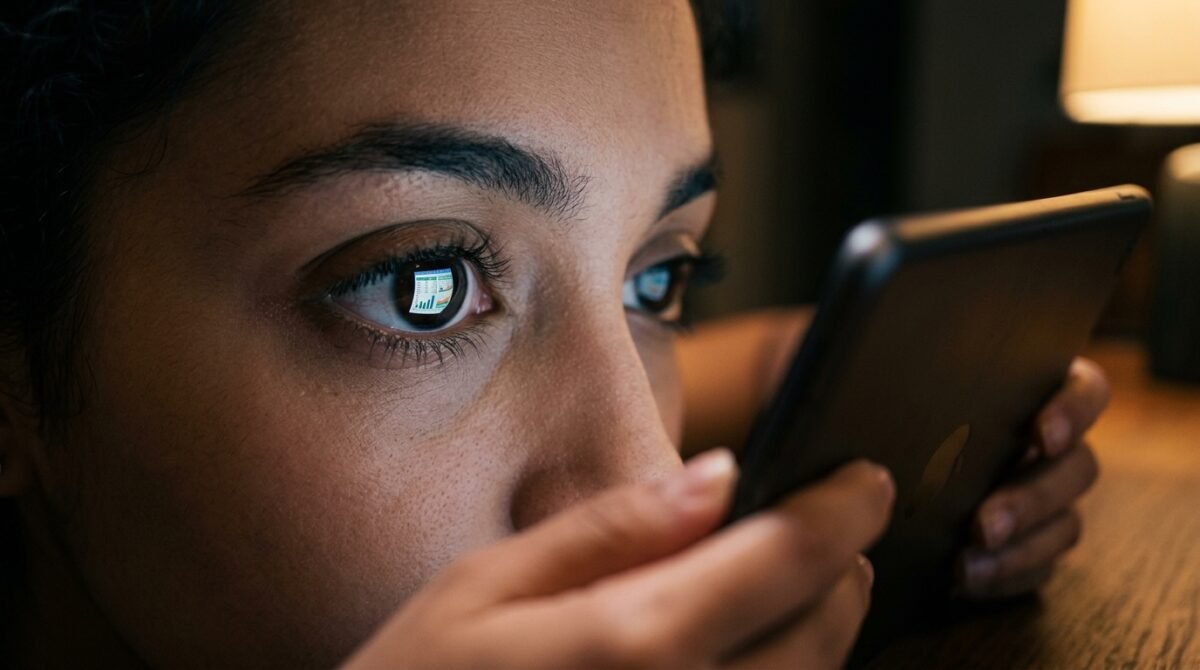
The living room was quiet, filled only with the soft hum of the air conditioner. Liam was in the shower, preparing for our big night out at the French bistro downtown. It was our fifth anniversary, a milestone we had discussed with such excitement just the night before. I felt a surge of warmth thinking about the last five years, the hurdles we had cleared, and the life we were building together. I wanted to surprise him by finalizing the dinner plans, specifically checking the menu he had mentioned was his favorite.
When I opened his tablet, it was already unlocked, sitting right on the coffee table. I didn’t intend to snoop; it was pure curiosity about the restaurant’s current pricing. But the browser tab was still open, and it wasn’t the restaurant website. It was a local spreadsheet file stored in his cloud, titled ‘Current Trajectory.’ My thumb hovered over the screen, and before I could stop myself, I clicked into the document.
The columns were meticulously arranged: Date, Weight, Meal Log, and ‘Status Rating.’ I scrolled down, my heart hammering against my ribs. I saw dates from three years ago, when I was struggling with my health during a stressful job transition. I saw notes like ‘Increased portion size,’ ‘Low effort in fitness,’ and the most devastating of all, a column labeled ‘Attractiveness Index’ with numbers ranging from 1 to 10.
I felt a wave of nausea wash over me. It wasn’t just weight; it was a catalog of my body, indexed and archived. Every time I had felt secure, loved, and beautiful in his arms, he had been tallying my ‘flaws’ in the background. It was a level of gaslighting that I couldn’t even begin to process. I realized that my self-esteem, which I had worked so hard to build, had been systematically eroded by someone who was supposed to be my safe harbor.
“How long has this been going on? Does he actually think of me as a collection of data points to be managed rather than a human being?”
I looked at the timestamps. Every single week, there was an entry. He had been doing this for the entire duration of our relationship. The level of commitment required to maintain such a malicious record was horrifying. I didn’t just feel hurt; I felt a cold, sharp anger that replaced the initial shock. I closed the tablet, set it back on the table exactly as I found it, and realized that I was no longer looking at my boyfriend. I was looking at a stranger.
The Charade at the Bistro

I arrived at the restaurant twenty minutes early. I needed to see him. I needed to see if he would act the same way he always did, or if the mask would slip. When Liam walked in, he looked impeccable in his blazer. He kissed my cheek, his eyes bright with what I now knew was a carefully curated performance. He ordered champagne, he talked about our future, and he even brought up a vacation we were planning for the summer.
Every word out of his mouth felt like a jagged piece of glass. He was acting like the doting partner, but I kept seeing the spreadsheet in my mind. I saw the ‘Status Rating’ column. I wondered which column I was currently in for his ‘Maintenance Protocol.’ Was I a ‘Project’ today? Or was I failing to meet his expectations?
I let him talk for nearly forty-five minutes. I didn’t eat. I didn’t touch the wine. I sat there, observing him with a detachment that surprised even me. The more he talked about our ‘team’ and ‘shared goals,’ the more disgusted I became. He was so confident in his deception that he didn’t even notice I was barely responding.
Finally, I leaned forward, my voice steady but cold. I didn’t want to make a scene, but I wanted him to know that the game was over. I didn’t even need to tell him what I found; I just needed to see his reaction when I asked a specific, pointed question. I wanted to see the moment the panic set in.
“Liam, tell me, on a scale of one to ten, how would you rate my performance as a partner tonight?”
His face went deathly pale. The fork paused halfway to his mouth. For a second, he thought I was being playful, but then he looked into my eyes and saw the absolute absence of warmth. He knew. I could see the gears turning in his head, trying to calculate which version of the truth would save him, but for the first time, he had no data to work with. He had no control over the situation.
The Confrontation in the Parking Lot

I didn’t wait for him to finish his stuttered excuse. I stood up, left a twenty-dollar bill on the table for the drinks, and walked out of the restaurant. He was scrambling, throwing his napkin down and chasing after me. The cool night air hit my face, and I felt a strange sense of liberation. I walked toward my car, his footsteps echoing rapidly behind me on the pavement.
“Wait! Where are you going? What is this about?” he shouted, his voice cracking with a mixture of confusion and genuine fear. He wasn’t afraid of losing me; he was afraid of being caught. I stopped at my car door and turned around. He looked like a cornered animal, but there was no sympathy left in me. None at all.
I didn’t yell. I didn’t scream. I just looked at him with an icy stare that stopped him in his tracks. “I saw the spreadsheet, Liam. I saw the maintenance logs. I saw the rankings.” His mouth opened, then closed. He didn’t have an answer. There was no ‘it’s not what you think’ defense that could possibly justify five years of documentation on my body.
He tried to step closer, to touch my arm in a placating gesture, but I recoiled as if he had burned me. “Don’t,” I said, my voice barely above a whisper. “You spent years measuring me, but you never actually saw me. You were too busy calculating my worth based on a spreadsheet that doesn’t even exist in the real world.”
“It was just a way to keep track of health goals! You’re overreacting. It’s not like I meant for it to hurt you. I just wanted us to be the best versions of ourselves.”
The audacity of his justification was staggering. He was still trying to gaslight me, even in the middle of a parking lot, minutes after being caught red-handed. He wanted to frame his obsessive, controlling behavior as ‘health coaching.’ That was the moment I knew I had made the right decision. There was no apology possible, and certainly no path back from this level of disrespect.
The Digital Breadcrumbs of Control

Once I reached the safety of my apartment, I didn’t go to sleep. I spent the night systematically removing him from my life. I knew there was more. If he was this obsessive about my weight, what else was he tracking? I accessed the shared cloud folder again, this time with a lawyer’s perspective. I found folders for everything: grocery expenses, time spent on hobbies, even a log of how many times I had called my mother.
It wasn’t just a weight spreadsheet. It was a digital dossier. He had been tracking my entire life, assigning ‘efficiency scores’ to my daily habits. I felt violated in a way that I can’t even put into words. It was as if I hadn’t been in a relationship at all, but rather, I had been under observation by a sociopathic project manager who viewed my very existence as a series of assets to be optimized.
I spent hours taking screenshots, documenting the extent of his ‘Maintenance Protocols.’ Every entry was a testament to his warped reality. I thought about the times I had felt guilty for buying a treat or taking a nap. Now I knew why. He had been conditioning me. He would make subtle comments, offer ‘gentle’ critiques, and all the while, he was logging it into his system, waiting for the data to confirm his biases.
I realized that he never actually loved me. He loved the idea of me, and he loved the control he felt when he could influence my ‘metrics.’ It was a power trip disguised as affection. I felt sick thinking about the years I had wasted trying to please him, trying to be the ’10’ on his arbitrary scale. I wasn’t a partner; I was a project that had failed to meet his quarterly projections.
“You are not a series of data points. You are a human being, and your worth is not something that can be calculated by a spreadsheet.”
By the time the sun started to rise, I had exported every single file. I had the evidence I needed to justify my exit to anyone who asked, though I realized I didn’t owe anyone an explanation. The only person I needed to convince was myself, and the mountain of data he had compiled was more than enough proof that he was fundamentally incapable of seeing me as an equal.
The Fallout in the Group Chat
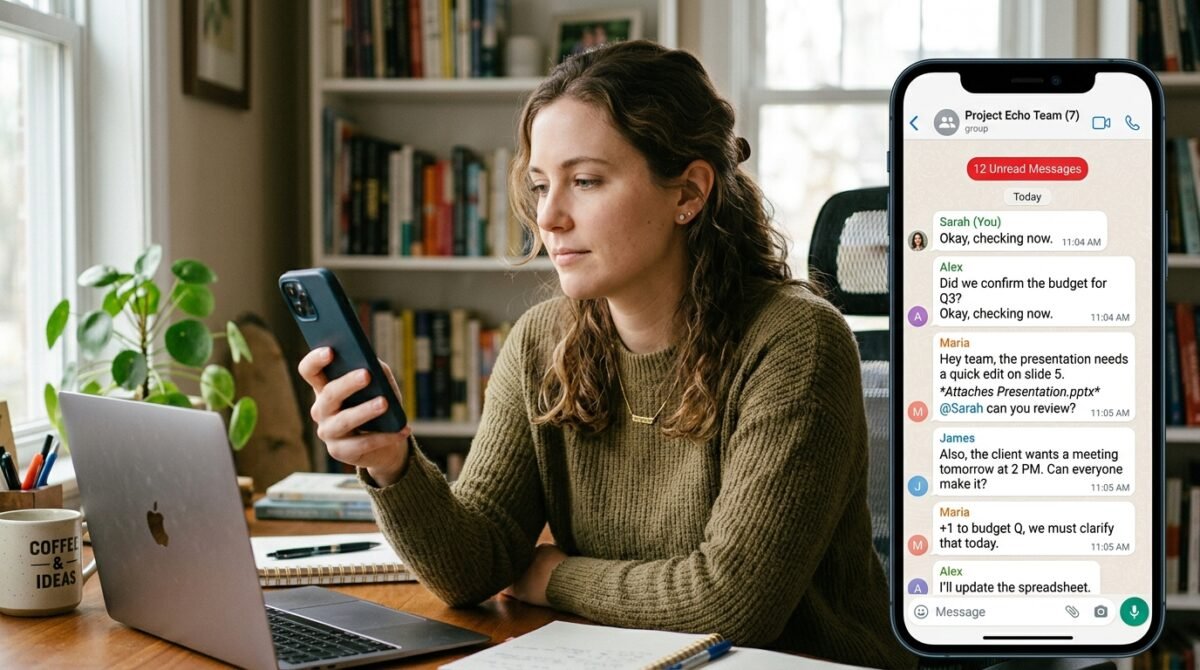
By noon the next day, the news had leaked to our mutual friends. I didn’t tell them; Liam did. He tried to get ahead of the story, framing himself as the ‘concerned partner’ whose girlfriend ‘had a breakdown’ over his efforts to help her get healthier. He sent a message to our shared group chat, expecting his friends to rally around him and provide the validation he so desperately craved.
I saw the messages as they popped up on my phone. They were filled with concern, but it was directed at me, not him. When I responded with a single, redacted screenshot of the ‘Attractiveness Index,’ the entire dynamic shifted. The silence in the chat was instantaneous and heavy. No one knew how to respond to the sheer coldness of his tracking system.
“Hey everyone, just wanted to let you know that things are a bit rocky. I was just trying to help her with her health goals, but she didn’t take the feedback well. Hoping for some space right now.”— Liam (Family/Friends Group Chat)
Then, I replied with the truth. I didn’t get emotional. I didn’t use insults. I just posted the proof. The response from his own friends was immediate. They didn’t see ‘health goals.’ They saw a man who had been objectifying his girlfriend for years. The realization that he had been hiding this from them too—that he had been acting like a supportive boyfriend while secretly tallying ‘flaw scores’—shattered their perception of him.
He tried to defend himself, claiming it was just ‘a way to organize thoughts,’ but the damage was done. The people who once admired his ‘meticulous’ nature now saw it for what it was: a controlling, dehumanizing obsession. One by one, the messages started pouring in, not for him, but for me. The support was overwhelming, but it was also a reminder of how long I had been living in a bubble of his design.
I watched as he tried to backpedal, posting long, rambling justifications about ‘self-improvement’ and ‘data-driven living.’ But no one was buying it. The reality of the spreadsheet was too clinical, too cold, and too undeniably cruel to be dismissed as a misunderstanding. I stopped reading the messages after a while. I didn’t need their validation anymore. I had my own truth.
The Internet’s Verdict

I posted a condensed version of the story to a popular subreddit, leaving out names but sharing the core of the spreadsheet discovery. The response was instantaneous and massive. Within hours, the post hit the front page. The community reaction was a mixture of horror, outrage, and, surprisingly, shared experiences from others who had dealt with similar ‘data-driven’ partners.
The thread became a repository of stories about control, gaslighting, and the dehumanizing impact of tracking apps and hidden metrics. People were shocked not just by the weight tracking, but by the ‘Attractiveness Index.’ Many pointed out that this wasn’t just ‘obsessive,’ it was a form of psychological abuse. The consensus was overwhelming, but the nuance in the comments was what really helped me process what had happened.
“This is not a quirk. This is not ‘data-driven living.’ This is a control mechanism disguised as self-improvement. He wasn’t tracking your health; he was tracking his power over you. Run, and don’t look back.”— u/RelationshipArchitect (Top Comment, 45.2k upvotes)
The thread served as a mirror. I saw my own pain reflected in the words of thousands of strangers who validated exactly what I was feeling. They helped me realize that I hadn’t been ‘overreacting.’ I had been living in a reality that was fundamentally broken, and now that I was out, I could see the truth for what it was. The community’s support was a vital part of my healing process.
Some comments were brutal, calling him out for his sociopathic tendencies, while others were more analytical, breaking down the psychological implications of his behavior. It was the most empowering moment of my entire journey. I wasn’t just a victim; I was a survivor who had successfully navigated an incredibly complex and manipulative relationship.
I read through thousands of comments, and for the first time, I felt truly understood. The internet isn’t always kind, but in this instance, it provided a level of objective validation that I desperately needed. It confirmed that my boundaries were valid, my anger was justified, and my decision to walk away was the only logical outcome of a life built on a foundation of lies.
Navigating the Aftermath

The weeks following the breakup were a blur of logistics. Moving out was the most difficult part. Every item I packed felt like a reminder of the life we had shared—a life that now felt like a curated exhibition of his preferences. I found more ‘logs’ in hidden places: a box of notes on my social interactions, a list of things he wanted me to change about my personality. It was as if I were a piece of software that he was constantly trying to update.
I started seeing a therapist to help me unpack the damage. She helped me realize that the spreadsheet was the tip of the iceberg. The real issue was the erosion of my sense of self. I had spent so long trying to optimize myself for him that I had forgotten what I actually enjoyed, who I was, and what I valued. The rebuilding process was slow, but it was mine.
Liam tried to reach out multiple times, sending long, desperate emails about ‘starting over’ and ‘deleting the files.’ He claimed he had changed, that he realized his mistake, but his words were empty. They were just more data points in his ongoing attempt to manage the narrative. I blocked him on everything. I needed to exist in a world where I wasn’t being measured, tracked, or evaluated.
I found peace in the simple things. I started going to the gym because I enjoyed the movement, not because I was trying to hit a number. I started eating food because I loved the taste, not because it was a ‘meal log’ entry. The freedom was intoxicating. Every day, I woke up, and for the first time in five years, I didn’t feel the weight of his judgment hanging over me.
“The most radical form of self-care is refusing to be someone else’s data point. You are a person, not a project, and your worth is not a variable in someone else’s equation.”
The hardest part was letting go of the guilt. I kept thinking about the good times, the laughter, and the shared memories. But then I would remember the spreadsheet. I would remember the ‘Attractiveness Index.’ And the guilt would vanish, replaced by a firm, unwavering resolve. I hadn’t lost a partner; I had gained my life back.
The Unmasking of a Perfectionist

It turned out that I wasn’t the only one he had been tracking. A few weeks after everything came out, I heard from an ex-girlfriend of his from years prior. She had seen the viral story and reached out, realizing that she had been the subject of similar ‘experiments.’ She told me that he had always been obsessed with control, using ‘wellness’ as a mask for his deeper anxieties.
It wasn’t just a one-off. It was a pattern of behavior that stretched back years. He didn’t see people as partners; he saw them as assets that could be optimized. The realization that I was just another entry in his long history of ‘projects’ made the breakup even easier to process. I wasn’t the problem; his entire worldview was.
Learning about his history helped me stop wondering if I had ‘failed’ to be good enough. I never could have been good enough, because the target was always moving. He didn’t want a partner; he wanted a subordinate who would submit to his rigid standards. Once I understood that, the weight of his criticism finally lifted. I had been fighting a losing battle against a man who was incapable of intimacy.
I started attending support groups for people who had survived controlling relationships. The stories I heard were eerily similar. The gaslighting, the ‘helpful’ suggestions, the subtle undermining—it was all a playbook. We were all ‘data points’ in someone else’s warped perception of the world. Sharing my story helped me realize that the shame wasn’t mine; it belonged to them.
I eventually stopped thinking about him altogether. He became a cautionary tale in my mind, a reminder of what happens when you prioritize logic over empathy, and control over connection. I had moved on, and while the scars were still there, they were a part of my story, not a definition of my worth.
Defining My Own Metrics

Today, my life looks very different. I don’t use spreadsheets, I don’t track my weight, and I don’t seek validation from anyone. I have defined my own metrics, and they are entirely internal. My worth is based on how I treat others, how I grow as a person, and how much joy I bring into my life. These are metrics that no one can track, and certainly no one can judge.
I am dating again, but the experience is entirely different. I look for partners who are comfortable with imperfection, who celebrate the messy, chaotic reality of human life. I am no longer looking for a project manager; I am looking for a partner. And if I see even a hint of the control I once lived with, I know exactly what to do. The lesson was expensive, but it was worth every tear.
I often think back to that night at the restaurant. It was the most difficult, painful, and transformative evening of my life. I walked into that bistro as a woman who was constantly looking over her shoulder, trying to live up to someone else’s expectations, and I walked out as a woman who owned her own story. It was the best anniversary gift I could have ever given myself.
I have learned that the most important relationship you will ever have is the one you have with yourself. And that relationship should never, ever be subject to a spreadsheet. It should be based on kindness, compassion, and an unwavering belief in your own inherent value. I am finally free, and for the first time, I am enough.
“The spreadsheet was a cage, but I held the key the entire time. All I had to do was choose to open the door and walk away.”
If you are in a situation where you feel measured, tracked, or constantly criticized, know that you are not alone. You have the power to walk away. You are not a data point. You are a person, and you deserve to be loved for exactly who you are, without any conditions, calculations, or ‘maintenance protocols.’ Your life is yours to live, and your worth is yours to define.
Why We Stay and Why We Leave

The question I get asked most often is, ‘How did you not see it sooner?’ And the answer is simple: love is blind, but it’s also trusting. We want to believe in the best of our partners. We want to believe that their ‘quirks’ are just a part of who they are. I didn’t see the spreadsheet for what it was because I didn’t want to believe that the person I loved was capable of such a cold, calculated betrayal.
We stay because we are conditioned to believe that relationships require compromise, that we need to work through ‘issues.’ But there is a line between working through issues and accepting emotional abuse. The spreadsheet was that line. It was the moment the mask slipped, and I could no longer deny the reality of what was happening. Leaving wasn’t an act of impulse; it was an act of survival.
I want people to understand that it is okay to walk away. It is okay to set boundaries. It is okay to demand to be treated with respect. If your partner is making you feel like a project, if they are measuring your worth, if they are constantly tracking your ‘improvements,’ you are not in a relationship. You are in a cage. And you have every right to walk out of it.
The journey to finding yourself again is not easy. It’s messy, it’s painful, and it takes time. But it is worth it. You are worthy of a love that doesn’t need to be measured, a connection that doesn’t need to be tracked, and a partnership that doesn’t need to be optimized. You are enough, exactly as you are.
I hope this story helps someone who is feeling the same way I did. I hope it gives them the courage to look at their own relationships, to question the dynamics they are in, and to choose themselves over a partner who doesn’t see their value. You are the only person who gets to define your worth, and that is a power that no one can take away from you.
Conclusion
The fallout from my decision to walk out that evening was significant, but it was the catalyst for the most profound period of growth in my life. I learned that the people who truly love you will never need a spreadsheet to track your worth. They will see you, flaws and all, and they will value you for the person you are, not for the data points you represent.
I have moved on to a life that is defined by freedom, authenticity, and a deep appreciation for the unmeasured moments. I no longer live under the shadow of ‘maintenance protocols,’ and I have never felt more alive. My story is a reminder that we all deserve to be seen, truly and deeply, without any conditions.
What about you? Have you ever discovered that a partner was keeping tabs on you in a way that felt dehumanizing? Or perhaps you have your own story of setting a firm boundary that changed the course of your life? Let’s talk about it in the comments below—your experiences and insights are what help us all grow together.
What's your verdict on this dilemma?
Vote below to contribute to the official community consensus.

Have a Dilemma Keeping You Up at Night?
Share your real-life feud, wedding chaos, or relationship crossroads anonymously with our editorial team.
What do you think ?
0 Comments🛡️ Comments are moderated to protect community integrity. Your comment will appear once approved by the editorial team.