
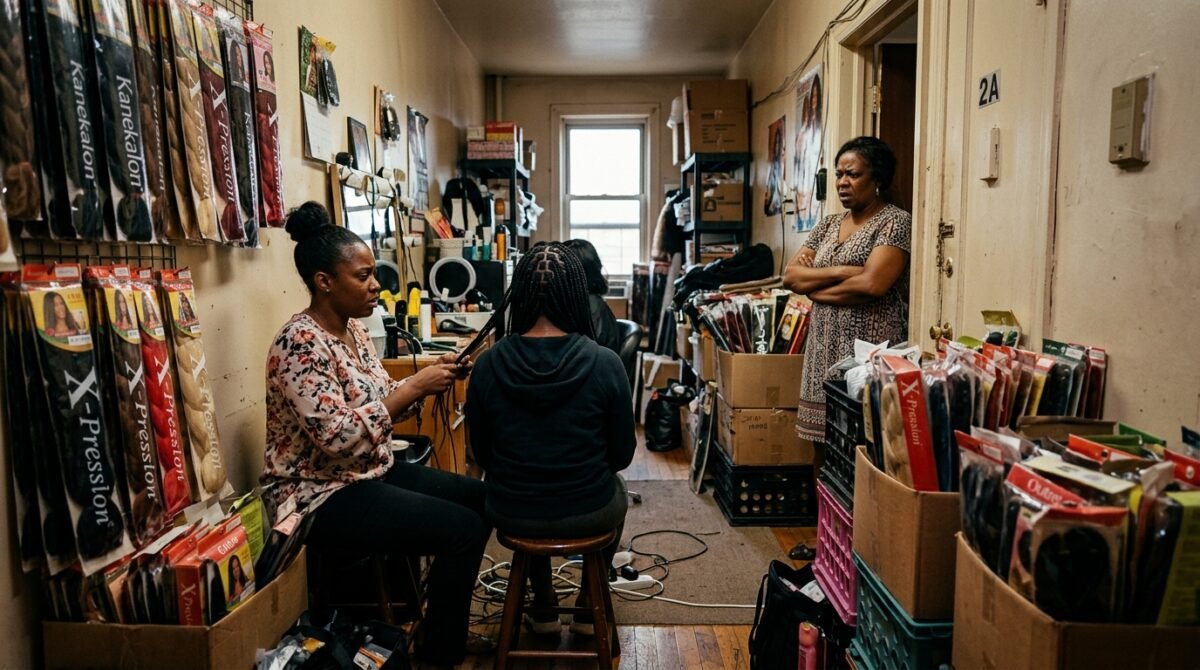
When I first moved in with Sarah, I thought we were a perfect match. She was tidy, paid her rent on time, and spent most of her weekends away visiting family. We had a simple, verbal agreement: the apartment was our sanctuary, a quiet retreat from our high-stress jobs. For the first six months, the arrangement was flawless. I enjoyed the solitude, and Sarah was a respectful, if somewhat distant, presence in our two-bedroom unit.
The shift began subtly. It started with a heavy cardboard box left in the foyer, then a small plastic organizer tucked behind the coat rack. I didn’t think much of it—everyone accumulates clutter. But then, the strange sounds started. I would hear hushed whispers and the distinct, rhythmic sound of hair being parted or brushed, even when I thought Sarah was alone in her room. I assumed she had picked up a new hobby, perhaps a craft project she was working on in the common area.
My curiosity turned into genuine confusion when I started finding stray synthetic hair fibers in the bathroom sink and, eventually, in my own bedroom carpet. I questioned Sarah, and she gave me a dismissive laugh, blaming it on an old sweater she had purchased from a thrift store. I wanted to believe her. I wanted to believe that our comfortable, peaceful living situation wasn’t unraveling right beneath my nose. I had no idea that I was living alongside a burgeoning, unlicensed commercial empire.
The moral dilemma weighed on me for weeks. Did I have the right to police her personal space, even if that space was bleeding into our shared living area? I felt like a stranger in my own home, constantly navigating around strangers in our entryway. The tension was palpable, a thick, suffocating cloud that hovered over every interaction. I was about to find out that Sarah wasn’t just working from home—she was operating a full-scale hair salon, and the lease was the least of our worries.
The Morning Commute Through a Salon
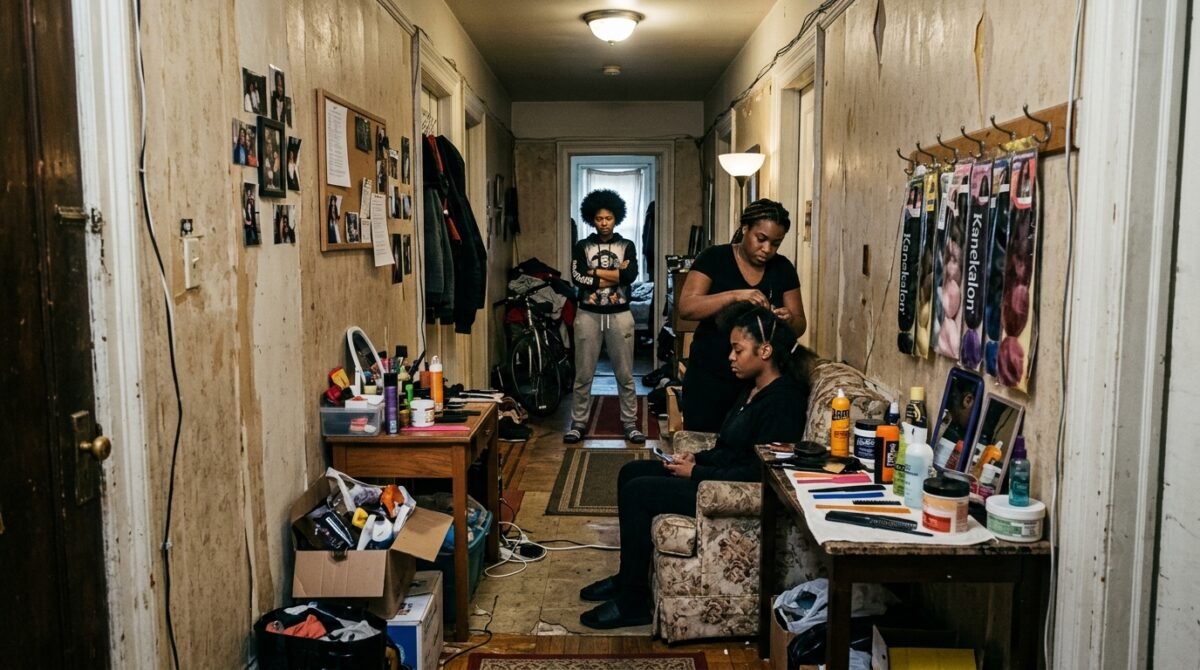
The breaking point arrived on a Tuesday morning at 6:45 AM. I walked out of my bedroom, coffee mug in hand, expecting the usual silence of an empty apartment. Instead, I nearly tripped over a rolling cart filled with hair gels, edge control, and a dozen packages of synthetic braiding hair. Sitting on a folding chair in the middle of our narrow hallway was a complete stranger, head bent, while Sarah stood over her, deftly braiding a section of hair.
I stood there in my pajamas, frozen in a mix of shock and pure rage. Sarah didn’t even flinch. She just gave me a quick, tight-lipped smile as if I were the one intruding. She was running a business—a real, paying, commercial enterprise—in our residential hallway. The smell of hair products was overpowering, thick and chemical-heavy, permeating the small space of our entryway.
“Sarah, what is going on? Why is there a customer in our hallway at seven in the morning? This is our home, not a beauty parlor.”
She rolled her eyes, continuing her work without missing a beat. “It’s just a quick touch-up, calm down. She’s a friend, and I needed the extra cash. It’s not like she’s living here, right? We’re out of the way, and I’m being quiet. You’re making this into a much bigger deal than it actually is.”
I couldn’t believe the audacity. She treated our common area like her personal storefront, disregarding my comfort and the lease terms. I retreated into my room, my heart hammering against my ribs. I felt violated. The sanctity of my home had been breached, and she had the nerve to act like I was the unreasonable one for wanting privacy.
I spent the next hour documenting the clutter, taking photos of the supplies strewn across the floor. This wasn’t just a favor; it was a business. I realized then that I wasn’t just dealing with a messy roommate; I was dealing with a business partner I never agreed to have. The dynamic had shifted from a friendly living arrangement to an adversarial legal dispute, and I needed to handle this with precision.
The Financial Trail of Hidden Clients

I started noticing the patterns. It wasn’t just one friend. There was a revolving door of women coming in and out of the apartment. I started checking the doorbell camera app, realizing that there were sometimes three or four clients coming through the door in a single day. The utility bills—specifically the electricity—had spiked significantly over the last two months, and it suddenly made sense why.
I confronted her again that evening, armed with the evidence of the foot traffic. I pointed out the excessive use of the common area and the wear and tear on our floors. She tried to deflect, claiming she was just ‘helping out her community’ and that she deserved to make money on her own time. She refused to acknowledge that she was violating the sanctity of our shared space.
“This is a residential apartment, Sarah. You’re running a business in our hallway. Do you have any idea what happens if the landlord finds out? We could both be evicted, not just you. Your ‘side hustle’ is putting my housing stability at risk.”
She finally snapped, her voice rising to a shrill pitch. “You’re just jealous because you don’t have any ambition. I’m building a brand, and you’re just sitting here being a corporate drone. If you’re so worried about the lease, maybe you should have thought about that before you signed it with someone who actually wants to succeed in life.”
The conversation quickly devolved. She wasn’t sorry; she was emboldened. She felt entitled to the space because she paid her half of the rent. She didn’t seem to care that our apartment complex had strict rules against commercial activity. She was blinded by the immediate cash, and she didn’t care who she dragged down with her if things went south.
I realized that talking was no longer an option. I needed to involve the landlord, but I wanted to make sure I had everything in order first. I began keeping a meticulous log of every client, every hour they spent in the hallway, and the impact it had on my ability to enjoy my home. It was a tedious, draining process, but I knew it was necessary to protect my future.
The Landlord’s Unexpected Visit
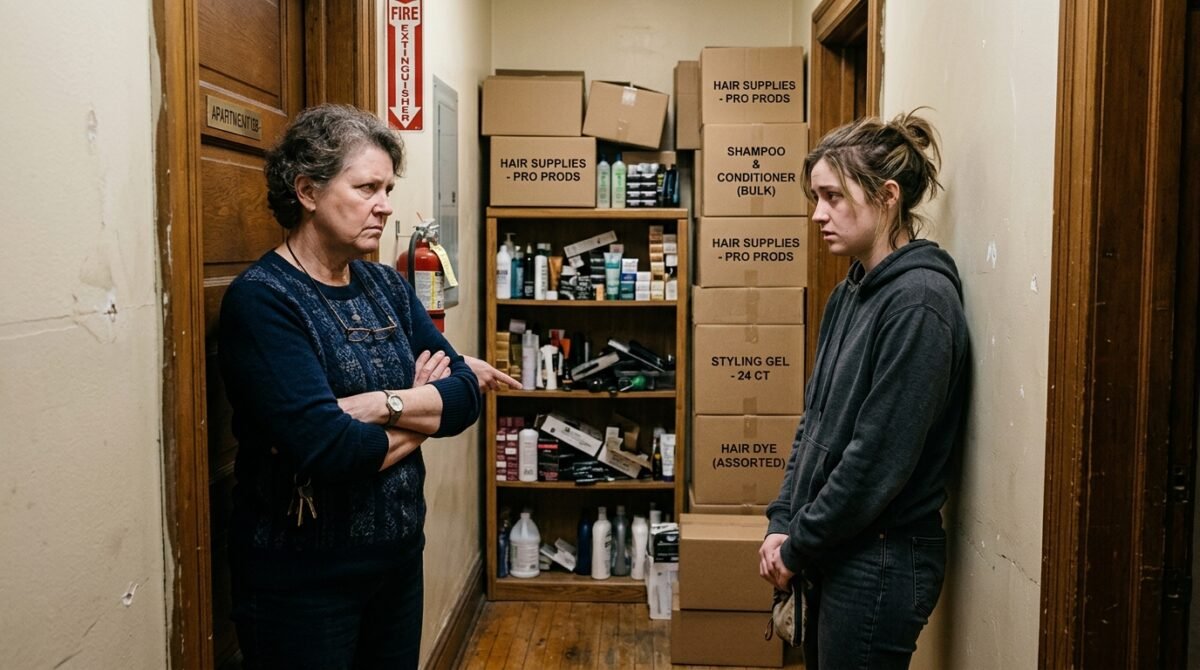
The inevitable happened on a Thursday. Our landlord, a man who prided himself on the quiet nature of his building, showed up for a routine inspection. He arrived unannounced, as he occasionally does, and I happened to be home early. Sarah was in the middle of a complex braiding session when he knocked on the door. I opened it, hoping to hide the chaos, but it was too late.
He walked in, his eyes immediately landing on the mountain of synthetic hair and the client sitting in the entryway. He stopped dead in his tracks. The silence in the apartment was deafening. Sarah looked like a deer in headlights, frantically trying to hide her supplies behind the coat rack, but there was no use. The evidence was everywhere.
“I don’t recall authorizing a commercial salon in my building, Sarah. This is a violation of your lease agreement, and frankly, it’s a liability issue I’m not willing to entertain for another second.”
The landlord was livid. He gave us a formal warning, but he made it clear: the business had to stop immediately, or we would both be facing an eviction notice. Sarah tried to argue, claiming it was a ‘private gathering,’ but he wasn’t buying it. He demanded that the supplies be cleared out by the end of the weekend, or he would be back with an official notice of breach.
Sarah turned on me the moment the door closed. She accused me of snitching, of sabotaging her ‘career,’ and of being a vindictive roommate who couldn’t stand seeing someone else succeed. She was lashing out, but the reality was that she had brought this upon herself. I had been patient, I had been reasonable, but she had pushed every boundary I had set.
I felt a strange sense of relief. The secret was out, and now, the consequences were real. Sarah was still angry, but she was also scared. She realized that her livelihood—the one she had built in the hallway—was in jeopardy. I didn’t feel guilty. I felt like I had finally regained some control over my own living situation, even if the atmosphere in the house was now toxic.
The Midnight Packing Incident
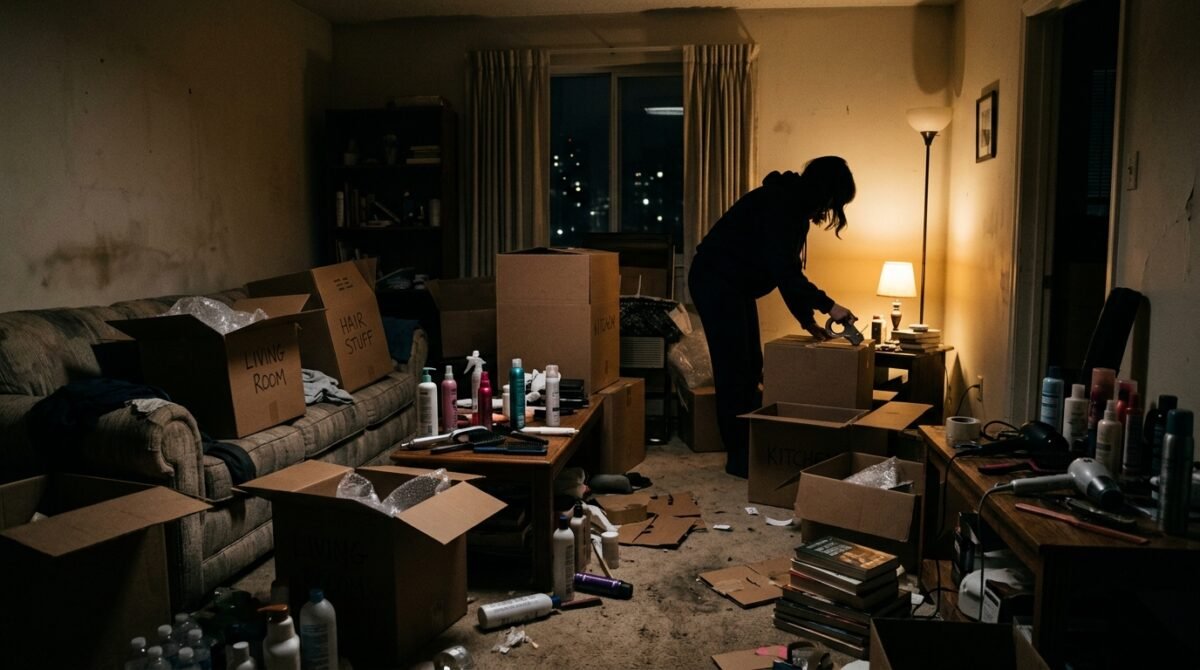
That night, Sarah didn’t stop. She stayed up until three in the morning, frantically packing her supplies into oversized duffel bags and cardboard boxes. She was slamming things around, making as much noise as possible, clearly trying to punish me for the ‘snitching’ she accused me of. I lay in bed, listening to the cacophony, feeling the walls shake with her resentment.
I finally got up and walked into the living room. She was surrounded by piles of extensions, hair oils, and mannequin heads. The sight was surreal. It looked like a beauty shop had exploded in my living room. I didn’t say a word, just walked past her to get a glass of water, trying to ignore the daggers she was shooting at me with her eyes.
“You think this is over? You think you’ve won? I’m going to make this place a living hell for you until you decide to move out. You have no idea what I’m capable of when I’m backed into a corner.”
Her threat hung in the air, cold and calculated. I didn’t respond. I knew that any reaction would just feed her need for drama. I just looked at her, then walked back to my room and locked the door. It was the first time I had ever felt the need to lock my bedroom door in my own home, and that realization was more upsetting than her threats.
The next day, I found sticky notes on all my belongings. She had labeled everything in the kitchen as hers, even the things I had bought months ago. It was a petty, childish game, but it showed how far she was willing to go to assert her dominance. I started looking at rental listings that night, knowing that my time living with her had to come to an end.
I contacted the landlord and explained the situation. I told him that I was a responsible tenant and that the issues were entirely due to Sarah’s behavior. He was sympathetic, but he also reminded me that we were on a joint lease. That meant I was as responsible for her actions as she was. The weight of that reality was crushing.
The Group Chat Exposure
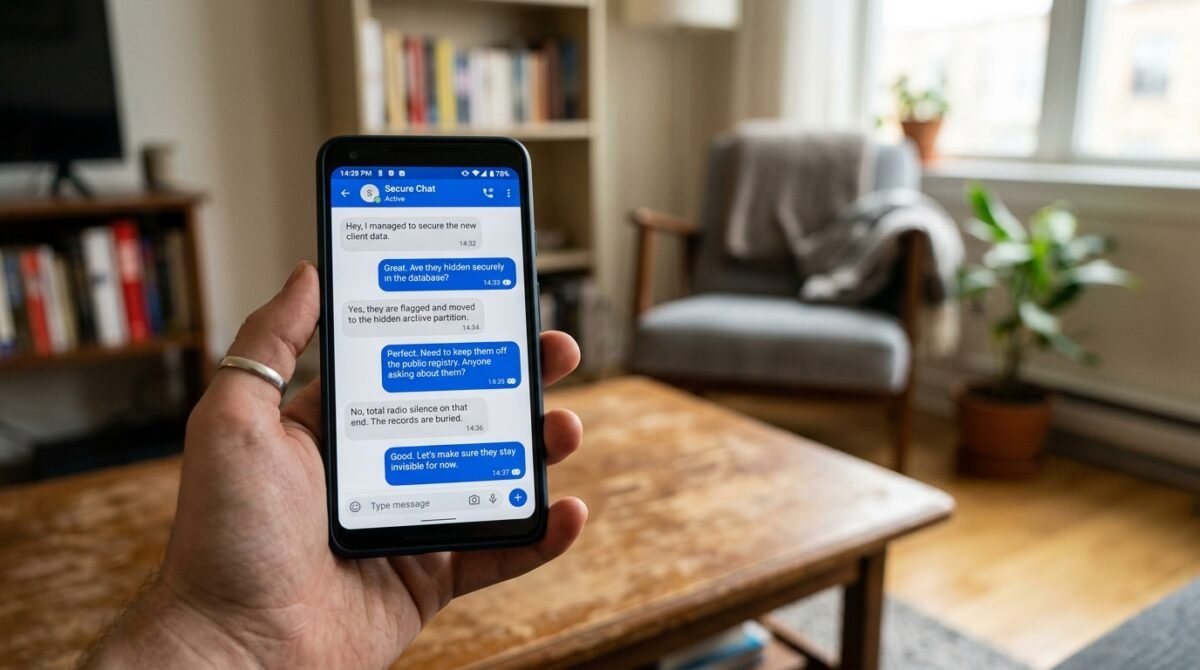
Things escalated when I accidentally saw a notification on her iPad, which she had left unlocked on the kitchen counter. It was a group chat titled ‘The Salon Squad,’ and the messages were eye-opening. She was talking about me, calling me ‘the warden,’ ‘the buzzkill,’ and worse. She was planning to invite her clients over while I was at work, mocking my requests for privacy.
“The warden is finally at work. Everyone come over for the late-night session! Bring cash, and leave through the back entrance so she doesn’t see you. We’re going to make a killing tonight.”
— Leaked Message from the ‘Salon Squad’ Group Chat
My blood went cold. She wasn’t stopping the business; she was just getting better at hiding it. She was actively conspiring to keep the salon running behind my back, knowing full well the risks she was taking with our housing. The betrayal was complete. I wasn’t just a roommate; I was an obstacle in her path to profit.
I took screenshots of the conversation, documenting the intent to continue the business. I now had proof that she had no intention of abiding by the landlord’s warning. This changed everything. I wasn’t just dealing with a messy person; I was dealing with a deceitful, manipulative individual who was actively putting my financial future at risk.
I sent a copy of the screenshots to the landlord, alongside a formal request to break my half of the lease. I told him I couldn’t live in an environment of deception and that I was willing to work with him to get Sarah out. It was a bold move, but I was done playing games. I deserved to live in a place where I felt safe and respected.
Sarah came home that evening to find a notice of lease termination from the landlord pinned to her door. She didn’t even look for me. She went straight to her room and slammed the door, and the sound echoed through the apartment like a gunshot. The tension was finally at a boiling point, and the end was clearly near.
The Final Confrontation
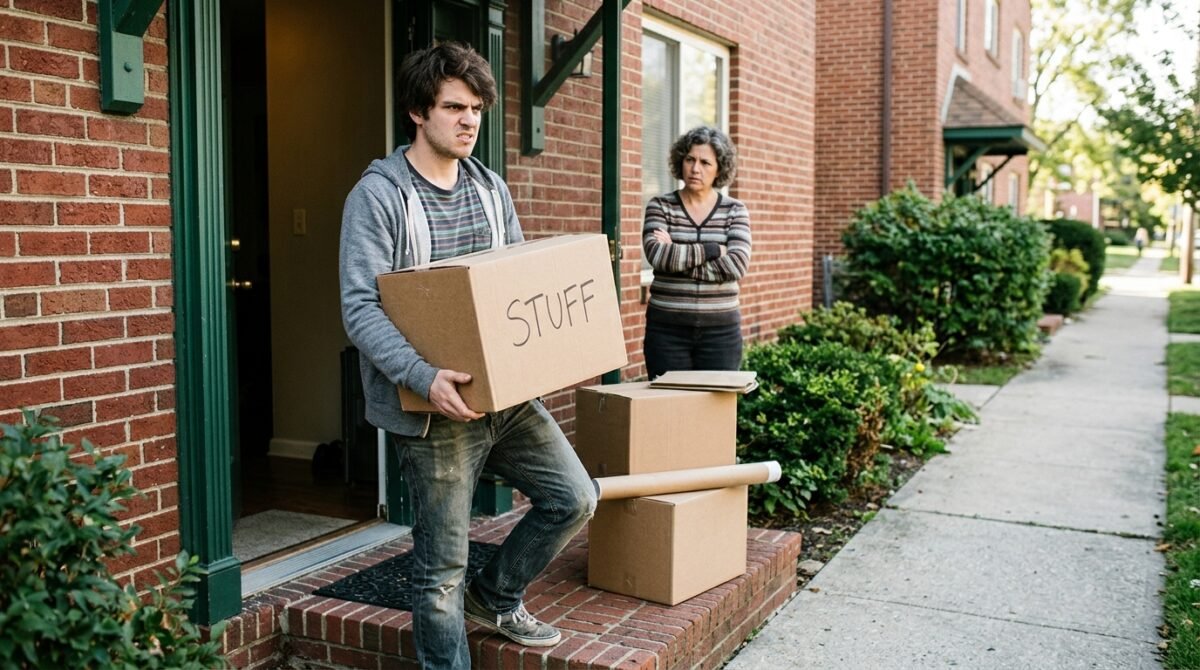
The confrontation happened on a Saturday afternoon. Sarah had packed her things, but she was refusing to leave until she was paid for her ‘investment’ in the apartment. She claimed that she had spent thousands of dollars on renovations—which, in reality, meant a few shelves and a fresh coat of paint in her room—and that I owed her for the value she had added to the place.
“You owe me for the shelves, for the lighting, and for everything I’ve done to make this place livable. I’m not leaving until you write me a check for two thousand dollars. That’s the price of my departure.”
I laughed, a genuine, bitter sound. I looked at her, standing in the middle of our now-empty living room, holding a bag of trash like it was a ransom note. She had no leverage, no legal ground, and no support from the landlord. She was just grasping at straws, trying to extract one final bit of profit from the wreckage of our friendship.
“I don’t owe you a dime, Sarah. You’re leaving because you violated our lease, and you’re lucky the landlord isn’t suing you for damages. If you aren’t out by the end of the day, he’s coming back with the sheriff to escort you out. Is that what you really want?”
She sputtered, her face turning bright red with rage. She realized that I wasn’t going to cave, and she realized that the landlord was done playing nice. She started packing her remaining items, cursing me under her breath, tossing things into boxes with reckless abandon. It was the most satisfying thing I had ever seen.
I watched as she hauled her last box out the door. The apartment felt instantly lighter. The smell of hairspray was fading, and for the first time in months, the hallway was just a hallway. I took a deep breath, feeling the weight of the last few months lift off my shoulders. I was finally alone, and it was glorious.
Community Perspectives on the Salon Scandal

I posted about the entire ordeal on Reddit, looking for some perspective on whether I had acted too harshly. The response was overwhelming. Thousands of people weighed in, with many of them sharing their own horror stories of roommates who had turned shared living spaces into unauthorized business hubs. The consensus was overwhelmingly in my favor, which was a huge comfort.
“This isn’t just about a hobby, it’s about the fundamental violation of a shared lease. Your roommate was a massive liability. You absolutely did the right thing by getting the landlord involved. Some people just don’t understand the concept of residential boundaries.”
— u/HousingExpert (Top Comment, 18.2k upvotes)
Others pointed out the risks I faced if I hadn’t acted. The insurance implications of a business operating in a residential building were massive. If there had been a fire or an accident in the hallway, the landlord would have been responsible, and my reputation would have been ruined. It made me realize how lucky I was that I caught her early.
Some commenters shared their own, similar experiences. One person mentioned how their roommate started a dog-grooming business in their kitchen, complete with a makeshift bathtub, and another told of a roommate who used their living room as a yoga studio for paying clients. It seems that ‘side hustles’ that overstep boundaries are more common than I ever imagined.
The discussion also turned to the legal side of things. Many people urged me to make sure my name was fully removed from the lease, and to double-check that there were no outstanding utility bills. I was glad I had already taken those steps, but the advice was a good reminder to be thorough and protect myself at every turn.
I felt a sense of community for the first time in months. Knowing that I wasn’t alone, and that my frustration was validated by thousands of strangers, helped me move on from the bitterness of the situation. I realized that my desire for a quiet, respectful home environment wasn’t ‘unambitious’—it was basic human decency.
Cleaning Up the Aftermath

Once Sarah was gone, the real work began. I had to scrub the floors to get rid of the chemical residue, repair the holes in the wall where she had installed her ‘salon’ fixtures, and deep clean the hallway to remove the lingering scent of hair products. It took me an entire weekend, but it felt like a ritual of cleansing. I was erasing the traces of her and her business from my life.
I found hidden things everywhere. A stash of hair extensions under the sofa, a collection of empty product bottles behind the radiator, and even a set of hair clippers buried deep in the pantry. It was like a scavenger hunt of bad memories. Each item I found reminded me of how much she had disrespected our shared living space.
I also had to deal with the aftermath of her clients. A few showed up at the front door, confused and angry that they couldn’t get their hair done. I had to turn them away, explaining that the salon was closed indefinitely. Most were understanding, but a few were downright hostile, blaming me for their lost appointment. It was another layer of frustration, but I stood my ground.
“I’m sorry, but there is no hair braiding studio here. You have the wrong place, and I suggest you reach out to Sarah directly to ask for your deposit back.”
I started enjoying the silence again. I could sit in the living room and read without hearing the hum of a hair dryer. I could cook in the kitchen without navigating around a pile of mannequin heads. I could invite friends over without worrying about whether they would be offended by the state of the common area. It was the simple, peaceful life I had signed up for.
I also started taking steps to improve my own financial situation. I looked into ways to make the apartment more comfortable, but this time, I was the one making the decisions. I bought a few nice plants, a new rug, and some artwork. I was reclaiming the space, turning it back into a home instead of a business hub.
Lessons in Boundaries and Roommate Vetting

Looking back, I learned a lot about the importance of setting boundaries early. I had been too passive, hoping that things would just work themselves out. I should have spoken up the moment I saw the first box in the hallway. I should have been firmer about my expectations for the common area, regardless of how much I wanted to be seen as ‘chill’ or ‘easygoing.’
I also learned the importance of vetting a roommate properly. It’s not just about whether they pay rent on time; it’s about their lifestyle, their respect for shared space, and their ability to communicate. I should have asked more questions about their work habits and their expectations for the home. It wouldn’t have prevented the situation, but it might have helped me spot the red flags earlier.
“Boundaries aren’t about being mean. They’re about being clear. If you don’t set them, someone else will definitely violate them for their own gain.”
I’m much more confident now in my ability to handle difficult situations. I know that I don’t have to be the ‘nice’ one if it means compromising my own comfort or safety. I know that I can stand up for myself, even when it feels uncomfortable, and that there is support available if I just reach out and ask for it.
Moving forward, I’m planning to live alone for a while. I need the space to rediscover my own rhythm, and I don’t want to worry about anyone else’s ‘side hustle’ interfering with my life. It’s a luxury, I know, but it’s one that I’ve worked hard for, and it’s the best way for me to move past the trauma of the last few months.
I still think about Sarah sometimes, but not with the anger I once felt. I wonder if she ever found a space for her salon, or if she’s still trying to force her way into others’ lives. I hope she learns to respect boundaries, but I also know that’s not my concern anymore. My life is my own, and that’s all that matters.
A New Chapter of Peace

Today, my apartment is my sanctuary. I’ve decorated it exactly how I like, and there isn’t a single stray hair in sight. I enjoy the quiet mornings, the tidy hallways, and the sense of security that comes with knowing I’m the only one in charge of the space. It’s a simple, modest life, but it’s mine, and I appreciate it more than I ever have.
I’ve also started a new hobby of my own—painting. It’s a quiet, personal, and non-commercial activity that I can enjoy in the living room without anyone to bother. It’s been therapeutic to spend my weekends doing something for myself, without the pressure of someone else’s expectations or the intrusion of their ‘hustle.’
“Your home is your reflection. If you allow chaos in, you’ll live in chaos. If you protect your peace, you’ll live in peace.”
I still stay in touch with a few of the people I met through the Reddit thread. We share stories, give each other advice, and support one another as we navigate the complexities of modern living. It’s a surprisingly supportive community, and I’m grateful for the perspective they provided when I needed it most.
I don’t regret the experience, even though it was incredibly stressful at the time. It taught me more about myself, my values, and my resilience than I could have learned any other way. It was a tough lesson, but it was an important one, and I’m a better person for it.
I’m looking forward to what’s next. I’m feeling stronger, more independent, and more sure of my place in the world. I’m no longer afraid of the difficult conversations, and I’m no longer afraid to stand up for my home. I’ve learned that peace is worth fighting for, and that sometimes, the hardest decisions are the ones that lead us to the best outcomes.
Conclusion
Looking back, the eviction was the only logical step. What started as a roommate relationship devolved into a clash of values—my need for a sanctuary versus her need for a commercial storefront. The lesson here is clear: never compromise your peace for someone else’s ambition, especially when that ambition encroaches upon your own livelihood and lease agreement.
For those currently dealing with similar situations, my advice is simple: document everything, communicate your boundaries clearly, and do not be afraid to involve the authorities—in this case, your landlord—when the boundaries are repeatedly crossed. You deserve to feel comfortable in your own home, and you should never feel like you’re walking on eggshells in your own living room.
I’d love to hear from you all. Have you ever had a roommate who took ‘side hustle’ a little too far? How did you handle the situation, and what would you have done differently? Let’s keep the conversation going in the comments below.
What's your verdict on this dilemma?
Vote below to contribute to the official community consensus.

Have a Dilemma Keeping You Up at Night?
Share your real-life feud, wedding chaos, or relationship crossroads anonymously with our editorial team.
What do you think ?
0 Comments🛡️ Comments are moderated to protect community integrity. Your comment will appear once approved by the editorial team.