

We all have that one possession—the one object that carries the weight of a thousand memories, the thread that connects us to a version of ourselves we are proud to remember. For me, that object was my mother’s vintage silk graduation gown. It wasn’t just a piece of fabric; it was a testament to her struggle, her academic triumph in the 1980s, and a symbol of the legacy she passed down to me. I had kept it preserved for years, shielded from light, dust, and, most importantly, the reckless hands of my younger sister, Chloe.
Chloe has always operated on a philosophy of ‘what’s yours is mine.’ It started with clothes in middle school and evolved into a systematic erosion of my personal autonomy as adults. I had established clear, firm boundaries, or so I thought. When I received a frantic text message three weeks ago, I knew the dynamic was about to shift from irritating to irreparable. But I never imagined the level of gaslighting I would face when the dress returned to me, not as a pristine heirloom, but as a ruined, wine-soaked rag.
The dilemma isn’t just about the fabric. It is about the absolute refusal of my family to acknowledge the value of something that wasn’t theirs to take. When I demanded that the professional restoration costs be covered by the person who caused the damage, the response I received was a masterclass in deflection. I was labeled ‘toxic,’ ‘controlling,’ and ‘petty’ for wanting to fix what was broken, all while the person who destroyed it played the victim of my ‘unreasonable’ anger.
In this article, I want to unpack the anatomy of this betrayal. It isn’t just about a dress; it is about the long-term cost of enabling entitlement. If you have ever been told that your boundaries are an attack on someone else’s happiness, this story is for you. We are going to look at the text messages, the family intervention that went sideways, and the harsh reality of why sometimes, the only way to save yourself is to walk away from the people who refuse to respect your property.
The Unannounced 6:00 AM Kitchen Intrusion

It began on a Saturday morning that I had reserved for silence. I live in a small apartment two blocks away from my parents, a distance I specifically chose to maintain my sanity. I was asleep, the kind of deep, restorative sleep that only comes when you don’t have to answer to anyone. My phone buzzed on the nightstand, a persistent, aggressive vibration that dragged me into consciousness. It was a photo sent by my sister, Chloe. She was wearing the silk gown. She looked radiant, or so she thought, as she stood in my living room, which she had accessed using the spare key I had given my mother for emergencies.
I sat bolt upright, my heart hammering against my ribs. The gown was supposed to be in a garment bag inside my cedar chest, tucked away in the back of my walk-in closet. The audacity of her, not just for taking it, but for broadcasting her theft as if it were a playful surprise, was dizzying. I immediately called her, my voice trembling with a mix of fury and disbelief. She didn’t pick up at first; she let it go to voicemail, a tactic I knew she used to let the tension build in her favor.
When she finally answered, she didn’t apologize. She didn’t even acknowledge the breach of privacy. Instead, she spoke as if she were doing me a favor by ‘borrowing’ it for a brunch date with some friends she was trying to impress. She said it was ‘just sitting there’ and that it would be a shame to let it gather dust. Her voice was light, dismissive, and entirely devoid of guilt. It was the voice of someone who had never been told ‘no’ in a way that actually stuck.
“You’re seriously mad over a dress? It’s just vintage silk, not the crown jewels. I’ll bring it back later, stop being so dramatic and toxic about everything. I needed something nice, and you literally have nothing going on this weekend.”
— Chloe, via phone call
I told her to bring it back immediately, to hang it up exactly as she found it, and to never step foot in my apartment again without permission. She laughed. She told me I was ‘ruining the vibe’ and that she would drop it off on Sunday evening. The call ended with me staring at the ceiling, feeling an icy knot of dread in my stomach. I knew, with a certainty that only comes from years of sisterly history, that the dress would not come back in one piece.
The Stained Reality of Sunday Night

Sunday evening arrived with a heavy sense of impending doom. Chloe showed up at my doorstep just as the sun was setting, the gown balled up in a plastic shopping bag. No garment bag. No hanger. Just a crumpled, sad mess of fabric shoved into a grocery bag that looked like it had seen better days. I didn’t even say hello; I reached out and took the bag, my hands shaking as I pulled the dress out. The sight was even worse than I had anticipated.
There were dark, splotchy stains near the hemline—red wine, undoubtedly. Worse, there was a jagged tear along the side seam where it looked like she had snagged it on a chair or a fence. The silk, which had survived decades of careful preservation, looked tired and wounded. I looked up at her, waiting for an apology, waiting for her to understand the gravity of what she had done. Instead, she was looking at her phone, barely paying attention to the disaster she had just handed me.
I held the dress up, the light hitting the wine stains, and asked her how she could be so reckless. I explained, with as much calm as I could muster, that this was not a dress from a thrift store. It was my mother’s graduation gown, something that could never be replaced. She sighed, a long, exaggerated sound of annoyance, and checked her reflection in the hallway mirror, seemingly more interested in her makeup than the ruin she had caused.
“Oh, get over it. It’s just a stain. Take it to a dry cleaner. You’re acting like I committed a crime. Can you just stop with the lecture? I have a headache and your energy is honestly just really toxic right now.”
— Chloe, during the return
I felt a physical pain in my chest. The accusation of being ‘toxic’ stung because it was so wildly misapplied. I wasn’t being toxic; I was being a victim of theft and destruction. I informed her that I would be taking the dress to a professional restoration expert and that she would be responsible for the bill. Her eyes went wide, and the dismissive attitude vanished, replaced by a cold, sharp anger that I had dared to hold her accountable.
The $1,400 Restoration Quote

Finding a specialist who works with vintage silk was not easy. I spent three days calling around, explaining the history of the garment, and sending photos to various boutiques. Finally, I found a woman who specialized in textile preservation. I took the gown in, watching as she examined the stains under a magnifying light. She gave me a grim assessment. The wine had set into the delicate fibers, and the tear required intricate weaving to ensure it didn’t fray further. The total estimate for the restoration, cleaning, and preservation was $1,400.
I didn’t blink. I knew that even if it cost more, it would be worth it to restore the piece to its former glory. I paid the deposit and sent the receipt to Chloe, along with a polite but firm message. I told her the cost, the breakdown of the services, and the deadline for payment. I expected, perhaps naively, that she would understand. I expected that she would realize the financial weight of her ‘fun’ afternoon and pay up without another word.
The response was not a bank transfer. It was a screenshot of my message forwarded to our family group chat. My mother, my father, and my older brother were all tagged. Suddenly, my phone was blowing up with notifications. My mother was the first to chime in, and her words hit me like a physical blow. She didn’t ask if the dress was okay; she asked why I was trying to ‘extort’ my sister.
“Chloe is your sister. She made a mistake, and we all move on. $1,400 is an insane amount of money to ask for a dress. You’re being incredibly petty and making this a family conflict over a piece of clothing. Let it go.”
— Mother, in the family group chat
The irony of being told to ‘let it go’ regarding an heirloom that I had protected for years was not lost on me. My brother, who usually stayed out of these things, suggested that maybe we could just ‘split the cost’ so that no one was ‘too burdened.’ It was a classic attempt to keep the peace by sacrificing my boundaries. I stood firm. I refused to pay a cent for someone else’s negligence.
The Sunday Dinner Silence
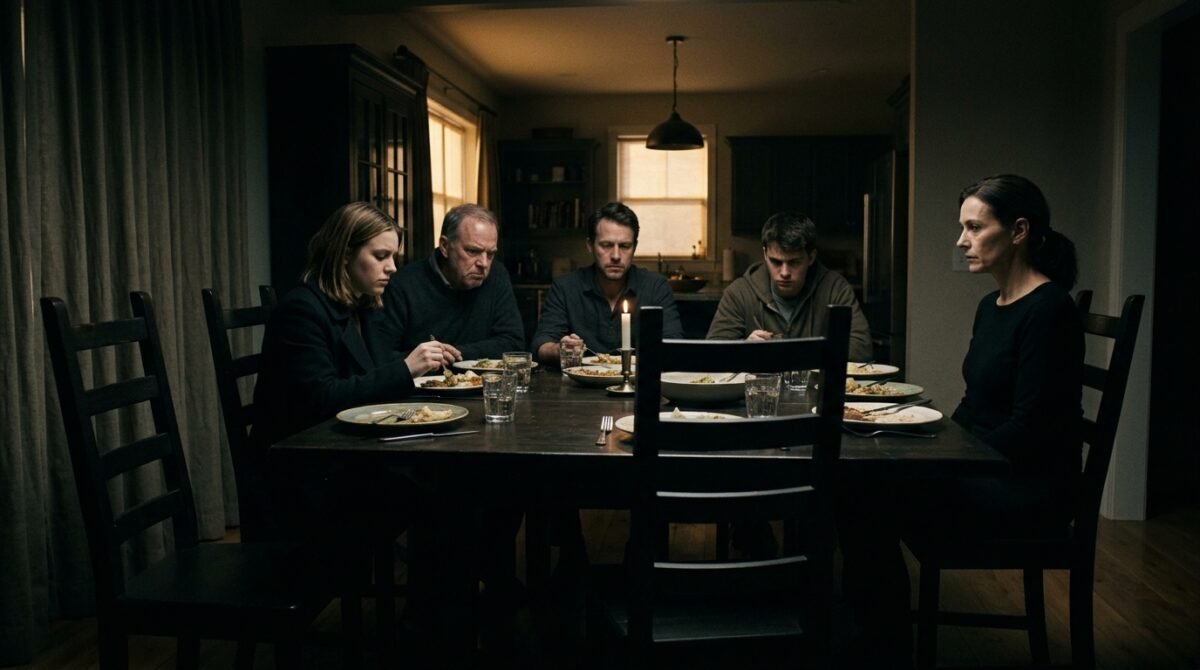
My parents insisted on a ‘family meeting’ over Sunday dinner. I knew what this meant. It was an ambush. I showed up, prepared for the inevitable gaslighting, but I didn’t expect the level of hostility waiting for me. My mother had set the table with the ‘good’ china, an attempt to make the situation feel formal and serious. Chloe sat across from me, looking smug and triumphant, already having whispered her side of the story into my mother’s ear.
The dinner started with forced small talk about the weather and my job. It was a suffocating layer of politeness covering the rot underneath. As soon as the main course was served, my father cleared his throat. He brought up the ‘dress situation’ as if he were discussing a minor disagreement about a movie choice. He said that while Chloe was ‘careless,’ my reaction was ‘disproportionate’ and ‘damaging to the family fabric.’ The irony of him using the word ‘fabric’ was almost funny if it weren’t so infuriating.
I looked at them, one by one. My mother, who had once told me that the gown was the most precious thing I would ever own, was now dismissing it as a ‘silly dress.’ I realized then that their love for me was conditional on my compliance. As long as I was the easy-going daughter, the one who shared her things and kept the peace, I was fine. But as soon as I demanded respect, I became the ‘difficult’ one. The silence at the table was heavy, thick with the weight of years of repressed frustration.
“You’re really going to choose a piece of silk over your sister’s relationship with this family? That’s what this comes down to, isn’t it? You’d rather have money in your pocket than a healthy dynamic with your own kin.”
— Father, at the dinner table
I didn’t answer with a shout. I answered with a question. I asked them why, if the relationship was so important, they felt it was acceptable for Chloe to steal from me and why they felt comfortable demanding I subsidize her lack of respect. The table went deathly quiet. I put my napkin down, stood up, and told them that if this was the price of admission to their family, I was no longer interested in paying it.
The Viral Reddit Thread

I didn’t have anywhere to vent, so I did what any millennial in crisis does: I posted the story to Reddit. I kept it anonymous, but I laid out the facts, the text messages, and the dinner table showdown. I expected a few replies, maybe some ‘NTA’ (Not The Asshole) comments to validate my feelings. What I got was a deluge of support that left me sobbing in my kitchen at 2:00 AM. Thousands of people saw themselves in my struggle.
The community analysis was razor-sharp. People pointed out the patterns of abuse that I had been too close to see. They talked about ‘golden child’ syndrome, where one sibling is allowed to cross every line while the other is expected to be the martyr for the sake of ‘family unity.’ The comments were a mix of validation and practical advice, telling me that the $1,400 wasn’t just a repair bill—it was the price of my independence.
“This isn’t about a dress. It’s about the fact that your family has never viewed you as a person with your own boundaries. They view you as a resource. The moment you stop being a resource, they lash out because they can’t control you anymore. Stay strong. Don’t pay the bill, don’t apologize, and honestly, consider going low contact.”
— u/BoundariesQueen (Top Comment, 32.5k upvotes)
Reading these comments, I realized that I wasn’t ‘toxic’ at all. I was simply holding a mirror up to their behavior, and they hated what they saw. The thread became a rallying point for people who had also been shamed for holding their ground. It was the first time I felt that my feelings were not only valid but entirely predictable. The ‘toxic’ label was just a weapon they were using to keep me in line, and for the first time, the weapon had lost its edge.
The Certified Letter From My Father
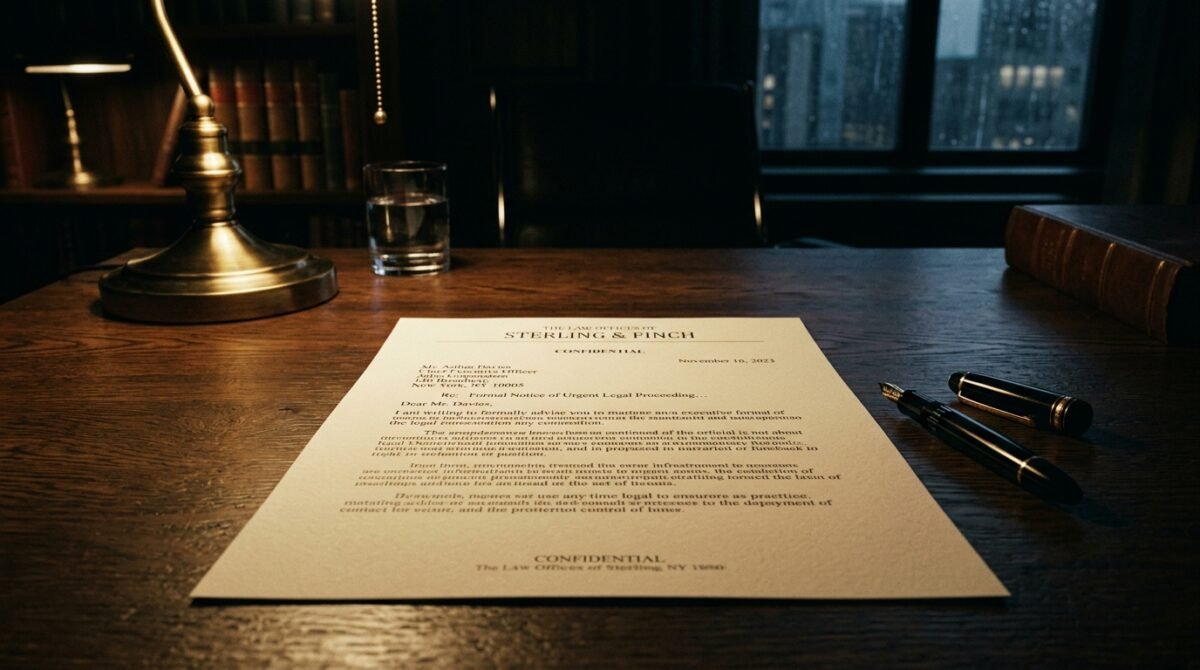
Two weeks after I walked out of that dinner, a certified letter arrived in my mailbox. It was from my father. I opened it, expecting some kind of reconciliation, or perhaps a check for the repair costs. Instead, I found a formal, typed list of ‘grievances’ he claimed I had committed against the family over the last year. It was a classic deflection tactic—if he could build a case against me, he wouldn’t have to address the fact that my sister had destroyed my property. It was legalistic, cold, and utterly terrifying in its calculation.
He wrote about how I was ‘withholding’ affection and how I was being ‘financially punitive’ toward my younger sister. He even brought up childhood incidents, twisted into narratives where I was the aggressor and Chloe was the victim. He demanded that I drop the ‘demand’ for the repair costs and attend a family mediation session, or else he would consider my relationship with the family ‘permanently severed.’ It was an ultimatum, plain and simple.
I held the letter in my hands, feeling the paper crinkle under my grip. It was the moment the bridge finally burned. I realized that my father wasn’t interested in justice; he was interested in maintaining a hierarchy where I was always at the bottom. The letter didn’t make me cry. It made me angry—a cold, clear, focused anger that I hadn’t felt before. I sat down at my desk and pulled out a notepad. I wasn’t going to mediation.
I drafted a response. It wasn’t emotional. It wasn’t begging for understanding. It was a simple, one-page document stating that I would be pursuing the costs for the restoration through small claims court if they were not paid by the end of the month. I didn’t mention the ‘family bond.’ I didn’t mention my feelings. I treated them exactly like the strangers they were acting like. I sent the letter via certified mail, just like he had. The game had changed.
The Small Claims Court Realization

The process of filing in small claims court was surprisingly therapeutic. Standing in the clerk’s office, surrounded by others filing their own disputes, I felt a strange sense of belonging. Everyone here had reached the end of their rope. Everyone here had been pushed to the point where the legal system was the only path left to them. I filed the paperwork, listing my sister as the defendant, and paid the small filing fee. It was the most empowering thing I had ever done.
When the notification was served to her, the fallout was, predictably, nuclear. My phone became a war zone of missed calls and vitriolic text messages. She wasn’t just mad anymore; she was panicked. She had never been held accountable, and the idea of standing before a judge, the idea of a public record of her actions, was terrifying to her. My mother called me, crying, saying that I was ‘ruining’ her life and that I would ‘never be forgiven’ for this.
I didn’t answer. I muted the notifications. I had spoken my piece, and now the court would speak for me. I looked at the evidence file I had prepared: the texts where she admitted to taking the dress, the photos of the stains, the invoice from the restoration specialist. It was an airtight case. The financial stake was small in the grand scheme of things, but the principle was monumental. I was no longer the daughter who could be taken advantage of.
I spent the next few weeks focusing on my own life. I started painting again, a hobby I had abandoned years ago because it took ‘too much time’ according to my father. I went to the gym. I saw friends who actually respected my boundaries. The silence from my family was deafening, but it was also peaceful. I had realized that the ‘family’ I was trying to save had already left me long ago; I was just the last one to pack my bags.
The Day of the Hearing

The day of the hearing was surprisingly anticlimactic. I walked into the courtroom, my suit pressed, my evidence neatly organized in a binder. Chloe was there, sitting next to our father. She looked disheveled and angry, her usual arrogance replaced by a visible nervousness. My father looked at me with a mixture of confusion and disappointment, as if he still couldn’t believe I would actually go through with this. They hadn’t offered a settlement. They hadn’t even reached out to discuss the bill. They truly thought I would back down.
When our case was called, I stood before the judge and presented my evidence clearly and concisely. I didn’t get emotional. I didn’t bring up the years of mistreatment. I simply stated the facts: the gown was taken without permission, it was returned damaged, and the cost to restore it was $1,400. The judge looked at the photos of the wine stains, then at my sister, and then at me. It was clear that the law didn’t care about ‘family dynamics’ or ‘toxic labels.’
Chloe tried to interrupt, to give her side of the story, but the judge silenced her immediately. She tried to say that I had ‘given it to her before’ and that it was a ‘misunderstanding.’ The judge asked for proof of permission. There was none. When the verdict was read, it wasn’t a triumph of emotion, but a triumph of truth. The judge ruled in my favor. Chloe was ordered to pay the full amount, plus court costs. The look on her face was something I would never forget.
I didn’t gloat. I didn’t say anything to them as I left the courtroom. I simply walked out into the sunlight, feeling like the weight of a thousand pounds had been lifted off my shoulders. The money would eventually be paid—or it wouldn’t, and I would pursue wage garnishment—but the outcome was already decided. I had stood up for myself in a public forum, and I had won. The power dynamic that had governed my life for twenty years was officially broken.
The Aftermath and The New Normal

It has been six months since the trial. My sister hasn’t spoken to me, and my parents have essentially cut me off as well. Initially, the silence was agonizing. I found myself checking my phone, hoping for an apology that I knew would never come. I found myself missing the Sunday dinners, even though they were miserable. But slowly, the pain began to fade, replaced by a strange, new freedom. I started to realize that the ‘family’ I was grieving was an idealized version that never actually existed.
I have fully restored the gown. It hangs in my closet now, not as a symbol of the conflict, but as a reminder of the day I stopped being a victim. It is perfect, pristine, and entirely mine. I don’t wear it often, but every time I see it, I am reminded of the price I paid to reclaim my own life. I’ve realized that boundaries are not just barriers to keep others out; they are the foundation upon which your self-respect is built.
I have learned that some relationships are simply not meant to be saved. If a relationship requires you to sacrifice your property, your autonomy, and your sanity, it is not a relationship; it is a transaction. And in this transaction, I was the one always being shortchanged. Walking away was the hardest thing I’ve ever done, but it was also the most necessary. I am finally, for the first time in my life, building a family of my own choosing—one based on mutual respect, not on shared blood.
I have also become an advocate for others in similar situations. I share my story, not to bash my family, but to encourage others to hold their ground. The ‘toxic’ label is just a tool used by manipulators to silence dissent. Don’t fall for it. Don’t apologize for expecting people to treat you with basic decency. If they can’t respect you, they don’t deserve you in their life. Period.
Reflection on the Value of Things

When I look back on everything, it is easy to focus on the dress. But the dress was just the catalyst. It was the thing that finally broke the dam. If it hadn’t been the gown, it would have been something else—a borrowed car, a piece of jewelry, a personal favor. The entitlement was the root of the problem, and the destruction of the gown was just the manifestation of that entitlement. I realize now that I was enabling them, too, by trying to be the ‘peacekeeper’ for all those years.
I’ve had to do a lot of internal work to understand why I felt so obligated to them in the first place. I think it comes down to a fear of being alone, a fear of not being part of the ‘tribe.’ But I’ve learned that loneliness is a temporary state, while being constantly disrespected is a permanent state of suffering. I would take the former any day of the week. The peace that I feel now is worth more than any family reunion or holiday gathering.
If you are reading this and you are in a similar situation, please know that you are not wrong for wanting respect. You are not wrong for being angry when your boundaries are crossed. You are not ‘toxic’ for expecting people to be adults. The people who tell you otherwise are the ones who benefit from your lack of boundaries. Don’t give them that power. Walk away, stand your ground, and reclaim your life.
I am planning to pass this gown down to my daughter, if I ever have one, but I will make sure she knows that it is not just a piece of fabric. It is a symbol of self-respect. I will teach her that the most important thing she owns is not a dress, but her own voice. And I will teach her that she never, ever has to apologize for protecting what is hers.
Conclusion
The saga of the silk gown has taught me more about myself than I ever thought possible. It wasn’t just about the money or the restoration; it was about the moment I realized that my own worth was not up for negotiation. My story isn’t unique, but it is mine. It is a testament to the fact that you can survive the fallout of setting boundaries, even when that fallout involves the people who were supposed to be your closest allies.
I would love to hear from you. Have you ever had to cut ties with someone who refused to respect your boundaries? Have you ever had an ‘heirloom’ destroyed by someone who thought they were entitled to it? Let’s talk about it in the comments below. What would you have done differently, or what advice would you give to someone currently struggling with a similar family dynamic?
Remember, your boundaries are not an attack. They are a declaration of your humanity. Don’t apologize for them, and never let anyone make you feel small for standing up for what you know to be true.
What's your verdict on this dilemma?
Vote below to contribute to the official community consensus.

Have a Dilemma Keeping You Up at Night?
Share your real-life feud, wedding chaos, or relationship crossroads anonymously with our editorial team.
What do you think ?
0 Comments🛡️ Comments are moderated to protect community integrity. Your comment will appear once approved by the editorial team.