

Growing up, the Silvercreek Farm was more than just a plot of land; it was a sanctuary. My grandfather, a man of few words but deep respect for history, spent decades meticulously maintaining the 1920s timber-frame barn that stood as the crown jewel of the property. When he passed away last year, he left the barn and the two acres it sat on specifically to me in his will. It was his wish that the space be preserved, perhaps turned into an art studio or a community space, but certainly not razed to the ground to satisfy a mid-life crisis.
My Uncle Gary, a man whose ambition often outpaced his conscience, had always viewed the farm as an underutilized asset. He was the kind of person who saw value only in what could be monetized, flipped, or turned into a status symbol. I lived three states away, managing a career and my own life, trusting that the local property manager—who was also my cousin—would keep an eye on things while I navigated the probate process. I never imagined that the trust I placed in my family would be the exact weapon they used to destroy everything I held dear.
The first sign that something was wrong was a casual, almost bragging text message from Gary about ‘optimizing the land for summer activities.’ I didn’t think much of it until the photos started circulating on the family Facebook group. There, where the weathered, hand-hewn oak beams of my grandfather’s barn had stood for nearly a century, was a pristine, garish blue and green court marked with white lines. The smell of sawdust and history had been replaced by the chemical sting of fresh acrylic paint and the hollow pop of plastic balls.
I didn’t just feel anger; I felt a profound, physical sense of violation. The barn wasn’t just wood and nails; it was the place where I had learned to wood-carve, where I had hidden during teenage heartbreaks, and where my grandfather had etched our family tree into the support beams. It was his legacy, and in one swift, unpermitted demolition, Gary had erased a century of history for a fad that would likely be forgotten in five years.
Standing at the edge of that court, staring at the debris pile being hauled away by a local contractor, I realized that family ties meant nothing to someone who viewed life as a series of transactions. I decided then and there: I wouldn’t just be angry. I would be litigant. This is the story of how I sued my own uncle, the family fallout that followed, and the battle to reclaim what remains of a legacy that should never have been touched.
The Casual Text That Triggered My Nightmare

It started on a Tuesday morning while I was in the middle of a high-stakes client meeting. My phone buzzed incessantly, the notification screen filling with images I couldn’t initially process. At first, I thought it was a joke—a filter, maybe, or a poorly executed Photoshop job. But as I scrolled through the family group chat, the reality set in with a sickening thud.
Uncle Gary had sent three photos. The first was a wide shot of the back field, the barn noticeably absent. The second was a close-up of the brand-new pickleball net. The third was a selfie of him, sweat-glistening and grinning, giving a thumbs-up. His caption was what pushed me over the edge: ‘Finally put that old eyesore to good use. The club is going to love the new court!’
“Finally put that old eyesore to good use. The club is going to love the new court! No more rotting wood, just pure recreation. You’re welcome for the property value boost!”
— Uncle Gary, Family Group Chat
I left the meeting abruptly, my heart hammering against my ribs. I tried calling him, but he didn’t pick up. I then called my cousin, Sarah, who was supposed to be overseeing the property. Her voice was shaky, filled with a mix of fear and forced nonchalance. She claimed she didn’t know the extent of the work until the bulldozers were already on-site. She said she felt ‘intimidated’ by Gary’s insistence that it was all legal.
The sheer gall of the act was staggering. He didn’t own the land. He had no authority to demolish, alter, or improve anything on the property. My grandfather’s will was explicit, and the deed was clearly in my name. Yet, Gary acted as if he were the executor of a kingdom he had inherited by birthright. I realized then that my silence during the probate process had been interpreted as an invitation to treat the property as his personal playground.
I spent the next six hours frantically pulling up land surveys and the original deed. My hands were shaking so hard I could barely type my password. The barn was protected under a local historic preservation easement, something my grandfather had set up decades ago to prevent the very thing that had just happened. Gary hadn’t just demolished a building; he had committed a massive legal violation on several fronts.
The Confrontation at the Family Barbecue
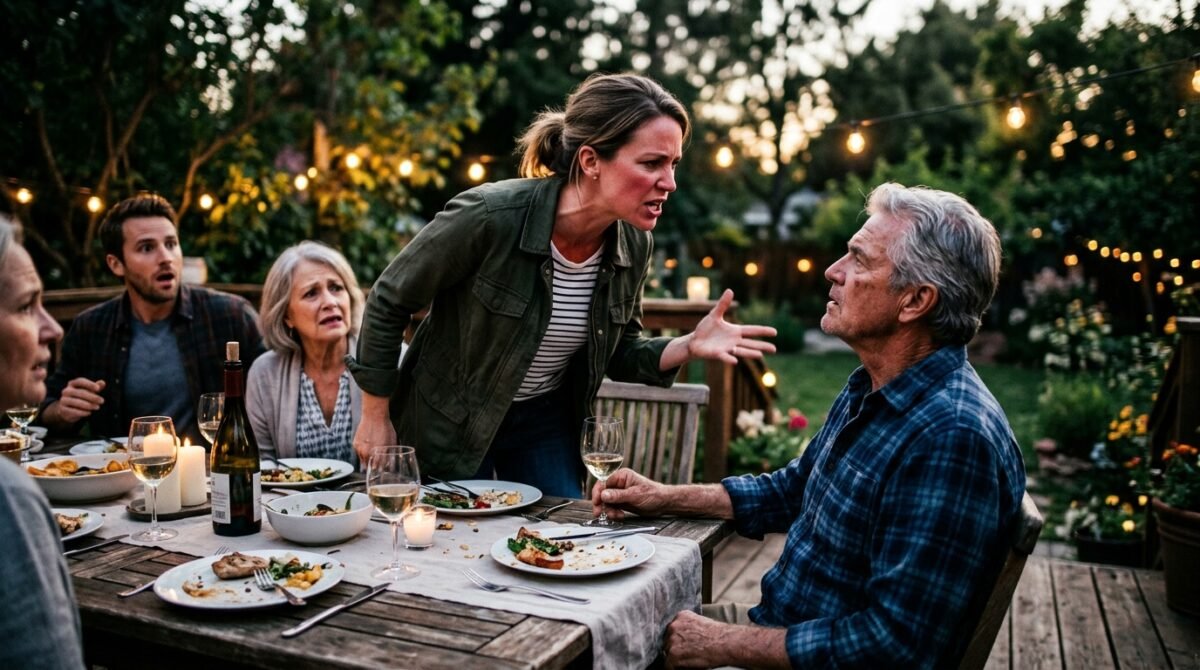
I didn’t wait for a lawyer to write a letter. I drove six hours straight to the town where the farm was located. I knew there was a small family gathering that weekend, the kind that usually revolved around food and small talk, but this time, it was going to be a battlefield. When I walked into the backyard, the atmosphere was already heavy with the scent of charcoal and the rhythmic, annoying ‘thwack’ of pickleball paddles from the court next door.
Gary saw me and froze, his paddle mid-swing. He quickly tried to pivot, walking toward me with a wide, fake smile that didn’t reach his eyes. He approached as if we were just going to have a nice chat about the weather, completely ignoring the fact that he had essentially stolen a landmark. He hugged me, a firm, performative gesture designed to make me feel small and unreasonable.
“Hey, look who decided to show up! I was just about to show you the new setup. It’s perfect, isn’t it? The property was falling apart, niece. I did us all a favor by cleaning up that hazard.”
— Uncle Gary
I pulled away, my voice steady despite the adrenaline surging through me. I didn’t raise my voice, but I made sure everyone at the table could hear me. I asked him, point-blank, where he got the authorization to demolish a structure that belonged to me. The silence that fell over the backyard was deafening. The only sound was the wind rustling through the trees and the distant, mocking sound of the pickleball game continuing on my land.
Gary laughed, a dismissive, patronizing sound. He told me that family ‘doesn’t sue family’ and that I needed to stop being so sentimental about ‘some old pile of boards.’ He told me he’d already spent five thousand dollars on the permit—a permit, I would later find out, that he had forged by misrepresenting himself as the legal owner to the zoning board.
The argument escalated quickly. My aunt joined in, telling me I should be grateful for the ‘improvement.’ My cousin, Sarah, looked down at her plate, avoiding eye contact. It was the moment I realized I was entirely alone in this. Not a single person at that table was willing to stand up for the truth, choosing instead the path of least resistance and the comfort of the status quo.
I told him that the ‘improvement’ was going to cost him more than he could ever imagine. I left before the burgers were even served, the look of disbelief on his face quickly curdling into genuine, cold rage. I wasn’t just mad anymore; I was resolute. I headed straight for the local municipal office to start the formal complaint process.
The Legal Paperwork That Stopped the Games

The following Monday, I walked into the office of a real estate attorney who specialized in historic preservation. When I showed him the photos and the deed, his expression went from professional curiosity to genuine shock. He had actually known my grandfather and remembered the barn fondly. He didn’t just see a property dispute; he saw a travesty of justice.
We filed an emergency injunction within forty-eight hours. The goal was to freeze any further ‘improvements’ and to compel an immediate environmental and historical assessment of the site. The news hit the local town board like a bomb. Gary, who thought he had the town in his pocket through his social club connections, suddenly found himself facing questions about permit fraud and destruction of protected property.
The legal documents were delivered to Gary’s front door by a process server at 7:00 AM. I made sure to be in the area, watching from a distance as he opened the envelope. His face went pale, his morning coffee nearly spilling onto the porch. It was the first time I felt a sense of power in this entire situation. The law was finally catching up to his arrogance.
“You are kidding me, right? You’re going to drag the family name through the mud over some wood and nails? This is absolute insanity. You’re ruining your own inheritance costs with these legal fees.”
— Uncle Gary, Voicemail left at 9:00 AM
He called me, screaming, trying to intimidate me into dropping the suit. He threatened that the family would cut me off, that I would be persona non grata at every holiday, and that the legal fees would eat up the value of the entire property. He didn’t realize that the value of the property meant nothing to me if it was going to be desecrated by his vanity project.
I didn’t answer his calls. I let my attorney handle everything. The sheer volume of paperwork required to address the zoning board’s failures, the illegal demolition, and the environmental impact of the new court was monumental. It felt like I was spending my life savings, but every dollar felt like a deposit on the restoration of my grandfather’s integrity.
The town eventually issued a stop-work order, and the pickleball court was taped off with caution tape. Seeing those yellow plastic strips fluttering in the wind, covering the place where my childhood memories used to stand, was bittersweet. It was a victory, yes, but it was a victory over a ruin. The barn was gone. Now, it was just about making sure he paid for what he had done.
The Day the Truth Came Out in Public
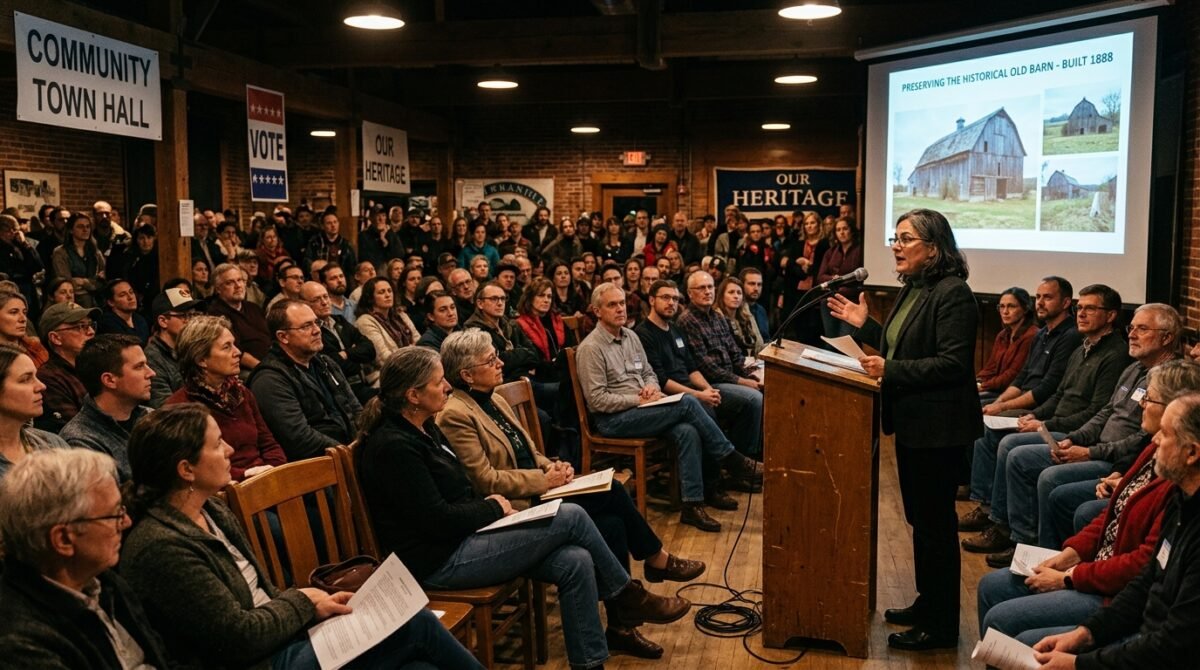
The town hall meeting was where the real reckoning happened. It was a public forum, and I made sure to prepare a presentation that detailed not just the legal violations, but the personal history of the barn. I had photos of my grandfather working on it, historical records from when he bought the farm in 1955, and the original, signed preservation easement document.
Gary arrived with his ‘club’ members, thinking he could bully the town board into retroactively approving his actions. He was wearing his club polo shirt, smiling at everyone as if he were the mayor. When it was my turn to speak, the room went dead silent. I laid out the timeline: the death of my grandfather, the explicit terms of the will, the unpermitted and fraudulent demolition, and the complete lack of respect for local history.
When I projected a photo of the original barn onto the screen next to a photo of his gaudy pickleball court, a collective gasp went through the audience. Even the people who were indifferent to me seemed appalled by the stark contrast between the beautiful, historic architecture and the cheap, commercial plastic court.
“This wasn’t just a demolition. It was a theft of history. My uncle didn’t just build a court; he erased the identity of a land that he never owned, never respected, and never deserved to touch.”
— My testimony before the Town Board
Gary tried to interrupt, shouting that I was being ‘hysterical’ and that the barn was infested with termites—a lie he had clearly concocted on the fly. The Board Chair shut him down, citing his lack of standing and the mounting evidence of his fraudulent permit applications. It was the first time I saw Gary truly lose control. He stood there, red-faced, sputtering as the board voted unanimously to force the removal of the court and a full restoration of the site to its pre-demolition condition at his expense.
The room erupted in applause, not just for me, but for the principle of the thing. People in town had been tired of Gary’s ‘club’ taking over local public spaces. This was a moment of vindication that went far beyond my own personal grudge. It was the community reclaiming its sense of order.
As I walked out of the hall, several neighbors approached me, offering their support. It was a stark contrast to the silence of my own family members, who had either left the room or were avoiding me. The divide was clear: the people who valued legacy and truth were on one side, and the people who valued convenience and entitlement were on the other.
The Financial Fallout of Arrogance
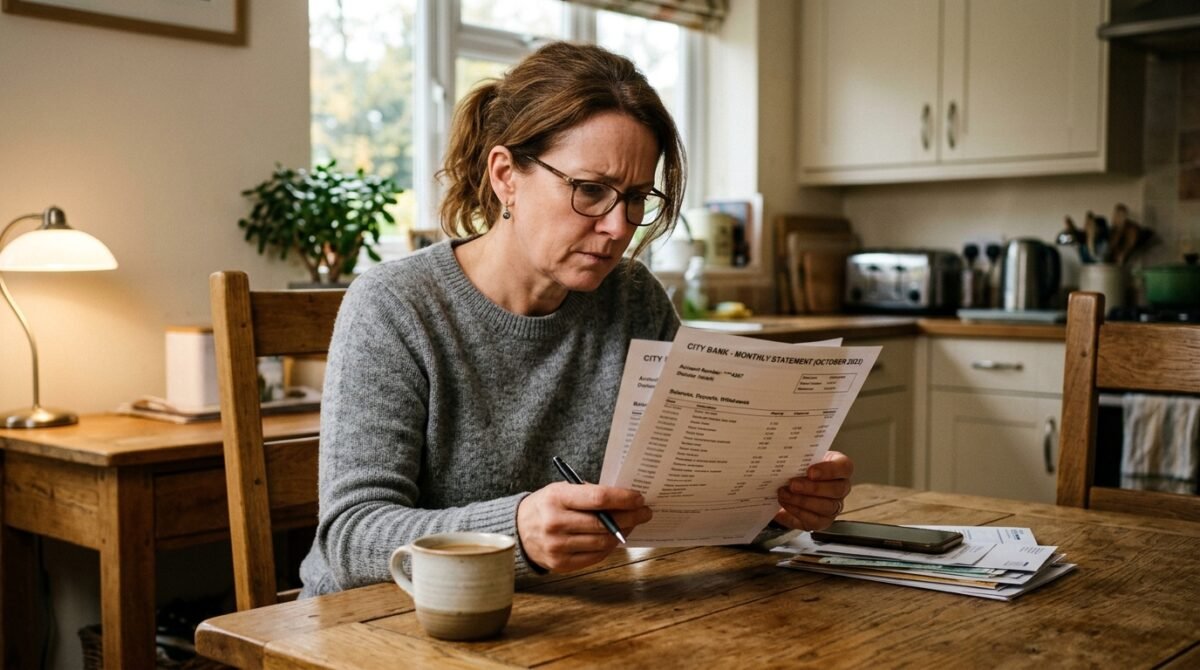
The financial reality of the judgment against Gary was staggering. The court didn’t just order the removal of the pickleball court; they ordered him to pay for the ‘restoration’ of the land. Since the barn couldn’t be brought back to life, the restoration meant clearing the site, remediating the soil contamination from the construction materials, and paying a hefty fine to the town for the fraudulent permits.
The total cost, including my legal fees which were awarded as part of the judgment, was well over $150,000. Gary’s lifestyle, which had always been built on the assumption that he could just take whatever he wanted, suddenly collapsed. His ‘club’ members, seeing the legal heat and the financial liability, abandoned him as quickly as they had joined his pickleball league.
He tried to sell his own home to cover the costs, but with the legal cloud hanging over him, the property value plummeted. He reached out to me through a lawyer, begging for a settlement, offering to pay a fraction of the cost if I dropped the enforcement of the judgment. I told my lawyer that the only settlement I would accept was full payment, or I would put a lien on his property and garnish his wages until the debt was paid.
“I just want to put this behind us. Can’t we reach an agreement? This is ruining my life, and you know that’s not what your grandfather would have wanted.”
— Message from Gary’s lawyer
It was ironic that he suddenly cared about what my grandfather would have wanted. I reminded them that my grandfather would have never wanted his grandson to be bullied out of his inheritance, nor would he have wanted his historic property turned into a commercial court. The refusal was absolute.
The financial pressure began to isolate him from the rest of the family as well. Other relatives, who had previously been happy to use the court, were now distancing themselves from him, terrified that his debt might somehow reach them or that being associated with him would make them targets of public scorn. It was a lonely, bitter end for a man who had thought he was the center of the family.
Seeing the impact of his own greed on his quality of life was not something I took pleasure in, but it was a necessary consequence of his actions. He hadn’t just destroyed a barn; he had tried to destroy my future, and he had failed. He was now living the consequences of his own choices, a reality he had spent his entire life trying to avoid.
Why the Family Dinner Table Went Silent

The next holiday season was the hardest. Usually, the entire family would gather at my aunt’s house, but this year, the invitations were… selective. I wasn’t invited, of course, but neither was Gary. He had become a pariah. The family was split down the middle, with half believing I was a ‘vindictive brat’ and the other half realizing that they couldn’t condone what he had done.
I chose to host my own dinner for the friends who had helped me through the ordeal. It wasn’t the traditional family gathering, but it was filled with genuine love and support. We toasted to the barn, not in mourning, but in appreciation of what it had meant to me. It felt like a fresh start, a way to build a new tradition on the foundation of the old.
Occasionally, I would see updates from the family group chat through a cousin who remained neutral. The tension in those threads was palpable. People were arguing over who was to blame, who should have stopped him, and why the whole thing had blown up so publicly. It was a mess of finger-pointing and denial that only served to highlight how deep the rot in our family dynamics really was.
“Are we really going to act like he’s the only one who did something wrong? Everyone knew he was planning this! We all watched it happen and didn’t say a word. We’re all complicit.”
— Message from a cousin in the family group chat
That message was the most refreshing thing I had read in months. Finally, someone was acknowledging the collective failure of the family. The realization that I was the only one who had the courage to act, while everyone else sat by and watched the destruction, was both lonely and empowering. I didn’t need their approval; I had my own.
I started to realize that the ‘family’ I had been clinging to for years wasn’t really a family at all—it was a social contract that relied on silence and submission. By breaking that contract, I had liberated myself. The silence at their table was the sound of a system failing because it could no longer sustain its own dishonesty.
I sent a short, final message to the group chat, acknowledging that I was moving forward and that I expected everyone to respect my decision to maintain my distance. I blocked the people who were still harassing me, and for the first time in my life, I felt truly free. The trauma of the barn’s destruction was still there, but it was no longer defining me.
The Reddit Verdict: Echoes of Validation

I eventually posted the story on a popular forum, keeping the details vague enough to protect my privacy but specific enough to get an honest take from strangers. The response was overwhelming. Thousands of people chimed in, most of them outraged on my behalf. It was a surreal experience to have thousands of people affirm that I had done the right thing, especially when my own family had been so gaslighting.
The top comment was from someone who had gone through a similar inheritance battle. They warned me about the long-term psychological impact of cutting off family and advised me to keep my boundaries firm. It was the best advice I had received, even from a stranger on the internet. It helped me realize that the guilt I was feeling was a learned behavior, not a natural one.
“NTA. You didn’t sue your uncle; you held him accountable for a criminal act. The fact that he’s family makes it worse, not better. He used your history and your property for his own ego. Don’t let anyone tell you that you’re in the wrong for protecting what’s yours.”
— u/LegalEagleEye (Top Comment, 32.4k upvotes)
There were, of course, the contrarians. A few people argued that I should have ‘talked it out’ more, or that the barn was just wood and the court was ‘good for the town.’ But they were quickly drowned out by the vast majority who understood the sanctity of inheritance and the importance of holding people accountable for their blatant disrespect.
Reading the comments was like reading a collective manifesto on boundaries. People shared their own stories of relatives who had ‘borrowed’ property, stolen heirlooms, or simply overstepped their bounds in the name of ‘family.’ It made me realize that my story was part of a much larger, global conversation about the necessity of boundaries in toxic family systems.
The internet, for all its faults, provided a sense of community that I had been denied in my real life. It gave me the validation I needed to stop doubting my decision. I was right. He was wrong. The consequences were deserved. And I was going to be okay, even if I never spoke to him again.
I started a new thread a week later, updating everyone on the legal progress and the final judgment. The support continued to pour in, and it helped solidify the idea that, in the face of injustice, one must stand tall, regardless of the blood relationship involved.
What Remains of the Legacy
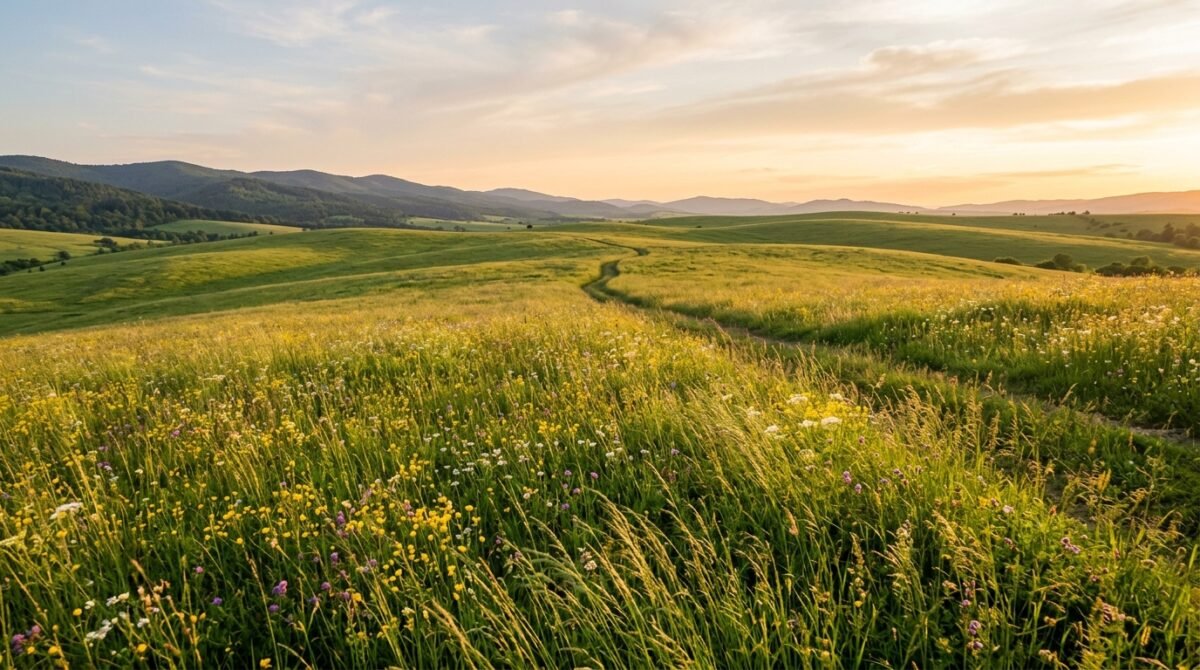
The site where the barn once stood is now a quiet, empty meadow. We had the debris cleared and the soil remediated as ordered. My lawyer and I are currently discussing what to do next. We’ve had a few proposals from local conservation groups to turn the land into a small memorial park for the town, keeping it as an open space in honor of my grandfather’s original vision.
It’s not what I had originally planned, but it feels right. The barn is gone, but the land remains. By preserving it, I am fulfilling the core of my grandfather’s wish: that the farm be something that adds value to the community, not something that is exploited for individual gain. It’s a way to turn a story of destruction into a story of preservation.
I’ve learned a lot about myself in this process. I learned that I am capable of standing up to bullies, that I have a backbone when it counts, and that I don’t need anyone’s permission to do the right thing. I also learned that some relationships are not worth the cost of maintaining, especially when that cost is your own self-respect.
“I am not the person who let my uncle ruin my life. I am the person who reclaimed my dignity and my grandfather’s legacy. And that is worth more than any barn in the world.”
— My internal reflection during the final site visit
I find myself visiting the land often, just to sit in the quiet. The ‘thwack’ of the pickleball paddles is gone, replaced by the sound of birds and the rustle of the wind. It’s a peaceful, honest silence. It reminds me that even when things seem destroyed beyond repair, there is always the possibility of a new beginning.
My uncle is still out there, living with the consequences of his actions, and I hope he’s learning something from this, though I doubt it. But that’s his journey, not mine. My journey is about restoration—not just of the land, but of my own peace of mind. And I’m finally, truly, moving forward.
Reflecting on the Cost of Silence
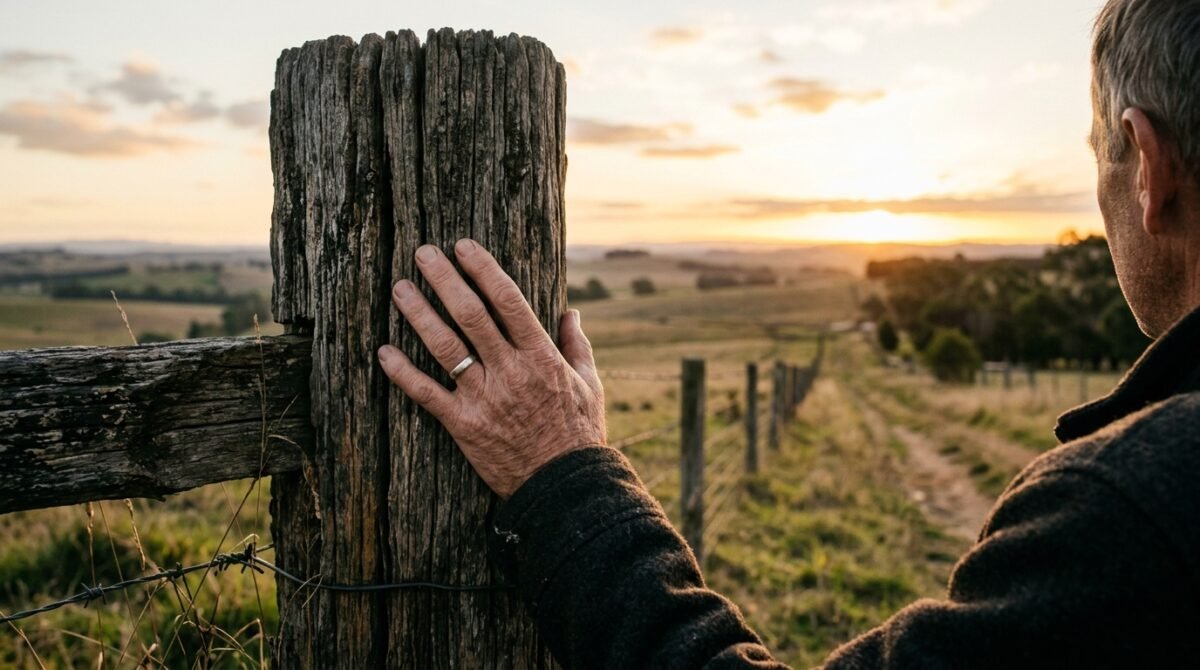
Looking back, the most painful part wasn’t the legal battle or the financial burden; it was the realization that my silence had been the catalyst for his audacity. I had been so worried about being ‘the difficult one’ that I had inadvertently allowed him to think he had free rein. I learned that silence in the face of boundary-crossing isn’t peace; it’s complicity.
I see now how he had been grooming the family for this for years, constantly pushing boundaries and testing what he could get away with. We had all just laughed it off, thinking he was ‘just Gary.’ We had enabled his behavior until it reached a point where he felt entitled to destroy something that didn’t belong to him. The barn was just the final, most visible step in his pattern of entitlement.
I wonder how many other people are currently in the same position, waiting for the ‘right time’ to speak up, or hoping that the person crossing their boundaries will just ‘see reason.’ I hope my story shows them that you don’t have to wait. You don’t have to be polite when your inheritance, your history, or your values are being trampled.
“Silence is the greatest ally of the narcissist. When you stop being silent, you stop being a target and start being a force of nature. Stand your ground.”
— Advice to anyone facing family boundary violations
The lesson I carry with me now is that you have to define your own value system and stick to it, regardless of the pressure from your environment. My grandfather taught me the value of hard work, but this ordeal taught me the value of integrity. Integrity isn’t about doing what’s easy; it’s about doing what’s right, especially when it’s hard.
I am grateful for the barn, for the memories it gave me, and even for the lessons I learned in its destruction. It was a expensive lesson, but one that changed me for the better. I am no longer the person who sits quietly at the table while others tear things down. I am the person who stands up and says: ‘Not here, and not on my watch.’
The Final Verdict of the Heart
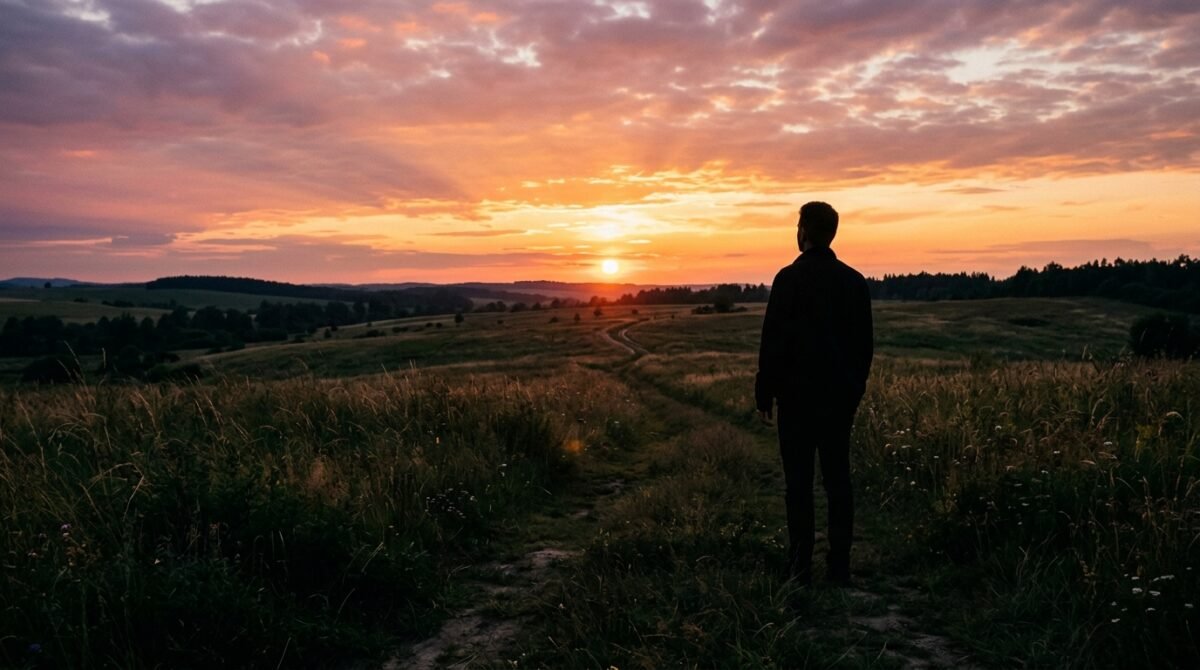
If I could go back and tell my past self one thing, it would be this: don’t be afraid of the fallout. The fallout is just the system purging itself of the rot. It was always going to be uncomfortable, and it was always going to be messy, but it was necessary. You didn’t ruin the family; your uncle ruined the family dynamic, and you were just the one who finally called him out on it.
I’ve reached a place of forgiveness, but it’s not the kind of forgiveness that means forgetting or re-welcoming him into my life. It’s the kind of forgiveness that means I no longer carry the anger with me. I’ve let it go. I’ve accepted that he is who he is, and I am who I am, and we are no longer traveling in the same direction.
The land is now a place for the community, a place where people can go to sit and think and breathe. That, I think, is a fitting legacy for my grandfather. He would have appreciated that it turned into something that served the people rather than just a private monument. He would have been proud of the way I handled it, I think.
“The true measure of a legacy isn’t what is kept, but what is given back. My grandfather understood that, and now, finally, I do too.”
— My final reflection
I am planning a small dedication ceremony for the park next month. It won’t be a big affair, just a few friends and neighbors, and maybe a small plaque to commemorate the history of the barn. It will be a closing of the chapter, a way to mark the end of the turmoil and the beginning of something new and better.
I hope that everyone reading this finds the courage to protect what they value. Whether it’s a barn, a relationship, or your own sense of self-worth—don’t let anyone take it from you, and don’t let anyone tell you that you’re being unreasonable for standing up for it. You owe it to yourself to be your own greatest advocate.
Conclusion
The saga of the Silvercreek Farm barn has fundamentally changed my life. What began as a violation of property rights evolved into a deep, introspective journey about boundaries, family loyalty, and the price of integrity. Standing up to my uncle wasn’t just about a pickleball court; it was about defining the terms of my own existence. I chose to prioritize the legacy of my grandfather and my own peace of mind over the comfort of a toxic family dynamic.
I am now more conscious of the boundaries I set in all aspects of my life. I know that I am capable of defending what is mine, and I have found a new, authentic community that values truth and respect. The barn is gone, but the foundation it provided for my character is stronger than ever. The restoration of the land is a physical reminder that healing is possible, and that even from the ruins of a betrayal, one can cultivate something meaningful and enduring.
What about you? Have you ever had a family member treat your boundaries or your inheritance as if they didn’t exist? Did you stand up for yourself, or did you choose the path of silence? I want to hear your stories in the comments below. Let’s create a space where we can support each other in the pursuit of respect and truth. Is it ever possible to fully reconcile after such a deep betrayal, or is some bridge-burning just part of the process of growing up?
What's your verdict on this dilemma?
Vote below to contribute to the official community consensus.

Have a Dilemma Keeping You Up at Night?
Share your real-life feud, wedding chaos, or relationship crossroads anonymously with our editorial team.
What do you think ?
0 Comments🛡️ Comments are moderated to protect community integrity. Your comment will appear once approved by the editorial team.