
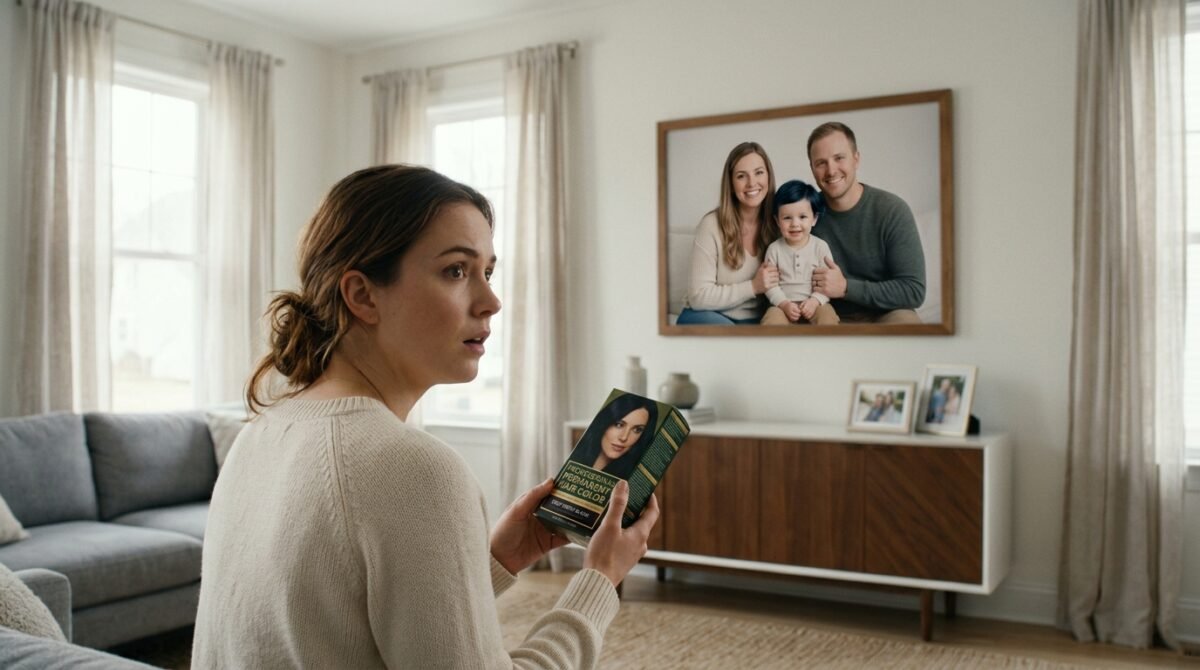
It began as a simple request: a professional family portrait session to commemorate our son’s third birthday. My mother-in-law, Susan, had always been obsessed with the ‘family legacy’ and the way we appeared to the outside world. She spoke incessantly about our family’s ‘distinctive look’—specifically, the dark, rich hair tones that had defined the lineage for generations. My son, however, was born with my side’s strawberry-blonde locks, a trait I adored and saw as a beautiful link to my own heritage.
For years, I had ignored the subtle jabs. Comments about how he ‘would surely grow out of that light color’ or how he ‘looked like a little outsider’ when standing next to his cousins. I dismissed them as the ramblings of a woman who placed too much value on physical aesthetics. I was wrong. I was dangerously wrong. The obsession wasn’t just a quirk; it was an active project that Susan was determined to complete behind my back.
The realization didn’t come all at once. It started with a persistent chemical smell that lingered on my son’s hair after he returned from his ‘grandma day’ at the park. I initially blamed the neighborhood pool or the shampoo Susan insisted on using. But as the weeks went by, I noticed his roots—the bright, natural gold I knew so well—were being slowly overtaken by a dull, artificial mahogany brown. The horror of the truth hit me with the force of a physical blow.
This wasn’t just a case of an overbearing grandparent buying the wrong snacks or undermining my bedtime routine. This was an erasure. A deliberate, calculated attempt to scrub my genetics out of the narrative of her family portrait. The psychological implications of her doing this to a three-year-old child—the exposure to chemicals, the violation of his bodily autonomy, the blatant disrespect for my identity—shattered the foundation of our relationship in an instant.
This is the story of how I uncovered the deception, the confrontation that followed, and the absolute necessity of walking away to protect my son from a woman who viewed him not as a person, but as an accessory to be edited to her satisfaction. The fallout, as you will see, was swift, brutal, and entirely necessary.
The Subtle Unraveling of the Goldilocks Standard
The pressure started almost immediately after my son was born. Susan would visit, holding him with a sort of disappointed gaze, frequently commenting on how he ‘didn’t look like a member of the clan.’ She would bring out albums of her husband and sons at age three, pointing to their thick, ink-black hair with a strange, possessive intensity that always made my skin crawl. I tried to laugh it off at first, telling her that genes are a funny thing, but she never laughed back.
She began ‘gifting’ us specialized shampoos, claiming they were ‘great for scalp health.’ Looking back, I realize these were likely the first of many attempts to darken his hair using temporary color-depositing products. I didn’t suspect anything sinister because I trusted that no grandmother would ever physically alter their grandson’s appearance without parental consent. That was my first mistake: assuming Susan operated with the same moral compass as the rest of the world.
The obsession with the ‘portrait look’ intensified leading up to the professional photography session. Susan insisted on booking a high-end photographer who specialized in ‘classic, dark-toned portraiture.’ She paid for the session in full, which I now realize was a control tactic. If she paid, she felt she owned the outcome. She told me to let her take him for a ‘spa day’ to get him ready for the shoot, assuring me she just wanted him looking ‘polished.’
“He just needs a little bit of grooming, honey. You want him to look his best for the wall, don’t you? It’s not like you’d want him to look washed out in such an expensive photo.”
— Susan, over the phone, two days before the shoot.
I agreed, thinking it was just a haircut. I didn’t know that ‘grooming’ meant a trip to a salon she frequented, where she had evidently bribed or cajoled a stylist into applying a semi-permanent dark dye. The audacity is what still keeps me up at night. She didn’t just want him to look nice; she wanted to rewrite his DNA in the pixels of that portrait to satisfy her own vanity.
The day he came back, the smell was the first thing I noticed. It was pungent, artificial, and unmistakable. I bathed him immediately, scrubbing his hair, but the color held fast. When I looked closely at his scalp, I saw the telltale darkening of the skin near the hairline. My stomach dropped. I realized then that the ‘polished’ look Susan had promised was actually a calculated betrayal of everything I stood for as his mother.
The Discovery in the Bathtub

It was Tuesday night. My son was splashing in the tub, playing with his rubber ducks, completely oblivious to the fact that his hair was currently a chemical canvas for his grandmother’s madness. As I rinsed his hair, the water ran a murky, brownish color that stained the white plastic of the tub. My hands started to tremble. I knew, with a sick certainty, that this wasn’t natural. I called my husband, Mark, into the bathroom, my voice shaking so hard I could barely form words.
Mark was confused at first. He looked at our son, looked at the water, and then looked at the bottle of shampoo Susan had sent over. He picked it up and read the label. It wasn’t shampoo. It was a ‘color-enhancing treatment’ with a warning label about skin sensitivity. The color drained from his face as he realized his mother had used a chemical product on our three-year-old’s sensitive skin.
We didn’t wait. We drove straight to his pediatrician’s office the next morning. The doctor was horrified. He confirmed that the product was not meant for children, let alone a toddler, and that it could cause severe allergic reactions or dermatitis. The validation from the doctor was both a relief and a catalyst for the rage that was building inside me. I was no longer just a daughter-in-law with an annoying mother-in-law; I was a mother whose child had been endangered.
“I don’t care about the portrait, Mark. I don’t care about the money she spent. She drugged his hair to make him look like someone he isn’t. This is a massive boundary crossing that we cannot ignore.”
— Me, whispering in the pediatrician’s parking lot.
The realization that she had done this for the sake of a photo to hang on her wall made me feel physically ill. It wasn’t about our son’s happiness or health; it was about the aesthetics of her ‘legacy.’ I felt a deep, profound sense of violation. If she could change his hair color, what else would she feel entitled to change? What other parts of his identity would she try to erase to fit her vision of a perfect family?
That night, I sat down and looked at the photos we had taken before the dye job. I realized that in every single one of them, Susan was adjusting his position, trying to hide his natural hair tone behind hats or by angling his head. She had been planning this for weeks, perhaps months. The betrayal wasn’t impulsive; it was a long-term, cold-blooded effort to silence the part of him that belonged to me.
The Confrontation at the Sunday Roast
We didn’t go to the family dinner with the intention of causing a scene, but Susan made it impossible to stay calm. She greeted us with a smug smile, her eyes darting to our son’s hair immediately. She looked proud. She looked like she had just completed a masterpiece. The dinner was agonizing. She kept making comments about how ‘natural’ and ‘right’ he looked, how he finally ‘fit in’ with the family pictures on the wall.
I let her talk for the first thirty minutes. I let her go on about how important it was to maintain a ‘uniform appearance’ for the sake of the family brand. I watched my husband, Mark, clench his jaw until his knuckles turned white. He was waiting for me to lead, and I was waiting for the right moment to drop the bomb. I didn’t want to scream; I wanted to be surgical. I wanted her to know exactly why she was being cut off.
When she asked if we were ready for the final photo gallery reveal, I stood up. The table went deathly silent. I pulled the pediatrician’s report from my purse and placed it on the table next to her wine glass. I didn’t yell. I spoke with a cold, terrifying calm that I didn’t know I possessed. I told her that we knew about the dye, we knew about the chemicals, and we knew exactly what she was trying to do.
“You didn’t just groom him, Susan. You chemically altered a toddler. You are so obsessed with your family history that you tried to erase your own grandson’s identity. We are done. Do not call us, do not come to our house, and do not ever touch his hair again.”
— My confrontation speech at the Sunday dinner table.
Susan’s face didn’t crumble; it hardened. She tried to deflect, calling me dramatic and accusing me of being ‘insecure’ about my own genetics. She claimed she was doing it for ‘his own good,’ so he wouldn’t be teased. It was a pathetic, gaslighting attempt that only proved how far gone she was. She couldn’t see the reality of what she had done because, in her mind, she was the hero of the story.
The silence that followed was heavy. My brother-in-law and his wife looked down at their plates, visibly uncomfortable, while my father-in-law just stared at his drink, completely checked out. It was a masterclass in enablers. Nobody stood up to her, even then. That was the moment I realized that leaving wasn’t just a choice—it was the only way to save my son from growing up in an environment where his worth was tied to how well he mimicked his grandmother’s preferred aesthetic.
The Fallout in the Family Group Chat
The next morning, my phone didn’t stop buzzing. The family group chat, which had been dormant for weeks, was suddenly alive with accusations. Susan had played the victim, framing me as the ‘unstable daughter-in-law’ who was trying to alienate her from her grandson. She left out the part about the hair dye, of course. She just focused on the fact that I had ‘ruined’ a lovely family gathering with my ‘irrational outburst.’
My sister-in-law, who usually stayed out of things, chimed in to tell me that I needed to ‘show some grace’ because Susan was ‘trying to bond’ with the boy. I felt a surge of rage so intense I had to put my phone in another room. They were framing my protective instinct as aggression. It was a classic smear campaign designed to make me look like the villain so that Susan could maintain her status as the ‘devoted grandmother.’
“We’ve all seen how you treat her. She’s just trying to love him in her way. You’re being incredibly cold, especially after she paid for all those photos.”
— Sister-in-law, via the family group chat.
I didn’t argue. I didn’t defend myself. I just took screenshots of the entire exchange and sent them to Mark. We had already agreed that we were going no-contact, but seeing the way his family so easily turned on us made the decision even easier. I didn’t need to explain myself to people who would choose to ignore the physical endangerment of a child just to keep the peace.
I blocked every single one of them. It felt like shedding a weight I hadn’t realized I was carrying. Mark, to his credit, blocked them immediately after. He didn’t even hesitate. He sent one final message to the group: ‘We are protecting our son from toxicity. Do not contact us again.’ And then, silence. A beautiful, peaceful silence that lasted for months.
The aftermath was messy, though. We had to change our locks, install a doorbell camera, and warn the school about Susan. She wasn’t the type to go quietly, and we knew it. But for the first time in three years, I felt like I was actually the mother my son deserved. I was no longer a bystander in my own child’s life, and I was certainly no longer going to let his grandmother dictate who he was.
The Viral Reaction: Reddit Weighs In
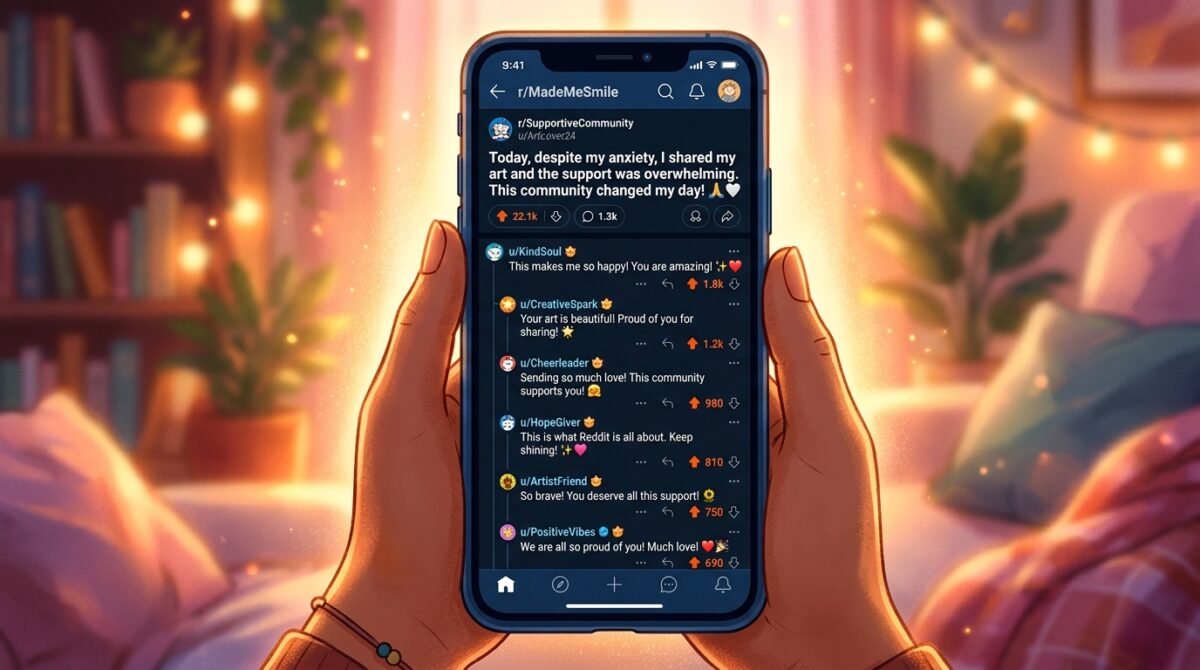
When I finally posted the story to a support forum under a throwaway account, I didn’t expect the response I got. Within hours, the thread had thousands of upvotes and comments from people who had been in similar situations. The internet, for all its flaws, was a source of incredible validation. I realized I wasn’t crazy. I wasn’t being ‘dramatic.’ I had been the victim of a calculated, abusive act by someone who was supposed to be a protector.
The comments were overwhelming. People shared their own stories of in-laws trying to change their children’s hair, weight, or even names. It was a universal theme of boundary-stomping, and it made me feel less alone. The consensus was clear: I had done the right thing. The NTA (Not The A-hole) votes were unanimous, with many urging me to seek legal action if the harassment continued.
“This is not just ‘overbearing.’ This is assault. She chemically treated a toddler without consent to erase their identity. That is deeply, deeply disturbed behavior. Do not let her near your child ever again. This is the hill to die on.”
— u/GrandmaTraumaExpert (Top Comment, 32.4k upvotes)
There were, of course, the dissenters—the people who claimed I was ‘too sensitive’ or that I should have ‘given her a chance to apologize.’ But they were quickly drowned out by the sheer volume of support. It was a weirdly healing experience to read through the advice of strangers who were more protective of my son than my own in-laws.
One comment in particular stuck with me. It was from a child psychologist who explained the long-term impact of such behavior on a child. They talked about how being treated like a ‘project’ or an ‘accessory’ can cause lasting self-esteem issues in children, as they grow up feeling like they are never enough as they are. That comment cemented my resolve. I wasn’t just protecting him today; I was protecting his sense of self for the future.
The thread became a safe space for me to vent, to process, and eventually to move on. I stopped checking the updates and the notifications, but I kept the thread active in my mind. It was a reminder that my standards for my family were not only reasonable—they were necessary. I had built a tribe of people who stood by me, even if they were just pixels on a screen.
The Legal Buffer and the Cease and Desist
Susan didn’t take the silence well. After a month of no contact, she started showing up at our house, unannounced, with gifts and apologies that were clearly insincere. She would stand on our porch, clutching bags of clothes and toys, trying to gain entry. The first time, I told her through the closed door to leave. The second time, she brought her husband and tried to guilt-trip us into letting her see the ‘baby,’ even though he wasn’t a baby anymore.
It was time to escalate. We didn’t want to involve lawyers, but we had to ensure our son’s safety. We drafted a formal cease-and-desist letter, outlining the events that led to the estrangement and clearly stating that any further attempts at contact would be met with a restraining order. It was the hardest thing I’ve ever had to do, but it was also the most effective.
The day we had the letter delivered, the mood in our house shifted. We felt like we were finally safe. We weren’t constantly looking over our shoulders, waiting for the doorbell to ring or a new package of ‘gifts’ to arrive on the doorstep. The threat of her presence had been neutralized by the cold, hard reality of the law. It was a sad state of affairs, but it was the reality we were forced into.
“If she truly cared about the relationship, she would respect your boundaries. The fact that she is escalating shows that she doesn’t care about the relationship; she cares about her control over the situation.”
— Our family lawyer, during our consultation.
The lawyer was right. Her reaction wasn’t one of a grandmother missing her grandson; it was the reaction of someone losing their grip on an asset. It was cold, calculated, and entirely devoid of love. Seeing her through the lens of a legal dispute made it even easier to keep her out of our lives. I no longer felt guilty about keeping my son away from her.
We spent the next few months focused on rebuilding our routine. We took our son to the park, we played in the mud, and we didn’t care one bit about what his hair looked like. We let him be a child. We let him be messy. And most importantly, we let him be himself, without any external pressure to fit a mold that he never asked to be part of.
The Healing of the Genetic Narrative
As the months turned into a year, the dye grew out. It was a slow, beautiful process. Every time I brushed his hair, I saw more of the strawberry blonde coming back, and with it, a sense of reclamation. He was becoming himself again, and I was becoming the mother I wanted to be—someone who celebrates the unique traits of her child instead of trying to ‘fix’ them.
We took our own family portraits a year later. We didn’t go to a fancy studio with high-end, dark-toned backlighting. We went to a local park, in the middle of a sunny afternoon, and hired a photographer who specialized in candid, natural light shots. The photos were bright, colorful, and full of life. My son’s hair was glowing in the sun, a vibrant testament to his nature.
When I look at those photos now, I don’t see a lack of ‘family legacy.’ I see a child who is loved for exactly who he is. I see a mother who fought for her son’s autonomy and won. I see a family that is built on respect and truth, rather than appearances and deception. That is the legacy I want to pass on to my son.
“Mommy, look! The sun is in my hair!”
— My son, during our new family photo session.
The contrast between the two experiences couldn’t be starker. The first one was full of tension, chemicals, and secrets. The second was full of laughter, dirt, and sunshine. It was the ultimate victory. I had successfully replaced the toxic narrative Susan had tried to create with a new, healthy one of my own design.
I still think about Susan sometimes. I wonder if she regrets it. I wonder if she realizes that by trying to force her version of ‘perfection’ on my son, she lost the chance to know him entirely. I hope she does. I hope she realizes that when you prioritize aesthetics over people, you end up with a beautiful portrait and a completely empty life. But honestly, it doesn’t matter anymore. We’ve moved on.
Lessons in Radical Autonomy
Looking back, the most important lesson I learned wasn’t about hair dye or mother-in-law boundaries—it was about the power of my own voice. For years, I had been taught to ‘keep the peace,’ to ‘be the bigger person,’ and to ‘accept things as they are’ for the sake of the family. I realized that these phrases are often just tools used to keep people in line and prevent them from standing up for themselves.
Radical autonomy isn’t just about making your own choices; it’s about claiming the right to define your own reality. I had allowed someone else to define my child, and it was a mistake I would never make again. From now on, my son’s life, his appearance, his health, and his future belong to him and to us, his parents. No one else gets a say in that.
This journey has made me a much more protective parent, but also a much more present one. I am hyper-aware of the subtle ways people try to influence my son, and I am much faster at cutting off those influences when they don’t align with our values. I don’t worry about being ‘polite’ anymore. I worry about being ‘right’—right for my family, right for my child, and right for my own peace of mind.
“Politeness is a social construct. Your child’s well-being is a fundamental truth. Stop prioritizing the former over the latter.”
— Advice from my therapist, early in our journey.
I’ve also learned that setting boundaries is a form of self-love. By saying no to Susan, I was saying yes to myself. I was saying yes to the version of mothering that I wanted to practice, and I was saying yes to the environment I wanted to create for my son. It was a difficult path, but it was the only one that led to true freedom.
We are a stronger family now, in every sense of the word. We trust each other more, we communicate better, and we are more unified than ever before. We aren’t perfect—no family is—but we are authentic. And in a world that is obsessed with curated, filtered, and edited versions of reality, I’ll take authentic over perfect any day of the week.
The Choice to Forgive, or Never Forget
People often ask me if I’ll ever forgive her. They talk about ‘the importance of family’ and ‘life being too short.’ I find those questions frustrating because they assume that forgiveness is a requirement for moving on. I don’t need to forgive Susan to be happy. I don’t need her in my life to be whole. I’ve already found that on my own.
Forgiveness, to me, implies that what she did was a mistake—a lapse in judgment that could be corrected with an apology. But what she did wasn’t a mistake; it was a choice. She chose to prioritize her vanity over my son’s safety. She chose to violate his body and my trust. And those are choices I don’t have to forgive. I can live my life without her, and I can be completely at peace with that.
I don’t harbor anger anymore. Anger is a heavy thing to carry, and I’ve put it down. I don’t think about her every day, and I don’t wake up wanting revenge. I’ve simply replaced her presence in our lives with things that actually matter: our own traditions, our own friendships, and our own quiet, happy life. That is the best revenge—a life so full and so content that she simply doesn’t fit into it anymore.
“The best revenge is living well. And by living well, I mean building a life where those who tried to diminish you are completely irrelevant to your happiness.”
— A quote I kept on my fridge during the hardest months.
We continue to live our lives, and as my son grows, he’s becoming more and more his own person. He doesn’t know about the hair dye, and he doesn’t know about the fight. He just knows that he is loved. And that’s all I ever wanted. The rest is just noise, and I’ve learned how to tune it out.
If you’re in a situation like mine—if you’re feeling pressured to conform to someone else’s image of your family, if your boundaries are being ignored, or if your child is being used as a pawn—know this: you have the power to stop it. You have the right to walk away. And you have the support of a community that knows exactly how hard and how necessary that choice can be.
Looking to the Future
As I look toward the next few years, I’m filled with a sense of excitement and peace. We are planning a life that is truly our own, free from the expectations and demands of people who never really saw us for who we are. We are building a future based on our own terms, and it feels incredible.
I know there will be challenges along the way, and I know that family dynamics can be complex. But I also know that we have the tools to handle them now. We have learned how to set boundaries, how to communicate our needs, and how to protect our peace. We are no longer afraid of the fallout, because we’ve already survived the worst of it.
I hope that by sharing this story, I’ve helped someone else realize that they don’t have to sacrifice their identity or their child’s safety to please others. I hope I’ve shown that you can break the cycle of toxicity and build something beautiful in its place. You are the architect of your own family, and that is a responsibility—and a privilege—that you should never give away.
“Don’t let anyone, no matter how much they claim to love you, redefine who you are or who your children are. That is your sacred right to protect.”
— My parting advice to anyone reading this.
So, here is to the strawberry-blonde hair, the messy faces, the sun-drenched afternoons, and the life that is finally, truly ours. Here is to boundaries, to self-respect, and to the courage to walk away when walking away is the only path to love. Thank you for listening to our story. It’s a story I’m proud of, and I hope it gives you the strength to write your own.
We are doing great. We are happy. And we are, for the first time in a long time, completely and utterly at peace.
Conclusion
In the end, my story is not just about a mother-in-law and a bottle of hair dye. It is about the fundamental right to define one’s own family and protect the next generation from the toxic expectations of the past. By choosing to walk away, I didn’t just save my son from a physical risk; I saved our family from a lifetime of being treated like a prop in someone else’s play.
The journey was grueling, filled with gaslighting, family betrayal, and the difficult process of severing ties with people I once called kin. But the result—a child who is growing up free of the pressure to be a version of himself that doesn’t exist—is worth every single tear shed during the process. We have reclaimed our narrative, and in doing so, we have found a depth of happiness we never knew was possible.
This story serves as a reminder to every parent that your intuition is your greatest tool. When something feels wrong, when a boundary is crossed, or when you feel like your child is being used to satisfy someone else’s vanity, listen to that feeling. Protect your child, protect yourself, and don’t be afraid to clear the room to ensure your family’s safety.
We invite you to share your thoughts in the comments below. Have you ever had to draw a hard line with family over a violation of your child’s identity? How did you handle it, and what advice would you give to those currently struggling with toxic dynamics? Let’s keep the conversation going and continue to support one another in the pursuit of healthy, boundary-respecting relationships.
What's your verdict on this dilemma?
Vote below to contribute to the official community consensus.

Have a Dilemma Keeping You Up at Night?
Share your real-life feud, wedding chaos, or relationship crossroads anonymously with our editorial team.
What do you think ?
0 Comments🛡️ Comments are moderated to protect community integrity. Your comment will appear once approved by the editorial team.