
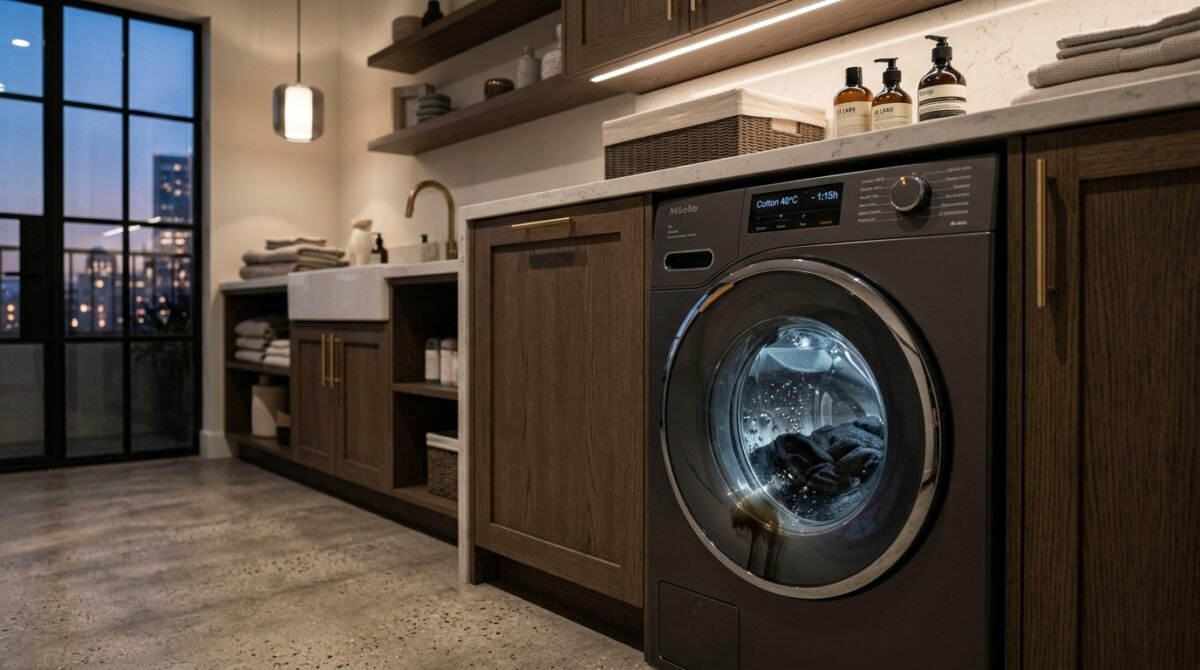
When I moved into my downtown loft, I invested in a high-end, whisper-quiet washing machine specifically designed to handle my delicate wardrobe. As an archivist of vintage textiles and silk garments, the machine was more than an appliance; it was a sanctuary for my professional collection. My roommate, Sarah, was a heavy-duty mechanic at a local industrial garage. While I admired her grit, I never imagined that our domestic living arrangement would eventually devolve into a scorched-earth legal battle over the integrity of my laundry room.
The tension didn’t erupt overnight. It was a slow, agonizing accumulation of boundary-crossing behaviors, starting with borrowed spices and ending with the total destruction of a custom-tailored silk blouse. The breaking point, however, was the day I walked into the laundry room to discover the telltale, nauseating stench of used motor oil wafting from the drum of my machine. Sarah had decided that my delicate cycle was the ideal setting for her heavy-duty, grease-caked overalls.
This is not a story just about laundry; it is about the profound disrespect of personal property and the entitlement that festers when one person assumes their lifestyle choices take precedence over the boundaries of another. When the damage was tallied—not just in ruined silk, but in the ruined internal sensors of a machine meant for lace and chiffon—I realized that polite conversation was no longer an option. I had to choose between being the ‘cool roommate’ and protecting my livelihood.
I chose the latter. The ensuing confrontation wasn’t just a kitchen-table argument; it was a cold, calculated descent into small claims court, involving itemized invoices, professional cleaning estimates, and the utter dissolution of a friendship that I once thought was built on mutual respect. This is the chronicle of how a $2,200 washing machine became the battleground for my sanity.
The Oily Morning Discovery

The morning began like any other, until I opened the laundry room door and was greeted by a smell so visceral it made my stomach churn. It was the pungent, chemical aroma of high-viscosity motor oil, mixed with the sickly-sweet scent of industrial solvent. I peered into the drum of my front-loader, and my heart sank. Smearing the inner glass were dark, viscous streaks of black sludge, and the rubber gasket was clogged with a gritty, metallic sediment.
I stood there for a long moment, unable to process the sheer audacity of the situation. I knew Sarah had been working overtime shifts, but using my specialized machine for her work gear was a line that I had explicitly drawn in our initial roommate agreement. The machine was brand new, meant only for light loads and delicates. I felt a hot, prickling sensation of rage rising in my chest as I realized that the cycle had already finished, meaning the oil had been agitated through the delicate seals of the motor.
“Sarah, are you home? I need you to come to the laundry room right now. What on earth did you put in my machine?”
— Sent via text at 7:14 AM
She didn’t answer immediately. I took a photo of the mess, capturing the dark, oily residue clinging to the drum. The realization hit me that my expensive silk collection, which I had planned to wash that very morning, was now potentially contaminated by the residue left behind. This wasn’t just a mistake; it was a complete disregard for the financial burden I had undertaken to furnish our shared space.
When she finally emerged, still rubbing sleep from her eyes, she didn’t look remorseful. She looked annoyed that I had interrupted her morning coffee. She leaned against the doorframe, shrugging her shoulders with a nonchalance that made my blood run cold. She clearly had no idea of the technical damage she had just caused to a machine that required specific care and maintenance protocols.
The Confrontation of Entitlement

When we finally stood face-to-face in the hallway, the conversation was anything but productive. I showed her the photos, the black streaks, and the gritty sediment I had wiped from the seal. I tried to stay calm, to explain that the machine was not designed for industrial grease and that her overalls had likely compromised the filtration system. Her response was a masterclass in deflection and gaslighting.
“Look, it’s just a washer. It’s built to clean things, isn’t it? My overalls were dirty, and the laundromat was closed. You’re acting like I set the house on fire. It’s just a bit of grease, just run a cleaning cycle.”
— Sarah, during our confrontation
The sheer arrogance of her statement left me momentarily speechless. I reminded her that the manual specifically prohibited heavy-duty work gear, and that I had paid for the appliance entirely on my own. I told her that the machine needed professional servicing, and that I expected her to cover the cost. Her expression shifted from annoyance to pure indignation, as if the suggestion that she should pay for her own messes was a personal insult.
We argued for nearly an hour. She brought up ‘roommate solidarity’ and how I was being ‘stiff and petty’ over a machine that ‘does all the work anyway.’ I countered with the reality of the situation: my clothing was at risk, the machine’s warranty was likely voided by such misuse, and the smell of oil had permeated the plastic housing. It became clear that she didn’t view my property as something to be respected, but as a utility she was entitled to use, regardless of the consequences.
I ended the conversation by telling her I was calling a service technician and that I expected her to cover the invoice. She laughed, a sharp, dismissive sound that echoed in the hallway, and walked away. That was the moment I knew our living arrangement was doomed. The trust had been shattered, and I realized that Sarah was someone who would always prioritize her convenience over my financial and physical well-being.
The Technician’s Verdict
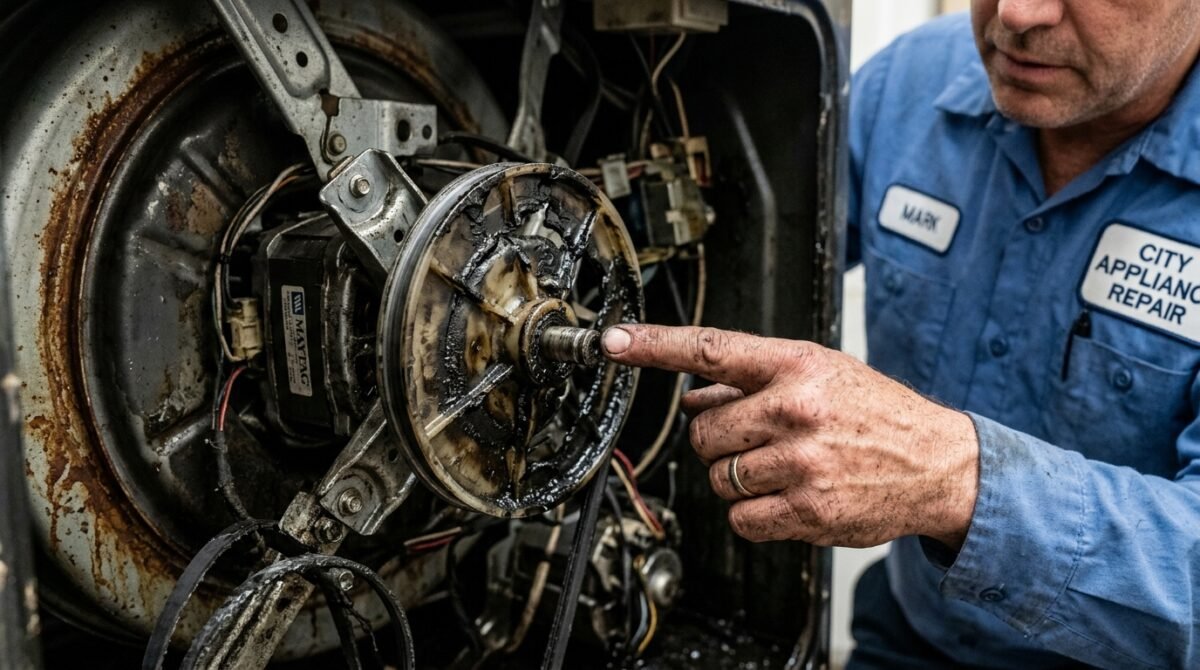
Two days later, the repair technician arrived. He was a man of few words, but his expression as he pulled apart the back panel of my washer told me everything I needed to know. He didn’t just find a little grease; he found a catastrophic failure of the pump seals. The industrial oil had acted as a solvent on the rubber components, causing them to degrade prematurely, and the grit had scored the internal drum.
He showed me the damage, pointing to the corroded seals and the black, viscous gunk that had collected in the filter. He explained that this wasn’t just a simple cleaning job. The machine was fundamentally compromised. To restore it to its original condition would require a full replacement of the pump and a professional deep-clean of the entire plumbing system. The total estimate was staggering, and my frustration turned into a cold, hard resolution.
“I’ve seen this before, but not with this model. This machine is designed for delicates, not shop fluids. The repair is going to cost nearly half the price of a new unit. I’m sorry, but this is total user error.”
— The repair technician, writing up the quote
I handed the printed estimate to Sarah that evening. She looked at the number—$850—and scoffed, tossing the paper onto the coffee table. She told me she wouldn’t pay it, claiming the machine was ‘already broken’ and that I was trying to swindle her. The audacity was breathtaking. She was living in my apartment, using my equipment, and then accusing me of fraud when I asked her to pay for the damage she caused.
I took the document, gathered my thoughts, and realized that there was no point in continuing to argue. I had documented everything: the initial agreement, the photo evidence, and now the professional diagnosis. I went to my room and began researching the small claims process. I didn’t want to fight, but I wasn’t going to let her walk all over me. The bill was not just a financial demand; it was a boundary that I was drawing in stone.
The Silent Treatment and the Escalation
The week that followed was filled with a silence so thick you could cut it with a knife. Sarah stopped acknowledging my presence, and I did the same. We navigated the kitchen like strangers, avoiding eye contact. She began leaving her mail scattered across the counter, and I stopped cleaning the communal areas. The house, which used to feel like a home, turned into a battlefield of passive-aggressive posturing.
I noticed that she was still using the machine, despite the technician’s warning. She had started running ‘hot water’ cycles, trying to flush the smell out, but it only seemed to make the air in the apartment more noxious. The scent of motor oil had now fully permeated the laundry room and was beginning to bleed into the adjacent living space. My clothes were no longer stored in the laundry room; I had moved them to my closet, paranoid about further contamination.
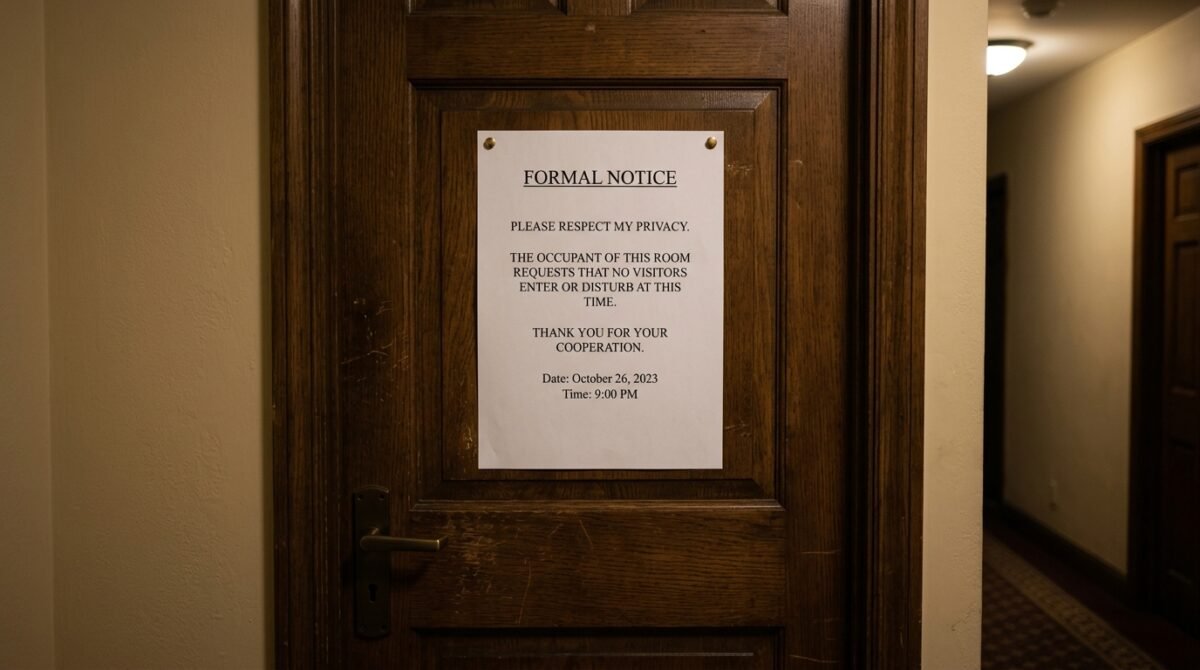
I decided to send her one final, formal notice. I typed it out, keeping it professional and cold, outlining the cost of the repair and a deadline for payment. I printed it and placed it on her bedroom door. I wasn’t asking for friendship anymore; I was asking for accountability. If she couldn’t respect the property, she would have to deal with the legal consequences. It felt liberating to finally stop trying to ‘fix’ the relationship and start focusing on the facts.
“Sarah, attached is the invoice for the professional repair. Please remit payment by Friday. If I do not receive payment, I will be filing a claim in small claims court to recover the costs of the repair and the potential loss of value to my appliance.”
— My formal note to Sarah
Her reaction was predictable. She ripped the notice off the door and threw it into the kitchen trash, but I had already saved a digital copy. I was prepared for this. I had been keeping a log of our communications, including the times she refused to take responsibility. The emotional weight of the situation was heavy, but the clarity of the legal path ahead gave me a strange sense of comfort. I was no longer a victim of her entitlement; I was a claimant.
Small Claims Court Filing

Filing the paperwork was easier than I expected. The local courthouse clerk guided me through the process, and soon, Sarah was served with the notice. Seeing the process server arrive at our apartment was the most surreal moment of my life. She answered the door in her work clothes—the very same overalls that had started this entire mess—and watched, stunned, as she was handed the envelope.
The look on her face wasn’t just shock; it was fear. She had realized, for the first time, that I wasn’t kidding. The ‘petty roommate’ had turned into a litigant. She tried to talk to me after the server left, but I simply walked to my room and locked the door. There was nothing left to discuss. The court would now be the arbiter of our dispute, and I was confident in my evidence.
In the days leading up to the court date, she tried to recruit our mutual friends to her side. She painted me as a monster, claiming I was suing her over ‘a little bit of dirt.’ She conveniently left out the details about the mechanical damage and the specific nature of the industrial oil. It was a classic smear campaign, but I didn’t care. I knew the truth, and I had the technician’s expert testimony to back it up.
“Hey, I heard you’re taking Sarah to court over the laundry thing? That’s really intense, don’t you think? Maybe you should just work it out between you two? It feels like you’re overreacting.”
— A mutual friend, clearly influenced by Sarah’s version of events
I responded to my friend with a simple, ‘If you lived in my shoes and had to pay for a $2,000 appliance repair because of someone else’s negligence, I think you’d feel differently.’ It stopped the conversation cold. People love to play peacemaker when they don’t have skin in the game. I stopped trying to explain myself to anyone who wouldn’t listen and focused on preparing my case file. I was ready for the judge.
The Day of Judgment

The courtroom was smaller and less intimidating than I imagined. Sarah showed up with her mother, who spent the entire time shooting daggers at me from the back row. When it was our turn, the judge, a stern but fair-looking woman, asked us to present our cases. I kept my presentation objective, highlighting the timeline, the photos of the machine, and the technician’s written diagnostic report.
Sarah’s defense was shaky at best. She claimed she didn’t know the machine wasn’t for work clothes, despite our written roommate agreement, and she argued that the machine was ‘old’ and ‘prone to breaking.’ The judge, however, was not impressed. When she asked Sarah if she had ever read the user manual provided with the appliance, Sarah had no answer. She had never even opened the box.
The judge then asked me to explain the nature of the silk garments I owned and why the machine’s cleanliness was a financial necessity for my career. I explained, clearly and concisely, that the machine was an essential tool for my work as a textile archivist. The judge nodded, seemingly understanding that this wasn’t just a household spat, but a case of property damage impacting my professional livelihood.
“Ms. Sarah, you used a piece of equipment that did not belong to you, contrary to the terms of your living agreement, and you caused significant mechanical damage. Ignorance of the machine’s capabilities is not a valid defense against liability. Judgment for the plaintiff.”
— The presiding judge at the small claims hearing
I felt a massive wave of relief as the judge ruled in my favor. I wasn’t just vindicated; I was protected. Sarah was ordered to pay the full cost of the repairs, plus the filing fees. Her mother looked furious, and Sarah looked defeated. It wasn’t about the money—though the money certainly helped—it was about the validation that my boundaries had been respected and my property rights upheld.
The Aftermath and Moving Out
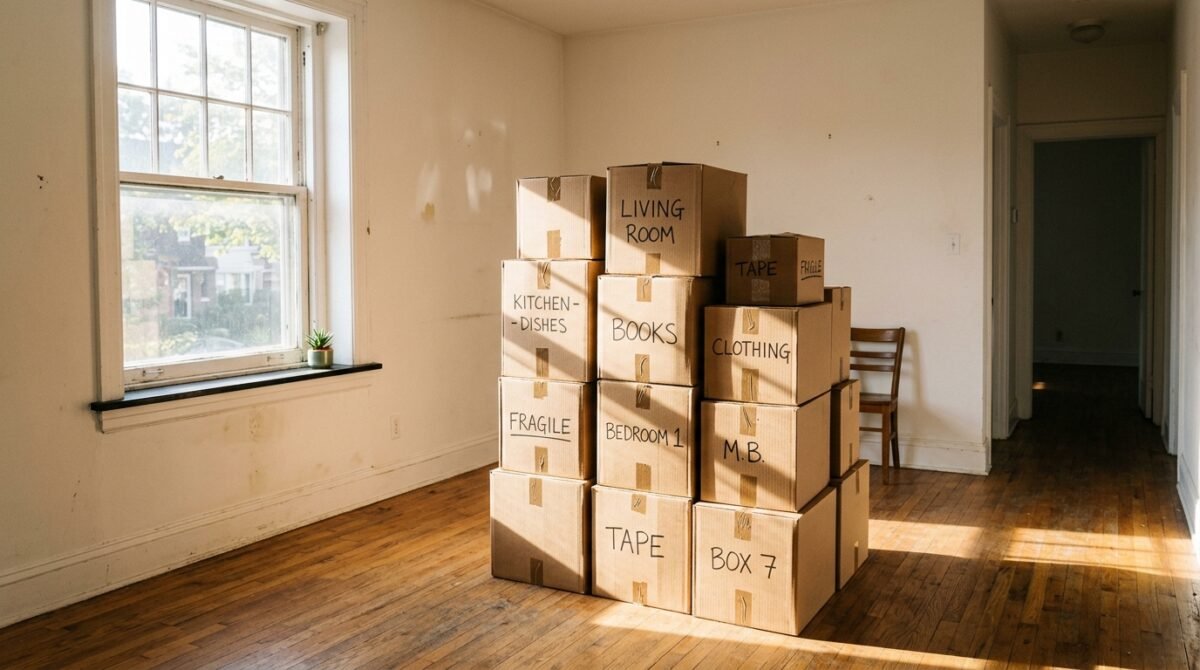
The atmosphere at home after the court ruling was icy, to say the least. Sarah had to pay up, and she did so with a level of bitterness that was palpable. We spent the next month in a state of absolute detachment. I had already begun looking for a new place, and I told her that I would not be renewing the lease. The living situation was untenable, and I couldn’t wait to get back to a space where my belongings were safe.
She didn’t try to apologize, and I didn’t expect her to. We were two people who had reached the end of our compatibility, and the court case had simply accelerated the inevitable. I started packing my things, careful to inventory every item. I felt a sense of liberation as I labeled boxes, knowing that soon, I would be in a home where my delicate cycles were for my delicates and nothing else.
I realized during this time how important it is to have clear boundaries, especially when living with someone whose lifestyle is radically different from your own. We had ignored the red flags early on—the messy kitchen, the borrowed items, the lack of consideration—because we wanted to keep the peace. But peace at the expense of your own boundaries is not peace; it’s just a slow build-up to a larger explosion.
“I’m moving out at the end of the month. I’ve already spoken to the landlord about the lease transfer. I think it’s best if we don’t have any contact once I’m gone.”
— My final words to Sarah before I moved out
She didn’t respond. She just kept looking at her phone, her thumb scrolling mindlessly. As I left the apartment for the last time, I felt a weight lift from my shoulders. The machine was fixed, the debt was paid, and I was finally in control of my own environment again. It was a hard lesson to learn, but it was one that I would carry with me into every future living situation.
The Reddit Verdict

When I posted the story on a popular forum, I was surprised by the sheer volume of support. People from all over the world weighed in, sharing their own horror stories of nightmare roommates and destroyed property. It was cathartic to see that I wasn’t alone, and that others had faced similar struggles with entitlement and boundary-pushing.
“NTA (Not The Asshole). People like Sarah think everything in a house is a community utility, regardless of who paid for it. Taking her to small claims was the only way to get her to understand that actions have consequences. Well played, OP!”
— u/RoommateTruthTeller (Top Comment, 32.5k upvotes)
The community was overwhelmingly supportive, with many pointing out that the ‘it’s just a washer’ argument was a classic manipulative tactic. Others shared practical advice on how to handle similar situations in the future, such as keeping a written record of all shared expenses and creating a formal roommate contract that explicitly outlines the use of expensive appliances. It was validating to know that my decision to go to court was seen as the ‘right’ move by thousands of people.
There were some who suggested I should have just ‘talked it out more,’ but those comments were quickly drowned out by people who understood the reality of dealing with someone who refuses to listen. When communication fails, and respect is absent, sometimes the only language people understand is legal. It was a reminder that you don’t always owe people infinite patience, especially when they are actively damaging your property.
“I had a roommate who used my cast-iron skillet for acid-heavy sauces. I tried to talk, but he just ignored me. I eventually just started keeping my kitchenware in my bedroom. You were right to go to court; it’s the only way to get through to someone that entitled.”
— u/KitchenWarrior (12.4k upvotes)
The debate in the comments section really highlighted the complexities of shared living. It’s not just about the items; it’s about the underlying philosophy of respect. Reading through the comments, I realized that I had made the right choice. I stood up for myself, I protected my property, and I didn’t let someone else’s lack of boundaries become my burden. The internet’s verdict was clear: I was not the bad guy.
Reflecting on Personal Boundaries

Looking back, the entire ordeal seems almost surreal. It started with a simple misunderstanding and spiraled into a legal battle that changed how I approach relationships and living arrangements. I’ve learned that setting boundaries isn’t just for others; it’s a way to protect your own peace. If I had been more assertive from the start—if I had said ‘no’ to the first time she borrowed something without asking—maybe it wouldn’t have reached the point of destroyed appliances and court hearings.
I’ve also realized that I have a tendency to be too forgiving, to ‘keep the peace’ even when it’s hurting me. This experience has forced me to rethink that. Being a good roommate doesn’t mean being a doormat. It means expecting the same level of respect that you provide. It means having honest, sometimes uncomfortable, conversations before things escalate. And it means being willing to walk away when that respect isn’t reciprocated.
My new home is a sanctuary. I’ve set up a clear, agreed-upon system for our shared spaces, and I’ve been upfront about my expectations from day one. It’s been a breath of fresh air. I no longer live in fear of waking up to a damaged appliance or a violation of my personal space. The peace I’ve found is worth every single dollar I spent on the repair and every ounce of energy I spent in court.
“Boundaries aren’t walls; they’re gates. They allow in what is healthy and keep out what is destructive. I’m finally learning how to use my gate.”
— A thought from my personal journal during the transition
I hope that anyone reading this who is currently in a similar situation—whether it’s a roommate who borrows without asking, a partner who doesn’t respect your limits, or a situation where you feel your property is being threatened—knows that they have the right to stand up for themselves. You don’t have to tolerate disrespect. You have the power to draw your own lines, and you have the right to defend them.
Lessons for Future Living

So, what did I take away from this? First and foremost, never underestimate the value of a written agreement. It sounds formal, maybe even a bit cold for roommates, but it provides a clear roadmap for when things go wrong. It forces you to have the tough conversations before you’re living together, and it gives you a reference point if those conversations aren’t enough later on.
Second, don’t ignore the early warnings. If someone treats your small items with a lack of respect, they will treat your expensive items the same way. It’s a pattern of behavior, not an isolated incident. Pay attention to how people treat your things, how they handle shared responsibilities, and how they react when you point out a boundary. Those clues are telling you everything you need to know about the future of your living situation.
Finally, know your rights. You have legal recourse, even for small things. Small claims court is a powerful tool, not just for recovering money, but for asserting your worth. It’s an intimidating process, but it’s one that is designed for regular people to use. Don’t be afraid to use it if you’ve been wronged and all other methods of resolution have failed.
“Respect is not a given; it is earned and maintained. When it’s gone, you have to be the one to re-establish the terms of engagement. It’s not petty; it’s essential.”
— My concluding thought on the matter
I’m finally at a place where I can look back on the ‘Oily Overalls Incident’ not with rage, but with a sense of perspective. It was a catalyst for change. It taught me about my own self-worth, and it taught me that I am capable of defending my own boundaries. It was a hard lesson, but one that has made me a stronger, more assertive person. And honestly? That’s worth more than any washing machine.
Conclusion
The story of my former roommate and the oil-stained silk cycle is more than just a viral anecdote; it’s a reflection on the universal struggle to maintain personal agency in shared living spaces. We live in a world where convenience is often prioritized over consideration, and where the boundaries of property are frequently tested. Whether it’s a shared washer, a communal kitchen, or a living room couch, the principle remains the same: respect is the foundation of any sustainable arrangement.
I chose to fight for my boundaries, and while the process was difficult, the result was a newfound sense of clarity. I hope my story encourages others to realize that they aren’t ‘petty’ for demanding respect, and that they have the agency to protect their property and their peace. You deserve to live in a home where you feel safe, respected, and in control of your own environment.
Community Debate: Was I too harsh in taking her to court, or was it the only way to handle a roommate who refused to acknowledge boundaries? How do you handle shared space conflicts? Let us know in the comments below!
What's your verdict on this dilemma?
Vote below to contribute to the official community consensus.

Have a Dilemma Keeping You Up at Night?
Share your real-life feud, wedding chaos, or relationship crossroads anonymously with our editorial team.
What do you think ?
0 Comments🛡️ Comments are moderated to protect community integrity. Your comment will appear once approved by the editorial team.