

Birthdays, for me, have always been about intimacy. As I approached my 30th, I wanted nothing more than a refined, quiet evening—a private tasting menu prepared by a renowned local chef, limited to a curated guest list of five people who actually knew me. I spent months scouting the venue, finalizing the menu, and fronting the $1,500 deposit to secure the space. It was supposed to be a celebration of growth, maturity, and genuine connection. I didn’t want a loud bar or a rowdy crowd; I wanted conversation, wine pairings, and the kind of memories that stay with you long after the candles are blown out.
Then there was Jessica. My ‘best’ friend since college, a woman who treated every social gathering as a networking opportunity for her brand, or as she called it, her ‘influence.’ When I sent out the private invites, I was very specific: no plus-ones, no surprises, just us. Jessica acknowledged the invite with an overly enthusiastic emoji, which, in hindsight, should have been a red flag. She had a history of making things about her, but I always excused it as her ‘vivacious personality.’ I was wrong. I was dangerously wrong.
The week leading up to the dinner, the air felt charged with a strange, unspoken tension. Jessica kept texting me, asking for ‘extra chair capacity’ at the venue, claiming she had work colleagues visiting from out of town who would just ‘love to meet the birthday girl.’ I stood my ground, citing the restaurant’s strict capacity and the specific nature of the Chef’s Table arrangement. ‘It’s a private tasting, Jess. It’s physically impossible to add more seats,’ I told her, feeling the prickle of irritation at the back of my neck.
I should have revoked her invitation then and there. Instead, I clung to the hope that she would respect my one boundary. The day of the dinner arrived, and the restaurant—a jewel box of a space with soft amber lighting—looked perfect. I was dressed in a dress I’d saved for months, feeling a rare moment of peace. That peace lasted exactly until the reservation time, when the front door swung open and Jessica walked in, not alone, not with her partner, but flanked by ten people I had never seen in my life.
As the maitre d’ signaled to me, his face a mask of professional concern, I watched my birthday vision disintegrate in real-time. Jessica beamed, waving a hand at her entourage as if she were leading a royal procession. The reality of the situation hit me with the force of a physical blow: she hadn’t just ignored my request; she had completely hijacked my event, turning my intimate dinner into a buffet for her social media following. And there I sat, the person who had paid for the privilege, watching as the chef walked out with his first course, looking clearly confused by the sudden influx of bodies.
The Grand Entrance of the Uninvited Ten

The moment Jessica and her entourage crossed the threshold, the atmosphere in the restaurant shifted from refined elegance to chaotic clamor. The private space, designed for six, was now being crammed with twelve people, pushing chairs together, scraping against the hardwood floor in a symphony of annoyance. My invited guests looked at me with varying degrees of shock and confusion, their eyes darting between me and the unexpected newcomers who were already busy snapping photos for their Instagram stories.
Jessica didn’t even look at me for the first five minutes. She was too busy directing her ‘guests’—a collection of influencers and acquaintances she’d met at a launch event the night before—to their seats. She grabbed the head of the table, the seat I had designated for myself, and slid into it with an air of practiced ease. When she finally locked eyes with me, she offered a dismissive, airy wave. ‘Oh, honey, I hope you don’t mind! They were just so dying to try this place, and I knew you wouldn’t want to exclude anyone. Let’s make this a night to remember, right?’
I stood there, paralyzed by the sheer audacity. My heart was hammering against my ribs, not from excitement, but from a growing, cold rage. The chef, a man who took his craft very seriously, looked at me with a silent question in his eyes. He had prepared six plates of delicate, hand-foraged mushrooms and truffle emulsion. He did not have twelve more portions ready. The logistical nightmare was only just beginning, and Jessica seemed entirely oblivious to the fact that she had just ruined the most expensive meal I had ever planned.
“I just assumed you’d be happy for the extra energy! It’s your birthday, we need a crowd to make it feel like a real party. You’re being so stiff, relax!”
— Jessica, minutes after hijacking the event
I walked over to her, keeping my voice low but steady. ‘Jessica, this is a private tasting menu. It is not an open event. I have paid for six people. The restaurant does not have the capacity, the ingredients, or the seating for these people. You need to tell them to leave.’
She laughed, a sharp, brittle sound that drew the attention of the surrounding tables. ‘Don’t be dramatic. Just put it on your card and we’ll settle up later. It’s not like you can’t afford it, and honestly, you should be thanking me for bringing such a great group of people. This is going to be the most tagged dinner in the city tonight.’ She turned back to her group, leaving me standing in the middle of the room, my hands trembling as I realized exactly who I was dealing with.
The Culinary Catastrophe Unfolds
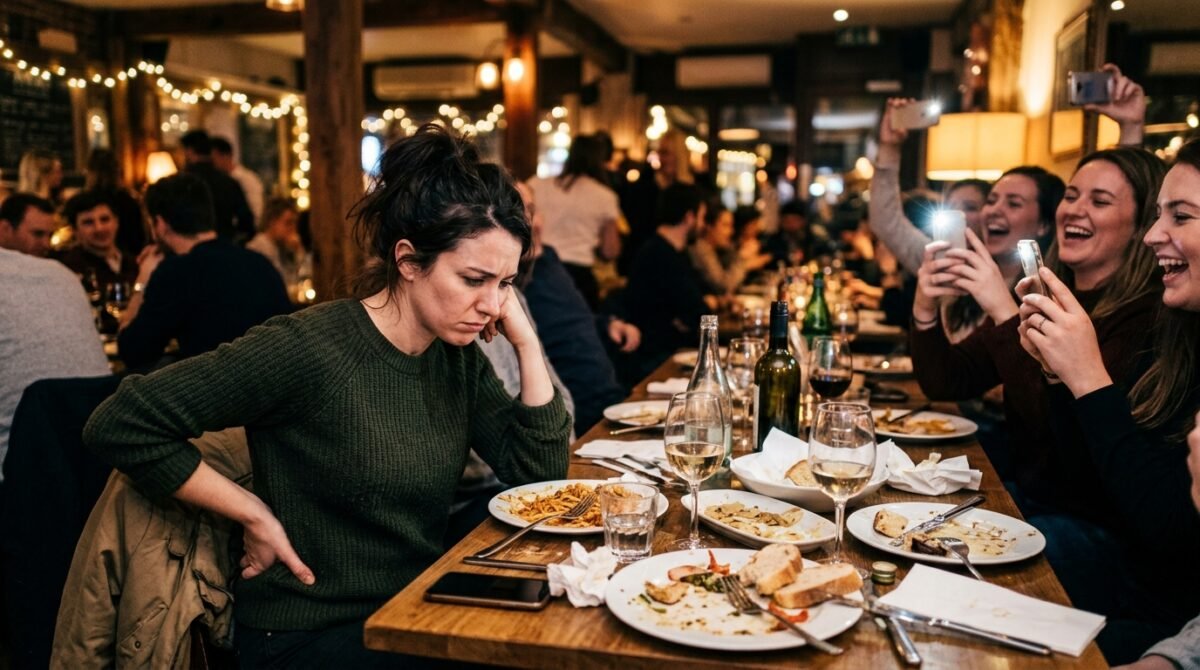
The dinner service was, predictably, a disaster of epic proportions. The chef, clearly frustrated by the lack of notice, had to scramble to prepare extra courses, which meant the pacing of the meal was completely destroyed. The exquisite tasting menu I had spent weeks discussing with the kitchen staff devolved into a hurried, mediocre buffet of whatever the kitchen could cobble together on short notice. My friends, who had come to celebrate with me, were relegated to the sidelines, forced to engage with Jessica’s ‘entourage’ instead of the conversation we had planned.
Every time I tried to steer the conversation back to the birthday celebration, Jessica would interrupt with a loud announcement, demanding a toast or asking the table to perform for her camera. ‘Everyone, look this way! Say cheese for the birthday girl!’ she’d shout, shoving a phone into my face while I was trying to eat. I felt like an extra in my own movie, a supporting character in a narrative I hadn’t agreed to participate in. The food, which I had paid a premium for, went largely ignored as people spent more time arranging their plates for photos than actually enjoying the meal.
The staff was visibly stressed, darting around the table to accommodate the doubled headcount. I saw the manager whispering with the chef, and I knew that the final bill would be inflated not just by the extra food, but by the ‘service disruption’ fees they were likely going to add. I felt a sick knot in my stomach. The cost of this evening was ballooning by the minute, and I was the one who had handed over my credit card upon arrival to secure the room.
I tried to confront Jessica again between courses, but she kept dodging me, moving to a different part of the table or engaging someone else in a loud, performative conversation. She was high on her own importance, drunk on the attention of strangers who she had promised a ‘free’ high-end dinner. I realized then that she hadn’t just invited them; she had sold them on the idea that they were guests of honor. She had promised them a night they didn’t have to pay for, and she had used my budget to fund her own social currency.
“I’m not paying for twelve extra people because you wanted to play hostess with my money. You have until the end of the meal to figure out how to handle their portion.”
— My whispered ultimatum to Jessica
She just rolled her eyes, sipping her wine. ‘You are so obsessed with money. It’s just a dinner, stop acting like you’re bankrupting yourself.’ Her lack of remorse was the final nail in the coffin of our friendship. I didn’t say another word. I simply watched, counting the minutes until I could end this charade and take back control of my night.
The Moment of Truth at the Register
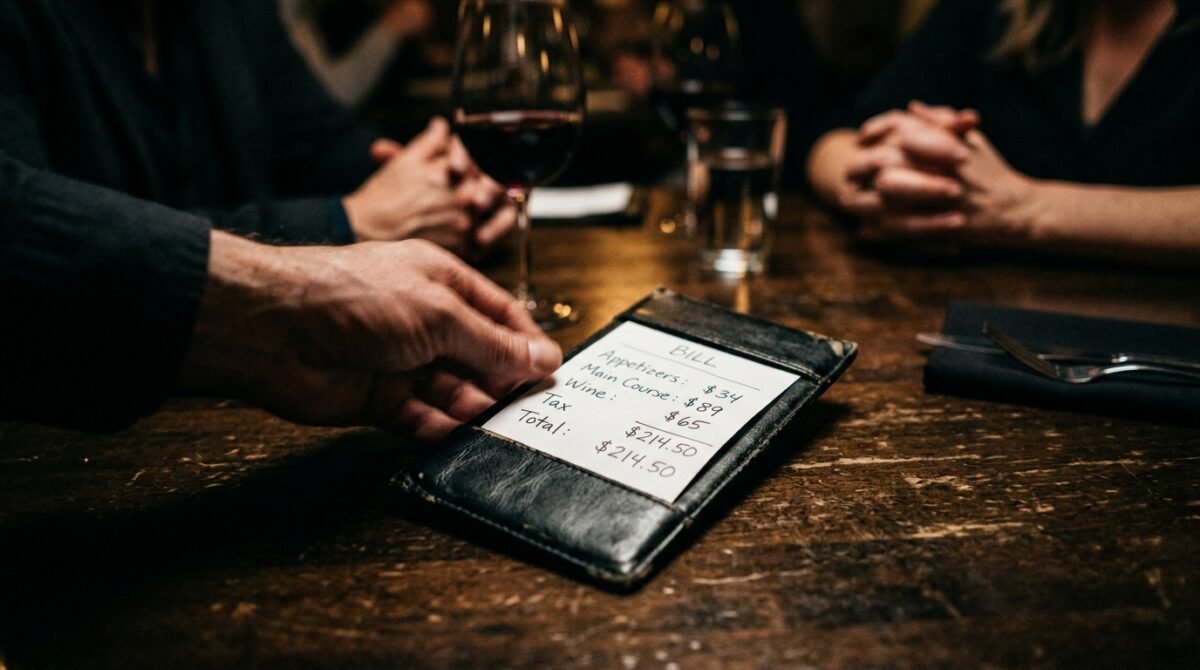
When the final course was served—a dessert that looked like an afterthought—I signaled for the bill. The manager approached, his face grim. He placed a leather folder on the table, and for a moment, the entire table went quiet. Jessica, seemingly sensing that the time for payment had arrived, suddenly became very interested in the contents of her handbag. I opened the folder. The total was staggering. It wasn’t just the fixed-price menu; it was the additional servings, the extra bottles of wine her ‘entourage’ had ordered, and the heavy service charge for the last-minute stress on the staff.
I didn’t blink. I didn’t panic. I just looked at the total, then looked at the manager. ‘I would like to pay for the first six guests, as per my original reservation, and I would like the remainder of the tab, including all additional food, drink, and the associated gratuity for the extra service, to be billed to this person.’ I pointed directly at Jessica. The air in the room seemed to vanish. Even her entourage stopped their chatter, eyes widening as the reality of the situation dawned on them.
Jessica’s face went from pale to a deep, splotchy red. ‘What? You can’t do that! This is your birthday! You’re the host!’ Her voice was thin, lacking the bravado she’d displayed all evening. The manager looked at her, his expression entirely neutral. ‘Ma’am, the primary booking was for six. The additional ten individuals were added at your request. We have a policy regarding unauthorized guest additions, and the guest who requested the change is responsible for the balance.’
The silence was deafening. Her ‘friends’ were now looking at her, their expressions shifting from amusement to annoyance. They weren’t just guests anymore; they were the ones who were going to have to foot the bill for an extremely overpriced, disorganized dinner. Jessica scrambled, fumbling for her wallet, then her phone, trying to make a call, trying to find a way out of the hole she had dug for herself. She wasn’t an influencer anymore; she was just someone who had promised a free meal and was now facing the consequences of her own vanity.
“You invited them, Jessica. You told them to come. You told them it was a birthday surprise. I’m sure they’ll be happy to contribute their share to the total, given that they’ve enjoyed the meal.”
— My parting words to Jessica at the table
I stood up, paid my portion, and walked out the door, leaving her to handle the fallout. I didn’t look back. I didn’t care about the scene, the yelling, or the inevitable social media fallout. I had reclaimed my dignity, and for the first time all night, I felt the weight lift from my shoulders. The birthday wasn’t what I had imagined, but it was certainly a night I would never, ever forget.
The Immediate Social Media Fallout

By the time I reached my car, my phone was already exploding with notifications. Jessica had taken to her Instagram Stories, posting a blurry video of the restaurant with the caption ‘Some people just don’t know how to share the love. So disappointed by the lack of birthday spirit.’ Her followers, who didn’t know the full story, were already jumping to her defense, leaving comments like ‘so rude’ and ‘why would you do that to your best friend?’ under my most recent photos.
It was a masterclass in manipulation. She had painted herself as the victim, the ‘generous’ friend who had tried to throw a party, only to be shut down by a cold, stingy birthday girl. I sat in my car for a long time, watching the likes pile up on her posts. It would have been easy to jump on, to post the truth, to reveal the receipts. But I realized that doing so would only validate her need for the spotlight. She wanted a war; she wanted the drama. I wanted peace.
I muted her. I didn’t block her immediately—I wanted to see if she would have the audacity to reach out—but I took myself out of the narrative. I reached out to the three friends I had actually invited, apologized for the ruined dinner, and invited them for brunch the following weekend on me. They were all incredibly supportive, having seen the entire disaster unfold. They confirmed what I already knew: she had been bragging to everyone about how she was going to ‘surprise’ me with a massive group.
The next morning, the texts started rolling in. They weren’t from Jessica, but from people I didn’t know—members of her entourage. They were angry, confused, and embarrassed. They had been told that the dinner was ‘pre-paid’ and that they were ‘guests of honor.’ They were now being hounded by the restaurant to pay their share of the massive, inflated bill. Jessica had apparently left the restaurant in a hurry, leaving her credit card information with the manager, but the card had been declined twice.
“Hey, I just got a call from the restaurant saying the card on file was declined. I was told this was your treat. What is going on? I’m not paying for a $200 meal I didn’t even order.”
— A text from one of Jessica’s ‘guests’
I didn’t respond to any of them. I simply replied with the contact information for the restaurant manager and a brief, professional note: ‘I am not responsible for the billing of the additional guests. Please resolve this with the restaurant directly.’ It was the most satisfying text I had ever sent. I had established the boundary, and I was going to hold it, no matter how much the social media drama escalated.
The Anatomy of a Narcissist’s Response

Three days after the dinner, Jessica finally reached out. It wasn’t an apology, of course. That would require a level of self-awareness she didn’t possess. It was a long, rambling voice note, filled with gaslighting and pseudo-psychological jargon. She talked about how I had ‘abandoned her in a moment of vulnerability’ and how my ‘inability to be flexible’ was a sign of a deeper emotional issue. She even managed to loop in the restaurant’s manager, claiming he had been ‘hostile’ and ‘unprofessional’ toward her.
Listening to the message, I felt a strange sense of detachment. It was like watching a documentary about a species I no longer had to interact with. She was still trying to frame the entire event as if she had done me a favor. She claimed that by inviting those people, she was helping me build my professional network and that I was ‘throwing away opportunities’ because I was too focused on ‘petty, transactional’ concerns. It was classic deflection, a desperate attempt to rewrite history to protect her own ego.
I realized then that this wasn’t just about a dinner. This was the culmination of years of her treating my time, my resources, and my boundaries as things she could use at her convenience. She had always been the ‘main character,’ and I had been the reliable, quiet friend who picked up the pieces. By refusing to pay for her mistake, I had disrupted the entire power dynamic of our friendship. I had stopped being a utility and started being a person with agency.
I didn’t reply to the voice note. I didn’t offer a rebuttal. I simply blocked her on every platform. It was a clean break, as decisive as the moment I dropped the bill on the table. The relief was immediate. I felt lighter, as if a weight I hadn’t realized I was carrying had been lifted. The drama didn’t end instantly—there were still whispers, still the occasional passive-aggressive post from her circles—but I was no longer a participant. I was an observer of a life I had finally escaped.
“You’ve always been so sensitive. I was trying to help you, and you turned it into a public spectacle. You owe me an apology for the humiliation you caused me.”
— Jessica’s final message before being blocked
It was fascinating, in a dark way, to see how she processed the rejection. She didn’t see a boundary being enforced; she saw a betrayal. In her mind, she was the hero of the story, and I was the villain who had ruined the perfect moment. It was a powerful lesson in human psychology: some people will never see the truth because their version of reality is too important for them to give up.
The Reddit Verdict: A Community Divided
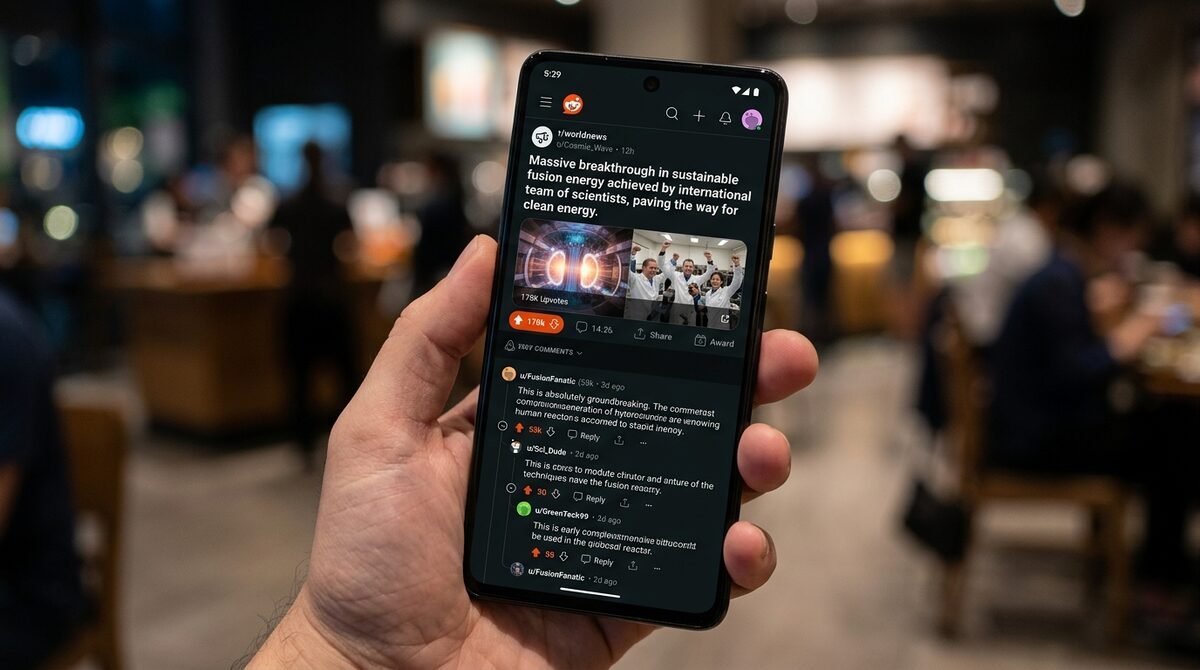
I decided to share the story on a popular forum, curious to see if I was actually the villain. The response was overwhelming. Within hours, the post had thousands of comments, and the thread was trending. It was a perfect microcosm of how people view friendship, boundaries, and etiquette. There were the ‘NTA’ (Not The Asshole) crusaders, who were cheering for my decision to leave her with the bill, and the ‘ESH’ (Everyone Sucks Here) camp, who argued that I should have handled it differently from the start.
The debate was intense. People were arguing over the legalities of the bill, the social nuances of hosting, and the definition of a ‘best friend.’ It was enlightening to see the different perspectives. Some people felt that by paying for the original six and leaving the rest, I had effectively ‘abandoned’ my friend, while others insisted that she had brought the consequences upon herself by violating the most basic of social contracts. I read through the comments for hours, finding comfort in the fact that so many people stood by my decision.
The most interesting comments were the ones from people who had been in similar situations—friends who had ‘hijacked’ events, partners who had overspent, and family members who had crossed the line. Their stories were eerily similar to mine, confirming that boundary-crossing is a universal issue. It wasn’t just about a dinner; it was about the fundamental respect that exists between two people. When that respect is replaced by entitlement, the relationship is already dead.
“The moment she invited people to a private dinner you paid for, she ceased to be a friend and became a liability. NTA. She tried to use you to buy social capital, and you refused to be the currency. Well played.”
— u/StoicObserver (Top Comment, 32.1k upvotes)
The community’s support was the validation I needed. It confirmed that my instincts were right and that I hadn’t been ‘cold’ or ‘stingy.’ I had been a person who stood up for themselves in the face of blatant disrespect. The Reddit experience, while exhausting, helped me process the finality of the situation. I wasn’t just an individual struggling with a friendship; I was part of a larger conversation about the value of self-respect.
Reflecting on the Cost of Boundaries

Looking back, the financial cost of the dinner was a small price to pay for the clarity I gained. I had been losing money, time, and emotional energy on Jessica for years, and this final, explosive incident was simply the breaking point. It forced me to look at the patterns in my life and ask myself why I had tolerated such behavior for so long. I realized that my own fear of confrontation had allowed her to thrive, and that by being ‘nice,’ I had actually been enabling her.
The lessons from that night stayed with me. I’ve become much more protective of my time and my energy. I don’t apologize for having boundaries, and I don’t feel the need to justify them to anyone. If someone asks for a favor that compromises my values or my peace, I say no—and I don’t feel guilty about it. It’s a liberating way to live, and it has attracted the kind of people who respect those boundaries from the start.
I also learned the importance of clear communication. If I had been more explicit, if I had told her ‘If you bring a single person, I will cancel the entire reservation,’ maybe it would have ended differently. But honestly? I doubt it. Jessica was never going to respect a boundary that inconvenienced her. The problem wasn’t the communication; it was the character of the person I was communicating with. And that is something you cannot change, no matter how clearly you speak.
The experience changed my view of ‘friendship.’ It’s not just about history or shared memories; it’s about mutual respect, reliability, and the ability to grow together. If a friendship feels like a burden, if it requires you to constantly shrink yourself to accommodate the other person, then it’s not a friendship—it’s an anchor. And sometimes, you have to cut the anchor to keep from sinking.
“Boundaries aren’t walls to keep people out; they’re gates to let the right people in. You did the right thing by closing the gate on someone who only wanted to tear it down.”
— A supportive comment from a long-time friend
I feel better now than I have in years. I have my inner circle, my peace, and my boundaries. And when I have my next birthday dinner, it will be exactly what I want it to be: intimate, thoughtful, and entirely mine. The memory of the ’10-stranger-tasting’ remains a sharp, cautionary tale, but it’s a story I can now tell with a sense of humor, knowing that I came out on the other side stronger than before.
The Aftermath: Moving Forward

It has been six months since the ‘Birthday Incident.’ I’ve had no contact with Jessica, and surprisingly, the world hasn’t ended. I still see her updates occasionally through mutual friends, and she seems to have found a new ‘best friend’ to parade around. I don’t feel jealousy or bitterness; I feel a strange sense of relief. It’s like watching someone else take on a burden I’m finally free of. She’s moved on, and I’ve moved on—and we’re both better off for it.
The restaurant, which I initially thought would ban me, actually sent me a note thanking me for my professionalism during a ‘highly unusual situation.’ They offered me a complimentary seat at their next seasonal tasting, which I accepted. I went alone this time, and it was glorious. I enjoyed every bite, every pairing, and every moment of silence. It reminded me that I don’t need a crowd to celebrate my life, and that true enjoyment comes from being present, not from being the center of attention.
My other friends have been incredibly supportive throughout the fallout. We’ve grown closer, having navigated the awkwardness of the initial separation. We laugh about the night now, calling it ‘The Great Dinner Hijack.’ It’s become a bit of a legend in our group—a story we tell to remind ourselves of the importance of boundaries and the absurdity of social entitlement. It’s a testament to the fact that when you walk through a fire, you either get burned or you get forged.
I’ve learned that life is far too short to spend it worrying about the feelings of people who don’t care about yours. I’ve started investing my time in people who show up, who listen, and who respect the boundaries I set. It’s a completely different way of existing, and I wouldn’t trade it for anything. The dinner was a nightmare, but it was a necessary one. It woke me up, and for that, I’ll always be grateful.
“The true test of a relationship isn’t how you handle the good times, but how you treat each other when things get difficult. You showed your strength, and she showed her true colors.”
— Wisdom from a reader
So, here I am, 30 and thriving. I’ve realized that my value isn’t tied to how many people I can host or how much money I can spend. My value is inherent, and it’s something I define for myself. If you’re reading this and you’re currently dealing with a ‘Jessica’ in your life, know this: you don’t owe anyone your peace, your money, or your birthday. Stand your ground. It’s worth it.
Final Reflections and Lessons Learned

Looking back at the entire saga, I realize that the most important thing I gained wasn’t just the satisfaction of standing my ground, but the realization that I deserve to be heard. For years, I had been the one who compromised, the one who made the concessions, the one who kept the peace. And for what? To maintain a connection with someone who viewed me as a prop in their own life. It was a high price to pay, and I’m glad I finally stopped paying it.
I’ve also come to understand that ‘friendship’ is not a stagnant thing. It changes, it evolves, and sometimes, it ends. And that’s okay. Not every friendship is meant to last a lifetime, and there is no shame in acknowledging when a connection has become toxic or one-sided. Letting go of Jessica was one of the hardest things I’ve ever done, but it was also the most liberating. It opened up space in my life for people who truly care about me and my well-being.
If there’s one piece of advice I would give to anyone in a similar situation, it’s this: trust your gut. When you feel that twinge of discomfort, when you feel like someone is pushing a boundary, listen to it. Don’t rationalize, don’t make excuses, and don’t try to be ‘nice.’ Your intuition is your best guide, and it will never steer you wrong. Protecting your peace is not selfish; it’s essential.
I’m grateful for the experience, even the messy, painful parts of it. It made me who I am today—a person who is more confident, more self-assured, and more intentional about the life I want to lead. I’m not the same person who walked into that restaurant six months ago, and I’m glad for that. I’m a better version of myself, and I’m looking forward to the future, whatever it may hold.
“The most important relationship you will ever have is the one you have with yourself. When you respect yourself, others will have no choice but to do the same.”
— Final thought from my personal journal
Thank you for letting me share my story. It’s been a long journey, but I’ve finally reached the other side, and the view is beautiful. I hope this story serves as a reminder that you have the power to set your own boundaries, and that you are deserving of respect, no matter the circumstances. Your birthday, your life, your choices—own them.
Conclusion
My birthday dinner was supposed to be a celebration of joy, but it became a masterclass in the necessity of self-respect. By refusing to let my friend’s entitlement override my own boundaries, I reclaimed not just my night, but my sense of self. It wasn’t about the money—though the bill was certainly a point of contention—it was about recognizing that I was being treated as a secondary character in my own life. Sometimes, you have to be the villain in someone else’s narrative to be the hero of your own.
We all have boundaries, and we all have to decide what we’re willing to tolerate. I hope my story encourages you to look at your own relationships and ask yourself: ‘Am I being valued?’ If the answer is no, it might be time to start setting some boundaries of your own. You deserve a seat at your own table, and you shouldn’t have to share it with people who don’t respect the guest list.
What would you have done? Would you have paid the full bill to avoid the scene, or would you have done exactly what I did? Have you ever had a ‘friend’ hijack an event or cross a major boundary? Share your thoughts and experiences in the comments below—I’d love to hear your take!
What's your verdict on this dilemma?
Vote below to contribute to the official community consensus.

Have a Dilemma Keeping You Up at Night?
Share your real-life feud, wedding chaos, or relationship crossroads anonymously with our editorial team.
What do you think ?
0 Comments🛡️ Comments are moderated to protect community integrity. Your comment will appear once approved by the editorial team.