
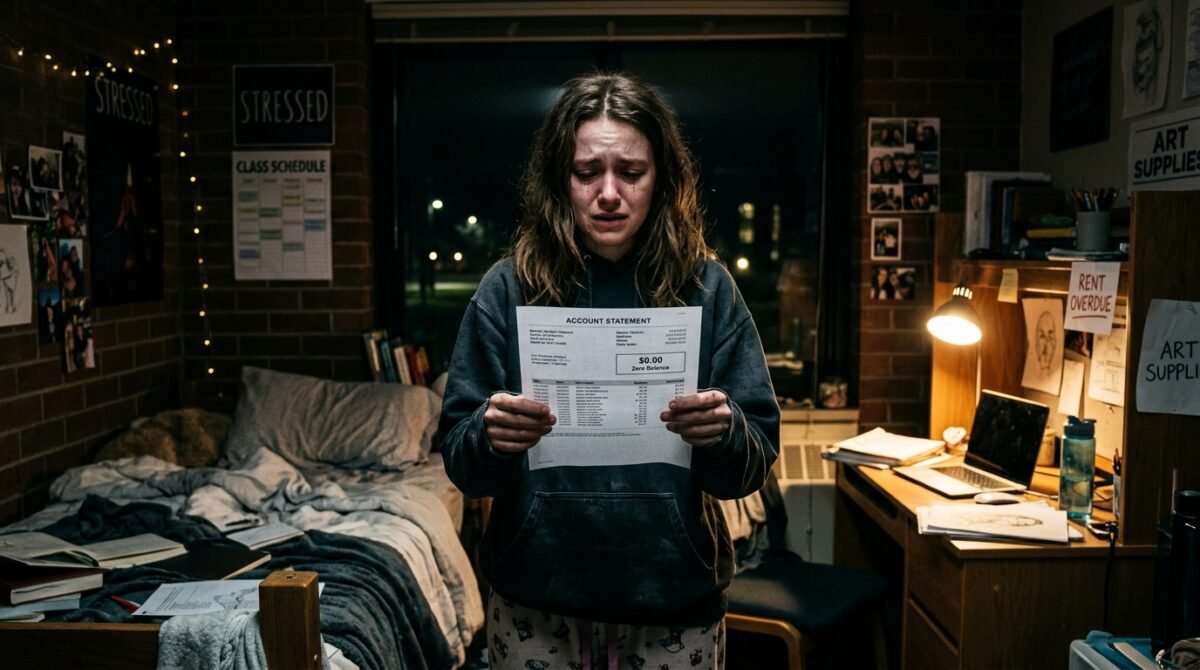
Growing up, the concept of a ‘college fund’ was a sacred covenant in my house. My grandparents had set aside money specifically for my housing and living expenses, a non-refundable, locked-in investment in my future. When my father remarried three years ago, I was cautiously optimistic. Karen seemed perfectly pleasant, if a bit focused on her own teenage daughter, Madison. I kept my distance, focused on my grades, and worked part-time jobs, never once imagining that my sanctuary of stability would be under threat by someone I barely considered family.
It wasn’t until I received an automated email from the university bursar’s office that the nightmare began. The subject line, ‘Payment Failure: Housing Deposit Overdue,’ hit me like a physical blow. I had checked my account balance only days prior, feeling a sense of relief that my housing for junior year was secured. Seeing a zero balance where thousands of dollars should have been wasn’t just a financial discrepancy; it was a betrayal that felt like a knife to the gut. I knew immediately who had access to the joint account my father and Karen shared—the account where my grandfather’s legacy had been unceremoniously dumped after the wedding.
The moral dilemma here isn’t just about money; it’s about the calculated erasure of my future to subsidize someone else’s hobby. This isn’t a story of a desperate family needing food or rent; this is a story of extreme entitlement, where an elite cheerleading camp—complete with international travel and private coaching—was deemed more important than my degree. As I piece together the timeline of lies, gaslighting, and blatant theft, I find myself standing at the edge of a bridge I am no longer sure I want to cross back over.
This narrative isn’t just a vent; it’s a documentation of how quickly a ‘blended family’ can turn into a battlefield. From the initial discovery to the eventual confrontation, I’ve had to navigate the complexities of parental loyalty, legal ramifications, and the sheer audacity of being told that my education is ‘optional’ while Madison’s social standing is ‘a once-in-a-lifetime opportunity.’ Join me as I recount the events that led to my decision to cut ties with the only home I had left.
The Silent Drain: Discovering the Zero Balance
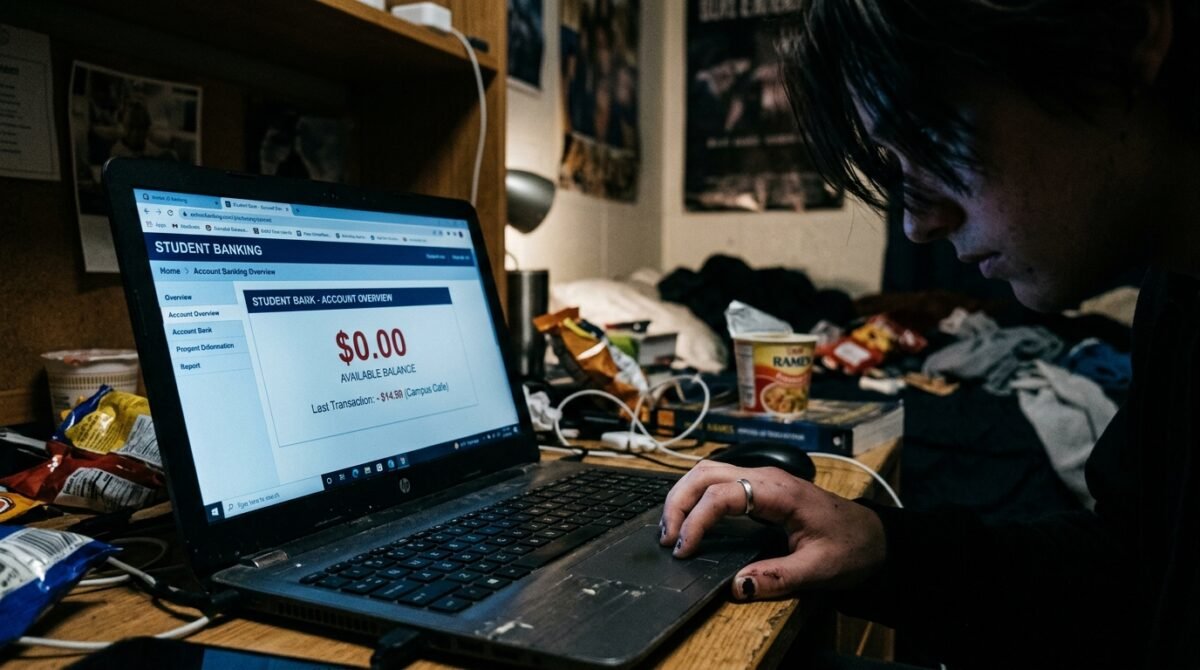
I stared at the screen, refreshing the browser page until my eyes blurred. The university portal was unforgiving. It didn’t care about family dynamics or the intentions of long-dead grandparents. It simply stated that the funds were insufficient and my housing assignment for the upcoming semester was in jeopardy. I checked the bank app, and there it was—a series of wire transfers and card swipes made over the last week. The destination of these funds was clear: ‘Elite-Squad-Cheer-Camp-Registration,’ ‘International-Travel-Insurance,’ and ‘Uniform-Fittings.’
My heart hammered against my ribs. I called my father immediately, but it went straight to voicemail. I then messaged Karen, my fingers trembling so violently I could barely type. The response I got back was nonchalant, as if I had asked to borrow five dollars for coffee rather than questioning the disappearance of my entire housing budget. She claimed it was a ‘loan’ that would be ‘paid back eventually’ when her cheer company sponsors came through. A loan? Without my permission? Using non-refundable funds earmarked for an education she knew I had worked tirelessly for?
“Hey, did you see the bank alert? There’s nothing left. How are we paying for housing?”
— Sent by OP to Stepmother, 9:15 AM
“Oh, don’t be so dramatic. Madison had a huge opportunity for the Elite squad. I just borrowed from the account to pay her registration and gear. It’s a temporary advance. My bonus is coming in next month, and you’ll get every cent back before tuition is due. Chill out.”
— Reply from Stepmother, 9:42 AM
I realized then that she didn’t view it as theft. To her, the account was a communal pool, and her daughter’s social status was a higher priority than my survival in academia. The audacity was suffocating. I spent the rest of the day in a haze, wondering if I should call the police or if that would just permanently destroy my relationship with my father, who was currently on a business trip and blissfully unaware of the chaos unfolding at home.
By evening, my rage had crystallized into a cold, hard resolve. I wasn’t going to let this slide. I started documenting everything—every transaction, every message, every promise. I knew I needed evidence, not just for the sake of the money, but to expose the reality of who Karen really was. I felt like a stranger in my own life, watching the ground crumble beneath my feet while the people who were supposed to be my protectors were the ones holding the shovel.
The 6:00 AM Kitchen Confrontation
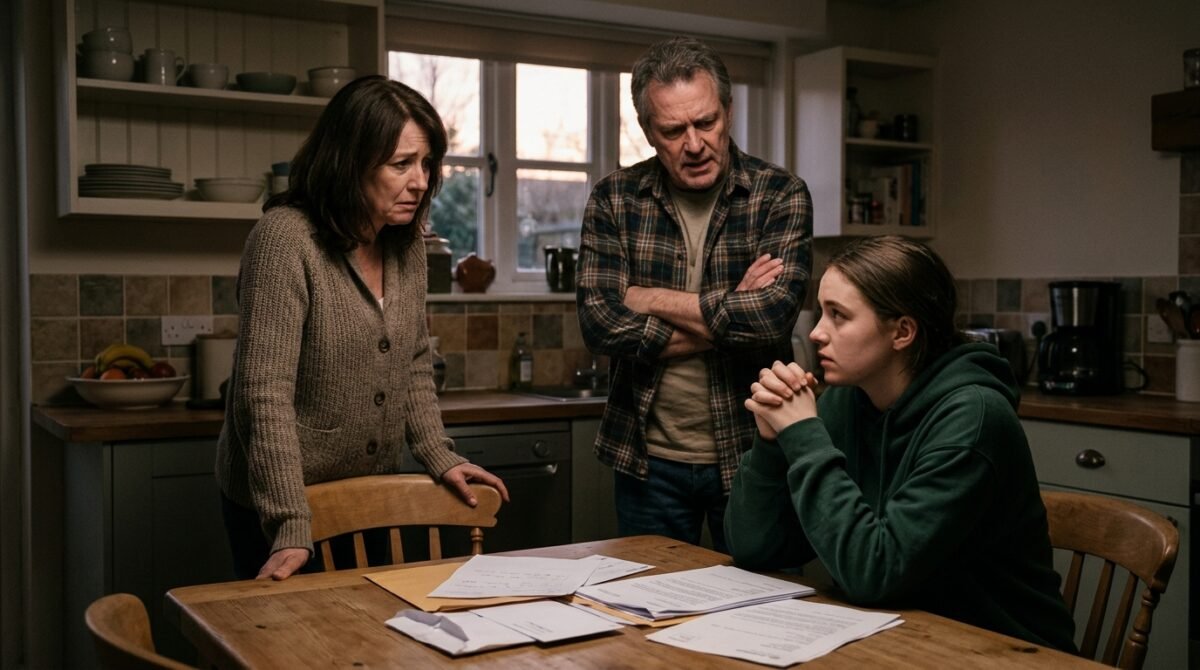
My father finally returned home on Tuesday, exhausted from travel. I had been waiting in the kitchen, a stack of printed bank statements on the table. The silence in the house was heavy, a suffocating blanket that seemed to dampen the sound of the front door opening. When he walked in, he looked ready to collapse onto the sofa, but the look on my face stopped him in his tracks. He asked what was wrong, and for a moment, I couldn’t speak. I just pointed at the papers.
Karen entered the room behind him, holding a Starbucks cup, still wearing her yoga gear. The moment she saw the papers, her demeanor shifted instantly from relaxed to defensive. She tried to interrupt, but my father held up a hand, his eyes scanning the transactions. The disbelief on his face was genuine, but his next words were a gut punch. He started trying to justify it, saying that ‘we are a family’ and ‘we need to support Madison’s dreams during this hard time.’ The word ‘we’ was used as a weapon to strip away my autonomy.
“Dad, that money was for my housing. It was non-refundable because I secured the spot early. It’s gone. She spent it on a cheer camp for a child who isn’t even your biological responsibility. How do you defend this?”
— OP to Father
“Listen, kiddo, it’s just a temporary set-back. Karen told me she has the funds coming. We can’t just be selfish when a family member has a chance to shine. Think about the team, about the community. You have time to figure out housing. Madison doesn’t have time to miss this camp.”
— Father to OP
The conversation devolved from there. I felt a surge of adrenaline as I realized that my father wasn’t going to stand up for me. He was completely under her thumb, prioritizing her daughter’s ‘potential’ over my guaranteed academic future. I looked at the two of them—the woman who had stolen from me, and the man who was enabling the theft—and realized I was completely alone. I told them I wouldn’t leave until the money was returned, but they both just looked at me as if I were being petulant.
I eventually retreated to my room, feeling the walls closing in. The betrayal wasn’t just the money; it was the realization that I had been demoted to second-class status in my own family. I spent hours messaging my friends, trying to find a way to make rent, but the amount was too large to cover on short notice. The financial burden shifted from a logistical hurdle to an existential crisis. I was staring down the barrel of dropping out, all because a teenager needed a new uniform and a plane ticket to a cheer camp.
The Secret Group Chat Revelation
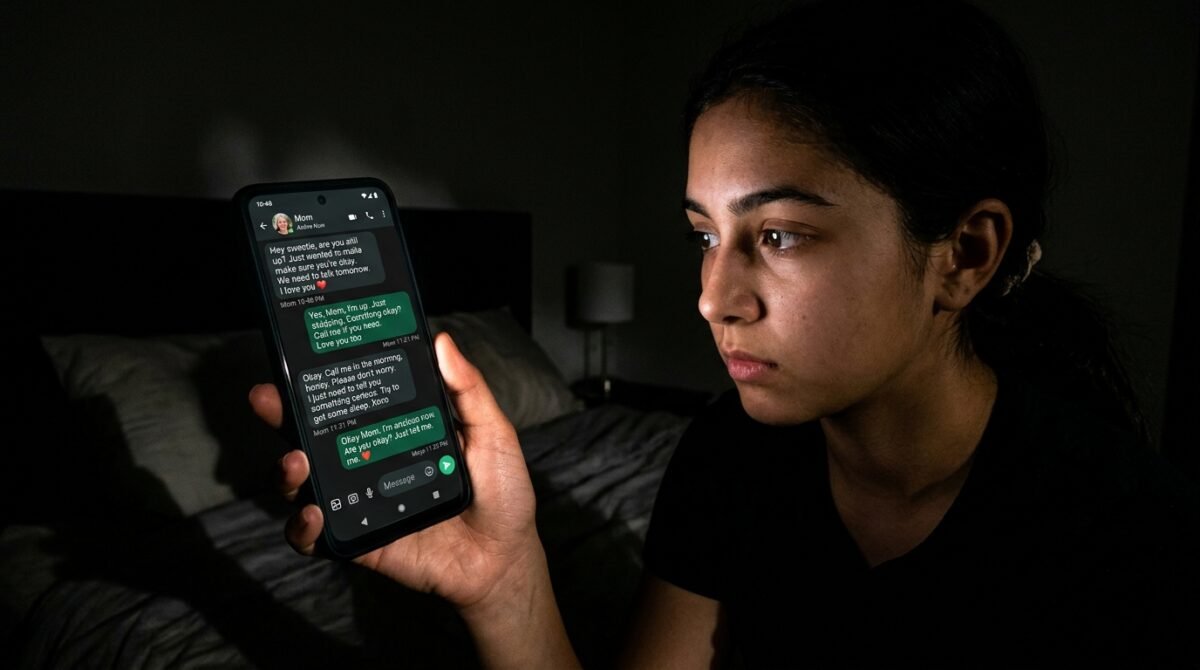
It was late at night when my phone chimed. A group chat I didn’t know existed, titled ‘Madison’s Big Win,’ had been inadvertently shared to my iCloud drive when I tried to sync my phone with the household Wi-Fi. My curiosity got the better of me. I opened it, expecting to see family updates, but instead, I found a roadmap of my downfall. Karen had been planning this for weeks, discussing how to ‘borrow’ from my account and how to manipulate my father into agreeing to it.
The messages were chilling. There was no mention of paying it back. There was only talk of how much ‘better’ Madison looked in the new uniforms compared to her teammates and how they were going to use the ‘leftover’ funds from my account to pay for a weekend getaway for the two of them. My hands shook as I scrolled through the confirmation of their deceit. They hadn’t just stolen the money; they had laughed about it. They viewed my college fund as a personal piggy bank they were entitled to loot.
“Just transferred the last of the housing money. He didn’t even notice yet, and by the time he does, the camp fees will be locked in. Don’t worry about it, honey. He’s got plenty of time to find a job if he needs more cash. It’s good for him.”
— Leaked Message from Karen to Madison
“OMG mom, you’re the best! I was worried we wouldn’t have enough for the luxury hotel in Miami after the camp, but now we can do it! Thanks for looking out for me.”
— Message from Madison to Karen
I realized then that this wasn’t just a mistake or a temporary lapse in judgment. It was a calculated, predatory action. My heart felt cold, hollow. I took screenshots of everything, every single message, knowing that if I wanted to fight this, I needed cold, hard proof. The betrayal was complete. There was no ‘misunderstanding,’ only a clear, deliberate act of theft that they felt no remorse for.
I didn’t sleep that night. I sat in the dark, drafting a letter to my grandmother’s lawyer. I knew that if I confronted them with this, they would lose their minds, but I didn’t care anymore. My respect for them had evaporated, replaced by a sharp, cutting anger. I was done being the polite stepchild who accepted the crumbs of their affection. I wanted justice, or at the very least, I wanted them to know that their actions had consequences that would haunt them for a long time.
The Reddit Verdict: Community Outrage

I posted my story on a popular advice subreddit, needing to know if I was crazy. Was I overreacting? Was I being the ‘selfish’ one for wanting the money that was rightfully mine? The response was immediate and overwhelming. Thousands of people flooded the comments with support, outrage, and legal advice. It wasn’t just ‘NTA’—it was a full-blown mobilization of the internet to help me find a path forward. The validation was both comforting and painful.
People shared their own stories of financial abuse and how they had dealt with similar situations. They pointed out that what my stepmother did was not just unethical, it was likely illegal. They advised me to contact the bank, report the fraud, and demand an accounting of the funds. They told me that I was right to be angry and that I shouldn’t back down. The solidarity of strangers was something I hadn’t expected, and it gave me the strength to look at the situation with more clarity.
“This isn’t a ‘loan.’ This is theft. You need to file a police report immediately and call the bank to flag these transactions as unauthorized. Do not let them gaslight you into thinking this is normal behavior. Your stepmother has committed a crime, and your father is complicit by letting it happen.”
— u/LegalEagle101 (Top Comment, 32.5k upvotes)
“The fact that they are planning a vacation with the ‘leftover’ money proves that this was never about a ‘cheer camp.’ It was about entitlement. OP, get out of that house and never look back. These people are toxic and dangerous to your future.”
— u/TruthSeeker_88 (15.2k upvotes)
The community’s response was a wake-up call. I had been internalizing their behavior, wondering what I did wrong to deserve this. But reading the comments, I saw clearly that I was the victim of a predatory situation. The Reddit thread became my anchor. Every time I felt weak or tempted to just drop it to keep the peace, I would read the comments and be reminded of the truth: I deserved to be treated with respect, and my education was not a charity for someone else’s child.
I started taking the steps the community suggested. I went to the bank, I spoke with an advisor, and I began the process of reporting the unauthorized access. The bank was shocked by the documentation I provided, especially the leaked texts. They told me they would investigate, and for the first time in weeks, I felt a glimmer of hope. It wasn’t a guarantee that I would get the money back, but it was a step toward accountability.
The Legal Ultimatum: A Certified Letter
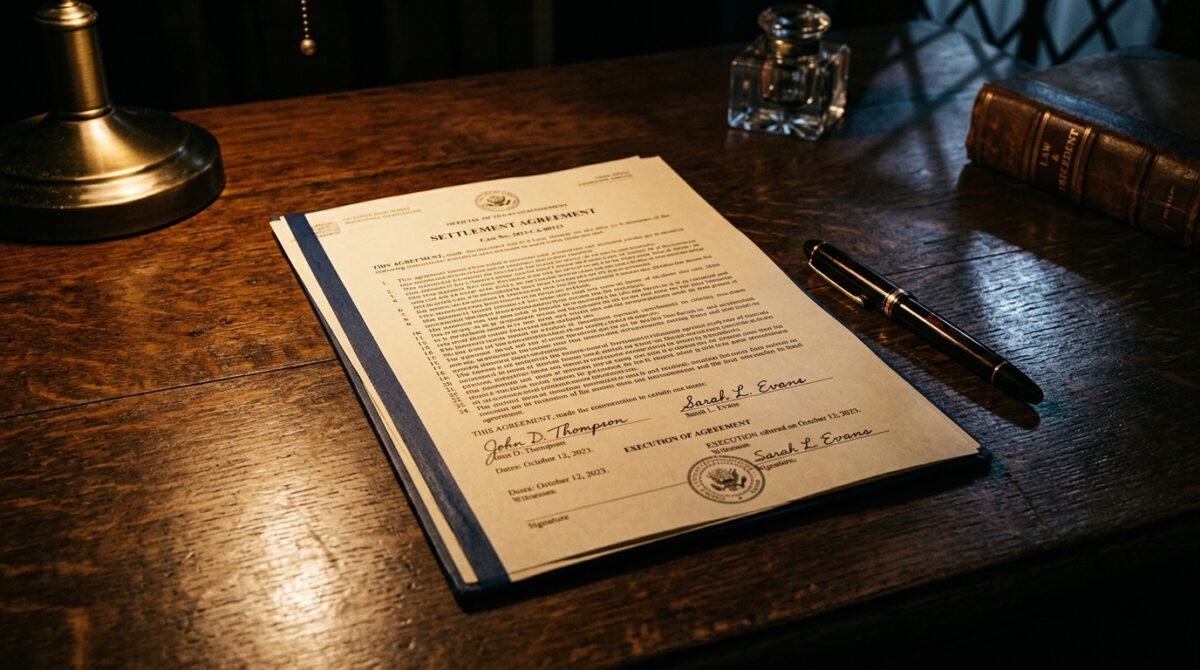
I didn’t want to engage with them directly anymore. The gaslighting was too exhausting. Instead, I had a lawyer draft a formal demand letter. It was a document that laid out the timeline of the theft, the evidence of the unauthorized transactions, and the demand for the return of the funds within 72 hours, or I would proceed with a civil lawsuit and contact the authorities regarding the fraud. I sent it via certified mail, ensuring they would have to sign for it.
The impact was immediate. My father came home early from work, his face white. He was panicked. He claimed that this was a ‘huge mistake’ and that we didn’t need to involve lawyers. I just looked at him and said, ‘The money or the police.’ The line had been drawn, and for once, he couldn’t push past it. Karen, meanwhile, was nowhere to be seen. She was likely hiding, realizing that the consequences she had ignored were finally catching up to her.
“We can’t do this! You’re going to ruin our family name! This is a private matter, not a legal one. Please, just withdraw the letter, and we will find a way to pay you back over time.”
— Father to OP
“The law doesn’t care about our ‘family name.’ You stole from me. You broke my trust. And you are going to pay the price. I want the full amount, in my account, by Friday at 5:00 PM. No excuses.”
— OP to Father
The next few days were a blur of tension. I had moved my essential documents and personal belongings to a friend’s place, not wanting to risk anything else being taken. I felt like a spy in my own home, packing bags when they were away, preparing for a life that didn’t involve them. It was a terrifying, exhilarating realization: I was already detaching, already moving on.
By Thursday afternoon, a deposit hit my account. It wasn’t the full amount—it was about 80%—and it came with a note from my father begging me to drop the legal threat. I looked at the bank balance and then at the letter. I knew the rest of the money was likely gone or spent on the trip, but I also knew that if I pushed for the remaining 20%, I would be trapped in this dynamic for years. I had to decide if my peace of mind was worth the final fight.
The Departure: Walking Out for Good

I made the decision on Friday morning. I wouldn’t fight for the last 20%. I would take what I had, pack my bags, and never look back. I had enough for the housing deposit and a small cushion, and that was enough to start over. I wrote a final letter to my father, not a plea for reconciliation, but a clear statement of why I was leaving. I told him that his choice to enable Karen’s theft had destroyed the foundation of our relationship, and that I couldn’t be part of a family that didn’t respect my future.
Packing was surprisingly cathartic. Every item I put into a box felt like shedding a layer of the burden I had been carrying. I left the house keys on the kitchen counter—the same counter where the argument had happened—and walked out the door without a backward glance. The sun was rising, and the world felt vast and intimidating, but for the first time in years, it felt like *my* world, not theirs.
“I’m moving out. The money you returned is in my account. I’m not pursuing legal action for the rest, but I am done. Don’t call me, don’t text me, and don’t try to find me. You made your choice, and I’m making mine.”
— Final message from OP to Father
I didn’t wait for a response. I blocked their numbers and walked to my car. As I drove away from the suburbs and toward the city, I felt a weight lift off my shoulders that I hadn’t even realized was there. The anger was still there, but it was cooler, more manageable. It was no longer a fire burning me from the inside; it was a compass, guiding me away from toxic people and toward a life I could build on my own terms.
Looking back, I realized that the money was just a catalyst. The real issue was the imbalance of power, the lack of respect, and the fundamental disconnect between how I viewed my future and how they viewed it. By leaving, I was reclaiming my life. I was choosing myself over their petty, narcissistic games, and that was the most empowering decision I had ever made.
The Aftermath: Rebuilding in Silence

The months that followed were a whirlwind of adjustment. University was hard, especially with the reduced budget, but it was also the most fulfilling period of my life. I worked harder than I ever had, picking up extra shifts and living frugally, but every dollar I earned felt like a triumph. I didn’t have the stress of family drama looming over me. I didn’t have to walk on eggshells or wonder if my accounts were being drained. I was free.
I kept to myself, focusing on my studies and my small circle of friends. I realized that the silence I had feared was actually peace. I didn’t miss the phone calls, the guilt trips, or the constant need to prove my worth. I was finally, truly independent. The lessons I learned from the theft—about setting boundaries, about protecting my assets, and about trusting my own judgment—became the foundation of my new, secure life.
“I honestly feel so much lighter. It’s like I was carrying a backpack full of rocks for years, and I finally just dropped it. The financial stress is real, but the emotional peace is priceless. I’d choose this struggle over that toxic environment any day.”
— From an update post by OP
I occasionally heard updates about them through mutual acquaintances. Madison had dropped out of her elite cheer squad after a injury, and Karen was dealing with a series of financial issues. My father had reached out a few times, but I held firm. The boundaries I set were not just for them; they were for me. They were a reminder that I was no longer a victim, and that my life was no longer their business to manage or destroy.
I realized that forgiveness wasn’t something I owed them. Forgiveness was a choice I could make for myself if I ever felt like it, but for now, I preferred to focus on my own healing. I had learned that family isn’t just about blood; it’s about respect, trust, and support. Those were the things I found in my friendships, in my work, and in myself, and that was more than enough.
Lessons in Financial Independence

If there is one thing this entire ordeal taught me, it’s the absolute necessity of financial literacy and autonomy. We are often taught to trust our families, to share and be generous, but there is a line between healthy support and enabling abuse. When I look back at the bank statements, I see the warning signs I missed—the joint accounts, the lack of transparency, the assumption that I would always just ‘deal with it.’ I see the danger of not having control over my own future.
I’ve since become an advocate for young adults managing their own finances. I tell everyone I meet to have their own accounts, to keep their passwords secure, and to never, ever give family members access to their hard-earned money. It might sound cynical, but the peace of mind is worth it. Financial independence is the ultimate form of protection, and it’s something I will never compromise on again.
“Always, always have a separate account. Even if you have a great relationship with your family, you never know when things might change. Protecting your future is not selfish; it’s a necessity. Don’t let anyone convince you otherwise.”
— Advice from OP to followers
I also learned that it’s okay to say ‘no.’ Saying no to your family, to your parents, or to your siblings doesn’t make you a bad person. It makes you a person with boundaries. It makes you someone who values themselves enough to protect their peace. And that is the most important lesson I’ve taken away from this entire experience.
I’m proud of who I’ve become. I’m not the scared, confused student I was a year ago. I’m a resilient, independent, and empowered person who knows their worth. And no matter what happens, no matter what challenges come my way, I know that I have the strength to handle them. Because I’ve already faced the worst, and I came out the other side stronger than before.
The Value of True Allies

I think about the friends who supported me during those dark days—the ones who let me sleep on their couches, the ones who helped me find work, and the ones who just listened when I needed to vent. They are my real family. They didn’t ask for anything in return; they just offered their help because they cared. They showed me that there are people out there who are worth trusting, who will stand by you even when things are difficult.
I learned that you don’t have to be alone in your struggle. Even if your biological family lets you down, there are communities—both online and offline—that can provide the support you need. I was lucky enough to find that on Reddit, and I’m forever grateful for the people who took the time to respond to my post. They were my lifeline, and they taught me that it’s okay to reach out for help when you’re drowning.
“I never realized how many people were going through similar situations. It made me feel less like a freak and more like a human being. Thank you to everyone who shared their stories. You really saved me.”
— Comment from OP to the community
I’ve also learned to be a better friend to others. I’m more aware, more empathetic, and more willing to stand up for those around me. I know what it feels like to be vulnerable, and I don’t want anyone else to go through that. I’ve become a better listener, a better advocate, and a better human being, all because of the experiences I’ve had.
I’m grateful for the path I’ve taken, even with all the pain and the heartbreak. It led me to where I am today, and I like where I am. I’m surrounded by love, by support, and by people who truly value me for who I am. And that is a victory that no amount of stolen money can ever take away.
Final Reflections: Moving Forward

As I look toward the future, I feel a sense of excitement that I haven’t felt in a long time. I have big dreams, and for the first time, I have the confidence to pursue them. I know that there will be challenges, but I also know that I have the strength to overcome them. I’ve survived the worst, and that gives me the courage to take on whatever comes next.
I hope that by sharing my story, I’ve helped someone else who might be in a similar situation. I hope that I’ve given them the strength to stand up for themselves, to protect their future, and to know that they are not alone. And if I’ve done that, then all the pain and the heartbreak were worth it. Because no one should ever have to go through what I went through alone.
“If you’re reading this and you’re struggling, please know that it gets better. You are stronger than you think, and you deserve a life that is truly yours. Don’t let anyone define your worth for you. Take control, protect your boundaries, and never look back.”
— Closing message from OP
I’m ready for whatever the world throws at me. I’m ready for the joy, the challenge, the growth, and the journey. I’m ready to live my life on my own terms, with no apologies, no regrets, and no looking back. I’m ready to be the person I was always meant to be, and I couldn’t be more excited for what’s ahead.
Thank you for listening to my story. Thank you for your support, your advice, and your encouragement. It has meant the world to me, and I will always carry it with me as I continue on my journey. I’m finally, truly, free.
Conclusion
The journey from betrayal to independence is never easy, but it is deeply transformative. My story is not just about a stolen college fund; it is about the reclaiming of my own life from those who sought to define it for me. The financial loss was painful, but the realization that I had the power to walk away was liberating.
What about you? Have you ever had to draw a hard line in the sand with family members who didn’t respect your autonomy? Did you find the strength to walk away, or did you try to bridge the gap? Share your experiences in the comments below. Let’s start a conversation about boundaries, family dynamics, and the true cost of independence.
What's your verdict on this dilemma?
Vote below to contribute to the official community consensus.

Have a Dilemma Keeping You Up at Night?
Share your real-life feud, wedding chaos, or relationship crossroads anonymously with our editorial team.
What do you think ?
0 Comments🛡️ Comments are moderated to protect community integrity. Your comment will appear once approved by the editorial team.