
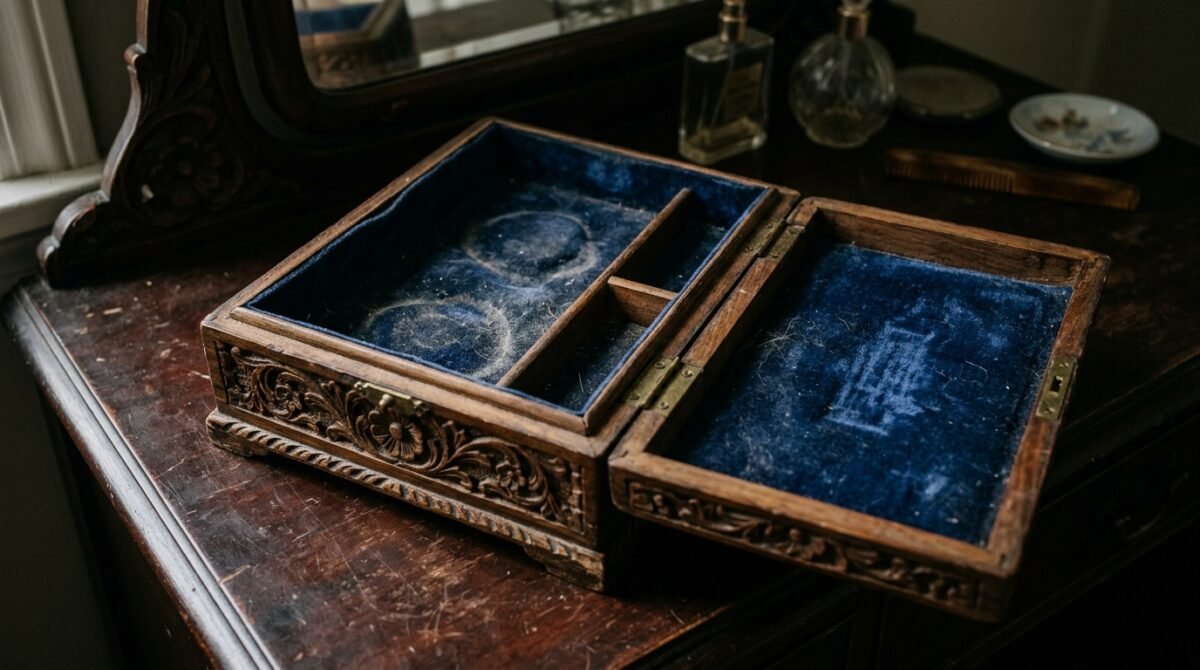
My mother passed away when I was sixteen. She left behind very little in terms of monetary wealth, but she left a legacy of craftsmanship. Her most prized possession was a hand-carved jewelry box, made of cedar and inlaid with mother-of-pearl, featuring delicate carvings of wildflowers that she’d spent months perfecting. It held the few pieces of jewelry she had inherited from her grandmother: a gold locket with a blurred photograph inside, a pair of modest sapphire earrings, and a silver charm bracelet that rattled with the history of her travels.
For years, that box sat on my dresser, a silent guardian of my grief and my connection to a woman I was still learning to understand. When my father remarried two years later, he insisted we move into his new wife’s home. Elena, my stepmother, was a woman of ‘modern aesthetics’—she despised clutter and constantly spoke of minimalism. I felt an immediate, prickly sense of dread whenever she entered my room, her eyes scanning my shelves as if she were taking inventory of a store rather than a child’s sanctuary.
The tension simmered for years, fueled by Elena’s thinly veiled attempts to ‘curate’ my life. She would often comment on how my mother’s things were ‘tacky’ or ‘outdated,’ suggesting that I donate them to charity. I learned to lock my door, but I didn’t realize that the danger wasn’t just my room—it was the house itself. Last month, I found that sanctuary violated, and the fallout didn’t happen over a kitchen table. It happened at the precinct.
This is the story of how a business venture built on the bones of someone else’s past collapsed under the weight of a grand larceny report. It’s a story about the intersection of grief, entitlement, and the moment a daughter finally decides that ‘family’ is not a synonym for ‘doormat.’
The Mysterious Disappearance of the Cedar Box
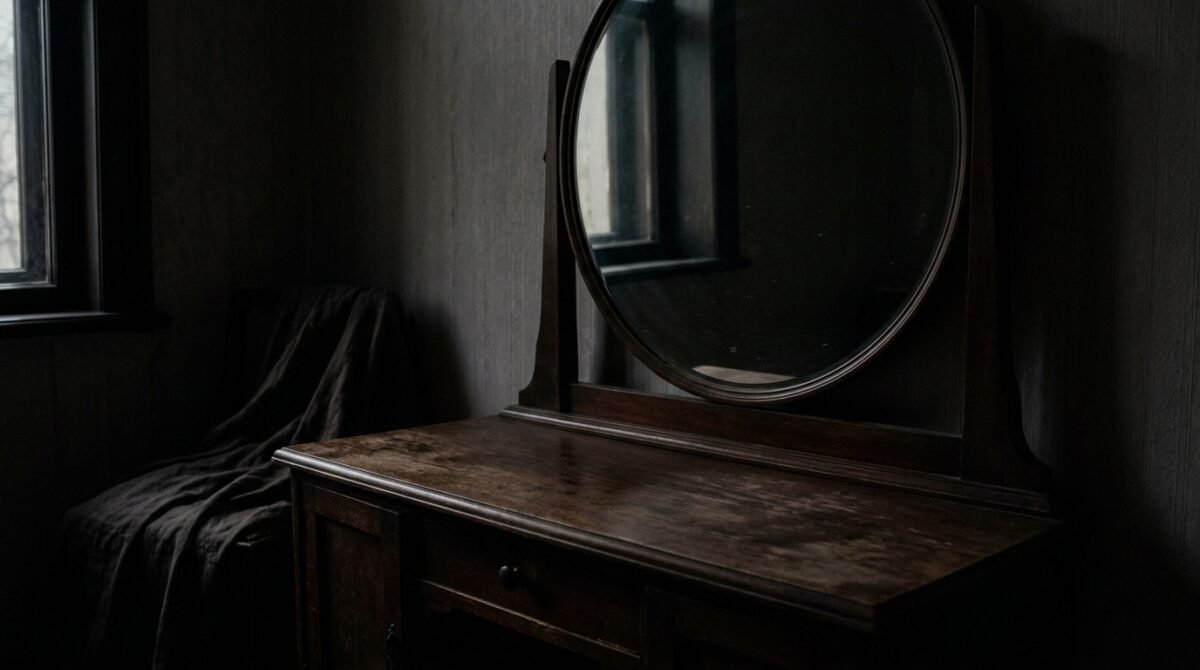
It started on a rainy Tuesday. I had returned from university for the weekend, looking to retrieve a specific set of earrings for a formal event. I walked into my old bedroom, which had become a makeshift storage space for Elena’s burgeoning ‘vintage’ hobby. The air smelled of sage and overpriced candles. I went straight to the vanity, but the surface was strangely bare. The cedar box, which had anchored the corner of that desk for nearly a decade, was gone.
My heart hammered against my ribs. I turned around, scanning the room. Elena had been complaining about the ‘clutter’ in this room for weeks, claiming she needed space for her shipping supplies. I checked the closet, then the basement storage bins, my panic growing with every empty shelf. There was no reason for the box to be moved; it was my private property, a clear boundary that had been established years ago.
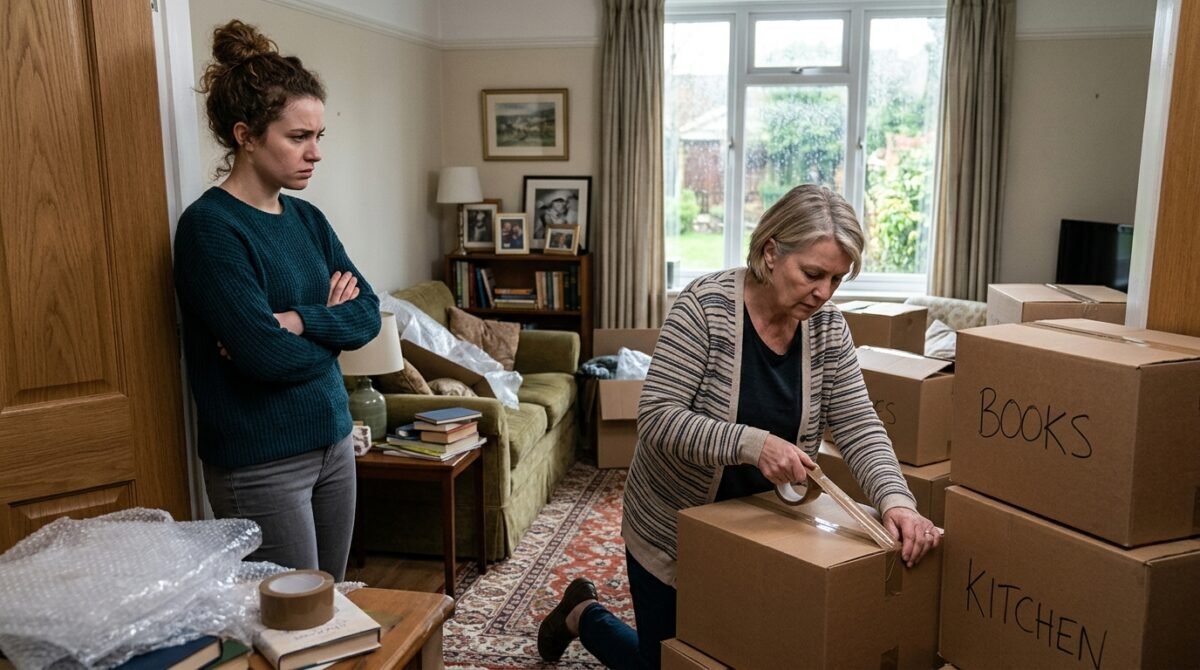
I found Elena in the living room, calmly taping up a cardboard box adorned with a cutesy ‘Hand-Selected Treasures’ stamp. I walked in, my voice shaking. ‘Where is my mother’s jewelry box, Elena?’ She didn’t look up immediately, just finished smoothing the tape with a precision that made my skin crawl. When she finally turned to look at me, her expression was one of practiced annoyance.
“Oh, you mean that dusty old thing? I took it to the consignment shop down the street. It was taking up valuable space, and honestly, the wood was rotting. I did you a favor by getting it out of the house.”
I felt a cold sensation wash over me, a physical manifestation of pure, unadulterated rage. I knew for a fact the wood wasn’t rotting; it was solid cedar, preserved with oils every six months. My mind raced, connecting the dots between her new hobby and the sudden absence of my most precious heirloom. I didn’t yell. I didn’t cry. I simply turned around and walked out to my car, my phone already in my hand, recording my own internal monologue.
The Etsy Storefront Revelation
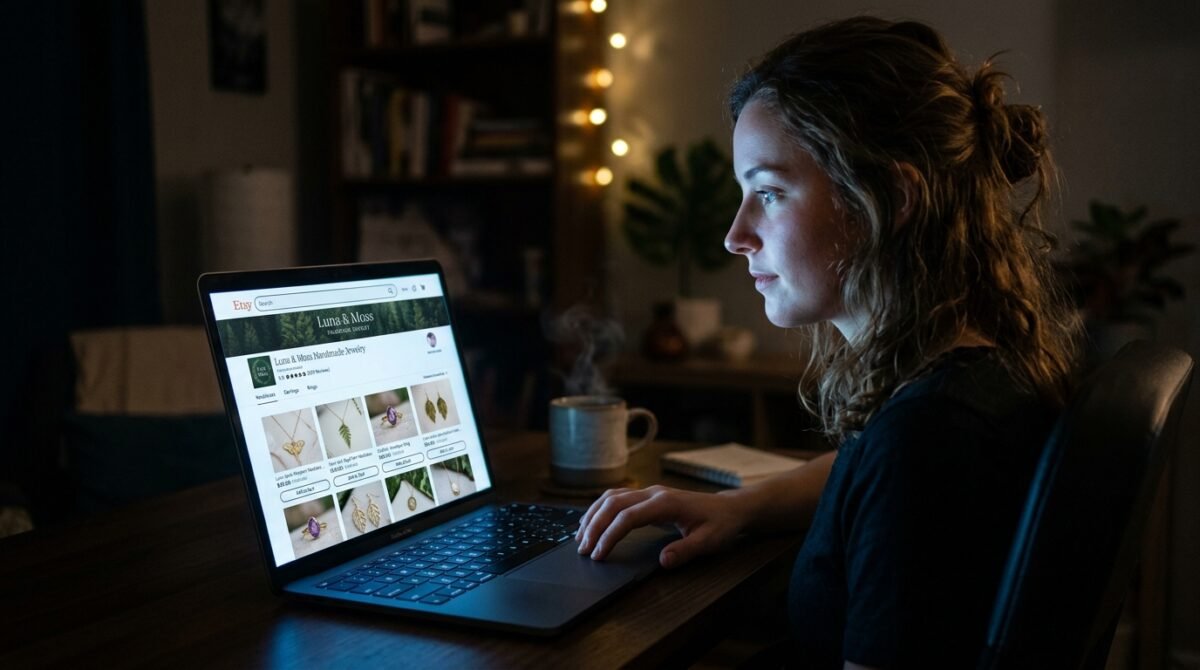
I didn’t go to the consignment shop. Instead, I went to my laptop and pulled up the link Elena had been spamming on her social media for weeks: ‘Elena’s Curated Keepsakes.’ I clicked through the listings, my stomach churning. There, under a banner that read ‘Vintage Bohemian Treasures,’ were the sapphire earrings. They were listed for $450, described as ‘found in a private estate collection.’
I clicked to the next page. The silver charm bracelet was there, too, priced at $300. The descriptions were filled with flowery language about ‘ancestral energy’ and ‘forgotten history.’ It was sickening. She wasn’t just selling my belongings; she was monetizing my mother’s life, stripping away the sentimental value and slapping a price tag on it like it was a cheap flea market find. I took screenshots of every single listing, every photo, and the profile information that confirmed the shop owner was indeed my stepmother.
The realization hit me harder than the theft itself: this wasn’t a mistake. This was a calculated business move. She knew exactly what those pieces were worth, and she had decided they were more useful as capital for her shop than as heirlooms for me. I felt a strange, detached calm settle over me. The phase of ‘reasoning’ with Elena had passed years ago. Now, we were in the territory of consequences.
“I see you’ve been busy, Elena. I have screenshots of the Etsy shop. You have 24 hours to return every single item, or I am going to the police.”
— Sent via text message
I sent the message and watched the bubbles appear. She was typing. For a moment, I actually thought she might back down. I thought she might realize that even a narcissist understands the threat of jail time. I was wrong.
The Gaslighting Escalation

The response didn’t come immediately. When it did, it was a masterclass in manipulation. Elena didn’t apologize. She didn’t offer to return the items. She launched into a diatribe about ‘family support’ and how I was being ‘ungrateful’ for the roof she provided. She claimed that because my father and she were married, ‘everything in this house is community property,’ and that she had the right to dispose of ‘excess’ items to support the household income.
I stared at the screen, my thumbs hovering over the keyboard. She was trying to frame this as a family budget issue. She was attempting to rewrite history, suggesting my mother’s jewelry was ‘marital assets.’ My father, meanwhile, remained conspicuously silent in the group chat. I knew he was watching. I knew he was likely sitting three feet away from her, paralyzed by the same fear that had allowed her to run his life for the past decade.
“You are not entitled to my mother’s estate, Elena. That is not community property. That was my inheritance, stored in my private quarters. This is theft. You are committing a crime.”
Her reply was even colder. She told me to ‘stop being dramatic’ and that if I tried to involve authorities, she would ensure I was ‘cut off’ from my father’s life entirely. It was a classic threat, designed to isolate me. She thought my love for my father was the leash she could pull to keep me quiet. She didn’t realize that she had already snapped that leash by taking the one thing I had left of my mother.
The Police Station Affidavit
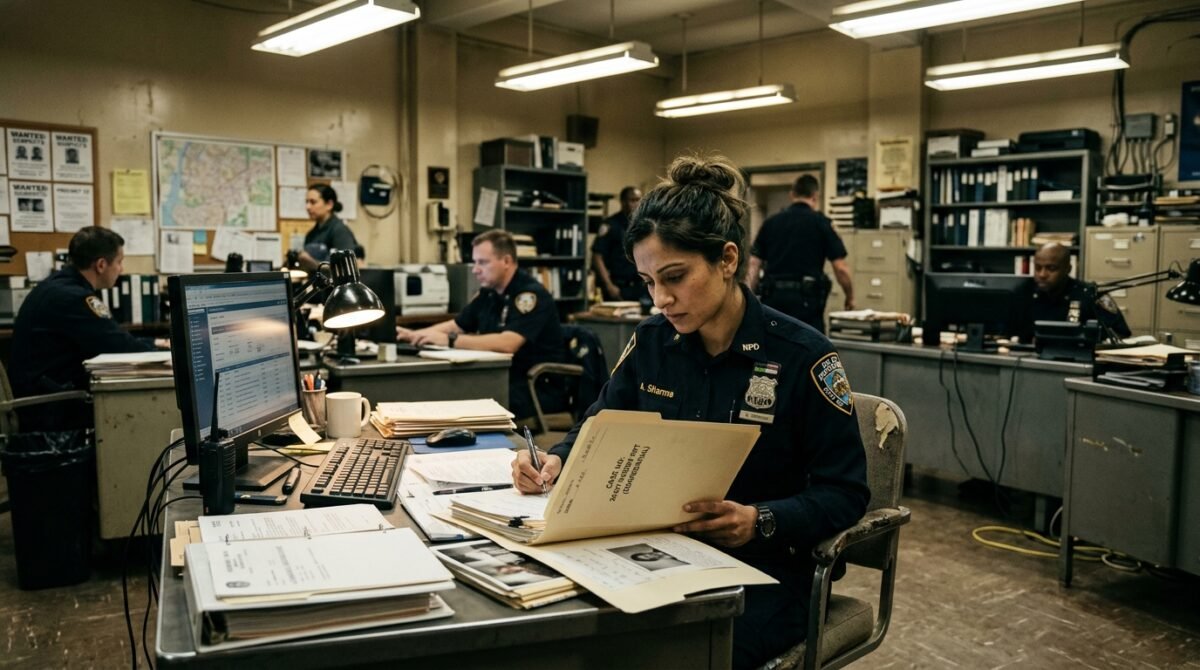
I walked into the local police station the next morning. I had a folder prepared. I had the original appraisal papers from my mother’s estate, which listed the jewelry items clearly. I had the screenshots of the Etsy shop. I had the text messages where Elena admitted to taking the items from my room. The officer at the desk looked at me with a mixture of sympathy and professional distance as I laid out the evidence.
When I mentioned ‘Grand Larceny,’ the officer shifted his posture. This wasn’t just a domestic squabble anymore. This was a documented, high-value theft. He took my statement, his pen scratching against the paper, capturing the details of the ‘unauthorized removal’ of personal property. The weight of it all—the years of resentment, the small violations that had built up to this moment—felt like it was finally being channeled into a legal structure.
I sat there for two hours, recounting every detail of the jewelry box and its contents. I didn’t hide the tension with my stepmother. I told them everything. By the time I left, the officer informed me that they would be opening an investigation and contacting the ‘suspect.’ I didn’t feel guilty. I felt, for the first time in my life, that the playing field had been leveled.
As I walked out of the station, I received a frantic call from my father. He sounded breathless, terrified. He told me the police had already been to the house. He pleaded with me to drop the charges, to ‘not make this a big deal.’ I listened, my voice steady, my resolve ironclad. ‘It’s not my deal, Dad. It’s her crime.’ I hung up before he could finish his sentence.
The Fallout in the Family Group Chat

The family group chat, which had been dormant for weeks, suddenly exploded. My aunt, my father’s sister, had clearly been alerted by the sudden police visit. The chat was a flurry of accusations and defensiveness. Elena was claiming I was ‘mentally unstable’ and that I had ‘given’ her the items to help with her business. She was painting me as a vindictive daughter trying to destroy her family.
I chose my moment to respond. I didn’t engage in the shouting match. I simply posted the screenshot of the Etsy shop listing alongside the original inheritance document from my mother’s estate. I didn’t need to add a caption. The contrast between ‘Hand-Selected Vintage’ and ‘Private Inheritance’ spoke for itself. The chat went completely silent for almost ten minutes. It was the longest ten minutes of my life.
“I am not here to argue. My mother’s things were stolen. The police are handling it. Do not contact me until every single item is returned, or until my lawyer reaches out to you directly.”
— Sent to the Family Group Chat
My aunt was the first to speak. She didn’t take my side, but she didn’t defend Elena either. She simply asked for ‘calm’ and ‘adult conversation.’ I laughed out loud. There was no ‘adult’ conversation to be had with someone who would steal from a dead woman to fund a side hustle. I exited the group chat immediately after sending my final message.
The Etsy Shutdown and Legal Pressure
Within 48 hours, the Etsy shop was gone. It didn’t just go private; it was wiped clean. I assume the platform took notice of a reported shop involving stolen, documented goods. Elena was panicking. I received a series of emails from her, ranging from vitriolic rants about my character to pathetic, half-hearted offers to ‘buy’ the jewelry from me at a fraction of its value. She clearly still didn’t understand the gravity of the situation.
My lawyer, a friend of the family who had known my mother, was relentless. He sent a formal Cease and Desist, followed by a demand for the immediate return of all property. He made it clear that if the items weren’t returned in original condition, the criminal charge would stick, and a civil lawsuit would follow for damages. Elena was starting to see that her ‘vintage’ shop was going to cost her much more than the profit she hoped to make.
I found out later that she had actually sold two of the items. The gold locket was gone, sold to an unknown buyer. That part of the news broke me. I spent the entire afternoon in my room, staring at the empty space on my vanity where the box once stood. The physical items were replaceable in theory, but the history they carried was gone. The locket held the only photo of my mother as a young woman. That was the piece that hurt the most.
“You sold my history, Elena. You didn’t just steal jewelry. You sold the only photo of my mother I had left. I will never forgive you for that. I don’t care what the police do; you are dead to me.”
Reddit Weighs In: The Verdict of the Internet

I posted a condensed version of this story to a popular subreddit dedicated to family conflicts. I needed to know if I was the villain. I needed to know if I had overreacted by involving the police. The response was immediate and overwhelming. Thousands of people, many of whom had dealt with their own toxic family members, flooded the comments with support. The consensus was clear: I had done exactly what was necessary.
One comment, in particular, captured the sentiment of the community. It wasn’t just about the theft; it was about the violation of autonomy and the disrespect toward a deceased mother. People were horrified by the idea of someone selling heirlooms to fund an Etsy store. The ‘NTA’ (Not The Asshole) labels were in the thousands. It was validating to see that my moral compass hadn’t failed me.
“OP, you didn’t call the police on your stepmother; she called the police on herself the moment she decided to steal your property. This isn’t about jewelry; it’s about her thinking she owns you and your past. Stay firm. Do not let her manipulate you with the ‘family’ card.”
— u/JusticeSeeker99 (Top Comment, 42.1k upvotes)
The community support provided me with the strength to continue. I realized that my family was just a group of people I happened to be related to, but the online community was a group of people who understood the value of boundaries. The comments section became a place for me to process my grief and anger, turning my private trauma into a public lesson on why we must protect our boundaries.
The Confrontation at the Dinner Table
I went to my father’s house one last time to collect my remaining belongings. The atmosphere was stifling. Elena was nowhere to be seen, likely hiding in her room, but my father was waiting for me in the kitchen. He looked aged, his face lined with the stress of the situation. He tried to speak, to apologize for his wife, to offer me money in exchange for ‘dropping the matter.’ I looked at him, realizing he was the same man who had stood by while she pushed me out of my own life.
I didn’t take his money. I didn’t want his apology. I wanted the remaining jewelry, which had been left in a bag on the kitchen counter. I checked the items. The sapphire earrings were there. The charm bracelet was there. The locket was missing. I looked at my father, my eyes cold. ‘Where is the locket, Dad?’ He looked away, his silence speaking volumes. He knew.
“I hope she was worth it, Dad. Because you just lost your daughter for a locket and a few hundred dollars in Etsy sales. I hope she’s happy with the life she’s curated for you.”
I left the house without saying goodbye. I didn’t look back. I heard him call my name, but I kept walking. The sound of the door closing behind me was the most liberating noise I have ever heard. I had all that was left of my mother’s collection, and I was finally free from the toxic environment of that house.
The Legal Aftermath and Restitution
The legal process continued for months. Elena was charged with misdemeanor theft, which was downgraded from grand larceny only because she managed to return most of the items before the formal indictment. She was ordered to pay restitution for the items she had sold—the locket included—and was placed on probation. She was also required to attend counseling, which I doubt she will take seriously, but the record is there.
The public nature of the incident, especially within our social circle, made it impossible for her to continue her ‘vintage’ business. Her reputation, such as it was, was shattered. People who had bought from her shop were notified by the platform, and the ensuing backlash was significant. She lost her social circle, her reputation, and, ultimately, her ability to dictate the terms of my life. It was a victory, but a hollow one in many ways.
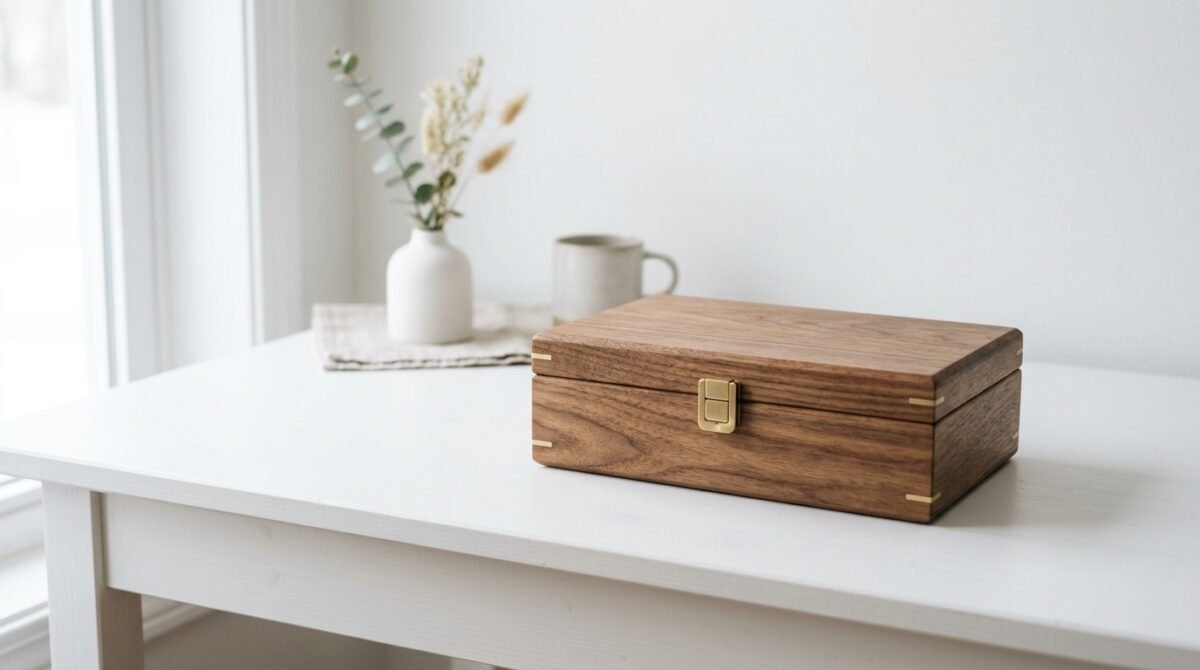
I kept the remaining jewelry in a new, secure box. I don’t wear the sapphire earrings often; they are too heavy with memory. But I look at them sometimes, reminding myself of the strength it took to stand up for myself. I am currently in therapy, working through the grief of losing not just my mother, but the version of my father I once believed in. It is a long process, but it is mine.
Reflections on Boundaries and Family

Looking back at the entire experience, I see clearly that the theft was just the final act in a long play of boundary violations. I allowed Elena to take small pieces of my life for years because I thought that was what ‘family’ meant. I thought that keeping the peace was worth the sacrifice of my own comfort and history. I was wrong. Peace at the cost of one’s identity is not peace; it is surrender.
The most important lesson I learned is that family does not grant anyone a license to exploit you. If someone asks for your patience, your belongings, or your energy and gives nothing but disrespect in return, you have the right to close that door. You have the right to call the police. You have the right to walk away. The guilt I felt at the beginning of this journey has been replaced by a quiet, steady self-respect.
I am still learning what it means to be an adult who sets boundaries. It isn’t always easy. Sometimes, it means cutting off people you love because they refuse to respect the lines you’ve drawn. Sometimes, it means being the ‘difficult’ person in the family. But I would rather be difficult and intact than compliant and hollow. My mother’s jewelry box is empty, but my life is full of the lessons she left behind, even if she wasn’t here to teach them directly.
Conclusion
My journey from a victim of theft to a person who stood up to a toxic family member was the hardest thing I have ever done. It forced me to confront the reality of my family dynamic and the limits of my own tolerance. Today, I am low-contact with my father and no-contact with Elena. The jewelry that was returned sits safely in my home, a reminder of both what was taken and what I reclaimed.
If you find yourself in a situation where family members believe your property, your boundaries, or your history are theirs to manipulate, remember that you are your own person. You do not owe anyone your silence. You do not owe anyone your heritage. Protect what is yours, and never be afraid to call the authorities if the line between family and criminal behavior is crossed.
What about you? Have you ever had to draw a hard line with a family member, even at the cost of the relationship? Do you believe that family status should ever exempt someone from legal consequences for their actions? Let me know in the comments below.
What's your verdict on this dilemma?
Vote below to contribute to the official community consensus.

Have a Dilemma Keeping You Up at Night?
Share your real-life feud, wedding chaos, or relationship crossroads anonymously with our editorial team.
What do you think ?
0 Comments🛡️ Comments are moderated to protect community integrity. Your comment will appear once approved by the editorial team.