
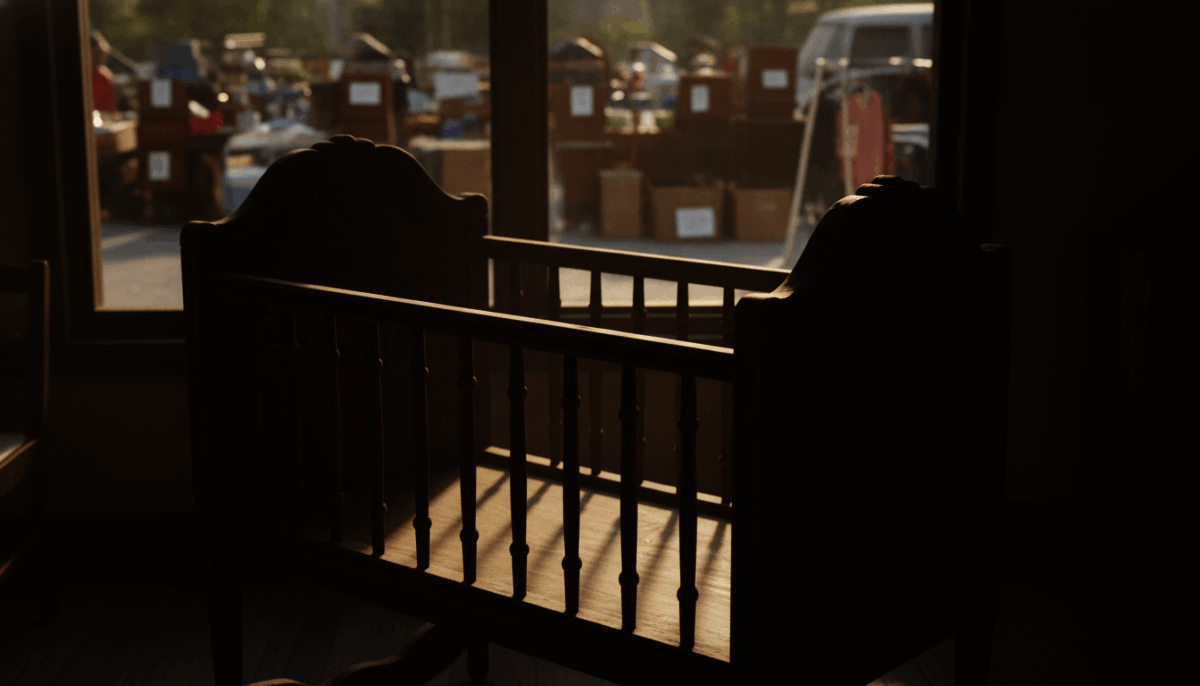
When we dream about the arrival of a first child, we imagine the nursery as a sanctuary. For me, that sanctuary wasn’t just about paint colors or soft blankets; it was about the mahogany crib that had been hand-carved by my great-grandfather in 1920. It had cradled my father, my siblings, and me. When I found out I was pregnant, the restoration of that crib became my passion project—sanding away decades of wear, applying non-toxic oils, and envisioning my own child sleeping in the same embrace that had held four generations of our family.
My mother-in-law, Linda, had always been ‘helpful’ in the way a hurricane is helpful. She liked to rearrange my pantry and suggest that my curtains were ‘draining the life’ out of the room. I tolerated it because she was family, but I never anticipated that she would view my most precious, irreplaceable heirloom as nothing more than clutter. I certainly never imagined she would wait until I was physically incapacitated, fighting through contractions in a hospital bed, to clear it out of my house.
The events of that weekend remain a blur of adrenaline, pain, and eventual, cold fury. While I was transitioning from early labor to the active, painful reality of bringing my daughter into the world, Linda was in my garage, slapping a twenty-dollar sticker on a piece of history. She saw ‘old wood.’ She saw ‘taking up space.’ She didn’t see the history, the love, or the explicit instructions I had given her: ‘Do not touch the nursery. Everything is ready.’
This isn’t just a story about a piece of furniture; it is a story about the profound violation of trust that happens when someone decides their convenience outweighs your deepest emotional bonds. It is about the moment I realized that my mother-in-law didn’t respect my home, my boundaries, or the legacy I was trying to build for my child. As I sat in the hospital, my phone buzzing with notifications I couldn’t yet comprehend, the stage was set for a confrontation that would redefine our family dynamic forever.
The Three-Day Weekend of Unauthorized Decluttering
Linda had volunteered to stay at our home while I was at the hospital. My husband, Mark, was frantic, and we both foolishly thought having his mother nearby would mean one less thing to worry about. We had prepped the house, stocked the fridge, and made a clear list of what needed to be done: water the plants, keep the dog fed, and wait for the call that we were home. I had explicitly pointed out the nursery, locking the door behind me as we left, though I didn’t think twice about the key.
It turns out, Linda didn’t need the door unlocked to ‘fix’ things. She had a set of master keys that Mark had given her years ago, a relic of a time when we were struggling and needed help with pet sitting. She viewed the nursery not as a sacred space, but as a project. She later claimed that the crib looked ‘unstable’ and ‘dangerous,’ despite the professional restoration it had undergone. She wanted the room to be ‘modern and bright,’ and in her mind, the dark, carved mahogany was an eyesore.
The yard sale was planned for Saturday morning. She had put up signs in the neighborhood, advertised on social media, and even invited her bridge club over to ‘browse the treasures.’ My husband, meanwhile, was focused entirely on me. He was breathing through the contractions with me, holding my hand, and entirely oblivious to the fact that his childhood home—or at least the nursery—was being picked apart by strangers for pennies on the dollar.
“I just thought you’d be happy I cleared the space! That crib looked like it belonged in a museum, not a nursery. It was suffocating the room. I sold it to a lovely lady who plans to paint it white for her craft room. Isn’t that better?”
— Linda’s defense, delivered two days later
When she finally mentioned it, she did so with a smile, as if she were revealing a surprise gift. She expected praise for her efficiency. Instead, she was met with a silence so profound and heavy it seemed to suck the oxygen out of the hospital room. My husband dropped his phone. I stopped breathing for a second, my mind unable to process the words. She had sold it. She had sold the heart of the room.
The Discovery in the Hospital Recovery Room

I was barely six hours postpartum, exhausted, trembling, and head-over-heels in love with my daughter, when the news broke. Mark came back into the room after taking a call from his mother, his face drained of all color. He looked like he had seen a ghost. When he told me, my first reaction was disbelief. I kept waiting for the punchline, for him to say it was a bad joke, a misunderstanding, or that she had moved it to the attic.
But as he detailed the conversation, the reality settled in. She hadn’t just moved it; she had accepted cash. She had let a stranger carry my great-grandfather’s masterpiece out of our home, likely to be sanded down and covered in ‘distressed chic’ paint. The violation was visceral. I felt physically ill, a sharp contrast to the joy I had felt moments before holding my baby. My husband was furious, but he was also trying to downplay it, saying, ‘We can find it, we can buy it back,’ which only made my blood boil further.
The fact that she had done this while I was vulnerable—while I was literally creating life—felt like a calculated strike. It wasn’t just about the furniture. It was about the power dynamic. She wanted to show me that even in my own home, even in my own nursery, her will could override mine. She had taken advantage of my absence to exert control over the space where I would be mothering my child.
I demanded to see her. I didn’t care about the recovery, the pain, or the doctors’ orders to rest. I wanted to look her in the eye and hear her explain how she justified the theft of an heirloom. Mark tried to stop me, citing my health, but my resolve was iron. I wasn’t going to let this go. The betrayal was too deep, and the loss of that crib felt like a physical amputation of my family’s history.
The Confrontation That Shook the Family

Linda arrived at the hospital an hour later, looking entirely unbothered. She had even brought a bouquet of flowers, as if this was a standard social visit. She didn’t understand the gravity of the situation. She expected us to be grateful for the ‘decluttering.’ When I asked her, in a voice shaking with adrenaline, exactly who she sold it to and where they lived, she scoffed.
“It’s just furniture, honey,” she said, dismissing me with a wave of her hand. “It was dark and imposing. I did you a favor. I have a list of buyers somewhere, but really, you should be focusing on the baby, not on old, dusty wood. It was a fire hazard, honestly. I’m surprised it hasn’t been thrown out sooner.” Her audacity was breathtaking. She hadn’t just stolen; she was actively gaslighting me about the value and safety of the item.
“You sold my family history at a garage sale. That crib was handmade by my great-grandfather. It was the only thing I had left of him. How dare you touch anything in that house without my permission?”
— My confrontation with Linda
My husband finally stepped in, his voice cold and hard—a tone I had never heard him use with his mother before. He told her that she needed to get the contact information for the buyer immediately. If she couldn’t, he would be involving the police. The threat of legal action finally made the color drain from her face. She realized, perhaps for the first time, that she had crossed a line she couldn’t charm her way out of.
She started to backtrack, claiming she didn’t know it was an antique, that she thought it was just ‘some old piece of junk’ she found in the corner. Her excuses fell flat. We all knew she knew exactly what that crib was. She had criticized it for years. She had called it ‘ugly’ and ‘outdated’ at every family gathering. This wasn’t a mistake; it was a deliberate act of spite, and we all knew it.
Tracing the Lost Heirloom
The next forty-eight hours were a detective story of the most frustrating kind. We had to backtrack through every neighborhood forum, every social media post, and every ‘garage sale’ sign that Linda had put up. It was humiliating to post on our local Facebook page, ‘Has anyone purchased a mahogany antique crib from Linda [Last Name] this weekend?’ The replies were a mix of genuine pity and curiosity about the drama.
Finally, a lead. A woman named Sarah responded. She was an amateur furniture restorer who had been looking for a project. She was delighted by the find, thinking she had gotten the bargain of a century. She sent a photo of it sitting in her garage, already half-sanded down. My heart shattered all over again. The beautiful, dark, hand-carved mahogany was being stripped away to be replaced by something ‘shabby chic.’
We had to offer her a significant sum of money—three times what she paid Linda—plus the cost of the materials she had already purchased, just to get it back. Sarah was confused, then empathetic, once we explained the emotional history. She agreed to return it, but the damage was done. The finish was ruined, the wood was exposed, and the memories associated with it felt tarnished by the commercial transaction it had just endured.
When we got the crib back, it looked like a shell of its former self. It wasn’t the warm, deep-toned piece I had spent months preparing. It was raw, patchy, and smelling of chemical stripper. I wept for hours. It was a reminder that some things, once broken by the malice or ignorance of others, can never be returned to their original state, no matter how much money you throw at the problem.
The Group Chat Explosion
While we were dealing with the retrieval, the family group chat was on fire. Linda, ever the victim, had reached out to her side of the family, framing the entire incident as ‘the young couple is being unreasonable and ungrateful for my help.’ She painted me as the hysterical postpartum mother who was overreacting to a piece of ‘trash’ furniture.
“Linda is just trying to help, guys. She thought she was doing a good deed by making the nursery safer. Can’t we just let this go? It’s just a crib, and the baby doesn’t know the difference. The stress you’re putting on Linda is really unfair given she just wanted to make the house nice for the new grandbaby.”
— My sister-in-law in the family group chat
I didn’t hold back. I screenshotted the messages where Linda admitted she knew it was a family antique and posted them to the group chat. I laid out the timeline of events, the unauthorized entry into my home, and the fact that we had to pay to retrieve our own stolen property. The silence that followed was deafening. Even the most ardent ‘Linda supporters’ had to concede that selling someone else’s property without permission was, at the very least, a massive violation.
My husband didn’t defend her. For the first time, he fully stood on my side, refusing to apologize for ‘being mean’ to his mother. He told his sister that if she wanted to support someone who stole from her own son, she was welcome to, but she wouldn’t be doing it while involving us. The group chat went dead. The lines were drawn, and the family was effectively split into those who recognized the abuse and those who wanted to maintain the status quo at the expense of my sanity.
The Aftermath and the New Boundaries
The weeks following the homecoming were filled with tension. Linda wanted to ‘visit’ the baby, acting as if nothing had happened. She dropped by unannounced, bearing gifts and casseroles, expecting us to open the door and welcome her back into the fold. We didn’t. We had changed the locks, and we didn’t open the door. We had a conversation through the Ring camera—a moment I’ll never forget.
I told her clearly, ‘You are not welcome in this house until you acknowledge what you did and respect the boundaries we set.’ She tried to argue, to minimize, to laugh it off. She told us we were being ‘dramatic’ and that the baby needed her grandmother. She didn’t seem to grasp that the ‘grandmother’ role is a privilege, not a right, and that she had burned that bridge when she sold my past for twenty dollars.
We decided on a period of no contact. It was the hardest thing to do, especially with the pressure from extended family, but it was necessary for my own healing and for the stability of our new family. I needed to know that my home was a place where my things, my history, and my decisions were respected. I needed to move forward without the constant anxiety of what Linda might ‘fix’ next.
The restoration of the crib became a therapeutic process. I worked on it every night while the baby slept. I sanded it down, stained it, and sealed it. It didn’t look exactly like it did before, but it had a new history now—a history of resilience. It was the crib that survived the fire sale, the crib that was fought for, and the crib that remained in the family because I refused to let it be sold.
Reddit Weighs In: The Verdict of the Internet
I posted the story on a popular forum, expecting perhaps some sympathy, but I was overwhelmed by the sheer volume of support. Thousands of people reached out with their own stories of boundary-crossing in-laws, and the consensus was absolute. The community wasn’t just on my side; they were ready to declare war on my behalf. The term ‘NTA’—Not The A-hole—was used so many times it became a mantra.
“This is not just about a crib. This is about control. She wanted to strip you of your agency while you were at your most vulnerable. The fact that she sold it during labor is a power move of the highest order. Go NC (No Contact) and don’t look back. Your husband is the MVP for supporting you.”
— u/FamilyDramaExpert, 32.5k upvotes
The comments were an eye-opener. People pointed out the patterns—the ‘help’ that is actually a way to impose their will, the entitlement to the grandchildren, and the gaslighting that usually follows. It was comforting to know that I wasn’t crazy for feeling betrayed. It helped me realize that the anger I felt wasn’t ‘postpartum drama’; it was a healthy, rational response to a profound violation of my domestic and emotional sanctuary.
Some commenters shared their own ‘stolen heirloom’ stories, which were both heartbreaking and validating. It’s a common trope in toxic family dynamics: the ‘cleaning’ that is actually a purge of things they don’t like or don’t value. It was a stark reminder that I needed to protect my daughter from that same kind of manipulative environment. The internet, in all its chaotic glory, gave me the clarity I needed to maintain the no-contact status.
Financial Reckoning: The Ledger of Betrayal
We sat down to calculate the ‘costs’ of the incident, not just in dollars, but in the toll it took on our lives. The financial cost was easy to list: the money we paid to get the crib back, the materials for the restoration, the locksmith fees for changing the locks, and the cost of the therapy we eventually started. But the emotional cost was immeasurable. The loss of trust in family, the weeks of conflict, and the anxiety of having to confront his mother—these are debts that can’t be settled with cash.
| Category | Expense / Impact | Resolution Status |
|---|---|---|
| Crib Retrieval | $450 (Paid to buyer) | Resolved |
| Restoration Materials | $150 | Completed |
| Locksmith Fees | $300 | Completed |
| Emotional Toll | High | Ongoing |
Linda never offered to pay us back, of course. To her, the entire ordeal was our fault. She still maintains that she shouldn’t have had to pay for the return of the crib because she ‘didn’t mean to steal it.’ It’s the ultimate deflection. She sees the world through the lens of her own intentions, regardless of the impact. The ledger shows a clear divide: we spent money to fix her ‘mistake,’ and she considers herself the victim because we cut her off.
The Turning Point in Our Marriage
Through all of this, my husband changed. He grew up. He had spent years making excuses for his mother, treating her behavior as a quirk or a ‘personality trait.’ He didn’t realize how deeply it had been affecting me until he saw the pain in my eyes when I learned about the crib. The betrayal was the catalyst for him to finally cut the apron strings. He stopped trying to mediate and started protecting our unit.
We had long, difficult conversations about his childhood and why he felt the need to keep her happy. He realized that by enabling her, he was sacrificing my well-being. It was a painful realization, but it was necessary. Our marriage is stronger for it. We are now a team, and we have established a foundation of trust that can withstand any future interference from his family. We learned that we don’t need ‘permission’ to set boundaries, even if it hurts people’s feelings.
We have also learned to communicate more effectively about these things. We now have a ‘no surprises’ rule for our home. If someone is coming over, if something is being moved, if there’s a change in plans—we talk about it first. We’ve become more intentional about our space and our time. It’s a small consolation, but the lessons we learned during that nightmare have made us better partners and better parents.
Lessons in Legacy and Boundaries
What does it mean to inherit something? It’s more than just an object; it’s a connection to the people who came before us. By trying to discard the crib, Linda was trying to discard that connection, to make our home ‘hers’ instead of ‘ours.’ I learned that my boundaries are not about being ‘mean’ or ‘difficult’; they are the walls of my home, and I have the right to decide who enters and what stays.
My daughter will grow up in a home where we talk about the history of the furniture, where we value the stories behind the things we own. She will know that her mother stood up for the family legacy, even when it was exhausting. And she will learn that it is okay to say ‘no’ to family when they don’t respect your boundaries. These are the lessons that will stay with her, long after the nursery is repurposed for a bigger bed.
I’ve realized that the ‘perfect’ family life isn’t one without conflict; it’s one where you navigate the conflict with integrity and courage. I didn’t want this drama, and I certainly didn’t want to lose my mother-in-law to a feud. But when the choice was between my own integrity and her approval, I chose myself. And I would choose that again every single time, without hesitation.
A Future Without Interference
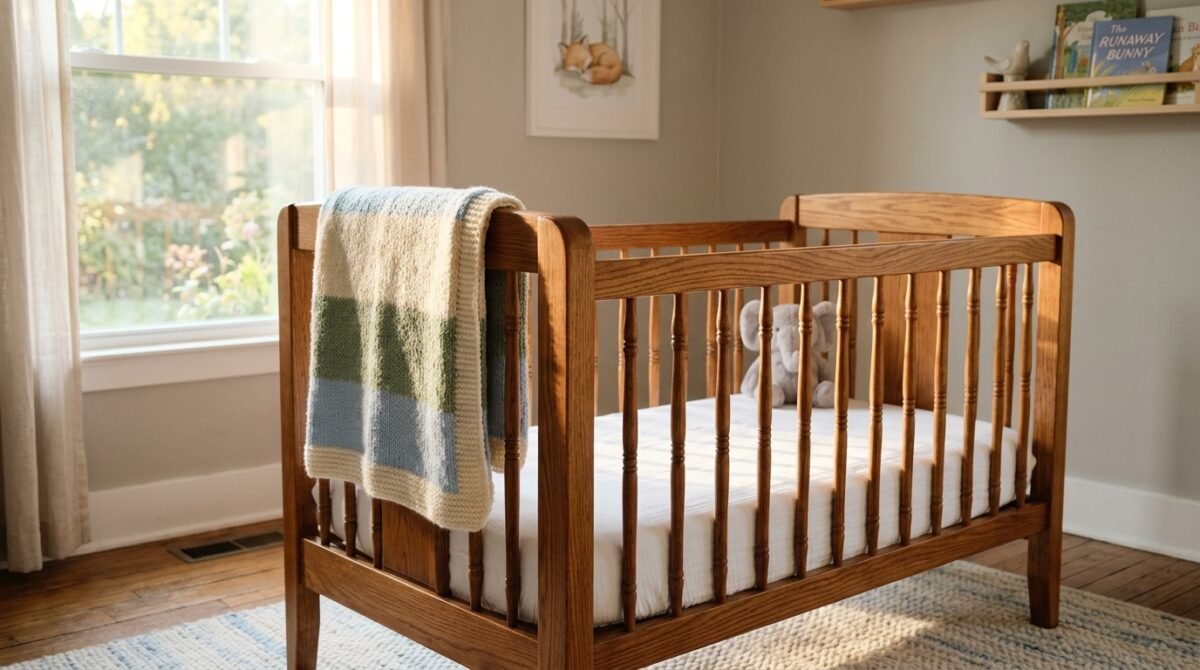
Today, the nursery is quiet. The crib stands in the corner, a little different than it was before, but it holds my daughter every night. The locks on the doors are secure, and the peace we have built is something I cherish every day. We are still no-contact with Linda, and while it isn’t always easy during holidays, it is the only way we can maintain our peace. We have learned to find joy in our own traditions, our own home, and our own way of doing things.
My husband has found peace in the distance as well. He is less stressed, more present, and more comfortable with the idea that he doesn’t owe his mother his life. We have started to build a family circle that is defined by mutual respect and love, not by obligation or the fear of ‘what she might do next.’ The scar from the incident remains, but it has faded, like the wood of the crib that has been sanded and refinished.
We are looking forward to the future—a future where we control the narrative, where our home is a sanctuary, and where we are the ones who decide what is valuable. The story of the crib is now a part of our family lore, a cautionary tale that we will tell our daughter one day when she is old enough to understand. It’s a story about strength, about survival, and about the things that really matter in the end.
Conclusion
Reflecting on this ordeal, I am reminded that family is not just about blood; it is about the mutual respect and trust we build with one another. When that trust is shattered by a fundamental violation of boundaries, the path forward is rarely easy. It requires sacrifice, courage, and a commitment to one’s own values. My mother-in-law may have seen a piece of wood, but she ultimately lost something much more valuable: a relationship with her son and her granddaughter, and the trust that once formed the bedrock of our family.
The debate over boundaries is as old as family itself, and yet, stories like this continue to resonate because they hit on something visceral: the right to our own spaces and our own history. I’ve learned that you cannot control how others act, but you can absolutely control how you react and what you allow into your home. The crib is just a crib, but it is also a symbol—a reminder that some things are worth fighting for, and some boundaries are worth defending at any cost.
What about you? Have you ever had a boundary so fundamental that, when crossed, left you with no choice but to cut ties? Was it a piece of family history, a digital privacy violation, or an overstepping of parental roles? I want to hear your stories in the comments below. Do you think there is a path back from this, or are some betrayals simply too deep to reconcile? Let’s discuss what it really means to protect your peace in a world that often demands we sacrifice it for the sake of ‘family’ harmony.
What's your verdict on this dilemma?
Vote below to contribute to the official community consensus.

Have a Dilemma Keeping You Up at Night?
Share your real-life feud, wedding chaos, or relationship crossroads anonymously with our editorial team.
What do you think ?
0 Comments🛡️ Comments are moderated to protect community integrity. Your comment will appear once approved by the editorial team.