
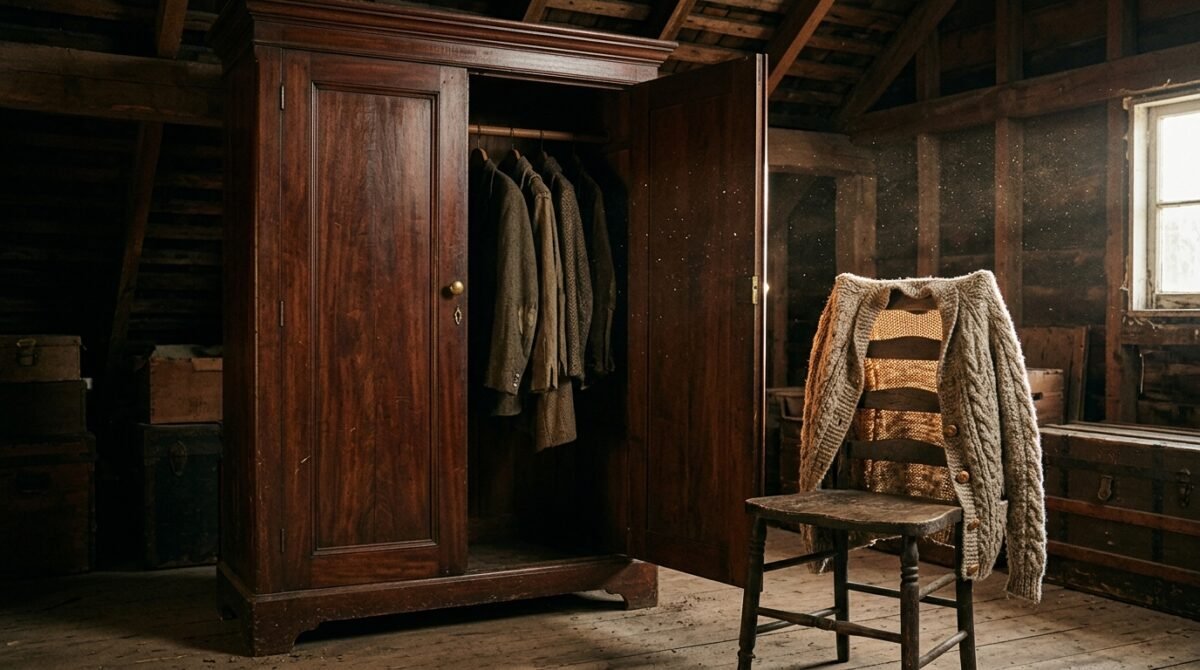
Grief affects everyone differently, but for my older sister, Sarah, it manifested as a predatory instinct to liquidate everything our mother left behind before the ink on the death certificate was even dry. We were left a modest estate, but the sentimental value of Mom’s hand-spun, hand-knit wool cardigans—pieces she had labored over during long winter nights—was, to me, priceless. These weren’t just sweaters; they were the physical embodiment of her warmth and her craft.
When I walked into the house three months after the funeral, I expected to see the boxes organized. Instead, I found the closets stripped bare. Not a single trace of Mom’s needlework remained. I felt a cold dread settle into my stomach, a sensation that something deeply personal had been violated. I began searching online marketplaces, praying that maybe they were just being stored, but what I found on Depop shattered the last of my patience and my faith in our relationship.
Sarah had listed them. Not as a memorial, not as a way to preserve them, but as ‘Vintage Boho Artisan Knits’ with a price tag that mocked the hours Mom had spent at the spinning wheel. The audacity was staggering. She didn’t need the money; she simply wanted the control. That was the moment I stopped being the grieving sibling and started being the strategic adversary.
I realized then that talking to her was useless. She viewed me as an emotional obstacle to her financial gain. I needed a plan that would protect the legacy of these items while simultaneously teaching her a lesson about boundaries, ownership, and the legal consequences of bypassing a co-executor. I didn’t reach for my phone to call her. I reached for my credit card and created an alias.
This is the story of how I bought back my heritage from a stranger—who was actually my sister—and why I eventually felt forced to escalate the situation into a courtroom drama that would change our family dynamic forever. This wasn’t about the wool; it was about the sanctity of our mother’s memory, and I was prepared to burn the bridge to save what remained.
The Empty Hangers and the Digital Discovery
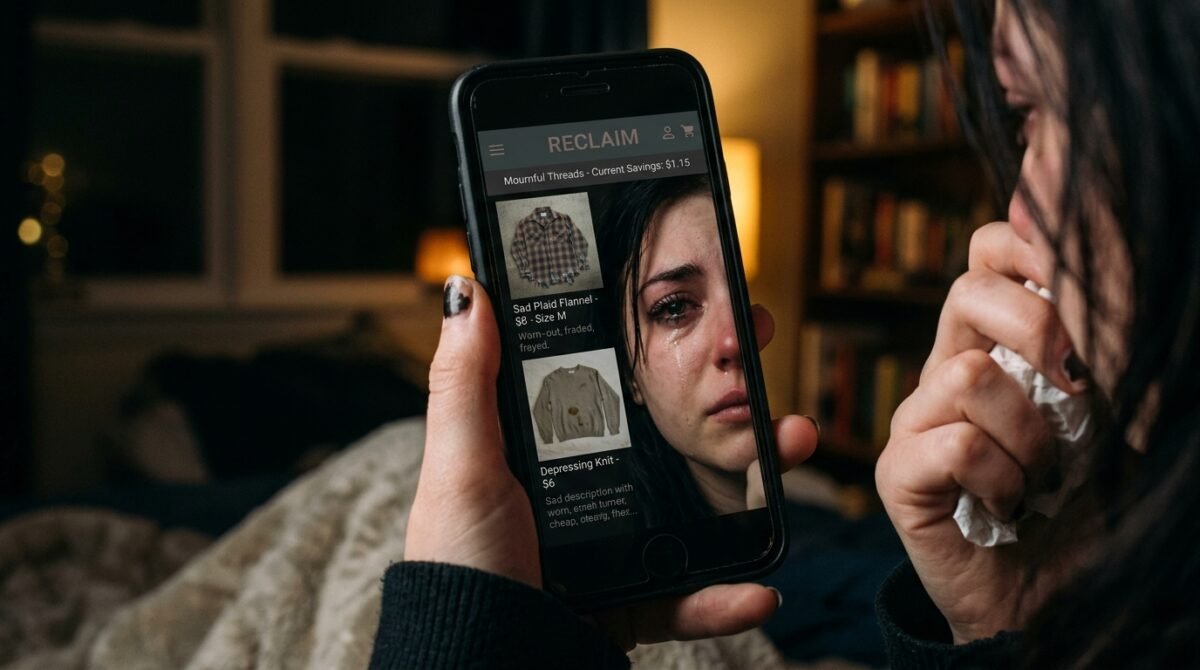
The silence in the house was deafening. It was the first time I had been back to the family home since the funeral, and the air still held the faint, sweet scent of lavender and cedar—Mom’s signature. I walked into the master bedroom, my heart hammering against my ribs, expecting to see the cedar chest where she kept her finished projects. When I lifted the lid, I found nothing but mothballs and a single, lonely knitting needle. The violation felt physical, a sharp ache in my chest that replaced the dull throb of mourning.
I spent the next hour frantically checking every drawer, every closet, and every storage bin. Nothing. It was as if Mom had never existed, or at least, as if her life’s work had been systematically erased. I called Sarah immediately, but she sent me straight to voicemail, which was standard for her lately. She had been ‘managing the logistics’ of the estate, which apparently meant clearing it out without consulting me.
Later that evening, I sat at my computer, scrolling through random search terms for ‘vintage wool’ on a whim, thinking maybe she had donated them. My breath hitched when I saw the familiar cable-knit pattern—the exact design Mom had made for my graduation. The shop name was ‘ThreadAndThriftStore.’ The description read: ‘Rare, hand-spun wool heirloom, one of a kind.’ The price was listed at $350. My hands began to shake as I clicked through the other listings in the store.
I cannot believe what I am seeing. Every single cardigan she ever knit, including the one she made for my wedding, is being sold off like common thrift store junk. She didn’t even tell me. She just took them.
— My journal entry, written that night
I cross-referenced the seller’s location with Sarah’s Venmo account history, which I still had access to from a shared utility payment. The zip code matched her neighborhood perfectly. The reality hit me with the force of a wrecking ball: my own sister was profiting off our mother’s death, piece by piece, behind my back.
I didn’t feel sadness anymore. I felt a cold, sharp, and terrifyingly clear resolve. If she wanted to treat our mother’s legacy like a retail business, then I would become her best customer, and then I would hold her accountable as a business owner who had broken the law.
The Anonymous Bidder’s Gambit

I knew I couldn’t confront her directly yet. If I did, she would just take down the listings or, worse, hide the remaining items where I could never find them. I had to play the game on her terms. I created a new account, used a burner email, and set my profile to look like a serious collector of ‘slow-fashion’ and ‘heritage knitwear.’ I started small, bidding on a lesser item just to see how she would react.
The notification pinged within minutes. ‘Item Sold.’ I felt a strange thrill, not of victory, but of reclamation. I kept buying. One by one, the cardigans began arriving at my house. Each time I opened a package, the scent of Mom hit me, and I wept. But after the tears, the anger returned, harder and colder. She was charging me exorbitant amounts for items that were already half-ours by inheritance.
I kept a meticulous ledger of every purchase, every shipping cost, and every item description. I was building a case. I wasn’t just buying clothes; I was collecting evidence of the embezzlement of estate assets. I needed to show, without a doubt, that she was liquidating shared property for personal gain, effectively cutting me out of my half of the inheritance value.
I’ve tracked 14 items now. She’s made over $4,000 in just two weeks. I have screenshots of the listings, the purchase receipts, and the tracking numbers showing they were shipped from her home address. She has no idea she’s been selling them back to her own sister.
— Message to my lawyer, drafted in private
The psychological toll was immense. Every time I hit ‘Confirm Purchase,’ I felt like a traitor to my own family. But then I looked at the sweaters, resting safely in my possession, and I knew I was protecting them from being lost to some random buyer who wouldn’t care for them. I was the guardian of our history now.
Sarah even messaged me once, bragging about her ‘successful side hustle.’ She had no clue that she was talking to her victim. She told me she was ‘clearing out the clutter’ to pay for a vacation she was planning. That was the final nail in the coffin of our relationship.
The Confrontation at Sunday Dinner
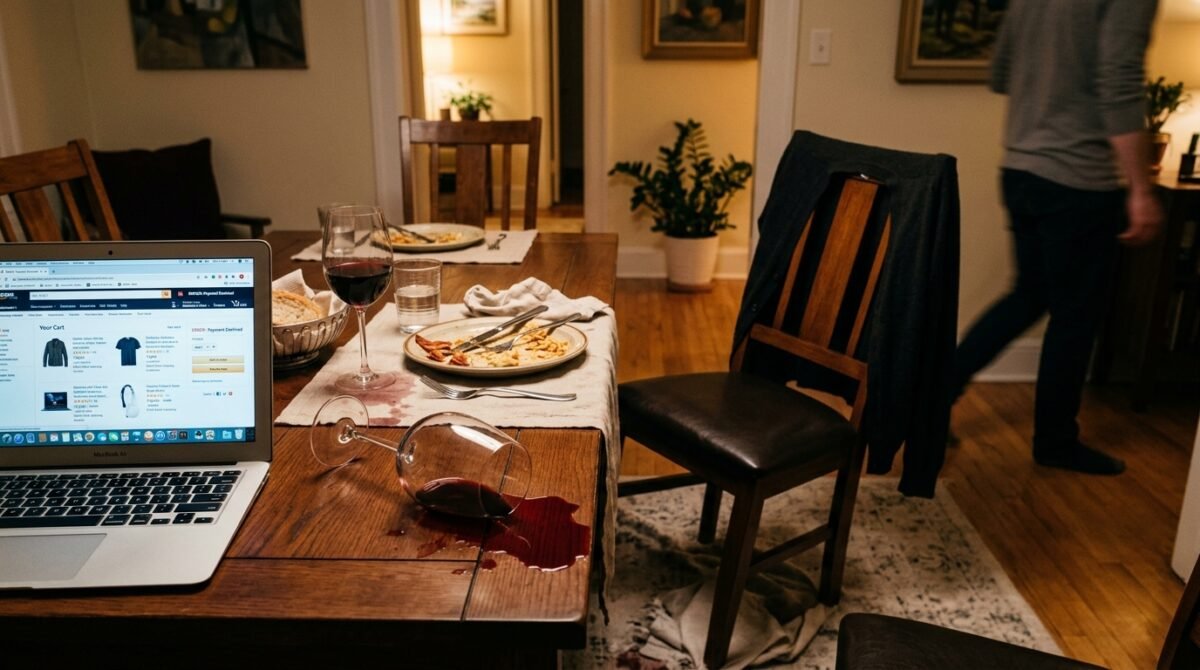
I decided it was time to drop the mask. I invited Sarah over for dinner, under the guise of ‘talking about the estate distribution.’ She arrived looking smug, dressed in one of her new outfits, completely unaware of the storm she was about to walk into. I had the boxes hidden in the guest room, but I had prepared the evidence on my laptop.
We ate in relative silence for a few minutes before I couldn’t take it anymore. I pushed my plate away and looked her dead in the eye. ‘Sarah, why did you feel the need to sell Mom’s sweaters?’ She froze, a piece of bread halfway to her mouth. ‘What are you talking about? Those old things? They were taking up space. I donated them or tossed them, I can’t remember.’ She lied so easily, it was chilling.
I opened my laptop and slid it across the table. The screen showed the Depop shop page, and specifically, a ‘Sold’ listing for the very cardigan she had worn to the funeral. ‘You didn’t donate them, Sarah. You sold them. And I have the receipts to prove it.’
Sarah: ‘You’re stalking me? Are you actually insane? I did the work to clear out the house! I deserved the money for the time I put in!’
Me: ‘You didn’t do the work. You looted the house. And by the way, I bought them all back. You were selling me my own inheritance.’
— The explosive argument in my dining room
The look on her face wasn’t shame; it was pure, unadulterated rage. She realized she had been outplayed, but instead of apologizing, she doubled down on her entitlement. She claimed that because she was the ‘primary’ in the house during Mom’s final months, she was entitled to the ‘liquid assets’ of the home. It was a legal delusion, and I was done entertaining it.
She stood up, knocked over her wine glass, and stormed out. She didn’t say goodbye. She just shouted that I was ‘toxic’ and ‘obsessed.’ I didn’t chase her. I sat there in the silence, watching the red wine stain the tablecloth, knowing there was no going back to the way things were before.
The Certified Letter and the Legal Realities
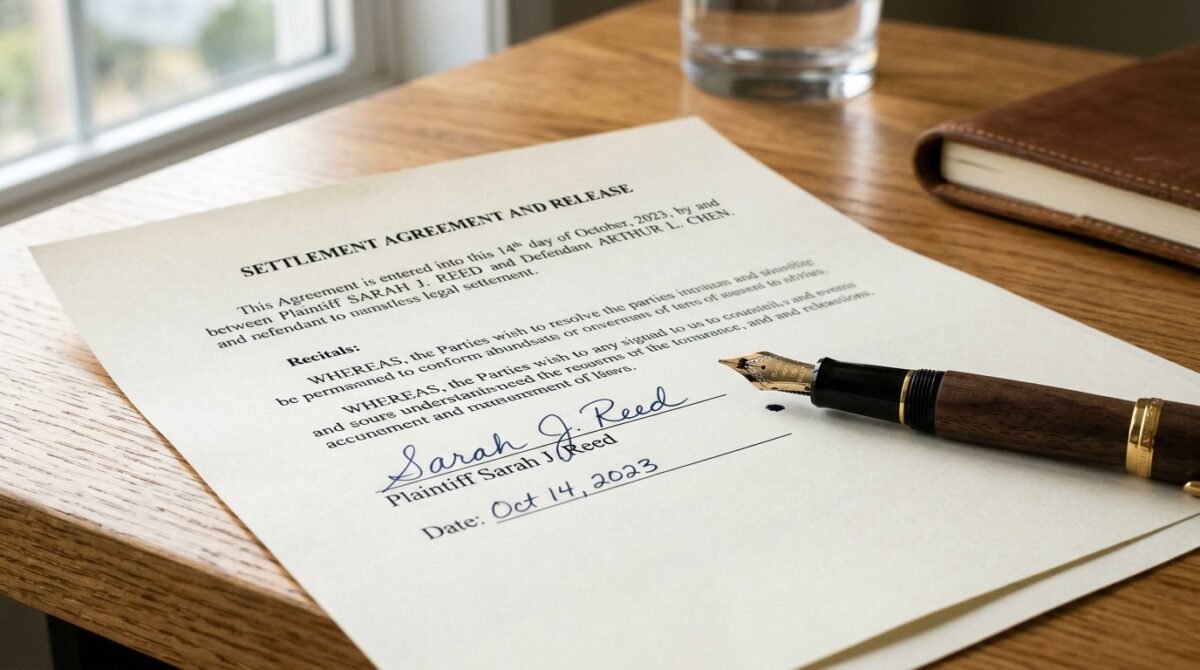
The next day, I didn’t send a text. I sent a formal notice through my lawyer. It was a demand for an accounting of the estate assets and a cease-and-desist regarding the sale of any further items. I wanted to make sure she understood that this was no longer a personal feud; it was a matter of probate law.
The response wasn’t a call from her. It was a frantic, unhinged email from her husband, claiming I was ‘harassing’ his wife and that they had already spent the money. They clearly didn’t understand the severity of the situation. They treated the estate like an ATM, and now the bank was closed.
I met with my attorney, a sharp woman who specialized in probate disputes. She looked at my ledger and smiled. ‘You have a very strong case,’ she said. ‘Not just for the sweaters, but for breach of fiduciary duty. She was the co-executor, and she acted in bad faith.’ It was the validation I needed. I wasn’t the crazy one; she was the criminal one.
The court doesn’t care about your ‘time spent’ cleaning a closet. If you sell estate assets without a mutual agreement, you are liable for the value of those assets. This is non-negotiable.
— Advice from my attorney during our consultation
Sarah tried to call me six times that day. I didn’t pick up. I knew what she wanted: to manipulate me, to cry about how hard it was, to gaslight me into thinking I was the one being unreasonable. I kept every text and every email. I was documenting the disintegration of my sisterhood, one message at a time.
I felt a strange sense of detachment. I had already ‘rescued’ the cardigans. Now, I was just ensuring that she couldn’t hurt anyone else with her sense of entitlement. It felt like I was cleaning up a spill, methodically and without emotion.
The Family Group Chat Explosion

It was only a matter of time before the rest of the family caught wind of the drama. My aunt, always the mediator, started a group chat, trying to play peacemaker. She didn’t know the full extent of the theft, only that Sarah and I were ‘not getting along.’ I decided to end the secrecy once and for all.
I posted the screenshots of the Depop listings, the receipts, and the proof that she had sold the items I specifically asked for in my inheritance request. The chat went silent for ten full minutes. Then, the messages started flooding in, mostly in support of my decision to involve the law.
‘I can’t believe she sold Mom’s wedding quilt too. I saw it on her shop last week. I thought she was just holding it for the estate!’
— My cousin, reacting to the group chat reveal
Sarah tried to defend herself, claiming she needed the money for her ‘living expenses’ after the funeral. She tried to turn the family against me, calling me the ‘greedy sister’ who was hoarding the memories. But the evidence was too damning. People saw the prices, the volume of items, and the sheer lack of remorse.
The family was fractured. Some stayed neutral, but most were horrified. My mother’s sisters were particularly vocal about the disrespect shown to her memory. It was heartbreaking to see the family tear itself apart, but it was necessary. The truth had to be out there.
I muted the group chat. I had done what I needed to do. The court date was set, and the focus was now on the legal proceedings. I was exhausted, but for the first time in months, I felt like I could finally begin to grieve properly, without the constant threat of my sister selling my mother’s legacy from under me.
The Courtroom Confrontation

Walking into the courtroom felt surreal. It was a small, dusty room that smelled of old paper and anxiety. Sarah was there, looking pale and defensive. She wouldn’t look at me, staring instead at the floor as if the ground might open up and swallow her. The judge was a stern, older man who didn’t care for family squabbles—he cared about the law.
My lawyer laid out the facts: the items stolen, the proof of sale, the violation of the probate agreement, and the emotional distress caused by the destruction of the estate’s sentimental value. The defense argued that the items had ‘minimal monetary value,’ but my lawyer countered by bringing up the sentimental importance and the fact that they were sold as high-value vintage goods.
Sarah took the stand and tried to play the victim, crying about how ‘stressed’ she was and how she thought the items were hers to do with as she pleased. Her testimony was riddled with contradictions. When she was asked about the specific items, she stumbled. She couldn’t even name the items she had sold, which proved she didn’t care about them at all.
Judge: ‘Ms. Sarah, did you or did you not have the legal authority to sell these items without the consent of the co-executor?’
Sarah: ‘I… I thought it was okay. Everyone was doing it.’
Judge: ‘The law does not care what ‘everyone’ is doing. You had a duty, and you breached it.’
— Transcript snippet from the probate hearing
The judge didn’t rule that day, but the writing was on the wall. He was clearly unimpressed with Sarah’s lack of accountability. I watched her as she left the room, her shoulders slumped, finally realizing that her little scheme had cost her more than just the money she made from the sales.
I felt a strange, hollow victory. I had won the legal battle, but the war had cost me the last of my trust in my sister. As I walked out of the courthouse, the sun was shining, but I felt like I was walking out of a long, dark tunnel.
The Reddit Community Weighs In

I turned to the anonymous support of the internet to process what I had done. I posted the full story on a popular subreddit, leaving out names but including all the facts. I was terrified of being labeled the ‘crazy sister,’ but the response was overwhelming. Thousands of people reached out, sharing their own stories of family betrayal and inheritance theft.
The consensus was clear: I was not the villain. Many pointed out that by buying the items back, I hadn’t just saved them; I had created an airtight audit trail of her crimes. The term ‘NTA’ (Not the Asshole) was used thousands of times, which, while trivial, felt like a validation of my sanity after months of gaslighting.
Honestly, you didn’t just sue her; you masterminded a sting operation. You didn’t give her the chance to lie about where the items went. You have receipts, you have the proof, and you have the moral high ground. Don’t feel guilty for holding her accountable.
— u/LegalEagleEye, 14.2k upvotes
Some users warned me that the relationship might be irreparably broken, and that I needed to prepare for the fallout. They were right. The comments weren’t just about the sweaters; they were about the boundaries we have to set with family when they decide to exploit our trust. It made me realize that my sister had been exploiting me in small ways for years.
Reading the responses helped me see the pattern. It wasn’t just the sweaters. It was the way she borrowed money and never paid it back, the way she made me feel guilty for having a career while she stayed home. This was the final straw in a long history of boundary violations. I wasn’t just grieving for Mom; I was grieving for the sister I thought I had.
I started a new thread a week later, providing an update, and the support was just as strong. It was the digital family I needed, the one that understood that sometimes you have to burn the bridge to stop the fire from spreading to the rest of your life.
Why I Can Never Go Back

People keep asking me if we’ve reconciled. ‘She’s your sister,’ they say, as if that’s a magical bond that erases theft and betrayal. But I can’t look at her without thinking of the Depop listings. I can’t hear her voice without wondering if she’s planning the next way to manipulate me. The bridge isn’t just burnt; it’s gone.
I’ve moved on, as much as one can move on from something like this. I have the sweaters, safely stored in a climate-controlled unit, treated with the respect they deserve. I wear them sometimes, and it feels like Mom is hugging me again. That is the only victory that matters in the end.
Sarah is still living her life, but the family dynamic has shifted permanently. She is the black sheep, not because I made her one, but because she chose to prioritize greed over our connection. There’s a sadness there, a permanent hole in the family tapestry, but I’ve learned that I don’t have to be the one to stitch it back together if the fabric is already ruined.
I realized that forgiveness isn’t about letting someone back into your life so they can hurt you again. It’s about letting go of the anger so you can finally be at peace. I’m at peace with the fact that she is no longer my sister.
— My closing thoughts in my journal
I’m focusing on my own life now, on the people who actually value me and respect my boundaries. It’s a quiet life, but it’s a healthy one. I still think about the sweaters, and I still think about the moment I saw them on that screen. But I don’t feel that cold, sharp anger anymore. I feel a quiet, steady resolve to keep my life—and my memories—safe.
The Aftermath of a Lawsuit

The final ruling was in my favor. The court ordered Sarah to return the proceeds from the sales she had made and to pay for the legal fees. It wasn’t a fortune, but it was the principle of it. She lost the money, she lost the family respect, and she lost me. It was a high price to pay for a few sweaters, but that was a choice she made, not me.
I didn’t take the money she returned. I donated it to a local arts charity in Mom’s name, ensuring that the ‘blood money’ went toward supporting the kind of craft Mom actually loved. It felt like the perfect way to close the loop on this entire disaster.
Sarah never reached out with a genuine apology. She sent a text once, blaming me for ‘ruining her reputation’ in the family. I didn’t respond. I blocked her number. I didn’t need the last word. The judgment was the last word. I was done.
‘You destroyed my life over some old yarn. I hope you’re happy, because you’ve lost your only sister.’
— The final text message from Sarah
I am happy, actually. Not because she lost, but because I finally feel free of the weight of her expectations and her entitlement. I feel like I am my own person again, someone who stands up for what matters, regardless of the social pressure to just ‘be the bigger person’ and let things slide.
I still talk to my aunts and cousins. We don’t talk about Sarah much. When we do, it’s with a sense of distance. The wound is healing, but the scar is there, a permanent reminder of what happens when you cross the lines of family and trust.
Lessons in Boundaries and Grief
Looking back, the biggest lesson I learned is that grief is not an excuse for bad behavior. People often give others a ‘pass’ because they are going through a hard time, but that pass doesn’t extend to theft and betrayal. It’s important to hold space for others’ pain without losing your own sense of self-worth in the process.
I’ve become much more protective of my boundaries, not just with family but in all areas of my life. I don’t apologize for expecting honesty and respect. If someone can’t provide that, they don’t have a place in my life. It’s a hard realization, but it’s a liberating one.
I’ve also learned that things—even things with deep sentimental value—are ultimately just things. They are vessels for our memories, but they aren’t the memories themselves. I fought for the sweaters because they were being used as weapons against me, but I would have walked away eventually if they were lost forever. The fight wasn’t for the sweaters; it was for the integrity of my mother’s legacy.
We don’t get to choose our family, but we do get to choose who we share our lives with. Sometimes, walking away is the most honorable thing you can do for yourself and the people you’ve lost.
— My reflection on the experience
I hope that if anyone is going through something similar, they know they aren’t alone. It’s okay to be the ‘difficult’ one when you’re standing up for what’s right. It’s okay to cut ties with people who hurt you, even if you share the same blood. You are your own best advocate.
I’m finally at a place where I can look at the sweaters and feel warmth, not resentment. I can remember Mom’s smile, her steady hands, and the love she put into every stitch. And that, more than anything else, is the real victory.
Conclusion
The story of the sweaters is, at its heart, a story about the fragility of trust. When I bought those cardigans back, I wasn’t just reclaiming fabric; I was reclaiming my own agency. I learned that family is not just about shared DNA—it’s about shared values and mutual respect. When those are violated, the title of ‘sister’ means very little compared to the reality of the actions performed.
Today, I am no longer waiting for an apology that will never come. I am living for myself, keeping Mom’s memory alive in the ways she would have wanted—with love and quiet integrity, not through courtroom battles or internet feuds. My life is calmer, my boundaries are firmer, and my heart, while scarred, is finally healing.
What about you? Have you ever had to draw a hard line with a family member who violated your trust, or have you been caught in an inheritance dispute that changed your life? Share your thoughts in the comments below—I’m curious to know how you’ve navigated these murky waters.
What's your verdict on this dilemma?
Vote below to contribute to the official community consensus.

Have a Dilemma Keeping You Up at Night?
Share your real-life feud, wedding chaos, or relationship crossroads anonymously with our editorial team.
What do you think ?
0 Comments🛡️ Comments are moderated to protect community integrity. Your comment will appear once approved by the editorial team.