
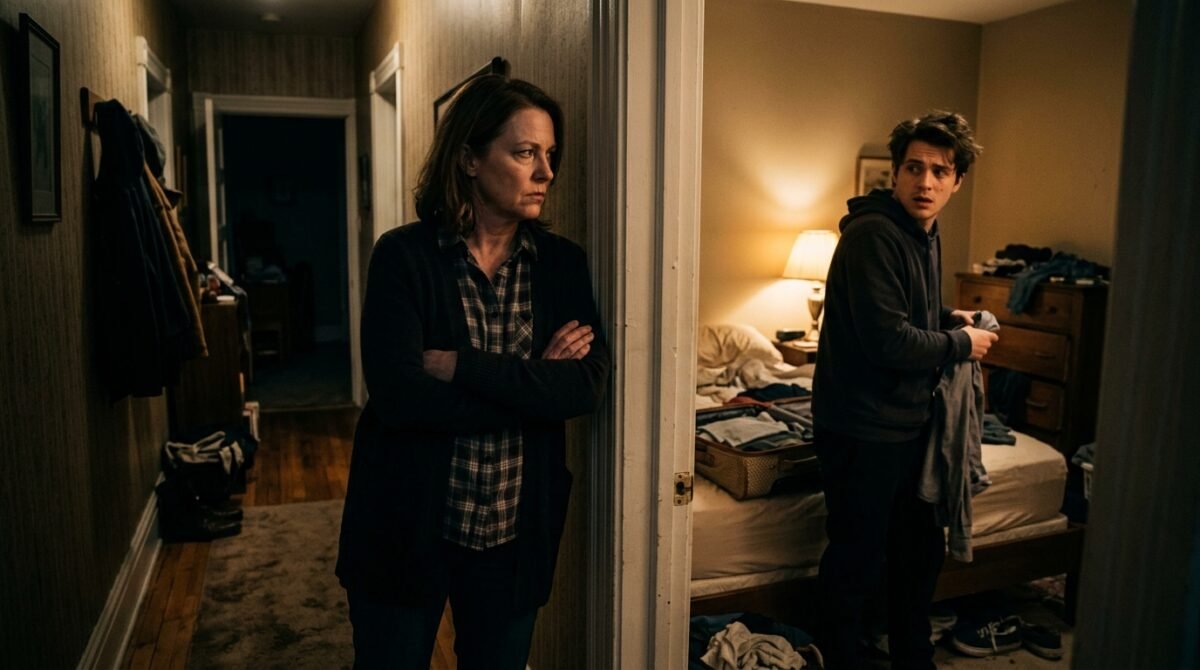
We all have that one family member—the one who can do no wrong in the eyes of our parents. For me, that was Julian. My stepbrother, the ‘Golden Child,’ had a knack for charming his way out of every disaster he created. Whether it was wrecking his first car or failing out of community college, my parents always found a way to frame his failures as ‘life lessons’ he just hadn’t learned yet. So, when he reached out to me, desperate and homeless after yet another ‘misunderstanding’ with a landlord, I felt a heavy, familiar sense of obligation.
I owned a two-bedroom condo, a space I had worked sixty-hour weeks to afford. It was my sanctuary, my investment, and my hard-won independence. When Julian asked for a place to crash for ‘just a few weeks’ while he got back on his feet, I agreed under strict conditions. No guests, no parties, and certainly no subletting. It seemed like a simple, reasonable request between family members. I wanted to trust him, despite the mountain of evidence that suggested I shouldn’t.
The first month was surprisingly quiet. Julian kept to himself, stayed out of the way, and even cleaned the kitchen once or twice. I felt a fleeting sense of hope that perhaps he had finally matured, that the ‘Golden Child’ label was finally evolving into something more substantial. I let my guard down, believing that the boundary I had set was being respected. That was my first mistake.
The reality, however, was far more insidious. While I was at the office, my home was being transformed into a revolving door of strangers. I wasn’t just hosting a brother; I was unknowingly running a clandestine hospitality business using my own furniture, my own utilities, and my own safety. The betrayal wasn’t just financial—it was a complete violation of the sanctity of my home.
When the truth finally came to light, it wasn’t a slow realization. It was a chaotic, jarring collision with reality that left me questioning everything I thought I knew about my family. This isn’t just a story about an eviction; it’s a story about the breaking point, the moment where ‘family duty’ ends and self-respect begins. What follows is how I reclaimed my home from someone who thought blood was thicker than boundaries.
The Mysterious Stranger in My Breakfast Nook
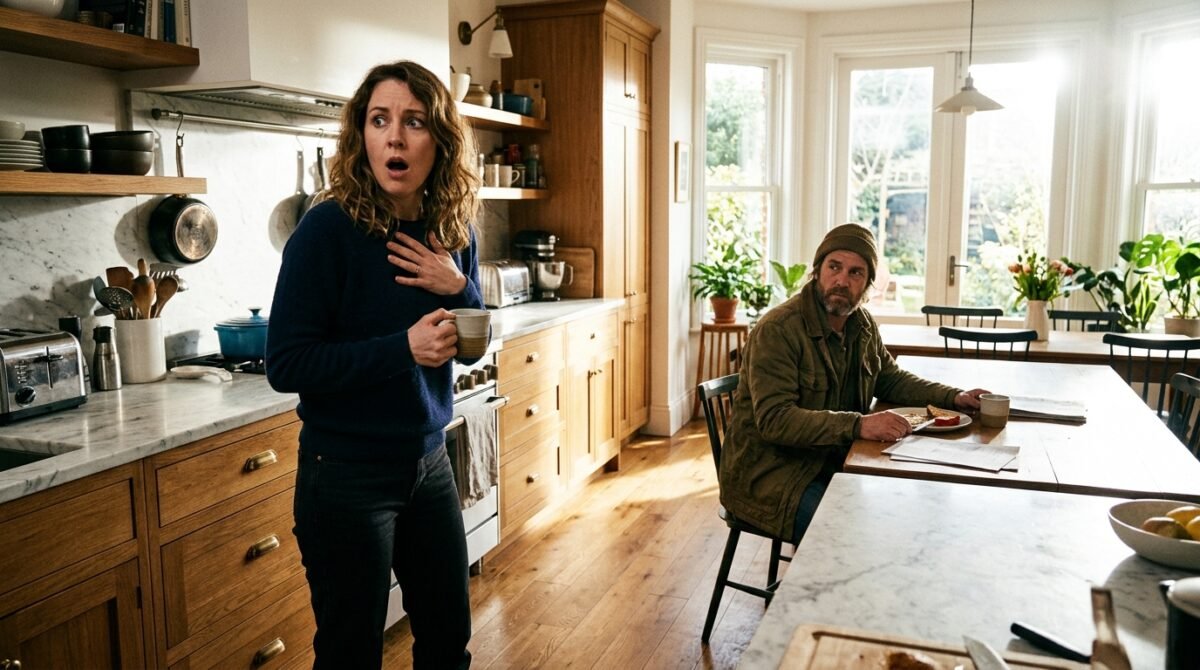
It started on a Tuesday morning. I had forgotten my laptop charger and ducked back home around 10:00 AM. Expecting the house to be empty—Julian worked a shift at a local café that didn’t start until noon—I walked through the front door, only to find a complete stranger sitting at my breakfast table, eating my cereal and scrolling through their phone. The stranger looked up, startled, and then looked around as if they were expecting someone else to walk in.
I stood there, frozen, gripping my keys. The stranger was a man in his early twenties, wearing a hoodie I didn’t recognize. My heart began to hammer against my ribs. Was I being robbed? Was this a friend of a friend? The intruder looked at me with genuine confusion, then asked, ‘Are you looking for Julian? He said the room would be ready by check-out time.’
I felt a cold wave of dread wash over me. I walked into the kitchen and stared at the stranger. My mind raced through the possibilities, but the most obvious, most offensive one kept rising to the top. I walked past him, my heels clicking sharply on the hardwood, and pushed open the door to the guest room. The bed had been stripped of my linens, and a travel bag sat in the corner.
“Who are you? And why are you in my house?” I demanded, my voice trembling with a mixture of rage and confusion.
“I’m a guest? I paid for the room on the app. Julian said this was a short-term rental arrangement,” the stranger replied, looking increasingly nervous.
The realization hit me like a physical blow. Julian wasn’t just living here; he was operating a business. He was charging people to sleep in my guest room while I was at work, banking the cash, and leaving me to deal with the strangers he brought into my private space. The betrayal was so audacious, so calculated, that I couldn’t even find the words to scream.
I grabbed my phone and dialed Julian. He didn’t answer on the first ring, which only fueled my fury. I paced the hallway, the stranger still sitting at my table, looking like they wanted to vanish into the floorboards. I was living in a nightmare of my own making, and the architect of it was the person I had been trying to help for the past three months.
The Confrontation at the Cafe

I didn’t wait for him to come home. I drove straight to the cafe where he worked, leaving the stranger to fend for themselves—my patience for hospitality had evaporated entirely. I found him behind the espresso machine, looking relaxed and comfortable. When he saw me storm through the front door, his smile faltered, replaced by a practiced look of concern that I had seen a thousand times growing up.
He wiped his hands on his apron and stepped out from behind the counter, trying to usher me toward a corner table. He clearly wanted to avoid a scene, but I was well past the point of caring about public optics. The entire cafe seemed to go quiet, the hum of the machines fading into the background as I approached him.
“I walked in on a stranger eating my cereal, Julian. You’re subletting my guest room? Are you kidding me?” I didn’t yell, but my voice carried a sharp, icy edge that made him flinch.
“Look, it’s not what you think. I was just trying to make a little extra cash to pay you back for the utilities. I was planning to tell you tonight!” he retorted, his voice rising in an attempt to sound defensive.
I laughed, a short, humorless sound. The idea that he was doing this ‘for me’ was the most insulting lie he had ever told. He had been stealing my privacy and endangering my home security for his own gain, and he had the audacity to frame it as an act of financial responsibility. It was classic Julian—the master of manipulation, always twisting the narrative to fit his needs.
He kept trying to touch my arm, to calm me down, but I stepped back. The look in his eyes wasn’t regret; it was annoyance. He was annoyed that he had been caught, annoyed that his ‘passive income’ stream had been interrupted, and annoyed that I was holding him accountable. He still saw me as the older sister who would eventually cave, the one who would lecture him but ultimately keep the peace.
I told him then and there that he had until the end of the day to get his things out. I didn’t care where he went. I didn’t care about his ‘rental’ customers. I didn’t care about the excuses he was already starting to spin about being ‘unfairly treated.’ My home was not his business venture, and he was officially done.
The Family Group Chat Explosion

By the time I got home, my phone was vibrating off the hook. My mother had already been contacted, and the family group chat was lit up with messages from my father, my stepmother, and even my aunt. It was an orchestrated campaign of guilt. They weren’t asking what happened; they were telling me that I was being ‘cruel’ and ‘unreasonable’ to someone in a ‘vulnerable position.’
“OP, how could you kick your brother out over a simple misunderstanding? He’s family. You should be supporting him, not throwing him onto the street!” — Mom
“It was just a room, honey. He wasn’t hurting anyone. You’re being so dramatic about a few bucks.” — Stepmom
I read the messages, feeling my skin burn. They were gaslighting me, as they always had. To them, Julian’s actions were a ‘misunderstanding,’ but my reaction was a ‘violation of family values.’ It was a script I had read a thousand times before. I didn’t reply to the individual messages; instead, I took a screenshot of the rental app page where Julian had listed my guest room and posted it to the chat.
The silence that followed was deafening. I followed the screenshot with a simple message: ‘He was charging strangers to sleep in my home. He was putting my safety and my property at risk for his own profit. If you want to support him so much, he can move into your guest room.’ That effectively ended the discussion for about ten minutes, before the excuses started again.
My father tried to call me, but I silenced the phone. I knew what he was going to say. He was going to tell me to ‘be the bigger person’ and ‘let it go’ because that’s what we always did. We always let Julian go, and we always cleaned up the mess he left behind. Not this time. This time, the mess was too big, and I was finished with the broom.
I spent the rest of the afternoon packing his boxes myself. I didn’t wait for him to get home. I moved his clothes, his shoes, and his stolen ‘rental’ supplies into the garage. Every item I touched felt like a weight being lifted. I wasn’t just removing his belongings; I was removing the influence he had exerted over my life for far too long.
The Aftermath: Legal Threats and Entitlement
The next morning, Julian showed up at my door with his father in tow. My stepdad is a man of few words, usually, but today he looked ready to argue. They didn’t even knock; they just let themselves in with the spare key I had foolishly given them for ’emergencies.’ I was sitting on my sofa, reading, when they walked in. The intrusion didn’t even surprise me anymore—it was just another boundary crossed.
“You need to give him his keys back and let him finish his week. He has contracts, OP. You’re going to get him sued by these people!” my stepdad barked, pointing a finger at me.
“He has contracts? He doesn’t own the property! He’s committing fraud! If he gets sued, he should be. And if you don’t leave right now, I’m calling the police for trespassing,” I replied, my voice steady and cold.
The look on their faces was priceless. They were so used to me being the ‘polite, responsible’ one that they couldn’t fathom me actually calling the authorities on my own family. My stepdad sputtered, his face turning a deep shade of red. He tried to argue about ‘family loyalty’ and ‘shared resources,’ but I stood my ground. I had already looked up the local tenant laws—since he wasn’t on a lease and hadn’t been there long enough to establish residency in a way that required a formal eviction process, I was in the clear.
Julian looked at me, his eyes wide and pleading. He was trying the ‘sad, victimized brother’ look again, but it didn’t land. I saw him for exactly what he was: a parasite who had finally run out of hosts. He didn’t care about the ‘contracts’ or the ‘law.’ He cared about the money he was losing and the ease of his lifestyle.
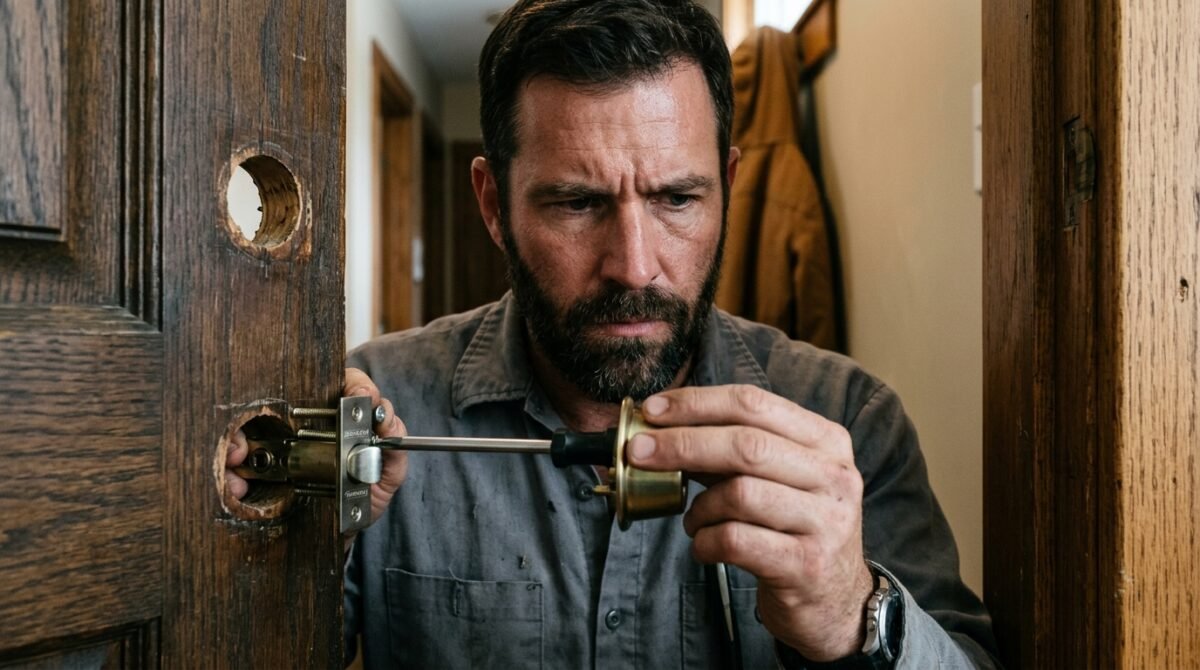
They left, but not before my stepdad threatened to never speak to me again. I told him that sounded like a fair trade-off for my peace of mind. As they walked out the door, I changed the locks. That sound—the click of the new bolt sliding into place—was the most satisfying sound I had ever heard. I was finally, truly, in my own home, and the ‘Golden Child’ was gone.
The Reddit Trial: How the Internet Reacted

I didn’t tell my friends initially, but after a week of harassment from my family, I decided to post my story on a popular subreddit. I wanted to see if I was actually the villain they kept calling me. The response was overwhelming. Within hours, my post had thousands of upvotes and an avalanche of comments. It was the first time I felt validated by something other than my own resolve.
“NTA. Your brother is literally committing fraud using your property. You’re not just ‘kicking him out’; you’re stopping a criminal enterprise in your own house. Change the locks and go no-contact with the family members who think this is acceptable behavior.” — u/JusticeSeeker (22.5k upvotes)
Reading the comments was therapeutic. People from all over the world were echoing my sentiments, calling out the manipulation and the entitlement of my family. It made me realize that my upbringing had normalized toxic behavior, and that leaving the family fold wasn’t just ‘cruel’—it was necessary for my own health.
“The ‘Golden Child’ syndrome is real, and it’s destructive. Your parents aren’t mad that Julian is homeless; they’re mad that you took away their puppet. You’re the one who broke the cycle, OP. Don’t let them guilt-trip you back into it.” — u/BreakTheCycle (15.2k upvotes)
I spent the night reading through the advice, especially the legal warnings. I realized I needed to secure my financial accounts, as my father was an authorized user on some of my old college accounts that I had neglected to close. I spent the next morning scrubbing my digital presence and ensuring that my family couldn’t access anything of mine. The Reddit community had provided more support than my own parents ever did.
It was a turning point. I stopped seeing myself as the ‘disappointing daughter’ who wouldn’t help her brother and started seeing myself as a woman who protected her boundaries. The guilt that had plagued me for years began to dissipate, replaced by a firm, unshakable clarity. I was done with the drama, done with the manipulation, and finally, starting to be done with them.
The Final Communication

A month later, I received a final email from Julian. It wasn’t an apology. It was a list of demands, claiming that I owed him ‘damages’ for the income he lost when I evicted him. He claimed that he had ‘invested’ in making the guest room attractive for his ‘guests’ and that I had essentially stolen his business property. It was the peak of his delusion.
“You owe me for the cleaning supplies, the new bedding, and the lost bookings. If you don’t send me $2,000 by the end of the week, I’m going to tell the whole family that you stole my savings and left me in the cold. You know how Mom gets.”
I didn’t hesitate. I replied with a single sentence: ‘If you contact me again, I will release the screenshots of your rental listings to your employer and the tax authorities, along with the proof of fraud.’ I never heard from him again. It was a gamble—I didn’t actually know if he was reporting that income, but I knew that the threat of a real-world consequence was enough to stop him dead in his tracks.
He knew I meant it. He knew that I had finally moved past the point of empty threats. And he knew that he had no leverage left. The ‘Golden Child’ didn’t know how to handle someone who wasn’t afraid of his tantrums or his threats of parental disapproval. He retreated into the shadows, likely to find another target who didn’t have a backbone.
I felt a strange sense of loss, not for him, but for the family relationship I had once hoped for. I realized then that the family I wanted didn’t exist; it was a fantasy I had been clinging to for years. By letting go of that fantasy, I was finally free. I could build my own family, one based on respect and trust, not on obligation and manipulation.
The Silence of the Sunday Dinner

My mother tried to arrange a ‘reconciliation dinner’ two months later. She sent me a long, rambling text about ‘forgiveness’ and ‘moving forward.’ I didn’t go. Instead, I spent that Sunday hiking with friends—people who actually cared about my life and didn’t see me as a resource to be exploited. It was the first time I had spent a Sunday not feeling like I had to apologize for existing.
I heard later that the dinner was a disaster. Apparently, my brother had complained to everyone about how ‘unfair’ his life was, and my father had finally snapped, telling him to ‘grow up and get a real job.’ It was a small victory, but it was enough. The crack in the foundation of the family’s delusion had finally widened into a canyon.
I realized then that the chaos wasn’t about me. It was about them. It was about their inability to deal with reality and their need for a scapegoat. I had been that scapegoat for a long time, but I had successfully removed myself from the pen. They would have to find someone else to blame for their problems, and I no longer cared who that person was.
I felt lighter, clearer, and more grounded than I had in years. The house, once a source of stress, was now truly my home. Every corner, every room, and every piece of furniture felt like mine again. The ‘Golden Child’ was no longer part of my narrative, and the silence of my home was the most beautiful sound I had ever heard.
Lessons in Hard Boundaries

Looking back, I see the warning signs I ignored. I see the moments where I should have said no, where I should have stood up for myself, and where I should have recognized that ‘family’ is not an excuse for abuse. The lesson was expensive, but it was worth it. I learned that boundaries are not just for others; they are for me to define, maintain, and enforce, even when it feels uncomfortable.
People often ask me if I regret being the ‘bad guy.’ I tell them that being the ‘bad guy’ in a toxic person’s story is often the only way to be the hero of your own. I didn’t start the conflict; I just finished it. I chose my peace over their approval, and I would make that choice again every single day of the week.
I’ve started a new chapter of my life, one where I am the author. I choose who enters my home, I choose how I spend my time, and I choose who I let into my inner circle. The ‘Golden Child’ is a distant memory, a warning sign I have finally heeded. I am no longer waiting for their validation, and I am no longer afraid of their disappointment.
The journey was long, and the path was rocky, but I am here now—whole, independent, and free. And for the first time in my life, I am truly happy, knowing that the walls I’ve built are there to keep the right things in, and the wrong things out.
The Evolution of My Perspective

It’s strange how one event can shift your entire worldview. Before this, I thought loyalty was about standing by people through their worst mistakes. I thought that family meant unconditional support, regardless of the cost. I was wrong. Loyalty should be a two-way street, and support shouldn’t come at the expense of your own survival.
I’ve had to re-learn how to trust. It’s hard, after you’ve been burned by the people who were supposed to love you the most. But I’ve found that there are people out there who value boundaries, who respect space, and who don’t look for ways to manipulate their way into your life. Those are the people I am now surrounding myself with.
I’ve also started therapy, which has been a game-changer. It’s helping me process the years of gaslighting and the deep-seated need for approval I had been conditioned to seek. It’s not an overnight fix, but it’s a start. I’m learning that my worth isn’t tied to what I can do for others, and that I don’t have to earn my place in this world.
The ‘Golden Child’ dynamic is a common one, and it’s a destructive one. I hope that by sharing my story, I can help others who are stuck in the same cycle. You don’t have to stay. You don’t have to accept the abuse. You are allowed to choose yourself, and you are allowed to walk away.
Finding Strength in Solidarity

The response to my story has been the most surprising part of this whole experience. I’ve had dozens of people reach out to me, sharing their own stories of family betrayal and boundary violations. It’s made me realize that I’m not alone, and that there is a huge community of people who are struggling with the same issues.
We’ve formed a small support group online, a space where we can share advice, vent about family drama, and remind each other that we aren’t crazy. It’s been a source of immense comfort and validation. Knowing that other people have gone through the same things and come out the other side has given me hope for the future.
I’m also more involved in my local community, volunteering and building connections that have nothing to do with my family history. It’s been a way to reclaim my identity and to define myself by my actions, not by my past. I’m finally living for me, and it’s a wonderful feeling.
If you’re out there reading this and feeling the same way I did, please know this: you are enough. You don’t need their approval, you don’t need their validation, and you certainly don’t need their drama. Stand tall, draw your lines, and never apologize for protecting your peace.
Conclusion
In the end, my decision to evict my stepbrother was the best thing I ever did for my mental health. It wasn’t about the money—though the financial fraud was a catalyst—it was about the fundamental disrespect for my home and my boundaries. The ‘Golden Child’ narrative had kept me hostage for years, but by choosing to walk away from that dynamic, I unlocked a version of myself I hadn’t seen in a decade.
What about you? Have you ever had to draw a hard line with a family member, even when the rest of the family called you the villain? What was the moment you realized that ‘family obligation’ had become ‘family abuse’? Let’s talk in the comments below.
Poll: Have you ever had to go no-contact or set firm boundaries with a ‘Golden Child’ relative?
– Yes, and it was the best decision of my life.
– I’m currently in the middle of the struggle.
– I tried, but the family guilt-tripped me back into it.
– No, but I’m considering it.
What's your verdict on this dilemma?
Vote below to contribute to the official community consensus.

Have a Dilemma Keeping You Up at Night?
Share your real-life feud, wedding chaos, or relationship crossroads anonymously with our editorial team.
What do you think ?
0 Comments🛡️ Comments are moderated to protect community integrity. Your comment will appear once approved by the editorial team.