

Graduation day is supposed to be the culmination of years of sacrifice, sleepless nights, and endless caffeine consumption. It is the one day where the focus is meant to be on the academic achievement of the graduate—a quiet, dignified moment of transition. But for my younger sister, Chloe, a milestone in someone else’s life is merely a stage waiting for her to step into the spotlight.
For months, I had been planning a small, private dinner to celebrate my Master’s degree. I had secured a reservation at ‘The Gilded Table’ three months in advance, a place I had been saving up for since the start of my program. It was meant to be a quiet space for my parents, my partner, and me to breathe after the chaos of the ceremony. I never expected that my graduation would become a secondary plot point in Chloe’s elaborate, choreographed production.
The trouble began when Chloe insisted on ‘helping’ with the logistics. She claimed she wanted to make sure my family was positioned for the best photos as I crossed the stage. In hindsight, that should have been the first red flag. She wasn’t worried about my pictures; she was scouting the terrain for her own tactical strike. She knew exactly when the ceremony ended and exactly where the crowd would be congregated.
As I walked across that stage, hearing my name announced, I felt the swell of pride—until I heard the music. Not the triumphant orchestral swell of the ceremony’s finale, but a high-tempo pop track blasting from hidden speakers. I walked out of the hall to find my family surrounded by a troupe of dancers in neon colors, and Chloe standing in the center of a heart-shaped formation, waiting for her boyfriend to drop to one knee.
The humiliation was immediate. My moment was swallowed whole by the spectacle. While the crowd cheered for her ‘surprise’ engagement, my parents were whisked away to participate in the ‘surprise’ video montage. I stood there, holding my diploma, realizing that the dinner reservation I had worked so hard to book was about to be abandoned. I didn’t say a word. I simply walked to my car, deleted the reservation, and left them to their confetti.
The Premeditated Sabotage of My Milestone
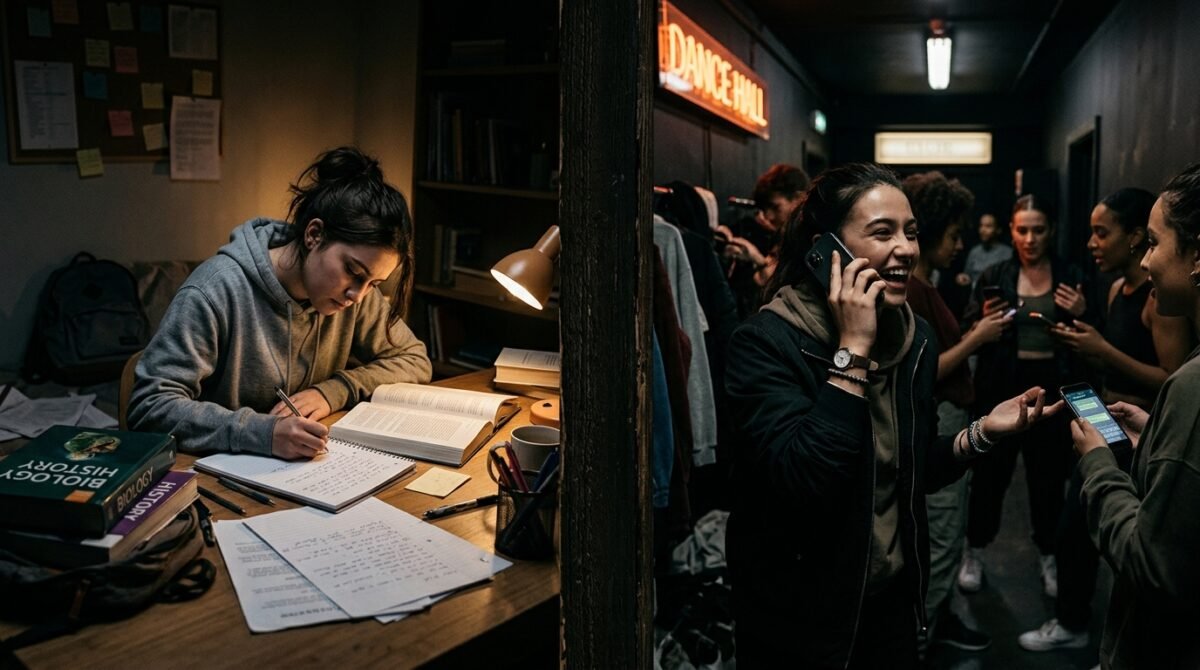
The planning of my sister’s stunt was a masterclass in manipulation. Looking back through our family group chat, I realize now how she had been orchestrating the ‘surprise’ by leveraging my graduation timeline. She kept asking for my itinerary, claiming she wanted to surprise me with a bouquet of flowers. I was naive enough to think she was finally being supportive.
She had even managed to get my parents on board by telling them it was a ‘surprise gesture’ for the whole family to celebrate me, but that she ‘happened’ to have a photographer available to capture the moments after the graduation. It was a bait-and-switch that would have made a marketing executive proud. The emotional toll of being played like that, especially on a day meant to honor my hard work, was suffocating.
I confronted her about the timing two days before, but she brushed it off with a laugh that felt icy in retrospect. She called me ‘dramatic’ and told me that ‘everyone loves a good surprise.’ The lack of respect for my boundaries wasn’t a one-time occurrence; it was a symptom of a larger, systemic entitlement that had defined our relationship for years.
“You’re really going to make this about your graduation? It’s just walking across a stage, Sarah. People will be happy for us both. Don’t be such a party pooper.”
— Chloe, via text message, three days before the ceremony
The resentment started to boil over the night before. I spent the evening finalizing my thesis defense notes while she was on Zoom calls with her ‘flash mob’ coordinators. I should have seen the writing on the wall, but I chose to focus on my success, foolishly believing that no one could possibly be that selfish on someone else’s big day.
The morning of the ceremony arrived with a heavy, humid tension. I didn’t want to start a fight, so I kept my head down and focused on the logistics. I had no idea that my car keys would soon become my only ticket to freedom, nor did I know that I was about to commit an act of ‘dinner-theft’ that would haunt our family dinner table for months.
The Moment the Music Swelled
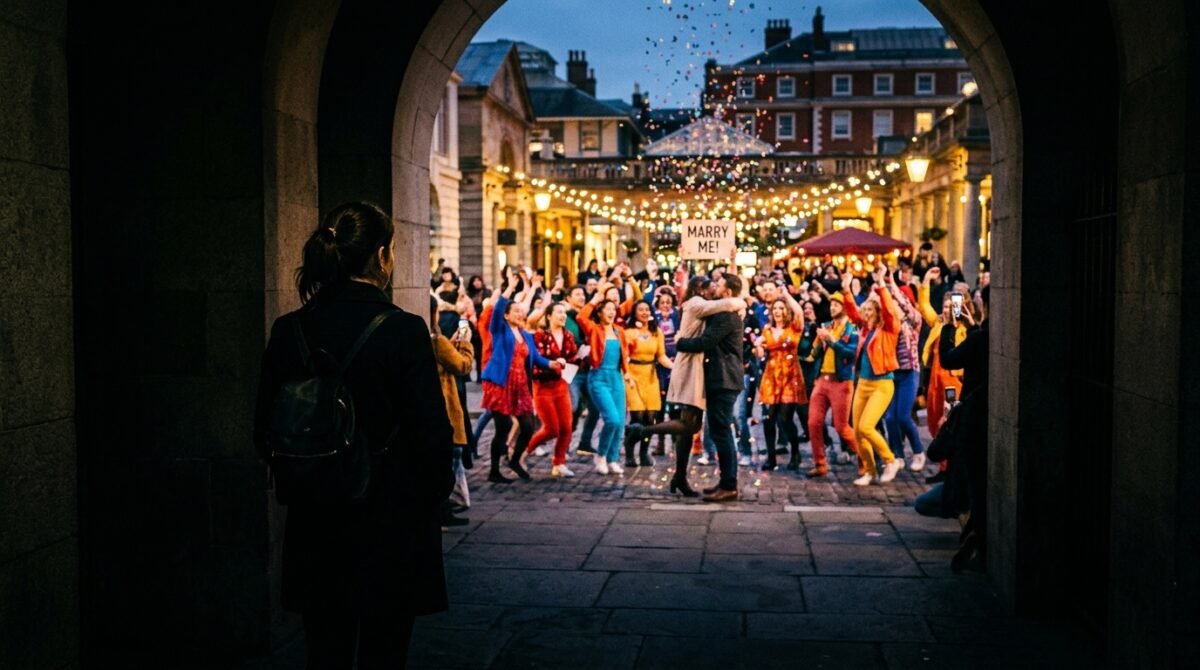
I remember the heat of the auditorium lights as I stepped off the stage. I was exhausted, sweaty, and looking forward to the quiet intimacy of my celebratory dinner. As I pushed through the heavy doors to the courtyard, the transition from academic silence to loud, bass-heavy pop music was jarring. It was as if I had walked into a music video shoot where I was the accidental background extra.
The flash mob was already in full swing. Strangers were dancing, a boombox was blaring, and there was Chloe, center stage, with a look of manic anticipation. My parents weren’t even looking at me; they were busy filming the dancers with their phones. My partner, bless him, looked utterly horrified as he tried to navigate through the crowd to find me.
I stood frozen near the exit, diploma in hand. People were taking videos, but not of me. They were all pointed at the spectacle. I felt a profound sense of erasure. My years of study, my financial struggle, my late nights—all rendered invisible by a choreographed dance routine designed to generate social media engagement.
“I just watched my sister get engaged while I was trying to find my parents. No one even realized I had walked across the stage. I was just a prop in her show.”
— My internal monologue, recorded in my journal that night
The realization hit me: this wasn’t just an accident. This was a calculated power move. Chloe had known exactly when the ceremony ended. She had timed the start of the music to the second I appeared in the doorway. She wanted the maximum audience, and she knew that my graduation crowd provided the perfect captive audience for her ‘Big Moment.’
The worst part was seeing my mother clapping along, completely oblivious to the fact that she was ignoring her other daughter’s milestone. When the boyfriend finally dropped to one knee, the crowd erupted. I felt like an alien in my own life. I realized at that moment that I owed them nothing—not my time, and certainly not the fancy dinner I had paid for.
The Great Dinner Reservation Heist

I didn’t storm out. I didn’t scream. I didn’t make a scene. I simply turned around, walked to the parking lot, and sat in my car for a long, quiet minute. My phone was buzzing with messages from the family group chat, asking where I was and complaining that I was missing the ‘big surprise.’ I didn’t reply. I opened the restaurant reservation app on my phone.
The reservation was for six people at 7:30 PM. I looked at the screen, my thumb hovering over the ‘Cancel’ button. Then, I had a thought: why cancel? I changed the reservation to a table for two. Then, I called the restaurant and asked if they had a private alcove, explaining that I was celebrating a major milestone and wanted a quiet, intimate atmosphere. They were happy to oblige.
After that, I messaged my partner, who had finally escaped the flash mob circle. I told him to meet me at the restaurant, but not to tell anyone where we were. I then blocked the family group chat for the next twelve hours. It was a petty, cold, and entirely necessary act of reclaiming my own narrative.
As I drove away, I looked in the rearview mirror. I could see the chaos of the crowd, the dancing, and the joy of a moment that wasn’t mine. I felt a strange sense of liberation. For the first time in my life, I wasn’t being a ‘good sport’ for the sake of family peace. I was prioritizing my own joy.
“I’m at the restaurant. It’s for two now. Don’t tell my parents or Chloe. I need tonight to be about me, even if it means I’m the villain.”
— Text to my partner, sent at 6:15 PM
The dinner was exquisite. We ordered the tasting menu, paired with the best wine on the list. We talked about my future, my career goals, and the relief of being finished with school. We didn’t talk about Chloe once. It was the best graduation gift I could have given myself.
The Aftermath: When the Group Chat Exploded
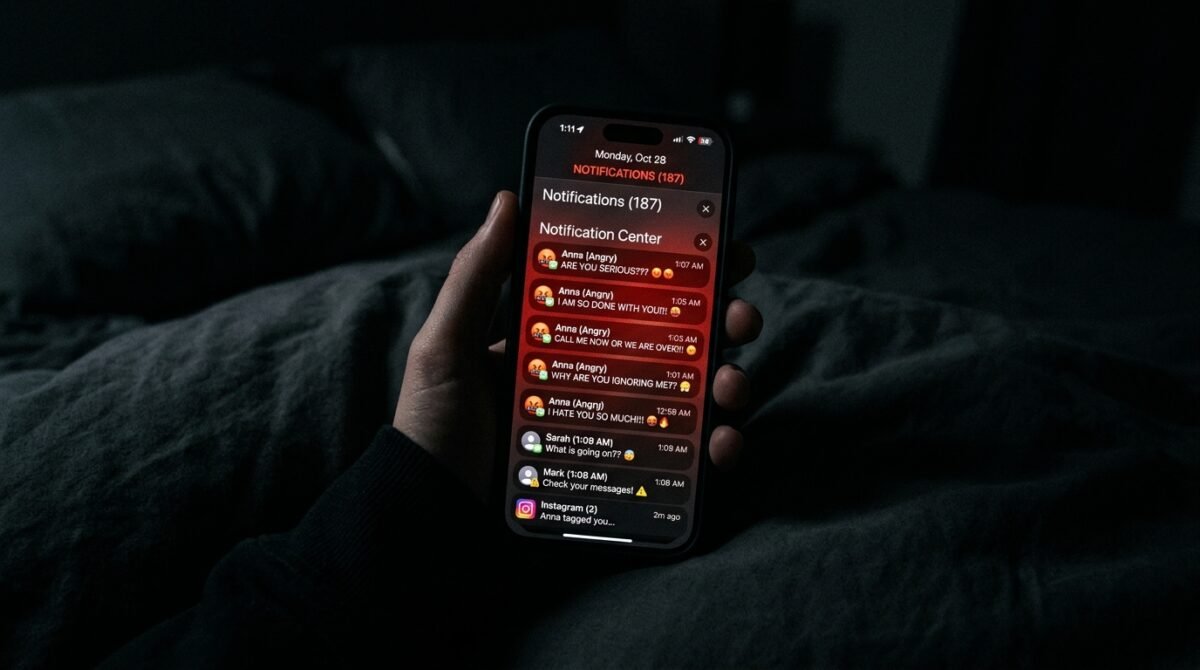
When I finally turned my phone back on the next morning, the notifications were overwhelming. There were over 150 missed messages, mostly from Chloe, my mother, and even some aunts who had been looped in. The tone ranged from confusion to absolute, unbridled rage. Apparently, the ‘surprise dinner’ was supposed to be the venue for the engagement party.
It turned out that the restaurant I had booked—the one I had planned for months—was the exact place where the engagement party was supposed to happen. Chloe had apparently ‘borrowed’ my reservation confirmation to tell her boyfriend to book it, assuming I would just go along with it once I realized what was happening. She hadn’t even checked if I had cancelled it; she just assumed I would pay.
The bill for the ‘engagement party’ was apparently the primary topic of conversation. Chloe had expected the family to split the cost, but with me gone and the reservation changed to just two people, the restaurant had no record of a larger party. They were left scrambling for a table, and the restaurant was fully booked for the night.
“You absolute snake! Do you have any idea how much money we lost on the deposit? And you just stole the table? I hope you’re happy with your pathetic little solo celebration.”
— Chloe, in the family group chat
My mother was the most disappointed, not because I was upset, but because I had ‘ruined the flow’ of the engagement. She kept insisting that I should have just ‘rolled with it’ and that my behavior was ‘unnecessarily vindictive.’ The level of gaslighting was intense. They were acting as if my graduation was an afterthought and that I was the one who had committed the primary offense.
I didn’t apologize. I simply sent a single, calm response: ‘My graduation, my reservation. If you wanted an engagement party, you should have planned your own instead of hijacking mine.’ Then, I muted the chat again. I knew this was just the beginning of the fallout, but for the first time, I didn’t care.
The Financial Breakdown of the Engagement Sabotage

It turned out the financial entanglement was deeper than I thought. Chloe hadn’t just hijacked my reservation; she had used my credit card information, which I had saved on the family account for ’emergency household expenses,’ to pay for the initial deposit on the restaurant. When I changed the reservation, I had essentially triggered a refund to my own card, which caused a massive accounting error in their planned budget.
This was the moment I realized that my sister had been using my accounts as a personal slush fund for her lifestyle choices. The sheer level of entitlement was staggering. I spent the next two days reviewing my bank statements and found hundreds of dollars in ‘small’ charges that I had previously attributed to household shopping. I was shocked, hurt, and finally, energized to set some serious boundaries.
I immediately called my bank, reported the unauthorized charges, and canceled the shared card. When my parents found out, they called me, absolutely livid. They argued that I was being ‘petty’ and that ‘family helps family.’ The concept of financial boundaries seemed entirely alien to them, which explained why Chloe felt so comfortable using me as a resource for her life.
| Category | Original Plan | The Reality |
|---|---|---|
| Graduation Dinner | Celebration of my Master’s | Hijacked for Engagement |
| Financial Cost | I paid for my table | Chloe tried to charge the party to me |
| Publicity | Private/Intimate | Flash Mob/Social Media Event |
The argument with my parents lasted for three hours. They didn’t see the issue with the theft; they only saw the issue with the disruption to the engagement party. They told me I needed to ‘grow up’ and that my behavior was ‘an embarrassment to the family.’ It was clear that in their eyes, my role was to support, not to be supported.
I stood my ground. I told them that if they wanted to support Chloe, that was their prerogative, but I would no longer be the primary financial or emotional vessel for her entitled behavior. The silence that followed was heavy, but it was the kind of silence that precedes a necessary change in the family dynamic.
Community Verdict: Why the Internet Took My Side

I posted about the situation on a popular sub-reddit, expecting to be told that I was the ‘asshole’ for being petty. To my surprise, the response was overwhelmingly supportive. Thousands of people commented, pointing out the pattern of manipulation and the absolute audacity of hijacking someone else’s milestone for a flash mob.
The consensus was that I had been a ‘doormat’ for too long and that this incident was simply the breaking point. Many users highlighted the fact that the flash mob itself was a massive boundary violation, regardless of the reservation theft. They urged me to maintain my boundaries and to stop letting my family guilt-trip me into submission.
“NTA. Your graduation was the culmination of years of hard work. She literally turned your milestone into her supporting act. The fact that she tried to hijack your reservation and charge the deposit to your card is actual fraud. Go low contact immediately.”
— u/FamilyDramaExpert (Top Comment, 32.5k upvotes)
There were, of course, the dissenters. Some people argued that ‘family is family’ and that I should have been more forgiving, but they were quickly drowned out by the stories of other people who had experienced similar ‘main character syndrome’ relatives. The validation was incredibly healing. It made me realize that my internal compass wasn’t broken—my family’s expectations were.
The sheer volume of responses helped me see that this wasn’t just a one-off mistake by Chloe. It was a pattern of behavior that was enabled by my parents. The ‘villain’ narrative that my family had constructed for me began to dissolve as I saw the objective reality of the situation through the eyes of thousands of strangers who saw the event for what it was: an act of blatant disrespect.
I spent the whole night reading the comments, realizing that I had the power to redefine my relationship with my family. I didn’t have to be the ‘good, obedient child’ anymore. I could be an adult with boundaries, even if it meant losing access to the toxic dynamic that had defined my life for so long. It was the beginning of my true independence.
The Confrontation at the Sunday Dinner Table
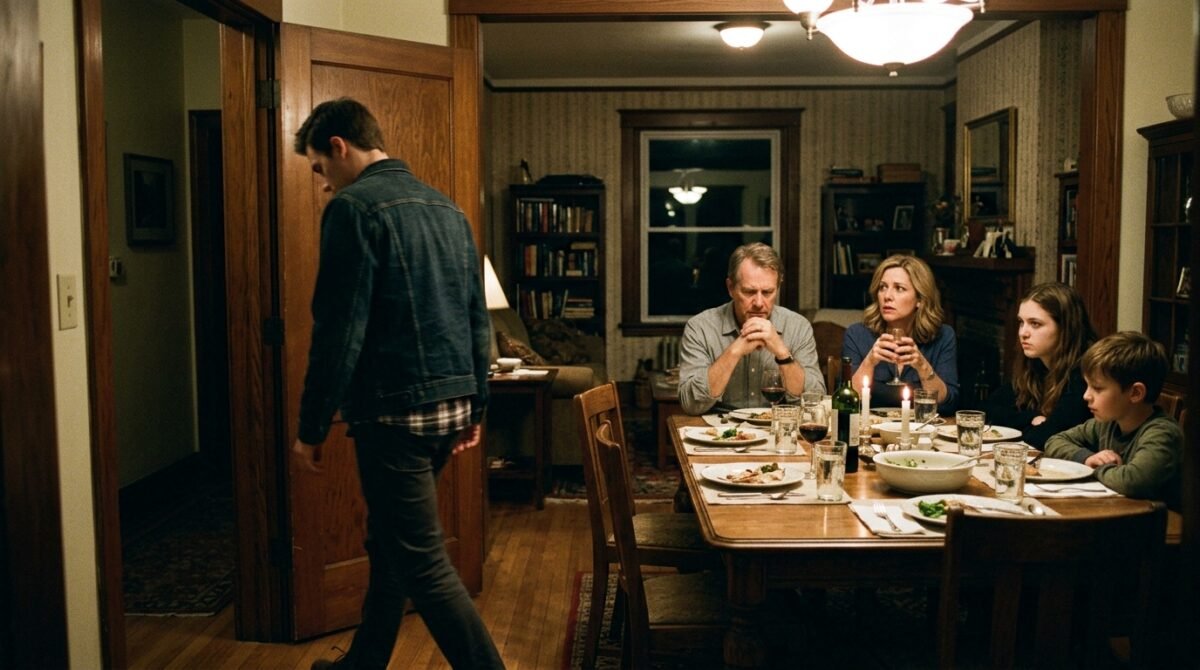
A week later, I was ‘invited’ to a family dinner. I knew what it was going to be—an intervention to tell me why I was wrong and how I needed to make amends to Chloe. I decided to go, but with a firm set of rules. If the conversation turned to the engagement, I would leave. I didn’t want to fight; I wanted to be clear.
The dinner started with forced pleasantries. My mother kept trying to steer the conversation toward ‘the big news’ and how excited she was about the wedding. My father was unusually quiet, looking at his plate. Chloe was sulking, clearly still annoyed that I had ‘ruined’ her night. It was an incredibly awkward atmosphere.
When my mother finally brought up the ‘misunderstanding’ at the restaurant, I stopped eating. I looked her in the eye and said, ‘Mom, I’m not discussing the reservation. I have my boundaries, and I expect them to be respected.’ The look of shock on her face was palpable. She wasn’t used to me asserting myself in such a direct, uncompromising way.
“You’re being so cold, Sarah. It was just a mistake. Why can’t you just be happy for your sister? It’s ruining the whole mood of the family.”
— My mother, at the table
I didn’t argue. I didn’t get emotional. I just said, ‘My happiness isn’t the problem here. The problem is that my accomplishments are consistently treated as background noise to Chloe’s life.’ I stood up, thanked them for the dinner, and walked out of the house. It was one of the hardest things I’ve ever had to do, but it felt right.
The walk to my car was exhilarating. I knew that things would never be the same. The dynamic had shifted permanently, and I had reclaimed my agency. As I drove home, I realized that I didn’t need their approval to validate my achievements. I had my degree, I had my independence, and I had my self-respect. And that was enough.
Why I Chose Low-Contact

In the weeks that followed, the fallout continued. My parents kept trying to reach out, sending messages about ‘forgiveness’ and ‘moving past the drama.’ They didn’t understand that for me, this wasn’t about a single event; it was about years of accumulated disrespect. I decided to initiate low-contact. I would check in once a month, but I would no longer be a participant in their constant drama.
The decision to go low-contact was a difficult one. I felt guilty at first, conditioned by years of being the ‘peacemaker.’ But every time I saw a text from Chloe or my mother, I remembered the flash mob, the stolen reservation, and the coldness of their reaction to my graduation. I reminded myself that I had done nothing wrong in setting boundaries.
I started focusing on building my own community. I reached out to friends who had been supportive during the whole ordeal and started creating traditions that didn’t involve my family’s chaos. It was like starting my life over again, but this time, I was the one in control. I felt lighter, more focused, and surprisingly, more connected to the people who actually cared about me.
“Boundaries aren’t meant to punish others; they are meant to protect your peace. And sometimes, the only way to find that peace is to step away from the people who don’t respect them.”
— My therapist, during our session
I realized that I had been carrying a weight that wasn’t mine to carry. The entitlement of my sister had been a mirror of the lack of boundaries in my family, and stepping away allowed me to see that I was not the problem. I was the person who was finally, after years of silence, speaking up for myself.
The transformation wasn’t overnight. There were days of doubt and longing for the family I thought I had, but those moments were becoming fewer and further between. I was creating a new, healthier life, and I was grateful for the clarity that the ‘flash mob’ incident had provided, even if it had been painful at the time.
Lessons from the Wedding-Hijacker

I learned a lot from this experience. First, that I need to be much more careful with my personal data and my credit card information. I had been too trusting, thinking that ‘family’ meant something different than it actually did in my case. I’ve since implemented strict security measures and keep my finances completely separate from everyone.
Second, I learned that ‘no’ is a complete sentence. I don’t need to justify my boundaries, and I don’t need to apologize for prioritizing my needs. If people can’t respect that, then they don’t have a place in my life. The realization that I don’t need to be the ‘nice one’ all the time has been liberating.
Most importantly, I learned that my self-worth is not dependent on my family’s validation. My achievements, my education, and my choices are mine and mine alone. I don’t need anyone else to celebrate them for them to be real. I’ve started celebrating my own wins, no matter how small, and it has changed my perspective on everything.
“I thought I was being the villain by walking away, but I realized I was just being the hero of my own story.”
— Reflection on my journey
I look back at the photos from that day now, and I don’t see a tragedy anymore. I see the day I finally stopped being a background character in someone else’s life. It was the most important lesson I’ve ever learned, and it was worth every bit of the drama it caused.
Life is short, and I’m no longer going to spend it living for others’ attention. I’m going to focus on my own path, my own success, and my own joy. If people are offended by that, that’s their problem, not mine. I have a life to live, and for the first time, I’m actually living it for myself.
Looking Forward: My Life, My Terms

Today, I am in a much better place. I’ve started a new job, I’m living in a new city, and I’m completely independent. The low-contact policy has turned into a comfortable, manageable distance. I still see my parents for holidays, but the conversations are superficial and short. I no longer feel the need to explain myself to them, and that silence has been incredibly peaceful.
As for Chloe, we don’t talk. The last I heard, the wedding is still on, but it’s becoming increasingly complicated with the budget issues and the fallout from the family drama. I don’t know the details, and I honestly don’t want to. I’ve moved on, and I’m focusing on my own future.
I’ve realized that the ‘flash mob’ wasn’t about me at all. It was about Chloe’s need to be seen and validated. By stepping out of the way, I denied her the one thing she wanted—my participation. It was the most powerful thing I could have done, and I don’t regret a single second of it.
“I learned that the best revenge is living well and not letting others define your boundaries. I’m finally free.”
— Final thought on the experience
My advice to anyone facing a similar situation is simple: trust your gut. If something feels like a boundary violation, it is. Don’t let yourself be guilt-tripped into accepting behavior that makes you feel invisible. You deserve to be the main character in your own life, especially on the days that are meant to celebrate you.
I am grateful for the journey, even the difficult parts. It has shaped me into the person I am today—stronger, wiser, and more committed to my own peace than ever before. The future is bright, and for the first time, it’s mine to define.
Conclusion
The saga of the flash mob engagement and the stolen dinner reservation is more than just a viral story; it is a testament to the importance of maintaining one’s boundaries in the face of relentless entitlement. By choosing to walk away, I didn’t just save a dinner; I saved my own self-respect. It was a clear demonstration that our milestones belong to us, and we are not merely supporting actors in the lives of those who seek to overshadow our achievements.
We all have people in our lives who prioritize their needs over everyone else’s, often under the guise of ‘family’ or ‘fun.’ Learning to spot the patterns of manipulation—the bait-and-switch tactics, the financial exploitation, and the constant gaslighting—is the first step toward reclaiming our own narrative. My journey towards low-contact was not an act of malice; it was an act of survival.
Now, I leave it to you, the readers, to weigh in on this. Was I right to leave them to the consequences of their actions, or should I have been the bigger person, even if it meant sacrificing my own celebration? Have you ever had someone hijack your milestone for their own agenda? Share your stories below—let’s discuss the fine line between ‘family support’ and ‘narcissistic takeover.’
Community Poll:
How would you have handled the ‘hijacked’ graduation?
1. Stayed and made the best of it for family peace.
2. Done exactly what I did and walked away.
3. Confronted them immediately in front of everyone.
4. Other (Please share in the comments!).
What's your verdict on this dilemma?
Vote below to contribute to the official community consensus.

Have a Dilemma Keeping You Up at Night?
Share your real-life feud, wedding chaos, or relationship crossroads anonymously with our editorial team.
What do you think ?
0 Comments🛡️ Comments are moderated to protect community integrity. Your comment will appear once approved by the editorial team.