
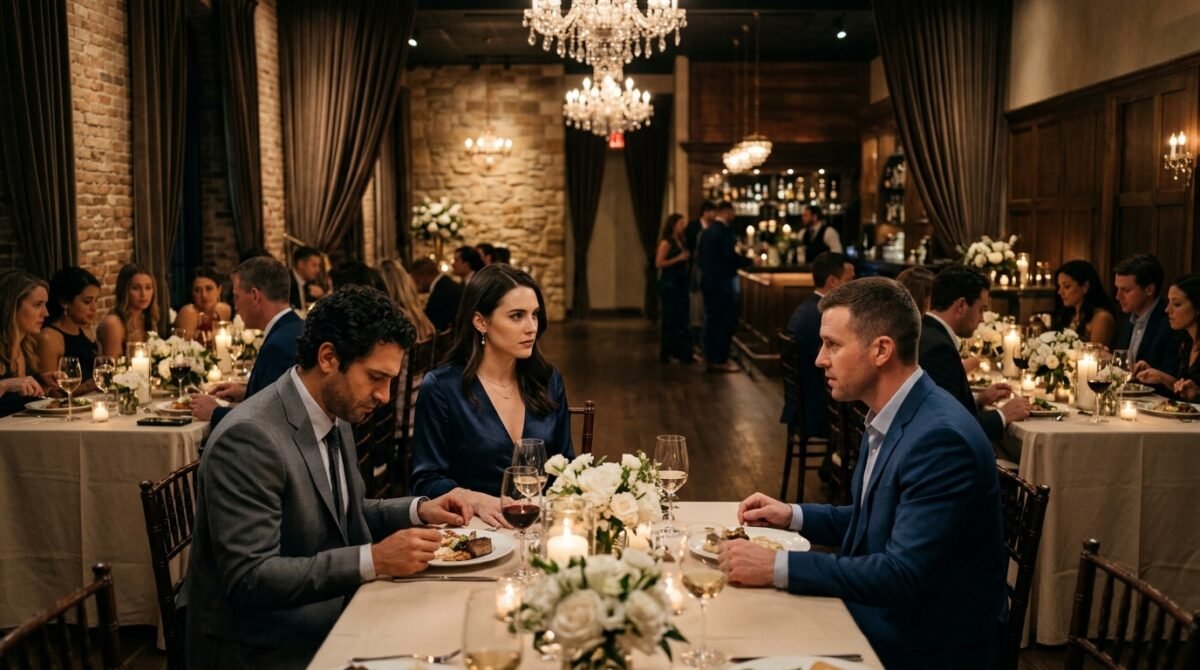
When my husband, Elias, and I began planning our wedding, we knew the guest list would be a delicate dance. Elias comes from a lineage of proud, displaced scholars and artisans from a region that has faced immense historical hardship. It is a part of his identity that he holds sacred, a quiet resilience that drew me to him from the very first day we met in our graduate studies. My brother, Mark, has always been the ‘joker’ of the family, a man whose humor often relies on punching down, a trait I had spent years excusing under the guise of him being ‘old-fashioned’ or ‘just a guy who likes to roast people.’
The rehearsal dinner was supposed to be the moment where our two worlds finally merged in celebration. We had rented a private room at a scenic lakeside restaurant, the tables draped in white linen, the air thick with the smell of rosemary and expensive wine. I had specifically asked Mark to play nice, to leave his caustic sense of humor at the door, and to honor the gravity of the occasion. I thought I had been clear. I thought I had set a boundary that even someone as dense as him would respect.
But as the evening progressed, the open bar became a catalyst for something far darker than mere tipsiness. Mark began to circle Elias, his comments starting as ‘playful’ jabs about our wedding decor before pivoting into a vitriolic monologue about Elias’s ancestral background. He wasn’t just being rude; he was engaging in a calculated, cruel mockery of the very culture that defined my husband’s existence. The room, which had been filled with laughter just minutes prior, fell into a suffocating, unnatural silence.
I watched Elias’s face go stone-cold. He didn’t erupt; he didn’t scream. He simply looked at me, a silent plea for protection that I had promised him long before we ever reached the altar. In that moment, the vision of my perfect wedding shattered. I knew then that there was no room for Mark at the ceremony the next day. The flight I had paid for, the suit I had rented, the place setting at the head table—none of it mattered. Only my husband’s dignity mattered.
This isn’t just a story about a canceled flight. It is a story about the agonizing choice between blood and the family we choose. It is a story about the moment a sister realizes that being ‘family’ is not a blank check to be cruel, and why, sometimes, you have to burn the bridge to keep the fire from spreading to the life you’ve worked so hard to build.
The Champagne Toast That Turned Into A Funeral Dirge

The rehearsal dinner was moving along with a rhythmic, joyful flow. The toasts had been warm, and the atmosphere was one of genuine anticipation for the following day. Mark had already had three whiskeys by the time he stood up to give his ‘unofficial’ speech. I felt a knot of dread tighten in my stomach, the kind of instinctual warning that whispers that something is about to go horribly wrong. He clinked his glass with a butter knife, the metallic ringing cutting through the laughter.
He started with the standard jokes about how I was ‘the difficult one’ in the family, which earned a few polite chuckles. But then, he turned his gaze toward Elias. He began to mimic the pronunciation of Elias’s last name, over-exaggerating the phonetics to make it sound like a guttural, primitive noise. The guests shifted in their seats. Some looked down at their plates, while others looked at me, waiting for me to intervene. I was frozen, trapped by the social contract of being the hostess.
“You know, Elias, it’s impressive how you guys managed to keep your history alive, considering most of your ancestors spent their time running from one border to the next. It’s like a never-ending game of tag, right?”
— Mark, during his ‘toast’
The mockery didn’t stop at the migration patterns. He began to make derogatory remarks about the traditional clothing Elias’s family had brought to the wedding as a gesture of goodwill, calling the embroidery ‘an eyesore’ and ‘something that should have stayed in the twentieth century.’ My mother looked like she wanted to evaporate. She opened her mouth to speak, but Mark cut her off, his voice rising in volume, drunk on the attention of the room.
I finally stood up, my chair screeching against the hardwood floor. The silence that followed was absolute. I looked at Mark, his face flushed and his eyes glassy with malice. I didn’t yell. I didn’t cause a scene. I simply walked over to him, took the microphone out of his hand, and told him that his time on the floor was over. I could see the confusion in his eyes—the genuine belief that he hadn’t done anything wrong because, in his twisted worldview, he was just ‘keeping things light.’
The rest of the night was a blur of apologies and awkward small talk. I spent the time huddled in the corner with Elias, who was remarkably composed, but the hurt in his eyes was something I couldn’t ignore. He told me he was used to it, which only made my blood boil further. No one should ever have to get used to being humiliated on their wedding weekend. By the time we left the restaurant, I knew what I had to do.
The 2:00 AM Cancellation And The Electronic Fallout

When we got back to the hotel, the adrenaline was still coursing through my veins. I sat at the small desk in our suite, my laptop open, while Elias paced the balcony. I logged into the airline’s management portal. My thumb hovered over the cancel button for Mark’s flight, which I had booked and paid for in full as part of his role in the wedding party. I didn’t hesitate. I clicked confirm, and within seconds, the confirmation of the cancellation popped up on the screen.
I didn’t stop there. I sent a short, cold text message to his personal phone. I didn’t want a conversation. I didn’t want to hear his excuses, his ‘I was just joking’ defense, or his pleas for me to reconsider. I needed to act before my resolve wavered. The message was final. It was a termination of his participation in the wedding, and effectively, a declaration of where I stood.
“Mark, due to your behavior tonight, you are no longer welcome at the wedding. Your flight has been canceled and your spot in the bridal party is gone. Do not come to the venue. Do not contact us. We are taking the night to recover, and you are not part of our future tomorrow.”
— My text to Mark
The reply came almost instantly. It was a barrage of insults, accusations of me being ‘too sensitive,’ and claims that I was ruining the family dynamic over ‘nothing.’ He called me a traitor and threatened to tell our parents that I had lost my mind. I muted the notifications. I didn’t want to see the toxicity spilling onto my screen while I was trying to prepare for the biggest day of my life.
The next morning, my phone was blowing up with messages from my extended family. My aunt, my cousin, my mother—they were all in a frenzy. Mark had painted himself as the victim, claiming I had uninvited him for ‘no reason’ and that I was being a ‘bridezilla’ who couldn’t take a joke. I had to spend the morning on the phone explaining exactly what happened, and to my surprise, some of them had actually been at the dinner and witnessed the whole thing.
The divide was clear. The people who were at the table were horrified by what Mark had said, while the people who weren’t there were siding with him, buying into his narrative of the ‘hysterical bride.’ I was exhausted, but I was firm. I wasn’t going to let the narrative shift. I sent a screenshot of the apology I had demanded from Mark—which he refused to provide—to the family group chat. That stopped the chatter for a few hours, at least.
The Family Group Chat Explosion

The family group chat, originally created to coordinate transportation and wedding logistics, turned into a digital war zone. My mother, caught in the middle of the crossfire, tried to mediate, but she was woefully ill-equipped for the intensity of the situation. Mark was posting voice notes, his voice slurred and defensive, claiming that I was ‘erasing him’ from the family history. It was pure, unadulterated manipulation.
I decided to stop reading the individual messages and instead posted a single, long-form response. I detailed the history of Mark’s behavior toward Elias, the constant microaggressions that had built up over three years, and the final, crushing blow delivered at the rehearsal dinner. I didn’t hold back. I laid it all out, the financial burden of the flight, the emotional labor of the rehearsal, and the absolute lack of respect for our boundaries.
“This wasn’t just a joke. It was a targeted attack on my husband’s heritage. If you think that is acceptable behavior for a guest, let alone a groomsman, then perhaps you should reconsider your own values. I am choosing my marriage over his ego. Anyone who cannot support that has no place at my wedding.”
— My message to the family group chat
The response was deafening silence for nearly thirty minutes. Then, the private messages started rolling in. My cousin supported me, having felt uncomfortable for years regarding Mark’s ‘jokes.’ Another cousin, however, told me I was ‘burning bridges’ and that I would regret it when the dust settled. The polarization was intense. I realized that my wedding was acting as a filter for the people who actually respected me and those who only liked me when I was compliant.
By the time the wedding morning arrived, I had blocked Mark on everything. I had to assign a cousin to act as a ‘bouncer’ at the venue, just in case he decided to show up to make a scene. I didn’t sleep, but for the first time in years, I felt a strange sense of clarity. I had stopped performing the role of the ‘accommodating sister’ and started performing the role of a wife and a partner.
The wedding itself proceeded without him. There was a palpable shift in the air, a lightness that hadn’t been there before. Without the weight of his presence and the constant anxiety of what he might say next, I was able to breathe. I focused entirely on Elias, and it was the most beautiful day of my life. The drama was still there, lurking in the background of my phone, but in that venue, it didn’t exist.
The Aftermath: When The Smoke Cleared
After the wedding, the fallout didn’t subside as I had hoped. The narrative shifted from the rehearsal dinner to the ‘uninvitation.’ My family held a dinner a week later, and I was pointedly not invited. They sat around and discussed my ‘radical’ decision, and the stories reached me through a friend of the family. Apparently, Mark was playing the part of the grieving brother, even though he hadn’t spoken to me in months.
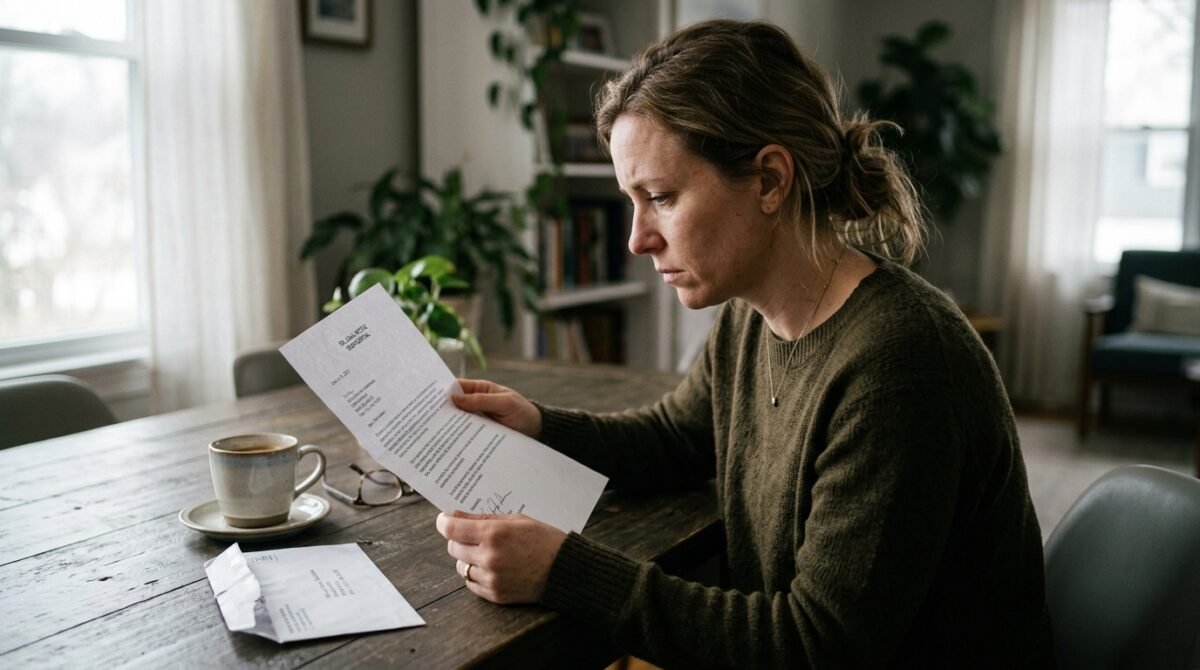
I started receiving letters in the mail—actual, physical mail—from my mother, pleading for me to ‘make peace’ for the sake of the family. She talked about how ‘life is short’ and how ‘blood is thicker than water.’ I found it ironic that she didn’t focus on the fact that my own brother had tried to humiliate my husband, but rather on the disruption caused by my standing up for him. It was a lesson in priorities that I wasn’t ready to learn, but one I desperately needed.
Elias and I spent that time building our own traditions, creating a space where we felt safe and respected. We started seeing a couples counselor to deal with the residual trauma of the wedding weekend. It helped us realize that this incident wasn’t just about the rehearsal dinner; it was the final chapter in a long, suppressed history of enabling Mark’s toxicity. We weren’t just cutting out a brother; we were cutting out an anchor that had been dragging us down for years.
“You are not obligated to set yourself on fire to keep others warm, especially when they are the ones holding the matches.”
— My therapist, during our session
The financial aspect was also resolved. I had spent around $1,200 on his travel and suit rental. I sent him a bill via a legal notice, not because I expected to get the money back, but to make a point that his actions had real-world consequences. He ignored it, but the message was sent. He wasn’t entitled to my resources anymore.
I eventually had to cut off contact with my mother as well. She continued to act as a pipeline for his manipulation, passing on his passive-aggressive comments and trying to guilt-trip me into reunions. It was the hardest thing I’ve ever done, but the silence that followed was peaceful. I had finally prioritized my own well-being over the expectations of people who didn’t respect me.
The Reddit Trial: How The Internet Reacted

I decided to post my story on a popular relationship advice forum, needing an objective perspective from people who hadn’t grown up in my family’s toxic ecosystem. I expected a mix of feedback, but I wasn’t prepared for the sheer volume of support. The post blew up overnight, reaching tens of thousands of upvotes and thousands of comments analyzing every aspect of my decision.
The consensus was overwhelming: I was not the asshole. Many people shared their own stories of ‘family jokers’ and how they finally had to draw a hard line. Some of the comments were from people who had been in similar positions, feeling the weight of societal pressure to maintain family bonds even at the expense of their dignity. It was validating in a way I hadn’t expected.
“He wasn’t just ‘roasting’ him. He was being xenophobic and cruel. You saved your wedding from being a permanent memory of humiliation. Stand your ground.”
— u/SupportiveSoul (15.2k upvotes)
However, there were dissenting voices. Some users argued that ‘family is family’ and that I should have handled it ‘more maturely’ instead of just canceling his flight. These comments were usually downvoted into oblivion, but they still stung, echoing the voice of my family in my head. I had to learn to filter out the noise and focus on the people who understood that boundaries are not negotiable.
The Reddit thread became a source of community for me. I spent hours reading through the advice, seeing how others had handled estrangement, and learning how to navigate holidays and birthdays without the people who were supposed to be my support system. It wasn’t just a validation of my decision; it was a masterclass in self-respect.
I eventually updated the thread with the news about my mother. The community was even more supportive, emphasizing that parents often enable toxic siblings because they are afraid of the conflict. It was a turning point. I stopped seeing myself as the ‘problem child’ and started seeing myself as a person who had finally grown up enough to demand respect.
Navigating The First Holiday Season Without Them

The first holiday season without my family was surreal. For my entire life, holidays were defined by the chaos of my brother’s presence, the tension of my mother’s attempts to keep the peace, and the feeling that I had to perform a specific version of myself to belong. Without that, the house felt empty, but it also felt like my own.
Elias and I cooked a dinner that honored both of our cultures, a fusion of traditions that felt authentic and shared. We didn’t have to listen to anyone mock our food or criticize our choices. We laughed, we drank wine, and we talked about our future. It was the first time I realized that ‘family’ is not a fixed construct, but something you build and nurture.
“It’s amazing how much quieter life is when you aren’t constantly waiting for the next explosion.”
— Elias, during our first holiday alone
We received a few ‘caring’ messages from extended family members, asking why we weren’t attending the usual gathering. I replied with a standard, polite message: ‘We are focusing on our own traditions this year.’ I didn’t owe them an explanation, and I certainly didn’t owe them a seat at my table. The freedom of not having to justify my existence was profound.
I kept a journal during that time, documenting the feelings of grief and relief. It wasn’t all sunshine; I missed the idea of my family, the version of them I had built in my head as a child. But I knew that the reality was something entirely different. Grief, I learned, is not the same as regret. I didn’t regret my choice, but I did grieve the loss of the possibility that things could have been different.
By the end of the year, I felt stronger. The scars were still there, but they were starting to fade. I had built a life that was mine, and I had protected it with everything I had. The flight that I canceled wasn’t just a trip; it was the start of a journey toward my own autonomy.
The Legal Notice And The Final Silence
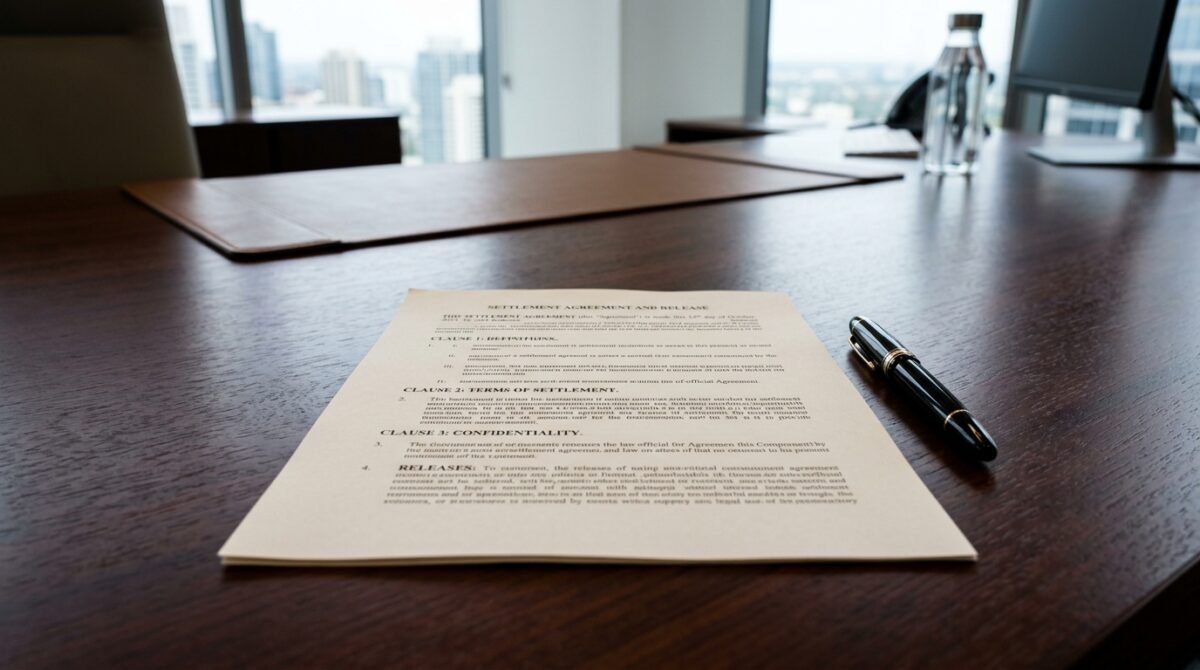
I decided to take the final, necessary step of professional boundaries: I sent a formal letter to my brother requesting that he cease all contact. I had my lawyer draft it, not because I expected him to listen, but because I needed it on the record. It felt cold, yes, but it was necessary to prevent him from continuing to harass me through my mother or other family members.
The letter stated that any further attempts to contact me, my husband, or my place of employment would be treated as harassment. It was a hard line, but one I felt was long overdue. My brother, of course, reacted with outrage, posting on social media about how his ‘sister was trying to sue him for existing.’ I didn’t look at the posts. I had friends who would alert me if anything truly dangerous was happening, but for the most part, I stayed in the dark.
The silence that followed was deafening, but it was a good kind of silence. It was the silence of a house where the windows are finally closed against the storm outside. I stopped waking up in the middle of the night wondering what my brother was saying about me. I stopped checking my phone for angry texts. I had reclaimed my mental space.
“You’ve done the right thing. Some people will never change, and you don’t have to stay around to watch them fail to be better.”
— My lawyer, during our final consultation
I realized that the ‘family bond’ is often a weapon used by toxic people to keep their victims in line. They rely on the idea that you will never truly cut them off because of shared history. By breaking that cycle, I had empowered myself in a way I didn’t think was possible. I was no longer the little sister trying to keep the peace.
I am now in a place where I can look back at the wedding weekend with a strange kind of pride. Not pride that it happened—the conflict was deeply painful—but pride in the version of myself that stood up and said, ‘No more.’ It was the moment I stopped living for my family’s approval and started living for my own life.
Why We Should Rethink The ‘Family First’ Myth

Our society is obsessed with the idea that family is the ultimate, inviolable unit. We are told that we must forgive, that we must tolerate, and that we must keep showing up, no matter how much we are hurt. This narrative is dangerous. It protects abusers, enables toxicity, and places the burden of peace on the victim rather than the perpetrator.
I have spent a lot of time reflecting on why it took me so long to cancel that flight. I was conditioned to believe that my brother’s behavior was an inconvenience I had to manage, not a boundary he was actively violating. I was taught that my husband’s heritage was something I had to ‘defend’ against, rather than something I should be proud of. It was a profound internal shift that I had to make.
We need to stop using the word ‘family’ as a synonym for ‘an excuse for bad behavior.’ If a stranger had walked into my rehearsal dinner and started mocking my husband, everyone would have called the police or thrown them out. Because it was my brother, people expected me to take it. The fact that he was blood made his behavior worse, not better, because it was a betrayal of trust.
“Boundaries are not an attack on the other person. They are a declaration of your own worth.”
— A quote I kept on my mirror during the fallout
I hope that by sharing my story, others will see that it is okay to draw lines. It is okay to protect your peace. It is okay to walk away from people who don’t respect your life, your marriage, or your values, even if those people are your family. Your life is yours to build, and you don’t need anyone’s permission to keep it safe.
The future is uncertain, and I know that I may never have a ‘normal’ relationship with my brother or my mother again. And that is okay. I have found a family in my husband, in our shared goals, and in the community I have built around us. I have found a life that is truly my own, and that is worth more than any traditional family dynamic could ever provide.
Reclaiming The Narrative: What I Learned

Looking back, the most important lesson I learned was about the power of the word ‘no.’ I had spent so much of my life saying ‘yes’ to appease, ‘yes’ to keep the peace, and ‘yes’ to avoid conflict. When I finally said ‘no’ to my brother, I wasn’t just canceling a flight. I was saying ‘no’ to a lifetime of being the secondary character in my own story.
I’ve realized that the people who get angry when you set a boundary are the ones who benefited the most from your lack of one. When I look at the reactions of my family, I see people who were comfortable with the way things were because it didn’t require them to change or to hold anyone accountable. They were comfortable with me being the emotional support beam for my brother’s toxicity.
I don’t hold hate in my heart for them. That would require too much energy, and I’m busy building a life that I love. I have moved into a state of indifference, which is far more powerful than anger. They don’t have access to me anymore, and that is their loss, not mine. I am free to be who I am without the weight of their judgment.
“Healing is not about forgetting. It is about understanding that you are no longer the person who was hurt by those events.”
— My personal reflection
I encourage anyone reading this to evaluate their own relationships. Are you being treated with the respect you deserve? Is your partner? Are you holding onto ‘family’ out of love, or out of fear? These are hard questions, but they are necessary ones. Don’t be afraid to make the hard choice if it means protecting the life you’ve built.
My husband and I are stronger now than we ever were. We went through the fire together, and we came out the other side with a deeper understanding of what it means to be a team. We are not just a married couple; we are partners who have each other’s backs, no matter who in the family tree disagrees.
The Final Verdict: Why I Don’t Regret A Thing

It has been over a year since that weekend. The dust has settled, the anger has faded, and the quiet of our new life has become our new normal. I have no contact with my brother, and I have minimal contact with the side of the family that continues to enable him. People sometimes ask me if I regret the drama, if I wish I had just ‘let it slide’ to keep the family intact. My answer is always the same: No.
If I had let it slide, I would have sent a message to my husband that his heritage, his background, and his identity were less important than my brother’s comfort. I would have spent the rest of my marriage wondering what my brother would say next, waiting for the other shoe to drop. I would have stayed the person who put everyone else’s comfort above my own integrity. I am not that person anymore.
The flight was canceled, the money was lost, and the family ties were frayed. But my dignity, my marriage, and my self-respect were saved. I realized that the people who were truly meant to be in my life were the ones who supported me, not the ones who tried to guilt-trip me back into compliance. I have found my true tribe, and they are people who respect boundaries, not people who test them.
“You don’t lose people when you stand up for yourself. You lose the people who were never really on your side to begin with.”
— A parting thought for the readers
So, to everyone who might be facing a similar crossroads—whether it’s an arrogant sibling, an enabling parent, or a toxic environment—know that you have the power to change your circumstances. You are not trapped. You are the architect of your own life. Don’t let anyone, blood-related or not, tell you that you don’t have the right to demand respect.
I’ll end this with a final message: Be kind, be compassionate, but above all, be firm. Your worth is not determined by the opinions of people who cannot respect you. Go out and build the life you deserve, even if it means doing it without the people you thought you needed.
Conclusion
My journey from the rehearsal dinner debacle to the peace I have today has been the most transformative year of my life. It wasn’t about winning an argument; it was about reclaiming the right to exist without being a punchline. I am now in a place where I can look at the chaos of the past with a sense of perspective, understanding that it was a necessary fire to burn away the old, toxic structures of my life.
If you have ever felt forced to swallow your pride to keep the peace for someone else’s sake, I want you to know that you are not alone. The burden of maintaining a toxic status quo is far heavier than the burden of walking away. You are allowed to protect your joy, your family, and your history. The people who truly love you will respect your boundaries, even if they have to grow to understand them.
What about you? Have you ever had to cut off a family member to protect your peace? Or perhaps you’ve been on the other side of the boundary, realizing that you were the one who needed to change? I want to hear your stories in the comments below. Let’s create a space where we can discuss the complexities of family, love, and the hard, necessary work of setting boundaries. Your experiences matter, and sometimes, sharing them is the first step toward healing.
What's your verdict on this dilemma?
Vote below to contribute to the official community consensus.

Have a Dilemma Keeping You Up at Night?
Share your real-life feud, wedding chaos, or relationship crossroads anonymously with our editorial team.
What do you think ?
0 Comments🛡️ Comments are moderated to protect community integrity. Your comment will appear once approved by the editorial team.