
Living with roommates is often a delicate dance of shared space, unspoken boundaries, and the occasional clash over whose turn it is to take out the trash. For most, the conflicts revolve around dirty dishes or the occasional unannounced guest. But for me, the threshold of sanity was crossed the moment I opened the freezer to find my soul—well, at least the soul of my kitchen—tossed into the recycling bin.
I have been nurturing a sourdough starter, ‘Mother Dough,’ for five years. It has traveled with me through three apartments, survived a cross-country move, and been the foundation of countless loaves, pizzas, and memories. It wasn’t just flour and water; it was a living history of my culinary journey. To find it dumped out to make room for four cartons of discounted grocery store ice cream was not just an inconvenience—it was a declaration of war.
My roommate, Chloe, has always been the type to treat the communal kitchen like her own private staging ground. She views my hobbies as clutter and my respect for shared space as a weakness. When I confronted her about the starter, her nonchalance was the final straw. She didn’t see a five-year project; she saw a ‘weird jar of goop’ that was preventing her from stocking up on rocky road.
The moral dilemma here isn’t just about the starter. It’s about the erosion of respect in a shared living situation. When one party consistently devalues the personal property of another, the social contract breaks down. I realized in that moment that she would never understand the value of what she destroyed, so I decided to show her the value of what she loved most in a language she could actually understand: loss.
What followed was an act of retaliatory destruction that has left our apartment in a state of icy, silent fury. My decision to ‘purge’ her vanity was impulsive, calculated, and entirely disproportionate, according to some. But in the landscape of our broken home, it felt like the only way to balance the scales of justice—at least, in my mind.
The Morning of the Great Freeze
It was a Tuesday morning when the world stopped. I went to the freezer, intending to pull out a portion of my starter to feed it for a weekend bake. My hands reached for the familiar glass jar, but my fingers hit empty air. Panic set in almost immediately, a cold, sharp sensation that started in my chest. I scanned the shelves, moving aside bags of frozen peas and half-empty boxes of veggie nuggets, but it was gone.
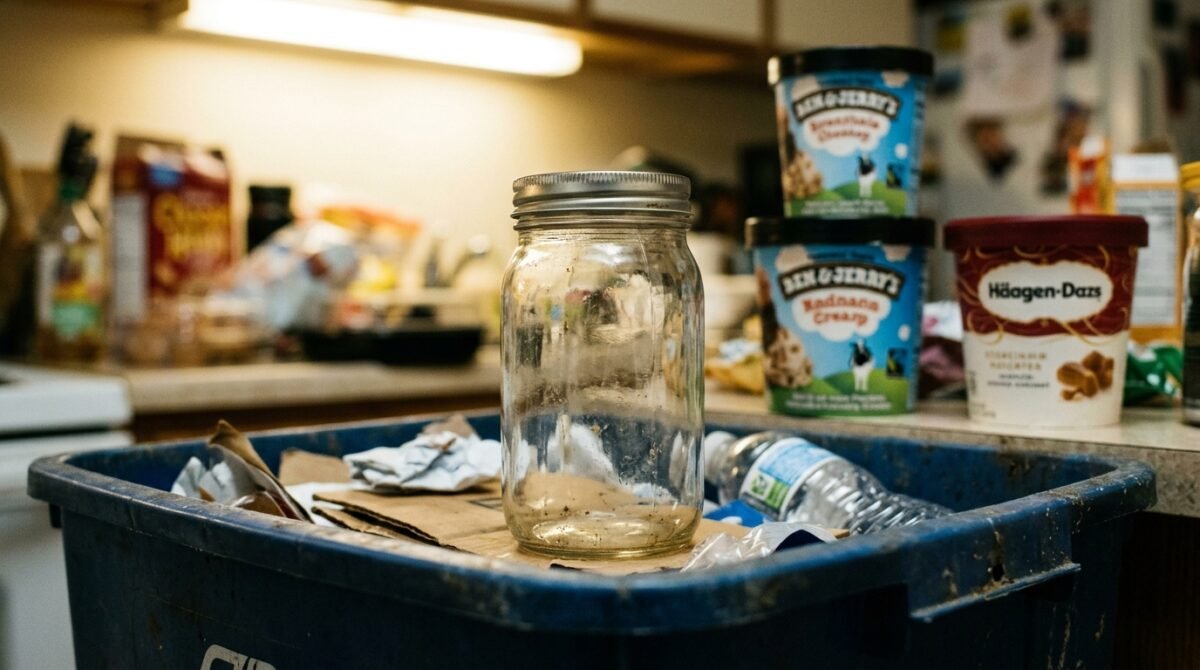
I checked the counter. Nothing. I checked the fridge. Nothing. Then, I saw it. The recycling bin was pushed slightly out from under the counter, and sitting right on top, looking like a crime scene, was my jar—scraped clean, the contents smeared into the grey plastic of the bin. My stomach dropped. Five years of fermentation, of daily care, of memories, was gone in the blink of an eye to make space for bargain-bin ice cream.
“Chloe, why is my starter in the trash? Why is the entire freezer filled with cartons of ice cream?”
— Me, confronting the situation
Chloe didn’t even look up from her phone. She was lounging on the sofa, scrolling through Instagram, looking completely unbothered. She sighed, a sound that conveyed more annoyance than apology. She didn’t see the gravity of the situation; she saw a minor logistical hurdle she had cleared for her own benefit.
“Oh, that jar? It smelled weird. And honestly, it was taking up the entire middle shelf. I got a bulk deal on ice cream, so I needed the space. It’s just flour and water, get over it,” she said, her tone dripping with the casual dismissiveness that had defined our relationship for the past six months.
I stood there, vibrating with a mix of fury and disbelief. This wasn’t just ‘flour and water.’ It was a living organism that required specific temperature control and feeding schedules. It was the centerpiece of my weekend ritual. The fact that she saw it as an obstacle to her dessert supply was a window into her complete lack of respect for my personal life and my belongings.
I felt a darkness creep in. I wasn’t going to scream. I wasn’t going to cry. I was going to do something that would make her feel the same sharp, gutting sensation of losing something irreplaceable. My eyes drifted to the hallway, toward the bathroom vanity where she kept her ridiculous, overpriced collection of designer makeup.
The Anatomy of a Petty Retaliation

The irony of the situation wasn’t lost on me. Chloe prided herself on her ‘aesthetic.’ She spent hundreds of dollars every month on limited-edition eyeshadow palettes, imported foundations, and lipsticks that cost as much as my weekly grocery bill. She treated these items like holy relics, displayed in clear acrylic organizers on our bathroom counter.
I walked into the bathroom, my heart pounding in my ears. The vanity was pristine, a stark contrast to the chaos she had just created in the kitchen. I looked at the palettes—the brands she bragged about on TikTok. She had spent months waiting for these drops. They were her version of my starter: things she cherished, things she spent time and money cultivating.
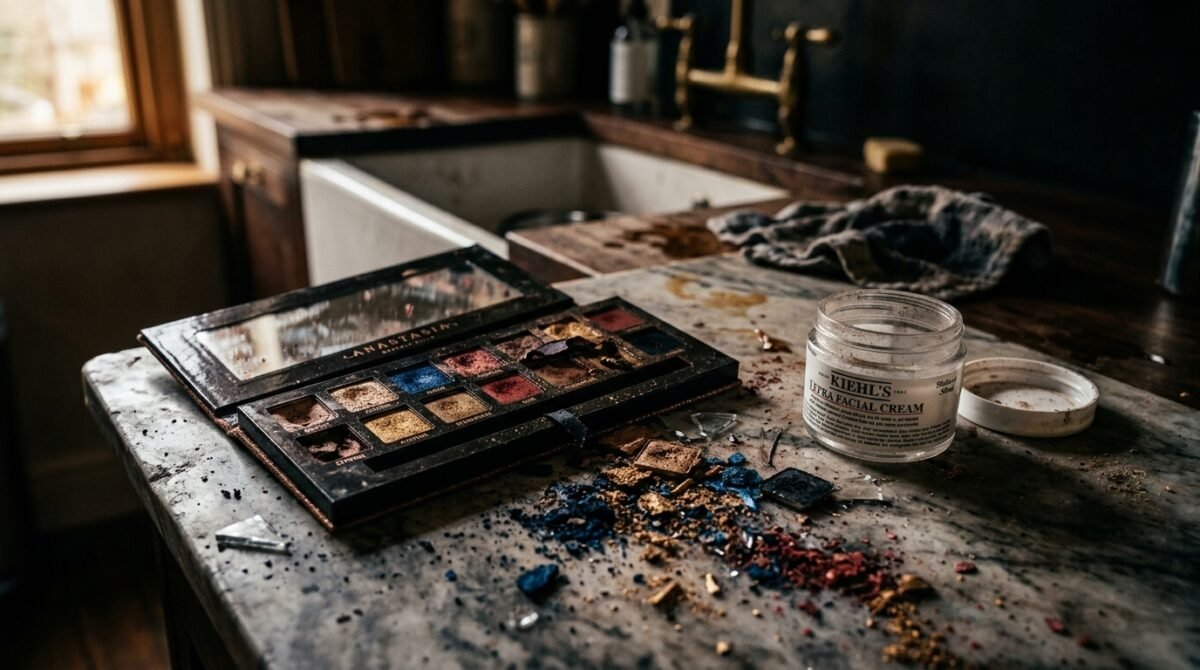
I didn’t destroy everything. That would have been too easy. I just targeted the ones she loved the most. I took the bronzer, the highlighter, and the main eyeshadow palette—the one with the ‘must-have’ shades. I didn’t just throw them away. I opened them, took a palette knife, and swirled them into a grey, muddy mess, mimicking the way she had scraped my starter into the bin.
I felt a rush of adrenaline. It was wrong. I knew it was wrong. But the image of my starter, cold and lifeless in the bin, kept fueling the fire. If she could devalue my effort, I could devalue her vanity. I placed the ruined palettes back in their slots, closed the lids, and walked away, feeling a strange, hollow sense of satisfaction.
“I just wanted her to know what it feels like to have something you care about destroyed for no reason. It wasn’t about the money. It was about the principle of the thing.”
— My internal monologue
I went back to the living room and sat down, my hands trembling. I couldn’t wait for her to go into the bathroom. I felt like a villain in my own story, but the anger was so deep, so layered, that I couldn’t bring myself to regret it. The silence in the apartment felt heavy, waiting for the inevitable explosion.
I picked up my phone and opened a group chat with a few friends. I didn’t tell them exactly what I did, but I hinted at the ‘justice’ I had served. I needed validation, even if I was terrified of what would happen next. I was walking a tightrope, and I knew that once she walked into that bathroom, the rope would snap.
The Bathroom Screams That Halted the Afternoon
It took exactly three minutes. I heard the bathroom door open, followed by the clatter of the vanity organizers. Then, silence. For a second, I thought maybe she hadn’t noticed. Maybe she was just doing her skincare routine. But then, a sound ripped through the apartment—a guttural, high-pitched shriek of absolute devastation.
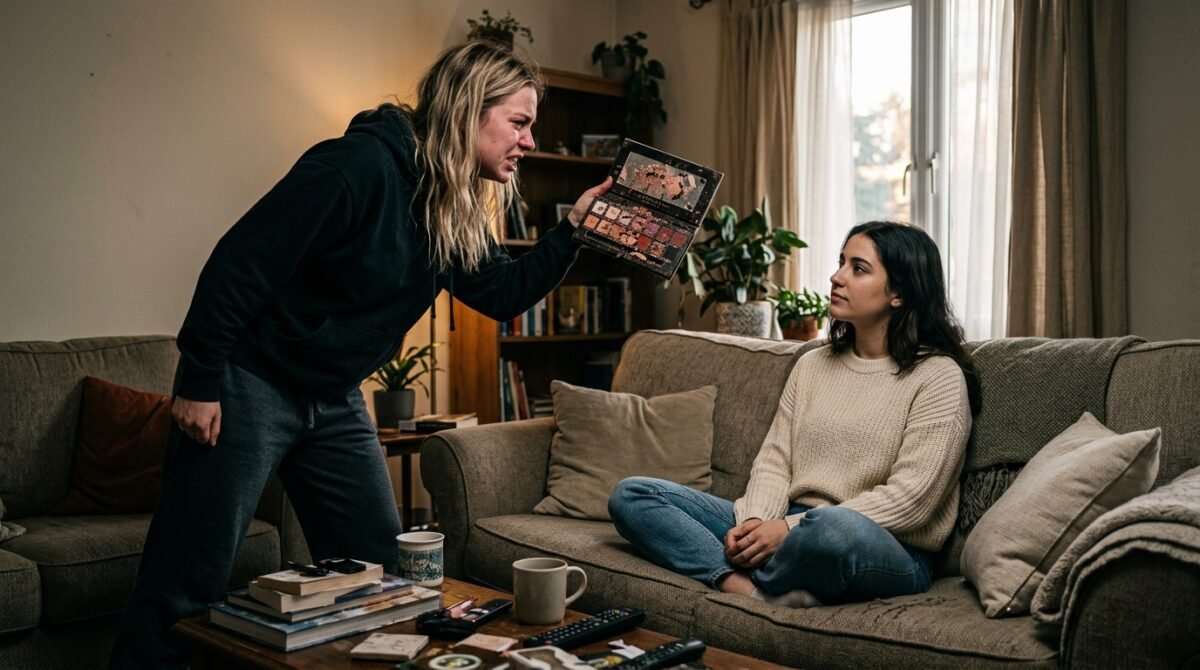
“WHAT THE HELL?!” she screamed, her voice cracking. I didn’t move. I stayed on the couch, staring at the blank TV screen. I heard her stumbling out of the bathroom, her footsteps heavy and frantic. She burst into the living room, her face a mask of pure rage, holding the ruined palette like it was a severed limb.
“Did you do this?!” she yelled, thrusting the palette toward my face. I looked at the mess I’d made, the colors blended into a disgusting, unusable slurry. I felt a cold calm wash over me. I stood up, meeting her eyes with a level of indifference that seemed to confuse her. I wasn’t going to apologize. I wasn’t going to back down.
“You dumped my five-year-old starter for ice cream, Chloe. You ruined something irreplaceable. Don’t look at me like I’m the monster when you started this.”
— Me, responding to her outrage
She froze. For a moment, the anger in her eyes flickered with confusion. She seemed to be searching for a way to justify why a jar of ‘goop’ was equal to three hundred dollars worth of makeup. She couldn’t find the logic, because there wasn’t any. She just doubled down, her voice trembling with fury.
“That is NOT the same! That was trash! This is designer, this is expensive, this is… it’s makeup! You are actually insane. I’m moving out. You’re a sociopath,” she shouted, pacing the room like a caged animal. She was already reaching for her phone, no doubt texting our mutual landlord or her parents to complain about the ‘crazy’ roommate.
I sat back down. The thrill of the revenge was fading, replaced by the crushing reality of our situation. We had a lease. We had six months left. We were now locked in a combat zone, and there was no coming back from this. The air in the apartment felt thin, suffocating, and I knew that the next few weeks would be a living hell of passive-aggression and legal threats.
The Escalation: Texts, Threats, and Landlord Emails
By evening, the house was a war zone. Chloe had retreated to her room, but the sound of her typing—furious, rapid-fire tapping on her screen—echoed through the walls. I knew exactly what she was doing. She was crafting the narrative, ensuring that everyone in our social circle saw me as the unhinged roommate who destroyed her property for no reason.
I received a ping on my phone. It was an email from our landlord, Mr. Henderson. Chloe had clearly gotten to him first. She had sent him photos of the ‘vandalism’ and requested an immediate lease termination or an eviction notice for me. I felt the knot in my stomach tighten. This was no longer just about sourdough or makeup; it was about my housing security.
“Hey, I’ve received reports of property damage and a hostile living environment. We need to discuss this immediately. If you can’t resolve this, I will have to look at the lease agreement regarding conduct and damages.”
— Mr. Henderson, Property Manager
I took a deep breath and started drafting my response. I had to be precise. I included photos of the empty jar in the recycling bin, timestamps of when I found it, and a detailed explanation of why the sourdough starter was a significant, long-term personal asset. I didn’t excuse my actions, but I framed them within the context of her destruction of my property first.
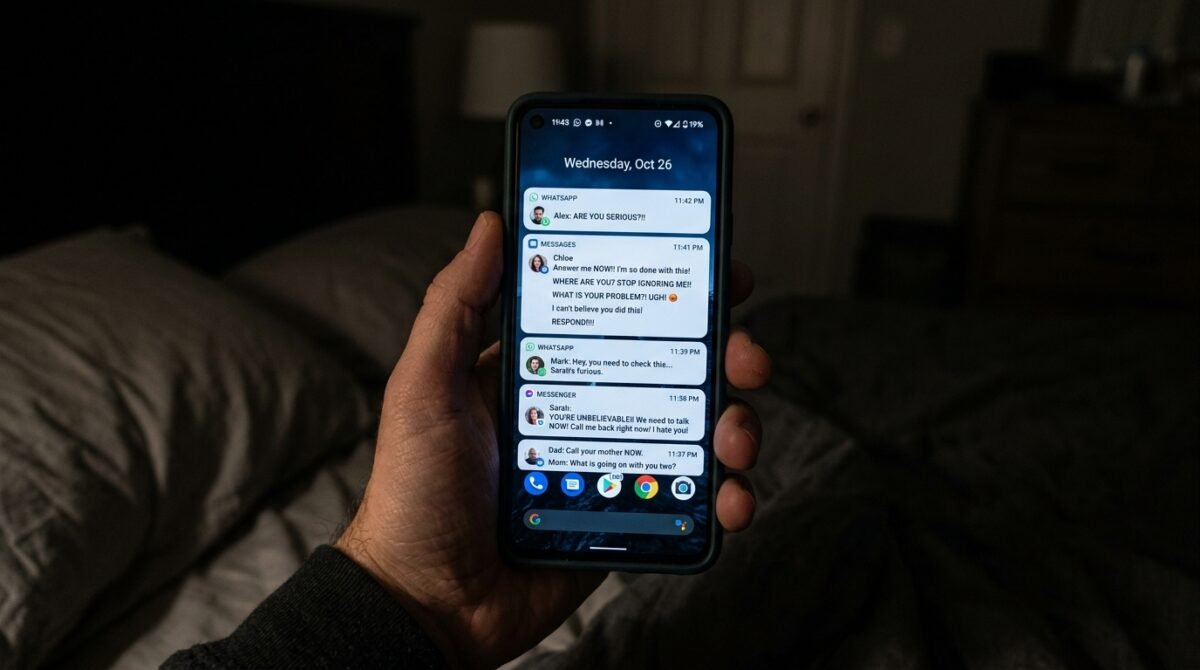
The phone buzzes didn’t stop. A group chat appeared—the one we shared with our other roommates. Chloe had screenshotted my response to her, painting me as a vindictive, unstable person. My phone was blowing up with messages from people I barely knew, asking me what the hell was wrong with me. The social pressure was immediate and overwhelming.
I realized then that in the court of public opinion, the ‘expensive makeup’ carried more weight than the ‘weird kitchen science project.’ No one cared about the five years of nurturing a culture. They cared about the dollar value of the items destroyed. I was being painted as the villain, and I had to decide if I was going to defend myself or own the narrative.
I stopped checking the messages. I turned my phone off and sat in the dark. The apartment felt like it was shrinking around me. I had forced the issue, and now I had to live with the fallout. The financial stakes were becoming clear: if I got evicted, I’d lose my security deposit and have to find a new place in a city with a housing crisis. Was it worth it? I didn’t know anymore.
Reddit Weighs In: The Verdict of the Internet

I did what anyone in a spiral of doubt does: I went to Reddit. I posted the story to r/AmITheAsshole under a throwaway account. I didn’t sugarcoat it. I explained the starter, the ice cream, the makeup, and the current threat of eviction. I refreshed the page every thirty seconds, watching as the comments poured in.
“ESH. Your roommate is a brat for throwing out your starter, but you’re a massive AH for destroying her property. You didn’t teach her a lesson; you just opened yourself up to a lawsuit and eviction. Grow up.”
— u/ReasonableObserver (Top Comment, 15.2k upvotes)
The reactions were polarized. There was a segment of the community that completely understood my fury—the ‘sourdough cult,’ as they called themselves—who saw the destruction of a five-year starter as a grave offense. But the vast majority were focused on the proportionality of the retaliation. They saw it as an escalation that crossed a legal line.
“It’s not about the sourdough. It’s about the fact that she destroyed your hobby, and you destroyed her bank account. That’s not ‘balancing the scales,’ that’s a felony level of petty. YTA.”
— u/LegalEagleInTraining (8.9k upvotes)
Reading the comments was a sobering experience. I had felt so righteous in the moment, but seeing it laid out by strangers made me realize how much I had let my anger cloud my judgment. I had handed Chloe the moral high ground on a silver platter. She could now play the victim, and she had the evidence of my ‘craziness’ to back it up.
The thread was becoming a train wreck. People were analyzing the ’emotional value’ versus ‘monetary value’ of our respective losses. I saw debates about the cost of starter culture kits versus high-end cosmetics. It was absurd, but it was exactly what I had created. I realized I needed to stop the bleeding before this got even worse.
I started replying to some of the comments, trying to explain, but it was pointless. The internet had already made up its mind. I was the ‘unstable roommate,’ and Chloe was the ‘victim of a property crime.’ I closed the laptop, feeling a deep, hollow exhaustion. The digital consensus was in, and it didn’t favor me.
The Emergency House Meeting

Mr. Henderson called an emergency meeting. We met in the living room, a space that once felt like a home and now felt like a sterile battlefield. Chloe was already there, sitting on the opposite end of the couch, her face tear-streaked and her arms crossed. Mr. Henderson looked tired, clearly regretting his decision to ever rent to two people with such volatile personalities.
He laid out the options. We could either figure out a way to live together without further ‘incidents,’ or one of us could break the lease. But breaking the lease in our current market was financial suicide for both of us. The penalties were astronomical. He looked at us, waiting for someone to apologize. Chloe didn’t look at me. I didn’t look at her.
“I want her out. I don’t feel safe living with someone who would destroy my belongings in a fit of rage. I can’t trust her anymore.”
— Chloe, speaking to the landlord
I looked at Mr. Henderson. I had brought the photos of the trash bin, the proof that she had intentionally sabotaged my property first. I explained that I, too, felt unsafe, because her casual disrespect for my boundaries was a form of psychological violence. It was a weak argument, and I knew it, but it was all I had.
The conversation devolved quickly. Chloe started crying again, bringing up the price of her makeup. Mr. Henderson sighed, rubbing his temples. He was clearly looking for an easy way out of this, but we had made it impossible. He told us we had forty-eight hours to reach an agreement or he would begin the process of legal mediation, which would cost us both money.
The meeting ended without a resolution. We were left in the living room, the silence between us heavy enough to crush bones. I realized that the path of escalation I had chosen had led us here—a stalemate where no one wins, and everyone loses money. I felt a wave of regret, not for my sourdough, but for my lack of composure.
The Realization of True Loss
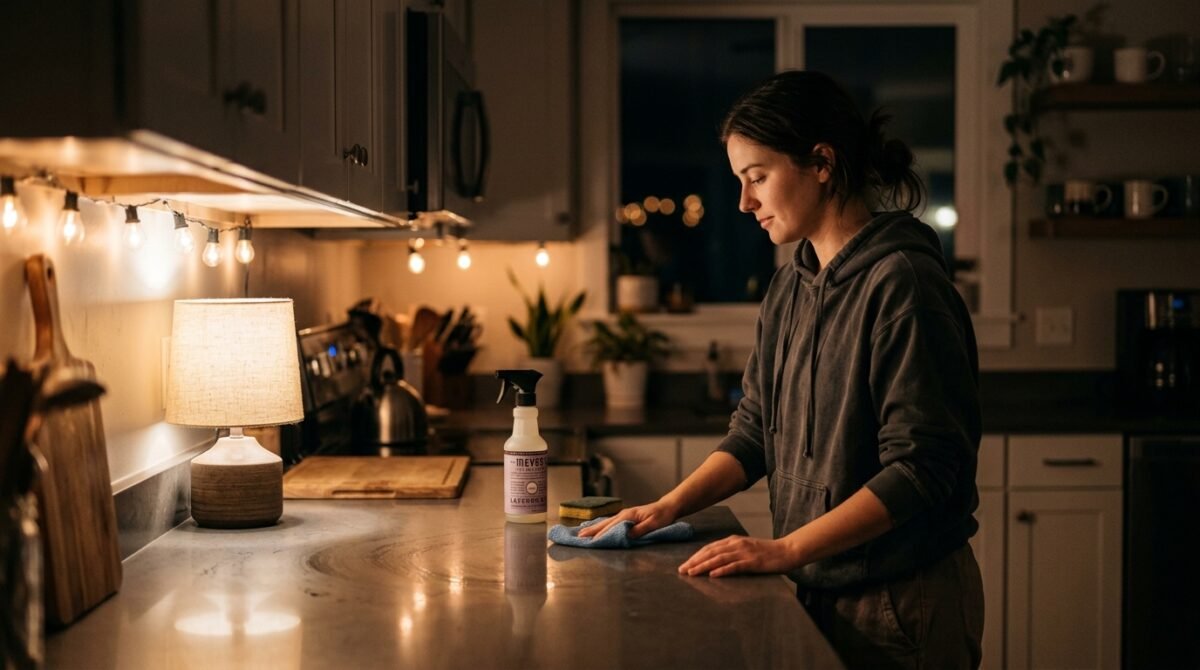
That night, I couldn’t sleep. I kept thinking about the sourdough. It wasn’t just about the baking. It was about the process, the rhythm, the quiet time I spent in the kitchen when the rest of the world was moving too fast. It was my form of meditation. When Chloe destroyed it, she didn’t just destroy a jar; she destroyed a coping mechanism.
I looked at my phone. The Reddit thread had thousands of comments now. Some people were telling me to sue, others were telling me to move out immediately. But as I sat there in the silence, I realized that I had become exactly what I hated about Chloe. I had been reactive, dismissive of her feelings, and destructive when I felt slighted.
I walked into the kitchen and looked at the space where the starter used to be. It was empty. The ice cream was still there, a monument to her selfishness. I realized that by destroying her makeup, I hadn’t made her understand the value of my starter. I had only validated her belief that I was someone to be feared and avoided. I hadn’t taught her a lesson; I had just fueled her ego.
“I didn’t lose my sourdough today. I lost my sense of myself. I’m better than this, but I didn’t act like it.”
— My internal reflection
I started to clean the kitchen. I threw out the empty ice cream cartons, not because I was mad, but because they were clutter. I cleaned the counters until they were spotless. I wanted to reclaim the space, not by fighting, but by restoring it to a place of peace. It was a small, almost invisible gesture, but it felt like the first step toward reclaiming my own sanity.
I still didn’t know what I would do about the lease. I didn’t know if Chloe would ever speak to me again. But for the first time in days, I wasn’t looking for a way to hurt her back. I was looking for a way to get out of this toxic dynamic, even if it meant admitting defeat and paying the price of the lease break.
The Final Reconciliation Attempt
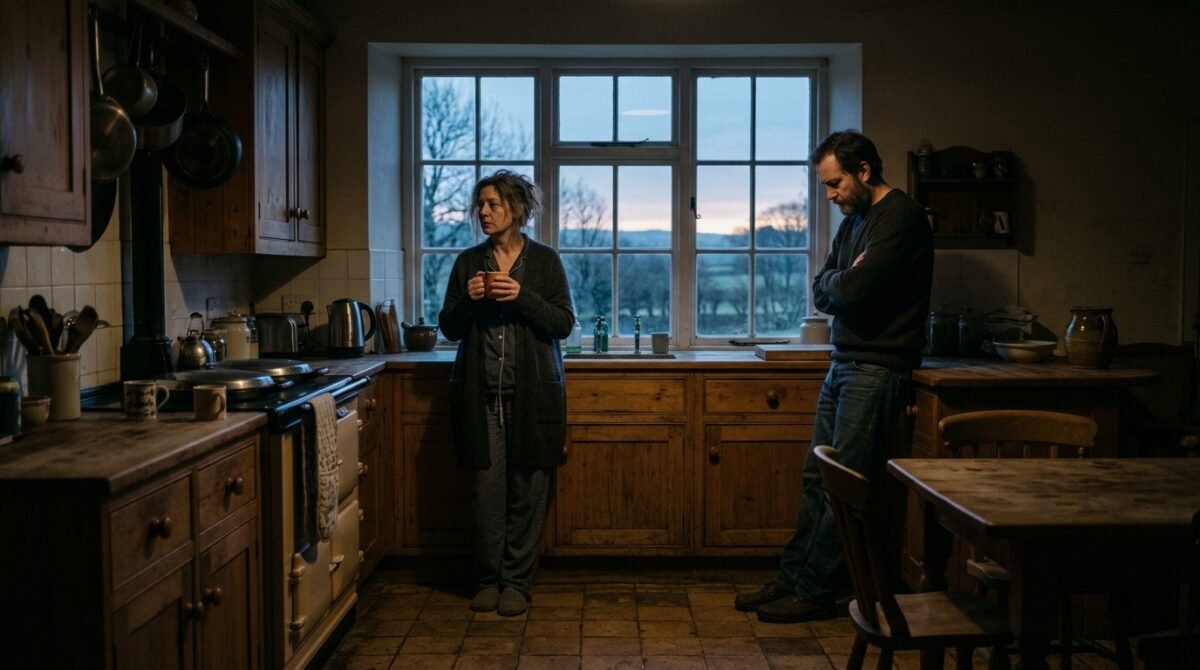
The next morning, I did something I didn’t think I would do. I walked into the living room where Chloe was sitting, nursing a coffee. I didn’t try to defend myself. I didn’t try to point out her hypocrisy. I just spoke, my voice steady for the first time in days.
“I’m sorry,” I said. The words felt strange, heavy. “I shouldn’t have destroyed your makeup. It was a disproportionate reaction to what you did, and I regret acting that way. I was hurt, and I was angry, but that’s not an excuse for destroying your property.”
Chloe looked at me, her eyes narrow. She was still waiting for the ‘but.’ She was waiting for me to blame the sourdough, to blame the ice cream, to blame her. When I didn’t, the tension in the room seemed to shift, just a fraction. She didn’t accept the apology, but she didn’t yell.
“I don’t know if I can forgive you for that. That wasn’t just makeup. It was my pride. You ruined it because you wanted to hurt me.”
— Chloe, responding to my apology
I nodded. “I know. I wanted to hurt you because I felt you had hurt me. And I’m sorry for that. I’m planning to look into subletting my room. I don’t think we can live together anymore. It’s not working for either of us.”
She looked surprised. I think she expected me to fight for the room, to dig my heels in. But the fight had drained out of me. I wanted out. I wanted a space where my things were safe and where I didn’t have to worry about who was sabotaging my peace of mind. It was a moment of clarity that had taken a lot of destruction to reach.
We didn’t become friends. We didn’t hug it out. We just reached a tentative truce. We would live in the same space until I could find a subletter, and we would keep our distance. It was the best outcome I could hope for, given the circumstances. The war was over, but the peace was cold and distant.
The Aftermath: Starting Over
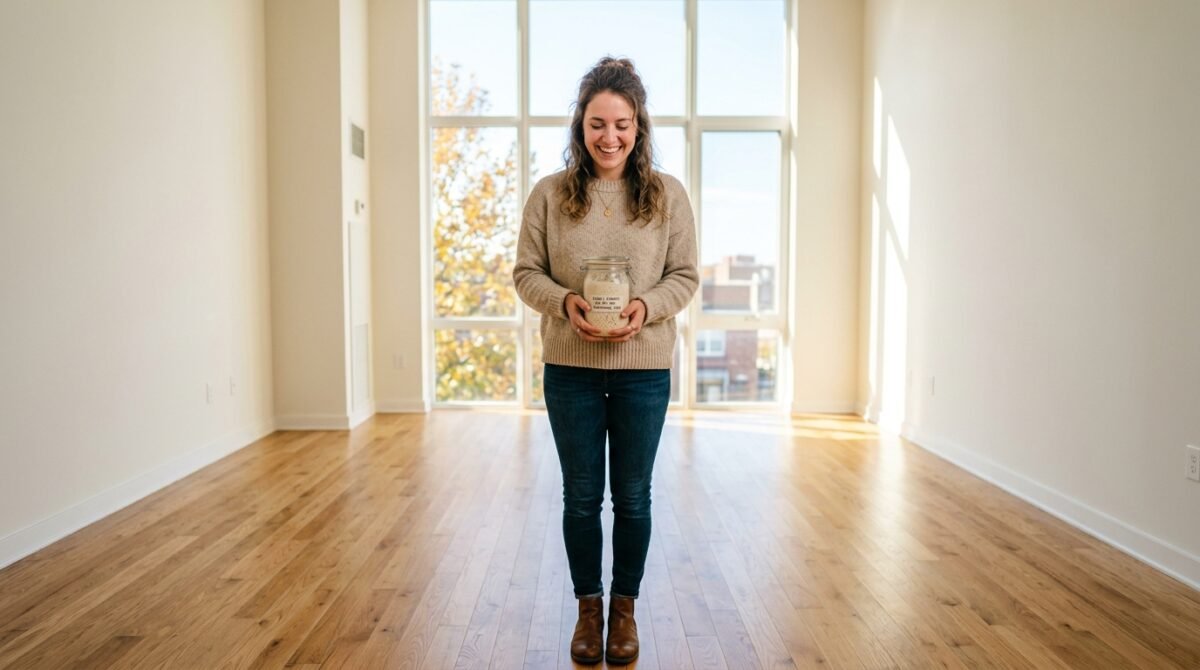
Moving out was a logistical nightmare. I had to pay a cleaning fee, a lease-break fee, and the cost of replacing the makeup I had destroyed. It was a massive financial blow, one that would take me months to recover from. But as I packed my last box, I felt a sense of relief that was worth every penny.
I found a small apartment, just for myself. No roommates. No shared freezers. No competing for counter space. The first thing I did when I settled in was start a new sourdough culture. It wasn’t the same as the one I had lost, and it would take time to develop its own personality, but it was a fresh start.
I kept the glass jar on my counter, the only thing on the counter, as a reminder of what happened. I learned that you can’t force respect. You can only set boundaries. If someone violates those boundaries, you don’t fight them on their terms; you remove yourself from the situation. It was a hard lesson to learn, and I paid for it with my pride and my savings.
“I’m not the same person who moved into that apartment. I’m a little poorer, a little wiser, and definitely more protective of my own peace.”
— Me, reflecting on the experience
I still see Chloe’s posts on social media sometimes. She’s still posting about her makeup, still living in that apartment. It doesn’t bother me anymore. We were just two people who were fundamentally incompatible, and we had brought out the absolute worst in each other. I hope she’s happy. I know I’m finally at peace.
The story of the sourdough and the makeup became a cautionary tale in our friend group. It’s a bit embarrassing to have your petty drama become a legend, but if it stops one person from making the same mistake, then maybe it was worth it. I’ve learned that the most important thing you can build in a home isn’t bread; it’s the environment you create for yourself.
Community Reflection: The Lessons of the Kitchen War

When the story eventually leaked out into the broader friend circle, the reaction was surprisingly nuanced. People didn’t just take sides. They talked about the pressure of modern living, the lack of private space in urban environments, and the way that small inconveniences can snowball into explosive conflicts. It wasn’t just about us; it was about the way we all live now.
I had people reach out to me—people I hadn’t spoken to in years—to share their own stories of roommate disasters. It was cathartic to realize that I wasn’t alone in this. Almost everyone had a story about a stolen item, a boundary ignored, or a moment where they lost their cool. It made me feel less like a ‘monster’ and more like someone who had just hit their breaking point.
“The real lesson here isn’t about sourdough or makeup. It’s about communication. If they had just talked about the freezer space, none of this would have happened. We all need to be better at setting boundaries before the explosion.”
— u/WiseFriend (Community comment)
The thread on Reddit eventually died down, but the messages kept coming. I realized that my story had touched a nerve. We are all living in such tight quarters, and the lack of respect for personal space is a massive, often unspoken, point of friction. I’m glad I shared it, even if it was humiliating, because it started a conversation that needed to happen.
I’ve started a new rule for myself: if I’m not comfortable having a difficult conversation about boundaries, I’m not ready to share a space. It’s a simple rule, but it’s a necessary one. I don’t want to live in a war zone anymore. I want to live in a place where I can breathe, where my things are respected, and where I can focus on the things that actually matter.
The sourdough is doing well. It’s bubbly, it’s active, and it makes a pretty good loaf of bread. But the real lesson wasn’t in the baking. It was in the realization that I am in control of my own reactions. I can’t control what other people do, but I can control how I handle it. And that, in the end, is the most important thing I learned from the great kitchen war.
Conclusion
Looking back, the destruction of my sourdough starter and the subsequent ruin of Chloe’s makeup was a crossroads. I chose the path of petty vengeance, and while it felt satisfying in the heat of the moment, it was a detour into a dark and expensive place. I lost my housing, my money, and, for a while, my sense of self-respect. But I also gained a profound understanding of the boundaries I need to set to protect my peace of mind.
We often think that reacting in kind is a form of justice. We think that if someone takes from us, we are entitled to take from them. But true justice is rarely found in the act of retaliation. It’s found in the ability to walk away, to acknowledge when a situation is toxic, and to take responsibility for our own actions, even when the other person refuses to take responsibility for theirs.
If you find yourself in a similar situation—trapped in a roommate war over space, belongings, or just plain disrespect—don’t let your anger drive the car. Step back, document the issue, communicate clearly, and if necessary, find a way out. Your peace is worth more than any starter, any palette, or any rent-controlled apartment.
I’d love to hear your thoughts. Have you ever been in a roommate war that went too far? What did you learn, and what would you have done differently? Let’s talk about it in the comments below.
What's your verdict on this dilemma?
Vote below to contribute to the official community consensus.

Have a Dilemma Keeping You Up at Night?
Share your real-life feud, wedding chaos, or relationship crossroads anonymously with our editorial team.
What do you think ?
0 Comments🛡️ Comments are moderated to protect community integrity. Your comment will appear once approved by the editorial team.