
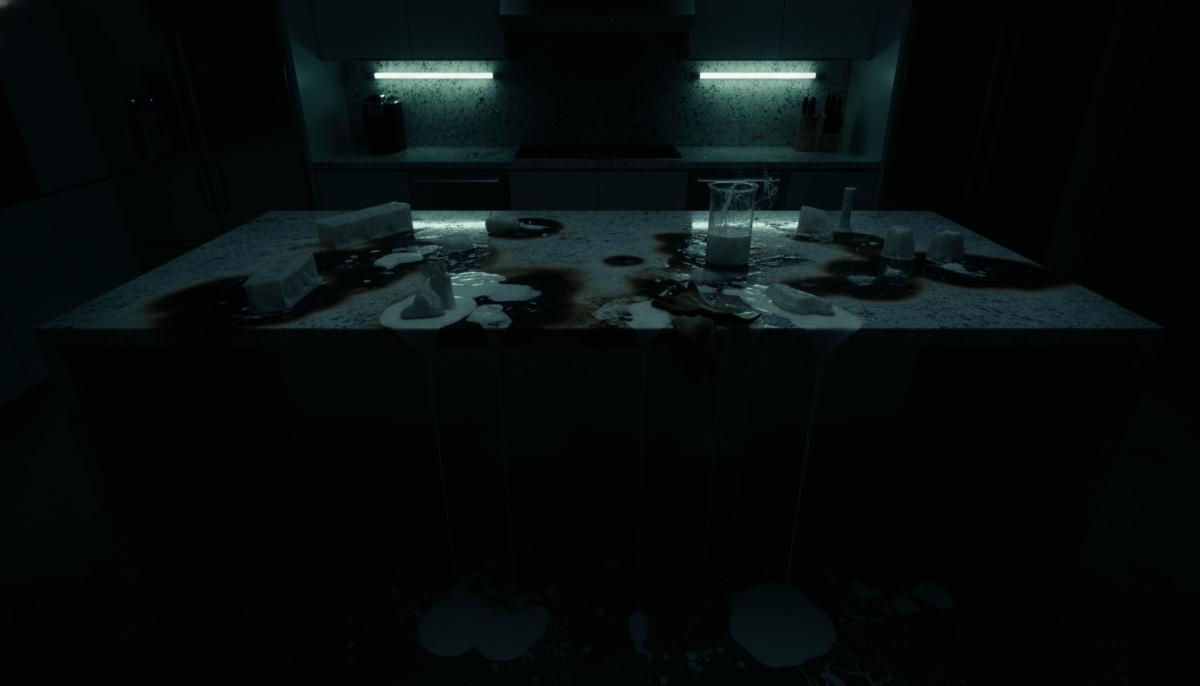
When I moved into my downtown loft, I thought I had found the ultimate living situation. Sarah, my roommate of two years, was always clean, quiet, and reliable. We shared the bills, split the household chores, and navigated the nuances of adult life with a unspoken code of mutual respect. Our kitchen, with its pristine white granite counters and stainless steel appliances, was the crown jewel of our home, a space we both promised to treat with care. But the shift didn’t happen overnight; it began with a single, innocent-looking package of lye beads left on the counter.
What started as a ‘creative hobby’ quickly spiraled into an industrial-scale manufacturing operation. I didn’t realize that soap making wasn’t just about lavender oils and dried flowers—it was about handling sodium hydroxide, a corrosive substance that demands specialized ventilation and industrial-grade surfaces. Sarah, caught up in the thrill of her newfound side hustle, ignored every warning I gave. She turned our shared sanctuary into a hazardous chemical lab, and the structural damage to our home was only the beginning of the fallout.
The moral dilemma here isn’t just about the money; it’s about the sheer audacity of someone using a shared space to endanger their roommate’s health and property. Every time I walked into the kitchen, I was greeted by the scent of harsh chemicals and the sight of drying racks encroaching on my space. I wasn’t just losing my kitchen; I was losing my peace of mind. By the time I realized the granite was permanently etched by lye spills, the trust in our relationship had already evaporated.
I am not the kind of person to jump to confrontation, but when you are dealing with literal chemical burns on your countertops, diplomacy has its limits. This isn’t just a story about a hobby gone wrong; it’s a story about the breaking point of friendship and the cold, hard reality of taking legal action against the person you share your morning coffee with. This is how a small business idea ruined a home, and why I had to issue an eviction notice to the person who was once my closest friend.
The First Batch and the Lingering Scent
It began on a Thursday evening. I came home from work to find the entire kitchen island covered in cardboard and plastic. Sarah was standing there, gloved and wearing a face mask, stirring a thick, bubbling liquid in a large steel pot. She told me she was making ‘artisanal, small-batch lye soap’ to sell on social media. I didn’t think much of it then, assuming it was a harmless hobby that would last a weekend.
Within three days, the smell started to permeate the house. It wasn’t the fresh, floral scent of store-bought soap. It was a sharp, metallic, and cloying odor that stuck to the back of my throat. Every time I went to make toast, I felt like I was breathing in toxic fumes. When I raised the issue with Sarah, she brushed it off with a casual wave of her hand, promising the smell was just a ‘process artifact’ that would dissipate once the soap cured.
“You’re being dramatic. It’s just soap-making, not a meth lab. The ventilation fan is on, and the doors are cracked open. It’ll be gone by morning.”
— Sarah, during our first tense conversation
I tried to be patient, but the intensity only escalated. By the second week, the ‘small-batch’ production had expanded to include curing racks that occupied the entirety of our breakfast nook. I found myself eating meals standing up or in my bedroom because every surface was covered in drying bars of soap that looked like wet bricks. I felt like a guest in my own home, slowly being pushed out by a mounting pile of inventory.
I asked her again to move the operations to her own bedroom or to rent a dedicated workspace, but she claimed she couldn’t afford it yet. She insisted that she was on the verge of a breakthrough with a major boutique order. She promised that once she made enough profit, she would move the business elsewhere. I foolishly believed her, thinking that if I just waited it out, things would return to normal. I didn’t realize then that the damage was already happening beneath the surface.
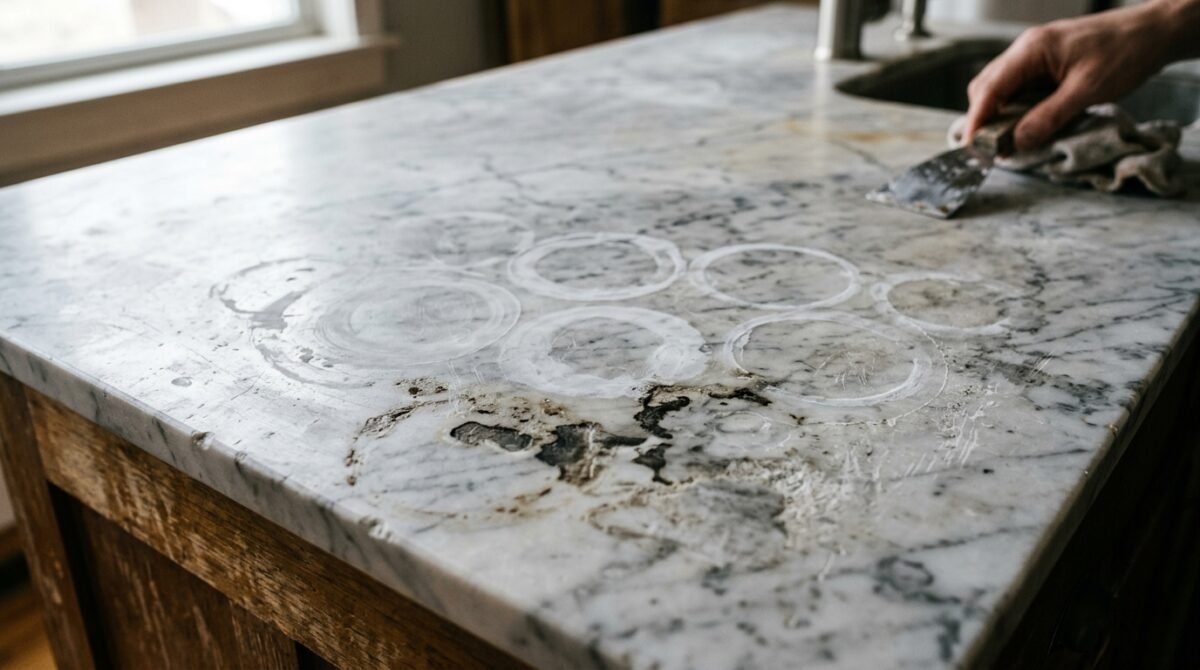
I started noticing spots. Tiny, white, cloudy circles began appearing on the granite counters wherever a soap mold had been resting. At first, I thought it was just residue. I took a damp cloth and tried to wipe it away, but the surface didn’t feel smooth. It felt rough, etched, and deeply scarred. I realized, with a sinking feeling in my gut, that the caustic lye had eaten through the sealant and was actively dissolving the stone.
The $5,000 Realization
I didn’t want to accuse Sarah without proof, so I contacted a local stone restoration professional. He came over while Sarah was at her day job, and the moment he touched the counter, he winced. He pointed out the deep chemical pitting and the irreparable damage to the stone’s integrity. He told me that granite of this quality could only be restored by professional grinding and sealing, and even then, the deep etching from the lye might be permanent.
He handed me a quote for the repairs: $4,850, plus a contingency for further damage. I stood in the middle of the kitchen, staring at the quote, feeling a mix of rage and disbelief. I had worked three jobs to afford this apartment, and my roommate had managed to destroy the most expensive feature of the kitchen in less than three weeks of amateur soap-making.
“This is chemical damage, plain and simple. Whoever has been working with lye here has essentially stripped the finish right off the stone. You’re looking at a full restoration.”
— The stone restoration contractor
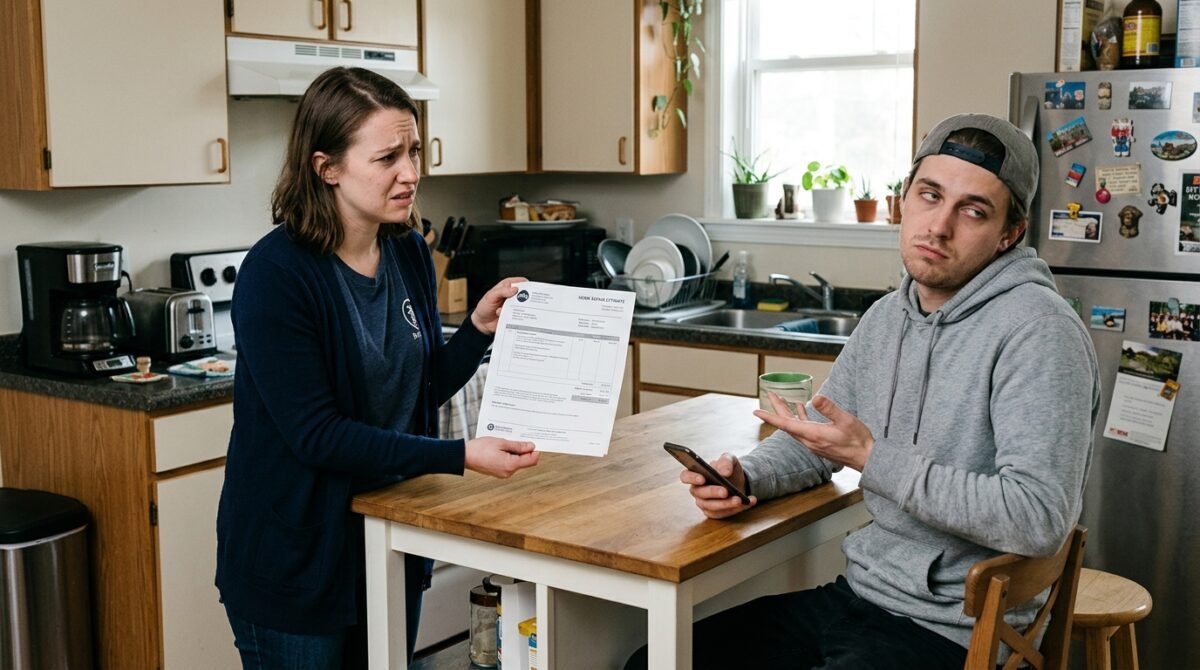
When Sarah returned home, I laid the quote on the counter right next to her latest tray of soap molds. She didn’t even look at it at first. She was busy checking her Instagram engagement on her phone. I had to physically remove her molds from the island just to get her attention. The silence that followed was heavy and suffocating. She looked at the paper, then at the counter, and then back at me with an expression that was more annoyed than remorseful.
“You want me to pay for this?” she finally asked, her voice tight. “I didn’t know the granite was so fragile. Why would a landlord put in stone that can’t handle a little soap? This is a design flaw, not my fault.” The gaslighting was immediate and infuriating. She was shifting the blame onto the quality of the building materials rather than her own negligence. It was the moment I realized that our friendship was fundamentally broken.
I told her, as calmly as I could, that regardless of the granite’s quality, she was responsible for the damage. The lease was clear about property maintenance. I wasn’t asking for a favor; I was asking for her to be accountable. She countered by saying she had already invested everything she had into the business and that asking for that money now would ‘kill her dreams.’ It was an appeal to emotion that fell completely flat against the backdrop of a ruined countertop.
The Group Chat Explosion

The next day, I woke up to a flurry of notifications from our shared friend group chat. Sarah had decided to frame the situation as me being a ‘controlling, anti-entrepreneurial roommate’ who was trying to sabotage her small business over a ‘minor spill.’ She had taken a photo of the repair quote and blurred out the amount, framing it as an unreasonable demand meant to crush her spirit. The group chat was lighting up with messages from people who didn’t know the full story.
“Honestly, I’m just trying to build something here, and my roommate is trying to evict me over some spots on a counter. It’s so toxic.”
— Sarah, in the shared group chat
I felt my blood pressure rise. I didn’t want to air our dirty laundry, but I had to defend my integrity. I replied with a single photo: a close-up of the deep, white etching in the stone, followed by the full text of the contractor’s quote. I added a brief explanation of the hazard: that lye is a caustic chemical that shouldn’t be handled in a residential kitchen without proper safety protocols. The silence that followed in the chat was deafening.
One of our friends, who happened to have a background in chemistry, chimed in. He backed me up, explaining that lye can cause severe skin burns and that using it on a porous surface like granite was an amateur mistake. Sarah didn’t respond to him. She just left the group chat. The fallout was immediate. My phone started vibrating with DMs from people who were horrified that I’d been living in those conditions for weeks.
I realized then that Sarah wasn’t just in denial—she was committed to being the victim. She didn’t see the damage to the home as a violation; she saw it as a temporary inconvenience that stood in the way of her success. I knew then that there was no path to reconciliation. The trust was gone, and the living situation had become a ticking time bomb of financial and environmental risk.
I spent the rest of the day documenting every single instance of damage, taking photos of the curing racks, the chemical stains on the floor, and the residue left on the appliances. I kept everything in a digital folder, labeled ‘Evidence.’ It felt cold and calculated, but it was necessary. I was no longer a roommate; I was a plaintiff preparing for a claim.
The Certified Letter
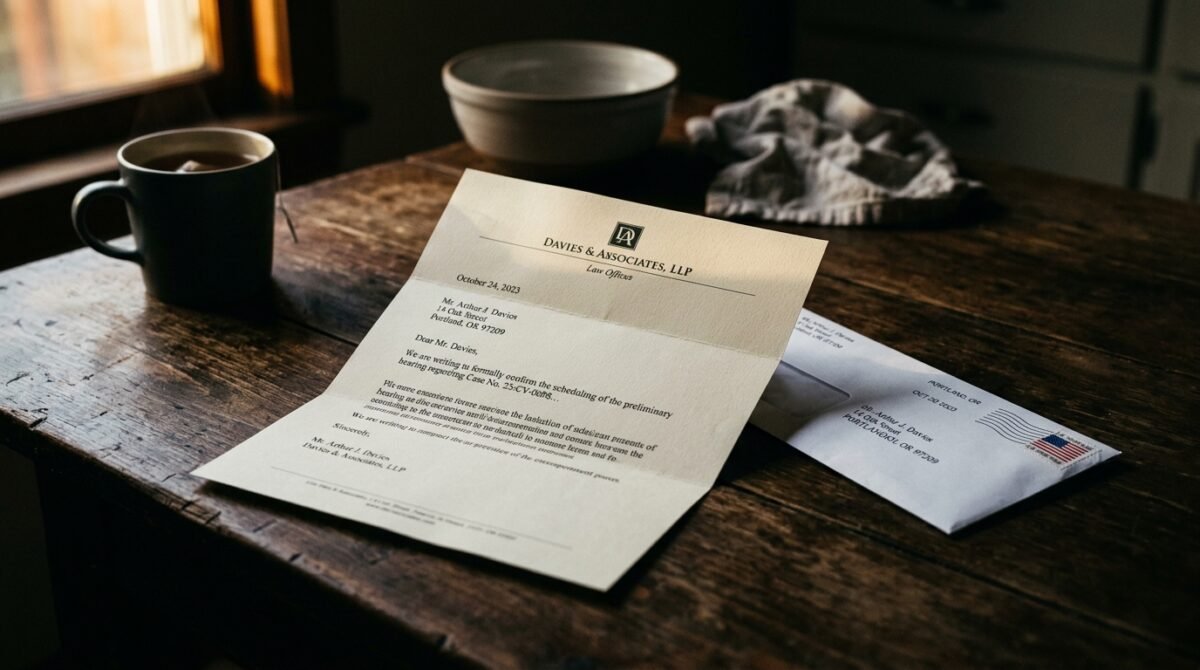
I consulted with a landlord-tenant legal clinic to understand my rights. They told me that if I allowed the situation to continue, I could be held liable for the damage to the property upon move-out. My best course of action, they advised, was to issue a formal notice of lease violation and a request for restitution. I typed up a professional letter, detailing the damages, the costs, and the health hazards. I sent it via certified mail, ensuring I had proof that she received it.
When she saw the envelope on the counter, she knew exactly what it was. She didn’t open it in front of me. She went to her room and slammed the door. For the next three days, we didn’t speak. The air in the apartment was thick with tension. I continued my work, avoided the kitchen, and kept my belongings in my room. It was a miserable existence, but it was the only way to maintain my sanity.
On the fourth day, she cornered me in the hallway. Her face was red, her eyes puffy. She told me the letter was ‘the most aggressive thing anyone has ever done to me.’ She claimed that she had potential investors lined up and that my actions would ruin her reputation. I looked at her and realized she had no grip on reality. She still thought this was about her success, not the physical destruction of my home.
“I am not ruining your reputation. You ruined my kitchen. The bill is for the repairs, not for your soul. Please find somewhere else to live.”
— My response to Sarah
She tried to argue that she would ‘fix’ the granite herself. I told her that was absolutely not an option. A DIY fix would only make the problem worse, and I wasn’t going to let an amateur with a power sander anywhere near the stone. The line had been drawn. The eviction notice was not a threat; it was a consequence of her continued refusal to take accountability.
She told me she couldn’t move out. She had no money, no savings, and the business was all she had. I felt a fleeting moment of pity, but it was quickly replaced by the memory of the $5,000 quote. Her failure to plan her business wasn’t my burden to bear. I told her she had thirty days to vacate, or I would take the issue to small claims court and involve the landlord. She didn’t have much of a choice.
The Final Cleanup

The final weeks were a blur of boxes and silence. Sarah packed up her soap business, leaving the kitchen in a state that could only be described as a crime scene. There was residue everywhere. I spent an entire weekend with a mask and goggles, scrubbing the counters and floors, just to ensure that the chemical fumes were gone. Every piece of equipment she left behind was a reminder of the toxicity of our living arrangement.
When she finally moved out, she left a trail of chaos in her wake. There were stains on the floor, a broken cabinet hinge, and a layer of soap dust that had settled into every corner of the room. I didn’t even care anymore. I just wanted her gone. I took photos of the final state of the apartment and sent them to our landlord, explaining the situation and providing the documentation I had collected.
The landlord was surprisingly understanding. He had seen this before with tenants who tried to start businesses in their units. He agreed to withhold the repair costs from the security deposit and pursue Sarah for the remainder. It was a relief to know that I wouldn’t be on the hook for the full $5,000. The weight that lifted off my shoulders when she finally turned in her key was indescribable.
I sat on the floor of the empty living room, looking out at the city lights. I was alone, but for the first time in months, I felt safe. I had stood my ground, protected my home, and refused to let someone else’s irresponsibility define my life. The cost was a ruined friendship and a lot of emotional energy, but the lesson was invaluable. Boundaries aren’t just suggestions; they are the foundation of healthy relationships, even with roommates.
I ordered pizza, sat at the now-clean (though still etched) counter, and breathed in the smell of nothing. No chemicals, no lavender-infused lye, no stress. It was the best meal I’d had in a long time. I was finally at peace, ready to start fresh, and fully committed to living alone for the foreseeable future. The soap business was dead, and so was our friendship, but I was still standing.
Reddit Weighs In: The Community Verdict

I posted my story on r/AmItheAsshole, looking for some validation that I wasn’t the monster Sarah made me out to be. The response was overwhelming. Within hours, the post had reached the front page, and the comments were pouring in. The consensus was clear: I was not the asshole, and my boundaries were entirely reasonable.
“NTA. Your roommate sounds like a classic narcissist. Using a shared kitchen for a hazardous, chemical-heavy business is a massive violation of both the lease and basic hygiene. You were generous to wait as long as you did.”
— u/RoommateNightmare, 18.2k upvotes
There were hundreds of comments from people who had dealt with similar situations—people whose roommates tried to run bakeries, pet grooming services, or car detailing operations out of shared spaces. It was comforting to know I wasn’t alone. Many people emphasized that the financial cost was the least of the issue; it was the total lack of respect for my health and property that was the real crime.
“As someone who works in stone fabrication, I can tell you that lye damage is permanent. You did the right thing. If you hadn’t, you would be paying for that out of your own pocket when you moved out. Don’t feel guilty about the eviction.”
— u/CountertopExpert, 5.4k upvotes
Some users, however, pointed out that I should have been firmer earlier. They argued that by letting it slide in the beginning, I had signaled that my boundaries were negotiable. It was a fair point. I had been trying to be a ‘nice’ roommate, which only allowed the situation to escalate. I took their advice to heart, realizing that my kindness was often perceived as weakness by those who were looking to take advantage.
The thread became a repository for advice on how to screen roommates, how to write ironclad roommate agreements, and how to spot the early warning signs of someone who doesn’t respect shared spaces. It was an educational experience for everyone involved, and it helped me process the frustration I had been holding onto for so long. The internet, for all its toxicity, really showed up for me when I needed clarity.
I spent hours reading the responses, laughing at the most ridiculous anecdotes and nodding along with the serious advice. It was the closure I needed. I realized that my anger was justified, my actions were necessary, and that I didn’t need to apologize to anyone for expecting my home to be a place of rest, not a site of industrial sabotage.
The Legal and Financial Aftermath

While the eviction felt like the end of the road, the legal proceedings were just beginning. The landlord moved forward with a claim against Sarah for the damages, using the evidence I had provided. Because I had everything documented—the photos, the contractor’s quote, and the initial messages where I warned her about the damage—the case was straightforward. It wasn’t just my word against hers anymore.
She tried to counter-sue, claiming that I had interfered with her business, but the judge wasn’t having it. The lease specifically prohibited commercial use of the unit, a clause that Sarah had signed when we moved in. By running a business, she had fundamentally breached the contract. The judge ruled in favor of the landlord, and Sarah was ordered to pay for the repairs and the legal fees associated with the eviction.
It was a cold, hard lesson in the importance of contracts. I had always thought of my living arrangement as a casual, friendly agreement, but the reality was that it was a business transaction. I learned to look at every lease, every roommate agreement, and every shared expense with a much more critical eye. I would never again assume that just because someone is my friend, they would treat my living space with respect.
The financial burden for me was reduced, but the emotional cost of the legal battle was still high. I had to testify, provide statements, and deal with the fallout of our mutual friends taking sides. It was exhausting. I lost a few friends who thought I had been ‘too harsh’ on her, but the ones who stayed were the ones who really mattered. They understood that you don’t destroy a person’s home in the name of a hobby.
Eventually, the payments began to come through. Sarah was forced to liquidate her remaining soap inventory and equipment to pay the debt. It was a poetic, if somewhat sad, end to her business. She had chased a dream and ended up with nothing but a court order. I didn’t feel a sense of triumph, just a deep, lingering relief that it was all over and that I could finally move on with my life.
Reflecting on the ‘Nice Roommate’ Trap

I have spent a lot of time thinking about why I let it happen. Why did I wait? Why didn’t I just say ‘no’ at the very beginning? I think a lot of it had to do with the societal pressure to be accommodating. We are taught to be ‘easygoing,’ to be ‘cool,’ and to not make a fuss. When Sarah asked if she could ‘just’ make a few soaps, saying no felt like I was being a killjoy.
But there is a difference between being easygoing and being a doormat. By trying to avoid conflict, I had created a situation where the conflict was inevitable and far more severe. I realized that true kindness isn’t about letting people walk all over you; it’s about setting clear, respectful boundaries that protect both the relationship and the people involved. If I had stopped her at the first batch, we might still be friends today.
I see this pattern everywhere now—in the workplace, in relationships, and among friends. We allow small violations to build up because we are afraid of the discomfort of the initial confrontation. But the discomfort of a firm ‘no’ is nothing compared to the pain of a deep betrayal or the cost of a ruined home. It was a hard lesson to learn, but one that has changed the way I interact with everyone in my life.
I am more vocal now about my expectations, whether it’s regarding my time, my space, or my money. I don’t feel the need to justify my boundaries to anyone. If someone is truly a friend, they will respect those boundaries without question. If they don’t, then they aren’t the kind of person I want in my life anyway. The experience with Sarah was a filter, a way of revealing who people really are when things get tough.
I am grateful for the clarity. I am grateful that I didn’t let the situation spiral even further, and I am grateful that I had the support of the community to validate my feelings. I am a different person than I was before I moved in with Sarah, and while the road to getting here was messy, I am better for it. I am no longer the ‘nice’ roommate; I am the ‘respectful and respected’ one.
Life After the Soap Saga

Today, my kitchen is clean, quiet, and entirely mine. I’ve replaced the damaged granite with a beautiful, durable quartz that is much easier to maintain. Every time I walk into the kitchen, I feel a sense of pride. I didn’t just survive the situation; I thrived in the aftermath. I’ve even started a new routine, one that includes cooking elaborate meals and hosting friends who actually respect the space.
Sarah is no longer in my life. I haven’t heard from her in months, and honestly, I prefer it that way. I’ve moved on to new projects, new hobbies, and a new sense of independence. I’ve realized that I don’t need someone else to validate my life, and I certainly don’t need someone else’s drama to make it interesting. I am content, and that is a powerful place to be.
I’ve also started helping others who are going through similar roommate nightmares. I share my story, provide tips on documentation, and offer a sympathetic ear. It’s my way of turning a negative experience into something positive. If I can help one person avoid the headache of a chemical-scarred kitchen or a toxic living arrangement, then the whole ordeal was worth it.
I am currently living alone, and I couldn’t be happier. I have complete control over my environment, my schedule, and my finances. It’s a level of freedom that I never fully appreciated until it was threatened. I’ve learned that home is not just a place to live; it’s a sanctuary, a reflection of the person you are, and a space that deserves to be protected at all costs.
For those of you dealing with your own ‘soap makers,’ my advice is simple: document everything, hold your ground, and don’t be afraid to act in your own best interest. You are not a bad person for expecting basic respect. You are a person who deserves to live in peace. So set that boundary, and if they push back, hold the line. It’s the only way to ensure your home remains yours.
The Community’s Parting Wisdom

Looking back at the thread, the comments didn’t just stop at supporting me; they evolved into a resource for others. People started sharing their own ‘roommate horror stories’ and the lessons they learned. It became a community space for venting and learning, and I was proud to have initiated that. The internet, often criticized for its negativity, really shone through in this instance.
“I learned from your post that I need to update my roommate agreement before my new lease starts. I’m adding a clause about no commercial activity in the unit. Thanks for the heads up!”
— u/FutureRoommate, 4.2k upvotes
It’s gratifying to know that my struggle helped others protect themselves. Many people commented that they were worried about their own roommates starting side businesses and that my story gave them the courage to have the ‘uncomfortable conversation’ before things went too far. That, to me, is the true success of this story. It wasn’t about the $5,000; it was about the collective power of setting boundaries.
I still get messages from time to time from people who read the post. They share their own updates, their own successes, and their own stories of overcoming toxic living arrangements. It’s become a small, supportive community, and I am honored to be a part of it. We are all just people trying to live our lives, and sometimes, that means standing up for ourselves in ways we didn’t expect.
The lessons we learned—about the importance of contracts, the need for documentation, and the courage to say no—are universal. They apply in every aspect of our lives, not just with roommates. I hope that by sharing my story, I have helped someone else find their voice, their confidence, and their peace. After all, that’s what it’s really all about: building a life that you are proud of, and a home that you are happy to walk into every single day.
If you take nothing else away from this story, let it be this: you are your own biggest advocate. Don’t wait for permission to protect your happiness. Don’t worry about being ‘nice’ at the expense of your well-being. Trust your instincts, stand your ground, and remember that you deserve to live in a space that is safe, healthy, and entirely your own.
Conclusion
This saga of the soap business wasn’t just about granite countertops or lost security deposits; it was a profound journey of self-discovery and the reclamation of my personal boundaries. I learned that the fear of being perceived as ‘difficult’ is a cage we build for ourselves, and that true freedom comes when we finally decide to stop apologizing for our own standards. My kitchen is now a space of peace, a testament to the hard-won lesson that our homes should reflect our values, not the chaos of others.
Reflecting on this experience, I invite you all to think about your own living situations. Have you been compromising on your peace just to keep the peace? Are there boundaries you’ve been afraid to set for fear of being the ‘bad guy’? I would love to hear your thoughts in the comments. Have you ever had to choose between your friendship and your sanity? Let’s keep the conversation going—share your own experiences, and let’s support each other in setting the standards we all deserve.
What's your verdict on this dilemma?
Vote below to contribute to the official community consensus.

Have a Dilemma Keeping You Up at Night?
Share your real-life feud, wedding chaos, or relationship crossroads anonymously with our editorial team.
What do you think ?
0 Comments🛡️ Comments are moderated to protect community integrity. Your comment will appear once approved by the editorial team.