
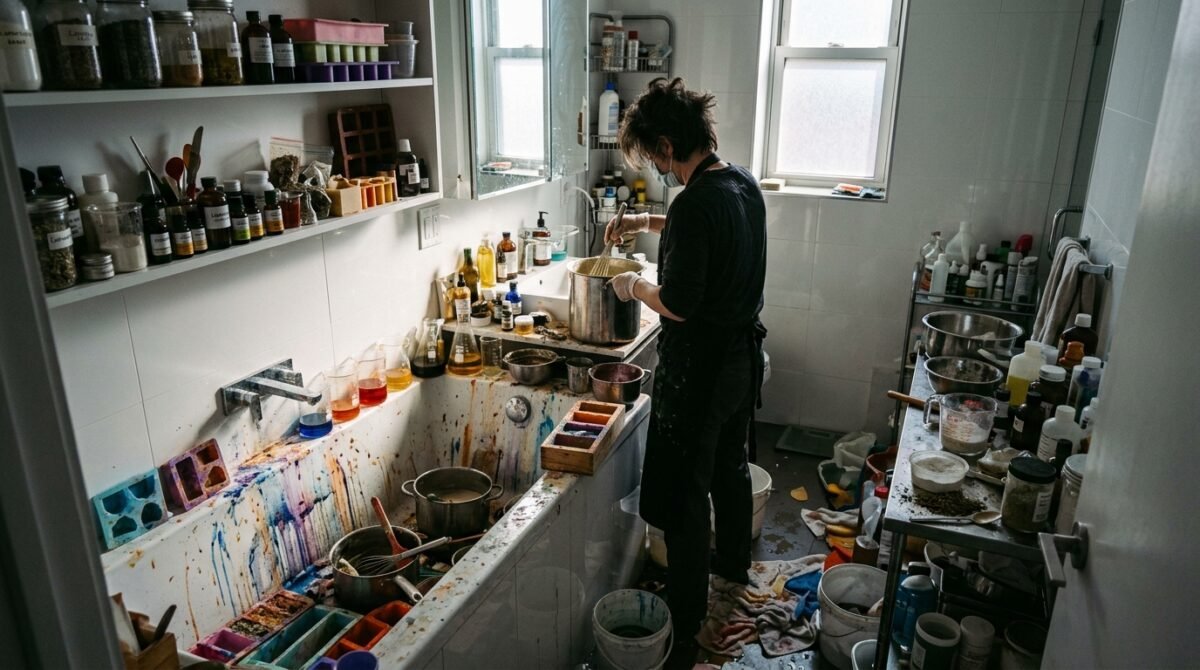
It began as a benign hobby. Sarah, my roommate of two years, had mentioned wanting to make some ‘natural, small-batch soaps’ to save money on gifts for the holidays. I was supportive. Who doesn’t like a nice lavender bar? But within six weeks, our apartment had ceased to be a home and had become a low-budget, high-hazard manufacturing facility. The transition was slow, then suddenly absolute.
The air in our apartment changed. Instead of the clean, crisp scent of my candles, we lived in a perpetual, thick haze of synthetic jasmine and harsh, caustic chemicals. My towels, left on the rack, began to feel brittle and waxy. When I finally walked into the bathroom one Tuesday evening to find my shower curtain draped over a drying rack filled with three hundred lye-drenched bars, I realized this wasn’t about gifts anymore. This was a commercial venture, and I was the unpaid, unwilling facilities manager.
I tried to be reasonable. I approached Sarah with a list of concerns: the water bill, the ruined grout, the encroaching smell, and the total lack of space for my own basic grooming. She laughed it off, promising that her ‘big launch’ was only a few weeks away and that I should be ‘proud to support a local woman-owned business.’ She treated our shared living space as her personal industrial park, completely ignoring the fact that our lease did not permit commercial activity of any kind.
As the months ticked by, the damage became undeniable. The finish on our tub was peeling. The drain was constantly backing up with oils, fats, and lye, leading to a plumbing bill I had to pay out of pocket when the landlord threatened eviction. The tension reached a breaking point when I received a notice from the property management company citing ‘unexplained chemical odors and potential structural damage’ to the flooring. Sarah’s response? A smug shrug and a link to her Instagram shop.
When the lease finally concluded, I did what any person at their wit’s end would do: I treated her security deposit like a business expense account. I calculated the water waste, the plumbing repairs, the cleaning fees, and the ‘loss of quiet enjoyment’ value. I deducted every single cent before handing her the remainder. The fallout was explosive, but for the first time in a year, I could finally breathe in my own bathroom.
The Lavender-Scented Invasion
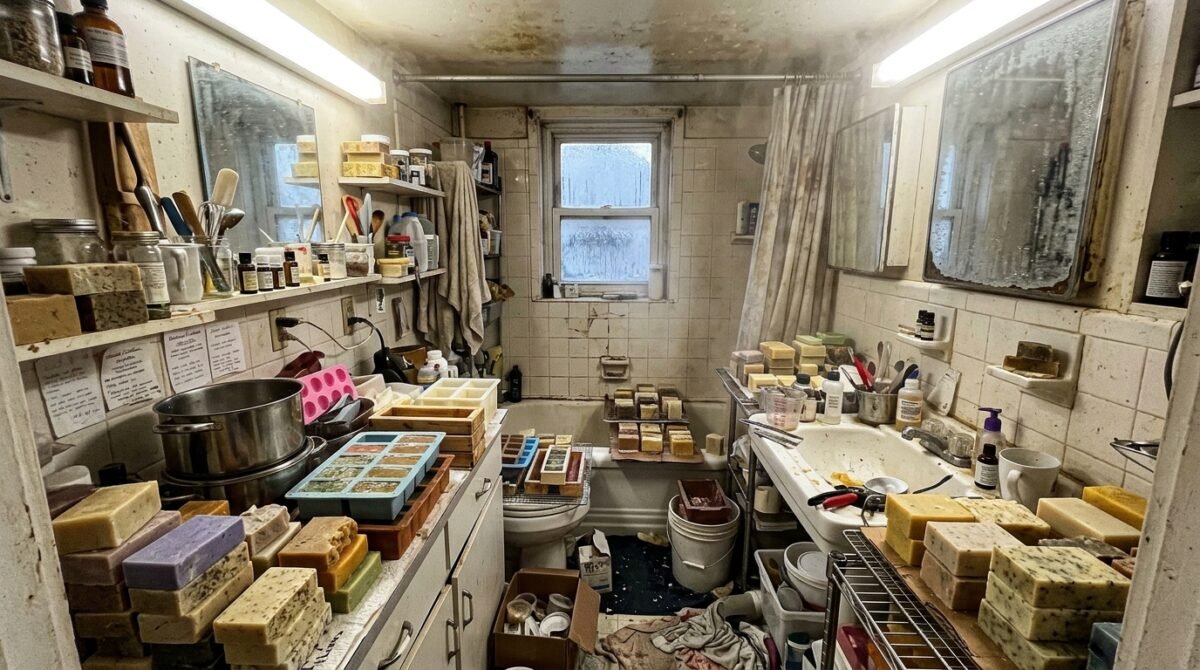
The shift was subtle enough that I almost missed it. It started with one silicone mold sitting on the vanity. Then, it became a stack of boxes under the sink. By the time I actually realized what was happening, the bathroom had been completely colonized. Sarah wasn’t just making soap; she was running an assembly line. She had ordered massive industrial drums of lye, essential oils by the gallon, and bags of raw materials that were stacked high in our foyer, creating a trip hazard.
I remember coming home from a twelve-hour shift, exhausted and needing nothing more than a hot shower. Instead, I walked into a bathroom that looked like a chemistry lab explosion. Steam filled the room, carrying a scent so potent it made my eyes water. The air was thick with the smell of ‘Midnight Citrus’ and burning oil. I couldn’t even see the floor tile through the mess.
“Sarah, this is not okay. I need to use the bathroom. Why are there fifty bars of soap in the shower stall?”
— Me, the first time I confronted her
Sarah barely looked up from her whisk. She was wearing thick rubber gloves and a face mask. “I’m in the middle of a pour, can you wait twenty minutes? It’s a custom order for a wedding party. Do you realize how much money I’m making on this batch alone? You should be grateful I’m doing something productive with my life instead of just sitting on the couch.”
The audacity was staggering. It wasn’t about productivity; it was about the fact that she was operating a factory in a space meant for human hygiene. She didn’t seem to care that the humidity from her cooling soaps was causing our wallpaper to bubble. She was obsessed with the growth of her brand, treating every room in the apartment as a potential warehouse. My living room was now a packaging center, and my kitchen was where she melted fats that left a thick, greasy residue on every surface.
I started noticing the stains. The bathtub, which was once white porcelain, had turned a dingy, yellowish gray. No matter how much I scrubbed, the surface remained sticky. It was clear that the caustic nature of the lye was eating through the enamel. When I tried to scrub it, I felt a burning sensation on my skin—the same burning sensation I felt in my chest every time I opened the front door.
The Plumbing Disaster and the Unpaid Bill
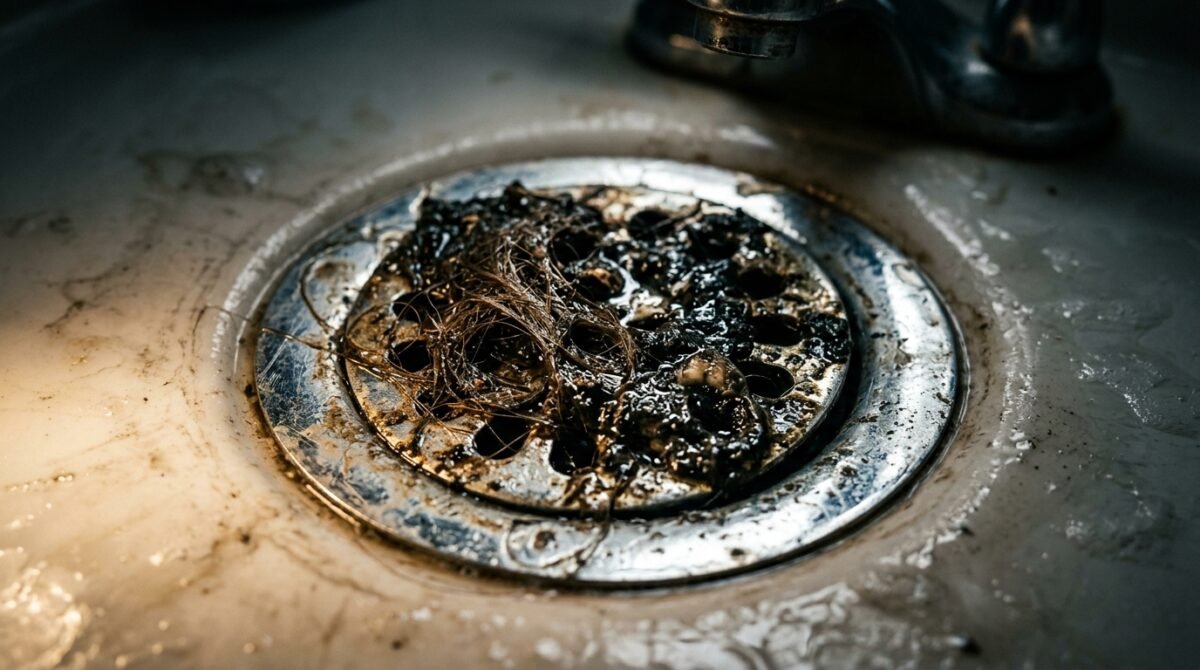
The inevitable plumbing catastrophe happened on a Sunday morning. I was trying to run a simple bath when the water didn’t just stay in the tub; it backed up, bringing a foul-smelling, oily sludge with it. The drain was completely clogged with what I can only assume was a mix of rendered fats and soap scraps. The smell was nauseating, a mix of rot and cloying perfume that clung to the walls for days.
I called a plumber, and the invoice was eye-watering. When the technician arrived, he didn’t even try to hide his frustration. He pulled out a clump of congealed gunk that looked like a biology experiment. He turned to me, looking both annoyed and concerned. “This isn’t just normal hair and soap scum, miss. This is industrial-grade grease. If you keep dumping this down the drain, you’re going to destroy the pipes in the entire building.”
“I’m not paying for this. Sarah is the one running the soap shop. Send the bill to her room.”
— My text message to Sarah
Sarah’s response was immediate and defensive. She didn’t offer to apologize or pay for the emergency call. Instead, she accused me of ‘sabotaging’ her equipment. “You probably let your long hair get down the drain again and are blaming it on my business to make me look bad! I’m a professional, my soaps are high-quality, and they don’t clog pipes. You’re just jealous of my success!”
I paid the bill because the plumber wouldn’t leave until he was compensated, and the landlord was already hovering in the hallway, alerted by the neighbors about the chemical smell leaking into the common area. I felt a surge of rage so intense it was physical. I wasn’t just paying for the damage; I was paying for the privilege of being disrespected and lied to in my own home.
The landlord sent a formal warning letter the next day. It mentioned the ‘unauthorized commercial use of residential property.’ Sarah dismissed it as ‘part of doing business.’ She was completely detached from reality. She truly believed that because her business was ‘eco-friendly’ and ‘artisanal,’ it was somehow exempt from the laws of physics and the terms of our lease agreement. I realized then that conversation was no longer an option.
The Secret Group Chat Revelation
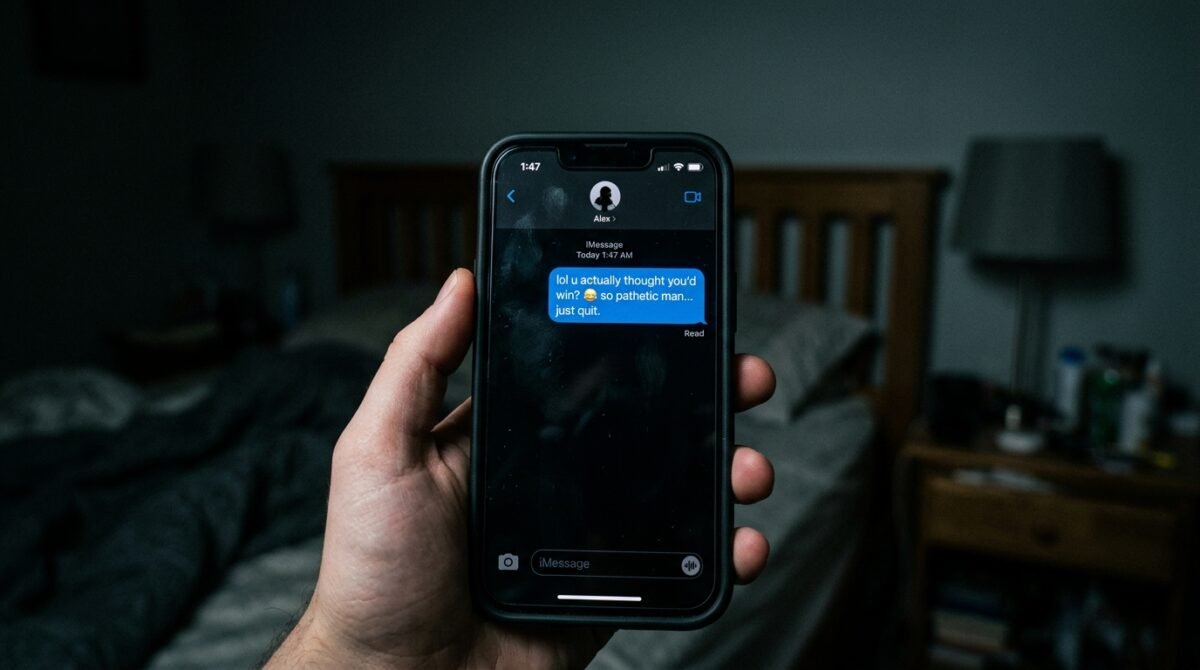
The real betrayal came when I accidentally saw a notification pop up on Sarah’s iPad while she was in the shower. It was a group chat titled ‘Soap Empire Operations.’ I shouldn’t have looked, but the curiosity was too much. I clicked on it, and my stomach dropped. They weren’t just talking about sales. They were talking about me.
The chat was between Sarah and two of her friends. They were laughing about how they could use the ‘dumb roommate’ to cover the cost of supplies. They had a plan to dump all the rinse water into the kitchen sink when I wasn’t looking so that the bathroom would look ‘cleaner’ for my benefit. It was a calculated, mean-spirited deception.
“Don’t worry about the smell. Just tell her it’s a new essential oil blend that promotes calmness. She’s too timid to actually call the landlord.”
— A text from Sarah’s business partner, found in the leaked group chat
I took screenshots of everything. Every joke about my ‘annoying habits,’ every plan to bypass the rules, and every mention of using me as a pawn. It was like reading a script of my own life written by people who hated me. I realized that my kindness wasn’t just being exploited; it was being mocked. I felt a cold, hard resolve settle in my chest.
I didn’t confront her immediately. I didn’t want to give her the chance to hide the evidence or lie her way out of it. I kept the screenshots and started documenting every single instance of her business activity from that point forward. I took photos of the bathroom, recorded the dates of every plumbing incident, and kept a tally of the water usage spikes I noticed on our utility bills.
The irony of her calling me ‘timid’ while I was quietly building a case against her was not lost on me. I realized that she had underestimated me, just as she had underestimated the damage she was doing to the apartment. She was playing a game of pretend CEO, and I was playing the long game of holding her accountable for the real-world consequences of her actions.
The Final Month and the Reckoning
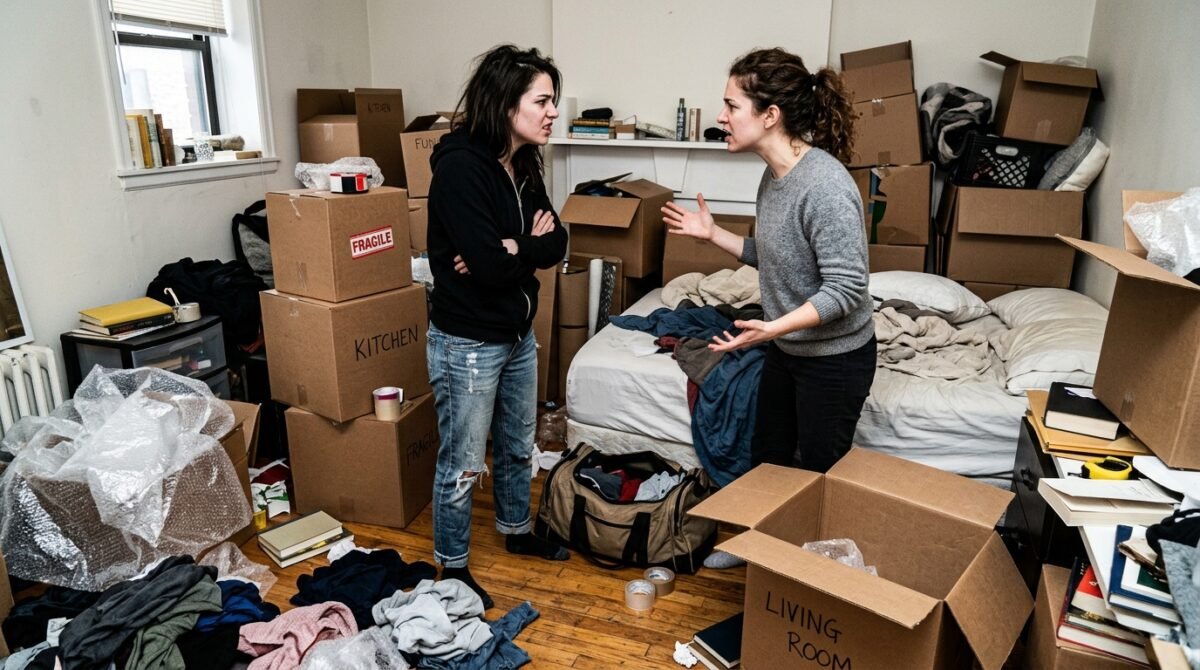
As we approached the end of our lease, the atmosphere in the apartment was suffocating. I spent as much time as possible out of the house, staying late at the office or visiting friends just to escape the smell of lavender and chemicals. Sarah, meanwhile, was working overtime to clear out her ‘inventory’ before the move-out date. She had boxes stacked everywhere, and the apartment felt like a crowded warehouse.
The day before we moved out, I did a full walkthrough with the landlord. He was visibly unhappy. He pointed out the damage to the bathtub, the staining on the floor, and the faint, lingering smell that no amount of ventilation seemed to fix. He estimated that the repairs would cost well over fifteen hundred dollars. He looked at me, expecting me to be shocked, but I just nodded.
I had the itemized list ready. I didn’t want to cause a scene in front of the landlord, so I waited until he left. Then, I turned to Sarah. She was busy packing her last few boxes, humming to herself, clearly oblivious to the storm that was coming. I held up my laptop, showing her the document I had spent all morning preparing.
“I’ve calculated everything. The plumber, the water overages, the cleaning service needed for the walls, and the professional tub restoration. You aren’t getting your deposit back.”
— Me, delivering the ultimatum
She froze. The silence that followed was heavy and sharp. Then, she exploded. She called me every name in the book, accused me of theft, and threatened to sue me for ‘stealing her hard-earned money.’ She claimed that her business expenses were ‘standard wear and tear’ and that I was the one who destroyed the apartment. The level of delusion was truly astounding.
She tried to grab my phone, but I was ready. I told her that I had already sent the documentation to the landlord and the property management company. I had receipts for the plumber, the utility statements, and the photos of the damage. I wasn’t just holding back her deposit; I was ensuring that she was liable for the full extent of the destruction she had caused.
The Social Media Fallout

Sarah didn’t take the hit quietly. She went to social media, posting a long, rambling rant about a ‘toxic roommate’ who ‘sabotaged a small business’ and ‘stole money.’ She left out the part about the plumbing, the chemicals, and the lease agreement. She painted herself as the victim of a jealous, petty person who couldn’t handle her success.
Her friends jumped in, tagging me and leaving hateful comments on my accounts. They were doing exactly what she had done in the group chat—gaslighting me and rewriting history to make her look like a saint. It was frustrating, but I didn’t respond with emotion. I responded with facts. I took the screenshots I had gathered and posted a neutral, factual summary of the events.
“I supported her business until it destroyed our living space, violated our lease, and cost me thousands in damages. Being a ‘small business owner’ doesn’t excuse you from being a decent roommate or following the law.”
— My public response to the drama
The tide turned quickly. People are surprisingly protective of their own living spaces, and the idea of someone turning a bathtub into a soap factory resonated with them. The comments section of her post, which had started with supportive messages, quickly turned into a debate about boundaries, business ethics, and the reality of living with ‘entrepreneurs’ who have no respect for common areas.
I started receiving messages from people who had similar experiences. They shared stories of roommates who turned living rooms into gyms, bathrooms into darkrooms, and kitchens into bakeries without asking. It was validating to know I wasn’t alone, but more importantly, it proved that Sarah’s behavior wasn’t just a quirky ‘hustle’; it was a violation of the social contract.
Sarah eventually deleted her post, but the damage to her reputation was done. She lost a few of her ‘loyal’ customers when they found out that her ‘natural, artisanal soaps’ were being made in a bathtub that had been clogged with sewage and chemical sludge. The irony was almost too much to bear, but I took a small, dark satisfaction in knowing that her business—the thing she valued above our friendship—was the very thing that brought her down.
Reddit Weighs In: The Verdict of the Internet

I posted the full story on a popular subreddit, keeping the names and locations private. I wanted to know if I had gone too far, if I was indeed the villain of the story like Sarah claimed. The response was overwhelming. Within an hour, the post had thousands of upvotes and hundreds of comments. The consensus was loud and clear: I was not the one in the wrong.
“NTA. Your roommate sounds like the classic ‘hustle culture’ parasite. She wasn’t running a business; she was running a hazard. You were essentially subsidizing her operation, and charging her for the damages was the only logical outcome.”
— u/RoommateTruthTeller (Top Comment, 32.1k upvotes)
The community support was intense. People from all over the world weighed in, offering legal advice, emotional validation, and even jokes about the smell of ‘Desperation and Lavender.’ There were some who argued that I should have confronted her earlier, but the majority agreed that once she started lying and using me as a pawn, the relationship was already effectively dead.
I read through comments from professional landlords who explained exactly why what she was doing was illegal and dangerous. They talked about the risk of chemical fires, the potential for structural damage, and the liability issues that I could have faced if the apartment had burned down or if someone had been injured by the lye. It was a sobering reminder of how close I came to a much worse outcome.
One comment, in particular, stood out. A former property manager wrote a long, detailed breakdown of why the deposit was rightfully withheld and how I could further protect myself if Sarah tried to sue in small claims court. It gave me the confidence to stand my ground when her parents eventually reached out to try and ‘negotiate’ the return of the money.
The thread became a hub for people to vent about their own ‘nightmare roommate’ experiences. It was weirdly therapeutic. It turned a painful, isolating experience into a collective conversation about boundaries, respect, and the hidden costs of modern side hustles. I realized that my story wasn’t just about a soap-making roommate; it was about the importance of standing up for yourself when your home is being invaded.
The Parents’ Intervention Attempt

A week after the move-out, I received a phone call from an unknown number. It was Sarah’s mother. Her tone was patronizing, to say the least. She spoke as if Sarah were a young child who had been bullied by a heartless roommate, completely ignoring the fact that her daughter was an adult running a commercial enterprise in a residential apartment.
“Sarah is devastated, and you’ve essentially stolen her startup capital,” the mother said, her voice dripping with indignation. “She was trying to build a future, and you’ve hindered her success over some minor, petty grievances. If you don’t return that money immediately, we will be forced to involve legal counsel.”
“I am happy to share the receipts, the photos of the damage, and the emails from the property management company with your lawyer. I suggest you look at them before you decide to move forward.”
— Me, responding to the mother
The call went silent. I had already forwarded all the documentation to Sarah and her parents, but it was clear they hadn’t bothered to look at it, choosing instead to believe Sarah’s filtered version of the truth. I remained calm, reciting the facts. I didn’t engage with the emotional manipulation or the insults. I stayed focused on the financial reality of the situation.
I informed them that the money had already been processed by the property management company to cover the professional cleaning, the tub refinishing, and the plumbing repairs. It wasn’t ‘my’ money anymore; it was the cost of restoring the apartment to its original condition. They were essentially asking me to pay for Sarah’s business expenses, which I refused to do.
The threat of legal action never materialized. I assume that once they actually saw the photos of the bathtub and the itemized bill from the plumber, they realized that they had no case. They stopped calling, and for the first time in months, I felt a sense of peace. I had stood my ground, and the consequences of Sarah’s actions had finally landed exactly where they belonged: with her.
Lessons in Boundaries and Hustle Culture

Looking back, I learned a lot about the nature of ‘hustle culture’ and how it can be used to justify bad behavior. Sarah wasn’t a bad person by nature, but she was entirely consumed by the need for success, to the point where she lost sight of reality. She viewed everyone around her as a stepping stone or a resource to be used, and she lacked the empathy to see how her ‘hustle’ was negatively impacting the people she lived with.
I also learned that being a ‘nice’ roommate often means being a doormat. I tolerated the smell, the noise, and the intrusion for far too long because I didn’t want to cause a conflict. I thought that by being patient, I was helping her succeed. In reality, I was enabling her, and by the time I realized it, the damage was already done. I should have set clear boundaries from day one.
“Your home is your sanctuary. If someone turns it into a factory, it’s no longer a sanctuary. You have every right to demand that it stays a home.”
— A piece of advice I received from a friend
I’ve become much more cautious about who I live with. I now have a very clear list of ‘deal-breakers’ that I discuss before even signing a lease. No commercial activity, no unexplained chemical usage, and a shared agreement on the use of common areas. It might seem rigid, but it saves me the stress and the expense that I had to endure.
The experience changed my perspective on success as well. I don’t look at someone’s Instagram shop or their ‘side hustle’ the same way anymore. I see the work behind it, but I also see the potential cost to the people around them. I admire drive, but I value consideration and respect even more. Success isn’t worth it if you have to burn bridges and ruin your home to achieve it.
I’ve since moved into a new apartment, and it’s blissfully quiet. There are no chemicals, no industrial equipment, and no secret group chats about me. I take the time to clean my bathroom regularly, and I appreciate the simple, clean smell of nothing in particular. It’s a luxury I’ll never take for granted again.
Moving Forward and Letting Go

It has been six months since I moved out, and I’ve mostly let go of the anger. Sarah still runs her soap business, although I’ve heard through mutual friends that she had to move it into a commercial studio space after her second apartment complex threatened to evict her. I suppose she finally learned that residential leases and bathtub chemical labs don’t mix.
We don’t talk, and I don’t follow her on social media. I’ve moved on to better things, focusing on my own career and personal growth. The money I ‘stole’ from her deposit actually turned out to be less than the total cost of the repairs, so I ended up paying a little extra out of my own pocket, but it was worth it to be free of that living situation and to ensure the landlord was compensated.
I still occasionally wonder what she tells people about ‘the roommate from hell’ who ruined her budding empire. I think about how she probably still blames me for all of her failures, and I’m okay with that. I know the truth, and so do the people who were actually involved in the situation. I don’t need her validation or her apology to know that I did the right thing.
“Growth often comes from the most uncomfortable situations. You didn’t just stand up for yourself; you learned what you were worth.”
— A message from a friend during the aftermath
I’ve found that the best way to handle these kinds of situations is to be as objective and document-heavy as possible. If you’re ever in a position where your roommate is violating boundaries or lease terms, start a paper trail immediately. Take photos, save texts, and talk to your landlord before things get out of hand. It’s not about being petty; it’s about protecting your rights and your living environment.
I’m grateful for the experience, in a strange way. It forced me to grow and to understand my limits. It taught me that I don’t have to sacrifice my comfort for someone else’s ambition. And most importantly, it taught me that my home is my sanctuary, and it is worth defending against anyone who tries to turn it into a chemical experiment.
Community Reflection: Where Do You Draw the Line?

The conversation continues to rage on in the comments of my original post, and it’s fascinating to see how divided people are on the issue of ‘hustle culture’ and roommate etiquette. Some people think I was too hard on her, that I should have supported her more. Others think I wasn’t hard enough, that I should have reported her to the authorities for health and safety violations.
The debate has evolved into a broader discussion about how we treat our friends when their dreams involve our own space. At what point does a hobby become a burden? How much should we be expected to endure in the name of ‘friendship’ or ‘supporting local businesses’? These are questions that don’t have easy answers, but they are worth considering.
“I think the real issue isn’t the soap. It’s the lack of communication and respect. If she had been honest, asked for permission, and helped cover the costs, this might have been a completely different story.”
— u/ReasonableObserver
I agree with that sentiment. It wasn’t the soap; it was the deception. It was the fact that she thought she was entitled to my space and my money. That’s a lesson for anyone who is currently living with a roommate or planning to. Communication is the foundation of any good relationship, and it’s the first thing to go when one person starts valuing their ‘hustle’ more than their home.
I’d love to hear from you. Have you ever been in a situation where your roommate’s business or hobby took over your home? How did you handle it? Did you set boundaries early, or did you wait until the breaking point like I did? Let’s talk about it in the comments. Your stories are the best way to make sure that none of us have to go through a bathtub soap factory disaster alone.
I believe that by sharing our experiences, we can help others avoid the same traps and learn how to advocate for ourselves in the spaces where we live. It’s not always easy to stand up for yourself, but it’s always worth it when you finally find the peace and the clean bathroom that you deserve.
Conclusion
My experience with the soap-making roommate was a harsh, expensive, and deeply frustrating chapter of my life, but it was also a turning point. It forced me to stop being a passive participant in my own life and to start setting clear, firm boundaries. It taught me that my home is a sanctuary that deserves to be protected, not a factory for someone else’s ambitions. I hope that by sharing this, I’ve given you the tools to recognize when your space is being disrespected and the courage to act before it’s too late.
In the end, Sarah learned a lesson about the real-world costs of her business, and I learned a lesson about the value of my own peace of mind. Both were expensive, but I know which one I’d rather have. If you’re currently dealing with a nightmare roommate, don’t wait for them to change. Document everything, set your boundaries, and never be afraid to put your own well-being first. After all, you’re the one who has to live there.
What is your take on this dilemma? Did I handle the deposit deduction correctly, or should I have taken a different path? Share your thoughts and your own stories of roommate disasters below—I’m curious to see how the community weighs in on this messy, sudsy conflict.
What's your verdict on this dilemma?
Vote below to contribute to the official community consensus.

Have a Dilemma Keeping You Up at Night?
Share your real-life feud, wedding chaos, or relationship crossroads anonymously with our editorial team.
What do you think ?
0 Comments🛡️ Comments are moderated to protect community integrity. Your comment will appear once approved by the editorial team.