
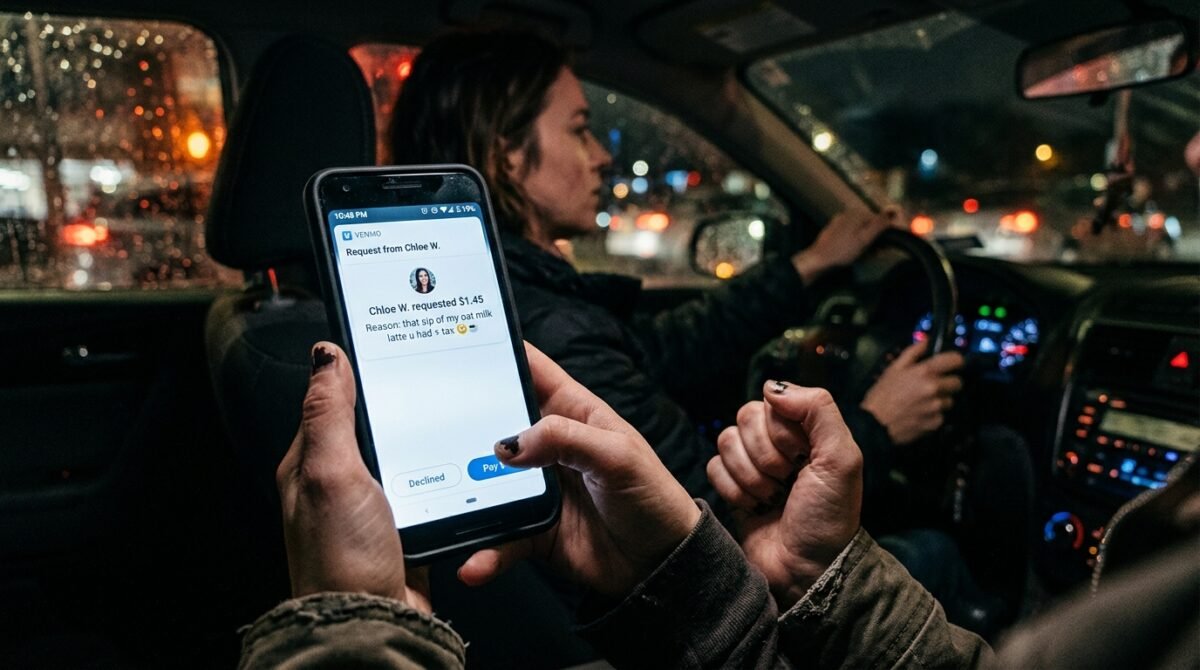
Friendship is often defined by the small, selfless acts we do when the chips are down. We lend money, we provide rides, and we show up for the people we love when they are in crisis. Or at least, that is the social contract most of us operate under. I learned the hard way that for some, friendship isn’t a bond—it’s a line item in a spreadsheet.
My friend, Sarah, and I have been close since college. When her golden retriever, Buster, started having a seizure on a Saturday afternoon, she was panicked. She didn’t have a car, and her partner was out of town. She called me, sobbing, begging for help. Without hesitation, I dropped my plans, rushed over, and drove them through heavy traffic to the emergency vet, a facility over an hour away.
The trip was stressful, exhausting, and emotionally taxing. I sat in the waiting room for four hours while they stabilized the dog. I paid for my own coffee, stayed late into the night, and eventually drove her home, feeling proud that I had been there for a friend in need. I expected a thank you, maybe a shared pizza later that week. I did not expect a financial audit.
Two days later, my phone pinged. A Venmo request from Sarah. The amount was small—$24.50—but the description read: ‘Gas and tolls for the vet trip.’ The sheer audacity of it hit me like a physical blow. I had sacrificed my time, my gas, my sanity, and my weekend, only to be invoiced like an Uber driver.
This isn’t just about $24.50; it is about the fundamental misunderstanding of what it means to be a friend. When I confronted her, the response wasn’t an apology. It was a lecture on ‘fiscal responsibility’ and ‘being fair.’ This is the story of how that one invoice turned a years-long friendship into a battlefield of resentment, group chat leaks, and a hard lesson in setting boundaries.
The Late Night Panic Call

It was 2:45 PM on a Saturday. I was just about to head out for a hike when my phone started vibrating incessantly. It was Sarah. Her voice was unrecognizable, jagged with terror as she described Buster’s condition. She told me he was convulsing, and she had no way to get to the emergency clinic. Panic is contagious, and within seconds, I was racing to her apartment.
When I arrived, the scene was chaotic. Sarah was sitting on the floor, cradling the dog, her face streaked with tears. I didn’t think twice. I scooped the dog up, wrapped him in a blanket, and carried him to my car. I drove like a maniac, dodging traffic and ignoring the speed limit, my only focus being the life of this animal she loved so dearly.
“Please, just drive faster! If he dies because we’re stuck in this traffic, I don’t know what I’ll do. I have the money for the vet, I just don’t have a car. Please, just get us there!”
— Sarah, during the frantic drive
The hour-long drive felt like an eternity. I had to pay $12.00 in tolls just to get onto the express lanes to save time. I didn’t ask Sarah for the money then, nor did I keep track of the gas I was burning. I was a friend helping a friend. I felt a sense of camaraderie, the kind of bond that is forged in crises. We were a team, or so I thought.
After we arrived, the waiting room was sterile and cold. I stayed with her, listening to her worry, offering comfort, and buying us both overpriced snacks from the vending machine. I didn’t complain about the cost or the inconvenience. I was just there, providing the emotional support that she claimed she so desperately needed. I even stayed until the vet gave us the ‘all clear’ at 9:00 PM.
Looking back, the signs were there. Sarah didn’t ask how I was doing. She didn’t thank me for the gas or the tolls at the time. She just focused on the dog, and then on herself. I chalked it up to trauma and exhaustion. I told myself that she was just in a high-stress moment and that she would surely express her gratitude when the dust settled.
The Audacity of the Notification
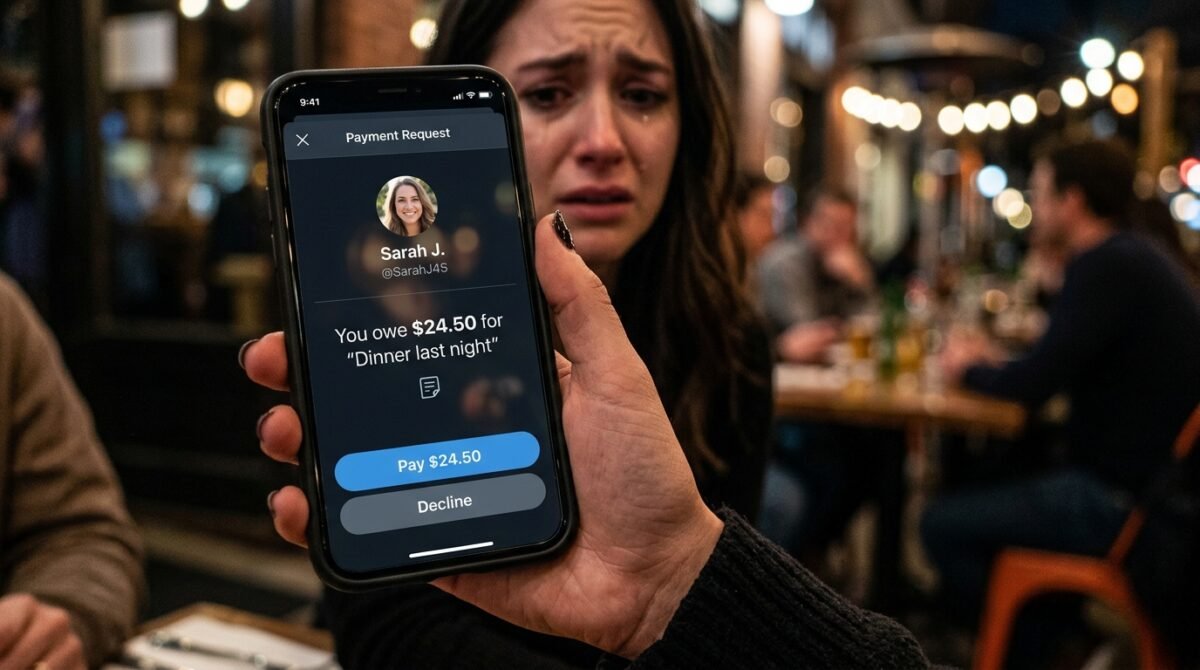
The following Monday, I was sitting at my desk at work, feeling the lingering fatigue of the weekend. My phone lit up with a notification from Venmo. I expected it to be a bill split from a dinner outing or perhaps a birthday gift contribution for a mutual friend. Instead, I saw a request from Sarah for $24.50. I tapped it, assuming it was a mistake.
The note attached to the transaction was chilling in its clinical tone: ‘Gas and tolls for the vet trip.’ I stared at the screen for a full minute, waiting for it to be a joke, a sarcasm-laden jab that I was meant to laugh at. But Sarah wasn’t a sarcastic person. She was hyper-organized, meticulous, and seemingly incapable of understanding that some things exist outside of a transaction.
“Hey, did you send me a Venmo request? I think you might have clicked the wrong button by accident.”
— My text to Sarah
I waited for the ‘LOL, sorry!’ response. It never came. Instead, I got a paragraph-long explanation about how she had ‘calculated the mileage’ and checked the toll receipts online. She had broken down the trip into cents. She wasn’t just asking for the money; she was justifying it as if she were a commercial service provider. I felt a cold knot form in my stomach.
The sheer transactional nature of the request stripped away the warmth of the previous weekend. It wasn’t about the money—the $24.50 would have bought me a sandwich and a coffee. It was the principle. It was the realization that in Sarah’s mind, my time, my car, and my emotional labor were essentially contracted services that were now being settled.
I realized then that she hadn’t seen me as a friend helping in a crisis; she had seen me as a convenient alternative to an Uber Pet. The realization made me feel cheap, used, and entirely foolish for the sacrifices I had made. I didn’t pay the request. I couldn’t bring myself to hit ‘Pay’ on a transaction that validated her entitlement.
The Confrontation in the Kitchen

I went over to her place that evening. I had to know if she was serious. When I walked in, she was sitting on her couch, acting as if nothing was wrong. I stood there, phone in hand, looking at the notification. I didn’t even say hello. I just asked her point-blank if she really expected me to pay for the gas and tolls after I had spent my entire Saturday saving her dog.
Sarah looked at me with a blank expression, as if I were the one acting unreasonably. She started talking about ‘fairness.’ She mentioned that she had a budget and that she didn’t want to feel ‘burdened’ by the costs of the emergency. She acted as if the $24.50 was a standard business expense that she was just passing along to the appropriate party.
“I thought that’s what friends are for. I helped you because you were in trouble. I didn’t think I was being hired as a transport service.”
— Me, during the heated kitchen argument
She fired back, claiming that her financial situation was tight and that she couldn’t afford ‘unexpected expenses.’ I reminded her that I had provided the car, the driving, the waiting, and the emotional support, and that those things had value, too. She dismissed that, saying those were ‘choices’ I made, while the tolls and gas were ‘fixed costs’ of the transport.
The argument escalated quickly. She began to cry, not out of regret, but out of frustration that I wasn’t ‘respecting her financial boundaries.’ It was a masterclass in gaslighting. She had turned the situation around so that *I* was the one being selfish for not wanting to pay her back for the privilege of helping her. I left her apartment that night feeling more exhausted than I had during the entire vet trip.
I realized that for Sarah, the world was a ledger. Everything had a price. Every favor was a debt to be collected. There was no room for genuine, uncalculated kindness in her life. The friendship, as I had known it, was essentially over. I wasn’t just an unpaid chauffeur; I was a line item that was currently in arrears, and she was doing her best to collect.
Leaked Texts and the Group Chat Explosion
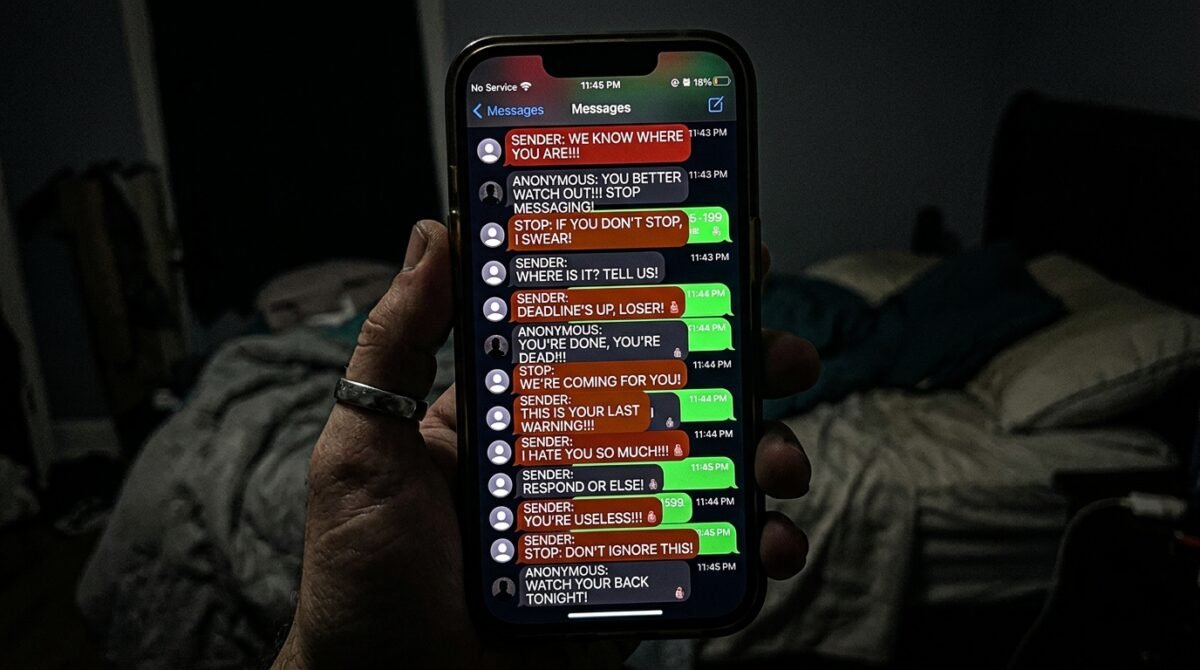
I made the mistake of venting to a mutual friend, Jessica. I thought I was just seeking perspective, but Jessica was the ‘messenger’ type. Within hours, she had shared my frustration with the rest of our group chat, spinning it as a petty squabble over money. The fallout was immediate. The group chat, which was usually for memes and brunch plans, turned into a digital war zone.
Sarah had gone into the group chat and played the victim, framing herself as the ‘responsible one’ who was just trying to manage her budget, while I was being ‘volatile and aggressive’ about a small amount of money. People started picking sides, and it was humiliating. Some of them genuinely thought I was being cheap for not paying a ‘legitimate expense.’
“Guys, I’m just trying to keep my finances in order. Is it really that big a deal to pay for gas? It’s not like it was a charity trip.”
— Sarah, in the group chat
The responses from the group were varied. Some were supportive, but others were surprisingly enabling. ‘It’s only $25, just pay it to keep the peace,’ someone wrote. That was the most infuriating part—the idea that you have to pay a ‘peace tax’ to people who don’t respect you. I felt isolated and misunderstood by the very people I called friends.
I didn’t defend myself in the chat. I just exited. I realized that the people who thought it was reasonable for me to be invoiced for a life-saving favor were not the kind of people I wanted in my life. The group chat, which had once been a source of community, now felt like a toxic echo chamber of entitlement and superficiality.
The leaks continued, though. Screenshots of my messages to Sarah were being sent around, stripped of context, making me look like a monster. It was a bizarre experience to see my private frustrations being turned into public content for people to judge and dissect. I learned then that when you set a boundary, people will often try to make you the villain for having it.
The Reddit Verdict: AITA?

I took the situation to Reddit, specifically the ‘Am I The Asshole’ subreddit. I laid it out exactly as it happened, keeping the details objective. I wanted to see if I was actually being crazy. Within minutes, the comments started flooding in. The response was overwhelming, and it was the validation I didn’t know I needed. The community was, for the most part, on my side, and they didn’t hold back.
“NTA. Your friend is a transaction-seeking missile. You saved her dog and she sent you an invoice? That’s not a friend, that’s a service provider who forgot to mention their rates upfront. You should send her an invoice for your hourly labor at the vet.”
— u/DogLover99 (Top Comment, 32.4k upvotes)
The community analyzed the situation with a level of clarity that my friend group lacked. They pointed out the emotional labor, the danger of the situation, and the absolute lack of social grace Sarah had shown. It was refreshing to see thousands of strangers recognize the absurdity of the situation. Some suggested I send her a bill for my time, which was a tempting idea.
Others were more philosophical, discussing the ‘transactionalization’ of modern friendships. They talked about how people are increasingly viewing their relationships through the lens of costs and benefits. It was a fascinating, if bleak, look at the state of human connection. The consensus was clear: I was not the asshole, and my boundaries were not only valid but necessary.
Reading the comments, I felt a weight lift. I realized that my anger wasn’t an overreaction; it was a normal, healthy response to a boundary violation. I wasn’t being ‘petty’ about $24.50; I was standing up for the value of my own kindness. The validation didn’t solve the problem, but it gave me the confidence to move forward without feeling like I was the one who had failed.
Calculating the Real Cost of Kindness

After the dust settled, I decided to do a little math of my own. If Sarah wanted to be transactional, I would play the game. I sat down and made a list. I calculated the hours I spent at the vet, the time spent driving, the wear and tear on my car, and the emotional distress of the situation. I didn’t actually send it to her, but the exercise was cathartic.
| Service | Estimated Cost | The Reality |
|---|---|---|
| Transportation | $40.00 | Friendly favor |
| Wait Time (4 hrs) | $100.00 | Unpaid labor |
| Emotional Support | Priceless | Dismissed |
| Total Value Provided | $140.00+ | Invoiced for $24.50 |
The disparity was staggering. By her own logic, she owed me significantly more than I owed her. But that was the point—friendship isn’t meant to be balanced like a corporate budget. It’s meant to be a flow of support, given freely without the expectation of an immediate return. When she broke that unspoken rule, she didn’t just break the agreement; she insulted the value of our entire history.
I kept that table on my laptop for a long time. Every time I felt guilty or wondered if I should just pay the money to end the drama, I looked at it. It reminded me that I wasn’t being unreasonable. I was being exploited by someone who prioritized a small, calculated amount of money over a years-long, meaningful connection.
It also made me think about all the other times I had helped her in the past. Had she been keeping a mental ledger for those as well? Was my kindness always being tracked, waiting for the right moment to be ‘settled’? The thought was nauseating. It meant that our entire friendship had been a lie, or at least, a business arrangement that I hadn’t realized I was signed up for.
The Final Cut

I didn’t pay the $24.50. I sent her a final message, keeping it short and firm. I told her that I was hurt by her request, that I didn’t believe in transactionalizing our friendship, and that I was stepping back from the relationship. I didn’t get a heartfelt apology. I got a series of defensive texts, followed by an angry block.
“Fine, keep your money. I guess I know what our friendship is worth to you now. It’s sad that you’re willing to throw it all away over a simple, fair expense.”
— Sarah’s final message
That final message was the ultimate projection. She was the one who had thrown it away for $24.50. I felt a sense of relief when I realized I wouldn’t have to deal with her entitlement anymore. It was like a weight had been lifted. I was no longer an unpaid assistant, and I no longer had to worry about what ‘expenses’ I might be incurring by spending time with her.
It was painful, of course. Losing a friend is never easy, especially when it ends in such a bizarre and petty way. But I realized that the person I was missing was the version of her I had imagined, not the person she actually was. The real Sarah was someone who would invoice her friends for life-saving help, and I didn’t need that kind of person in my life.
The aftermath was quiet. I avoided the mutual friends who were still taking her side, and I focused on the ones who understood. It was a hard lesson, but an important one. Boundaries are not meant to punish others; they are meant to protect your own peace and self-respect. And sometimes, enforcing those boundaries means losing people who were never really on your team to begin with.
Why We Need Boundaries in Friendship

The experience taught me a lot about the nature of modern friendship. We are often told that we should be ‘supportive’ and ‘always there’ for our friends, but we are rarely taught how to set boundaries when that support becomes exploitative. We assume that our friends have the same moral compass as we do, and that they would never dream of asking for gas money after a life-saving favor.
But the world is changing, and so is the way people view relationships. The ease of apps like Venmo and CashApp has made it too easy to commodify every interaction. We have replaced genuine, messy, human connection with clean, efficient, digital transactions. And in the process, we have lost the ability to simply be kind without calculating the cost.
It is important to remember that you are allowed to say no. You are allowed to set boundaries, even with the people you love. You are allowed to be hurt when those boundaries are crossed. You are not a service, you are not a company, and you are not obligated to subsidize anyone’s life at the expense of your own peace.
If a friend asks for something that feels wrong, listen to that feeling. Don’t dismiss it as being ‘too sensitive’ or ‘too petty.’ Your intuition is usually right. It’s better to have fewer friends who respect and value you than to have a large circle of people who are constantly looking for ways to extract value from your kindness.
The Aftermath: Moving Forward

It has been six months since the incident. I have moved on, and my life feels lighter. I have established new, healthier friendships with people who understand the value of reciprocity and support. We help each other, we show up in crises, and we would never dream of invoicing each other for the cost of being a decent human being.
I still see Sarah around occasionally, but we don’t speak. It’s a strange, distant feeling to see someone you once shared your life with and realize that they are now a complete stranger. But it’s a necessary distance. I’ve accepted that we have different values, and that’s okay. She can live her life of ledgers and spreadsheets, and I will live mine, surrounded by people who understand that friendship is not a transaction.
I’ve also become more aware of my own patterns. I’ve learned that I had a tendency to overextend myself in the past, always trying to be the hero, always trying to solve everyone else’s problems. I’ve realized that this behavior often attracted people who were looking for someone to lean on, not someone to connect with. I am more cautious now, and that is a good thing.
I hope that if you are reading this, you’ve never had to deal with an invoice from a friend. But if you have, know that you are not alone. Your reaction was valid, your boundaries are necessary, and your kindness is a gift, not a commodity to be exploited by those who don’t deserve it.
Reflecting on the Value of Connection

The story of the vet trip invoice serves as a reminder that the quality of our relationships is determined by the values we share. When our values are misaligned, friction is inevitable. It’s not about the money, and it never was. It’s about the underlying philosophy that governs our lives: do we treat people as ends in themselves, or as means to an end?
When we treat our friends as means to an end, we lose the very thing that makes friendship valuable: the trust that we are cared for, not because of what we provide, but because of who we are. Trust is fragile. Once it’s broken by an act of cold, calculated entitlement, it’s almost impossible to rebuild. And that, in the long run, is a much higher price to pay than $24.50.
I’ve learned to appreciate the people in my life who show up without asking for anything in return, and I make sure to do the same for them. We don’t track the favors, we don’t count the gas miles, and we don’t send invoices. We just show up. That is the kind of friendship that survives the ups and downs of life, and that is the kind of friendship I am committed to cultivating.
So the next time someone tries to invoice you for a favor, remember that you have the right to say no. You have the right to protect your energy, your time, and your peace. And most importantly, you have the right to surround yourself with people who will never dream of sending you a Venmo request for being a good friend.
Conclusion
This story of the vet trip invoice is not just about a petty disagreement over money; it is a profound exploration of modern friendship, entitlement, and the crucial importance of setting boundaries. When we allow others to commodify our kindness, we not only lose our own time and resources but also diminish the value of the very relationships we are trying to preserve.
Sarah’s actions were a symptom of a larger issue—the increasing tendency to view human interactions through a purely transactional lens. By choosing to invoice me for a life-saving favor, she signaled that our friendship was not built on mutual support, but on a ledger of debts and credits. My decision to step back was not an act of pettiness, but a necessary act of self-preservation.
I hope this narrative serves as a wake-up call for anyone feeling exploited by their friends or family. You are not a service provider, and you do not need to justify your kindness to those who cannot understand it. True friends show up when it matters, and they do it because they care, not because they’re calculating the cost.
What about you? Have you ever had a friend cross a line and treat your help as a paid service? How did you handle it? Let’s keep the conversation going in the comments below—I’d love to hear your stories of boundary-setting, friendship fallouts, and the lessons you’ve learned along the way.
What's your verdict on this dilemma?
Vote below to contribute to the official community consensus.

Have a Dilemma Keeping You Up at Night?
Share your real-life feud, wedding chaos, or relationship crossroads anonymously with our editorial team.
What do you think ?
0 Comments🛡️ Comments are moderated to protect community integrity. Your comment will appear once approved by the editorial team.