

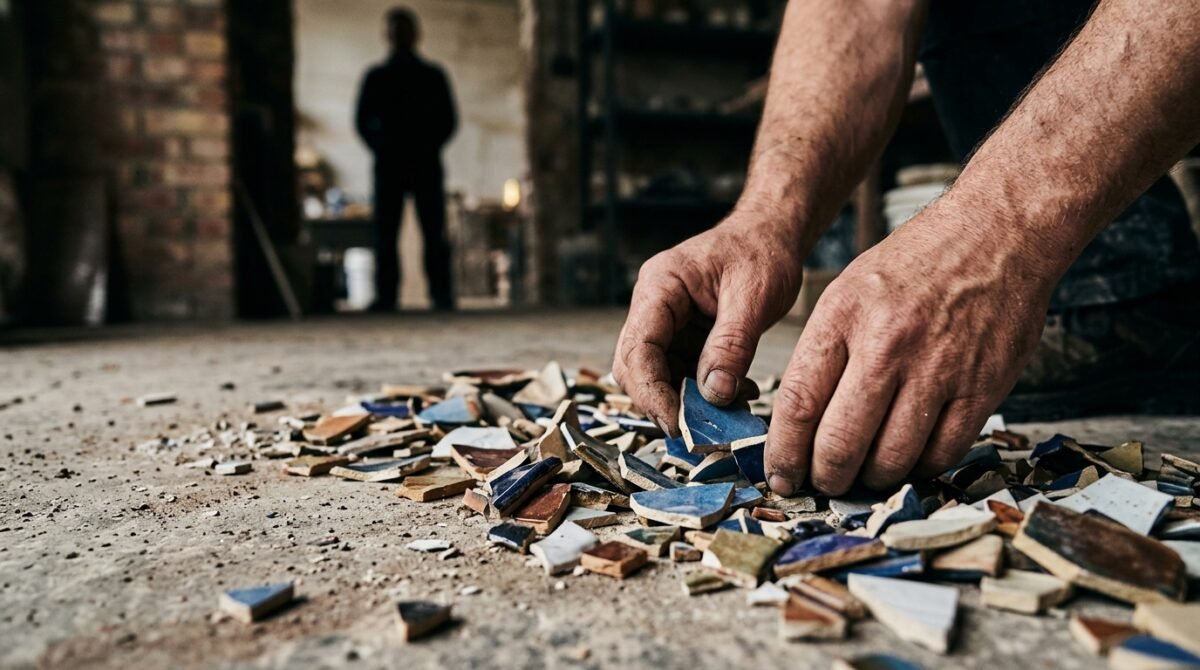
When people tell you that living with friends is a recipe for disaster, you usually assume they mean dirty dishes left in the sink or a dispute over the utility bill. You rarely expect to return home from a weekend trip to find your life’s work—hundreds of hours of labor, kiln-firing, and glazing—reduced to a pile of literal dust and jagged porcelain shrapnel. That is exactly what happened to me.
For the past three years, I have dedicated my evenings and weekends to the art of pottery. It wasn’t just a hobby; it was a meditative practice, a creative outlet that kept me grounded during a high-stress corporate career. I had built a modest collection of handcrafted vases, bowls, and sculptural pieces, some of which were slated for a local gallery exhibition. My roommate, Sarah, always claimed to be my biggest supporter, constantly complimenting my work during our morning coffee rituals.
The betrayal wasn’t just the destruction; it was the casual, nonchalant reasoning she provided when I discovered the wreckage. To her, my art wasn’t ‘real’ work. It was clutter. It was an inconvenience in the garage where she wanted to host her ‘recreational shooting’ sessions with a pellet gun. She didn’t see art; she saw cheap target practice. The sheer audacity of her actions forced me into a position I never wanted to be in: dragging a friend into the cold, clinical halls of the local courthouse.
This isn’t a story about a petty grudge over a broken plate. This is a story about the intersection of creative labor, personal property, and the boundary-crossing entitlement that can destroy even the closest friendships. When I presented her with the invoice for the market value of my work, her laughter quickly curdled into a genuine legal crisis. I didn’t want to sue, but when she told me to ‘get over it,’ she left me no other choice but to seek justice on the record.
What follows is the breakdown of how one afternoon of reckless fun turned into a landmark moment of accountability. From the initial discovery in the garage to the final verdict handed down by a judge who clearly didn’t appreciate the destruction of fine art, this is my experience navigating the aftermath of a shattered collection and an even more shattered trust.
The Silence of the Kiln Room
The garage had always been my sanctuary. I had invested heavily in ventilation systems, shelving units, and a professional-grade kiln. It was a space I paid for through a modified rent agreement, one that Sarah had agreed to in writing when we moved in together. She was aware of the fragility of the items stored there; she had even helped me bubble-wrap pieces for the local winter market just months prior.
Returning home on a Sunday evening, I walked straight to the garage to check on a batch of mugs that were cooling. As I pulled the heavy door open, the sound of crunching porcelain was the first thing to greet me. It wasn’t the soft, rhythmic hum of the kiln. It was the sharp, metallic crunch of ceramic shards being crushed under my own sneakers.
I froze. The lighting was dim, but as I clicked on the overhead fluorescent bulbs, the reality of the scene hit me like a physical blow. The shelves were nearly bare. The shards on the floor weren’t from a seismic event or an accidental nudge. There were distinct puncture holes in the center of several larger, intact pieces that had been propped up against the back wall, clearly serving as makeshift targets.
My heart hammered against my ribs. I dropped to my knees, sifting through the debris, hoping against hope that perhaps it was just a few pieces. But as I scanned the room, I realized the full scope. My ‘Ocean Series’ collection—ten intricately glazed vases I had spent four months perfecting—was pulverized. I felt a surge of nausea that was only eclipsed by a burning, white-hot rage.
“Sarah, get out here. Now. Tell me you didn’t do this. Tell me this is some kind of sick, twisted joke.”
She walked in, holding a soda can, looking entirely unbothered. She glanced at the floor, then back at me, with a look of mild annoyance that I had disturbed her evening. She didn’t look guilty. She looked like someone who had been caught doing something she deemed perfectly within her rights.
The Logic of the Pellet Gun
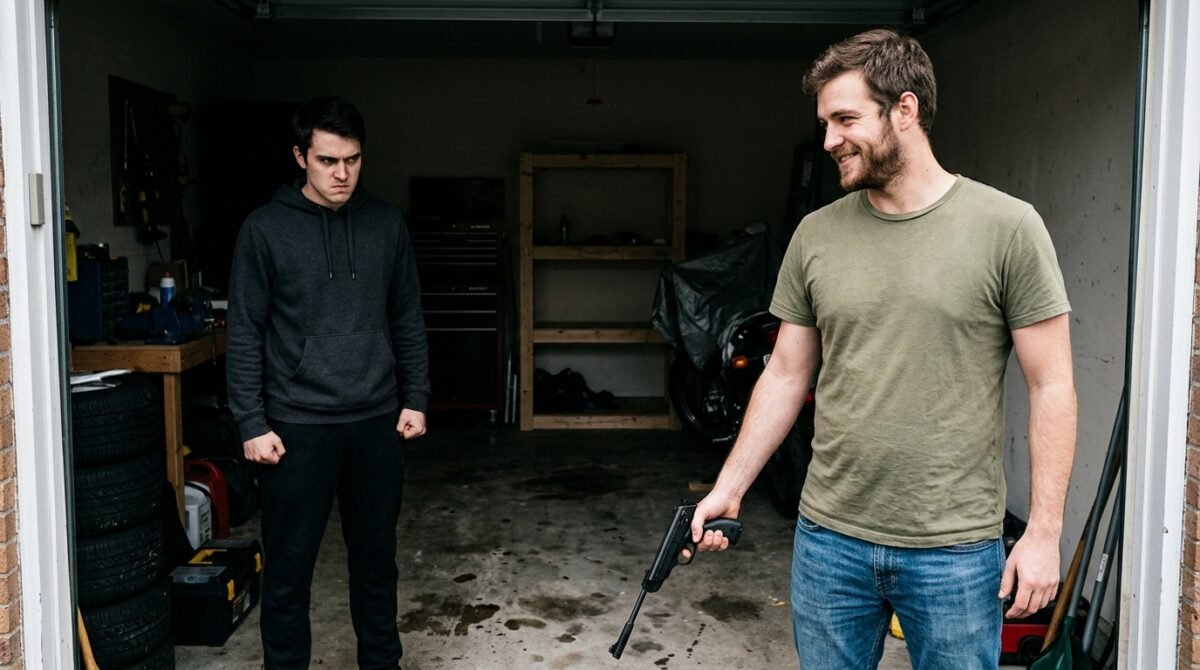
When she finally spoke, her defense was as chilling as the destruction itself. She didn’t apologize. She didn’t stutter. She launched into a pre-rehearsed narrative about how the garage had been ‘wasted space’ and how she needed a place to practice her aim for an upcoming camping trip. She seemed to genuinely believe that because the items were ‘just clay,’ they were replaceable.
I stood up, my knees shaking from adrenaline, and looked at her. I asked her point-blank if she had any idea how many hours went into those pieces. Her response was a dismissive wave of her hand, suggesting that since I made them, I could just ‘make more.’ The sheer lack of respect for the labor involved was staggering.
She explained that she had invited a couple of friends over on Saturday. They had apparently gone through my entire inventory, taking turns to see who had the best aim. She thought it was a ‘fun way to blow off steam’ while I was out of town. She even admitted that she had recorded a few videos of her friends hitting the more delicate vases, laughing about how they ‘shattered like glass.’
“You’re overreacting. It’s clay, not gold. I can buy you a bag of clay tomorrow. Why are you acting like I burned your house down? It was just a little target practice.”
The conversation quickly devolved into her blaming me for ‘hoarding’ space in a shared garage. She argued that as a roommate, I shouldn’t have been keeping ‘expensive-looking junk’ in an area she considered a living space. She refused to acknowledge that she had effectively destroyed thousands of dollars of inventory and destroyed the only hobby that kept me sane.
I realized in that moment that there was no point in arguing about the artistic value or the emotional labor. She was never going to understand. She was only going to understand the language of loss, and the only way to make her feel that loss was to involve the financial stakes. I told her then and there that I would be sending her an invoice for every single item.
The Invoice That Ignited the War

I spent the next forty-eight hours cataloging every single piece. I looked through my sales records from the previous year, the materials costs, and the time-investment logs I kept for tax purposes. I didn’t want to gouge her, but I wanted to be made whole. The total came to $4,200—a conservative estimate given that these were exhibition-ready pieces.
I typed up a formal document, printed it out, and placed it on her nightstand. I also sent a digital copy via email, just in case she tried to claim she never saw it. I knew she would react poorly, but I didn’t expect the level of vitriol that followed. By the time I got home from work the next day, she had blocked me on social media and left a stack of my remaining, untouched supplies in the middle of the kitchen floor.
The group chat, which had been dormant, suddenly lit up. She had invited our mutual friends into the conversation to paint me as the ‘crazy roommate’ who was trying to extort money from her. I didn’t participate in the drama; I simply documented everything. I took screenshots of her admissions of guilt, her justifications, and the threats she made to leave the apartment if I ‘kept harassing her’ for money.
“Just a heads up to everyone: my roommate is trying to sue me for $4k because I ‘broke’ some ugly clay pots she had in the garage. She’s literally a psycho. Don’t engage with her.”
— Sarah, in the mutual friend group chat
The friends were divided. Some were shocked at the destruction, while others, influenced by Sarah’s framing, told me to just drop it to keep the peace. I realized then that my social standing in our shared circle didn’t matter. What mattered was the legal reality of the situation. I didn’t need their validation; I needed the court’s judgment.
The Small Claims Filing

Filing in small claims court was surprisingly straightforward, but the psychological hurdle was significant. You’re taught to solve conflicts amicably, to ‘be the bigger person.’ But when someone destroys your work and laughs in your face, the ‘bigger person’ narrative starts to feel like a concession to injustice. I walked into the local courthouse with my evidence binder, feeling a mix of nerves and cold resolve.
The clerk looked through my documents—my sales history, the photos of the shards, and the text messages where Sarah admitted to the ‘target practice.’ She was professional and efficient, processing the claim without judgment. I paid the filing fee, and for the first time in weeks, I felt like I had regained a modicum of control over my own life.
When Sarah was served the papers at our apartment, the atmosphere shifted instantly. She had been acting like I was just making empty threats, but holding that legal document in her hands changed her demeanor. She stopped acting smug and started acting desperate. She tried to convince me to settle ‘outside of court,’ but I had already learned my lesson about trusting her word.
“Look, I’ll pay you $500. That’s more than enough for the clay. Just drop the court thing, this is going to make everything so awkward. We live together, for God’s sake!”
I didn’t blink. I told her that if she wanted to settle, the number was $4,200, paid in full within 24 hours. She scoffed and told me I was delusional. I told her I’d see her in front of a judge. The silence between us for the next few weeks was deafening, a cold war fought in the kitchen while we avoided eye contact, each waiting for the court date.
The Community Weighs In

I posted about the situation on a popular legal advice subreddit, keeping the names anonymous. I wanted to see if I was truly the villain in this story, as Sarah had claimed. The response was overwhelming. Within hours, the post hit the front page, and the comments section became a battlefield of perspectives.
The vast majority of the community was on my side, citing the clear destruction of personal property and the lack of respect for my hobby. People shared similar stories of roommates who felt entitled to their personal space or items, offering legal strategies and words of encouragement. The validation was immense, but the dissenting voices were just as educational.
“NTA. This isn’t just about ‘clay.’ This is about the destruction of labor and property. If she wanted to play target practice, she should have bought a paper target or a dedicated backstop. Using your finished work is a massive violation of trust.”
— u/LegalEagle88 (Top Comment, 15.2k upvotes)
“I mean, ESH. You kept your stuff in a shared garage and didn’t expect someone to mess with it? You should have had a lock on the garage or a storage unit. You’re both responsible for this mess.”
— u/RoommateRealist (Downvoted, 1.2k downvotes)
The debate helped me realize that while I might have been naive in my trust, I was not legally or morally wrong. The consensus was clear: Sarah had committed an act of vandalism, and she needed to be held accountable. The support gave me the courage to stand firm when she tried to gaslight me about the ‘value’ of my work in the lead-up to the hearing.
The Day of Reckoning
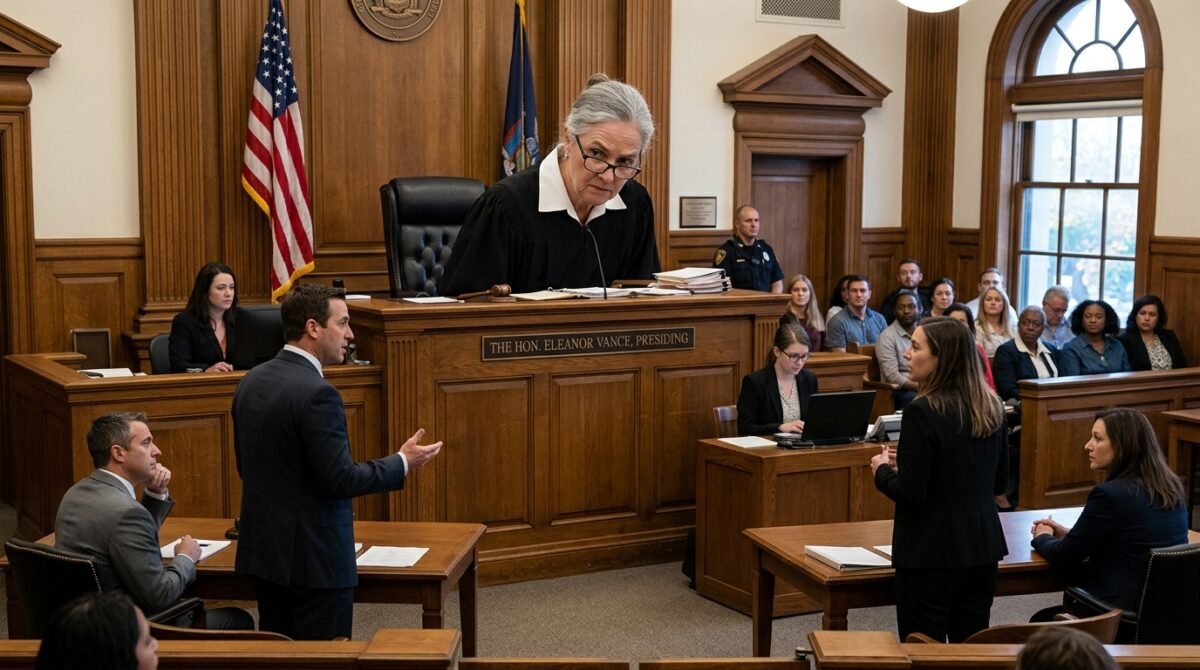
The courtroom was smaller and less intimidating than I had imagined. It smelled of floor wax and old paper. Sarah arrived dressed in an outfit that I’m sure she thought made her look ‘respectable,’ but her fidgeting gave away her anxiety. When our case was called, we stood before the judge, a woman with a sharp gaze and an even sharper way of cutting through nonsense.
Sarah tried to argue that I had abandoned the property, claiming it was ‘trash’ and that she was doing me a favor by clearing out the garage. She tried to frame the pottery as ‘clutter’ that had been sitting there for months. She even claimed that I had given her permission to use the garage however she wanted, a blatant lie that I quickly refuted with our original rental agreement.
The judge asked me to present my evidence. I handed over the photos of the shards, the sales records, and the printed screenshots of the text messages. When I pointed to the specific photo of a vase with a pellet hole right through the center, the judge actually leaned in to get a closer look. She didn’t look like she was enjoying the story, but she was certainly paying attention.
“Ms. Sarah, are you claiming that these items were considered trash by the owner? And are you also claiming you didn’t know these were the result of the plaintiff’s professional work?”
— The Judge, during the cross-examination
Sarah stumbled, trying to backtrack. She said she thought they were ‘practice pieces.’ The judge didn’t buy it for a second. She asked why, if they were practice pieces, they were stored with such care on shelves rather than in the bin. The logic of Sarah’s defense began to crumble under the weight of the evidence.
The Verdict and the Aftermath

The judge ruled in my favor within twenty minutes. She found that the destruction was intentional and that the value of the property was documented clearly. She ordered Sarah to pay the full $4,200, plus the court fees. Sarah’s face turned white. She clearly hadn’t considered that the law would actually value my creative labor.
We walked out of the courthouse in total silence. I didn’t gloat; I didn’t gloat because the damage had already been done. My exhibition, my work, and my friendship were all gone. As we reached the parking lot, she turned to me, her voice trembling. She didn’t say she was sorry. She asked how she was supposed to pay that much money.
“I don’t have that kind of money right now. Can we talk about a payment plan? I’ll pay you back, I swear, just don’t send this to a collections agency.”
I looked at her and realized I didn’t care about the money as much as I cared about the closure. I told her that as long as she followed the court’s payment schedule, I wouldn’t take further action. But our time as roommates was finished. I moved out the following week, leaving the garage behind forever.
The aftermath was a period of intense reflection. I lost a friend, but I gained a deeper understanding of the boundaries I needed to set. The money helped me replace the kiln and the materials, but the time I lost—the three years of work—could never be fully recovered. It was an expensive lesson in who to trust, and more importantly, how to protect the things that matter most.
Lessons from the Shards

I didn’t immediately go back to the wheel. For months, I couldn’t even look at clay without feeling a phantom ache in my hands. The trauma of the event was deeper than I admitted to myself. I had to consciously rebuild my relationship with my craft. It started with small, simple pieces—bowls that didn’t need to be perfect, mugs that were just for me.
I realized that I had been too focused on the outcome of my work—the market value, the exhibitions, the sales—rather than the process itself. The destruction forced me to rediscover why I started in the first place: the sheer joy of creation. I stopped keeping my best work in the garage, and I invested in a small, secure studio space that was entirely my own.
Sarah eventually paid the debt, though it took her nearly a year. We haven’t spoken since that day in the parking lot. I see her occasionally in town, but I look right through her. The bridge isn’t just burnt; it’s been turned to dust, just like the ceramics she destroyed. And honestly? I’m okay with that.
“You learn who people really are when they think they can get away with hurting you. And you learn who you are when you decide not to let them.”
I’ve moved on, but I still keep a small bag of the shards on my desk. They aren’t there as a reminder of the hate, but as a reminder of the strength it took to stand up for myself. They are my ‘remembrance pieces,’ proof that even when things are broken into a thousand pieces, you can still find the resilience to start over and create something new.
The Legal Reality Check

Looking back, I’m often asked if I would do anything differently. People want to know if I regret taking her to court. The answer is a resounding no. There is a strange, quiet power in the law that validates your experience when the people around you try to minimize it. It wasn’t just about the money; it was about the official recognition of my worth as an artist.
If you find yourself in a similar situation, document everything. I cannot stress this enough. Screenshots, photos, receipts, and written agreements are the only things that matter in a courtroom. Your feelings are important, but they don’t hold weight in a legal dispute. It’s the concrete, provable facts that win cases, and that’s what saved me.
I’ve since spoken to a few lawyers who told me that cases like mine are more common than you’d think. Entitlement is a pervasive issue, and too many people shy away from legal action because they think it’s ‘too much work.’ It is work, but it’s the kind of work that protects your future and your peace of mind.
“The law is a tool. Don’t be afraid to use it when your boundaries are violated. Silence is the ultimate enabler of bad behavior.”
I’m finally back to full production, and my work is better than it has ever been. There is a maturity in my pieces now, a confidence that comes from knowing exactly who I am and what I’m worth. If Sarah taught me anything, it’s that no one else is going to protect my art for me—I have to be the one to do it.
Moving Forward with Integrity

Today, I have a different approach to my living situation. I live alone, in a space that respects my creative energy. I don’t share my studio, and I don’t share my time with people who don’t understand the effort that goes into my work. It’s a quiet life, but it’s a full one. The echoes of the past don’t haunt me as much as they used to.
I’ve seen Sarah on social media a few times through mutual friends. She seems to have learned nothing, repeating the same patterns with new people. It’s a sad reality, but one that I’ve learned to accept. I am not responsible for her growth, and I’m definitely not responsible for her poor choices anymore.
My advice to anyone reading this is simple: honor your work and protect your peace. If someone destroys what you’ve built, don’t let them convince you it’s ‘just stuff.’ It’s your time, your energy, and your soul. And you deserve to be made whole, whether that’s through an apology or a court-ordered judgment.
“You are the only person who can define the value of your labor. Never let someone else assign a price tag to your passion.”
I’m looking forward to my next exhibition. It’s going to be dedicated to the idea of reconstruction—taking the broken parts of life and turning them into something stronger, more beautiful, and entirely, authentically mine. Thank you for listening to my story.
Conclusion
The ordeal taught me that while we cannot control the actions of others, we have total control over our response to them. Small claims court was not just a legal battle; it was a reclamation of my own dignity. By standing my ground, I proved to myself that my work—and my well-being—was worth fighting for, no matter how difficult the path became.
This story has resonated with thousands of people who have felt the sting of betrayal in their own lives. We all have that one boundary-crossing experience that defines our growth, and I hope my experience encourages you to prioritize your own worth over the convenience of keeping the peace. Justice may be slow, but it is incredibly grounding.
Now, I turn it over to you. Have you ever had to take a stand against someone who refused to respect your boundaries? Did you find that taking legal action or cutting ties was the right move, or do you have a different philosophy on handling conflict? Let’s keep the conversation going in the comments below.
What's your verdict on this dilemma?
Vote below to contribute to the official community consensus.

Have a Dilemma Keeping You Up at Night?
Share your real-life feud, wedding chaos, or relationship crossroads anonymously with our editorial team.
What do you think ?
0 Comments🛡️ Comments are moderated to protect community integrity. Your comment will appear once approved by the editorial team.