
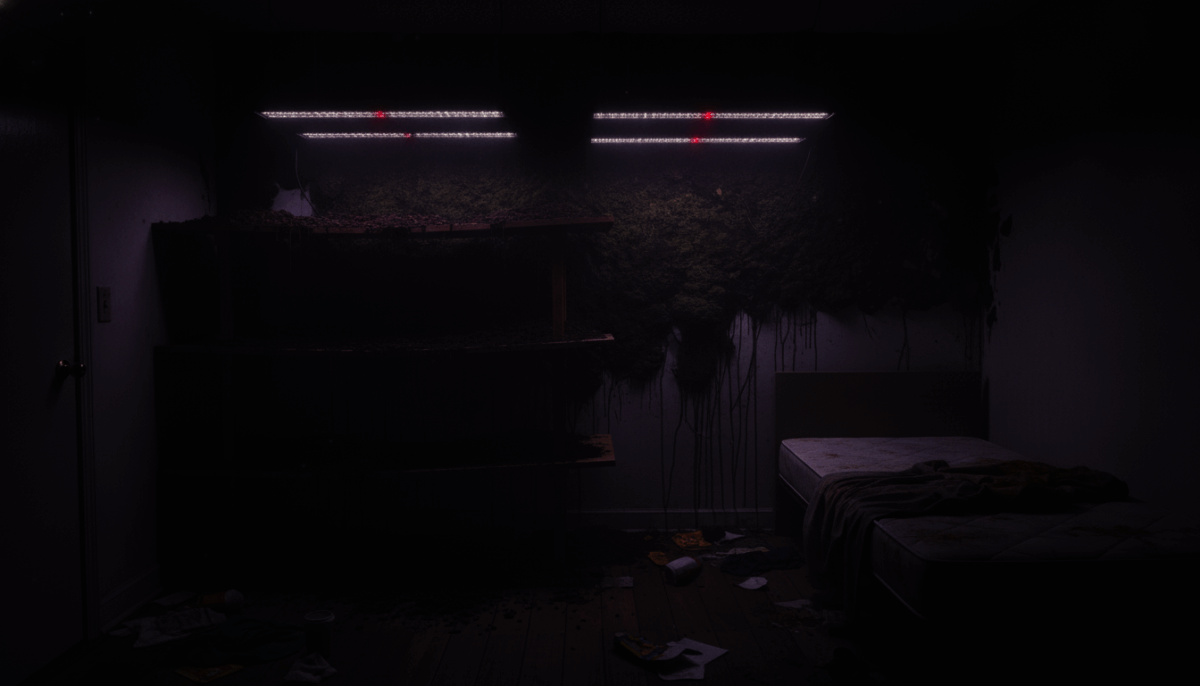
Living with a roommate is often a gamble, a delicate social contract built on quiet hours and shared utility bills. But for most, that contract implies a baseline level of mutual survival. You expect them to pay their half of the rent, perhaps wash their dishes, and certainly not turn your shared apartment into an uncontrolled biological hazard. My story begins with what I thought was a simple, slightly odd hobby—my roommate, Jason, was ‘into gardening.’
It started with a few trays on his windowsill. Harmless, I told myself. Then it migrated to a rack in his closet, then a full-blown shelving unit under high-intensity ultraviolet lights that hummed through the walls at 3:00 AM. I didn’t realize until it was far too late that Jason wasn’t just growing basil; he was running a high-humidity, semi-automated commercial micro-green farm in a bedroom not equipped for industrial moisture levels.
The first sign was the smell—a damp, earthy musk that clung to the upholstery in the living room. Then came the physical peeling of the wallpaper near his bedroom door. When I finally forced my way in, the sight was nothing short of apocalyptic. Black mold had colonized the drywall, the carpet, and the ventilation system, turning our home into a toxic health liability. The restoration company’s quote wasn’t just a number; it was a life-altering demand for $15,000.
When I approached Jason, he did what he had always done: he looked at his shoes, mumbled about ‘financial strain,’ and promptly went no-contact. Left with no other choice and facing eviction or ruin, I did the only thing that felt like justice. I found his parents’ contact information and mailed the entire invoice directly to their home address, accompanied by a letter detailing exactly how their son had destroyed our shared life.
The Hum of the Midnight Grow Lights

For the first six months, Jason was the ideal roommate. He was quiet, he worked late shifts at a tech firm, and he never invited anyone over. I assumed he was just introverted. The first sign that something was off was the constant, low-frequency hum vibrating through the floorboards at night. I initially thought it was the HVAC system struggling, but the sound was localized to his room.
When I asked him about it, he was dismissive. ‘It’s a high-end server I’m running for some freelance data processing,’ he said, not even looking up from his phone. I trusted him. That was my first mistake. I didn’t press for details, assuming that his professional life was his own business, provided the rent was paid.
It wasn’t just the hum. The apartment started to feel… heavy. There was a constant, stifling humidity that made the air feel thick enough to chew. My windows were constantly fogged over, even on dry, breezy days. I remember waking up with a sore throat every morning, which I attributed to the changing seasons or perhaps a dust allergy.
“Hey, do you mind keeping your door closed? The humidity in here is insane. My plants need to stay at a specific moisture level or they die.”
— Jason, casually mentioning his ‘hobby’ during a brief encounter in the kitchen.
I didn’t realize the gravity of his words until later. I thought he was talking about a few potted plants, not a vertical farm. The lack of ventilation in his room, coupled with the constant misting of trays, was turning the room into a petri dish. By the time I noticed the first dark speckle on the ceiling, the colony was already well-established.
The Day the Walls Started Breathing
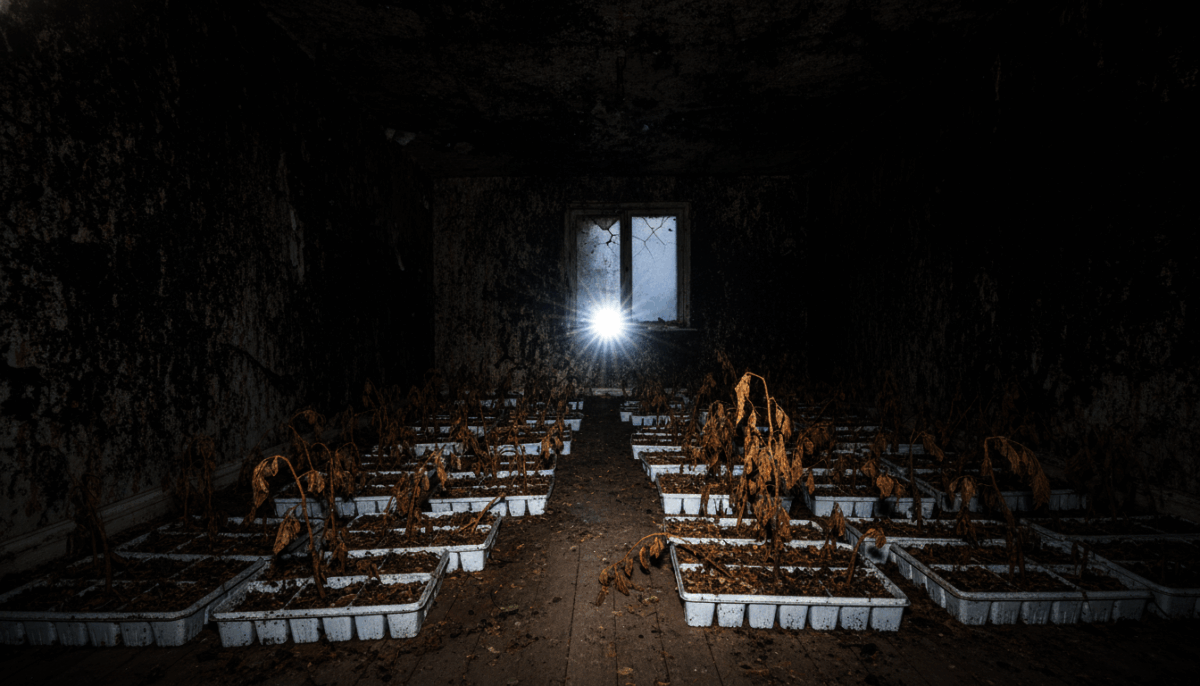
The realization came on a Tuesday afternoon. I had returned home early from work due to a massive migraine and found the apartment’s air quality to be suffocating. The smell of rot was so potent that it triggered an immediate gag reflex. I walked toward the hallway, and that’s when I saw it: a dark, velvet-like patch of black mold creeping like a bruise from the baseboard of Jason’s room into the common area hallway.
My heart hammered against my ribs. I knocked on his door, but there was no answer. I knew he was at work. I didn’t hesitate—I grabbed the master key from the kitchen drawer and unlocked his room. The blast of hot, wet air that hit me felt like stepping into a tropical greenhouse gone horribly wrong.
Rows upon rows of plastic trays were stacked on industrial-grade metal shelving units. The carpet was soaking wet, clearly from overflow during his constant misting cycles. The mold wasn’t just on the walls; it was climbing the curtains and had completely claimed the drywall behind the headboard. It was a complete, systemic failure of the structure.
“What the hell is this? Jason, you have destroyed this entire room. This is a biohazard. Do you have any idea what you’ve done to this apartment?”
— My internal monologue as I stood in the doorway, staring at the destruction.
I started taking photos, my hands shaking. I needed documentation. Every corner, every damp patch, every tray of rotting micro-greens. I felt a surge of rage so intense it was almost cold. This wasn’t just a mistake; it was an act of complete negligence fueled by a secret, selfish enterprise that put our health and our financial future at risk.
The $15,000 Reality Check
I called an emergency restoration service the moment I stepped out of the room. They arrived within three hours, donning hazmat gear that made the situation feel even more dire. The lead technician walked through the apartment with a moisture meter, and the numbers were off the charts. He didn’t just tell me it was bad; he told me it was essentially a total loss of the flooring and drywall in that wing of the apartment.
The estimate arrived via email the next morning. It was itemized, cold, and devastating: $15,400. That included remediation, professional drying equipment, drywall replacement, carpet removal, and the mandatory air-quality test to ensure the spores weren’t spreading throughout the rest of the ventilation system. I sat at my kitchen table, staring at the screen, unable to process the sheer scale of the betrayal.
I finally got Jason on the phone. He was at work, and when I read him the estimate, his response was not one of apology or shock. He acted as if I were being unreasonable, as if I were overreacting to a ‘minor spill’ that I could just scrub away with some bleach.
“$15,000? You’re joking, right? You’re probably just trying to squeeze me because you’ve always hated my side hustle. Just clean it up and stop being dramatic. I’ll throw you a few hundred bucks when I get my next bonus.”
— Jason, responding to the news of the repair bill.
Hearing him dismiss the damage as a ‘side hustle’ was the tipping point. He didn’t just cause the damage; he viewed it as my problem to solve. I realized then that I was dealing with someone who had zero grasp of accountability. He was a spoiled child in an adult’s body, and I was holding the bag for his immaturity.
The Vanishing Act
Within twenty-four hours of my confrontation, Jason had cleared out. He took his grow lights, his trays, and a few bags of clothing, leaving behind a mountain of trash and the overwhelming stench of damp decay. He didn’t leave a forwarding address. He didn’t even leave a note. He just blocked my number and vanished, leaving me with the lease and a looming bill from the property management company.
My landlord was furious. They had received an anonymous tip about the odors, and when they inspected the unit, they realized I was technically on the hook for the full amount unless I could prove liability. I spent the next three days in a state of absolute panic. I wasn’t rich. I didn’t have $15,000 tucked away for mold remediation caused by a roommate’s secret garden.
I scoured the apartment for any trace of him. I found an old piece of mail in the recycling bin—a package addressed to him from his parents’ house in a neighboring state. It was a return address, a phone number, and a name. I knew it was a nuclear option, but at that point, I felt I had no other choice. It was them or me.
I drafted a long, detailed letter. I included the photos, the professional estimate, and the text messages where he admitted to having the ‘plants.’ I addressed the envelope to his parents and sent it via certified mail. I needed to make sure they knew exactly what their ‘golden boy’ had been doing while they likely thought he was working a respectable job.
The Sunday Morning Phone Call

Two days after the letter was delivered, my phone rang. It was an unrecognized number. I took a deep breath and answered, expecting the worst. It was his mother. She didn’t sound angry; she sounded confused, then defensive, then eventually, as I spoke, deeply, profoundly shocked.
I didn’t yell. I stayed calm and professional, laying out the timeline of the damage, the health risks we were both exposed to, and the final cost of the repairs. I explained that I was not the one who caused this, and that I simply could not afford to pay for his negligence. I told her I was prepared to take legal action if they didn’t take responsibility for their son’s mess.
“I just… I don’t understand. Jason told us he was working at a firm. He said he was saving for a car. We sent him money for his ‘rent.’ Is this really what he was doing with his time?”
— Jason’s mother, voice trembling with realization.
She was clearly reeling. It became obvious that Jason had been spinning a web of lies to his family for years. The ‘farm’ wasn’t just a hobby; it was an obsession that had replaced his actual employment. He had been living off his parents’ support, which he likely poured into his equipment instead of his living expenses.
The Fallout at the Dinner Table
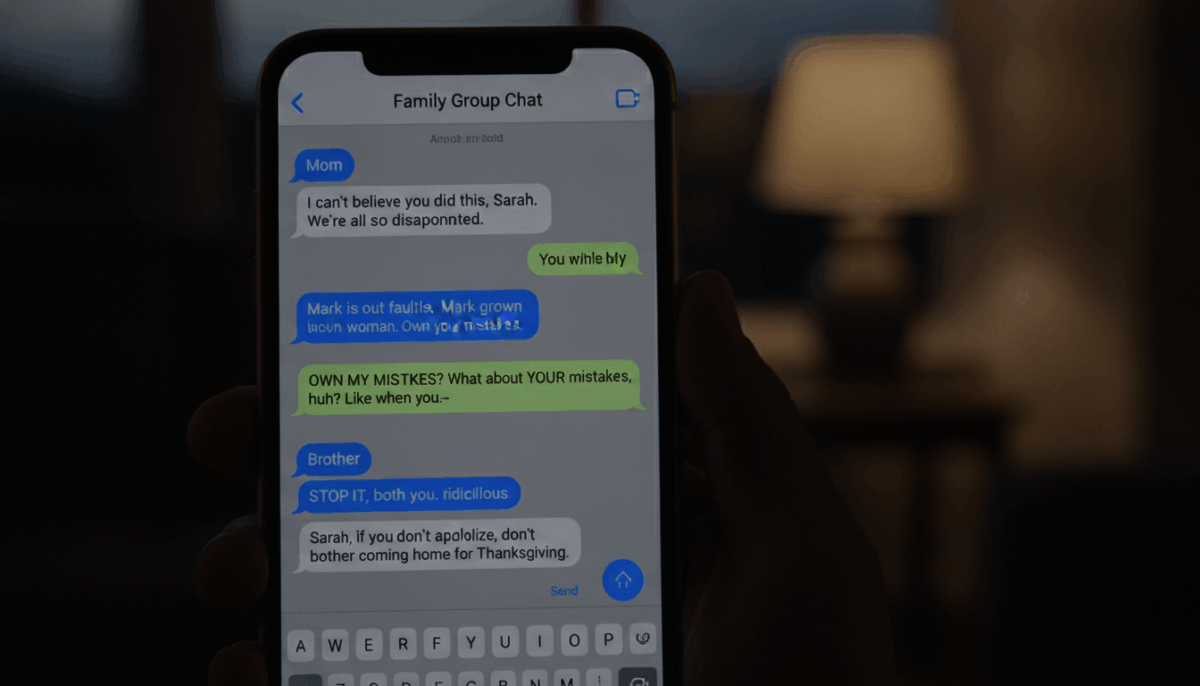
I later found out through a mutual acquaintance that the revelation caused a complete meltdown in their household. When Jason returned home a week later, thinking he was just visiting, he was met with the stack of photos and the invoice on the dining room table. There was no warm welcome. There was only the sound of his father demanding answers that Jason couldn’t possibly provide.
The group chat I was eventually added to by his sister—who was furious at how her brother had been manipulating their parents—was a window into the chaos. It felt like watching a train wreck in slow motion, yet I felt a strange sense of vindication. I wasn’t the bad guy. I was the witness to his undoing.
“Jason, look at the photos. You lied to us for six months. You lied about your job, your rent, and you destroyed someone else’s life and home. We aren’t paying for this. You are going to take a loan and fix this immediately.”
— A text from Jason’s father to the family group chat.
It was clear the enabling had finally stopped. Jason had been bailed out of every minor trouble he’d ever faced, but $15,000 for structural damage was apparently the line they wouldn’t cross. For the first time in his life, he had to face the consequences without a safety net.
The Internet Weighs In: A Reddit Perspective

I posted about the situation on a popular subreddit, needing an objective perspective on whether I had crossed a line by contacting his parents. The response was overwhelming. Thousands of people chimed in, many of whom had dealt with their own nightmare roommates. The consensus was shockingly unanimous: I had done exactly what needed to be done.
There were, of course, the skeptics who thought I should have just sued him in small claims court. But the reality is that suing someone with no money and no permanent address is a long, expensive process with very little chance of payout. The parents were the only ones with the capital to actually fix the mess, and they were, at least partially, the ones who had funded his lifestyle.
“NTA. You saved your credit and your health. His parents were enabling him, and they deserved to know where their money was actually going. He’s an adult, and he burned the house down—figuratively and literally. He brought this on himself.”
— u/RoommateSurvivor, 15.2k upvotes
Reading the comments helped me realize that I hadn’t acted out of spite, but out of necessity. The ‘internet jury’ gave me the validation I needed to stop feeling guilty about the fallout. My situation wasn’t just about a roommate; it was about the fundamental requirement that people must take responsibility for the chaos they create.
The Legal Implications of Negligence

My landlord, while initially furious, eventually saw the evidence I provided. I had the texts, the photos of the ‘farm,’ and the receipts from the remediation company. They ended up pursuing legal action against Jason directly. By then, his parents had apparently cut him off, and he was working two low-paying jobs just to pay back the money they had fronted for the initial restoration.
It wasn’t a clean ending. There were months of phone calls with insurance adjusters, lawyers, and the property management company. My credit score took a small hit due to the initial delay in rent payments while the unit was uninhabitable, but I eventually managed to negotiate a settlement that cleared my name.
I learned a lot about tenant rights during that time. Most leases have clauses about ‘unauthorized modifications’ and ‘damages beyond normal wear and tear.’ Jason had violated every single one of them. He had essentially converted a residential space into a commercial one, voiding the insurance and creating a massive liability for the landlord.
“If you ever have a roommate doing anything that involves moisture, high heat, or weird smells, don’t wait. Document everything. The moment you see a sign of a ‘side project,’ check your lease. Protect yourself before the mold starts growing.”
— Advice from my attorney during our final consultation.
I left that apartment as soon as the lease ended. I moved into a studio, alone. No roommates, no ‘hobbies,’ just silence. It was the most expensive move of my life, but the peace of mind was worth every penny.
Healing After the Hazard

The psychological impact of living in a mold-infested space was something I didn’t fully appreciate until months later. I had developed a constant anxiety about air quality. Every time I smelled something earthy or damp, I would have a mild panic attack, convinced that the mold was back. I had to seek counseling to work through the feeling of betrayal and the lingering fear of financial ruin.
Jason tried to reach out to me once, a year later. It was a brief, pathetic email asking me to ‘tell his parents I’ve changed.’ I didn’t reply. There was nothing to say. He had burned the bridge, and I had no interest in rebuilding it. I had moved on, and so had his family, who were finally starting to see him for who he was without the rose-colored glasses.
My advice to anyone in a similar spot: document, document, document. If you think your roommate is doing something they shouldn’t be, don’t be polite. Don’t worry about being the ‘uncool’ roommate. Your health and your financial future are worth far more than a polite living arrangement.
I look back at those photos now and I barely recognize the person who took them. That person was scared, broke, and drowning in a problem that wasn’t theirs. Today, I am the person who stood up, took the hard road, and survived the consequences of someone else’s secret farm.
Community Reflection: Where Do We Draw the Line?

The story sparked a larger conversation in my social circle about the line between being a ‘good friend’ or ‘supportive roommate’ and being an enabler. Many people feel obligated to stay silent to keep the peace, but that silence often comes at a massive cost. We talked about how much we sacrifice for the sake of avoiding an awkward conversation.
Is it truly being a bad friend to call someone out on their behavior? Or is it the ultimate act of friendship to force them to face reality? In Jason’s case, my ‘betrayal’ was actually the only thing that forced him to stop his downward spiral. His parents didn’t thank me, but they stopped paying for his destruction. That, in itself, was a win.
“The hardest part of growing up is realizing that some people will never change unless they hit rock bottom. You didn’t push him to rock bottom; he built it himself. You just held up a mirror.”
— A friend’s reflection on the situation.
We need to stop treating ‘keeping the peace’ as the ultimate virtue. Sometimes, peace is just a cover for rot—literally and figuratively. If you are ever in a situation where your boundaries are being violated, speak up. The outcome might be messy, but it is far better than the alternative of letting someone else’s chaos destroy your life.
Conclusion
In the end, this experience wasn’t just about a mold-infested room; it was about the realization that we are responsible for the environments we curate, both physically and socially. By handing the bill to his parents, I wasn’t just recovering money; I was reclaiming my agency. The mold may have been cleaned, the apartment renovated, and the friendships severed, but the lesson remains: never trade your well-being for the comfort of silence.
What about you? Have you ever had a roommate situation that went from ‘weird’ to ‘absolute disaster’? Would you have had the courage to contact their parents, or would you have walked away and swallowed the cost? Share your stories below, and let’s debate the ethics of the ‘nuclear option’ in roommate disputes.
What's your verdict on this dilemma?
Vote below to contribute to the official community consensus.

Have a Dilemma Keeping You Up at Night?
Share your real-life feud, wedding chaos, or relationship crossroads anonymously with our editorial team.
What do you think ?
0 Comments🛡️ Comments are moderated to protect community integrity. Your comment will appear once approved by the editorial team.