

Living with roommates is supposed to be a lesson in compromise, not a masterclass in heart-wrenching loss. We all know the unspoken rules: don’t touch the expensive skincare, don’t leave dishes for three days, and for the love of everything sacred, do not touch the cast iron. My great-grandmother’s Griswold skillet wasn’t just a kitchen tool; it was a physical artifact of my family’s history, seasoned by four generations of Sunday morning breakfasts and holiday feasts. It was an object that connected me to a woman I barely knew but felt I understood through the flavor of the searing heat and the patina of a century.
When I moved into this apartment, the ground rules regarding the kitchen were written in stone. I laid out a clear expectation: the vintage cast iron was off-limits for cleaning. I explained the chemistry of polymerization, the delicate nature of a seasoned surface, and the importance of hand-washing. My roommate, Chloe, nodded along, eyes glazing over as I spoke. I thought she understood. I thought we were on the same page about respecting personal property and the sanctity of things that couldn’t be replaced at a big-box store.
The disaster didn’t happen overnight. It happened on a Tuesday, while I was at work, under the guise of ‘helping out’ and ‘cleaning up the kitchen.’ When I walked through the door, the smell of harsh chemicals hit me first. It was that sharp, metallic, throat-closing scent of lye. I walked into the kitchen and saw it: my grandmother’s skillet, sitting in the sink, stripped bare to the raw, grey iron, looking like a bleached skeleton of its former self. The patina—the history—had been chemically nuked.
My stomach dropped, a physical ache spreading from my chest to my fingertips. The betrayal wasn’t just about the pan; it was about the complete disregard for my boundaries and the arrogance of thinking she knew better than me. I didn’t scream. I didn’t throw things. I simply went into the living room, sat down, and realized that our lease was ending in three weeks, and I had exactly one lever left to pull: the security deposit, specifically the portion allocated for the shared kitchen assets.
This is the story of how a single misguided act of cleaning destroyed a friendship, led to a stand-off over a $400 kitchen deposit, and sparked a debate that eventually consumed an entire corner of the internet. It’s a story about entitlement, the value of heirlooms, and the inevitable explosion that happens when one person’s ‘helpful’ gesture meets another person’s ‘non-negotiable’ boundary.
The Tuesday Afternoon Chemistry Experiment
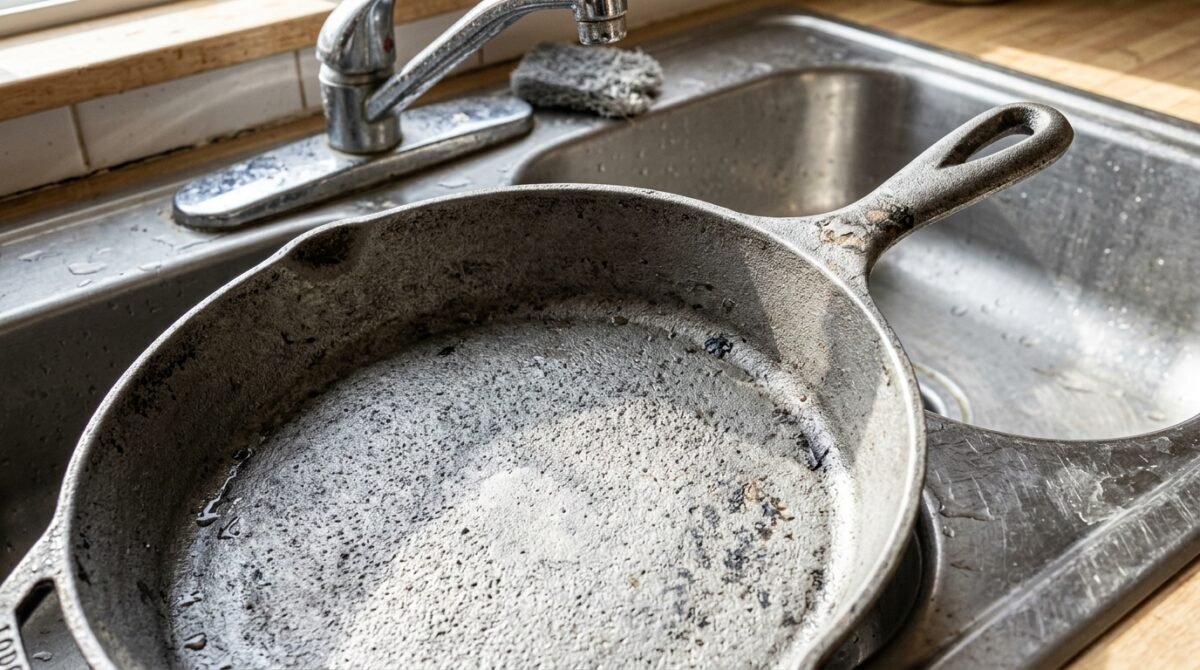
I came home to find the kitchen window wide open, a desperate attempt by Chloe to mask the chemical fumes. The sight of the pan in the sink was surreal. It looked like it had been dipped in acid, which, to be fair, was exactly what had happened. She had used a heavy-duty lye-based oven cleaner, a substance designed to strip stubborn grease from industrial appliances, not to rejuvenate a seasoned heirloom. The raw, grey metal stared back at me, porous and defenseless, looking like it belonged in a scrap heap rather than on a stove.
Chloe walked in from the living room, wiping her hands on a dish towel with a smile that was clearly fishing for praise. She looked at me, then at the sink, and then back at me, waiting for the ‘thank you’ that was never going to come. She seemed genuinely proud of herself, as if she had just performed a public service by removing the ‘grime’—what she called seasoning—that I had spent years cultivating.
“I noticed it was super sticky and dark, so I did you a huge favor! I used that heavy-duty oven cleaner from under the sink. It took a few hours of scrubbing, but look, it’s brand new again! You’re welcome.”
— Chloe, oblivious to the destruction
I felt a cold, sharp rage settle into my bones. It wasn’t just that she had touched it; it was the sheer audacity of her doing it without a single word to me, and the fact that she thought she had improved it. I didn’t even know where to start. How do you explain to someone that you’ve just committed a crime against kitchen history?
“Chloe,” I said, my voice barely above a whisper, “do you have any idea what you’ve done? That wasn’t dirt. That was a hundred years of history. That pan has survived two world wars, a great depression, and three family moves. And you stripped it in an afternoon because you thought it looked ‘dirty’?”
She just rolled her eyes, her confidence not even wavering. “It’s just a piece of metal, OP. Honestly, you’re being dramatic. I even bought you a new scrubbing sponge since the old one was getting gross. You should be happy I took the time to do this for us.”
The Math of a Broken Heirloom

That night, I didn’t sleep. I sat in the living room, the stripped pan resting on the coffee table like a cadaver. I started looking up what it would take to restore it. It wasn’t just about ‘seasoning’ it again; the lye had potentially compromised the integrity of the iron if it had sat long enough, and the loss of the original patina was irreversible. I realized that the value wasn’t just monetary, but the emotional tax was immeasurable. I started calculating the costs: the specialized equipment, the time, the potential for failure, and the fact that it would never truly be the same.
I looked at our rental agreement. We had put down a joint deposit, but I had fronted the money for the high-end kitchen appliances and the cookware starter kit when we first moved in. Chloe had promised to pay me back in installments, but she was two months behind. That’s when the idea formed. The kitchen deposit wasn’t just a fee; it was my leverage.
I drafted a ledger, detailing exactly what she owed me. It wasn’t just the pan. It was the unpaid utilities, the shared groceries she had been ‘forgetting’ to pay for, and now, the professional restoration services I would need to try to salvage the heirloom. When I presented it to her the next morning, the mood in the apartment shifted from tense to hostile.
“You’re really going to nickel and dime me over a pot? This is insane. I’m not paying for ‘restoration’ of a rusty old pan. That’s ridiculous and you’re being petty.”
— Chloe, during the initial confrontation
The audacity was staggering. She didn’t see the theft of the seasoning as an act of destruction; she saw my reaction as an act of financial abuse. I realized then that we were speaking two entirely different languages—one of respect and history, and one of convenience and erasure.
The Group Chat Exposure

Two days later, the situation went nuclear. I saw a notification on her tablet, which she had left open on the kitchen island. A group chat with our mutual friends was pinging incessantly. Curiosity got the better of me—or rather, a sense of self-preservation. I glanced at the screen and saw my name splashed across the chat. Chloe wasn’t just venting; she was painting a picture of me as an unhinged, controlling roommate who was holding her deposit hostage over a ‘dirty old piece of junk.’
The messages were brutal. She had sent pictures of the pan—the ‘before’ and ‘after’—mocking my distress. Our friends, who had eaten food cooked in that pan for years, were chiming in with ‘jokes’ about how much better it looked now that it wasn’t ‘crusty.’ It felt like a betrayal on a secondary level, knowing that people I thought were friends couldn’t see the line she had crossed.
“I literally saved the kitchen from a biohazard. And she’s acting like I burned down her house. She told me she’s not giving back my deposit money because of the ‘damage.’ Can you believe how crazy she is?”
— Chloe, in the leaked group chat
I took screenshots, my hands shaking. I didn’t confront her immediately. I waited. I needed to see how far this would go. It wasn’t just about the pan anymore; it was about the narrative she was building to justify her actions. By the time she realized I had seen the messages, the dynamic in the apartment had shifted completely. I was no longer the roommate; I was the villain in her social media narrative.
The Stand-Off Over the Deposit
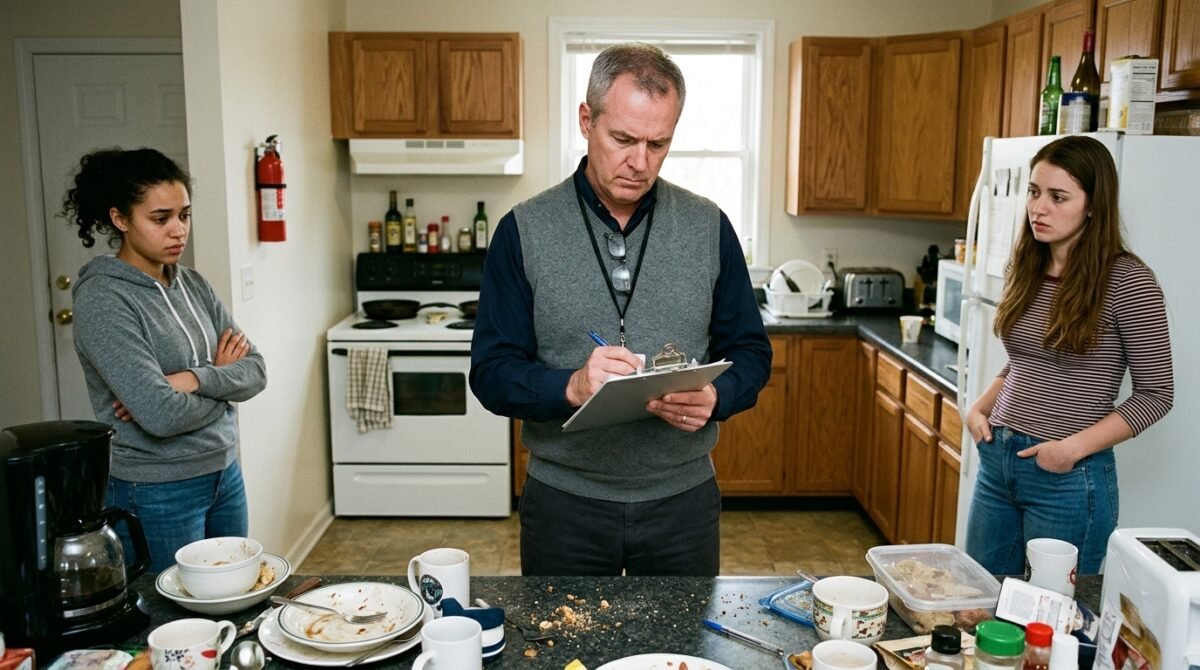
When the landlord came for the final walkthrough, the tension was palpable. Chloe was wearing her ‘innocent’ face, ready to claim her half of the deposit. She had been counting on that money for her next apartment. I had informed the landlord of the situation, providing photos of the damage to the apartment’s kitchen inventory, which I had documented as part of our check-in. The cast iron was technically a personal item, but the chemicals used had stained the countertop and the sink basin, which were legitimate damage claims.
The landlord looked at the sink, looked at the pan, and sighed. He wasn’t interested in the history of the pan, but he was very interested in the chemical burns on his property. He noted the damage, which Chloe had tried to scrub away with even more abrasive cleaners, causing further scratching. The bill for the countertop repair alone was going to be significant.
Chloe turned white. She realized that by trying to ‘clean’ the kitchen to get her deposit back, she had actually created a record of damage that would eat into whatever money she expected to receive. She turned to me, her eyes wild, pleading for me to lie to the landlord so she could get her deposit back. I just looked at her and shook my head.
“You wanted to clean the kitchen, Chloe. You did a great job. Now you get to pay for the professional repair of the surfaces you ruined. That’s how deposits work.”
— My final words to her before the landlord intervened
The silence in the room was deafening. The landlord didn’t care about our drama, only the bottom line. He presented the cost of the repairs, and it was clear that between the unpaid utilities and the countertop damage, Chloe was getting almost nothing back from the deposit.
The Reddit Trial: NTA or YTA?

I posted the story on a popular forum, needing to know if I had lost my mind. The response was immediate and overwhelming. Thousands of comments poured in, dissecting the morality of the cast iron, the betrayal of the roommate, and the legality of the deposit hold. The community was split, but the majority leaned heavily into the ‘NTA’ (Not The Asshole) camp, with many users citing the ‘don’t touch my stuff’ rule as the golden commandment of shared living.
“This isn’t just a pot, it’s a family heirloom. Stripping a seasoned cast iron is the equivalent of taking a sharpie to a stranger’s oil painting. You aren’t just in the right; you are legally and morally justified in every sense. Keep the deposit.”
— u/KitchenHistorian (Top Comment, 32.1k upvotes)
Of course, there were dissenters. Some argued that money is just money and that keeping the deposit was an act of escalation that would only invite more conflict. But reading through the support, I felt a sense of validation I hadn’t been able to find in my personal life. The community understood that this wasn’t about the money—it was about the violation of trust.
One user, a lawyer, provided a detailed breakdown of how to handle the deposit in small claims court if she decided to challenge it. It was eye-opening. I realized that my personal trauma was a common experience, and that boundaries, when violated, carry a price. The internet, in all its chaotic wisdom, had given me the roadmap to finish this chapter of my life with dignity.
The Aftermath: Moving On

The move-out day was silent. Chloe didn’t say a word as she packed the last of her boxes. She tried to take some of the kitchen supplies I had bought, but I reminded her that those were mine, and I had the receipts to prove it. She left with a car full of her things and a very light wallet. I felt a strange mixture of relief and sadness. We had been friends for a year before the lease, and to see it end over a pot felt incredibly hollow.
I stayed in the apartment for another week to finish cleaning and ensure the transition was smooth. The kitchen was empty, the air finally clear of the chemical stench. I spent hours trying to re-season the cast iron, but the magic was gone. I knew it would take years to build back that patina. It was a chore, but it was a quiet, meditative one. It helped me process the anger.
“You’ll never get it back to what it was, but you’re starting a new story with it now. That’s what seasoning is. It’s a record of the meals you cook moving forward.”
— My grandmother’s voice in my head, reminding me that things change
I realized that the pan was a metaphor for our friendship. Once the surface was stripped, you couldn’t just go back to the way things were. You had to work to build something new, but if the foundation had been permanently scarred, sometimes it was better to just accept the change and move on. I was finally ready to leave that place behind.
The Legal Reality Check
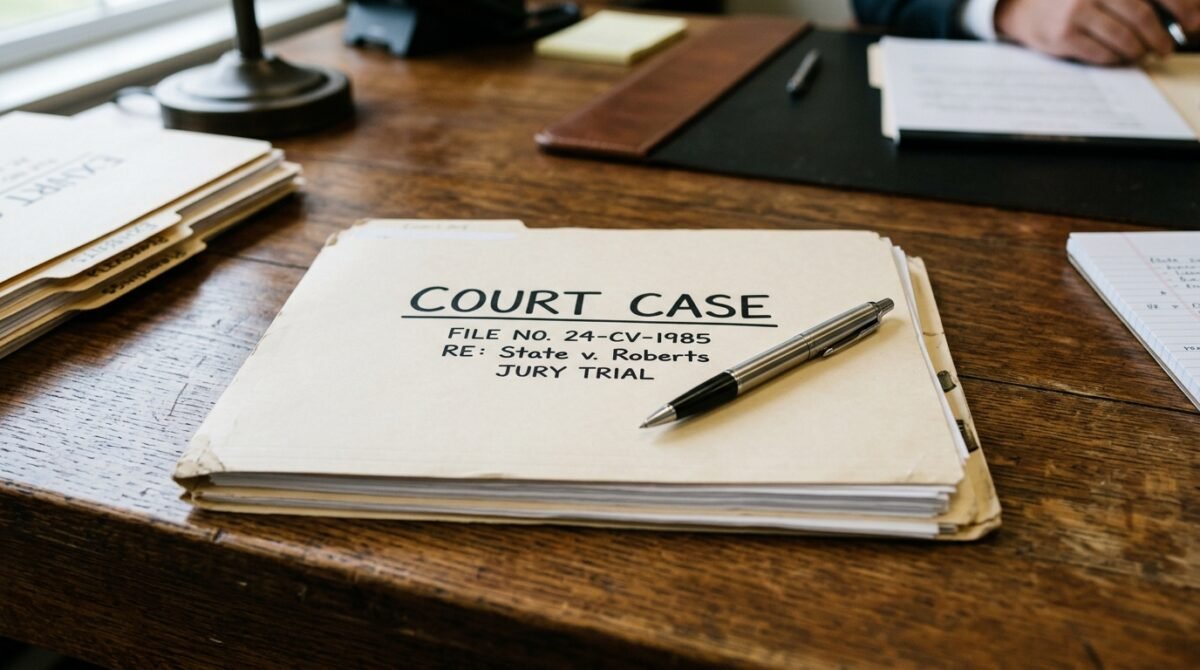
A month after moving out, I received a certified letter. Chloe was threatening to take me to small claims court for the remainder of the deposit. I wasn’t surprised. I had been expecting it, and I was prepared. I had gathered every text message, every photograph, every receipt, and even the email exchange with the landlord detailing the damages. I had a file that was thick enough to be a legal brief.
I consulted with a friend who works in property law. She reviewed my evidence and told me I was in a strong position. ‘The key isn’t the pan,’ she said. ‘The key is the proof of the other damages and the fact that you held the deposit based on a legitimate contractual dispute over the kitchen inventory. Don’t back down.’
The court date was set. I spent the time organizing my timeline, creating a clear visual aid for the judge. I was terrified, but I was also righteous. I had done nothing wrong, and I wasn’t going to let someone who had violated my space, destroyed my property, and lied about me to our friends walk away with my money.
“If you go to court, bring the pan. Let the judge see it. Sometimes, seeing the object is more powerful than any argument you can make.”
— My legal friend’s advice
The idea of bringing the pan to court felt poetic. It was the centerpiece of our drama, the silent witness to the end of our friendship. I prepared to present it, the raw iron a testament to the mess we had made of our lives.
Day in Court: The Final Reckoning

Walking into the small claims courtroom was a surreal experience. It was a modest room, but it felt like the stage for the final act of our tragedy. Chloe arrived with her new boyfriend, who looked like he was ready to fight. I arrived alone, with my folder of evidence and the cast iron skillet in a protective bag. When the judge called our names, the air felt thick with the weight of everything that had happened over the last few months.
Chloe opened with a passionate speech about my ‘controlling behavior’ and my ‘obsession’ with the kitchen. She tried to make it sound like I was holding the money out of malice. I listened, my face impassive. When it was my turn, I didn’t get angry. I laid out the facts: the unpaid utility bills, the documented damage to the countertops, and the destruction of the kitchenware.
When I placed the cast iron skillet on the judge’s desk, the courtroom went quiet. The judge picked it up, examined the raw, grey surface, and looked at me. I explained the history, the care it required, and the chemical damage. I didn’t need to say much more. The state of the pan spoke for itself. The judge then turned to Chloe and asked why she had used industrial cleaner on a surface she didn’t own.
“I was trying to be helpful! I didn’t think it was a big deal.”
— Chloe, failing to explain herself to the judge
The judge didn’t seem impressed by her ‘helpfulness.’ In a matter of minutes, the decision was made. The costs for the damages and the unpaid bills were deducted from the deposit, and the rest was split according to the original agreement. Chloe lost most of the money she had hoped to recover, and I was vindicated.
Reflecting on the Cost of Boundaries

Walking out of the courthouse, I felt a strange sense of emptiness. I had ‘won,’ but at what cost? I had lost a friend, spent months in a state of high-stress conflict, and spent more money on legal advice than the pan was probably worth. But then I looked at the cast iron in my hand. It was just a piece of metal, but it was *my* metal. It was a reminder that I was capable of standing up for myself.
I realized that the true cost wasn’t the money; the true cost was the erosion of trust that happens when you don’t enforce boundaries early enough. I had let Chloe get away with small things for months—the late payments, the ‘borrowed’ clothes, the lack of consideration—because I wanted to be the ‘easygoing’ roommate. My silence had been interpreted as permission.
This experience changed how I look at relationships. I’m no longer afraid to be the ‘difficult’ one. I’m no longer afraid to state my needs clearly and enforce them when they’re disregarded. Some people will call it being controlling; I call it being a person who respects their own history and their own space.
“Boundaries aren’t walls we build to keep people out. They’re gates we install to decide who gets to come in and how they treat the space we’ve created.”
— A piece of advice I read online that finally clicked
The cast iron is now back in my rotation. It’s not the same as it was, but it’s getting better with every meal. It’s a work in progress, just like I am.
Lessons from the Kitchen Sink
Looking back, the most important lesson wasn’t about the pan; it was about the people we choose to surround ourselves with. We often ignore the red flags in roommates, partners, and friends because we’re afraid of the conflict that comes with addressing them. We tell ourselves it’s not a big deal, that we’re being oversensitive, or that we can ‘fix’ the other person if we just show them enough grace.
But some people don’t want to be fixed. They want to be accommodated. And the moment you stop accommodating them, they reveal their true colors. I learned that you can’t be friends with someone who doesn’t respect your history, your property, or your boundaries. It was a hard lesson to learn, and it was expensive, but it was worth it.
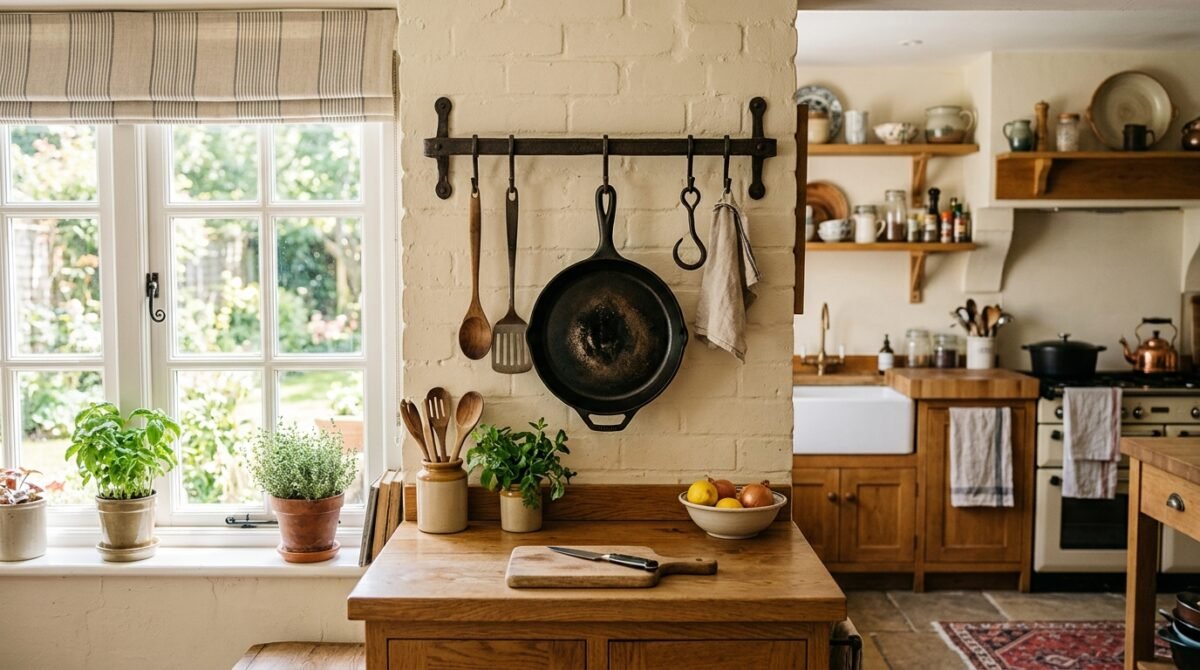
I’ve since moved into a new place, living alone, and it’s been the best decision I’ve ever made. The kitchen is mine, the cast iron stays exactly where I put it, and the only person who touches my stuff is me. It’s peaceful. It’s simple. And it’s exactly what I needed after the chaos of the last year.
“If you want to know if someone is a good roommate, wait until you ask them to respect something they don’t value. That’s when the real person comes out.”
— My concluding thought on the whole saga
I still see our mutual friends sometimes, and it’s always a little awkward. But I’ve learned that the people who matter will understand. The ones who don’t? They weren’t my friends in the first place. I’ve built a new life, one that’s grounded in respect and clear expectations. And honestly? I think that’s a better season than any pan could ever offer.
Conclusion
My experience with the cast iron skillet became a lesson in the architecture of personal boundaries. We often treat our possessions—and our personal peace—as if they are disposable, but sometimes it takes a literal destruction of history to remind us of their value. By keeping the deposit, I wasn’t just recouping financial losses; I was asserting that my limits were not negotiable and that my past mattered more than someone else’s desire for convenience.
The internet community’s reaction was a stark reminder that while we often feel isolated in our personal dramas, our experiences are universal. We all have that one roommate, that one boundary-crossing friend, and that one object that holds our heart. Whether you think I was right to keep the deposit or believe I should have been more lenient, the conversation proves that we are all trying to navigate the messy, often contradictory, rules of living with others.
What about you? Have you ever had a roommate ruin something irreplaceable, or have you been caught in a deposit dispute that went completely off the rails? Is a family heirloom worth the bridge you burn to protect it? Let’s talk about it in the comments below—I’m curious to see if my ‘petty’ move would be your first choice or your last resort.
What's your verdict on this dilemma?
Vote below to contribute to the official community consensus.

Have a Dilemma Keeping You Up at Night?
Share your real-life feud, wedding chaos, or relationship crossroads anonymously with our editorial team.
What do you think ?
0 Comments🛡️ Comments are moderated to protect community integrity. Your comment will appear once approved by the editorial team.