
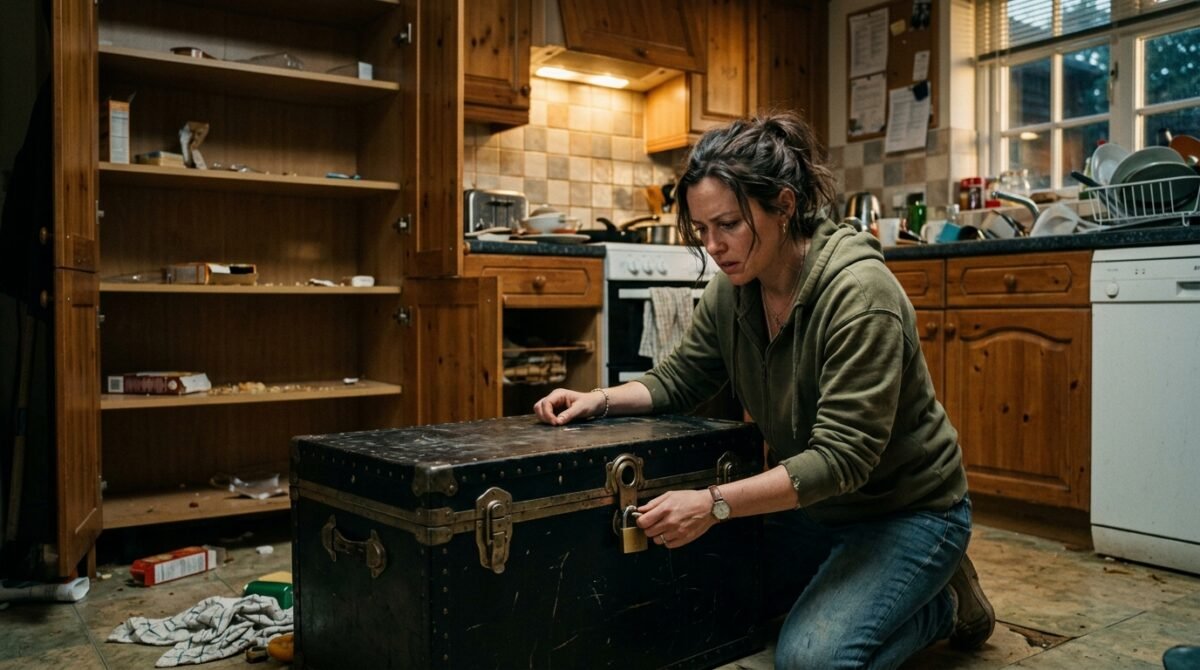
Living with a roommate is often touted as a quintessential rite of passage, a mix of late-night heart-to-hearts and shared utility bills. But for me, it transformed into a daily exercise in boundary-testing that pushed me to the brink of fiscal and emotional exhaustion. My roommate, Jessica, lived by a philosophy that everything in the apartment was communal property—provided that she was the one consuming it.
This wasn’t just about the occasional stolen egg or a splash of milk. We are talking about artisanal olive oils, imported cheeses, high-grade protein powders, and rare spices that I painstakingly sourced for my specific dietary and culinary needs. It was an investment in my health and my hobby, treated like a public pantry by someone who felt entitled to my hard-earned income.
The climax of this saga occurred on a Tuesday evening when I returned home from a grueling ten-hour shift to find my kitchen transformed into a makeshift catering station. Fourteen sorority sisters were laughing, snacking, and spilling red wine on my rug, all while consuming the entirety of my monthly meal-prep stash. I didn’t yell. I didn’t cause a scene. I simply walked into my room and ordered a professional-grade, lockable storage trunk.
What followed was a slow-burn war of attrition. Jessica viewed my new security measures as a personal affront, a sign of ‘unfriendliness’ that she felt compelled to rectify through increasingly bold attempts to bypass my locks. This narrative explores the intersection of entitlement and personal responsibility, and how one woman’s refusal to respect a simple ‘do not touch’ sign led to a social media firestorm.
The Tuesday Night Catering Disaster
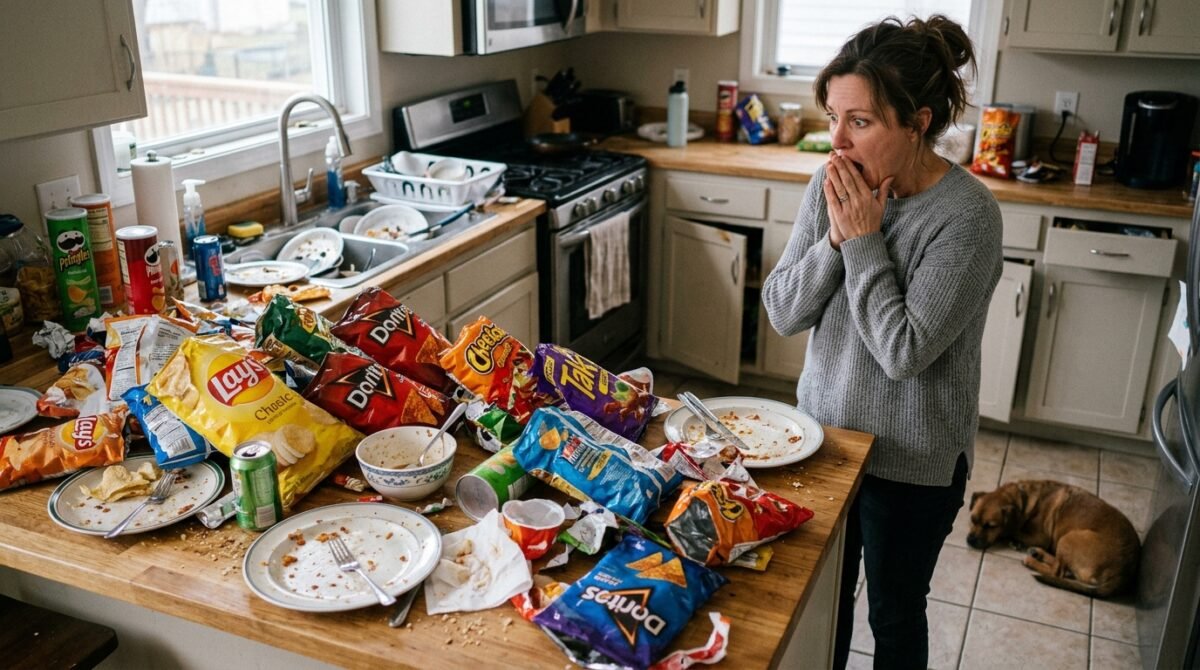
I walked through the front door expecting the familiar silence of a quiet apartment, but instead, I was greeted by the suffocating scent of cheap perfume and burnt popcorn. The living room was packed with women wearing matching sorority shirts, clutching plastic cups filled with what looked like my high-end craft soda.
I bypassed the living room, my pulse quickening as I entered the kitchen. My heart sank. The entire shelf I had dedicated to my specialized, expensive diet—items like gluten-free crackers, raw almond butter, and organic dried fruits—was decimated. Empty wrappers littered the counter, and a half-eaten block of my imported Manchego cheese was left to warm on the granite island.
“Oh, hey! I hope you don’t mind, we were all just starving after chapter meeting, and I knew you had all this great stuff stocked up. You’re a literal lifesaver, Jess!”
— Jessica, while smearing my organic almond butter on a cracker.
I stared at the empty jars, trying to calculate the cost. That single evening of ‘hospitality’ had just set me back at least two hundred dollars. My hands were shaking, not from anger, but from the sheer audacity. Jessica hadn’t even texted me to ask. She had acted as if my pantry was a neighborhood food bank.
The sorority sisters looked at me, some smiling, some oblivious to the tension radiating off me. I didn’t say a word to them. I turned around, walked into my bedroom, and closed the door. I could hear the party continuing, the laughter muffled but still grating. It was in that moment of silence that I decided I was finished being a victim of ‘roommate courtesy.’
I opened my laptop, navigated to a home-organization site, and purchased a heavy-duty, reinforced steel footlocker with a programmable combination lock. If Jessica wanted to throw parties, she could do it with her own catering budget. The era of communal consumption was officially over.
The Arrival of the Fortress
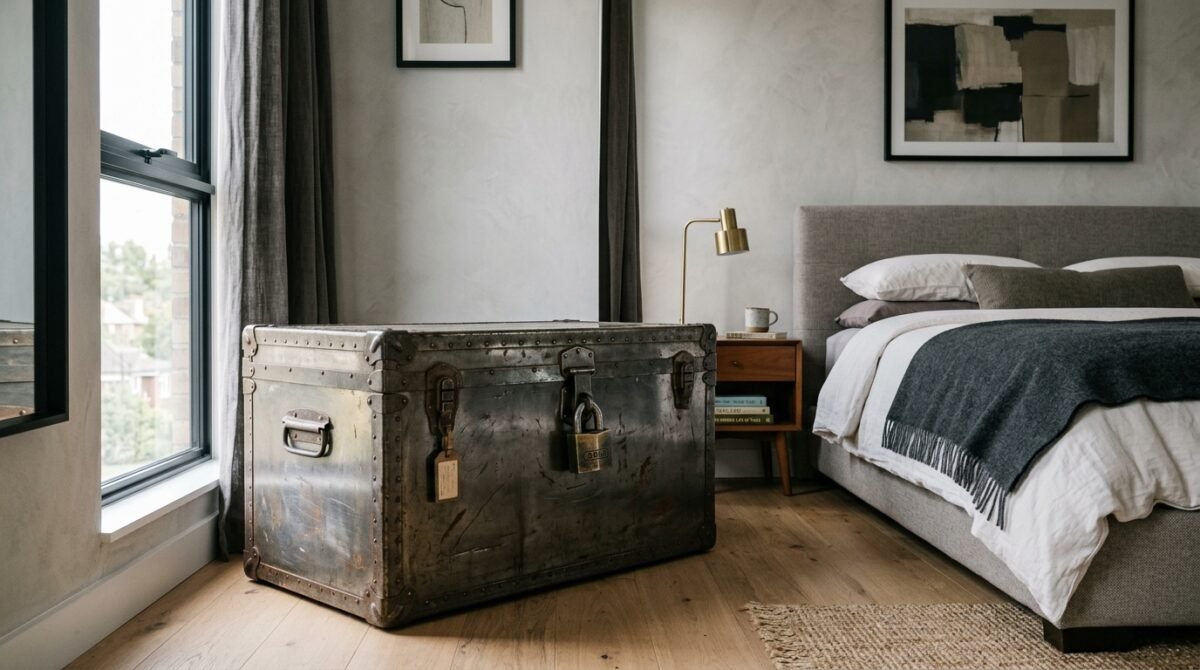
When the heavy package arrived three days later, Jessica was home. She watched, leaning against the doorframe, as I dragged the massive steel trunk into my bedroom. She squinted at the lock, her expression a mix of confusion and mounting annoyance. She clearly thought I was just doing a bit of organization.
“What is that? Are you storing winter clothes?” she asked, her voice dripping with that classic, casual judgment she used whenever I did something she didn’t approve of. I didn’t look up from the assembly instructions. I was busy securing the floor anchors. I wanted this thing to be immovable.
“It’s a pantry, Jessica. Or rather, it’s a secure storage unit for my groceries. Everything that isn’t currently sitting in the fridge—which I’ve also labeled—is going in here. If you need something, you can ask me, and if I say no, then you don’t get it.”
“Are you serious? A lock? You’re acting like we’re in prison, not a luxury apartment. I thought we were friends, but this feels incredibly hostile.”
— Jessica, attempting to guilt-trip me.
I stood up, wiping the dust from my hands, and looked her square in the eyes. I felt a sense of relief that was almost intoxicating. I was reclaiming my space, my money, and my sanity. I explained to her, calmly and clearly, that I had tracked my spending over the last three months, and she had consumed over six hundred dollars of my groceries without replacing a single cent.
She sputtered, trying to justify it as ‘just snacks’ and ‘living together stuff.’ I didn’t let her finish. I told her that if she wanted to share groceries, she could set up a split-cost account and we could go shopping together. She refused, claiming she had ‘different dietary habits’—which was code for ‘I want your expensive stuff, but I’m not paying for it.’ The conversation ended with her slamming my bedroom door, but I didn’t care. The trunk was locked, and for the first time in months, I slept soundly.
The First Attempted Breach
The next morning, I woke up to a scratching sound at my bedroom door. I peeked through the peephole to see Jessica trying to turn the knob. When she realized it was locked—I had taken to locking my bedroom door whenever I wasn’t inside—she sighed, loud enough for me to hear through the wood, and marched off to the kitchen.
I stayed in my room until she left for class. When I finally emerged to grab a coffee, I noticed the kitchen was eerily clean. Too clean. It was a performative act of domesticity meant to make me feel guilty. She had left a note on the counter: ‘We’re out of coffee. I’m having guests over tonight, hope you don’t mind.’
I ignored the note. I went to the trunk, entered my combination, and pulled out my French press and a bag of premium, single-origin beans. I made my coffee, cleaned up, and put everything back. I watched from my window as she returned later that day with a bag of cheap grocery store coffee. She saw my trunk, still sitting in the corner, and glared at it.
“I noticed you didn’t leave any coffee out for my study group. It’s honestly really pathetic that you’re hoarding bean water while I have friends coming over who need to be caffeinated.”
— Jessica, trying to make me feel small.
I just shrugged. I told her that if she wanted premium coffee, she was welcome to go to the store and buy it. I wasn’t a barista, and I certainly wasn’t an ATM for her social obligations. She called me ‘the worst roommate ever’ and stomped off. It was the most satisfying interaction I’d had in weeks.
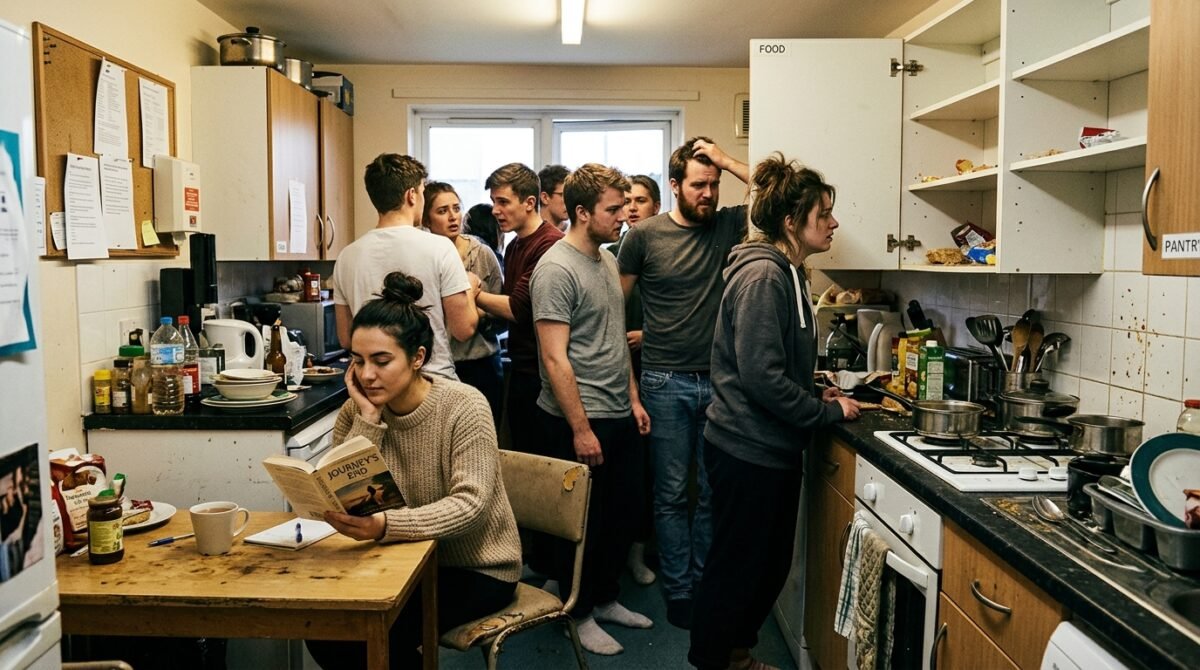
The study group arrived at 7:00 PM. They were confused, looking for snacks, but finding nothing but empty cabinets. Jessica made a show of opening the fridge, pointing to my labeled items, and then pointing to the locked trunk. I was sitting at the kitchen island reading, completely unfazed by their stares. I didn’t even acknowledge their presence. I had reached a level of petty detachment that I didn’t know I possessed.
The Group Chat Exposure
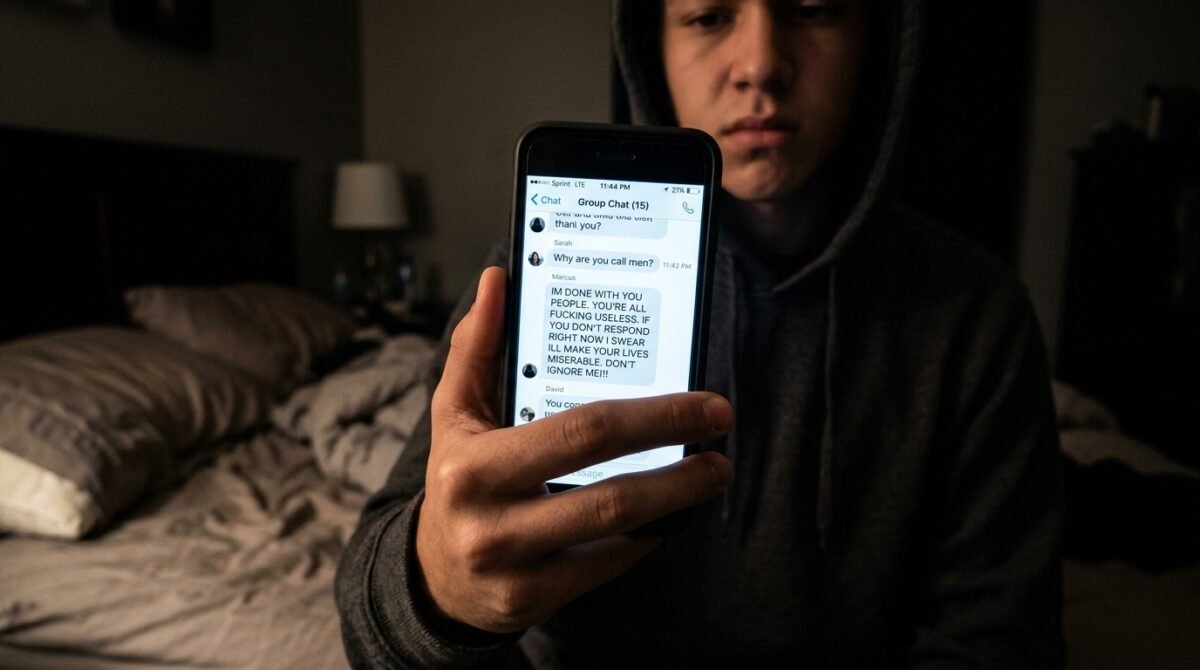
Two days later, my phone pinged with a notification from our shared ‘Roommate’ group chat. I had forgotten I was even still in it. It wasn’t a direct message from Jessica, but a forwarded screenshot of a conversation she was having with her sorority sisters in their private group. She hadn’t realized she was still sharing her screen with me, or perhaps she just didn’t care.
“The new girl is so toxic. She literally put her granola in a safe. Can you imagine? I’m planning to just pry the lock off while she’s at work. Who’s going to help me? I’m tired of eating cheap ramen.”
— A screenshot of Jessica’s private group chat.
My blood went cold. She wasn’t just annoyed; she was actively planning to destroy my property to steal my food. I took a screenshot of the message and sent it to my landlord immediately. I also messaged her directly, keeping it strictly professional and legal. I wasn’t going to get into a shouting match.
I informed her that if she attempted to damage or open my property, I would be filing a police report for attempted theft and property damage. I also reminded her that I had documentation of everything I had bought and the messages where she admitted to wanting to ‘pry the lock off.’ The response was immediate and frantic.
She tried to claim it was a joke, that she was ‘just blowing off steam.’ I didn’t buy it for a second. I told her that the next time she touched my property, it wouldn’t be a conversation; it would be an eviction notice. She finally stopped texting, but the atmosphere in the apartment became thick with unspoken hostility. I started keeping my trunk in my room at all times, even when I was home.
The paranoia was exhausting, but I knew I was in the right. I had documented everything—receipts, photos of the empty pantry, and now, the written intent to commit theft. I started looking for a new place, but in the meantime, I was not going to let this girl walk all over me. I was the one paying for the high-end ingredients, and I was going to be the only one enjoying them.
The Escalation at the Dinner Table

A week later, the situation boiled over. I came home to find that Jessica had invited her entire sorority pledge class over for an ‘unplanned’ dinner. The smell of cooking was overwhelming, and as I walked into the kitchen, I saw her using my expensive copper pots—the ones I specifically told her were off-limits—to boil pasta.
I didn’t lose my cool. I simply walked over, removed the pans from the stove, and placed them in the sink to wash. She was livid. Her friends watched in awkward silence, unsure of whether to intervene. I looked at her, my expression blank, and told her that if she wanted to cook for a crowd, she needed to bring her own equipment.
“You are literally ruining the vibe for everyone. Why can’t you just share? It’s just pots and food. You’re being so incredibly selfish, and honestly, everyone here thinks you’re the problem.”
— Jessica, trying to rally her friends against me.
I looked at the group of girls—none of whom I knew—and asked them if they would appreciate it if I walked into their homes and started using their things without asking. A few of them looked down at their shoes, clearly uncomfortable. Jessica realized she wasn’t getting the support she expected and tried to deflect by calling me ‘mentally unstable.’
I just laughed. It was a cold, hard sound. I told her that sanity is knowing the difference between what is mine and what is hers, and that she seemed to have lost her grip on that simple concept. I finished cleaning my pans, dried them, and put them inside my bedroom. I then walked to my trunk, grabbed a pre-packaged meal, and headed back to my room.
I heard her shouting after me, telling me that I was ‘dead to her’ and that she would be finding a new roommate soon. I didn’t care. That was the best news I’d heard all year. I spent the rest of the night with my noise-canceling headphones on, ignoring the sounds of a party that had suddenly lost all of its luster.
The Landlord’s Intervention

The following morning, I received a call from my landlord. Jessica had complained about ‘hostile living conditions,’ citing my ‘inability to share’ and my ‘aggressive’ behavior. I wasn’t surprised. She was trying to get ahead of the story before I could tell the truth. I remained calm and prepared.
I invited the landlord over for a meeting. When he arrived, I had everything laid out: the receipts, the screenshots of the group chat, and a timeline of the ‘pantry incidents.’ I showed him the damaged cabinets where she had tried to force the pantry door open before I got the trunk. He listened, his expression shifting from annoyance to genuine shock.
He looked at the evidence and then at Jessica, who was trying to play the victim. He didn’t buy it. He told her that as a tenant, she had no right to my personal property, and that her attempts to ‘pry open’ my belongings were a violation of the lease agreement. He warned her that if there was one more incident, she would be the one facing eviction.
“I don’t care about your sorority politics. I care about the lease. You are here to pay rent and keep the place in good condition. You are not here to harass your roommate or steal her groceries.”
— The landlord, shutting down Jessica’s excuses.
Jessica was silent, her face turning a deep shade of red. She tried to interrupt, but the landlord cut her off. He told us both that if we couldn’t live together, it was time to start the process of one of us moving out. I already had a plan in place, and this was just the push I needed.
That afternoon, I started packing. I didn’t want to live in a place where I had to lock my food in a steel trunk. I wanted a home, not a bunker. As I packed, I saw Jessica in the living room, looking small and defeated. She didn’t say a word to me. The war was over, and I had won, but it felt hollow. It was just a reminder of how much energy I had wasted on someone who never deserved a second of my time.
The Online Fallout

I didn’t think the story would end with the landlord. A few days after the confrontation, I saw that Jessica had posted a ‘vent’ on her own social media about a ‘crazy, controlling roommate’ who was ‘ruining her college experience.’ She didn’t name me directly, but it was clear who she was talking about. She included photos of my trunk, calling it a ‘symbol of oppression.’
The internet, as it turns out, loves a good roommate disaster. A friend of mine who saw the post shared it with a popular subreddit, and within hours, I was receiving messages from strangers asking for the full story. I decided to post my side of the incident, complete with the screenshots and the receipts. I didn’t make up anything; I just laid out the facts.
The response was overwhelming. Thousands of people weighed in, and the vast majority were on my side. They saw the entitlement in Jessica’s actions and the necessity of my reaction. It became a viral sensation, a case study in boundaries and the dangers of living with entitled people.
“I don’t understand why people are surprised. If you take things that don’t belong to you, you forfeit your right to be treated with kindness. OP didn’t lock her food up; she locked her property up against a thief. NTA.”
— u/RoommateTruthTeller, 32.5k upvotes.
It was validating, but it also made me realize how common this problem is. So many people have dealt with ‘roommate vampires’ who suck the life and resources out of them. It wasn’t just about the food; it was about the lack of respect. Seeing that so many others had been through the same thing made me feel less alone.
Jessica, meanwhile, had to deal with the fallout. Her sorority sisters were suddenly distancing themselves, not wanting to be associated with the girl who tried to steal from her roommate and then lied about it on social media. She ended up having to move out, and I ended up getting a new roommate—someone who actually understands the concept of boundaries and mutual respect.
Reflecting on the Boundaries I Set

Looking back, the trunk was a extreme measure, but it was the only thing that worked. It wasn’t just about the money I saved; it was about the psychological barrier I established. By physically securing my belongings, I was also securing my own mental space. I was telling myself that my needs were valid, and that I didn’t need permission from anyone to protect my assets.
I learned that you can’t reason with someone who feels entitled to your life. You can talk until you’re blue in the face about ‘respect’ and ‘boundaries,’ but if the other person doesn’t share those values, it’s just noise. You have to take action, and sometimes that action is loud and uncomfortable. But it’s better to be uncomfortable for a week than to be taken advantage of for a year.
“Setting a boundary isn’t an act of aggression. It’s an act of self-preservation. Don’t let anyone tell you otherwise.”
— My therapist, during our follow-up session.
I also realized that I was too quick to give people the benefit of the doubt. I had tried to be ‘the cool, chill roommate’ for too long, thinking that if I just went with the flow, she would eventually respect me. I was wrong. Some people see kindness as a weakness to be exploited, not as a currency to be returned.
Moving forward, I’ve decided to be much more upfront about my expectations from day one. I don’t care if it makes me seem ‘difficult’ or ‘uptight.’ I’d rather be those things than a person who is constantly cleaning up after someone else’s messes. The trunk is still in my closet, a souvenir of a lesson well-learned, and I hope I never have to use it again.
The Community Weighs In
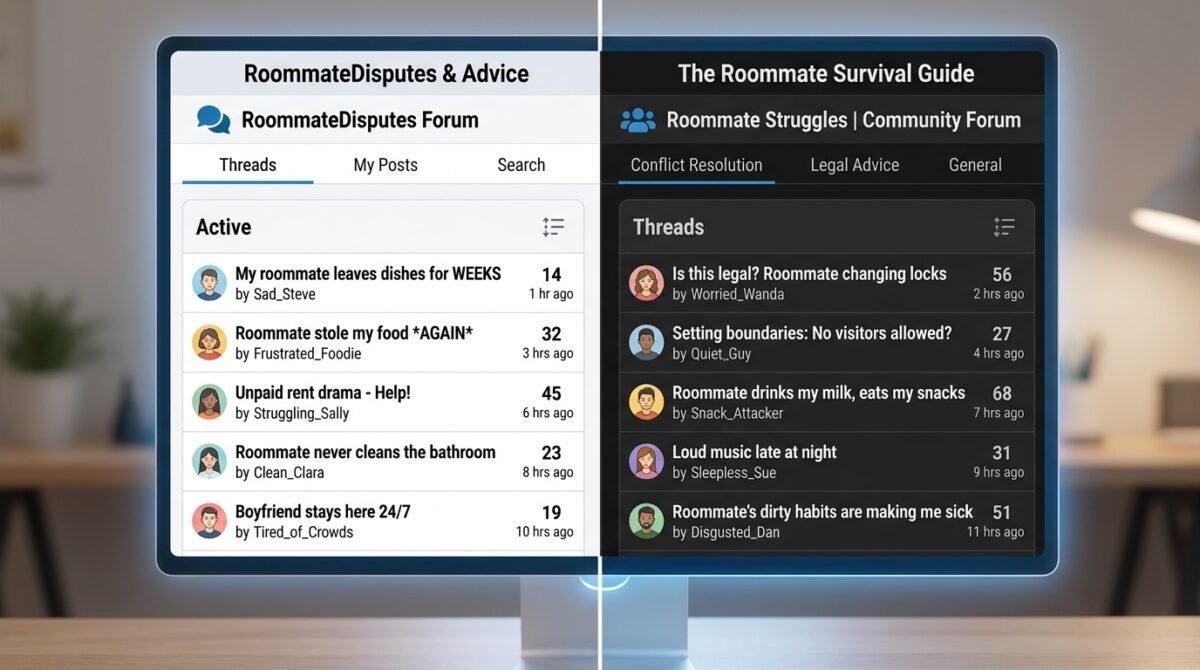
The discussions on the forums were just as fascinating as the drama itself. People from all over the world shared their own ‘roommate from hell’ stories, creating a massive archive of shared trauma and collective wisdom. It was like a support group for people who had been pushed too far, and it helped me process my own experience in a healthy way.
“I once had a roommate who used my expensive shampoo to wash her dog. I didn’t lock it up; I just started filling the bottle with Nair. She learned her lesson real quick. You took the high road, OP, but sometimes the low road is the only one that gets results.”
— u/PettyRevengeQueen, 15.2k upvotes.
Other commenters provided practical advice on how to handle similar situations in the future. They suggested things like individual lockboxes for the fridge, cameras (if legal), and clear, written agreements that are signed by all parties. It was refreshing to see that so many people had come up with creative solutions to common problems.
However, there were also those who criticized me for ‘being too petty.’ They argued that I should have just sat down and had a ‘heart-to-heart’ with Jessica, as if I hadn’t already tried that a dozen times. It reminded me that there will always be people who blame the victim for standing up for themselves. I ignored them, knowing that they weren’t the ones paying for the groceries.
Ultimately, the consensus was clear: I was not the one in the wrong. I was defending my property, and in doing so, I was defending my own integrity. The community support was the final piece of the puzzle, helping me move past the anger and focus on the lessons I had learned. I walked away from the experience stronger, wiser, and much more protective of my boundaries.
Final Thoughts on My New Living Situation

Life is much quieter now. My new roommate is someone who values the same things I do: a clean kitchen, mutual respect, and the ability to ask before touching something that doesn’t belong to them. We have a simple agreement: if it’s in the communal area, it’s fair game if we’ve agreed to share it, but if it’s in our respective spaces, it’s off-limits.
It’s amazing how much easier life is when you aren’t constantly on guard. I no longer have to worry about my food disappearing or my equipment being ruined. I can actually enjoy my life, my hobbies, and my home. It’s the peace of mind that I was working towards all along, and it was worth every bit of the drama I had to go through to get there.
“The best revenge isn’t getting back at someone; it’s moving on and living a better life than they could ever imagine for themselves.”
— A piece of advice I read online that stuck with me.
I still see Jessica around occasionally, but we don’t speak. She’s moved on to her own life, and I’m sure she’s still dealing with the consequences of her actions, or maybe she’s learned something. Either way, it’s not my concern anymore. I’ve closed that chapter of my life, locked the metaphorical trunk, and I’m moving forward with a much clearer vision of what I want.
If you take anything from this, let it be this: you are the only one who can set your boundaries. Don’t be afraid to be the ‘difficult’ person if it means protecting your peace. And if you ever find yourself in a situation where you feel like you have to lock your food in a steel trunk, just know that you aren’t the crazy one. You’re just the one who finally decided to stop playing by someone else’s unfair rules.
Conclusion
The saga of the sorority-pantry-raider was a painful, expensive lesson in human nature and the necessity of self-respect. While I never intended for my life to become a viral cautionary tale, I am grateful for the outcome. It forced me to articulate my boundaries clearly and, more importantly, to enforce them without apology.
For those of you currently suffering under the thumb of an entitled roommate, hear this: your space, your property, and your peace of mind are non-negotiable. If a ‘friendly’ conversation doesn’t work, don’t be afraid to escalate—physically, legally, or socially. You owe it to yourself to be the steward of your own life.
Discussion Poll: Have you ever had to resort to ‘extreme’ measures to protect your property from a roommate or family member? Share your most satisfying boundary-setting story below. Are you Team ‘Lock It Up’ or Team ‘Communication First’?
What's your verdict on this dilemma?
Vote below to contribute to the official community consensus.

Have a Dilemma Keeping You Up at Night?
Share your real-life feud, wedding chaos, or relationship crossroads anonymously with our editorial team.
What do you think ?
0 Comments🛡️ Comments are moderated to protect community integrity. Your comment will appear once approved by the editorial team.