

Friendship is often described as the chosen family, a bond forged in shared experiences, secrets, and an unspoken agreement of mutual respect. For Sarah and I, that bond had lasted over a decade. We had navigated the complexities of our twenties, the heartbreak of failed relationships, and the professional highs and lows that defined our careers. I always considered her my ‘person,’ the one who knew exactly how I took my coffee and exactly when I needed space. However, I never truly understood the dark underbelly of her sense of entitlement until we decided to take a celebratory trip to celebrate our promotions.
We chose a coastal paradise, a destination known for its rugged cliffs and azure waters. It was meant to be a time of rejuvenation. I had been transparent with her for years about my crippling vertigo—a condition that wasn’t just a fear of heights but a vestibular nightmare that left me physically ill if I looked down from anything higher than a second-story window. Sarah knew this. She had seen me turn down mountain hikes and avoid glass elevators. It was a non-negotiable aspect of my life.
The trouble began the moment we arrived at the resort. The itinerary, which I believed we had curated together, suddenly underwent a mysterious ‘upgrade’ by Sarah. She began mentioning a private helicopter tour of the coastline, a ‘once-in-a-lifetime’ experience that came with a price tag that made my stomach churn—not from vertigo, but from pure financial anxiety. I assumed she was just dreaming out loud, a harmless bit of vacation fantasy.
I couldn’t have been more wrong. When the booking confirmation landed in my inbox for a tour I explicitly told her I would not be participating in, the illusion of our friendship started to fracture. The demand that followed wasn’t just a request; it was a cold, calculated expectation that I would subsidize her luxury. The ensuing silence between us was the loudest sound I’ve ever heard, marking the end of a ten-year chapter I wasn’t prepared to close.
The Seven-Hundred-Dollar Misunderstanding
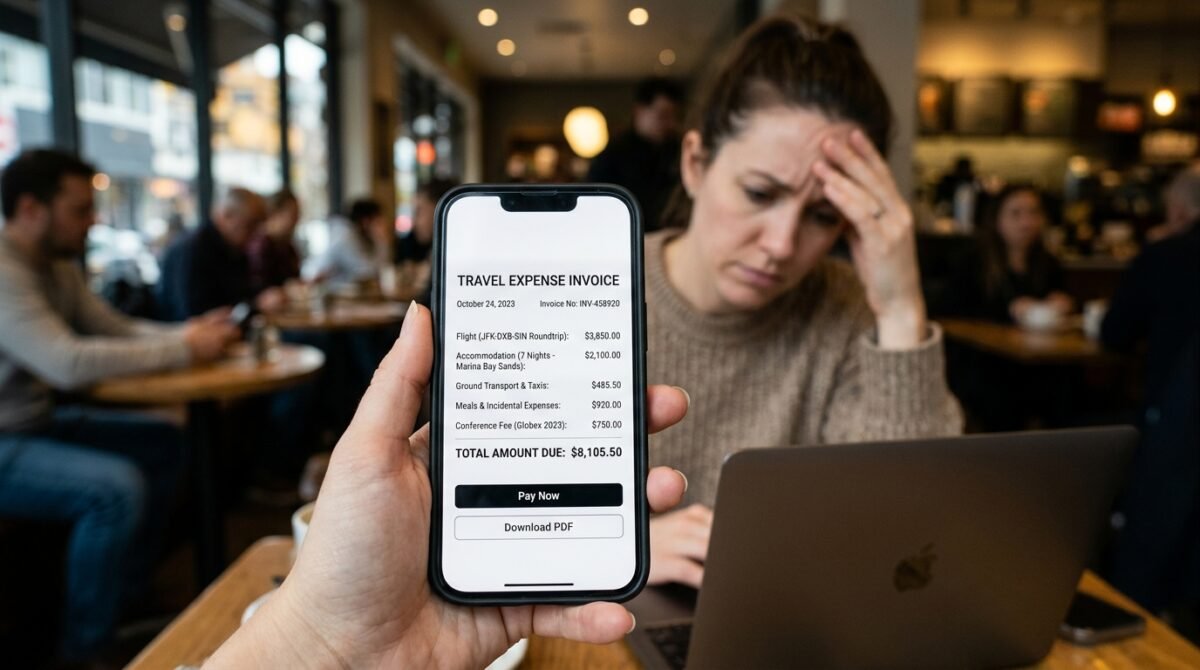
It started on a Tuesday, three days before our departure. We were grabbing drinks at a local bistro, hashing out the final details of our itinerary. Sarah was animated, scrolling through her phone, showing me pictures of deep-sea fishing excursions and spa packages. I felt a sense of relief; everything seemed balanced, affordable, and well within our agreed-upon budget. That was until she pulled up the website for ‘Azure Skyline Tours.’
She kept insisting that this was the ‘must-do’ event of the trip. The price was exorbitant—seven hundred dollars per person. I gently reminded her that my vertigo prevented me from participating. I assumed that would be the end of it. She nodded, smiled, and moved on to discussing dinner reservations. I walked home that night thinking we were on the same page, completely oblivious to the fact that she had already decided my participation was not optional.
“Look, I totally get why you’re nervous, but it’s a helicopter, not a tightrope. Plus, it’s only forty minutes. You can take some Dramamine and just keep your eyes shut if you have to. It’s an investment in the memories, don’t you think?”
I laughed it off then, thinking she was just being pushy in her usual way. I told her, ‘Sarah, I literally cannot step onto an aircraft that doesn’t have a pressurized cabin and a landing gear that stays on the ground. I’m not doing it.’ She didn’t press the issue further, which I took as a sign of respect. Little did I know, she was already drafting an email to the concierge to ‘secure’ our spots.
The next morning, the notification popped up on my phone. An invoice from the tour company, addressed to both of us, with a ‘split payment’ link. My heart skipped a beat. I had been charged half the deposit for a service I never requested, never approved, and physically could not use. The audacity was breathtaking. I felt my hands shaking as I reached out to her.
I called her, my voice tight. ‘Sarah, did you book this? I told you I wasn’t going.’ She answered with a casual tone that made my blood boil. ‘Oh, don’t worry about it,’ she said. ‘It’s already done. The deposit is non-refundable, and I figured you’d change your mind once you saw how beautiful the views were. Just think of it as a treat for yourself, even if you’re a little dizzy.’
I didn’t yell. I couldn’t. I was too stunned. I told her clearly and firmly that I would not be paying for the tour, and that she needed to contact them to remove me from the booking. Her response was immediate and icy. ‘Well, I already put it on my credit card, and I’m expecting you to reimburse me. I can’t afford to lose that money, and you’re the one being difficult about your silly phobia.’
The Escalation of Financial Entitlement

The next forty-eight hours were a masterclass in gaslighting. Sarah sent me a barrage of texts, each one more condescending than the last. She framed my refusal as an act of selfishness, claiming that my ‘phobia’ was ruining our friendship and forcing her to miss out on her dream experience. It was a complete reversal of reality. She was the one who had unilaterally booked an expensive activity I couldn’t attend, yet she was acting as the victim of my ‘stubbornness.’
I tried to remain calm. I kept repeating that I would not pay for a service I was not receiving, regardless of who booked it or why. I even offered to pay for a nice dinner as a compromise, a gesture of goodwill to smooth over the tension. She rejected it outright, demanding the full cost of the tour. She told me that if I didn’t pay, I was effectively stealing from her, which felt like an insane leap in logic.
“I just can’t believe you’re doing this. After everything I’ve done for you, you’re going to let me eat the cost of this tour because you’re too stubborn to push yourself out of your comfort zone? You have the money. Just pay it and let’s move on.”
The resentment started to settle in, heavy and thick. I realized this wasn’t about the money for her; it was about control. She wanted me to participate in her vacation lifestyle, regardless of my physical limitations. She wanted the status and the ‘best friend’ photos, and she felt entitled to my bank account to facilitate that. It was a violation of the boundaries I had spent years building.
I spoke to a few mutual friends, trying to keep it vague, just to see if I was losing my mind. They all agreed—it was completely out of line to book something for someone else and demand they pay for it. The validation helped, but it also solidified my resolve. I was not going to let this slide. If I paid this time, where would it end? The next time she wanted to stay at a five-star resort I couldn’t afford, would she charge me for that too?
She began posting passive-aggressive updates on social media, mentioning how ‘some people don’t know how to support their friends’ and how ‘traveling with the wrong people is a lesson in patience.’ It was thinly veiled, and it was meant to isolate me. She was trying to frame the narrative before we even left for the trip. I knew then that the friendship was effectively over, but the conflict had only just begun.
I finally sent a clear, final message: ‘Sarah, I am not paying for the helicopter tour. I never agreed to it, and I am not going. If you cannot afford the tour on your own, you should cancel it. I am not responsible for your financial decisions.’ I hit send, my heart pounding, waiting for the inevitable explosion that I knew would define our final confrontation.
The Group Chat Ambush
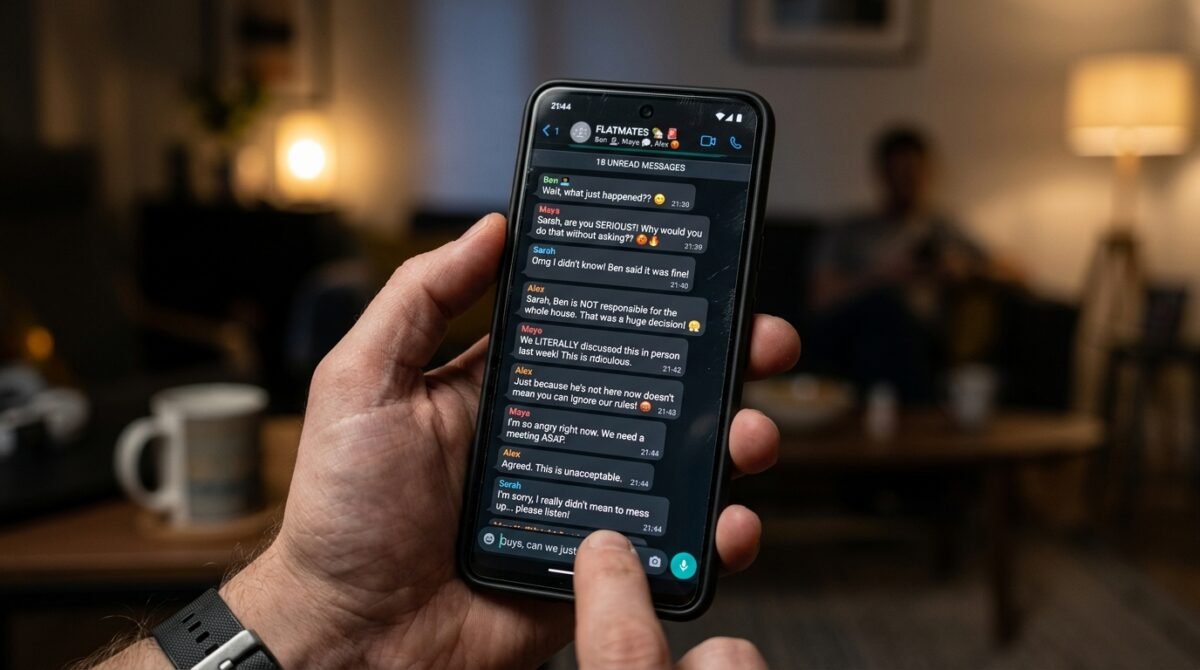
I didn’t have to wait long for the reaction. She didn’t reply to my direct text; instead, she added me to a group chat with three of our mutual friends. It was a classic ‘triangulation’ move, designed to force me into a defensive corner and shame me into compliance. The messages started flooding in, each one more aggressive than the last. Sarah was painting me as the villain, leaving out the fact that I had never agreed to the tour.
“Hey everyone, I just need some outside perspective. OP is refusing to help me out with a major booking she backed out of, and now I’m stuck paying for her share of our dream tour. Does anyone else think this is incredibly unfair? I’m so disappointed.”
— Sarah, in the group chat
I watched as my friends chimed in, clearly confused. One of them, Jessica, asked, ‘Wait, did you guys agree on this beforehand?’ Sarah deflected, saying, ‘We discussed the trip extensively, and I assumed we were on the same page. It’s about the principle of the thing.’ I jumped in then, my fingers flying across the screen. I laid out the timeline: my long-standing vertigo, the fact that I had explicitly said ‘no,’ and the fact that she had booked it without my consent.
The chat went silent for a few minutes. That silence was the most satisfying moment of the entire ordeal. It was clear that Sarah hadn’t expected me to be so transparent or so factual. She wanted me to be the ‘flake,’ not the victim of a boundary violation. When Jessica finally spoke up, she was on my side. ‘I mean, if OP said she couldn’t do it, you probably shouldn’t have booked it without her express permission, Sarah.’
The shift in the room—or rather, the digital space—was immediate. Sarah went on the defensive, attacking everyone who dared to suggest she might be in the wrong. She started calling us all ‘toxic’ and ‘unsupportive.’ It was a total breakdown of logic. I realized then that she wasn’t interested in a resolution; she was interested in being right, and she would burn every bridge in our friend group to achieve that.
I didn’t want to be part of the drama anymore. I had defended myself, the truth was out, and I felt a strange sense of peace. I sent one last message to the group: ‘I’ve made my position very clear. I’m not paying for a mistake I didn’t make. I’m stepping out of this chat now.’ And with that, I left. I didn’t wait for her to reply. I blocked the chat, and for the first time in weeks, the tension in my chest began to dissipate.
The aftermath, however, was still looming. We were supposed to go on this trip in two days. I had already paid for my flight and my share of the accommodation. I had to decide if I was going to go on the trip, knowing she would be there, or if I would cut my losses and stay home. The choice wasn’t just about money anymore; it was about my peace of mind and my ability to stand up for myself against someone who had used our friendship as a tool for leverage.
The Decision to Stay or Go

I spent the night staring at my suitcase. Should I go? Part of me wanted to stick to my plans. I had saved for this vacation for six months, and I deserved to see the coast. But the other part of me knew that being in the same resort as Sarah, given the current state of our ‘friendship,’ would be a recipe for disaster. She was the kind of person who would make sure the entire trip was miserable if she didn’t get her way.
I imagined the awkward encounters in the hotel lobby, the passive-aggressive comments at breakfast, and the constant cloud of resentment hanging over everything. Was it worth it? Probably not. But if I didn’t go, she would win. She would feel justified in her behavior, and she would have effectively driven me out of my own vacation. It was a lose-lose situation, but I had to choose the version of losing that felt the most like a victory.
I decided to go, but with a firm set of rules. I would treat this as a solo trip. I would not engage with her, I would not address the helicopter tour, and if she tried to corner me, I would walk away. It was a strategy of radical indifference. It wasn’t about being petty; it was about survival. I was going to enjoy my vacation, and if she wanted to be miserable, she could do it on her own time.
The morning of the flight, I arrived at the airport early. I saw her at the gate, sitting alone, scrolling through her phone with a face like thunder. She saw me, her eyes narrowed, but she didn’t say anything. I sat three rows away, put on my noise-canceling headphones, and focused on a book. It was the most awkward boarding experience of my life, but I held my ground. I wasn’t going to be the one to break the silence.
During the flight, I thought about the nature of our friendship. How long had she been this way? Had I just been blind to it? I remembered times when she had pressured me into things before, always with that charming, ‘it’ll be fun, don’t be a buzzkill’ attitude. I had always brushed it off as her being ‘adventurous’ and me being ‘reserved.’ I realized now that she didn’t value my boundaries; she just found them inconvenient.
When we landed, I went straight to the hotel shuttle and checked into my room. I didn’t wait for her. I didn’t invite her to dinner. I spent the first evening by the pool, reading and sipping a cocktail, watching the sunset. It was beautiful. For the first time in weeks, I didn’t feel the weight of her expectations. I was entirely alone, and for the first time, it felt like a relief rather than a burden.
The next morning, I woke up to a flurry of notifications. She had left several voicemails. I didn’t listen to them. I knew what they would be—more demands, more blame, more drama. I deleted them without a second thought. I was finally free. The trip was going to be exactly what I needed, provided I could keep the peace of mind I had fought so hard to reclaim.
Reddit Weighs In: The Community Verdict

I decided to post my story on Reddit to see if I was truly in the wrong. The response was overwhelming. Within hours, the thread had thousands of upvotes and hundreds of comments. People were outraged on my behalf. They saw the situation for what it was: a blatant attempt at financial manipulation disguised as a ‘shared experience.’ It felt validating to have strangers confirm what I had felt in my gut all along.
“This isn’t just about a helicopter tour. This is a classic case of someone using their ‘best friend’ status to force you into paying for their lifestyle. The fact that she tried to guilt-trip you in a group chat is the cherry on top. Cut her off and don’t look back. NTA (Not The Asshole) 100%.”
— u/TravelBound99 (Top Comment, 15.2k upvotes)
The thread was full of people sharing their own experiences with ‘friend-takers.’ It was eye-opening to see how common this kind of behavior was. Many people pointed out that real friends don’t book things their friends can’t do and then demand they pay for it. The community consensus was clear: Sarah was not a friend; she was an opportunist who had finally been caught in her own trap.
Some users even pointed out the legal side of things. One person noted that since the contract was between Sarah and the tour company, I had no legal obligation to pay for a service I hadn’t signed for, especially since I had made my refusal clear in writing. That gave me extra peace of mind. I wasn’t just morally in the right; I was legally safe as well.
There were a few people who suggested I was being too harsh, or that I should have tried to ‘talk it out’ one more time. I ignored them. I had talked it out. I had set boundaries. She had ignored them and tried to bully me into submission. There was nothing left to talk about. The time for communication had passed; the time for action had arrived.
The most touching comments were from people who had been in similar situations and had successfully cut off toxic friends. They shared how much lighter their lives felt afterwards, and how they had found new, better friends who actually respected their needs. It gave me hope. I wasn’t losing a friend; I was making space for someone who would actually deserve my friendship.
Reading the thread, I realized that I had been carrying the weight of this friendship for a long time. I had been the one making the compromises, the one smoothing things over, the one apologizing for things I hadn’t done. The realization was both painful and liberating. I was finally done with the apology tour. I was ready to be my own advocate, no matter how much it cost the friendship.
The Final Confrontation at the Lobby

It happened on the third day of the trip. I was walking through the hotel lobby, heading to the beach, when I saw her. She was waiting for me. She had clearly been watching my movements, because she intercepted me before I could reach the exit. Her face was flushed, and she looked like she hadn’t slept. She didn’t look like a friend; she looked like a creditor coming to collect a debt she felt I owed her.
She didn’t waste time with pleasantries. ‘So, this is how it is? You’re just going to ignore me like I don’t exist? I paid for that tour, and you’re going to pay me back, whether you like it or not. I have the receipts, and I’m going to make sure everyone back home knows exactly what kind of person you are.’
“I am not paying you, Sarah. You booked a service without my permission. You were warned, and you proceeded anyway. That is on you, not me. And if you want to tell everyone, go ahead. I’m happy to share the emails where I explicitly said no.”
She was stunned. She expected me to crumble, to offer to pay half, to apologize for the ‘misunderstanding.’ When I stood my ground, she looked genuinely confused. It was like she couldn’t process the fact that I wasn’t afraid of her threats. She tried to raise her voice, but I just held up my hand and stepped back. I wasn’t going to have a shouting match in the lobby of a luxury resort.
I told her, ‘Sarah, we’re done. I’m not going to spend another second of my vacation dealing with your entitlement. I’m blocking you on everything, and I suggest you enjoy the tour you booked for yourself. I’m going to the beach.’ I walked away, my heart pounding in my ears. I didn’t look back. I didn’t wait to see her expression. I just kept walking.
That was the last time I spoke to her. The relief was instantaneous. It wasn’t just that I had stood up for myself; it was that I had finally broken the pattern. I had stopped being the person who was afraid of her anger. I had become the person who was finally in control of her own life and her own boundaries. It was a turning point, not just for the trip, but for me as a person.
The rest of the trip was a dream. I ate where I wanted, went to the beach when I wanted, and for the first time in years, I didn’t feel the need to check in with anyone. I was truly, blissfully alone. I realized that the best friend I had been looking for was someone who would never put me in that position in the first place. I had found that person, and it was me.
The Aftermath and the New Normal

When I returned home, the real work began. I had to navigate the fallout of losing a decade-long friendship. There were calls from mutual friends, some of whom wanted to know ‘what really happened,’ and others who just wanted to stay out of the drama. I was honest with everyone. I showed them the receipts, the emails, the messages. I didn’t need to lie or manipulate. The truth was enough.
Most of my friends understood. They saw the pattern I had been blind to for so long. A few, however, chose to stay loyal to Sarah, which was their right. I didn’t hold it against them. I just accepted that my circle would look different moving forward. It was a smaller circle, but it was also a more genuine one. I wasn’t interested in maintaining friendships that felt like a transaction.
I started focusing on my own hobbies again, the ones I had neglected to make space for our friendship. I started hiking—on low-altitude, flat trails—and taking up painting. I found that I was much happier when I wasn’t constantly trying to appease someone else’s whims. I was rediscovering parts of myself that I had tucked away to accommodate Sarah’s ego.
I also set new boundaries in my other relationships. I became much more vocal about what I could and couldn’t do, and I stopped apologizing for my limitations. It was a liberating shift. I realized that people who truly cared about me would respect my ‘no’ without needing a justification or a compromise. It was a simple test, but it was a very effective one.
I still think about Sarah sometimes. I wonder if she ever realized what she lost. Probably not. People like that rarely do. They move on to the next person they can control, the next person they can use to prop up their own insecurities. I’m just glad it’s no longer me. I’m no longer the person who has to pay the price for her lack of maturity.
Life is too short to spend it on people who make you feel small. I learned that the hard way, but I learned it well. I’m a better friend, a better partner, and most importantly, a better advocate for myself. The helicopter tour is a distant memory now, a symbol of a time when I let someone else drive my life. Now, I’m the one in the pilot’s seat, and I’m going exactly where I want to go.
The Unspoken Lesson of Financial Boundaries
One of the most important things I took away from this whole ordeal is the power of financial boundaries. We are often taught to be polite, to share, to ‘chip in,’ and to support our friends. But there is a line between support and exploitation. When a friend uses your money as a way to access a lifestyle you didn’t ask for, that is not friendship; that is theft. I realized I had been ignoring that line for years.
I started looking back at our past trips, our dinners, our outings. I saw the patterns now. I had been paying for her lack of planning, for her ‘spur of the moment’ desires, for her ‘I forgot my wallet’ moments. It had been happening for years, and I had just accepted it as part of our friendship dynamic. I had been a financial enabler, and she had been a financial taker.
The helicopter tour was just the final straw. It was the moment the scale tipped so far that I couldn’t ignore it anymore. It forced me to look at the entire ledger of our friendship, and the balance was overwhelmingly in her favor. I was the one giving, and she was the one taking. It was a parasitic dynamic that I had convinced myself was reciprocal.
I started reading books about boundaries and toxic relationships. I learned about ‘the giver-taker dynamic,’ and it described us perfectly. I realized that my need to be a ‘good friend’ had been used against me. I had been so afraid of being seen as stingy or difficult that I had allowed myself to be taken advantage of repeatedly. I’m done with that now.
I’m much more comfortable saying ‘no’ to financial requests now. Whether it’s a friend asking for a loan or a group trip where the costs are spiraling, I have no problem speaking up early and often. If someone gets angry, that’s their issue, not mine. I’ve learned that people who truly respect me don’t get angry when I protect my interests. They understand, and they respect my autonomy.
It’s a powerful feeling, being able to protect your own resources. It doesn’t mean I’m selfish; it means I’m responsible. It means I have the means to support the people who truly need it, and to enjoy the things I actually care about. It’s a lesson that cost me a friendship, but it’s a lesson that has made my life exponentially better.
Reflecting on the ‘Best Friend’ Label

We put so much pressure on the title of ‘best friend.’ We treat it like a sacred, unbreakable bond, something that justifies any behavior. If a best friend asks, you do it. If a best friend needs, you provide. But what happens when that ‘best friend’ starts acting like an anchor instead of a sail? What happens when the bond becomes a cage? I think we don’t talk enough about the breakup of a long-term friendship.
It’s often harder than a romantic breakup. There’s no guidebook, no social protocol for how to handle it, no clear way to divide your assets or your social circle. It’s just messy and painful. You have to mourn the loss of the person you thought they were, and you have to accept the reality of who they actually are. It’s a double loss, and it takes time to process.
I miss the good times, of course. I miss the inside jokes, the shared history, the comfort of knowing someone for so long. But I’ve come to realize that those memories are just that—memories. They don’t justify the present. They don’t justify being treated with disrespect or being used as a financial resource. The past doesn’t buy you a pass for the present.
I’ve started to appreciate the new friendships I’m making. They’re built on different foundations—on mutual respect, on clear communication, on shared values. They’re not as ‘dramatic,’ and that’s a good thing. They’re stable, they’re supportive, and they’re incredibly fulfilling. I’m no longer looking for excitement in my friends; I’m looking for consistency.
I’ve learned that the people who stay in your life when you start setting boundaries are the ones who were actually there for *you*, not for what you could do for them. It’s a filter, and it’s a very effective one. I’m grateful for the people who stuck around, and I’m grateful for the ones who left. They all played a part in making me the person I am today.
I’m not the same person I was before the helicopter tour. I’m stronger, I’m wiser, and I’m much more protective of my heart and my bank account. I’m not saying I’ll never make a mistake again, but I am saying I’ll never make the same one twice. I’m moving forward, and I’m looking forward to everything the future holds.
A Final Message to the Readers

If you take one thing from my story, let it be this: your boundaries are not negotiable. You don’t owe anyone an explanation for why you can’t or won’t do something, especially when it comes to your own body or your own money. The people who truly love you will respect your boundaries, even if they don’t fully understand them. If someone tries to shame you, bully you, or coerce you into doing something you’re uncomfortable with, that is a red flag, not a misunderstanding.
Don’t be afraid to walk away. Don’t be afraid to be the ‘bad guy’ in someone else’s narrative. Their opinion of you is none of your business. What matters is your integrity, your peace of mind, and your ability to look yourself in the mirror at the end of the day. You are the only person who has to live with your choices, so make sure they’re choices you can be proud of.
And to those who are currently dealing with a ‘Sarah’ in their lives: you are not alone. You don’t have to put up with it. You have the right to set limits, and you have the right to enforce them. It might be hard, it might be painful, and you might lose some friends along the way, but you will find your own strength in the process. And that is a price worth paying.
Thank you for letting me share my story. It’s been a long journey, and writing this has been a part of my healing. If my story helps even one person realize that they don’t have to be a doormat, then it was worth the trouble. We all deserve to be surrounded by people who lift us up, not people who look for ways to drag us down for their own benefit.
Stay strong, stay firm, and never let anyone make you feel guilty for taking care of yourself. You are the pilot of your own life, and you get to decide who gets a seat on your flight—and who gets left on the ground. Don’t forget that.
Conclusion
Looking back at the whirlwind of the last few months, I am struck by how quickly a decade of friendship can unravel when the mask of entitlement finally slips. The helicopter incident was never really about a flight; it was about the fundamental mismatch of values between someone who saw a friend as a resource and someone who saw a friend as a partner. By choosing my own well-being over the pressure of a false obligation, I didn’t just save seven hundred dollars—I reclaimed my self-worth.
The community support I received reminded me that I am far from the only one who has navigated these treacherous waters. We are all learning, day by day, how to balance our inherent desire for connection with the necessary, often difficult, work of boundary-setting. It is a lesson that is never truly finished, but one that becomes easier with each iteration of courage.
I am curious to hear your take. Have you ever had a friend who pushed your boundaries until you finally had to walk away? Or perhaps you’ve been on the other side, realizing you were the one being too demanding? Let’s discuss in the comments below—your perspectives help us all learn how to navigate the complex, often messy world of human relationships.
What's your verdict on this dilemma?
Vote below to contribute to the official community consensus.

Have a Dilemma Keeping You Up at Night?
Share your real-life feud, wedding chaos, or relationship crossroads anonymously with our editorial team.
What do you think ?
0 Comments🛡️ Comments are moderated to protect community integrity. Your comment will appear once approved by the editorial team.