

Living with a roommate is often an exercise in compromise, but there are certain lines that should remain uncrossable by nature of common decency. My roommate, Chloe, had always been the type to blur those lines, treating my belongings like a community closet. It started with small things—borrowing my expensive serums, wearing my scarves without asking—but I naively assumed she understood the value of my career-defining wardrobe pieces.
I am a curator for a high-end fashion archive. My collection isn’t just ‘stuff’; it is an investment and a passion. One piece in particular, a vintage-inspired emerald silk gown I acquired at auction for three thousand dollars, was the centerpiece of my collection. It required specialized cleaning and was strictly stored in a climate-controlled garment bag. I had not worn it in months, keeping it pristine for an upcoming industry gala.
The trouble began on a rainy Tuesday. I had returned home from a week-long business trip to find my apartment in a state of chaos. Wet boots were piled by the door, and the air smelled faintly of damp earth and cheap hairspray. I didn’t think much of it until I went to check on the humidity-controlled closet where my most prized garments were kept.
The garment bag was unzipped. The hanger was empty. My heart sank into my stomach as I rushed to the living room, where Chloe sat scrolling through her phone, looking suspiciously self-satisfied. I realized then that my boundary—the one she had been testing for two years—had been shattered in the most expensive way possible. The moral dilemma wasn’t just about the money; it was about the absolute violation of trust and the arrogance of someone who felt entitled to destroy my hard work for the sake of an Instagram aesthetic.
The Discovery of the Mud-Stained Fabric

I didn’t find the dress in the closet. I found it in the laundry basket in the mudroom, balled up and smelling of stagnant rainwater and pine needles. The hem, which should have been a pristine, sweeping train of silk, was caked in dried, gray sludge. My breath hitched, a physical ache blooming in my chest as I pulled it out. Every inch of the delicate fabric felt heavy, damp, and fundamentally ruined.
I didn’t scream. I didn’t throw things. I simply walked into the living room, holding the gown out like a piece of evidence in a crime scene. Chloe looked up, her expression shifting from casual boredom to a flicker of genuine alarm. She had clearly hoped I wouldn’t be back for another two days, but the universe had other plans.
“Is this a joke, Chloe? Tell me you rented a replica. Tell me you didn’t take a three-thousand-dollar piece of couture into the middle of a swamp for a photoshoot.”
She shifted uncomfortably, her hand instinctively reaching for her phone. “It’s just a dress, and it’s not like it’s ruined forever. I’m sure a dry cleaner can get that out. I needed a high-fashion look for my portfolio, and you were out of town. I figured you wouldn’t even notice it was gone.”
The sheer audacity of the statement left me speechless for a long moment. “You figured I wouldn’t notice? It’s a custom-fitted piece of history, not a shirt from a fast-fashion outlet. The silk is stained, the delicate lace is snagged, and the value of this piece has plummeted to zero. You don’t get to decide what you can borrow from me, especially when you treat my property with such total disregard.”
She stood up, her face flushing with indignation. “You’re overreacting. You have a whole closet full of clothes. Why are you being so possessive over one thing that you weren’t even wearing? I’ll pay for the cleaning, just stop acting like I committed a felony.”
I watched her, realizing that there was no remorse, only inconvenience. She wasn’t sorry she ruined my gown; she was sorry she got caught. In that moment, the friendship, the shared groceries, the late-night movies—it all meant nothing compared to the blatant disrespect she had shown my livelihood. I knew right then that there would be no civil resolution.
The Invoice That Ended the Friendship
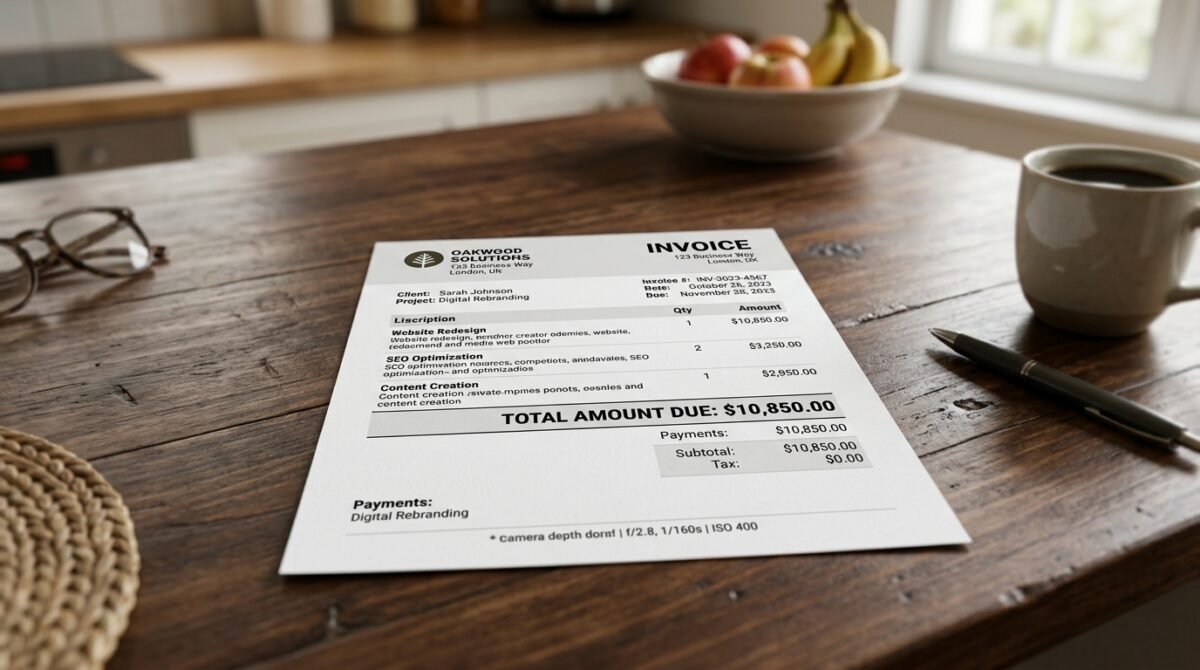
I didn’t just go to a local dry cleaner. I took the gown to a professional restoration service that specializes in vintage textiles. The quote for the attempted repair and the loss of market value assessment came to exactly $3,200. I printed the official document, along with the receipts of my original purchase, and taped the envelope to the center of the kitchen table.
I sent her a text as I left for work the next morning. I didn’t want to engage in a yelling match; I wanted a paper trail. I knew she was the type to play the victim, and I needed to ensure that I had legal standing should this escalate to a small claims situation. The silence in the apartment felt heavy as I packed my bag, avoiding the living room where she was likely still sleeping.
“The restoration estimate is on the kitchen table. You have 48 hours to pay the balance. If you don’t, I am deducting the full amount from your security deposit, which I currently hold in our joint account.”
— Sent via iMessage at 7:15 AM
When I returned home that evening, the envelope was open, and the mood in the apartment was volatile. Chloe was pacing the kitchen, her eyes red-rimmed. She didn’t look remorseful; she looked cornered. She started in on me the moment I stepped through the door, her voice shrill and trembling with a mix of anger and self-righteousness.
“You are being completely insane!” she shrieked, waving the paper at me. “Three thousand dollars? This is a scam! You’re trying to extort me because you’re mad about a stupid dress. I’m not paying that, and you certainly don’t have the legal right to touch my deposit for your personal vendettas.”
I kept my voice calm, icy, and level. “It’s not a vendetta, Chloe. It’s a contract. You signed a roommate agreement that explicitly states that any damage to common property or personal property stored in the unit is the financial responsibility of the party who caused the damage. I have the receipts, the photos of the gown before you took it, and the professional estimate. The money is coming out of the deposit. I suggest you find the funds to cover your share of the next rent payment.”
She went silent, her jaw dropping. She hadn’t expected me to be so prepared. She had banked on me being a pushover, someone who would let this slide because I didn’t want the awkwardness. But the damage was too great, and my patience was at absolute zero.
The Instagram Exposure

The real kicker came later that night. I was scrolling through social media when I saw the tags. Chloe had posted the photos from her ‘muddy photoshoot’ as if it were some high-art concept. She looked beautiful, I’ll admit—the emerald silk flowing against the dark forest floor, the fabric catching the low light. But every time I saw the shot of her kneeling in the mud, my stomach turned.
I didn’t comment on the post. Instead, I took a screenshot of the time-stamped photos and her caption: ‘Channeling raw, organic elegance in this vintage find.’ I sent the screenshot to her with a short, pointed message. I wasn’t going to let her rewrite the narrative to make herself look like an artist who just happened to find a gown.
“I see your post. It’s interesting how you call it a ‘vintage find’ instead of ‘my roommate’s stolen designer gown.’ I’ve attached this to the evidence pile for the landlord and, if necessary, the court. Good luck explaining this to your followers when I post the repair bill.”
She deleted the photos within ten minutes. But it was too late. I had already screen-recorded the post, the captions, and the follower comments praising her ‘original’ look. It felt petty, yes, but in the world of online clout, she was using my property to build her brand, and that was a bridge too far. The ‘raw, organic elegance’ was bought with my tears and my bank account.
The next morning, the apartment was a tomb. Chloe didn’t look at me, and I didn’t look at her. I went about my morning routine, making coffee, checking my emails, and ensuring my remaining wardrobe was locked away in a new, heavy-duty safe I had ordered the night before. The divide between us was no longer just a wall; it was a chasm of resentment.
I knew she was venting to friends. I could hear her muffled voice through the bedroom wall, her tone frantic and defensive. She was painting me as the villain, the cold, materialistic roommate who cared more about money than people. She didn’t realize that in this house, the ‘people’ had burned the ‘money’ first, and now they were surprised they were being billed for the ashes.
The Landlord’s Unexpected Involvement

When our landlord, Mr. Henderson, stopped by for a routine check-in, the tension in the room was palpable. He was a no-nonsense man who managed the property with an iron fist. He didn’t care about our interpersonal drama until it started to affect the apartment’s condition. Chloe, ever the master of manipulation, tried to get him on her side before I could even explain the situation.
“Mr. Henderson, you have to help me,” she started, her voice dripping with artificial sweetness. “My roommate is threatening to withhold my deposit over a piece of clothing. She’s being completely unreasonable and making the living situation impossible. Can you tell her that she can’t just seize my money like that?”
Mr. Henderson looked at me, then at Chloe, and finally at the envelope I had placed on the table. I didn’t speak. I just handed him the folder containing the lease addendum we had all signed upon moving in—the one that included a clause about personal property damages. He looked through it for a long time, his face unreadable.
“The lease says that any intentional or negligent damage to the property, including personal items within the common areas that are agreed upon as off-limits, is subject to deductions. Chloe, did you take this item without permission?”
Chloe froze. She tried to stammer out a defense, claiming I had ‘implied’ it was okay, that we shared things all the time. But Mr. Henderson was a man who lived by the letter of the law. He looked at me, then at the photo of the stained gown. “This isn’t a normal wear-and-tear situation, and if it’s documented as a high-value item that was explicitly private, I don’t see how you can argue that she’s overstepping here.”
He turned to Chloe, his tone hardening. “I’m not getting involved in a civil suit, but I am saying that if you’ve caused damage to your roommate’s property, you’re liable for the cost. If the deposit is tied up in this dispute, I’m going to withhold the full amount until you two reach a written settlement. You’re both on the hook for the full rent regardless of your personal fighting.”
Chloe looked defeated, but more than that, she looked furious. She knew she had lost her only potential ally. She stormed off into her room, slamming the door hard enough to rattle the pictures on the wall. I felt a strange sense of relief. For the first time, the law was on my side, and I wasn’t just some bitter roommate; I was a person seeking fair compensation for a blatant violation.
Community Perspectives: The Reddit Verdict

I turned to the internet to see if I was truly the villain in this story. I posted a sanitized version of the events on a popular relationship advice subreddit, omitting names but keeping the details vivid. The response was overwhelming. Within an hour, I had hundreds of comments, and by morning, the post had hit the front page. The divide in the comments was fascinating.
“OP, you are NTA (Not The A-hole). This is not just ‘borrowing a shirt.’ This is a 3,000-dollar piece of professional inventory. You are 100% entitled to be compensated. If she treats your belongings like props for her vanity, she needs to pay for the consequences.”
— u/FashionLawExpert (Top Comment, 24.3k upvotes)
Others, however, leaned into the ‘petty’ angle. There were those who argued that while I was in the right, the way I went about it was needlessly escalatory. They suggested that I should have handled it with a formal conversation instead of immediately jumping to the security deposit. But they clearly hadn’t lived with a Chloe.
“ESH (Everyone Sucks Here). Yes, she’s a brat for taking the dress, but withholding a security deposit is a nuclear option that could land you in court if she fights it. You’re both behaving like children in a sandbox. Grow up and move out.”
— u/NeutralObserver (4.2k upvotes)
The debate raged on for days. It was validating to see so many people stand up for the idea of personal boundaries, but it was also sobering to see how polarizing a simple issue of ‘don’t touch my stuff’ could be. It confirmed one thing: the internet is a mirror of our own frustrations, and my story touched a nerve with anyone who has ever had a boundaries-challenged roommate.
I read every comment, looking for a way forward. Many suggested that I needed to document the entire thing with a lawyer’s assistance to make sure I wasn’t breaking any tenant laws. It was a wake-up call. I was right, but I had to be careful to stay ‘right’ in the eyes of the law, not just in the eyes of the internet.
The discourse also gave me the courage to stay the course. When I felt guilty—which happened more often than I’d like to admit—I would go back to those comments and remind myself that respect is the baseline for cohabitation. Without it, you’re just two strangers paying rent to exist in a space of constant anxiety.
The Final Confrontation

A week later, the deadline passed. I walked into the kitchen to find Chloe sitting at the table, her laptop open, her credit card laid out like a peace offering. She looked exhausted, the fight having drained the life out of her. She didn’t look up, but she spoke softly, her voice devoid of the usual bravado.
“I don’t have the full three thousand,” she whispered. “I have two thousand. I can pay you the rest in installments over the next three months. I know I messed up. I thought it was just a dress, but when I saw your legal stuff and the way the landlord spoke to me… I realized I really crossed a line.”
I looked at her, really looked at her. She wasn’t just playing the victim anymore; she was finally acknowledging the reality of the situation. I agreed to the terms, provided she signed a legally binding repayment agreement that we both notarized. I wasn’t going to let this linger for months without a guarantee.
“I’m not doing this because I’m nice, Chloe. I’m doing this because I want you out of this apartment. As soon as the final payment is made, I expect you to have your notice handed in. We are done living together.”
She nodded slowly. There was no apology for the friendship lost, no acknowledgment of the trust she had shattered. And honestly, I didn’t want one. The damage was permanent, not just to the gown, but to the idea that I could ever feel comfortable with her again. The money would eventually be replaced, but the sanctity of my home, my safe space, was something I had to rebuild from scratch.
The paperwork was signed, the notary left, and the silence returned. It was a heavy, final silence. We lived like ghosts for the next few months, passing each other in the hallway without a word, avoiding eye contact, existing in separate realities within the same four walls. It was the longest three months of my life.
Moving On and Moving Out

The day she moved out was the most liberating experience of my adult life. I watched from my bedroom window as she hauled her boxes into a moving van. She didn’t say goodbye, and I didn’t offer to help. I simply locked the door behind her, took a deep breath, and stood in the center of the living room, reveling in the quiet.
I spent the next weekend deep-cleaning everything. I purged the apartment of her energy, donating the things she had left behind—the half-used shampoos, the cheap decorations, the clutter. I bought fresh flowers, opened the windows, and let the air circulate until the room felt like it belonged to me and only me.
My industry gala was coming up, and I finally had the restoration report back. The dress was… different. It was cleaner, yes, but the silk had lost some of its original luster. It would never be the same again. I decided to frame it instead of wearing it. It serves as a reminder—a beautiful, expensive reminder—to never let my guard down with someone who doesn’t respect the value of my life’s work.
“Some things are meant to be worn, and some are meant to be warnings. This dress is now a piece of art that tells a story about boundaries, respect, and the cost of entitlement.”
I feel lighter now. I have a new roommate—a quiet professional who keeps to herself and understands the concept of ‘private property.’ We have a whiteboard on the fridge with our chore list, and a tacit agreement to leave each other’s belongings strictly alone. It’s not a friendship, but it’s a healthy, respectful living arrangement.
I still think about that day in the mud. I think about the look on Chloe’s face when she realized she’d ruined something precious, and the look on her face when she realized she’d have to pay for it. It was a hard lesson for both of us. For her, it was a lesson in accountability. For me, it was a lesson in self-advocacy.
Lessons in Financial Accountability

Looking back, the financial aspect was the easiest part to resolve, but the emotional fallout was the most complex. I learned that money is often the only language people like Chloe understand. When you try to appeal to their empathy or their sense of community, you’re met with excuses. But when you hit them in the wallet, suddenly, they listen.
The security deposit was a vital tool for justice. I would tell anyone in my position: always have a clear, written agreement that covers the ‘what ifs.’ Don’t assume that because someone is your friend, they will treat your things with the same care you do. Protect your assets, and don’t feel guilty about it.
I also learned that being the ‘bad guy’ is sometimes necessary to be the ‘safe person.’ I used to worry about being perceived as cold or petty, but I realized that being the ‘easygoing roommate’ was just a way of sacrificing my own well-being to make others comfortable. That’s a trade I’m no longer willing to make.
“The cost of your peace of mind is always worth more than the discomfort of holding someone accountable.”
I’ve become much more assertive in my professional and personal life. I don’t apologize for my boundaries, and I don’t feel the need to explain them to people who don’t deserve an explanation. I carry myself with a new confidence, knowing that I can handle the fallout of a confrontation if it means protecting my own integrity.
Ultimately, the $3,200 loss was a small price to pay for the clarity I gained. I’ve realized that I am the only one who is going to look out for my future, and that includes the physical things I work so hard to curate and maintain. I’ve found a new balance, and I finally feel at home in my own apartment again.
Conclusion
The story of the muddy gown is more than just a tale of roommate drama; it is a profound lesson on the necessity of boundaries in an age of entitlement. When we allow others to treat our property and our personal space as an extension of their own, we inevitably lose a piece of ourselves. The restoration of my gown was never really about the fabric; it was about reclaiming my right to protect what I value.
Readers, I want to hear your take. Have you ever had to draw a line in the sand with someone you trusted? Was I too harsh with the security deposit, or was it the only way to get through to someone who refused to respect my boundaries? Let’s talk about it in the comments below.
If you enjoyed this deep dive into the realities of shared living, consider subscribing for more stories about navigating the complex, often messy world of human relationships. We all deserve to live in a space where our boundaries are not just respected, but honored. Until next time, keep your doors locked and your designer gear safe.
What's your verdict on this dilemma?
Vote below to contribute to the official community consensus.

Have a Dilemma Keeping You Up at Night?
Share your real-life feud, wedding chaos, or relationship crossroads anonymously with our editorial team.
What do you think ?
0 Comments🛡️ Comments are moderated to protect community integrity. Your comment will appear once approved by the editorial team.