
We all have that one roommate who tries to find a side hustle to cover the rising cost of rent in a crumbling city. When Leo moved into our third-floor apartment, he seemed like the perfect guy: quiet, tidy, and obsessed with sustainability. He spoke about carbon footprints and circular economies with the kind of zeal that makes you feel bad for buying plastic-wrapped vegetables. For the first six months, we lived in perfect harmony. I handled the utilities; he handled the recycling.
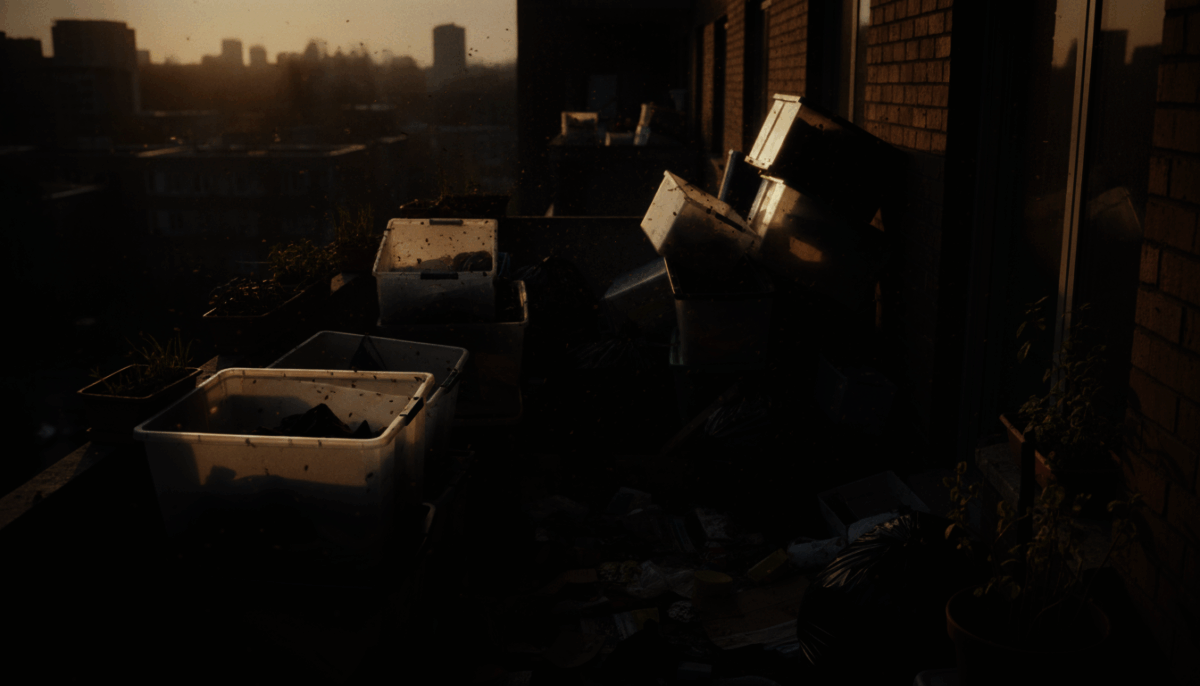
But the shift started in early April. It began with a few small, ventilated plastic tubs placed strategically on our narrow balcony. Leo called it his ‘Black Soldier Fly Larvae Bio-Conversion Initiative.’ He told me he was helping local restaurants reduce their food waste while creating high-protein animal feed for local farms. I was impressed. I even joked that he was going to be the next big thing in urban agriculture. I had no idea that my validation was the fuel for an absolute nightmare.
By May, the balcony looked like a scene from a low-budget horror film. The mild smell of damp earth had transformed into a pungent, sickly-sweet scent that clung to our curtains and drifted into the living room every time we opened the sliding glass door. The floor was covered in a slick, dark residue. When I asked Leo about the sheer volume of waste he was processing, he just smiled and talked about scalability. He wasn’t just composting; he was running a commercial-grade operation in a space meant for a folding chair and a potted plant.
The moral dilemma weighed on me for weeks. On one hand, I wanted to support his entrepreneurial spirit. On the other hand, the structural integrity of our aging building was being tested by hundreds of pounds of wet, decomposing organic matter. My landlord was a notoriously absent man who hadn’t checked on the property in years. If the balcony collapsed, or if the health department showed up, we were all going to be evicted. The tension in our home was becoming toxic, not just because of the flies, but because of the lies.
When I finally approached him about the sheer scale of the operation, he told me I was ‘lacking vision.’ He had already signed contracts with three local juice bars to haul their pulp. He was doing this for the planet, he claimed, and my discomfort was just a symptom of my privilege. That was the moment I realized we weren’t just roommates anymore; we were adversaries in a war for the sanity of our home. This is the story of how I chose the fire marshal over my friendship.
The Initial Pitch of the Bio-Conversion Initiative

It started as a casual conversation over coffee. Leo laid out his plan with a level of detail that suggested he had been researching it for months. He had charts, spreadsheets, and a PowerPoint presentation about the efficiency of larvae in processing organic waste. I was genuinely swayed by the statistics he provided about methane reduction in landfills.
“Think about it,” Leo said, leaning across the kitchen table. “Every ounce of food waste we divert from the city bins is a victory for the environment. I’ve already secured a deal with the juice bar down the block. They have hundreds of pounds of fruit fiber they pay to have hauled away. I’m going to transform that waste into revenue and high-quality livestock feed.”
I nodded, foolishly thinking this was a weekend project. I agreed to let him use a corner of the balcony, provided he kept it clean and didn’t attract pests. I had no idea that his definition of ‘pest’ excluded his own commercial-grade livestock. He was so charismatic about the potential for profit that I didn’t question the logistical nightmare of hauling hundreds of pounds of wet pulp up to a third-floor apartment without an elevator.
Over the next few weeks, the balcony became his sanctuary. He bought massive, industrial-strength rubber bins. He spent his evenings meticulously layering fruit pulp, cardboard, and millions of tiny, wriggling larvae. I started hearing the constant drone of flies, which he assured me were ‘niche, non-invasive species’ specifically bred for this purpose. I didn’t know enough about entomology to argue, but I knew enough about hygiene to be concerned.
Eventually, the weight became the primary issue. The building was old, dating back to the 1920s, with wooden support beams that had seen better days. Every time Leo hauled a new crate of wet compost up the stairs, the floorboards in our hallway groaned in protest. I tried to bring it up, but Leo would just dismiss it as ‘settling’ or tell me that I was being overly dramatic about the structural engineering of an apartment complex I didn’t own.
The Subtle Unraveling of Our Living Agreement
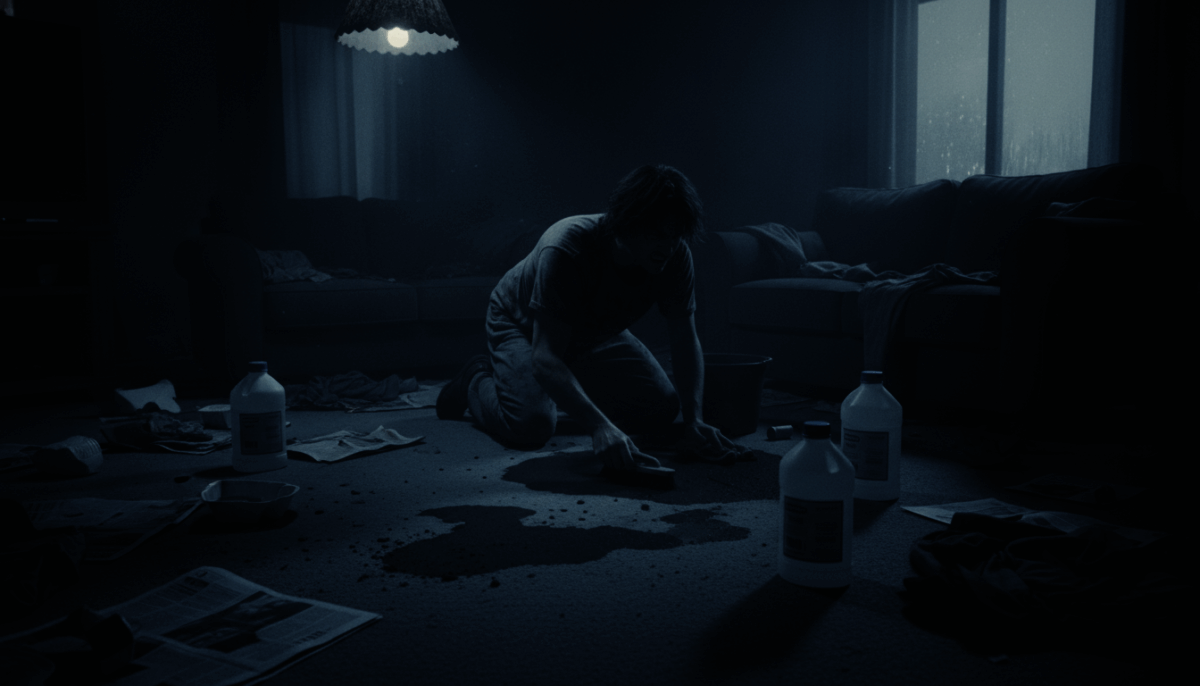
The tipping point for the friendship occurred when I returned home early from a business trip to find my living room transformed into a sorting center. Leo had spilled a bin of ‘pre-processed’ sludge while trying to move it from the balcony to the kitchen for weighing. The smell was indescribable—a mix of fermentation, rot, and something vaguely chemical.
“What the hell is this, Leo?” I shouted, backing away from the slick, brown patches on the hardwood floor. He was on his knees with a roll of paper towels, looking frantic and defensive. He claimed it was an accident, a one-time thing, and that he was on the verge of landing a major contract with a local school district that would allow him to move into a warehouse.
“I’m doing this for us, you know,” he said, his voice rising in panic. “If this works, we could both quit our day jobs. You’re looking at a multi-million dollar industry in the making. All I need is a little more time to scale up. Once I get the warehouse, this will all be a funny story we tell at parties.”
I looked at him, really looked at him, and realized he wasn’t talking about a side hustle anymore. He was talking about a full-time obsession that had blinded him to the reality of our living situation. He had stopped sleeping properly, his eyes were bloodshot, and he had stopped cleaning anything that wasn’t related to the maggots. The ‘shared’ apartment was now an auxiliary facility for his business, and I was just an unsupportive obstacle in his path.
I spent the next three hours scrubbing the floor with bleach while he stood there, watching me and muttering about the loss of ‘beneficial bacteria’ I was killing. That was the moment I realized the boundary had been shattered. I wasn’t his roommate anymore; I was his unwilling business partner in a venture I wanted no part of. I realized then that talking to him was useless—he was deep in a delusional cycle of entrepreneurial fervor.
The Midnight Confrontation
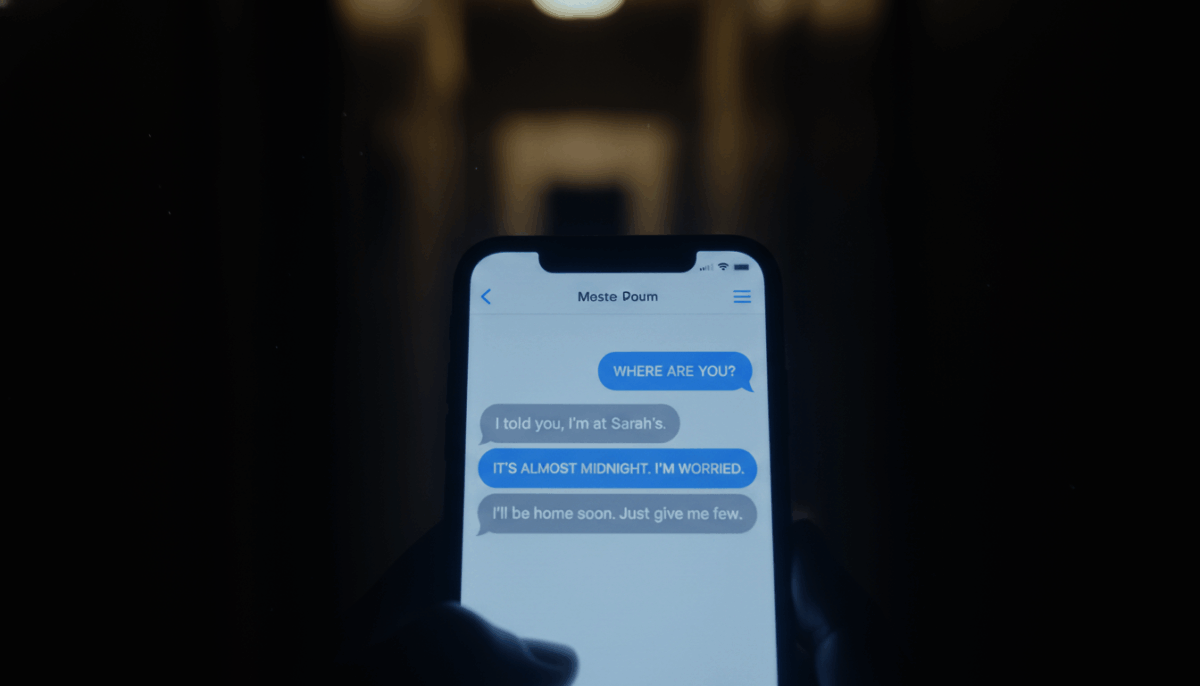
The confrontation didn’t happen in the living room; it happened over a text thread after he brought home a ‘delivery’ of organic waste at 3 AM. The sound of the crates hitting the floorboards woke me from a dead sleep. I walked out to the hallway, not even bothering to put on a robe, and found him stacking crates against the balcony door. The smell was so intense it made my eyes water.
“Leo, enough is enough. This is a residential building, not a waste management facility. You are waking me up, you are destroying the floors, and I cannot breathe in my own home. You need to get rid of this, or I am calling the landlord.”
— Sent at 3:14 AM
“You are so shortsighted. This is the future of sustainable protein! If you report me, you are literally killing a green business. Why do you hate progress? Just go back to sleep. I’ll have it moved by morning.”
— Received at 3:16 AM
The audacity of his response was staggering. He had the nerve to frame his hoarding of decomposing filth as a moral crusade for the environment. I didn’t sleep the rest of the night. I sat in my room, staring at the ceiling, thinking about the consequences of calling the landlord versus calling the city. The landlord was a cheapskate who would likely just raise our rent if he found out, but the fire marshal? The fire marshal was an objective authority on safety.
By morning, the balcony was packed so high that the railing was actually beginning to bow under the weight. It was no longer a question of ‘being supportive’; it was a question of basic safety. The building was a fire hazard waiting to happen, not to mention the potential for disease. I took photos—dozens of them—from every angle. I documented the weight, the smell, and the proximity to the electrical wiring that ran along the exterior of the building.
The Decision to Notify the Fire Marshal
I didn’t call the landlord first. I knew he would tip off Leo or try to handle it in a way that left me liable for the cleanup. I did my research. I found the city’s code for residential property use and waste disposal. What Leo was doing wasn’t just a nuisance; it was a fire code violation and a public health hazard. I felt a cold sense of purpose as I dialed the non-emergency line for the local fire department.
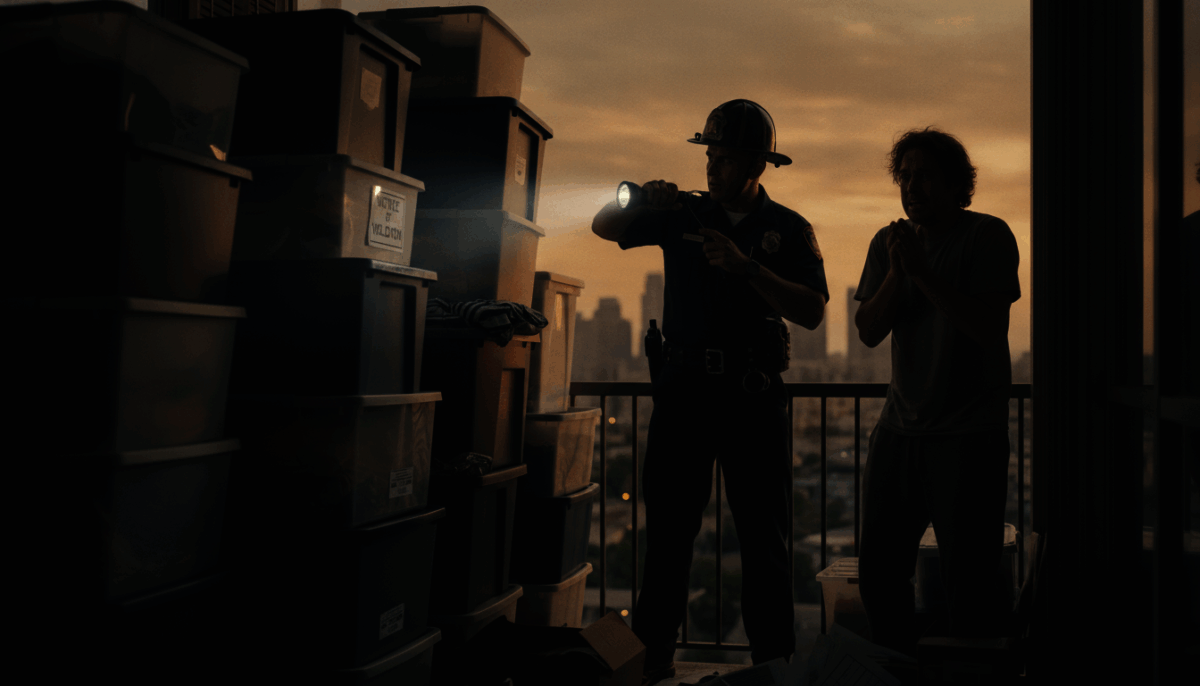
When the inspector arrived, he wasn’t there for a friendly chat. He was a stern man with a clipboard and a nose for trouble. Leo was actually in the middle of a feeding cycle, wearing a hazmat-style apron he’d bought online. The look on his face when he saw the fire marshal standing on our balcony was priceless. It was the look of a man who realized his empire was about to be burned to the ground—figuratively, at least.
“Sir, you have an excessive accumulation of organic matter on a load-bearing structure, blocking emergency egress, and presenting a significant fire and health hazard,” the inspector said, his voice echoing off the brick walls of the balcony. Leo started to stutter about his ‘business plan,’ but the inspector silenced him with a single sharp look. “I don’t care about your business. I care about the fact that this floor could collapse at any second, and the amount of methane gas being produced in these bins is a ticking time bomb.”
I stayed in my room, listening to the entire exchange through the thin walls. Leo tried to defend his ‘circular economy,’ but the inspector was having none of it. He gave Leo a strict ultimatum: clear the balcony within 24 hours, or the unit would be condemned, and the owner would be slapped with fines that would make any business profit look like pocket change. Leo was forced to dismantle his entire operation while the inspector waited, clipboard in hand.
The Massive Cleanup and Financial Fallout
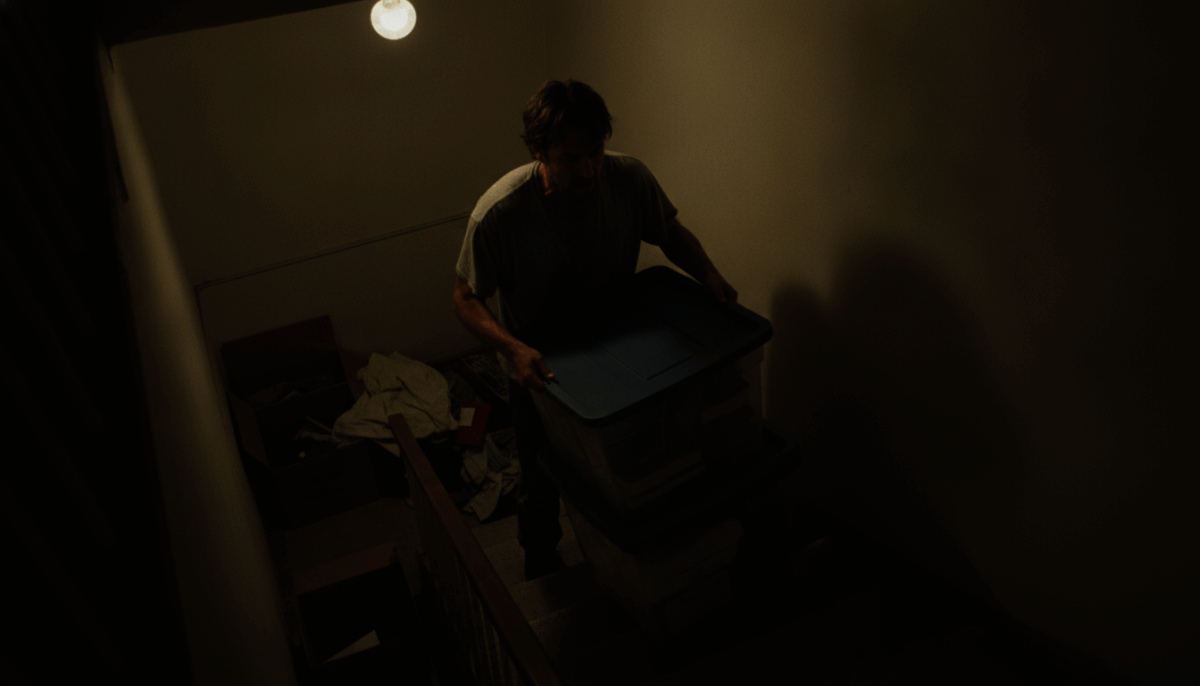
The next 24 hours were the most miserable of my life. Leo refused to pay for professional waste removal, so he had to haul every single pound of maggot-infested sludge down the three flights of stairs himself. The stench followed him everywhere. He was sweating, crying, and cursing my name the entire time. He blamed me for the ‘loss of his livelihood,’ as if I had been the one who invited millions of larvae into our third-floor living space.
He didn’t just have to clear the balcony; he had to scrub the concrete until it was sterilized. The inspector returned the following afternoon for a final walk-through. He found a few lingering larvae in the corner and threatened to escalate the case to the health department if they weren’t gone by the hour. Leo had to go out and buy heavy-duty industrial cleaners, which he begrudgingly did, muttering about how ‘toxic chemicals’ were ruining the work he’d done.
The financial loss for him was significant. He had invested thousands in the bins, the specialized larvae, and the initial setup. He tried to sell the bins to a friend, but nobody wanted to buy used containers that had housed a maggot colony. He ended up throwing them in the dumpster, watching his ‘startup capital’ vanish into the trash. He was furious, completely unable to accept that the disaster was entirely of his own making.
I kept to myself during the whole ordeal. I didn’t help him carry the bins, and I didn’t offer a shoulder to cry on. I had reached my limit. Every time he tried to start a conversation about how I had ‘betrayed the vision,’ I would just walk away. I wasn’t interested in his excuses. I was interested in getting my apartment back to a state where I could breathe without gagging.
The Post-Eviction Social Media Fallout
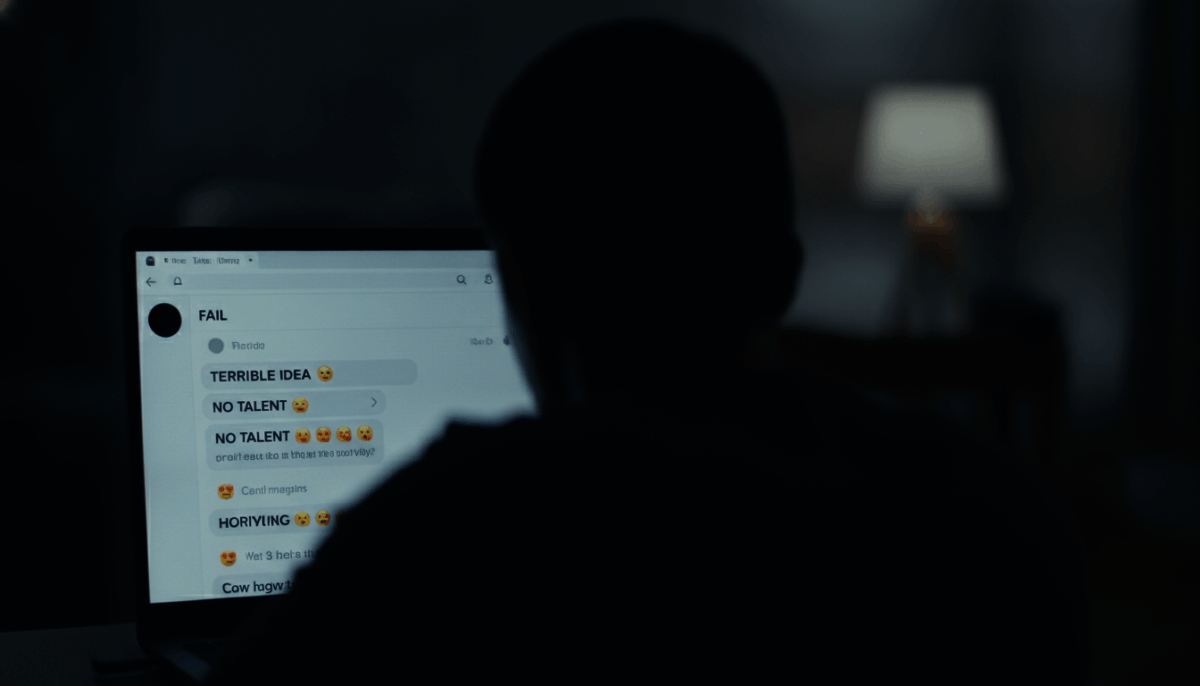
Leo, being the ‘entrepreneur’ he was, took to social media to complain about the ‘corporate-funded fire department’ shutting down his green startup. He posted a long, rambling thread about how the city was suppressing innovation. He didn’t mention the smell, the structural risk, or the fact that he was running a maggot farm on a third-floor balcony. He just painted himself as a martyr for the environment.
His friends, who hadn’t seen the state of the balcony, were all in his comments, offering support and calling the fire department bullies. It was incredibly frustrating to watch, but I decided not to engage. I knew the truth, and eventually, so would everyone else. I didn’t need to win a social media battle; I just needed to move out when our lease ended.
However, one of his friends decided to do some digging. They asked for pictures of the ‘operation’ to help him raise money for a legal fund. Leo, blinded by his desire for validation, posted a photo of the balcony at its peak. The comments shifted immediately. People weren’t impressed by his green initiative; they were horrified by the health hazard. The ‘support’ evaporated in minutes.
“Wait, you were running a maggot farm on a wooden balcony in the middle of the city? That’s not a startup, man, that’s a public health crisis. I’m actually glad the fire marshal shut you down.”
— Top Comment on Leo’s Facebook post
Watching the tide turn was oddly satisfying. The thread went from a sympathetic rally to a roast in record time. He deleted the post within an hour, but the damage to his reputation was done. He tried to come to me and demand I ‘clear his name’ on my own social media, but I just locked my bedroom door and put on my headphones. He was beyond saving.
Reddit Community Weighs In: NTA or ESH?

Naturally, I turned to Reddit to see if I was in the wrong. I posted the story on r/AmITheAsshole, leaving out no details. I wanted an objective assessment of whether my decision to go straight to the fire marshal was too extreme. The response was almost unanimous, though there were a few interesting dissenting voices.
“NTA. You literally saved the building from a structural collapse and potential disease. People who compare ‘entrepreneurship’ to basic hygiene/safety codes are delusional. You did the right thing by going to the authorities.”
— u/SafetyFirstExpert (Top Comment, 32.4k upvotes)
“ESH. You should have tried to talk to him one more time before calling the authorities. Maybe a final warning? Going straight to the fire marshal is the nuclear option. That’s a bridge-burner for sure.”
— u/ConflictAvoider (1.2k upvotes)
The debate in the comments was fascinating. Many people shared their own stories of roommates who had ‘side hustles’ that turned into nightmares, from home-brewing operations that leaked to animal hoarding. It made me feel less alone in the experience. The consensus was clear: you can support someone’s ambition without sacrificing your own safety or the safety of your home.
Reading through thousands of comments helped me process the guilt. I realized that my desire to be a ‘cool, supportive roommate’ was actually enabling his dangerous behavior. By calling the fire marshal, I wasn’t being a bad friend; I was being a responsible adult. The ‘bridge-burner’ argument was interesting, but I realized that a bridge built on maggots and rotting fruit pulp was never going to hold any weight anyway.
The Final Month of Coexistence

The last month of our lease was incredibly awkward. We barely spoke. The air in the apartment felt heavy and cold. Every time I passed him in the hallway, I could feel the resentment radiating off him. He still looked at me like I was the reason his ‘vision’ failed, and I looked at him like he was a ticking time bomb I had successfully defused.
He stopped trying to run the business, but he also stopped cleaning. It was like he was living in a state of suspended animation. He would just sit on the couch, staring at his phone, waiting for the clock to run out. I spent most of my time in my room or at the library, avoiding the apartment as much as possible. I just wanted the lease to end so I could move on with my life.
We had to coordinate the final inspection with the landlord, who was still blissfully unaware of the full extent of the maggot saga. Leo tried to downplay the damage to the balcony, but the fire marshal had left a report that the landlord eventually saw. The deduction from our security deposit was significant, and of course, Leo tried to argue that I should pay half of it since I was ‘part of the household.’ I told him that if he wanted to settle the deposit, I would be happy to include the cost of the professional carpet cleaning and the fire inspection fees in our final tally.
He dropped the argument pretty quickly after that. He knew I had the upper hand, and he knew that if we went to court over the deposit, the full story of his ‘commercial maggot farm’ would become a matter of public record. That was the final nail in the coffin of our roommate relationship. We didn’t even say goodbye on the day he moved out. He left, the apartment was empty, and for the first time in months, I could breathe.
Reflecting on the Boundaries of Roommate Living

Looking back, the biggest lesson I learned was about the importance of early intervention. I spent so much time being the ‘chill roommate’ that I let the situation get completely out of hand. I thought I was being kind, but I was actually being a bystander to my own misery. I should have drawn the line the moment the first bin of rotting pulp entered the front door.
True, he was the one who decided to run a business on the balcony, but I was the one who permitted it. I learned that you cannot negotiate with someone who is blinded by their own ego. If someone is violating your safety or the terms of your living agreement, a firm, immediate boundary is necessary. You don’t owe them an endless supply of patience, especially when your own health and living conditions are on the line.
I also learned about the importance of knowing your local laws. If I had known earlier that what he was doing was a direct violation of the fire code, I would have had more confidence in my decision to act. Ignorance of the rules is what keeps many people in toxic situations. I now keep a copy of my local building codes on my computer, just in case. It’s a bit extreme, perhaps, but it provides a sense of security I didn’t have before.
Ultimately, I am grateful for the experience, as bizarre as it was. It taught me how to stand up for myself, how to trust my intuition when something feels ‘off,’ and how to prioritize my own peace. The maggot farm was a disaster, but it was a disaster that forced me to grow up and define what I will and will not accept in my home. I haven’t seen Leo since, and I’m perfectly okay with that.
Lessons Learned and Moving Forward

If you find yourself in a situation where your roommate is doing something that feels dangerous or illegal, don’t wait for it to ‘blow over.’ It won’t. People who are obsessed with a project, whether it’s a maggot farm or a questionable side hustle, rarely stop on their own. They need an external force to hold them accountable. If that force has to be the fire marshal, so be it.
I’ve since moved into a studio apartment. It’s smaller, but it’s mine. I don’t have to worry about what’s happening on the balcony or what kind of ‘bio-conversion’ project might be lurking in the kitchen. It’s a relief to know that I am the final word on what happens in my living space. It’s a level of control I don’t take for granted anymore.
I often wonder what happened to Leo. Did he ever find his warehouse? Did he give up on the larvae? I saw him mentioned once in a local business newsletter, but he wasn’t doing anything with maggots. He was working at a retail store, looking far less manic than he did during the peak of his ‘initiative.’ Maybe he learned a lesson too, or maybe he just moved on to a different, less invasive obsession.
I’m happy to be out of it. I’ve found that my life is much more peaceful when my living situation is boring. I’ll take a boring, quiet roommate over an ‘entrepreneurial’ one any day of the week. And for anyone else dealing with a roommate who thinks a third-floor balcony is the perfect spot for an industrial operation: take the photo, document the mess, and call the authorities. You aren’t being petty—you’re being safe.
Conclusion
My experience with the maggot farm was a surreal, exhausting, and ultimately necessary chapter in my life. It forced me to confront my own inability to say ‘no’ and taught me the value of protecting my own environment. Sometimes, the most ‘difficult’ choice—calling the fire marshal on a friend—is the only one that preserves your sanity. Life is too short to live with someone else’s chaos, especially when that chaos has a heartbeat and a smell.
I’d love to hear from you all. Have you ever had a roommate with a ‘hobby’ that spiraled out of control? Did you take the diplomatic route or go straight for the nuclear option? Share your stories below—let’s see who had the most absurd living situation!
What's your verdict on this dilemma?
Vote below to contribute to the official community consensus.

Have a Dilemma Keeping You Up at Night?
Share your real-life feud, wedding chaos, or relationship crossroads anonymously with our editorial team.
What do you think ?
0 Comments🛡️ Comments are moderated to protect community integrity. Your comment will appear once approved by the editorial team.