
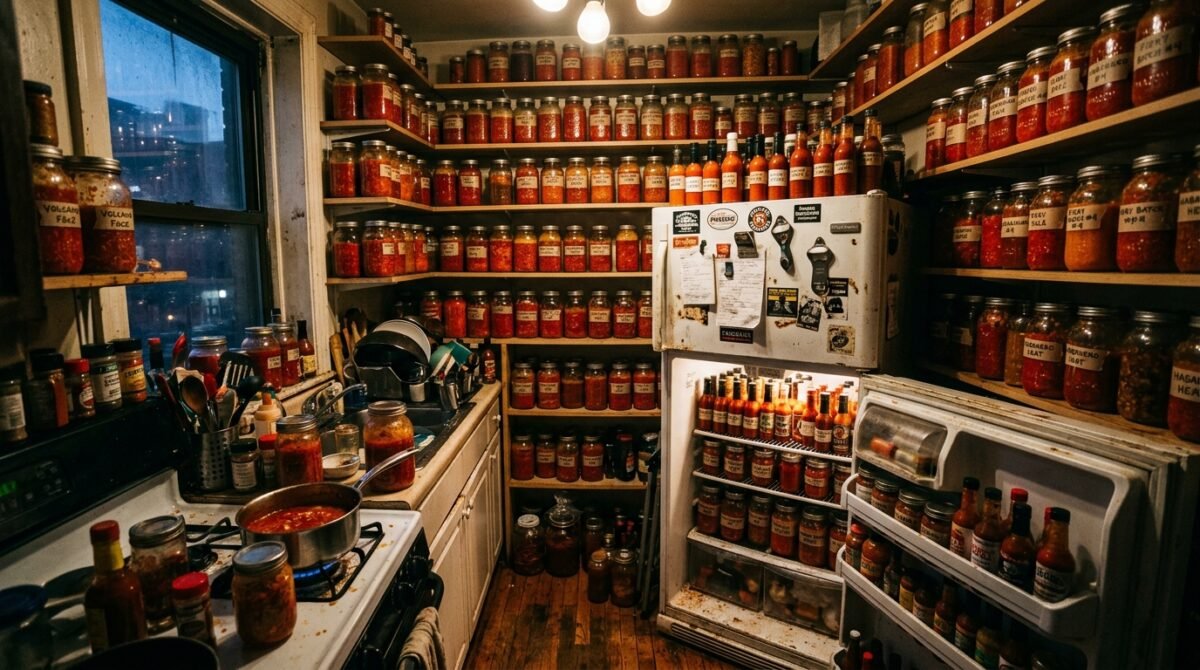
It started as a hobby. Marco, my roommate of three years, decided that he was the next big thing in the artisan condiment world. He spent his weekends sourcing ghost peppers and exotic vinegars, turning our kitchen counter into a makeshift assembly line of glass bottles and pungent fumes. I was supportive at first, even helping him label a few bottles. But then, the hobby metastasized into a full-scale industrial operation that effectively evicted my groceries from our shared living space.
For weeks, I lived off takeout and non-perishables. My milk spoiled because the fridge was packed tight with his ‘small batch’ test runs, and my frozen peas were tossed aside to make room for his oversized bags of fermenting habaneros. It wasn’t just an inconvenience; it was a total takeover of the domestic sphere. The kitchen, once a place for me to unwind and cook, became a humid, spicy-smelling warehouse that I actively avoided.
I brought it up repeatedly. I tried the polite route, the firm route, and eventually the angry route. Each time, Marco brushed me off with a condescending smile, claiming that his ‘investment’ was about to pay off and that I was ‘stifling his creative entrepreneurship.’ He acted as though my basic right to keep my yogurt cold was an act of personal sabotage against his future empire.
The breaking point wasn’t a singular explosion; it was the slow, agonizing realization that I had become a tenant in my own home, paying half the rent to be treated like an unwelcome guest. When he started storing his surplus stock in my designated crisper drawer, I knew the social contract was dead. I had to choose: continue to live in a state of culinary deprivation or take drastic, irreversible action that would inevitably end our living arrangement.
I chose the latter. I didn’t just move his stuff; I killed the power to the one thing he cared about most: the temperature-controlled environment of his fermentation lab. This is the story of the Hot Sauce Siege, the fallout, and why I have absolutely no regrets about pulling that plug.
The Rise of the Habanero Empire
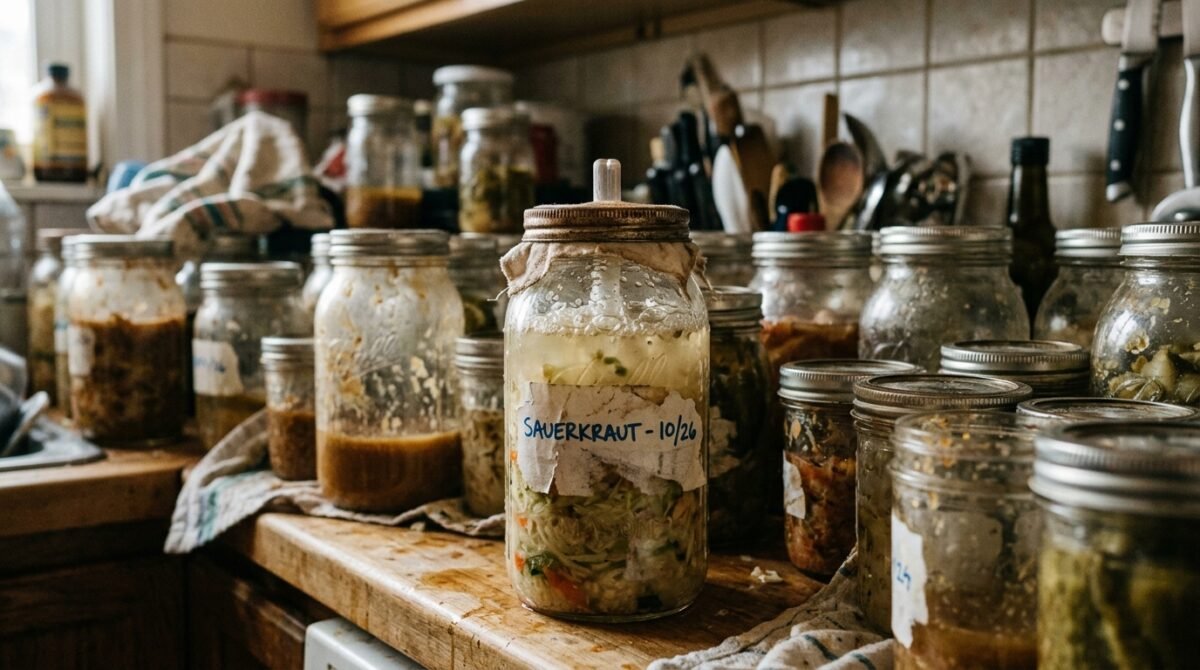
The transformation of our apartment was subtle at first. A few Mason jars on the windowsill, a lingering smell of vinegar, and the occasional mess left on the stovetop. I thought it was just a phase, something he’d get bored of after a few weeks. I was wrong. Marco was obsessed. He started watching YouTube tutorials on ‘probiotic preservation’ and ordering equipment that required industrial-grade cooling. Suddenly, the kitchen wasn’t just a kitchen; it was a laboratory.
Every time I walked into the kitchen to grab a coffee, I was greeted by the sight of rows upon rows of murky liquid bubbling away in glass jars. The smell of fermented garlic and chili pepper became the permanent scent of our home. It wasn’t entirely unpleasant, but it was aggressive. It clung to the upholstery, the curtains, and my clothes. I started smelling like a spicy taco stand before I even left the house for work.
Marco began treating the refrigerator like his personal asset. He started putting color-coded stickers on shelves, marking which areas were ‘for production’ and which were ‘for general use.’ The problem was, ‘general use’ quickly shrank to a tiny corner of the top shelf, barely enough room for a carton of eggs and a bottle of soda. He told me, with a straight face, that the commercial demand was growing and he needed to maintain a ‘consistent cold chain’ for his inventory.
“Look, man, this is a business. If I don’t maintain the fermentation temperature, the whole batch goes south. You’re literally costing me money by asking for more shelf space.”
— Marco, ignoring my request for space
I felt a strange sense of gaslighting every time we spoke about it. He acted like I was the one being unreasonable for wanting to store my own food in the apartment I was paying half the rent for. He would point to the success of his local farmer’s market stalls as if that somehow superseded our lease agreement. It was the arrogance of a burgeoning entrepreneur who believed his vision was more important than basic human courtesy.
I started keeping my produce in my bedroom. I had a small cooler bag I kept under my desk, which felt insane. I was living in a modern urban apartment, but I was managing my groceries like a college student in a dorm room. My anger wasn’t just about the fridge; it was about the lack of respect. He didn’t see me as a roommate; he saw me as an obstacle to his potential wealth.
The Inevitable Kitchen Confrontation
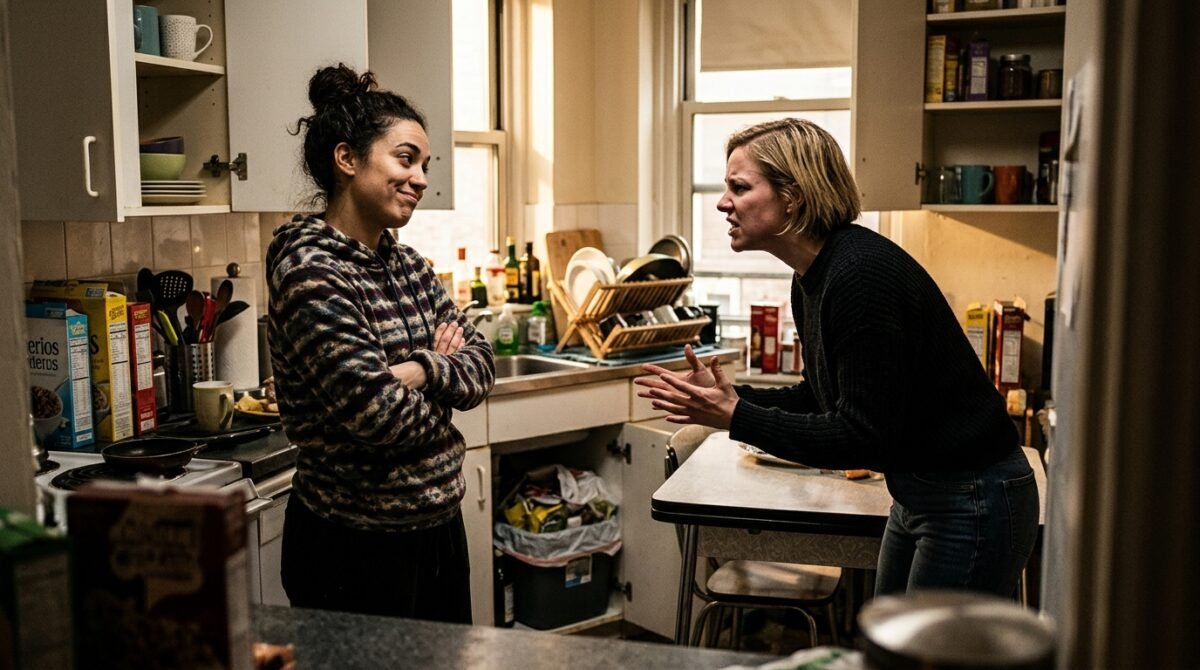
The confrontation happened on a Tuesday night. I had just come home from a long shift, starving and dreaming of the leftovers I had intended to eat. I opened the fridge, and to my absolute horror, my Tupperware container of pasta was gone. In its place sat four massive, gallon-sized carboys of some neon-orange hot sauce blend. I could feel my blood pressure spiking instantly.
I marched into his room without knocking, finding him hunched over his laptop, likely designing labels or tracking sales metrics. I didn’t care about his ‘deep work’ phase. I gestured toward the kitchen, my voice trembling with suppressed rage. I told him that my food was gone and that he had officially crossed the line. He barely looked up, sighing as if I were a child interrupting his genius.
“I moved your food, it’s in the pantry. You don’t need to be so dramatic. That batch needs to be chilled immediately or the cultures die. It’s an investment, dude. Think about the ROI.”
— Marco, failing to understand the concept of living together
I laughed, a short, sharp sound of disbelief. I told him that I wasn’t an investor and that I didn’t care about his return on investment. I told him that my pasta was my dinner, not a casualty of his ‘business’ war. I reminded him that we shared this space equally and that he had effectively monopolized the only piece of major appliance equipment we had. He stood up, looking down at me with a mixture of pity and annoyance.
The argument escalated quickly. He started listing the costs of his ingredients—the imported peppers, the specialty vinegar, the glass bottles. He acted as if these costs entitled him to a larger portion of our communal life. I told him if he wanted a commercial kitchen, he should rent one. He told me I was small-minded and that I lacked the drive to succeed in life. That was the moment I realized we were no longer friends.
I walked away because I knew that if I stayed, I would say something I couldn’t take back. I went to my room and sat in the dark, listening to the hum of the refrigerator. It sounded different now. It sounded like an intruder. I realized that my own passivity had enabled this for far too long. He wasn’t going to change his behavior because he didn’t respect me. And if he didn’t respect me, why should I respect his ‘business’?
The Unplugging Heard ‘Round the Apartment
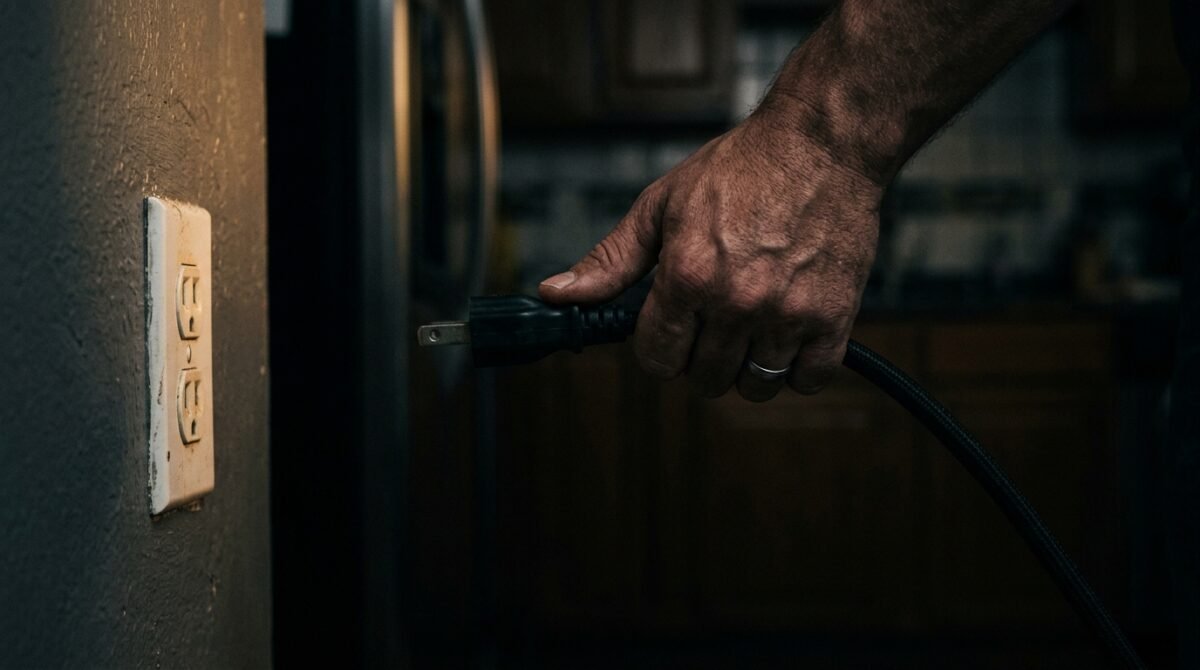
It wasn’t a heat-of-the-moment decision. I waited until he went out for his Friday night ‘networking event’ at a local dive bar. I walked into the kitchen, the humming of the fridge feeling like the heartbeat of his operation. I looked at the temperature gauge he had taped to the door. It was set perfectly to keep his ferments happy. I reached behind the appliance, felt for the thick black cord, and with a swift, decisive motion, pulled the plug from the wall.
The silence that followed was deafening. The hum died, and for the first time in months, the kitchen felt like a normal space again. I didn’t throw his stuff away—that would have been vandalism. I just let it sit there. Without power, the temperature would slowly drift, the fermentation would accelerate, and the delicate balance of his ‘secret recipe’ would inevitably be ruined. It was a silent, scientific sabotage.
I left a note on the counter. It was polite, almost robotic. I told him that the fridge was acting up and I had unplugged it to prevent an electrical fire, and that I wouldn’t be able to plug it back in until he cleared out his personal inventory. I knew it was a lie, and I knew he knew it was a lie. I felt a sense of liberation that I hadn’t experienced in years. I had taken back my territory.
“Hey, the fridge started making a weird sparking sound. For safety, I’ve unplugged it. Please move your stuff out so we can see what’s wrong with it. I’m not plugging it back in until it’s empty.”
— The note I left on the counter
I spent the night in my room, listening for his return. When he came in around 2:00 AM, there was a long, awkward silence. Then, a sharp intake of breath. He must have opened the fridge and realized the cold was already fading. He didn’t come to my door. He didn’t scream. He just paced the living room for twenty minutes before retreating to his bedroom. The tension in the house had reached a breaking point.
I slept soundly that night. I knew the morning would be ugly, but I also knew that the power dynamic had shifted. He had been so sure of his authority that he never imagined I would actually push back. He thought I was just a background character in his success story. I had proven that I was the one who held the real power, if only because I was willing to sacrifice a little convenience for the sake of setting a hard boundary.
The Morning After: A Sour Discovery
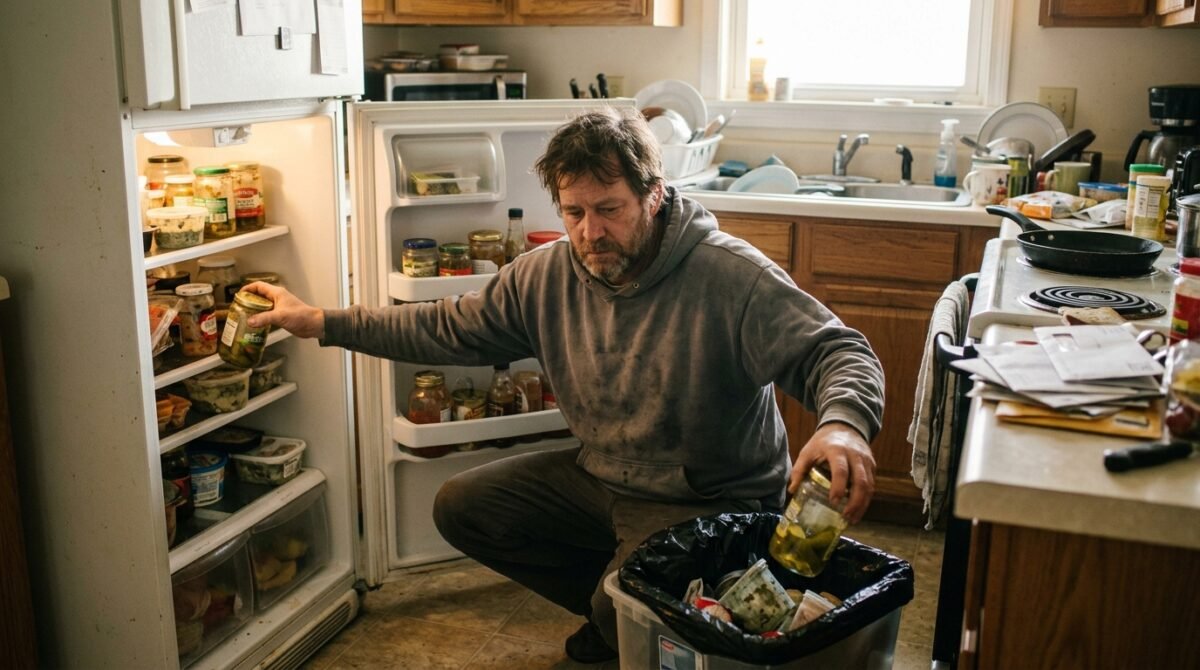
The morning sun hit the kitchen and revealed the extent of the damage. Marco was standing in front of the fridge when I walked in to get a glass of water. He looked haggard, his eyes bloodshot, his hands trembling. He looked inside the fridge, where the temperature had obviously risen. A few of the jars had begun to foam over the lids, leaking a pungent, sour mixture onto the shelves. The smell was intense—a mixture of rotting vegetables and aggressive spice.
He turned to me, his face a mask of pure, unadulterated rage. He didn’t speak at first. He just gestured to the mess, the ruined batches, and the dark, silent refrigerator. He asked me, very quietly, if I realized how much money I had just cost him. He started reciting figures—the cost of the peppers, the labor, the lost potential sales. He was treating this like a corporate litigation issue rather than a roommate dispute.
“Do you have any idea what you’ve done? That’s three weeks of work. That’s five hundred dollars in ingredients. You’re going to pay for every single cent of that, or I’m calling the cops.”
— Marco, spiraling after his failed business venture
I didn’t blink. I told him he could call whoever he wanted, but he was the one who had occupied 90% of a shared appliance without a rental agreement or prior consent. I told him that the ‘sparking’ was a safety concern, and if he wanted to pursue damages, he was welcome to explain to a judge why he was running a commercial food processing plant in an apartment zoned for residential use.
That hit him like a brick. The look on his face shifted from rage to panicked calculation. He knew I was right. Our lease explicitly prohibited ‘business activities’ on the premises. If the landlord found out, we’d both be out on the street, but he would lose his entire operation. He realized that his threat of calling the police was the fastest way to get himself evicted. He slumped against the counter, defeated.
He spent the next two hours frantically cleaning out the fridge, throwing away his ‘investments’ into the trash. It was a sad sight, but I couldn’t bring myself to feel bad. He had brought this on himself by pushing the boundaries too far. He hadn’t just used the fridge; he had used me. Watching him throw away those bottles was watching the end of a delusion.
Community Perspectives: The Reddit Verdict

I knew I needed a sounding board, so I posted the story to a popular subreddit dedicated to roommate disputes. I didn’t expect much—maybe a few people saying I was an asshole for being petty. But by midday, the post had blown up. Thousands of people had weighed in, and the consensus was surprisingly supportive. It turns out, I wasn’t the only one who had dealt with an entitled ‘entrepreneur’ roommate.
People were analyzing the situation from every angle—legal, social, and moral. Some were horrified that I had destroyed his product, while others felt that it was the only way to communicate with someone who clearly didn’t respect basic boundaries. It was fascinating to see the debate unfold in real-time, with strangers providing a much-needed perspective on my own behavior and Marco’s entitlement.
“NTA. Your roommate decided that his ‘hustle’ was more important than your right to use your own kitchen. You didn’t steal his business, you just stopped subsidizing it with your own rent money. He was essentially using you as an investor who didn’t get a cut of the profits.”
— u/KitchenWarrior88 (Top Comment, 18.2k upvotes)
“ESH. He’s definitely in the wrong for taking over, but unplugging a fridge full of food (even if it’s his) is a nuclear option. You could have just cleared it out and put his stuff on the counter. You escalated this into a war, and now you have to live with the fallout.”
— u/NeighborlyAdvice (1.4k upvotes)
Reading the comments helped me realize that there was no clean way to handle this. When one party stops playing by the rules, the other party is inevitably forced into a position of escalation. The ‘nuclear option’ I chose was definitely extreme, but was there any other way to get his attention? I had tried talking. I had tried being reasonable. The reality was that he didn’t care about my comfort; he only cared about the consequences when they were forced upon him.
The thread became a repository for other horror stories. People shared tales of roommates who turned living rooms into gyms, bathrooms into dog grooming parlors, and kitchens into bakeries. It was validating to know I wasn’t alone in this. But it also made me realize that I needed to change my own living situation. No matter who was ‘right’ or ‘wrong,’ the trust in our living arrangement was permanently shattered.
The Silent Treatment and the Lingering Stench
The days following the ‘fridge incident’ were excruciatingly silent. We stopped talking altogether. We would pass each other in the hallway like ghosts, avoiding eye contact. The air in the apartment felt thick, heavy with the weight of things unsaid. The kitchen still smelled like vinegar and fermented peppers, a haunting reminder of the ’empire’ that had just collapsed.
I started looking for a new place. I knew I couldn’t stay here, even if he moved out. The memory of the conflict, the smell, the way he looked at me—it was all too much. I needed a clean break. Marco, meanwhile, seemed to have retreated into a shell. He spent his time in his room, and I would hear him occasionally talking on the phone, likely complaining to whoever would listen about his ‘unsupportive’ roommate.
I kept wondering if I should apologize. Was I wrong? I had destroyed his product, which was the result of a lot of hard work. But then I’d look at the kitchen—the empty fridge, the clean counter—and I’d remember how I felt when I couldn’t even keep a carton of milk in the fridge. I remembered the feeling of being an intruder in my own home. My resentment was stronger than any guilt I felt.
“I don’t think you’re wrong for wanting space, but I think you’re both acting like children. This is a communication failure that turned into a power struggle. Move out, get your own space, and stop acting like this is a war.”
— Advice from a friend I told about the situation
I realized my friend was right. We were both acting like children. He was acting like a petulant business mogul, and I was acting like a vengeful saboteur. We had both failed to maintain the maturity required to live together. The conflict hadn’t brought out the best in either of us. It had simply revealed how much we had grown apart, not just as roommates, but as people.
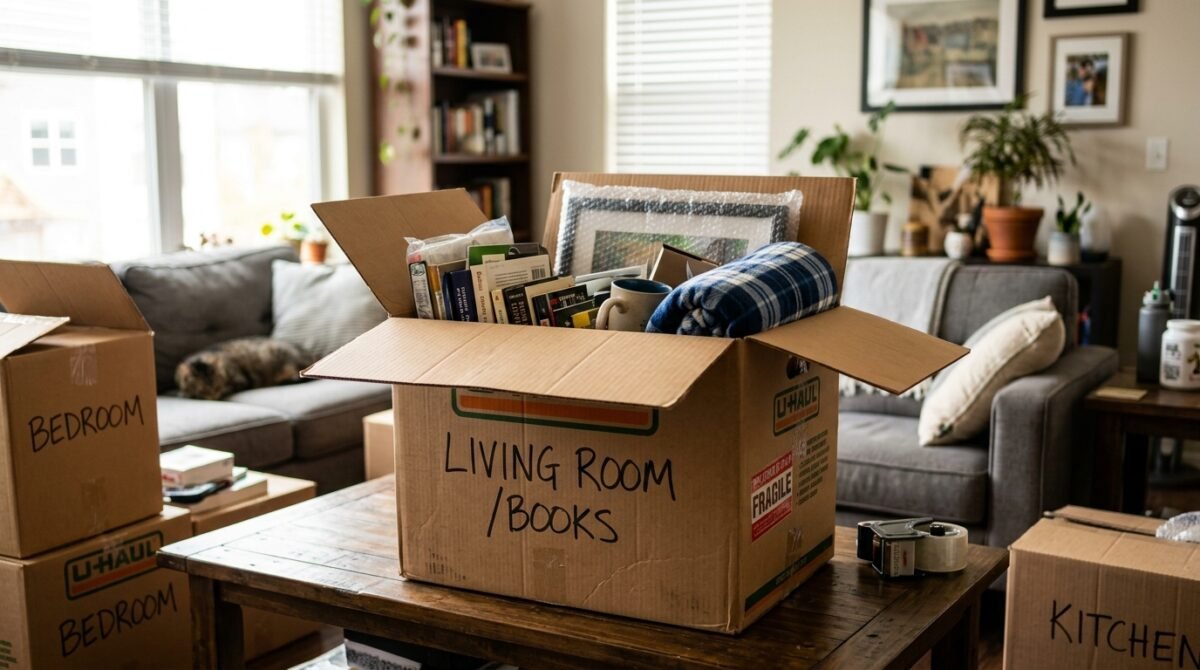
I started packing my things, one box at a time. It felt like I was unwinding three years of my life. I didn’t want to leave on bad terms, but I didn’t see any other way. The ‘hot sauce incident’ was just the catalyst for a change that was already long overdue. We were two ships passing in the night, and I was finally steering my ship away from the collision.
The Final Confrontation: Moving Day
Moving day was as awkward as you’d expect. I was hauling my boxes to the elevator, and Marco stood by the kitchen doorway, watching me. He didn’t offer to help. He didn’t ask me to stay. He just watched, his arms crossed, a look of cold indifference on his face. I stopped for a moment, thinking I should say something—a goodbye, an apology, a wish for him to succeed with his business in a more appropriate space.
I looked at him, really looked at him, and realized that he was already gone. He wasn’t the guy I had moved in with three years ago. He was someone who had become so obsessed with his own ambition that he had lost the ability to treat people with basic human decency. I decided not to say anything. There was nothing left to say that wouldn’t just lead to another argument.
“I hope you find a place where you can run your business. And I hope you find a roommate who doesn’t mind the smell. Good luck, Marco.”
— My final words to him
He didn’t even respond. He just nodded, once, and turned back to the kitchen. I realized then that he didn’t care about me, and he never had. I was just a utility, a means to an end, and now that the utility was gone, he didn’t have any further use for me. The lack of emotional closure was hard, but it was also a form of clarity.
I walked to the elevator, the heavy boxes of my life in my hands, and I felt lighter with every step. The apartment was behind me. The stress, the tension, the smell of fermenting peppers—it was all in the past. I was walking into a new chapter, one where I wouldn’t have to apologize for existing in my own home.
As I loaded my car, I caught a glimpse of him through the window. He was already pulling out a new jar from a box, his eyes bright with that familiar, obsessive fire. He was ready to start again. And that was okay. He was allowed to be an entrepreneur, and I was allowed to leave. We just weren’t allowed to occupy the same space anymore.
Financial Reckoning: Who Paid the Price?

Looking back at the finances, the situation was even more absurd. We had split our expenses equally for three years, but the last six months had been a lopsided affair. I was paying for half the electricity that was constantly running a commercial fridge, and I was effectively paying for his storage space. I ran the numbers after I moved out, and the amount was staggering.
I calculated the cost of the extra electricity, the loss of my own groceries that spoiled, and the sheer mental toll of the situation. It wasn’t just about the money; it was about the equity. I had invested in a roommate relationship, and I had received a stressful, toxic environment in return. I wasn’t just losing a roommate; I was reclaiming my life.
| Category | My Contribution | His Contribution |
|---|---|---|
| Rent | 50% | 50% |
| Utilities | 50% | 50% |
| Fridge Space | 10% | 90% |
| Sanity | 100% | 0% |
The table above doesn’t even begin to capture the nuance of the situation. It shows the imbalance of resources, but it doesn’t show the emotional exhaustion of living in a state of constant conflict. I was paying for his business to succeed at the cost of my own comfort. And he was benefiting from my passivity without ever acknowledging it. It was a classic case of exploitation in a domestic setting.
I didn’t try to get the money back. I saw it as the price of admission for a lesson I needed to learn. I had to learn how to set boundaries, how to advocate for myself, and how to recognize when a relationship—or a living arrangement—was no longer sustainable. I had lost some money, but I had gained a level of self-respect that was far more valuable.
If I could do it all over again, I would have put my foot down on day one. I would have said ‘no’ to the first jar on the shelf. I would have had a serious, mature conversation about boundaries before the kitchen turned into a lab. But I didn’t. I waited, I hoped, and I suffered. And that’s the real lesson: you can’t wait for the other person to change. You have to be the one to change the situation.
Reflections on Boundary Setting

Living with someone is one of the most intimate experiences you can have outside of a romantic relationship. You share your most basic needs—food, sleep, sanitation. When those boundaries are violated, it feels like a personal attack. And when you don’t enforce those boundaries, you’re telling the other person that it’s okay to treat you that way. That was the hardest realization for me.
I spent so much time blaming Marco for his selfishness that I forgot to look at my own role in the dynamic. I was the one who said ‘fine’ when he asked for more space. I was the one who ignored the warning signs, hoping that he would eventually see the light. I was the one who let myself be treated like a secondary character in my own home. My passivity was a choice, and it was a choice that had consequences.
Setting boundaries isn’t about being mean or controlling. It’s about defining what you need in order to feel safe and respected. And it’s about being willing to communicate those needs, even when it’s uncomfortable. I didn’t know how to do that back then, but I do now. I learned that you don’t need permission to prioritize your own well-being.
“Boundaries aren’t walls to keep people out; they’re fences to define your own space. If someone keeps climbing over your fence, you don’t just ask them to stop—you build a higher fence or you move to a different yard.”
— A piece of advice I read online that resonated deeply
I’ve moved into a new place now, and it’s a quiet, peaceful sanctuary. I have my own fridge, my own space, and no one is fermenting anything in my kitchen. It’s a boring, wonderful life. And every time I open the fridge and see that I have all the space I need for my own groceries, I feel a sense of peace that I never could have appreciated before.
Marco is doing his thing somewhere else, and I wish him the best. I hope he finds success, and I hope he learns how to treat people better. But that’s no longer my problem to solve. I’ve moved on, and I’ve learned that the most important space you ever need to protect is the one inside your own head.
The Aftermath: Where I Stand Today

It’s been six months since I moved out, and life is completely different. I still think about the ‘hot sauce incident’ from time to time, but the sharp edges of the anger have faded. I don’t feel the need to justify my actions anymore. I did what I had to do, and I’m in a much better place because of it. I’ve learned that some people aren’t meant to live together, no matter how good the original plan seemed.
I haven’t talked to Marco since that final day. I don’t know if his business ever took off or if he’s moved on to something else. And honestly, I don’t care. That part of my life is over. I’ve focused on building a life where I’m in control, where I surround myself with people who respect my boundaries, and where I don’t feel like I’m constantly compromising my own comfort.
I’ve realized that the ‘hot sauce drama’ wasn’t really about the hot sauce. It was about the way we communicate, the way we respect (or don’t respect) each other, and the way we handle conflict. I was a person who avoided conflict at all costs, and he was a person who pursued his goals regardless of the cost to others. Those two personalities were never going to thrive in the same kitchen.
I’ve been sharing my story with friends, and it’s been fascinating to see how many people have had similar experiences. It seems that roommate conflicts are a universal rite of passage. But I hope that by sharing my story, I can help someone else who might be in the same situation. If you’re living in a home that feels like a battleground, know that you have the right to change it.
Don’t wait until you’re forced into a nuclear option. Speak up early, communicate your needs clearly, and be prepared to make the hard decisions if those needs aren’t met. Your space, your time, and your sanity are worth more than any convenience. And sometimes, the only way to win is to walk away from the table entirely.
Conclusion
The story of the hot sauce monopoly is a reminder that domestic harmony is a fragile thing, built on the foundation of mutual respect and clear communication. When those elements are missing, even the smallest issues—like fridge shelf space—can escalate into a conflict that destroys relationships. I learned the hard way that you cannot force someone to respect your boundaries; you can only enforce them yourself.
What about you? Have you ever had a roommate who took over your home for their ‘hustle’ or hobby? Did you find a way to compromise, or did you have to take the path I did? Let’s discuss in the comments below. Is it ever okay to resort to ‘nuclear’ options like unplugging a shared appliance, or is there always a better way to handle the tension?
Share your stories, your advice, and your perspective on the line between entrepreneurship and entitlement in a shared living space. I’m looking forward to hearing your thoughts and learning from your own experiences. The community is the best place to find the wisdom I wish I had before the drama began.
What's your verdict on this dilemma?
Vote below to contribute to the official community consensus.

Have a Dilemma Keeping You Up at Night?
Share your real-life feud, wedding chaos, or relationship crossroads anonymously with our editorial team.
What do you think ?
0 Comments🛡️ Comments are moderated to protect community integrity. Your comment will appear once approved by the editorial team.