
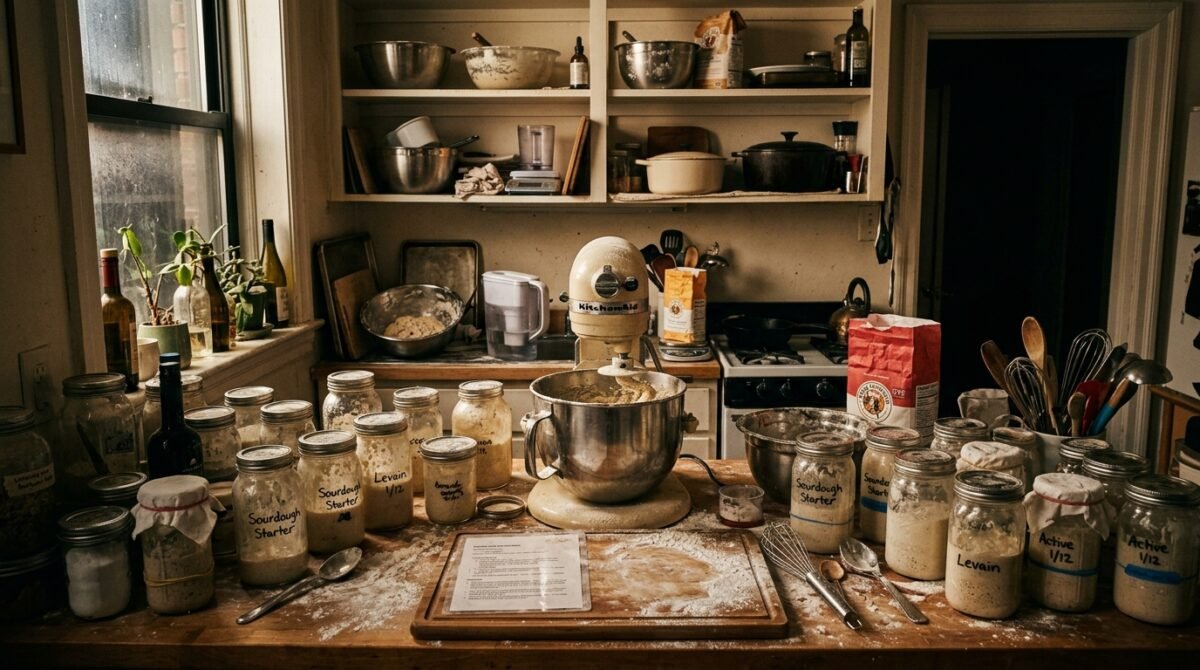
Living with roommates is supposed to be a symbiotic arrangement. You split the rent, share the communal utilities, and hopefully, keep the peace in the common areas. For the first six months, everything with Sarah was perfect. She was quiet, clean, and paid her half of the rent on the first of the month without fail. Then, the sourdough phase began. It started with a single jar of starter on the counter, a harmless hobby that yielded a loaf or two a week. I didn’t mind; in fact, I enjoyed the occasional slice of fresh bread.
But the hobby quickly metastasized. Sarah decided that her ‘artisan’ skills were destined for local markets and Instagram fame. She didn’t consult me. She didn’t ask if the electrical grid of our aging apartment could handle three industrial-grade ovens and a commercial stand mixer. She simply took over. By the third month, the kitchen was no longer a shared living space—it was a production line. My own cookware was shoved into the back of a cabinet, replaced by sheet pans, heavy-duty cooling racks, and the omnipresent, suffocating smell of yeast and fermentation.
The moral dilemma didn’t fully manifest until the utility bills arrived. The first month, the electric bill was triple its normal amount. The second month, it was quadruple. When I brought this up, Sarah laughed it off, suggesting it was just ‘the cost of growth.’ That was when I realized this wasn’t just a roommate being messy; it was a business owner exploiting her living arrangement as a subsidized production facility. I was literally funding her startup through my portion of the electric bill.
I tried to set boundaries. I tried to schedule kitchen time. I even printed out a calendar for us to manage who was cooking when. But Sarah treated the kitchen like it was her private property. She ignored my texts, left flour on every surface including the living room rug, and eventually, started using my personal pantry space to store her ingredients. The situation reached a breaking point one Tuesday afternoon when I came home to find a delivery driver leaving five fifty-pound bags of flour in the hallway, blocking the front door entirely.
This is the story of how I reached my breaking point, how I made the decision to lock the pantry, and how I eventually walked away from a lease that had become a prison. It is a story about the boundaries of friendship, the audacity of entitlement, and the moment you realize that some people will burn your house down just to keep their own ovens warm.
The Initial Flour Dusting of Our Common Space

It started innocently enough. Sarah would bake on Sunday afternoons, listening to podcasts and filling the apartment with the comforting scent of yeast. As a roommate, I was happy to act as a taste tester for her experiments. Everything felt communal. I figured if she was happy, the vibes in the apartment would remain positive. I didn’t think twice when she bought a second cooling rack or a more specialized flour sieve.
However, the transition from hobbyist to commercial enterprise happened with alarming speed. Within weeks, the counter was completely covered in plastic tubs, proofing baskets, and bags of specialty grains. I found myself having to move her equipment just to make a cup of coffee in the morning. When I mentioned it to her, she had a ready answer, acting as if my request for space was unreasonable.
“I’m just trying to get these orders out for the local market, can’t you just use the microwave for your coffee? You’re being a bit dramatic about a few cooling racks.”
— Sarah, responding to my request for counter space
The disregard for shared space was absolute. It wasn’t just the kitchen; the flour dust started settling on the television, the bookshelves, and even the clothes in my closet. I spent my weekends cleaning up her messes instead of relaxing. I became a reluctant janitor for a business I didn’t own and from which I received zero profit.
The lack of consideration was staggering. Sarah began inviting her ‘business partners’ over—mostly friends she had roped into helping with packaging—during weekday evenings when I was trying to work. My apartment, my sanctuary, became a chaotic workshop. I started retreating to my bedroom, closing the door and wearing noise-canceling headphones just to get a moment of peace.
I tried to explain how this was impacting my mental health and my living situation. She consistently pivoted, telling me that once she made her first thousand dollars, she would pay for a professional cleaning service. She never did, of course. The money she made was always reinvested into more equipment, never into the household she was actively disrupting.
The tension grew thick. Every time I walked into the kitchen, I felt a spike of adrenaline, waiting to see what new obstacle she had placed in my path. The once-friendly dynamic was replaced by a cold, calculating resentment. I knew then that the arrangement was unsustainable, but I was still tied to the lease, unable to see a way out without losing my security deposit.
The Triple Digit Utility Bill Reality Check
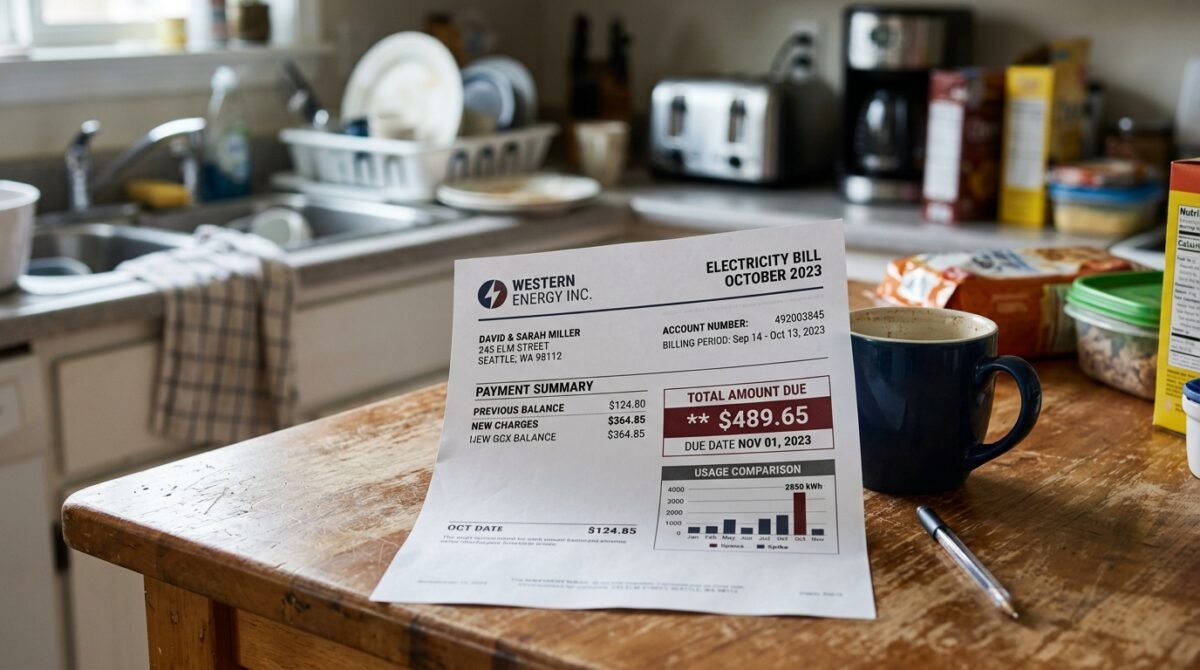
The month the power bill arrived was the moment the scale tipped from frustration to pure anger. Our bill, usually around $120, had skyrocketed to over $500. I stared at the paper in disbelief, assuming there had been a mistake by the utility company. I checked the meter, I checked our usage, and then I realized: the oven had been running nearly twenty-four hours a day for three weeks.
I confronted Sarah in the living room, holding the bill like a weapon. She didn’t even look up from her phone. Her nonchalant attitude toward the financial burden she had placed on me was the final nail in the coffin for our friendship. She essentially told me that I was ‘paying for the privilege’ of living with an entrepreneur.
“It’s just electricity. You’re making such a big deal out of nothing. We split the bills, that’s how it works. If you want to save money, go sit in the dark.”
— Sarah, during the first confrontation about the utility costs
I felt a deep sense of betrayal. This wasn’t about the money alone; it was about the lack of respect. She felt entitled to use my resources to build her future while I was left to shoulder the consequences. It became clear that she didn’t see me as a roommate, but as a silent investor—a venture capitalist who hadn’t agreed to the investment.
I started tracking the hours she spent in the kitchen. I created a spreadsheet, logging every hour the oven was on and every hour she spent monopolizing the workspace. The data was damning. She was using the kitchen for an average of 60 hours a week for commercial production, essentially running a high-intensity baking facility in a residential unit that wasn’t zoned for it.
I brought the spreadsheet to her, hoping a visual representation of her consumption would trigger some level of guilt or accountability. Instead, she mocked me. She called me ‘obsessive’ and ‘controlling.’ She told me I was ruining her creative process by trying to quantify it. It was classic gaslighting, designed to make me feel like the crazy one for wanting to live in a functional apartment.
The realization hit me hard: she wasn’t going to stop. She was emboldened by my previous tolerance. Because I hadn’t put my foot down earlier, she believed she had a permanent right to the space. I realized that the only way to get her attention was to start cutting off the resources she had grown accustomed to exploiting.
The Pantry Lockdown Strategy
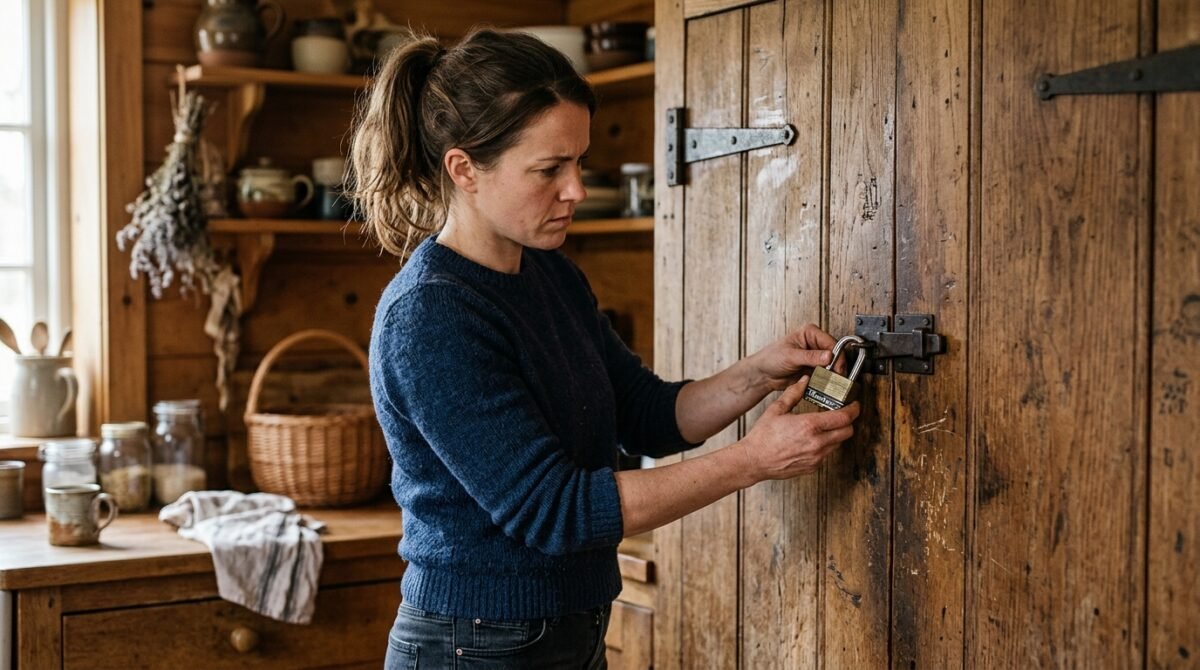
It started as a small, symbolic move, but it quickly became my primary tactic. I bought a heavy-duty pantry cabinet with a built-in key lock. I moved all my non-perishable goods, my expensive spices, and my personal cookware into this unit. I locked it every time I stepped out of the room, and I kept the key on a carabiner attached to my belt loop.
The look on Sarah’s face when she realized she couldn’t access my shelves to ‘borrow’ my olive oil or my artisan sea salt was priceless. She tried to pry it open once, but the metal was too thick. She demanded I give her a copy of the key, claiming that in an emergency, she might need something from my pantry. I laughed in her face and told her that if she needed salt for her business, she should buy it herself.
“You’re really going to lock your spices away? How are we supposed to live like this? You’re creating a hostile environment for a business that helps the neighborhood.”
— Sarah, realizing she had lost access to my supplies
She tried to frame her entitlement as a community service, acting as if her sourdough business was a charity. She told our mutual friends that I was trying to sabotage her ‘livelihood.’ It was pathetic to watch her try to turn people against me, but I didn’t care. I was done being the enabler. My pantry was now a fortress, and it felt incredible.
The dynamic in the apartment shifted. She could no longer use my supplies to bake her goods, which meant she actually had to start spending her own money on high-quality ingredients. Her profit margins tanked, and she suddenly had a lot less money to spend on her ‘business expansion.’ It was a small victory, but it felt like the first time I had control over my own life in months.
She retaliated by leaving her dirty baking sheets in the sink for days, hoping to annoy me into submission. I didn’t budge. I bought a small dish tub, put all of her crusty, flour-covered pans into it, and placed it right in front of her bedroom door. If she wanted to be messy, she could live with the mess in her own private space. The message was clear: stay in your lane.
Our communication dropped to almost zero. We only spoke to exchange cold, functional sentences about rent or specific logistics. The air in the apartment was heavy, but for the first time, it didn’t smell like burning flour. It smelled like boundaries, and to me, that was the sweetest scent of all.
The Secret Group Chat Revelation
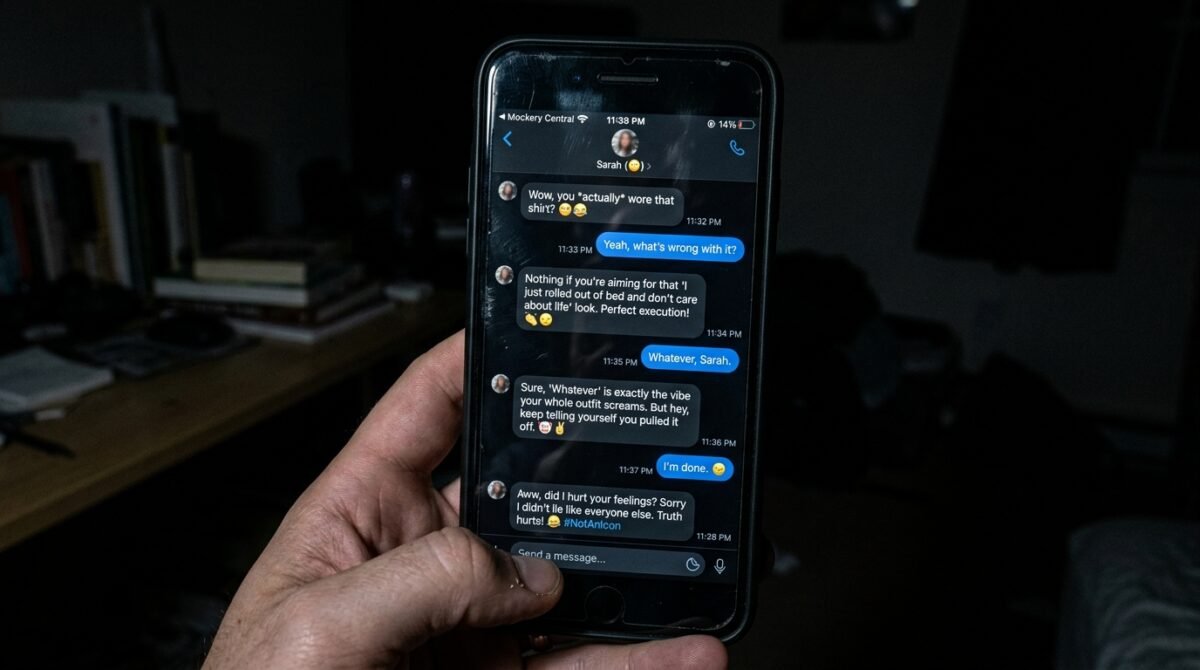
The real turning point came when I accidentally saw a notification on her tablet while she was in the shower. She had left it logged into a group chat called ‘Bakery Dream Team’ with her friends. Out of pure curiosity—and perhaps a bit of justified paranoia—I took a quick look. What I saw made my blood run cold. They weren’t just discussing recipes; they were discussing how to ‘deal with the roommate’ who was making things difficult.
“The roommate is being such a brat about the oven. Does she not realize this is going to pay for our summer trip? Just keep using the oven at night, she’s too timid to actually do anything about it.”
— Sarah in a group chat, revealing her true intentions
The realization that my struggle was being treated as a joke by her and her friends was devastating. They weren’t just exploiting my kitchen; they were actively plotting to ignore my concerns and continue the exploitation. They saw me as a pushover who would eventually give in if they just pushed hard enough. The mask had completely slipped, and I finally understood that there was no reasoning with her.
I took screenshots of the entire conversation. I didn’t confront her immediately. I waited, gathering my evidence. I needed to know exactly what I was up against before I made my next move. It turned out they had been planning to ‘increase production’ even further during the holidays, which would have meant even more chaos in our shared space.
I felt a strange sense of calm after reading those messages. The ambiguity was gone. There was no more hoping she would change or that she would eventually realize she was being unfair. She knew exactly what she was doing, and she didn’t care about the consequences to me. That clarity was empowering. It gave me the permission I needed to stop worrying about being ‘polite’ and start being firm.
I started looking for a subletter, even though our lease still had four months left. I didn’t tell her. I wanted to be ready to leave the moment I found a way out. I started packing my belongings in boxes that I hid in the back of my closet, slowly deconstructing my life in that apartment so that when the day came, I could leave in a matter of hours.
The group chat messages were my insurance. If she ever tried to claim I was being unreasonable to the landlord or to our friends, I had the proof that this was a planned, deliberate exploitation of my home. It was the leverage I needed to ensure I wouldn’t be bullied out of my security deposit.
The Unannounced 6:00 AM Kitchen Intrusion
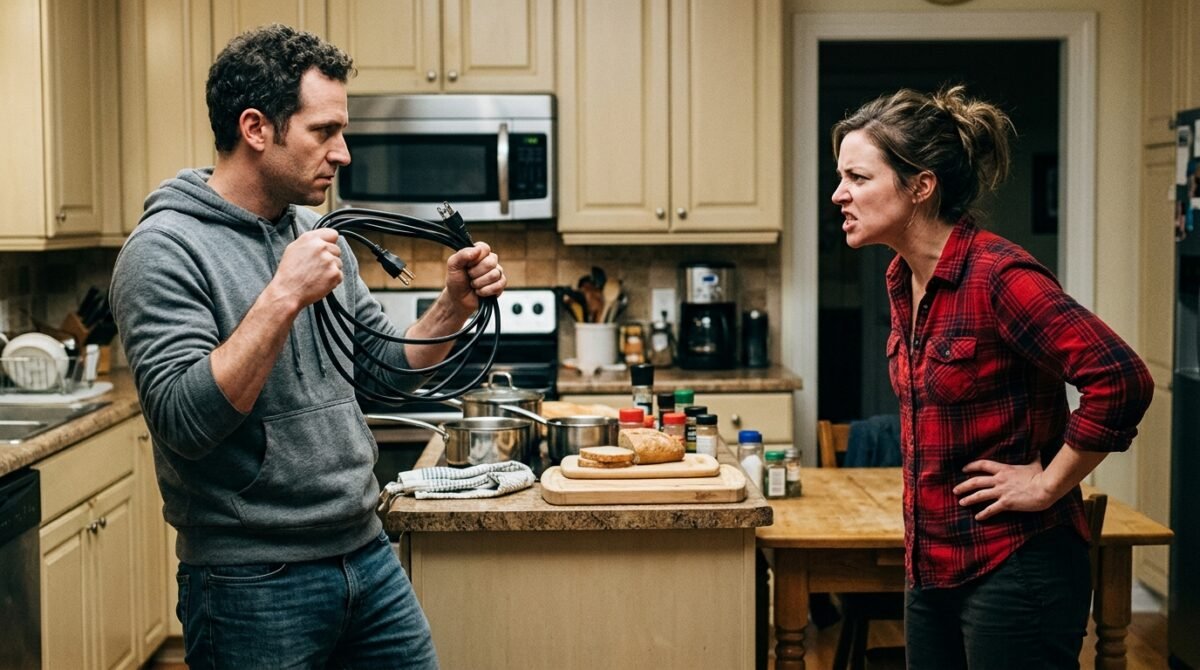
I woke up at 6:00 AM on a Saturday to the sound of a heavy mixer crashing against the counter. It was the sound of my peace being shattered. I walked out of my room to find Sarah, completely disheveled, covered in flour, and shouting at someone on the phone while the mixer continued its deafening roar. The kitchen was a disaster zone, with dough dripping off the counter and onto the floor.
I didn’t say a word. I just stood there, watching her. She didn’t notice me at first. She was too busy ranting about how ‘the oven is taking too long to heat up’ and that she needed to ‘buy another one.’ The level of entitlement was so extreme it was almost surreal. She was operating a factory in a space meant for living, and she felt absolutely no shame about it.
“I don’t care if it’s early, the bread doesn’t wait for anyone! If the neighbors complain, tell them it’s the smell of success. I’m not turning this mixer off until the dough is done.”
— Sarah, shouting at her assistant while standing in our shared kitchen
I finally walked over and unplugged the mixer. The silence that followed was deafening. Sarah spun around, her face turning bright red with rage. She looked like she was about to explode. I stood my ground, my hands folded across my chest, waiting for her to justify her actions. She didn’t have a justification; she only had an excuse.
She lunged for the cord, but I was faster. I grabbed it and held it out of her reach. This was the moment where the power dynamic finally shifted. She was used to me retreating, to me backing down, to me apologizing for my own presence in my own home. I was finished with that. I told her that if she didn’t stop, I would call the landlord immediately and inform them of the commercial activity.
She scoffed, thinking it was an empty threat. She didn’t know that I had already read the lease agreement and confirmed that commercial activity was strictly prohibited without written consent. I had the upper hand, and she didn’t even realize it. She was so blinded by her ego that she thought she was invincible. That was her biggest mistake.
The confrontation lasted for nearly twenty minutes. It was raw, ugly, and filled with years of stored-up frustration. I told her everything—the ruined kitchen, the sky-high bills, the secret group chat, the lack of respect. She listened, but I could see she wasn’t absorbing a word of it. She was just waiting for her turn to speak, to justify her greed. I didn’t let her. I walked away and locked myself back in my room.
The Reddit Verdict: Echoes of Solidarity

After the incident, I took to the internet to vent. I posted the full story on a popular forum, detailing every single event from the sourdough starter to the 6:00 AM intrusion. I didn’t expect much, but the response was overwhelming. Within hours, thousands of people had weighed in, and the vast majority were firmly on my side. It felt validating to know that I wasn’t the one being unreasonable.
“NTA. You are subsidizing her business with your rent and your sanity. You need to contact your landlord immediately. She is likely violating the lease agreement by running a commercial business out of a residential unit. Don’t feel bad about ‘snitching’—she’s the one who risked your housing security for a few loaves of bread.”
— u/BreadWinnerTruth (Top Comment, 15.2k upvotes)
The community was ruthless. They pointed out things I hadn’t even considered: the fire hazard of having industrial ovens in a standard kitchen, the insurance implications of a home-based business, and the potential for a massive fine from the city. They were right. I was being incredibly generous by not reporting her sooner. I felt like a weight had been lifted off my shoulders.
Other people shared their own stories of roommates from hell. It was a massive support group for anyone who had ever had their personal space violated. The stories ranged from the funny to the truly horrific, but they all shared a common theme: boundaries are essential. You cannot build a healthy living environment without mutual respect, and once that is gone, the only solution is to leave.
“I had a roommate who started a soap-making business. It was fine until the lye started eating through the kitchen tiles. Get out of there, OP. She won’t change until she’s forced to by law or by eviction. Save yourself the stress.”
— u/SudsAndStruggle (4.8k upvotes)
The consensus was clear: I needed to protect myself. The Reddit community gave me the confidence to take the next step. They reminded me that I didn’t owe her anything—not my patience, not my time, and certainly not my kitchen. They encouraged me to prioritize my well-being over the social niceties that had kept me trapped for so long.
I started printing out the most helpful comments and highlighting the legal advice. I knew I needed to approach the situation with cold, hard facts. If I was going to get out of this lease without a fight, I needed to have my case ready. The support from strangers online was the armor I needed to face the final battle in my apartment.
I felt a strange sense of unity with these people I had never met. They were the friends I didn’t have, the ones who saw the situation for what it was and weren’t afraid to tell me the truth. It was a wake-up call that my personal reality was valid and that I had the power to change it.
The Final Ultimatum: Legal or Exit
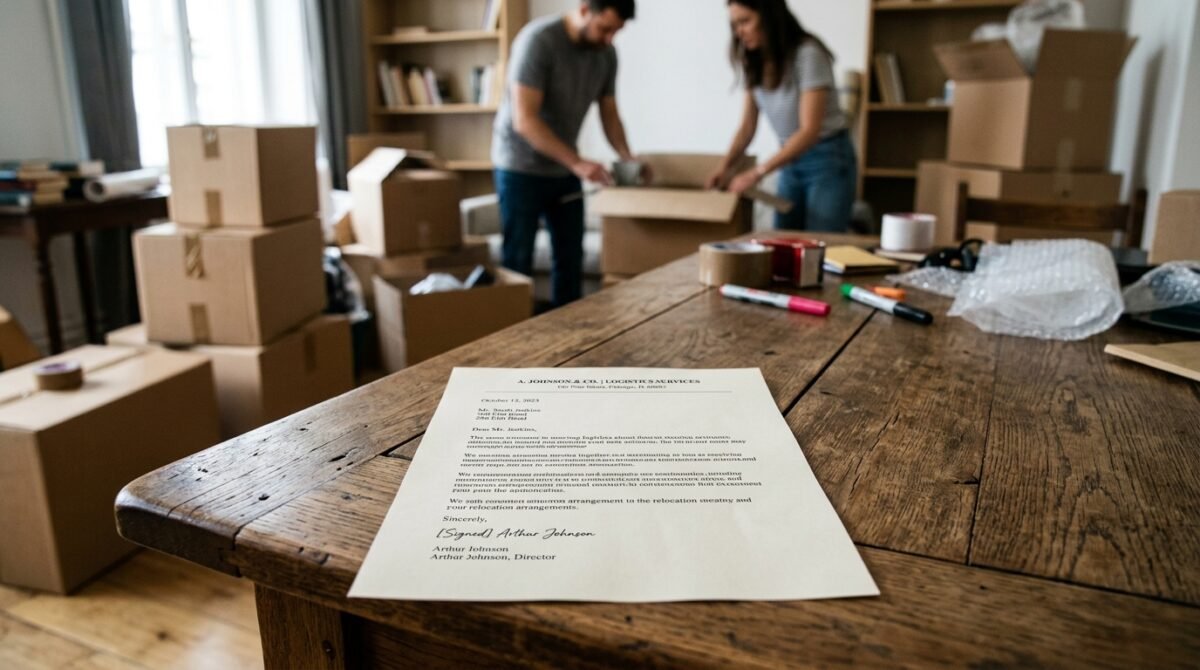
I prepared a formal letter. I didn’t use any emotional language. I simply stated the facts: the increased utility costs, the violation of the lease, the constant disruption to my living space, and the health and safety risks. I gave her a simple ultimatum: she either stops the commercial activity immediately, pays the difference in the utility bills for the past four months, and agrees to a professional deep cleaning of the kitchen, or I would be contacting the landlord and the city’s housing board.
I left the letter on the kitchen counter, right where she couldn’t miss it. I then went for a walk, giving her space to process the information. When I came back, the silence in the apartment was heavy. She was sitting in the living room, her face pale. She didn’t say a word as I walked past her into my room. The power dynamic had finally flipped for good.
“You’re really going to do this? You’re going to report me? I thought we were friends. This is so petty. You’re ruining everything I’ve worked for.”
— Sarah, trying to guilt-trip me after reading the letter
I didn’t even stop to argue. I just kept walking. The ‘friendship’ card was gone. She had betrayed that friendship months ago when she decided that my home was her business asset. I didn’t owe her any emotional labor, and I certainly didn’t owe her my future in that apartment.
She tried to bargain, offering to pay a portion of the electric bill if I just ‘kept things quiet.’ I refused. It was all or nothing. I wanted the business out of the kitchen, period. I didn’t want a compromise; I wanted my home back. She realized then that I wasn’t playing anymore. The threat of legal action, combined with the fact that she was operating without a permit, was enough to make her realize she was in a very precarious position.
She begrudgingly agreed to all my terms. She started moving her equipment out of the kitchen that same night. It was slow, agonizing work, and the sight of her taking down her ‘bakery’ was the most beautiful thing I had ever seen. She packed up the mixers, the cooling racks, and the hundreds of tubs that had been my prison for so long.
As she cleared the space, the kitchen seemed to breathe again. The flour smell began to fade, and the feeling of claustrophobia that had lived in my chest for months started to dissipate. It was a quiet, somber victory, but it was a victory nonetheless. I had successfully reclaimed my home.
The Aftermath: A Quiet Apartment
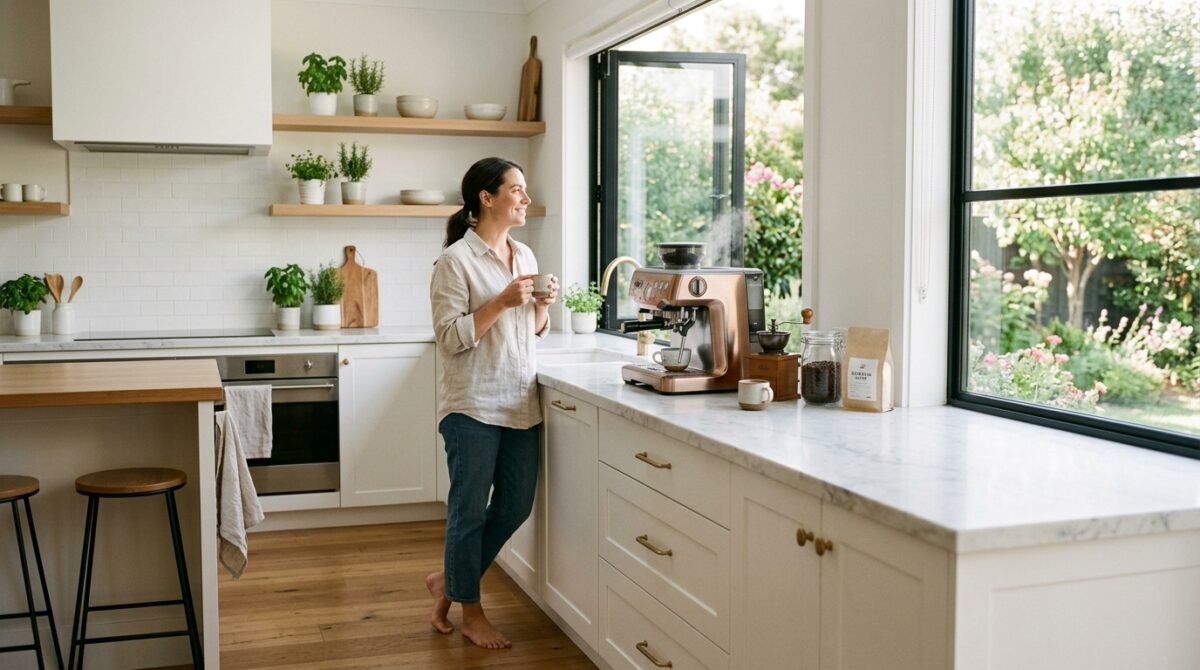
The weeks that followed were strange. The apartment was quiet, almost eerily so. Sarah stayed in her room, emerging only to cook quick meals that didn’t involve professional-grade equipment. We didn’t talk. The air was cold, but it was clean. I finally felt like I could breathe in my own living room again.
I spent my evenings redecorating. I deep-cleaned the kitchen, scrubbing away the layers of flour and yeast that had stained the grout. I bought new cookware, replaced the items that had been ruined, and set up a small coffee station that I actually owned. It was a process of reclamation, a way to erase the memory of the past few months.
I didn’t stay much longer after that. The relationship was irreparable, and the trust was gone. I found a new apartment, one with a strict ‘no commercial activity’ clause in the lease, and I moved out as soon as I could. Sarah didn’t even say goodbye when I left. She just stayed in her room, the door closed.
“I hope you’re happy. You destroyed my dream just because you couldn’t handle a little flour. I hope the new place is worth the bridge you burned.”
— Sarah, the day I moved out
I didn’t answer her. I didn’t need to. I knew the truth. I hadn’t destroyed her dream; she had destroyed her own dream by being incapable of respecting the person she lived with. If her business was truly as successful as she claimed, she should have been able to afford her own commercial space. She chose the cheap path, and she lost because of it.
I felt a profound sense of relief as I closed the door to that apartment for the last time. I had learned a valuable lesson: your home is your sanctuary, and you have to protect it fiercely. Never be afraid to set boundaries, even if it feels uncomfortable. Your peace of mind is worth more than someone else’s convenience.
I now live in a quiet apartment with a wonderful, respectful roommate. We have a chore chart, we communicate openly, and our kitchen is exactly what it should be: a place to cook dinner, not a place to run a business. I still bake the occasional loaf of bread, but I keep it simple, and I always, always clean up my mess.
Reflections on Boundary Erosion

Looking back, I realize how I let this happen. It was a slow erosion, a series of small, seemingly insignificant compromises that eventually led to a total loss of autonomy. I didn’t set boundaries early enough, and by the time I did, they were seen as ‘aggressive.’ It’s a common trap, especially when you want to be a ‘cool’ roommate, but it’s one that can cost you your sanity.
I learned that when someone repeatedly ignores your needs, they aren’t ‘forgetful’ or ‘busy’—they are choosing not to care. I spent so much energy trying to find ways to make it work, thinking that if I just explained it better or gave her more space, she would finally understand. That was a mistake. Some people are not capable of understanding, or they simply don’t care to.
Setting boundaries is not about being mean; it’s about being clear. It’s about stating what you need in order to feel safe and respected in your own home. If someone cannot respect those boundaries, then they are not someone you should be living with. It’s a hard lesson, but it’s a necessary one for anyone who wants to maintain their mental health.
“The most important boundary you can set is the one that says ‘I am not responsible for your success at the expense of my comfort.’ Once you realize that, you’ll never let yourself be exploited again.”
— A wise friend, during one of my late-night vent sessions
I also learned the value of documentation. Had I not kept that spreadsheet and those screenshots, I would have had a much harder time standing up for myself. When you’re dealing with someone who gaslights you, having the cold, hard facts is your only defense. It allows you to step out of the emotional drama and focus on the reality of the situation.
I am grateful for the experience, in a way. It taught me who I am and what I’m willing to tolerate. It made me a stronger, more assertive person. I don’t apologize for my needs anymore. I don’t feel guilty for wanting to live in a clean, functional space. I know my worth, and I know that I deserve to live in a home that feels like a home, not a battleground.
If you are in a similar situation, don’t wait. Don’t hope for change, and don’t make excuses for them. Take action, protect your space, and if you have to, leave. There is no job, no business, and no dream worth your peace of mind.
Community Analysis: The Anatomy of a Toxic Arrangement
The response to my story continued to grow even months later. People kept messaging me, asking for advice on how to handle their own ‘roommate from hell’ situations. It was clear that this wasn’t just my story; it was a universal struggle. The themes of entitlement, boundary violations, and the exploitation of common space were everywhere.
Many people reached out to share their own experiences with ‘entrepreneurial’ roommates. It seems that the rise of side-hustle culture has created a new kind of roommate nightmare—the one who thinks their business is everyone else’s business. They don’t see the home as a place to live, but as a resource to be mined. And they often don’t see their roommates as equals, but as necessary, albeit annoying, parts of their infrastructure.
“I had to deal with a roommate who was starting a clothing brand. Our living room was filled with boxes of inventory for months. We couldn’t even use the sofa. It’s amazing how entitled people get when they think they’re the ‘next big thing.’”
— u/InventoryNightmare (5.2k upvotes)
The community also discussed the legal and financial aspects of these situations. Many people pointed out that renters insurance often doesn’t cover commercial activity, meaning that if there had been a fire or an accident, both of us would have been in serious trouble. I was lucky that nothing worse happened, but it was a sobering realization of how much I had put on the line.
There were also some who tried to play devil’s advocate, suggesting that I could have been more supportive. Those comments were quickly buried by the majority, who understood that support requires consent, not coercion. If she wanted a partner, she should have asked me to be a partner, not a victim of her business model.
It was fascinating to watch the debate unfold. It touched on so many different aspects of modern life: the pressure to succeed, the blurring lines between work and home, and the lack of affordable housing. All of these factors played a role in our conflict, even if we weren’t fully aware of them at the time.
Ultimately, the community reinforced the idea that we are all responsible for our own choices. She chose to prioritize her business over our friendship, and I chose to prioritize my well-being over her business. We both got the outcome we deserved. I hope that for anyone reading this, it serves as a reminder that you always have a choice, no matter how trapped you feel.
Conclusion
My experience with Sarah taught me more than I ever expected about human nature, boundaries, and the importance of self-respect. It was a long, exhausting journey, but I came out the other side stronger and more aware of what I need to feel at home. It’s a story about the moment you realize that some people don’t see you as an equal—they see you as an obstacle or a resource—and how, once you see that, you have to act.
If you are currently in a living situation that feels like it’s slowly draining your life, I want to encourage you to take the first step toward change. Whether that’s setting a firm boundary, having that difficult conversation, or making a plan to leave, you have more power than you think. You don’t have to tolerate disrespect in your own home. You don’t have to subsidize someone else’s dream if it comes at the cost of your own reality.
I’m curious to hear from you, dear reader. Have you ever had a roommate who took their ‘side hustle’ way too far? How did you handle it? Did you find a way to make it work, or did you, like me, find that moving on was the only answer? Let’s talk about it in the comments below, and maybe we can all learn a little something about how to navigate these tricky living arrangements with our sanity intact.
What's your verdict on this dilemma?
Vote below to contribute to the official community consensus.

Have a Dilemma Keeping You Up at Night?
Share your real-life feud, wedding chaos, or relationship crossroads anonymously with our editorial team.
What do you think ?
0 Comments🛡️ Comments are moderated to protect community integrity. Your comment will appear once approved by the editorial team.