
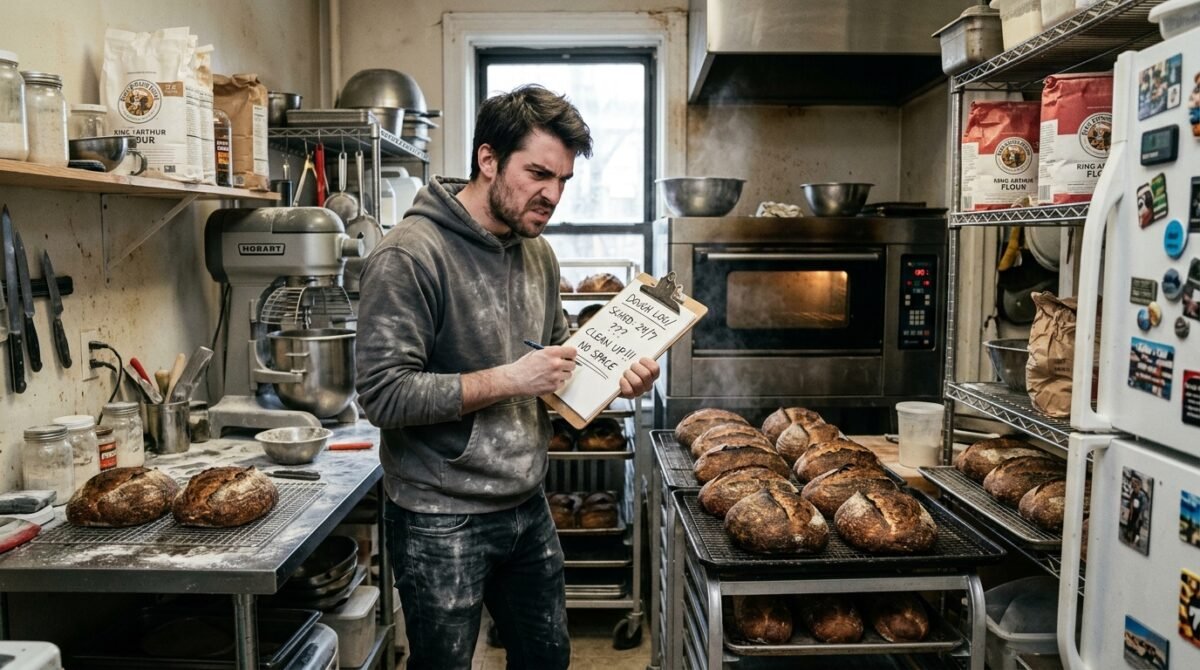
When I first signed the lease for our 600-square-foot apartment, the kitchen was supposed to be a place for casual weeknight dinners, not a production facility for a burgeoning boutique bakery. My roommate, Chloe, had always been a hobbyist baker, but the shift from ‘weekend cookies’ to ‘industrial-scale sourdough’ happened with alarming speed. It wasn’t just the smell of yeast that began to permeate every corner of our tiny living space; it was the total takeover of our limited utility.
At first, I tried to be supportive. I thought it was just a quarantine phase or a fleeting creative burst. But when the professional-grade mixers started appearing, and the counter space vanished under a mountain of cooling racks, I realized the boundary between our home and her business had completely disintegrated. The moral dilemma wasn’t about supporting a friend’s dream; it was about the fundamental right to exist in the home I paid half the rent for.
The conflict reached a breaking point when I couldn’t even boil water for pasta without navigating a maze of proofing baskets and flour-dusted surfaces. I raised the issue repeatedly, trying to address it through calm conversations, then through firm requests, and eventually, through tense, late-night confrontations. Nothing worked. Chloe was convinced that her ‘hustle’ took precedence over my comfort.
As the air quality in the apartment deteriorated under the constant heat of the oven, and the fire alarm began to chirp in protest, I realized that living with a commercial enterprise in a residential unit was not just annoying—it was a health and safety violation. I didn’t want to be the villain, but I was living in a baking-induced purgatory. Calling the health inspector wasn’t a snap decision; it was the final, desperate act in a saga of ignored boundaries and mounting resentment.
This is the story of how our friendship dissolved in a flurry of flour, the legal threats that followed, and the moment I finally drew the line in the sand. It is a lesson in what happens when personal ambition blinds someone to the basic respect required for cohabitation.
The Rise of the Sourdough Empire
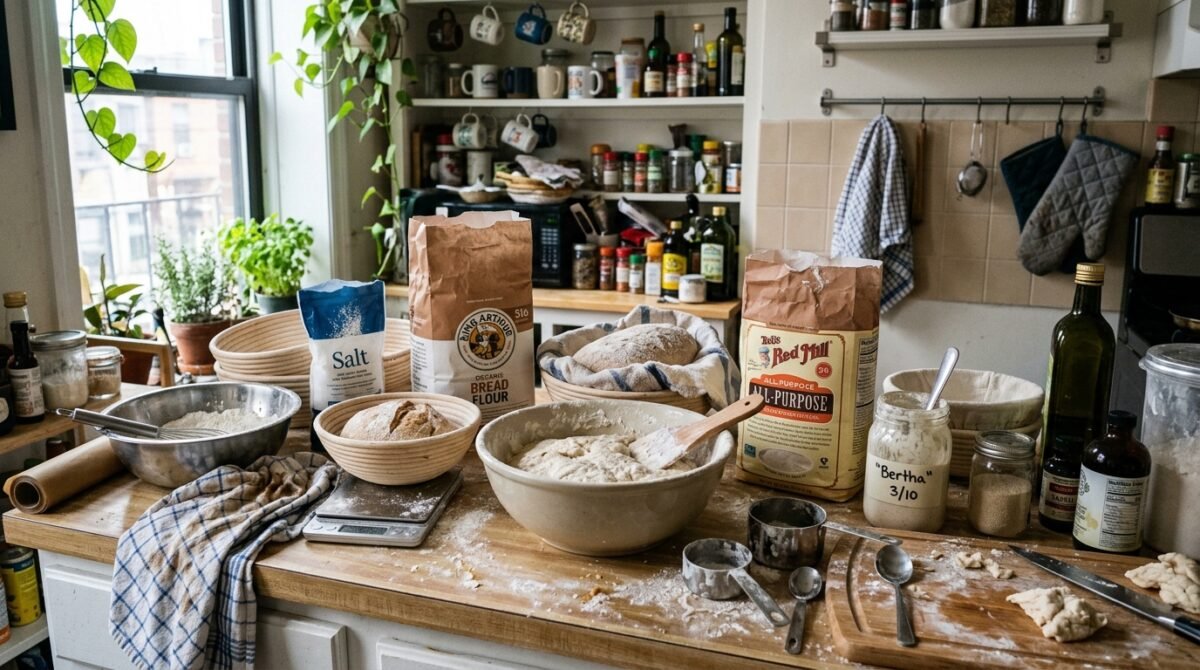
It began innocently enough. Chloe, a talented but perpetually unorganized graphic designer, decided that her true calling lay in the world of artisan breads. At first, she just made the occasional loaf, which was admittedly delicious. I was happy to eat the test batches, unaware that I was essentially serving as a free taste-tester for a future commercial enterprise.
Within two months, the kitchen counters had become permanent fixtures for her rising dough. She purchased a second, massive oven that barely fit in the corner, effectively blocking the path to the pantry. I found myself having to ask permission to reach my own spices, which were now buried behind bags of organic flour and specialty grains.
When I finally sat her down to discuss the space, she looked at me with genuine confusion. She truly believed that because she was ‘making something,’ it justified the total loss of my utility. It was the first sign that our definitions of a shared living space were fundamentally incompatible.
“It’s just for a few months until I get the orders up, okay? You’re being really unsupportive of my career shift. This could be our ticket out of this cramped apartment.”
— Chloe, defending her kitchen takeover
The audacity was staggering. She framed her inconvenience as a favor to me, claiming that if she succeeded, she would move out and I would have the place to myself. It was a classic trap: the promise of a future benefit used to justify the complete erosion of my present quality of life.
I kept track of the space usage, marking off squares on a piece of paper. Within three weeks, 85% of our kitchen surface area was occupied by her business tools. I was relegated to eating on the couch, using a tray, while she moved around me with the frantic energy of someone who had completely lost perspective.
The Late Night Proofing Incident
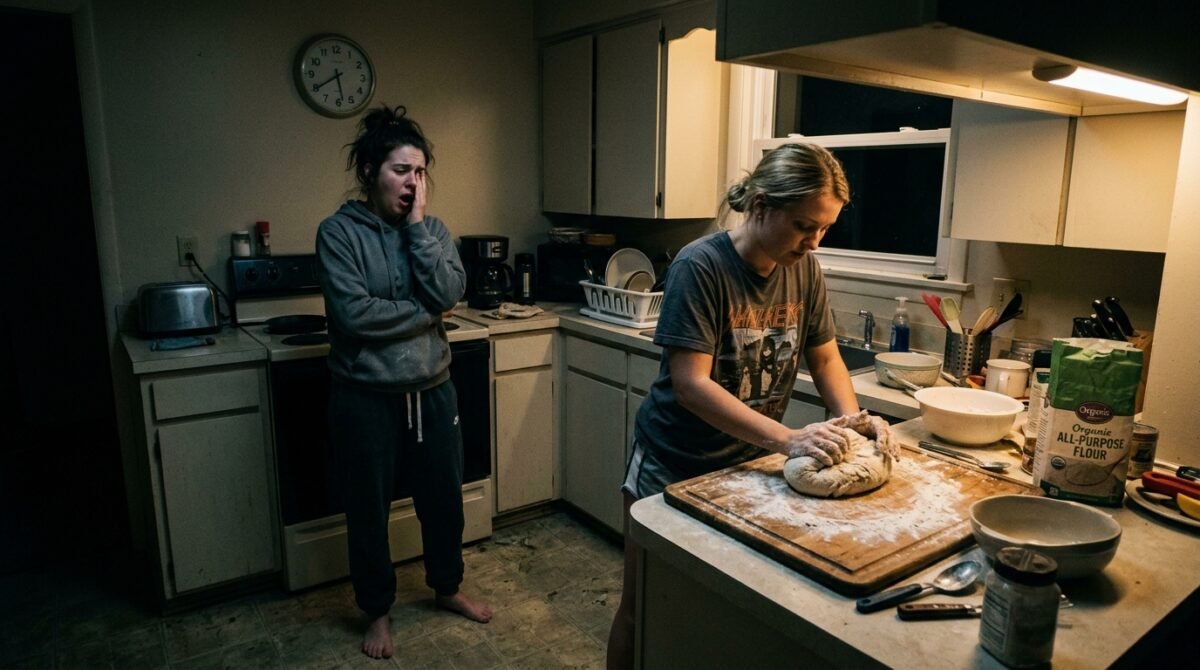
The tipping point for the first major argument happened on a Tuesday at 2:00 AM. I was woken up by the distinct, rhythmic thud of a heavy dough hook hitting the side of a stainless steel bowl. I stumbled out into the kitchen, rubbing my eyes, to find Chloe sweating over a batch of rye bread.
The noise was deafening in the silence of the night. My bedroom shared a wall with the kitchen, and the vibration was enough to rattle my picture frames. When I confronted her, she didn’t even apologize; she just told me to go back to sleep because she had ‘a big delivery’ in the morning.
“Are you serious? It is two in the morning, Chloe. I have to work in five hours. You can’t just run a factory in our living room!”
— My confrontation with Chloe
She rolled her eyes and turned up her podcast. It was at that moment that I realized we were no longer just roommates; we were an employer and an unwilling, unpaid janitor. I spent the rest of the night on the couch, listening to the hum of the oven, seething with a mixture of anger and disbelief.
The next day, I found the sink clogged with a thick, cement-like residue of sourdough starter. She hadn’t even bothered to rinse it. The pipes were struggling, and the smell of fermenting yeast had begun to seep into the carpet of the living room, creating a permanent, sour aroma that made guests uncomfortable.
I realized then that she wasn’t just inconsiderate; she was entirely disconnected from the reality of sharing space. She looked at our apartment not as a home, but as a resource to be mined for her personal profit. The resentment was no longer just a flicker; it was a fire.
The Unsolicited Business Expansion
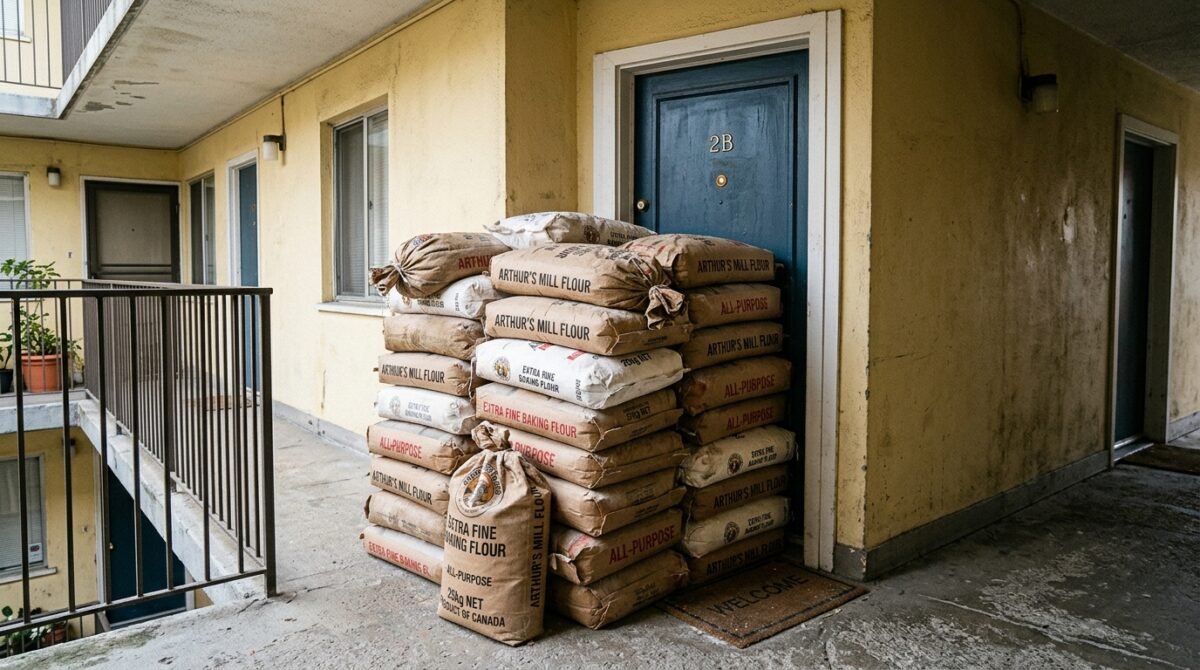
A week later, I came home to find a professional-grade delivery driver dropping off three large boxes of wholesale ingredients. There were fifty-pound bags of flour stacked against the front door, making it nearly impossible to enter the apartment. I had to shimmy through the gap, stepping over bags of ‘Premium Heritage Wheat’ just to reach the light switch.
When I called Chloe, she was thrilled. She told me she had signed up for a local farmers’ market booth and needed to ‘scale up’ her production. She didn’t ask if it was okay. She didn’t warn me. She just assumed that our apartment, a place zoned for residential living, would double as her warehouse.
I looked at the lease agreement. It was clear: no commercial activities were permitted in the unit. I had a choice: continue to be a silent victim of her ambition, or start the process of reclaiming my home. I chose the latter, but I wasn’t going to be rash. I started documenting everything—the blocked exits, the grease stains, the excessive water usage, and the fire hazards.
“I’m not a landlord, and I’m not your business partner. You are turning this place into a liability. If the building manager finds out, we’re both getting evicted.”
— My warning to Chloe
She dismissed my concerns with a wave of her hand, telling me the manager ‘wouldn’t notice’ because she was ‘keeping it clean.’ The irony was lost on her. She couldn’t see that the very act of bringing in industrial supplies was the definition of ‘not keeping it clean.’
The relationship was now purely transactional, and the transaction was entirely in her favor. I felt like a stranger in my own home, a visitor in a bread-making sweatshop. Every day, the pile of boxes grew, and every day, my resolve to end the arrangement hardened.
The Group Chat Explosion
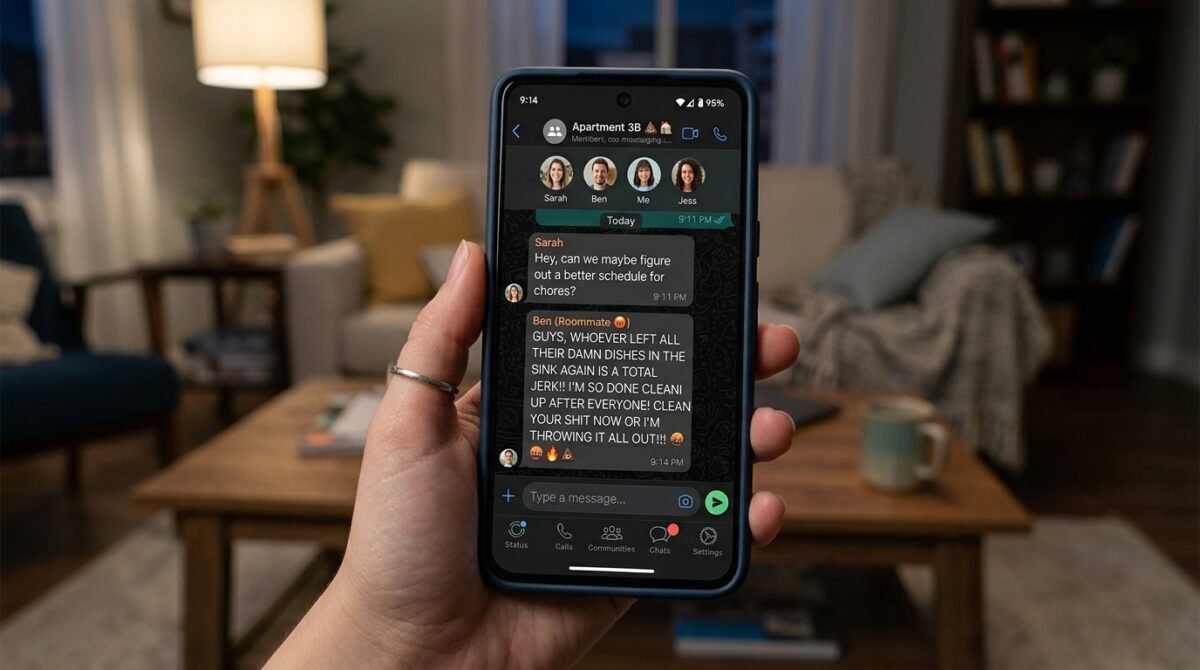
The situation hit a breaking point when she added her ‘business mentor’ to our shared apartment group chat. The mentor started sending me ‘helpful tips’ on how to keep the kitchen organized for better throughput. I was being managed in my own home by a stranger who had never met me.
I replied by sending a list of the utility bills, highlighting the massive spike in electricity and water costs since the bakery started. I didn’t ask for reimbursement; I demanded it. The silence that followed was deafening, until Chloe erupted in the chat.
“I can’t believe you’re complaining about pennies when I’m trying to build something real here. You’re so small-minded. I thought you were my friend, but you’re just jealous.”
— Chloe’s message in the group chat
The ‘jealous’ comment was the final straw. It was a deflection, a way to paint me as the villain rather than addressing the fact that she was effectively stealing space and utilities from me. I didn’t reply in the chat. I simply walked into the kitchen, took a photo of the fire hazard she had created by storing baking sheets directly on the stovetop, and sent it to our landlord.
The subsequent fallout was nuclear. She screamed at me for two hours, telling me that I had betrayed her trust and ruined her chance at independence. She ignored the fact that she had betrayed my trust first, the moment she turned our shared living space into her private warehouse.
The tension became so thick you could cut it with a knife. We stopped speaking entirely, communicating only through cold, post-it notes left on the fridge. One note, in particular, stood out: ‘Stop touching my cooling racks.’ I didn’t touch them; I threw them in the trash, then realized that might be too far, and fished them back out, leaving them on the floor.
The Health Inspector’s Arrival
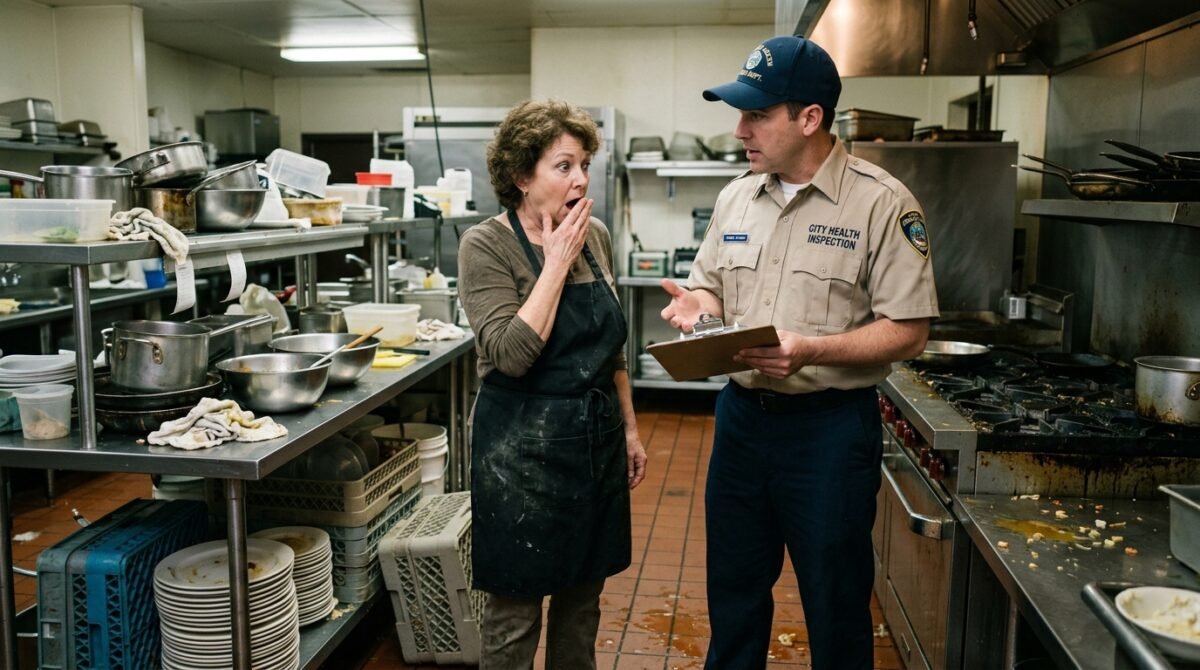
It wasn’t a snap decision. I spent days debating whether to call the authorities. I knew that it would destroy the friendship, but the friendship was already a carcass. I had to protect myself from the legal repercussions of living in a place that wasn’t up to code. If a fire started, or if someone got sick from her unregulated kitchen, I would be held liable.
When the health inspector knocked on the door, Chloe was in the middle of a massive baking run. The look on her face when she saw the badge was one of pure, unadulterated terror. She tried to bar the door, but it was too late. The inspector saw the industrial mixers, the unlabelled food bins, and the absolute chaos of the ‘bakery.’
“Ma’am, this is a residential unit. You are operating a commercial kitchen without a license, health permits, or proper food safety protocols. You need to cease all production immediately.”
— The health inspector’s stern warning
The inspector was thorough. He noted the lack of a proper handwashing station, the presence of pets in the kitchen area, and the improper storage of raw ingredients. Chloe was silent, her face pale. She finally realized that the ‘hustle’ had consequences.
The inspector told her that she was facing a significant fine and that if she didn’t clear the kitchen within 48 hours, the landlord would be notified and formal eviction proceedings would begin. Chloe looked at me, her eyes filled with betrayal, but I didn’t look back. I was already planning how to deep-clean the kitchen to get rid of the lingering, sour smell.
She spent the next two days frantically moving bags of flour and industrial equipment out of the apartment. She was crying, and for a moment, I felt a twinge of guilt, but it vanished as soon as I walked into the kitchen and saw the layers of grime she had left behind on the cabinets.
The Aftermath and The Move-Out
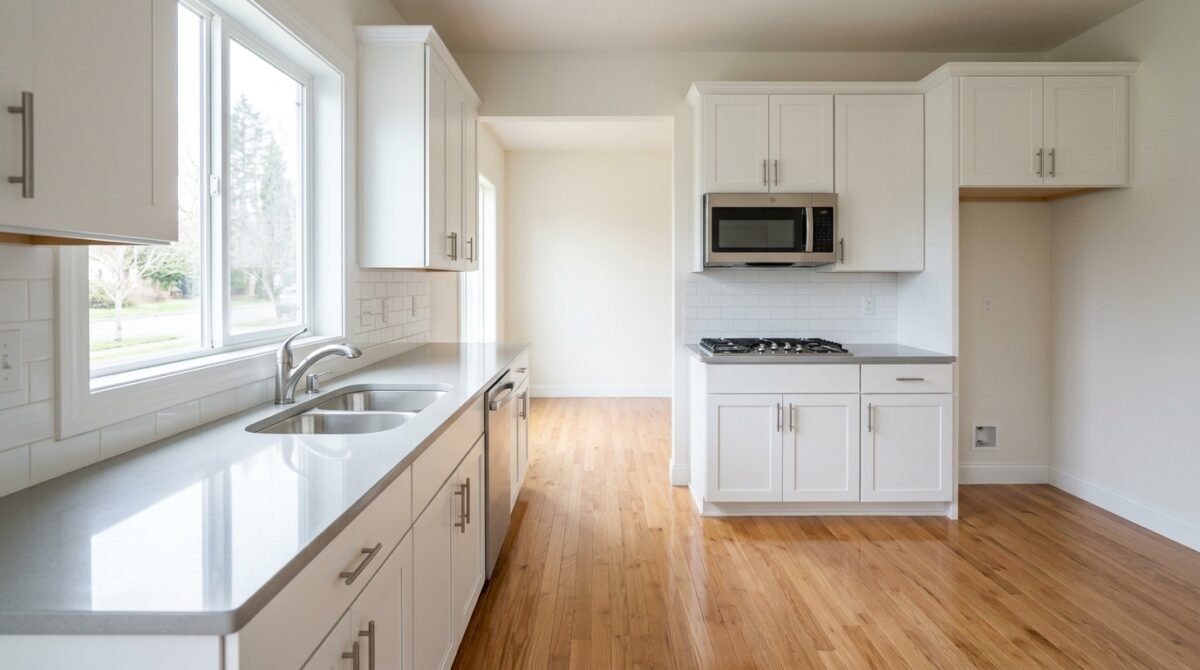
The weeks following the inspector’s visit were the most awkward of my life. We lived in silence, avoiding each other in the halls. Chloe began looking for a new place, but she blamed me for her financial ruin. She told our mutual friends that I was a ‘jealous sabotage artist’ who couldn’t stand seeing someone else succeed.
I kept to myself, focusing on my own work and trying to reclaim the space that had been stolen from me. I hired a professional cleaning service to scrub the kitchen, and the total cost was something I deducted from the final month’s rent. The kitchen finally felt like a home again, but the damage to our relationship was irreparable.
“I hope you’re happy. You destroyed my business just because you didn’t like the smell of bread. You’re the most selfish person I’ve ever met.”
— Chloe’s final words before moving out
I didn’t argue. There was no point. She still couldn’t see that her business was only possible because she was using my rent money to pay for her kitchen space. She was living in a bubble of entitlement that made empathy impossible.
When she finally packed her last box and left, the quiet that descended on the apartment was glorious. I stood in the kitchen, made a simple cup of tea, and enjoyed the fact that I didn’t have to navigate a maze of equipment to get to the kettle. It was a small victory, but it felt monumental.
I learned a lot about setting boundaries, but mostly, I learned that some people will take as much as you allow them to, and they will never, ever be grateful for your patience.
Reddit Weighs In: The Community Verdict

I posted about the situation on a popular subreddit, and the response was overwhelming. Thousands of people chimed in, with most siding with my decision to call the health inspector. The consensus was that Chloe’s entitlement had crossed the line from a ‘quirky hobby’ to a ‘serious liability.’
“Your roommate wasn’t just baking bread; she was running an illegal, unregulated business in a residential building. You did the right thing. If something had gone wrong—like a fire or a health crisis—you would have been just as liable as she was. Don’t let her gaslight you into thinking you’re the villain.”
— u/HomeSafeAndSound (Top Comment, 32.5k upvotes)
There were some dissenting voices, of course. A few people argued that I should have been ‘more supportive’ or that I should have tried to ‘work it out’ further. But the vast majority of the community recognized the inherent unfairness of the situation. They saw exactly what I had seen: a parasitic relationship disguised as a friendship.
One user, who claimed to be a landlord, pointed out the legal nightmare I had avoided. They explained that my insurance would likely have been voided if a fire had started, leaving me on the hook for thousands of dollars in damages. Reading those comments helped ease the residual guilt I felt.
It was a stark reminder that the internet, despite its reputation, can provide a very clear-eyed perspective on personal dilemmas. Seeing my experience validated by strangers helped me move on, knowing that I hadn’t acted out of malice, but out of a necessary defense of my own home and well-being.
The Lingering Lessons of the Flour War

Looking back, the signs were there from the very beginning. The way she dominated the conversation, the way she made decisions about our shared home without consulting me, and the way she reacted when I set even the smallest boundary. I ignored those signs because I wanted to be the ‘cool roommate,’ the supportive friend who ‘got it.’
I realized that being a good roommate doesn’t mean being a doormat. It means having clear, written agreements about expectations, and it means being willing to enforce those boundaries when they are violated. It means recognizing that your home is your sanctuary, not a business incubator for someone else.
“Boundaries aren’t about being mean. They’re about protecting your own peace. If someone gets angry when you set a boundary, that’s usually a sign that they were benefiting from you having none.”
— A piece of advice I read during the conflict
I started practicing this in other areas of my life. At work, I became more assertive about my project scope. In my social life, I learned to say no to requests that drained my energy. The ‘flour war’ was painful, but it was also a crucible that forged a stronger, more self-assured version of myself.
I still bake bread occasionally, but I do it for fun, in small batches, and I never, ever leave a mess in the kitchen. Every time I smell fresh bread now, I don’t feel the stress of the past; I feel the satisfaction of having navigated a difficult situation and come out the other side with my sanity intact.
The Financial Reality of the Fallout
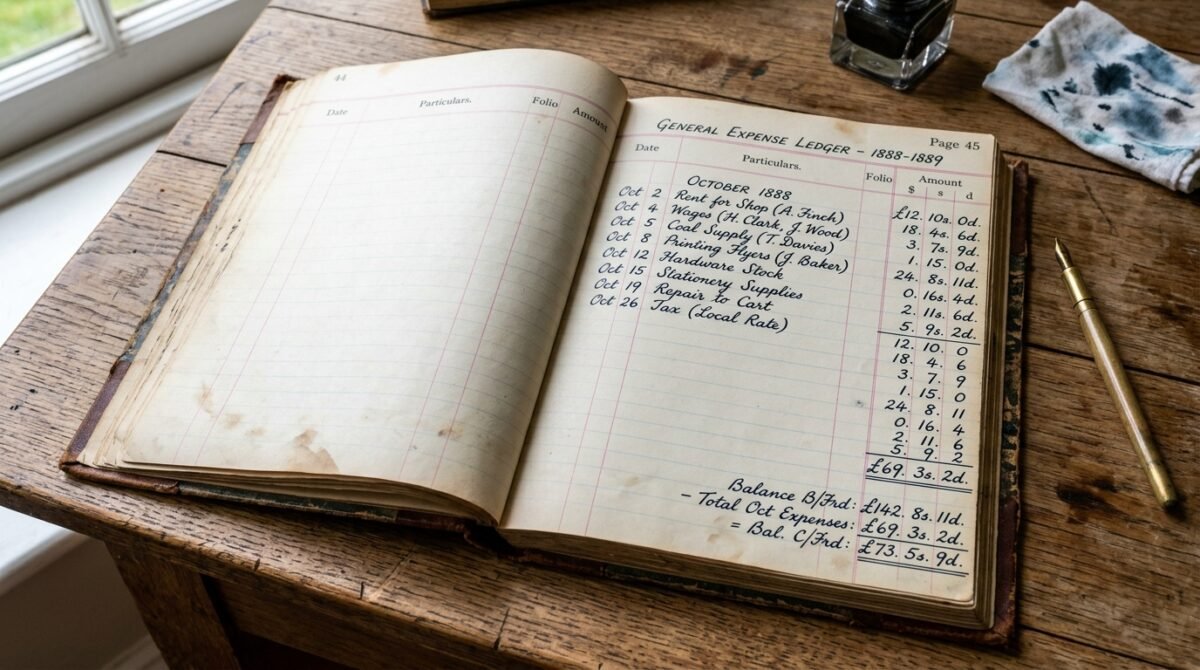
The financial impact of the whole ordeal was significant. Aside from the increased utilities, there was the cost of the professional cleaning, the loss of security deposit potential due to the wear and tear she caused, and the legal advice I had to pay for just to understand my rights. I kept a detailed ledger of every dollar she cost me, just in case she tried to sue.
She never did, but it was an eye-opener. People often think that ‘sharing’ a home is just about splitting rent, but it’s actually about splitting the responsibility of maintaining a shared asset. When one person treats that asset as a commercial resource, the entire balance of the living arrangement collapses.
| Category | Estimated Cost | Notes |
|---|---|---|
| Utility Overages | $450 | Water and Electric spike over 6 months |
| Cleaning Fees | $300 | Professional deep clean after move-out |
| Legal Consult | $250 | Understanding my liability |
| Total | $1,000 | Costs absorbed by OP |
The ledger was a reminder of why I needed to be more careful in the future. I wasn’t just paying for bread; I was paying for a lesson in how to vet roommates. I learned that you should always discuss future career plans and any potential ‘hobbies’ that might turn into business ventures before signing a lease together.
I eventually moved to a new apartment, and this time, I was very clear about my expectations. No businesses, no industrial equipment, and a strict ‘no late-night production’ policy. It might sound restrictive, but for me, it was the only way to ensure that my home remained a place where I could actually relax.
Moving Forward and Reclaiming Peace
Today, I live in a quiet apartment with a roommate who respects my time and my space. We have a chore chart, we have a mutual agreement about guests and noise, and we have a shared commitment to keeping the kitchen clean. It’s boring, in the best way possible. I wouldn’t trade it for anything.
I haven’t spoken to Chloe since the day she moved out. I see her posts on social media occasionally—she’s still trying to make the bakery work, though she seems to be doing it from a dedicated commercial space now, which is exactly where she should have been all along. I don’t follow her, but I hope she succeeds, provided she respects her next roommate.
“Growth is often uncomfortable. It requires us to shed old habits and, sometimes, old friendships that are no longer serving our well-being. Don’t fear the silence that comes after you set a boundary.”
— My reflection on the experience
The experience taught me that I am capable of standing up for myself, even when it feels like I’m being the ‘bad guy.’ It taught me that my comfort matters just as much as someone else’s ambition. Most of all, it taught me that I deserve a home that feels like a home, not a production facility.
I am grateful for the lessons, even if they were learned the hard way. I’ve moved on, and I’m finally living in a space that is truly mine—a space that is peaceful, clean, and entirely free of the smell of fermenting sourdough.
Conclusion
The story of the flour-covered war isn’t just about a roommate who crossed the line; it’s a cautionary tale about the importance of communication, boundary setting, and the courage to act when your living environment is compromised. We often feel pressure to be the ‘understanding’ friend, but understanding should never come at the expense of your own mental health or legal standing.
If you find yourself in a similar situation, remember that you are not obligated to enable someone else’s dreams at the cost of your own stability. Sometimes, the most ‘supportive’ thing you can do is to force them to operate within the bounds of reality and professional standards.
What about you? Have you ever had a roommate who turned your home into their workspace? How did you handle it, and what did you learn about setting boundaries in the process? Join the conversation in the comments below.
What's your verdict on this dilemma?
Vote below to contribute to the official community consensus.

Have a Dilemma Keeping You Up at Night?
Share your real-life feud, wedding chaos, or relationship crossroads anonymously with our editorial team.
What do you think ?
0 Comments🛡️ Comments are moderated to protect community integrity. Your comment will appear once approved by the editorial team.