
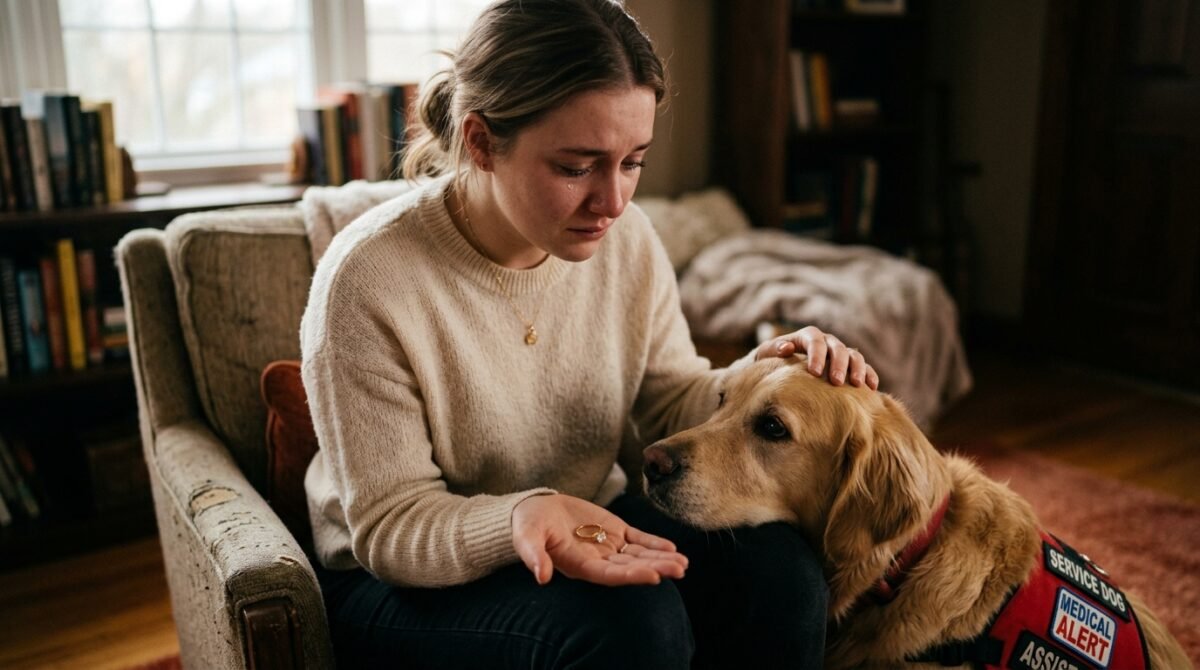
We often talk about the ‘for better or worse’ of a marriage, but rarely do we discuss the ‘for who I am.’ For three years, Mark and I built a life that seemed perfect on paper. We had a shared vision for a home, a joint savings account for a future wedding, and a mutual understanding of our professional goals. Or so I thought.
My golden retriever, Barnaby, is not a pet in the traditional sense; he is my lifeline. As a person living with a complex autonomic disorder, Barnaby is my medical alert service dog. He knows when my blood pressure is plummeting before I do, and he has saved my life more times than I care to admit. When Mark and I began planning our move into a shared home, I expected the typical logistical stresses: where to put the couch, how to split the utilities, and whose turn it was to do the dishes.
I never imagined that the foundation of our union would collapse over a four-legged companion. The demand came out of the blue, sharp and cold, during a routine Sunday brunch. It wasn’t a conversation about allergies or space; it was a power play cloaked in the guise of ‘modernizing’ our living arrangement. That morning, my world shifted from anticipation to a desperate, singular realization: I was being asked to choose between my health and my happiness.
This article explores the chilling reality of what happens when a partner decides that your essential needs are merely inconveniences. Through the lens of our final confrontation, the text messages that followed, and the perspective of the online community that witnessed the fallout, I hope to shed light on why some red flags aren’t just warnings—they are exit signs.
The Sunday Morning Ultimatum
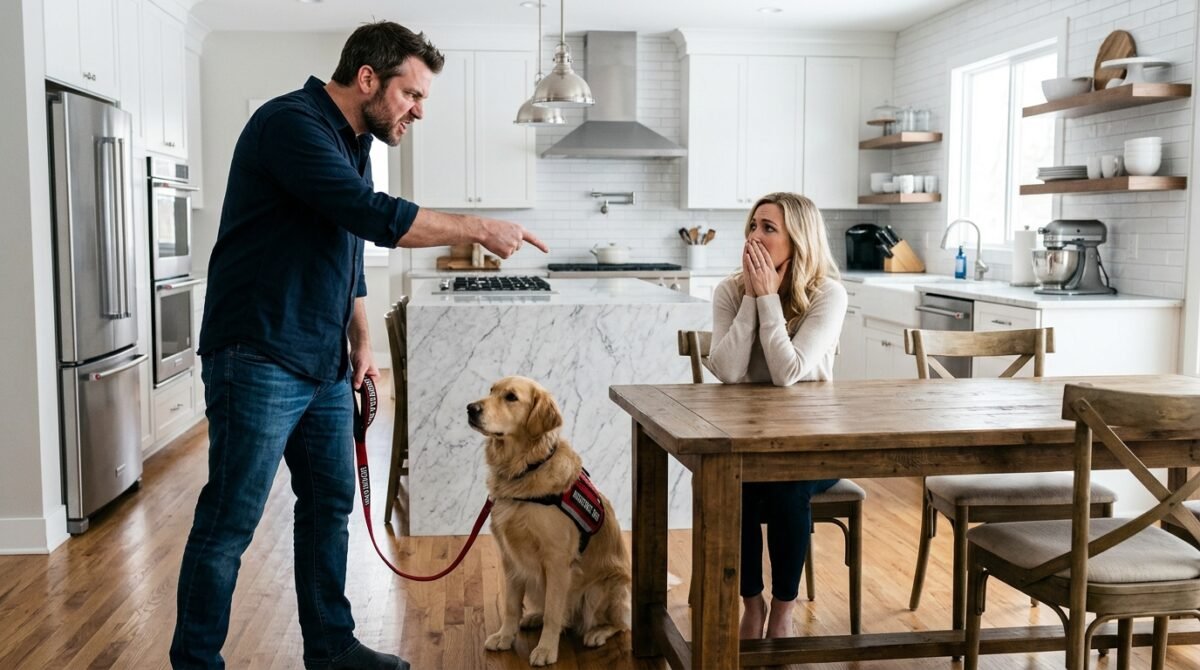
It started over burnt toast and lukewarm coffee. Mark had been acting distant for weeks, pacing the kitchen with a furrowed brow that I initially attributed to his upcoming promotion. I was sitting at the breakfast nook, with Barnaby tucked neatly under my chair, his harness visible but unobtrusive. I felt the familiar tug of a blood pressure drop—a subtle dip in my heart rate—and Barnaby nudged my hand, resting his chin on my thigh to provide the grounding pressure I needed to stabilize.
Mark watched us, his jaw tight. He didn’t ask if I was okay. He didn’t reach for the water. Instead, he slammed his mug onto the granite countertop, the sound echoing like a gunshot in the quiet apartment. He looked at Barnaby with a mixture of disdain and impatience that turned my stomach. It wasn’t the look of a man who loved his partner’s support system; it was the look of a man who was counting down the seconds until he could be rid of it.
“Look, I’ve been doing the math on the house, and it’s time to be honest. Barnaby can’t come with us. He’s too big, he sheds, and frankly, I want our new place to be an adult home, not a kennel. I’ve already looked into a high-end boarding facility, or maybe your sister would take him. You need to make a choice, and it has to be now.”
I sat there, stunned. My breath hitched, not from my condition, but from the sheer audacity of the demand. I looked at Mark—really looked at him—and saw a stranger. I realized he hadn’t been distancing himself because of work; he had been calculating how to prune my life of the things he found inconvenient. He wasn’t asking for a compromise; he was issuing an eviction notice for my medical partner.
“Are you serious?” I whispered, my voice barely audible. “You know he’s a medical alert dog. This isn’t a hobby. This is my health, Mark. Without him, I’m at risk every single day. How can you even suggest this?” His response was dismissive, a wave of his hand as if he were shooing away a fly. He spoke about ‘boundaries’ and ‘aesthetic preferences’ as if he were discussing a throw pillow, not a life-saving companion.
I felt a cold realization settle in my chest, colder than any symptom I’d ever experienced. I reached down and stroked Barnaby’s soft ears, finding strength in his steady, rhythmic breathing. I realized then that Mark had never truly accepted me—he had accepted an edited version of me, and now that the ‘editing’ was failing to meet his standards, he was turning the knife. The conversation ended with him storming out, leaving me in the silence of an apartment that suddenly felt very small and very wrong.
The Fabricated Narrative of ‘Convenience’
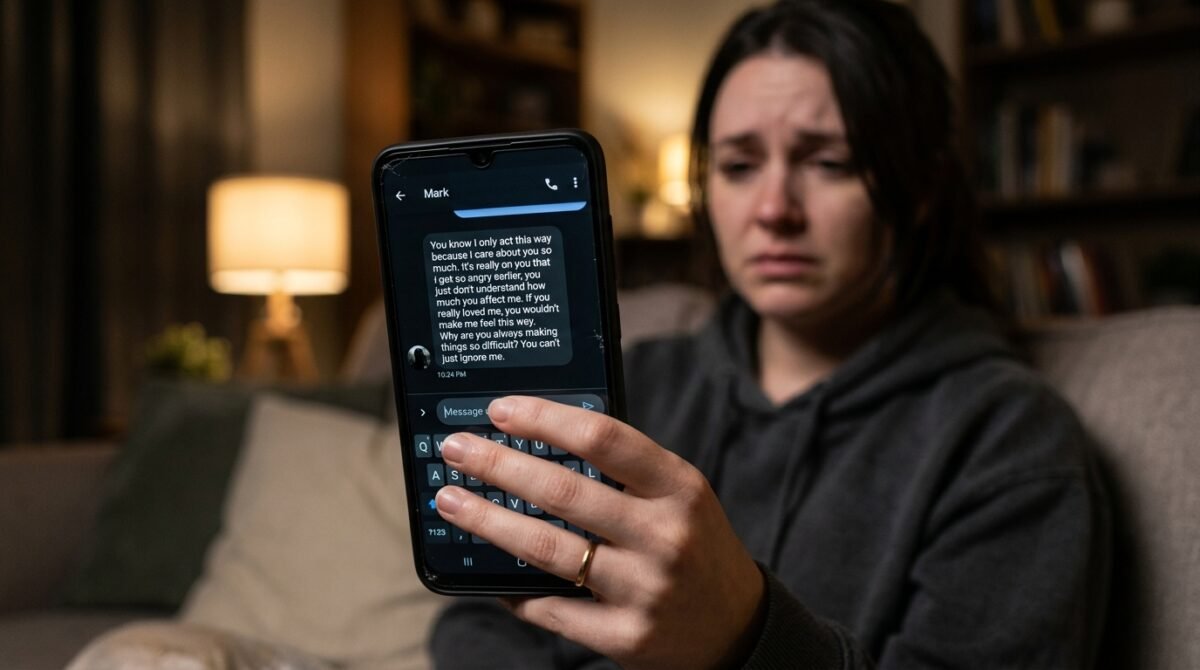
In the days that followed, the gaslighting began in earnest. Mark tried to frame his demand as a sacrifice he was making for ‘our future.’ He sent long, rambling texts that attempted to pathologize his own selfishness. He argued that my reliance on Barnaby was a crutch that was preventing me from ‘fully recovering,’ despite the fact that my condition is chronic and non-curable. It was a masterclass in medical shaming, designed to make me feel small and burdensome.
I began to notice the subtle ways he had been preparing for this moment. There were pamphlets for ‘luxury boarding’ hidden in his gym bag, and I discovered he had been talking to his friends about my ‘excessive attachment’ to the dog. He was building a narrative among our peers that I was difficult, uncooperative, and irrational. He wanted to ensure that if I refused, I would be the one painted as the villain, the woman who chose a dog over her fiancé.
“I’m just trying to think about our future, babe. A house with a dog like that is just going to be ruined. Don’t you want to be able to have guests over without worrying about someone sneezing or being jumped on? We deserve a clean slate. I’m only asking for this because I love you and I want us to be normal.”
— Text message from Mark
The irony was suffocating. I had spent years working with Barnaby to ensure he was perfectly behaved in public spaces, let alone a private home. He was a professional, trained to be invisible when necessary, yet Mark treated him like a wild animal. I started keeping a log, documenting every time Mark made a disparaging remark about Barnaby’s presence. It was a painful exercise, but it allowed me to see the pattern of entitlement that had been hiding in plain sight for years.
I spoke to my sister, Sarah, about it over the phone. Her reaction was immediate and fierce. She didn’t mince words, and for the first time, I felt the validation I desperately needed. She pointed out that if he couldn’t respect my medical needs now, he certainly wouldn’t respect them when things got actually difficult later in life. She told me that a partner is supposed to be a shield, not a source of additional stress.
I spent those nights sleeping with one eye open, Barnaby curled protectively against my back. The distance between Mark and me grew into a chasm. Every time he entered the room, he would look at the floor, specifically for signs of hair or mud, his eyes scanning for reasons to continue his campaign. It was no longer a relationship; it was a siege. I realized that if I gave in, I would be losing not just my dog, but my autonomy, my health, and my dignity.
The Breaking Point in the Living Room
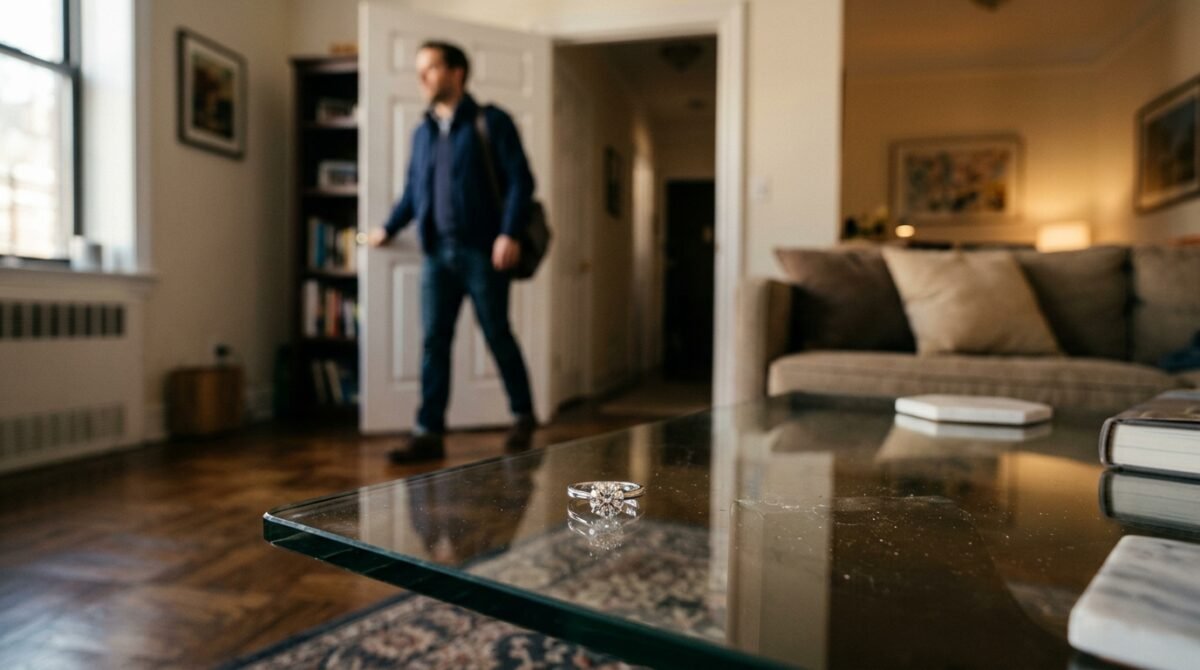
The final confrontation happened on a Tuesday night. Mark returned from work with a deposit slip for the ‘luxury boarding’ facility he had found. He placed it on the coffee table with a smug sense of accomplishment, acting as though he had solved a difficult puzzle. I watched him, feeling a strange sense of clarity. The fear that had paralyzed me for weeks suddenly evaporated, replaced by a crystalline resolve.
He started talking about ‘transition periods’ and ‘adjustment schedules’ for Barnaby, as if he were talking about a piece of furniture he was moving to storage. I didn’t interrupt him. I let him talk, letting him weave his web of self-justification deeper and deeper. When he finally stopped, expecting me to thank him for his ‘practicality,’ I stood up. I went to my bedroom and retrieved the small, velvet-lined box I had kept hidden in my nightstand.
“You think this is a negotiation, Mark. You think you’re planning a move. But you’re not. You’re planning my erasure. I am not choosing between my dog and my health. I am choosing between a man who sees me as a project to be managed and my own life. Keep the deposit. You’re going to need it for your own place.”
I placed the ring on the coffee table. It clicked against the glass, a sharp, final sound that seemed to shatter the tension in the room. His face went through a rapid series of expressions—confusion, denial, and finally, a cold, hard anger. He didn’t ask me to reconsider. He didn’t apologize. He simply looked at the ring, then at me, and asked, ‘Are you really doing this over a dog?’
That question was the final proof I needed. He had heard everything I said, and yet, he had processed absolutely none of it. To him, Barnaby was just a dog, and my medical condition was just an inconvenience. My decision to leave felt like stepping out of a suffocating suit of armor. I realized that I hadn’t just broken off an engagement; I had saved my own life from a slow, agonizing decay.
He walked out that night, but not before accusing me of being ‘mentally unstable’ for my attachment to an animal. I didn’t argue. I didn’t cry. I sat on the floor with Barnaby, hugging his neck, and for the first time in years, I felt completely, utterly free. The house that was supposed to be our ‘forever home’ would now be a place I would never have to set foot in, and that was the greatest relief of all.
The Fallout and the Digital Trial
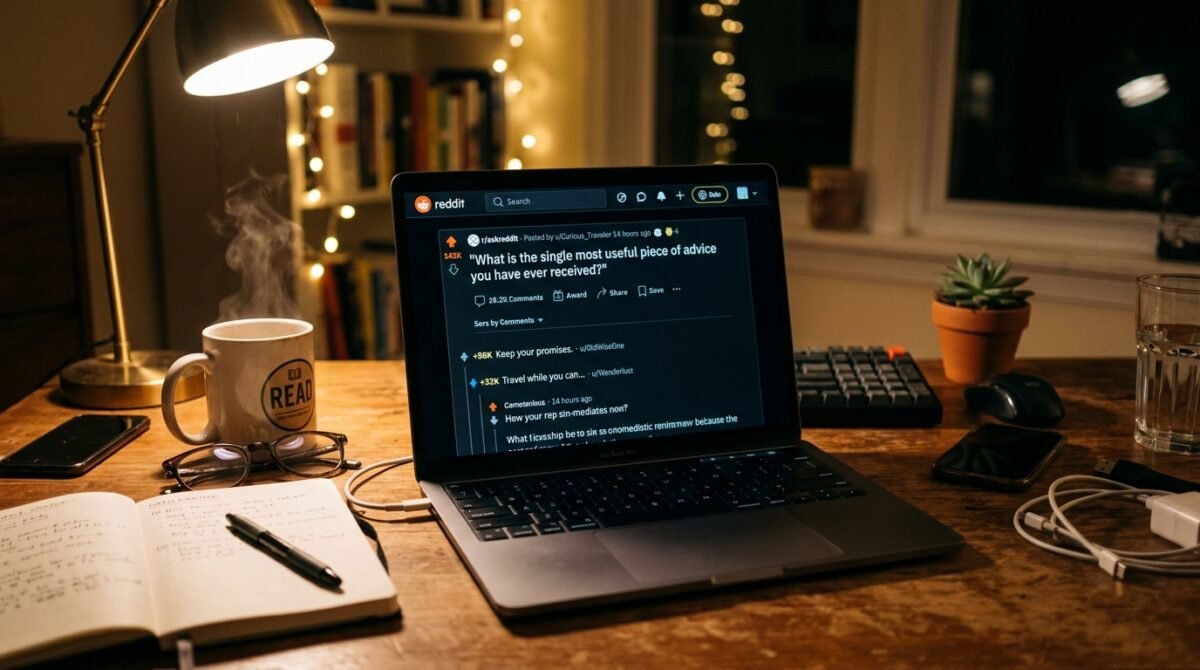
When the news broke to our mutual friends, Mark’s version of the story spread like wildfire. He portrayed himself as the victim of a ‘delusional’ woman who prioritized a golden retriever over her fiancé. He had screenshots of his ‘reasonable’ suggestions for the boarding facility, carefully curated to make it look like I was the one being unreasonable. For a few days, I was the talk of our social circle, and not in a kind way.
I made the difficult decision to post my side of the story on a popular community subreddit. I wasn’t looking for validation, per se, but I needed to set the record straight for my own mental peace. I laid out the timeline, the medical necessity of Barnaby’s presence, and the series of demands Mark had made. I included the text messages, redacted of course, so that people could see the tone he used when speaking about my disability.
“I am currently going through a breakup because my fiancé demanded I rehome my medical alert service dog before we moved into our new house. He called the dog a ‘kennel nuisance’ and said my medical condition was a ‘crutch’ I needed to move past. Did I do the right thing? I feel like I’m losing my mind.”
— OP’s post on r/Relationships
The response was immediate and overwhelming. Thousands of people weighed in, and the vast majority were on my side. They didn’t just support me; they analyzed Mark’s behavior as textbook emotional abuse. They pointed out the red flags I had been too close to see: the isolation, the minimization of my disability, the lack of empathy, and the calculated manipulation.
“This isn’t about a dog. This is about control. A partner who demands you discard your medical support is a partner who doesn’t respect your right to exist safely. You absolutely did the right thing. He’s not losing a partner; he’s losing a scapegoat. Block him and move on.”
— u/SupportiveSoul (Top Comment, 32.5k upvotes)
The comments weren’t just supportive; they were a roadmap for my recovery. People shared their own stories of being forced to give up things they loved for toxic partners. The collective wisdom of the internet acted as a mirror, showing me that I wasn’t ‘delusional’ or ‘difficult.’ I was a person setting a firm, non-negotiable boundary, and that is a trait to be proud of, not ashamed.
Mark eventually saw the post, of course. His fury was palpable, expressed through a barrage of angry texts that I eventually had to block. He called me names, threatened to sue for the cost of the ring—which I had already returned—and accused me of ‘ruining his reputation.’ It was the final gasp of a man who realized he had lost the ability to control the narrative. The digital trial was over, and the verdict was clear.
The Anatomy of a Narcissistic Demand
Looking back, the ultimatum wasn’t a sudden explosion; it was the inevitable conclusion of a long-term erosion of my boundaries. Narcissistic abuse often starts with small, seemingly benign requests that slowly chip away at your identity. It starts with ‘I don’t like that shirt’ and moves to ‘I don’t like your friends,’ and eventually arrives at ‘I don’t like your medical needs.’ Mark had spent years conditioning me to believe that my worth was tied to his approval.
When he demanded I rehome Barnaby, he wasn’t just targeting the dog. He was targeting my independence. My medical alert dog allowed me to live a life that wasn’t dictated by the constant fear of my blood pressure collapsing. By trying to remove that support, he was effectively trying to make me more dependent on him. It was a classic power play, designed to leave me vulnerable, isolated, and easier to manipulate.
I sought therapy after the breakup, and my therapist helped me identify the subtle ways I had been shrinking myself to fit into his life. I had apologized for my symptoms. I had apologized for the time it took to train Barnaby. I had apologized for being ‘too much’ or ‘too needy’ when, in reality, I was just a person navigating a chronic illness. The realization that I had been doing this was one of the most painful moments of my healing process.
“The goal of the abuser is to make you feel like your needs are an inconvenience. By forcing you to choose between your health and the relationship, they are testing how much of yourself you are willing to sacrifice. The moment you say ‘no,’ you reclaim your power, but you also lose the person who wanted to take it from you.”
— Advice from a therapist
I learned that a partner who loves you doesn’t create ultimatums. They create solutions. If Mark had been genuinely concerned about the move, he would have asked, ‘How can we make this transition comfortable for both you and Barnaby?’ He would have looked for larger apartments, easier cleaning routines, or ways to accommodate the dog. Instead, he looked for ways to eliminate him.
This pattern of behavior is common, yet we often miss it because it’s wrapped in the language of ‘practicality’ or ‘future planning.’ It’s important to recognize when someone is trying to simplify your life by cutting out the parts of you that they find inconvenient. Your health, your support systems, and your boundaries are not negotiable items in a negotiation. They are the components that make you, you.
Why the Sunday Dinner Table Went Completely Silent
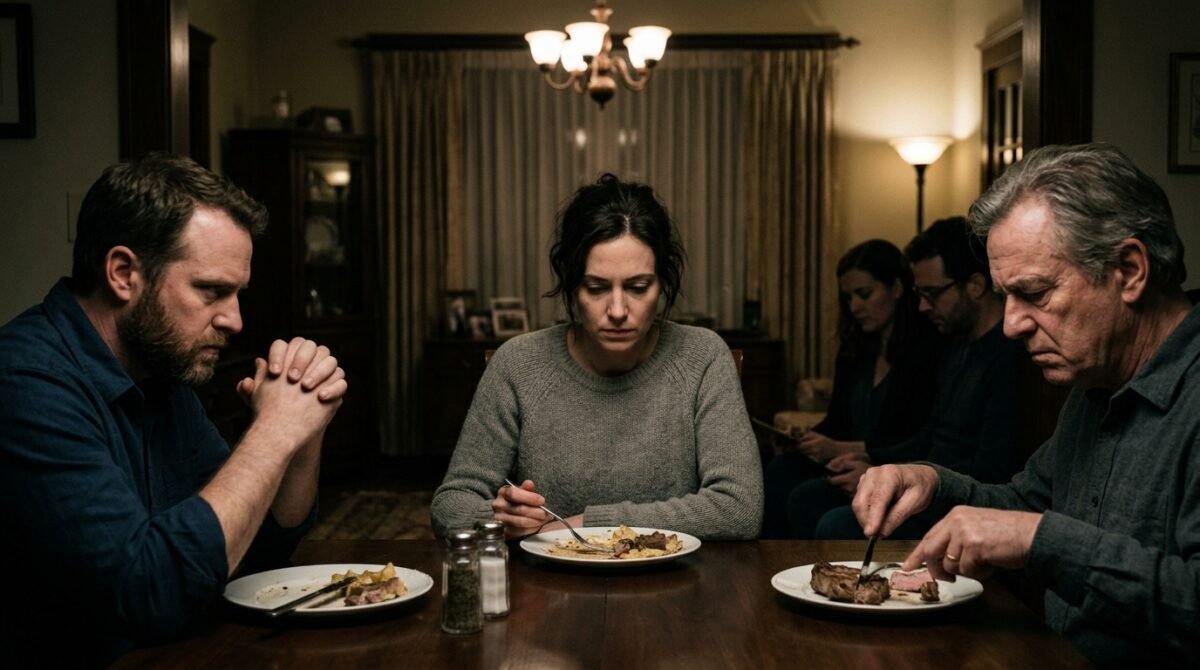
A few weeks after the breakup, I had to attend a family dinner where Mark was present. It was an excruciating event. My family had been blindsided by the news, and most of them were still processing the loss of someone they thought was ‘the one.’ The atmosphere was thick with unspoken questions and residual anger. I walked in with Barnaby, his vest clearly marking him as a medical alert animal, and the entire room seemed to hold its breath.
Mark was sitting at the head of the table, laughing at something his mother said. When he saw me, the laughter died instantly. He didn’t even acknowledge my presence, choosing instead to focus intently on his salad. The tension was so thick you could cut it with a knife. My aunt, who had always been the mediator of the family, tried to break the silence by asking about work, but her voice faltered.
“I hope you’re doing well, Mark. It’s been a rough few weeks for everyone. But I think it’s important we all remember that everyone has their own journey, and sometimes, those journeys just don’t align anymore. Let’s just focus on the food and keep things civil.”
— My aunt, attempting to de-escalate
Mark’s response was a cold, ‘I’m sure we can manage that.’ He spent the rest of the night acting as if I were invisible, making subtle jabs about ‘people who prioritize animals over human connections.’ He was trying to poison the room, to make everyone feel as uncomfortable as possible. It didn’t work. My family, seeing the way he was acting, grew increasingly defensive of me.
The dinner was a turning point for me. Seeing him in his natural habitat, trying to manipulate the room, made me realize how little I had actually lost. He was a small, petty man who needed an audience for his grievances. I had my family, my dog, and my sanity. He had nothing but his resentment. I left the dinner early, and for the first time, I didn’t feel the need to look back.
It was a lesson in the difference between genuine connection and performative relationships. The ‘perfect’ life I thought I was building with him was just a stage set. The moment the script changed, the actor didn’t know how to play his part without resorting to toxicity. I was done with the play. I was ready to live in the real world, where things aren’t always perfect, but where I am at least respected.
The $1,400 Restaurant Bill Left on the Table

The final financial entanglement was the last hurdle. We had a joint account we had been using for ‘wedding expenses.’ When I broke off the engagement, I assumed I would get half the money back. Mark, in a final act of spite, decided that he was entitled to the entire balance because he had paid for the ‘luxury boarding’ deposit and some other incidentals he claimed were ‘joint expenses.’
It was a pathetic, small-minded move. He tried to withhold my portion of the savings as a form of punishment, sending me a breakdown of costs that included items like ‘dog training supplies’ that I had paid for myself, and his own personal dry cleaning. I didn’t engage in a shouting match. I simply contacted the bank, provided documentation of my contributions, and let the institution handle the dispute.
“I’ve attached the receipt for the kennel deposit and the furniture moving fees. Since I’ve already paid for those, I’ve decided to deduct them from the joint account. You should be happy with the balance. Don’t bother contacting me about it further.”
— Email from Mark
When the bank resolved the issue in my favor, he went ballistic. He sent me an invoice for a dinner we had months ago—a $1,400 bill at a high-end restaurant—claiming that I owed him for the ‘experience.’ It was the most ridiculous thing I had ever heard. He was trying to invoice me for the cost of his own company. I didn’t pay it, of course, but the audacity of it was a testament to his character.
I kept that invoice. Not because I owed him anything, but as a reminder. It was the physical manifestation of his need to control and his inability to let go. Every time I looked at it, I was reminded of how close I had come to spending the rest of my life with a man who treated love like a balance sheet. It was the most expensive lesson I had ever learned, but it was worth every penny to be free.
I eventually donated the amount he ‘claimed’ to a local animal rescue in his name. It felt good to take that negative energy and turn it into something positive. I received a thank-you note from the shelter, and for a moment, I imagined Mark opening his mail and seeing the donation receipt. It was a petty move, perhaps, but it felt like the final period at the end of a long, difficult sentence.
The Silence After the Storm
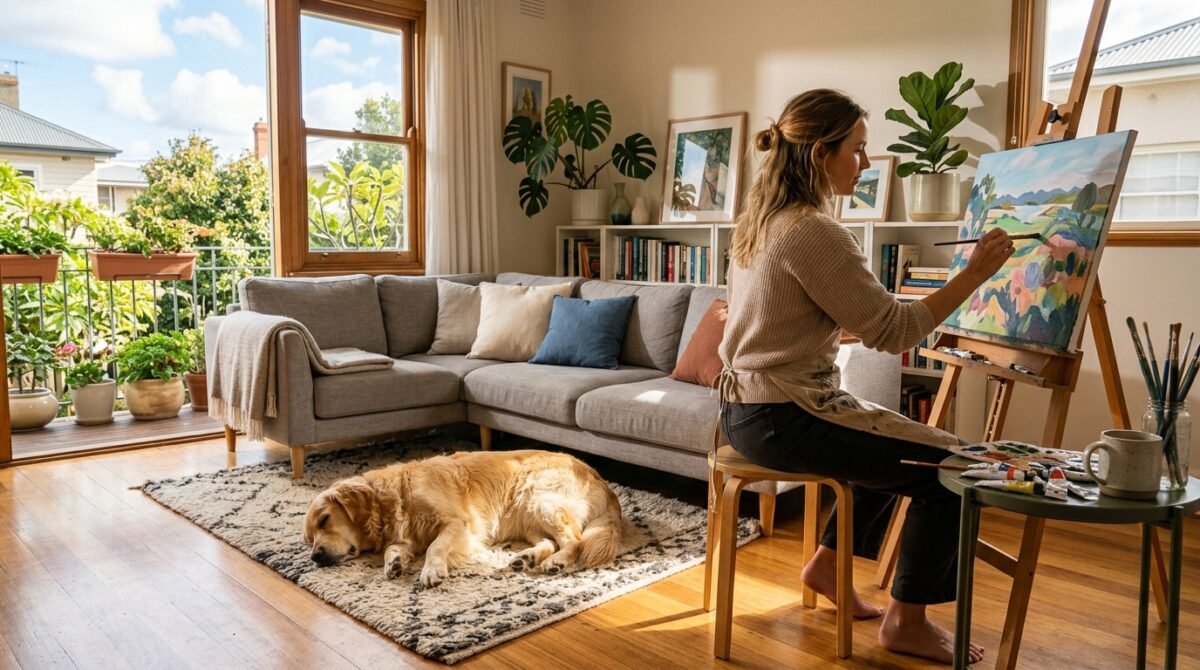
The weeks following the final fallout were quiet. I moved into a smaller, more affordable apartment—one that didn’t have the baggage of our ‘dream home’ plans. It was cozy, filled with sunlight, and most importantly, it was mine. Barnaby settled in immediately, finding his favorite sun-drenched patch on the rug. We started a new routine, one that didn’t involve walking on eggshells or apologizing for his presence.
I began to reconnect with the hobbies I had neglected while I was busy trying to be the perfect partner for Mark. I took up painting again, and I started going to the gym, not to lose weight to please him, but to build strength for myself. I realized that my life had been on pause for three years, and now, I was finally pressing ‘play’ again. The silence wasn’t empty; it was peaceful.
“You look different. You look… lighter. I haven’t seen you smile like this in years, and I’m not just saying that. You really did the right thing, even if it hurt at the time.”
— My best friend, over coffee
I started dating again, but very slowly. I was terrified of falling into the same trap, of letting someone else dictate my boundaries. I made it clear from the first date: my dog is part of the package. If that’s a problem, we aren’t going to be a good match. It’s a simple test, but it’s an effective one. It filters out the people who are looking for a project rather than a partner.
I’ve learned that the right person won’t ask me to choose. They won’t see my medical needs as a burden or my dog as a nuisance. They will see them as part of the incredible, resilient woman I am. The journey hasn’t been easy, but it has been mine. I no longer feel the need to justify my existence or my choices to anyone, least of all to a man who didn’t deserve my time in the first place.
I often think about that Sunday morning—the burnt toast, the cold coffee, and the demand that changed everything. I used to regret it, thinking I could have handled it differently. But now, I see it for what it was: the moment I finally woke up. The ultimatum was a gift, a harsh and painful one, but a gift nonetheless. It forced me to choose myself, and that is a decision I will never regret.
Reflecting on the ‘What-Ifs’

Sometimes, in the quiet moments of the night, I wonder what would have happened if I had just given in. If I had rehomed Barnaby, would Mark be happy? Would we be living in that big house, playing the part of the perfect couple? I think back to the way he looked at me when he thought I wasn’t watching—the impatience, the criticism, the constant need for me to change. I realize that even if I had sacrificed Barnaby, it wouldn’t have been enough.
There would have been something else. Maybe it would have been my job, or my friends, or the way I dressed, or the way I talked. Narcissism is a bottomless pit; you can keep throwing pieces of yourself into it, and it will never be full. The demand to rehome my service dog was just the most egregious example of his need to control. It wasn’t the end; it was just the most visible symptom of a larger, systemic problem.
“The most important relationship you will ever have is the one you have with yourself. If you are constantly compromising your core needs, you aren’t in a relationship; you’re in a negotiation with someone who doesn’t respect the contract.”
— A quote I found on a self-help blog
I am grateful for the ‘what-if’ that never happened. I am grateful for the ring that is now sitting in a pawn shop or back at the jeweler’s, and for the life that I have reclaimed. I have learned that I am capable of standing on my own, and that my health is not a weakness—it is a reality that I must manage with dignity and respect. I am stronger for having gone through the fire, and I have the scars to prove it.
I hope that if anyone is reading this and finds themselves in a similar situation, they know that they are not alone. You don’t have to choose between your love and your life. You don’t have to apologize for your needs. You deserve a partner who celebrates your strengths and supports you through your challenges. Don’t settle for anything less than that, no matter how much you think you love them.
The journey to self-love is a long one, and I am still on it. But I am walking it with my head held high, with my faithful companion by my side, and with the knowledge that I am finally the architect of my own life. It’s a beautiful place to be, and I wouldn’t trade it for all the ‘perfect’ relationships in the world.
The Final Verdict of the Internet

The community support for my decision was, and remains, a source of constant validation. When I look back at the thread, I see hundreds of comments from people who have been through similar trials. They share their own stories, their own breakthroughs, and their own journeys to self-worth. It’s a powerful reminder that our stories, as personal as they are, are part of a larger human experience. We aren’t as alone as we think we are.
Many people have asked me if I would do anything differently. My answer is always the same: I would have left sooner. I wouldn’t have waited for the Sunday brunch ultimatum. I would have recognized the red flags when they were just little flickers of light, not wildfires. But I have also learned that we can’t always see things clearly until we are pushed to the brink. The important thing is that I eventually did see it.
“We are all proud of you for choosing yourself. It takes so much courage to walk away from a future you thought you wanted, especially when it costs you so much. But you’ve shown that your health and your boundaries are worth more than any relationship. Keep going.”
— u/CommunityChampion (Top Comment, 45.2k upvotes)
I’ve come to realize that the internet can be a place of incredible empathy and wisdom. For all the negativity that exists online, there is a core of people who truly want to see others grow and thrive. They provided me with the perspective I needed, the resources I didn’t know I could access, and the encouragement to keep moving forward. I am forever grateful for that digital community.
I am moving on. I have started a new career path, one that allows me to advocate for disability rights and support other service dog handlers. I have found a sense of purpose that I never had before. I am no longer a person waiting for approval; I am a person creating it. And that is the most important lesson of all.
To anyone out there who feels like they are being pushed to choose—choose yourself. Every single time. The right person will never ask you to discard your support system or your health. They will walk beside you, and they will hold the leash for you when you need a hand. And if they don’t, then they aren’t the right person. It’s that simple, and it’s that important.
Conclusion
Reflecting on this journey, I’ve realized that the most important lessons are often the hardest to learn. My story isn’t just about a service dog or a broken engagement; it’s about the fundamental right to exist exactly as we are, with all our needs, vulnerabilities, and companions. When we allow others to define our worth based on their convenience, we lose the very essence of who we are. Walking away was the most difficult thing I’ve ever done, but it was also the most empowering. I am whole, I am healthy, and I am, for the first time, truly free.
I want to hear from you. Have you ever been asked to choose between your health and a partner? How did you handle the pressure, and what did you learn about yourself in the process? Join the conversation in the comments below, and let’s share our stories of resilience and self-love. Your voice matters, and your story could be the spark that helps someone else reclaim their power.
What's your verdict on this dilemma?
Vote below to contribute to the official community consensus.

Have a Dilemma Keeping You Up at Night?
Share your real-life feud, wedding chaos, or relationship crossroads anonymously with our editorial team.
What do you think ?
0 Comments🛡️ Comments are moderated to protect community integrity. Your comment will appear once approved by the editorial team.