
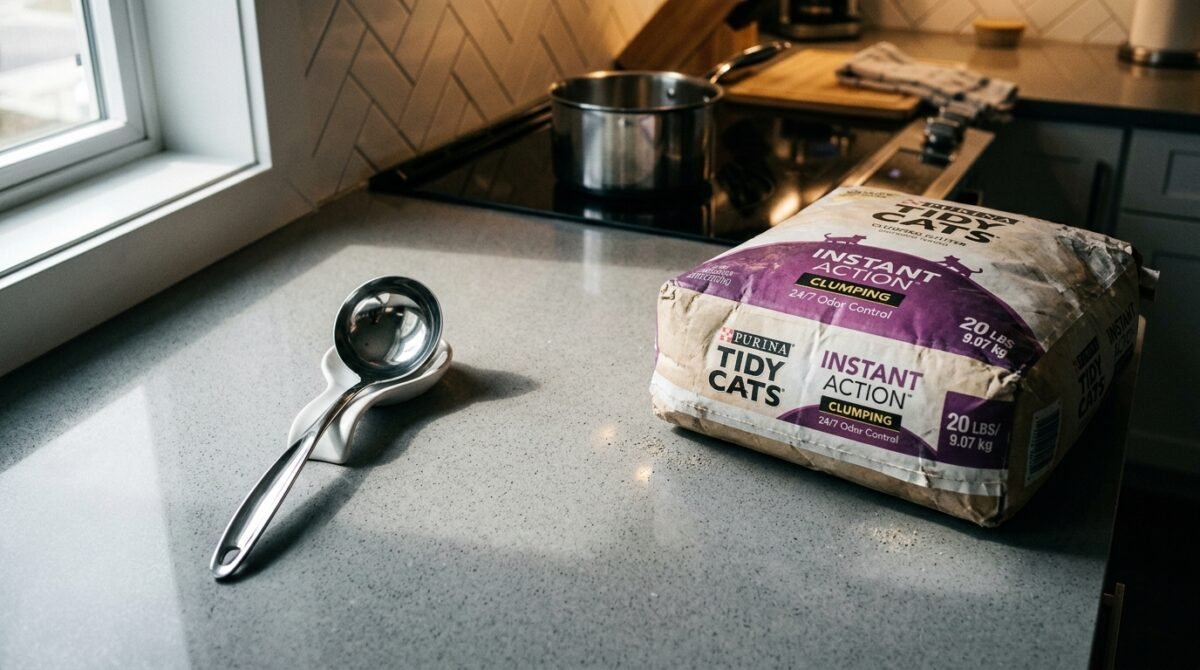
Living with a roommate is often described as a social experiment, one that frequently results in a catastrophic failure of hygiene standards and boundary management. For years, I prided myself on maintaining a pristine living space with my roommate, Sarah. We had a system: bills were split down the middle, chores were rotated, and our kitchen was our pride and joy, stocked with high-quality, professional-grade cookware that we had both chipped in to purchase.
However, the veneer of our domestic harmony began to crack months ago, starting with small, almost imperceptible shifts. A missing mug here, an unwashed pan left to soak for days there. I attributed it to the stress of her new job, but the red flags were mounting. It wasn’t until a Tuesday evening, when I walked into the kitchen to start dinner, that the reality of our shared living situation hit me with the force of a wrecking ball. The sight I witnessed wasn’t just a breach of house rules; it was a fundamental violation of sanity.
There she was, standing over the litter box in our guest bathroom, utilizing the very tool we used to serve Sunday night linguine to dig through clumps of feline waste. The sheer audacity, combined with the visceral disgust of the moment, left me paralyzed. It wasn’t just about the ladle; it was about the years of unspoken entitlement that had led to this moment. That night, I didn’t scream. I didn’t fight. I retreated to my room and opened a spreadsheet, beginning an itemized document that would eventually end our friendship forever.
This story isn’t just about a kitchen utensil. It is about the breaking point that occurs when a person realizes their boundaries have been systematically eroded by someone they once trusted. It is about the aftermath of a confrontation that couldn’t be smoothed over with an apology, and the cold, hard logic of an invoice that served as the final chapter of our living arrangement.
The Tuesday Night Discovery

The sound was distinct—a rhythmic, metallic scraping against plastic. I had just walked through the front door, exhausted from an eleven-hour shift at the office. The house was quiet, save for that persistent, grating noise coming from the direction of the guest bathroom. As I rounded the corner, my brain struggled to process what my eyes were seeing. Sarah had the stainless steel pasta ladle, our pride and joy from the wedding registry set we’d bought together, buried deep in the litter.
She didn’t hear me at first. She was focused, almost clinical in her approach, ensuring that every grain of clay and waste was accounted for. When she finally looked up, her expression wasn’t one of guilt or embarrassment; it was one of mild irritation, as if I had walked in on her during a private phone call. She didn’t move the ladle. She didn’t drop it. She just stared at me, the clumped waste still clinging to the metal teeth.
“Are you kidding me right now? You are using the pasta ladle to scoop that?” I managed to choke out, my voice trembling with a mixture of rage and disbelief.
— My initial confrontation
Sarah rolled her eyes, sighing as if I were being unreasonable. She tapped the edge of the litter box, causing a cloud of dust to billow up. “It’s just a ladle, okay? The scoop broke two days ago and I didn’t want to get litter on my hands. It’s metal, it washes off. Chill out, you’re being dramatic.”
The word ‘dramatic’ was the final spark in a room full of gasoline. I watched as she set the ladle down on the edge of the bathtub, right next to a damp towel. The realization hit me then that this wasn’t an isolated incident. If she was comfortable doing this in plain sight, what had she been doing when I wasn’t home? My mind raced through every meal we’d shared in the last few months, every pasta night, every dinner party. I felt physically ill.
The Spreadsheet of Resentment

I didn’t argue. I didn’t engage in the shouting match she clearly wanted. Instead, I retreated to my room, locked the door, and opened my laptop. I didn’t want to talk; I wanted to track. I went through our shared bank statements, our Amazon purchase history, and the receipts I had filed away in a folder labeled ‘Shared Expenses.’ If she wanted to treat our home like a casual hotel, she could pay the price of admission.
I created a spreadsheet titled ‘Kitchenware Replacement & Depreciation.’ Every item we owned—the Dutch oven, the non-stick skillets, the chef’s knives—was accounted for. I didn’t just add the current cost; I added a ‘hygiene violation surcharge.’ My hands shook as I typed. I wasn’t just being petty; I was reclaiming my space and my health. The total came to $1,240.50.
“I’m not paying you for a bunch of pans just because you think I’m ‘gross.’ You’re being insane and vindictive.”
— Sarah’s text message received at 11:45 PM
I sent the invoice via email, attaching a PDF that clearly outlined every item, its original price, and the reason for the replacement. I also included a firm deadline: payment within 48 hours, or I would be taking the kitchenware with me when I moved out, regardless of who paid for it initially. It was a bold, aggressive move, and I knew it would burn the bridge to the ground.
By the next morning, my phone was buzzing incessantly. Sarah had sent a flurry of messages, ranging from ‘you’re crazy’ to ‘I’ll just buy new ones if you’re going to act like a child.’ But the damage was done. The trust was gone, and no amount of money could sanitize the mental image of that ladle in the litter box. I wasn’t looking for a reconciliation; I was looking for a clean break.
The Group Chat Intervention

It didn’t take long for the drama to spill over into our wider friend circle. Sarah, ever the victim, decided to broadcast her version of the events to our mutual friends. She framed it as me ‘losing my mind over a spoon,’ conveniently omitting the specific nature of how that spoon was used. The group chat, once a place of planning brunch and concerts, quickly turned into a theater of war.
My phone pinged with messages from people I’d known for years, some asking what happened, others accusing me of being ‘over-the-top.’ I decided to post a neutral, factual explanation. I didn’t use names initially, just the situation. “If your roommate used your kitchenware to clean a litter box, would you consider that grounds for immediate replacement?” The response was overwhelming, and it wasn’t what Sarah expected.
“Wait, she actually used a pasta ladle? That’s not just a hygiene issue, that’s a mental health red flag. Do not pay for anything, she owes you the replacement cost of every single piece.”
— u/KitchenConfidential (Comment on my post, 12.4k upvotes)
The tide turned quickly. When people learned the truth about the litter, the ‘crazy’ label shifted from me to her. Sarah went radio silent on the group chat, but the damage to her reputation was done. It wasn’t about me being petty; it was about common decency. My friends started messaging me privately, offering to help me move out or just to listen to me vent about the absolute insanity of the situation.
I watched from my room as Sarah paced the living room, her face illuminated by the blue light of her phone. She was clearly losing the battle of public opinion. I didn’t feel triumphant, though. I felt tired. The sheer energy required to defend my boundaries against someone who simply refused to acknowledge them was draining my spirit. I just wanted to be in a place where I didn’t have to worry about the tools I used to cook my dinner.
The Final Face-Off

The 48-hour deadline arrived on a Thursday. I came home to find Sarah sitting at the kitchen table, the invoice printed out and laid flat on the granite. She looked exhausted, her eyes red-rimmed. She didn’t look like the person who had been mocking me in group chats; she looked like someone who had finally realized the gravity of her actions. Or perhaps, she just realized she was about to be homeless and without a kitchen.
“I have the money,” she said, her voice barely a whisper. She pushed a check across the table. It was for the full amount. She didn’t look at me, and I didn’t look at her. The silence in the kitchen was heavy, punctuated only by the hum of the refrigerator. I picked up the check, tucked it into my bag, and turned to walk toward my room.
“I hope that ladle was worth it, Sarah. Because I’m gone by the end of the month.”
— My final words to her
She didn’t respond. There was nothing left to say. The check was a surrender, an admission that she understood why I was leaving. I felt a strange sense of closure. The money didn’t matter as much as the validation that my boundaries had been recognized, even if it was only through a financial transaction. I started packing my boxes that night, beginning with the kitchenware.
It was strange, wrapping each item in bubble wrap, knowing that they were officially mine now. Every plate, every glass, every utensil represented a transition. I wasn’t just moving to a new apartment; I was moving toward a life where I wouldn’t have to wonder if my living space was being contaminated by someone else’s complete lack of regard for health and safety.
Cleaning the Slate

The move-out process was efficient and cold. I hired movers, and we worked in silence. Sarah stayed in her room, the door firmly closed. I made sure to clean every inch of the kitchen before I left, not because I owed it to her, but because I wanted to leave the space exactly as I found it—or rather, as I wanted it to be. I replaced the ladle, even though I didn’t have to, leaving a brand-new one on the counter for her.
It was a final act of passive-aggression, perhaps, but it felt necessary. I wanted her to see what she had lost. I wanted her to know that I held no malice, just a complete and total lack of interest in continuing a relationship with someone so fundamentally different in their values. The house felt empty as I took my last box out to the truck.
“You’re really going to just leave? No conversation? No ‘let’s work through this’?”
— Sarah, finally coming out of her room as I finished loading the truck
I stopped and looked at her. “There’s nothing to work through, Sarah. You chose a shortcut that destroyed our trust. I’m choosing a living situation that respects my boundaries. We are not compatible, and that’s okay. Good luck.” I didn’t wait for her to answer. I closed the door, stepped into the truck, and didn’t look back.
The drive to my new place felt like a weight being lifted. For the first time in months, I didn’t feel the need to check the kitchen or worry about what was happening in the bathroom. I was in control again. The ‘ladle incident’ became a cautionary tale I told friends, a bizarre chapter that solidified my resolve to never compromise on my living standards again.
Reddit Weighs In: The Verdict

I decided to share the full story on Reddit a few weeks later, curious if I’d acted too harshly. The community response was fast and incredibly supportive. While there were a few people who thought I was being ‘too extra’ with the invoice, the overwhelming majority were horrified by the litter box situation. It was a fascinating look into the collective psyche of people who have lived with ‘nightmare roommates.’
The comments section turned into a treasure trove of stories that made mine look almost tame. People shared tales of roommates who used toothbrushes to clean drains, or who didn’t shower for weeks, or who stole money directly from their wallets. It was a sobering reminder that I wasn’t alone in my struggle to find a decent living companion.
“NTA. You didn’t just charge her for the items; you charged her for the mental trauma of knowing your dinner was prepared with a tool used for animal waste. I would have charged triple.”
— u/JusticeForKitchenware (28.4k upvotes)
The debate about the invoice was particularly interesting. Some users argued that I should have just moved out without the money, while others insisted that holding her accountable was the only way to teach her a lesson about boundary setting. It was the first time I felt truly understood. The ‘petty’ act of sending an invoice was viewed by most as a necessary act of setting a boundary.
I spent hours reading the comments, finding solace in the fact that my reaction was considered normal by thousands of people. It validated my feelings of disgust and my decision to cut ties. I realized that the conflict wasn’t about the ladle; it was about the fundamental respect that is required for cohabitation to work. And Sarah, quite clearly, didn’t have it.
The Psychology of Entitlement

In the aftermath, I did a lot of reflecting on why Sarah felt so comfortable doing what she did. It wasn’t just a lapse in judgment; it was a deeper sense of entitlement that had been building for months. She had become so accustomed to me handling the ‘grown-up’ tasks—paying the utilities, managing the cleaning schedule, buying the shared items—that she stopped viewing me as an equal.
When you stop viewing someone as an equal, you stop respecting their boundaries. The ladle wasn’t a tool; it was just an extension of her convenience. She didn’t care about the consequences because, in her mind, I would just deal with it. It’s a dangerous dynamic, one that often leads to exactly the kind of explosion I experienced.
“I never realized how much I was enabling her until I saw the look on her face when I handed her that invoice. She wasn’t just surprised; she was offended that I was finally standing up for myself.”
— My internal reflection in my journal
This realization was the most important part of my healing process. It taught me that setting boundaries isn’t just about what you do; it’s about what you tolerate. By tolerating the small ‘missing’ items and the ‘ignored’ chores, I had signaled that my boundaries were flexible. It took a massive, disgusting violation to force me to draw a hard line, but it was a lesson I’ll carry with me forever.
Moving forward, I’m much more cautious. I interview potential roommates like I’m hiring for a business role, and I’m upfront about my expectations from day one. I no longer feel the need to be the ‘nice’ roommate. I need to be the ‘respectful’ roommate, and I expect the same in return. It’s a healthier, more sustainable way to live.
Living Alone: The New Standard

Life in my own place is bliss. There are no dishes in the sink that aren’t mine. There is no mystery about what happened to my kitchen tools. The bathroom is pristine, and the cat litter remains in the guest bathroom, far away from any kitchen implements. It’s a level of peace I hadn’t realized I was missing until I finally achieved it.
I still occasionally get a pang of nostalgia for the fun times Sarah and I had before the decline, but it’s easily overshadowed by the relief of living alone. I’ve invested in better cookware, and I treat each piece with care, knowing that it’s mine and it’s safe. It’s a small thing, but it’s a reflection of the pride I take in my home.
“The cost of living alone is higher, but the value of my sanity is priceless. I’ll never go back to splitting a kitchen.”
— My thought on a Sunday morning coffee
I’ve learned to appreciate the silence. I listen to podcasts while I cook, and I dance in the kitchen without worrying about who might be watching or judging. It’s a freedom that I didn’t know I craved until I was denied it for so long. The ladle incident was the catalyst, but the result was a transformation of my entire living philosophy.
Sometimes, I look at that new ladle I bought, and I have to laugh. It’s a ridiculous, absurd story, but it was the defining moment of my late twenties. It taught me about self-worth, about the power of saying ‘no,’ and about the necessity of protecting my environment. It was worth every cent of the invoice.
Financial Lessons Learned

Beyond the personal conflict, there was a real financial lesson in this entire ordeal. I realized that my lack of a clear ‘exit strategy’ for shared purchases had left me vulnerable. I had assumed that we were ‘in this together,’ but the reality is that shared ownership without clear legal or written agreements is a recipe for disaster.
I started using a dedicated app to track shared expenses, and I kept a digital record of every single item we purchased. It wasn’t about being paranoid; it was about being smart. If I ever do live with a roommate again, I’ll have a clear, written agreement about what happens to shared items if we move out, or if a boundary is violated.
“Always have a paper trail. You never think you’ll need it until the moment you do, and when you do, it will save you hundreds if not thousands of dollars.”
— Advice to a friend moving in with a partner
It’s a boring, practical lesson, but it’s essential. We often think that friendships are enough, that ‘we’re cool, we don’t need to sign anything.’ But friendships change, and people’s priorities change. Having a clear, established system for finances takes the emotional weight off of disagreements. It turns a potential drama into a business transaction, which is exactly what it should be.
I’m proud of how I handled the invoice. It wasn’t just a way to get my money back; it was a way to make the conflict concrete, to force a resolution, and to ensure that I wasn’t the one paying for someone else’s lack of respect. It’s a strategy I’ll use for the rest of my life.
Moving Forward With Confidence

Looking back, I don’t regret the way I handled the ‘ladle incident.’ It was messy, it was confrontational, and it was the end of a friendship. But it was also the beginning of a stronger, more assertive version of myself. I realized that I don’t owe anyone my silence when my boundaries are being violated, and I don’t owe anyone an explanation for why I value my health and my space.
I’ve reached a point where I can talk about the story and laugh, which I think is the ultimate sign of healing. It’s no longer a source of pain or resentment; it’s a story I tell at dinner parties to show how far I’ve come. And usually, someone else will chime in with their own ‘horror story,’ and we’ll share a laugh over the absurdity of human behavior.
“Boundaries aren’t walls; they’re the gates that allow you to invite people in on your terms. If someone tries to kick down the gate, you don’t keep the door open.”
— My favorite self-help quote
I’m excited for the future. I have a home that I love, a kitchen that is mine, and a life that is defined by my own standards, not by someone else’s indifference. The ladle is long gone, probably sitting in some junk drawer or, heaven forbid, back in a litter box, but it no longer has any power over me. I’ve moved on.
For anyone else out there struggling with a roommate who refuses to respect the basics, my advice is simple: don’t wait for the ‘ladle moment.’ If the red flags are there, start planning your exit. Your sanity is worth more than the convenience of splitting rent. You deserve a space where you feel safe, respected, and, most importantly, clean.
Conclusion
The story of the cat litter ladle is, at its heart, a story about the breaking point of patience. We all have that one friend or roommate whose habits start as minor annoyances and gradually evolve into something much larger. By the time the realization hits, the resentment has already taken root, making a clean break inevitable.
I chose to document the betrayal through a financial invoice—not because I cared about the money, but because I needed to make the violation as objective and undeniable as possible. It was the only way to communicate that the friendship had reached its end. Today, I live in a space that is entirely my own, free from the stress of navigating someone else’s poor hygiene choices.
I encourage all of you to reflect on your own living situations. Have you been tolerating ‘minor’ violations that are actually chipping away at your peace of mind? Don’t wait for a dramatic, cinematic moment to draw your line. Do it today. And for those who have had their own ‘ladle moments,’ tell us in the comments—what was the final straw that made you realize it was time to move on?
What's your verdict on this dilemma?
Vote below to contribute to the official community consensus.

Have a Dilemma Keeping You Up at Night?
Share your real-life feud, wedding chaos, or relationship crossroads anonymously with our editorial team.
What do you think ?
0 Comments🛡️ Comments are moderated to protect community integrity. Your comment will appear once approved by the editorial team.