

Living with roommates is often described as a trial by fire, but for most, that fire is limited to passive-aggressive notes about dirty dishes or disagreements over the utility bill. For me, the conflict began not with a late rent payment, but with the metallic, screeching sound of my Great-Grandmother’s 1940s-era cast iron skillet being dragged out of the dishwasher.
It wasn’t just a pan. It was a tangible piece of my family history, seasoned over eight decades, passed down from my great-grandmother to my mother, and finally to me when I moved into my first apartment. It was the only thing I owned that felt truly irreplaceable. When I returned home from a long shift at the office, the kitchen smelled of soap and ruin, and there it sat—grey, stripped, and oxidizing, the perfect black patina of eighty years effectively obliterated in a single, high-temperature wash cycle.
My roommate, Sarah, had always been the type to take shortcuts. She viewed my ‘obsession’ with kitchen maintenance as a quirk, something she tolerated rather than respected. Despite having a printed list of ‘House Rules’ taped to the inside of the pantry door—rules that explicitly forbade the dishwasher for the cast iron—she chose convenience over caution. The aftermath wasn’t just a ruined item; it was a total breakdown of trust.
As the days turned into weeks, the tension in our shared space became thick enough to cut with a dull knife. She refused to apologize, claiming that a pan is just a pan and that my reaction was ‘neurotic’ and ‘excessive.’ When the time came for her to move out, I had to make a choice: let the resentment fester, or hold her accountable for the financial value of the item she destroyed. I chose the latter, and the fallout was nothing short of explosive.
In the following narrative, I detail the descent from casual cohabitation to legalistic confrontation. This is a story about the intersection of material value and emotional history, the weight of boundaries in a shared home, and the volatile aftermath of a deposit deduction that left both of us reeling.
The Morning the Seasoning Died
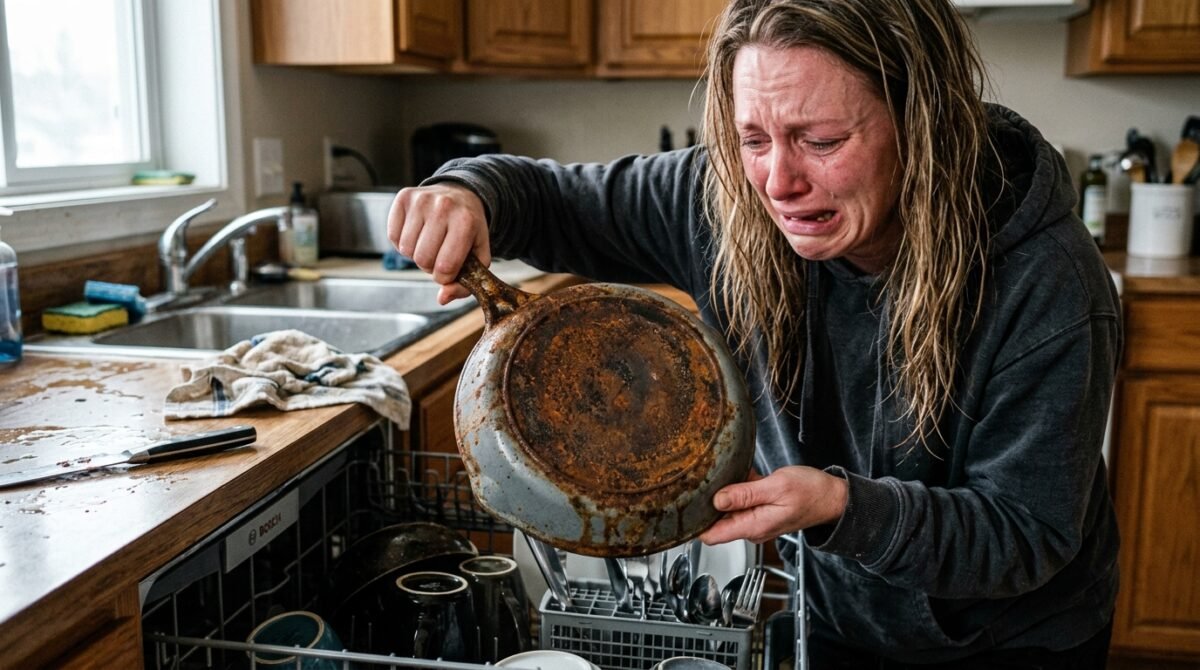
I remember the morning perfectly because it started with the quiet hum of the dishwasher. I had left the skillet on the stove, heat-treated and oiled, exactly where it belonged. When I returned from work, the machine had finished its cycle. As I pulled open the door, a plume of steam escaped, carrying the distinct, metallic scent of wet iron. There it was, sitting on the top rack, devoid of its legendary sheen.
My heart dropped into my stomach. I reached in and pulled it out; it was already starting to turn a dull, dusty grey. The seasoning—the result of decades of care, fried eggs, searing steaks, and slow-cooked stews—had been washed away by the harsh detergents and the scalding heat of the Bosch. I stood there in the kitchen, paralyzed by a strange, hollow sense of grief.
When Sarah walked in, she didn’t even notice my distress at first. She was scrolling through her phone, humming a tune, clearly oblivious to the crime scene in my hands. I held the pan up, my knuckles white, staring at her with an intensity that must have been terrifying. I needed to know why. I needed to know how she could be so blatantly careless when the rules were written in plain English on the pantry door.
“Sarah, did you put my cast iron in the dishwasher? I have told you a dozen times—this is an eighty-year-old heirloom. It is ruined.”
— Me, in the moment of discovery
She barely looked up. She glanced at the pan, shrugged, and muttered that it looked ‘greasy’ and that she was just ‘trying to be helpful’ before the landlord came for the inspection. That dismissiveness was the first crack in the foundation of our roommate relationship. It wasn’t about the pan anymore; it was about the lack of respect for my property and my family legacy.
I retreated to my room, not because I was done, but because I knew if I stayed in that kitchen, I would say something I couldn’t take back. The silence that filled the apartment for the next few hours was heavy, pregnant with the realization that my roommate didn’t value the things that defined my life. That night, I didn’t sleep. I spent hours researching the cost of vintage iron, knowing full well that no amount of money could replace the seasoning, but I needed a figure for the damage.
The Pantry Door Manifesto
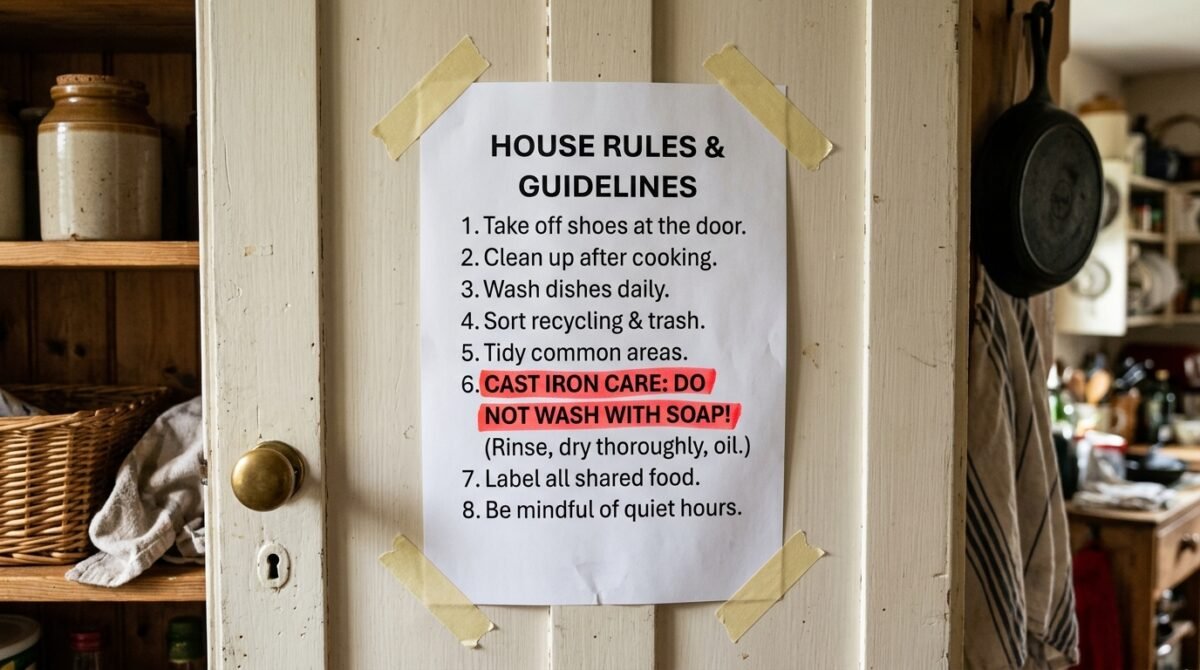
For months, I had maintained a ‘House Rules’ document. It was a simple, one-page guide intended to keep the peace. It covered everything from noise levels after 10 PM to the specific care instructions for the cast iron. I remembered specifically highlighting the section about the kitchenware. It wasn’t a suggestion; it was a requirement for living in that space. Sarah had signed the document when she moved in, a symbolic gesture of agreement that I thought meant something.
I walked to the pantry and tore the paper down. It looked pathetic now, a laminated relic of a contract that clearly had no teeth. I stood in the hallway, reading the highlighted lines over and over, wondering if I was the crazy one. Was it normal to have such rules? Most people would say yes when dealing with delicate items, but Sarah had consistently treated my boundaries like suggestions.
Our relationship had been strained for weeks prior to this. There were smaller incidents—the stolen oat milk, the unwashed blender, the refusal to take out the recycling. The cast iron was merely the breaking point. I decided then that I would not let this slide. If she didn’t care about my property, then she would pay the price for its restoration or replacement. I had to be practical, even if I was furious.
“It’s just a pan. You’re acting like I burned down the building. Get a grip, it’s literally just iron. You can buy a new one at Target for twenty bucks.”
— Sarah’s defensive text message, 9:42 PM
The text message burned on my screen. Twenty dollars? The ignorance was staggering. She didn’t understand that the value wasn’t in the metal itself, but in the history, the care, and the unique non-stick surface that takes a lifetime to build. I didn’t respond. I knew that engaging in a text-based debate would only make me look hysterical. I needed to act logically, professionally, and firmly.
I started documenting the damage. I took photos of the ruined seasoning, the rust spots, and the specific marks from the dishwasher detergent. I reached out to a local vintage kitchenware appraiser to get a professional opinion on the restoration cost. The figure they quoted me was significant. It wasn’t just ‘twenty bucks.’ It was the cost of professional re-seasoning and restoration, plus the loss of value to the heirloom itself. I was ready for the end of our lease.
The Security Deposit Calculation
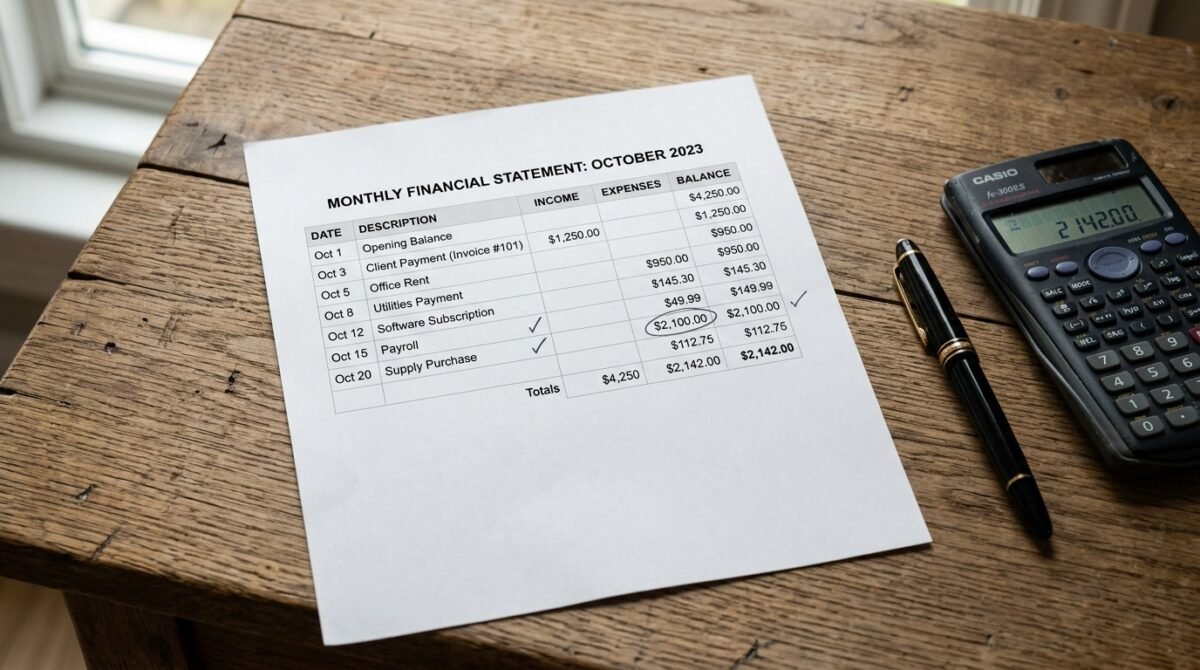
The day Sarah moved out was a flurry of boxes, tape, and icy cold silence. She expected the return of her security deposit in full, as if the last month of our living arrangement hadn’t been defined by the cast iron incident. I had already spoken to the landlord, who was supportive of my decision to withhold the amount required to repair the damage. I had the invoices, the photos, and a very clear ledger of our shared responsibilities.
I sat down at the kitchen table and laid out the spreadsheet. I had calculated the cost of the professional restoration, the inconvenience of being without my primary cooking tool for weeks, and a small deduction for the unpaid utilities she had conveniently ‘forgotten’ during the final month. The total was nearly two hundred dollars. To her, it was a nuisance; to me, it was a matter of principle.
When I handed her the itemized deduction letter, her eyes widened. She didn’t even look at the math. She immediately shifted into a defensive rage, throwing her car keys onto the counter and demanding that I write her a check for the full amount right then and there. I remained calm, which only seemed to frustrate her further. I had prepared for this moment.
“Are you kidding me? You’re keeping my money for a pan you already had? This is illegal, and I’m going to make sure you regret trying to scam me.”
— Sarah, during the deposit argument
I explained that the damage was documented, that she had signed the lease agreement regarding the care of the apartment’s shared items, and that the cost was based on professional estimates. I wasn’t ‘scamming’ her; I was recovering the value of what she had destroyed. She stormed out of the apartment, leaving a trail of packing tape and broken promises in her wake.
The silence that followed was peaceful, but it was also heavy. I had won the battle over the deposit, but I felt drained. I wondered if the cost of the pan was worth the bridges I had burned. Then, I looked at the kitchen, where my restored skillet now sat, back to its deep, obsidian black. It was worth it. Boundaries are only as strong as the consequences you enforce.
The Viral Reddit Thread

I didn’t think twice about posting the story to a popular subreddit. I wanted to know if I had overreacted. The response was immediate and overwhelming. Thousands of people chimed in, some calling me a hero for standing up for my boundaries, others suggesting I was petty for targeting the security deposit over a ‘kitchen utensil.’ The debate raged for days, reaching the front page of the platform.
I read through thousands of comments while sitting on my couch, the restored pan sitting safely on the stove. It was surreal to see my life turned into a cautionary tale. Some users were adamant that I was right, noting that respect for communal property is a fundamental part of living together. Others were equally firm that a deposit shouldn’t be used for personal items, even if they were damaged by the roommate.
“NTA. If she doesn’t respect your property, she doesn’t respect you. People who act like heirlooms are just ‘things’ are the worst kind of roommates. Keep the money.”
— u/KitchenWarrior88 (Top Comment, 15.2k upvotes)
Another perspective, however, gave me pause. A few commenters argued that while Sarah was in the wrong, using the security deposit as a personal piggy bank could lead to legal trouble with the landlord. They suggested that I should have handled it through small claims or insurance rather than mixing it with the deposit. The complexity of the situation was starting to weigh on me.
Despite the criticism, the support was comforting. It reinforced my belief that I wasn’t just fighting over a piece of iron; I was fighting for the right to live in a home where my possessions were safe from neglect. The thread became a repository for other stories of ruined heirlooms and roommate horror, proving that I wasn’t alone in this specific type of grief.
The Landlord’s Ultimatum

A week after Sarah left, the landlord called. He had received a frantic email from her accusing me of theft and illegal withholding of funds. He was a reasonable man, but he was also protective of his own assets. He asked me to come to his office to explain the situation, and I brought every piece of documentation I had: the photos, the house rules, the restoration invoice, and even the text messages.
He looked over the papers in silence. He wasn’t interested in the emotional side of the skillet, but he was very interested in the fact that Sarah had violated the house rules which he had signed off on. He admitted that while he usually discouraged tenants from settling disputes with the security deposit, in this case, the damage was a direct result of negligence that affected the apartment’s inventory.
He told me he would handle it. He would reach out to Sarah and explain that the deduction was justified based on the damage to the property inventory. I felt a wave of relief wash over me. For a moment, I thought I was back in the clear, but the drama was far from over. Sarah was not the type to go quietly, and I knew she was already plotting her next move.
“I’ve reviewed the documentation. The deduction is within the bounds of our agreement. Sarah has been notified. Expect a formal response, but I wouldn’t worry about legal action. She doesn’t have a case.”
— The Landlord, via phone call
The landlord’s backing was the vindication I needed. It proved that my actions weren’t just a fit of pique, but a measured response to a violation of trust and agreement. However, I still felt a lingering sense of unease. Sarah had a way of making everything feel like a war, and I knew that this wouldn’t be the end of our interactions.
As I hung up the phone, I looked at the pan once more. It was solid, durable, and reliable. It had survived eighty years of family history, and it had survived the dishwasher. I realized that my own resilience was being tested in the same way. I was learning to stand my ground, even when it felt uncomfortable, even when it meant enduring the scrutiny of others.
The Angry Social Media Campaign

The next morning, I woke up to a flurry of notifications. Sarah had taken our dispute to social media. She had posted screenshots of our text messages, edited to make me look unreasonable, and had even tagged me in a public post calling me ‘the worst roommate in history.’ She was playing the victim, omitting the part about the house rules and the actual value of the pan.
The comments on her post were vicious. Her friends, who didn’t know the full story, were calling me names and threatening to leave bad reviews on my professional profiles. I was suddenly at the center of a digital firestorm. It was exhausting to watch people jump to conclusions without knowing the facts, but I decided to take the high road. I wouldn’t engage in the mud-slinging.
I contacted the platforms to report the harassment, providing evidence that the posts were defamatory and based on a distorted narrative. It took time, but eventually, the posts were taken down. It was a stressful experience that made me question the nature of online discourse. How could people be so quick to condemn someone without a second thought?
“I can’t believe she’s actually doing this. She really thinks she’s the hero of this story, despite the fact that she ruined an irreplaceable heirloom and ignored the rules.”
— Me, expressing frustration to a friend
This phase of the conflict was the most painful. It wasn’t just about the pan; it was about the invasion of my privacy and the attempt to damage my reputation. I spent hours blocking accounts and privacy-locking my social media. It was a lesson in how quickly things can escalate when people feel entitled to share their unsolicited opinions on matters they don’t understand.
Ultimately, the digital drama died down as quickly as it had erupted. People moved on to the next outrage, and I was left to rebuild my peace of mind. I learned to be more selective about who I allowed into my life and, more importantly, how I shared my personal space. The experience left me more guarded, but also more certain of my own values.
The Legal Threat
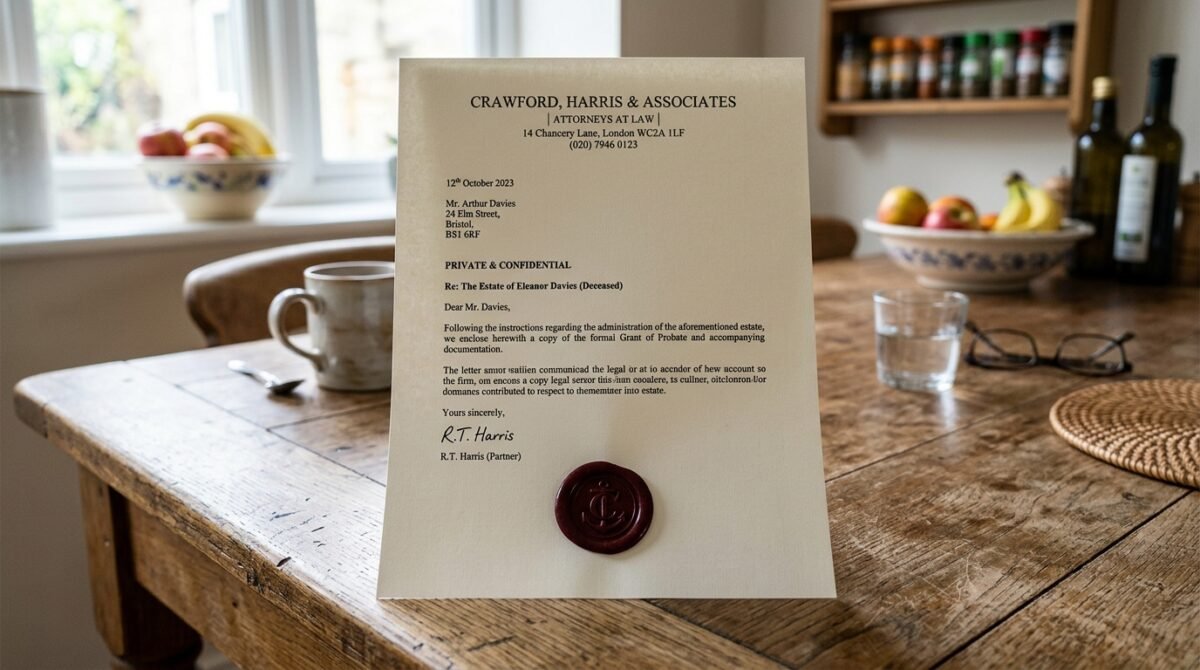
Just when I thought the dust had settled, a certified letter arrived at my door. It was from a small claims attorney representing Sarah. They were demanding the return of the deposit plus damages for ’emotional distress’ and ‘harassment.’ My hands shook as I opened the envelope. I had never dealt with a legal threat before, and the sudden reality of the situation was overwhelming.
I spent the next forty-eight hours scouring the internet for advice and consulting with a friend who had a background in law. The consensus was that the claim was largely frivolous, intended to intimidate me into backing down. The cost of legal representation would likely exceed the amount of the deposit, which was clearly her strategy. She wanted me to pay more to defend myself than the money was even worth.
I decided to fight it. I gathered my evidence, organized my timeline, and prepared for the possibility of court. I wasn’t going to be bullied by someone who had no regard for the rules or for my property. I wrote a formal response, outlining the facts of the case and the justification for the deduction, and sent it to the attorney.
“We have documented evidence of the damage, the signed house rules, and the professional appraisal. We are prepared to defend these actions in small claims court if necessary.”
— Excerpt from my formal legal response
Weeks passed in agonizing silence. Every time the mail arrived, I held my breath. The pressure was intense, and I found myself losing sleep again. But in the quiet moments, I looked at my kitchen, my home, and the life I had built for myself. I knew I had done the right thing, and I wasn’t going to let fear dictate my choices. The attorney never contacted me again.
Looking back, I think Sarah realized that I wasn’t going to fold. She had expected me to be the ‘nice’ roommate who would pay for her mistakes just to avoid conflict. She miscalculated. I was willing to go the distance to protect my rights, and that, in the end, was the most powerful lesson I could have learned from the whole ordeal.
Reflections on Materialism and Memories
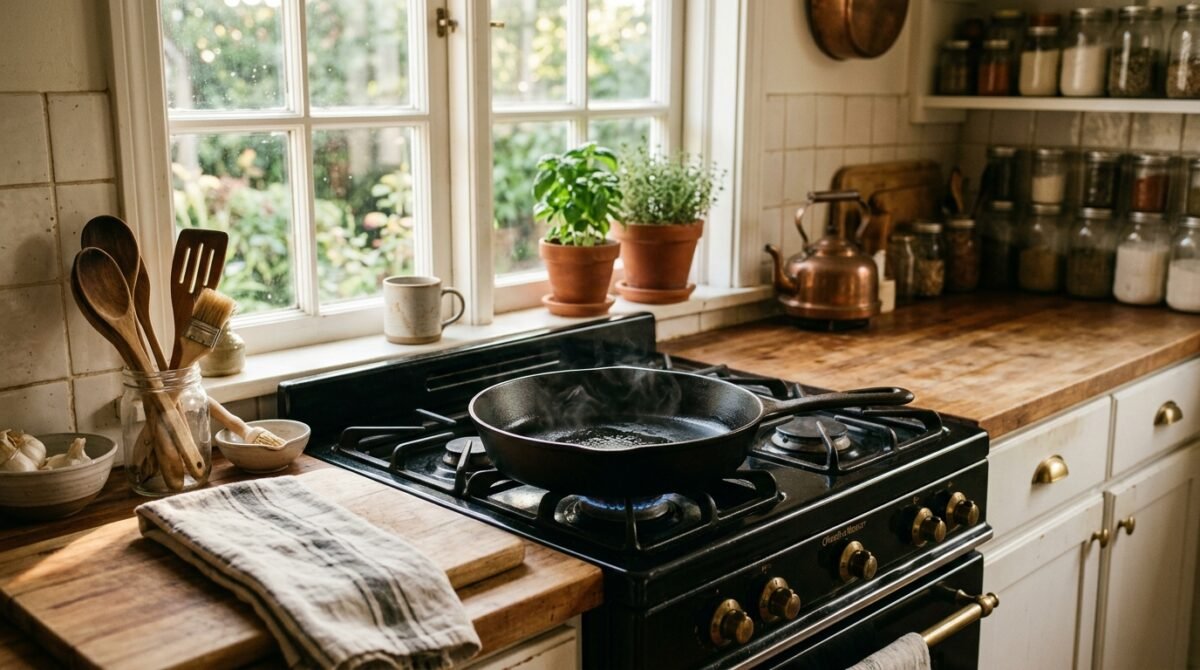
With the legal threat gone and the social media drama a distant memory, I finally had time to think about why this had affected me so deeply. It wasn’t just about an eighty-year-old piece of iron. It was about the way we value objects that connect us to our history. In a world where everything is disposable and replaceable, having something that has endured decades of use is rare.
Sarah didn’t see the history; she saw a dirty piece of metal. I saw the meals my mother cooked, the holiday dinners, and the love that had been poured into that pan for generations. To lose that was to lose a link to the past, and that hurt. It was a reminder that not everyone shares the same values, and that’s okay, but it’s important to recognize those differences before they become a source of conflict.
I started to look at my other possessions differently. I realized that the value of an item is not just in its price tag, but in the story it tells. I began to take better care of my things, not out of obsession, but out of a desire to preserve the memories they represented. I also became more intentional about my relationships, seeking out people who shared a similar level of respect for boundaries and history.
“We live in a culture that treats objects like trash and people like inconveniences. Sometimes, holding on to something—a memory, a tradition, a standard—is the only way to remind yourself who you are.”
— A thought from my personal journal
The experience changed me. I became more confident in setting boundaries and less afraid of the potential for conflict. I realized that being ‘nice’ is not the same as being kind to yourself. You have to be your own advocate, especially when others are unwilling to respect the things that make you feel like yourself. The cast iron, now perfectly seasoned again, sits on my stove as a silent witness to that growth.
I also realized that I needed to be more transparent about my house rules, not by taping them to the pantry, but by having honest, open conversations with potential roommates from the start. Communication is the only real way to prevent these kinds of misunderstandings. I learned that you can’t assume someone knows what you value; you have to tell them, and you have to be willing to walk away if they can’t respect it.
The Community’s Final Verdict

Months later, I revisited the Reddit thread. It was still active, with new comments trickling in from people who had found it through search engines. It was fascinating to see how the public opinion had shifted over time. People were still debating, still arguing, still sharing their own stories. It was a testament to how universal this kind of conflict is.
Many people had updated the thread with their own experiences of roommate disasters, and it felt like a community of sorts had formed. We were all sharing the burden of having our boundaries pushed, our property ruined, and our peace disrupted. It was a strange kind of solidarity, but it was validating to know that I wasn’t the only one who felt this deeply about such ‘minor’ things.
I saw comments from people who had apologized to their roommates after reading my story, and others who were finally standing up to the people who had been taking advantage of them for years. It was heartening to see that my story had actually helped someone else. It made the pain of the experience feel like it had a purpose, even if that purpose was just to help someone else realize they weren’t crazy.
“After reading this, I finally told my roommate that if she breaks my coffee machine again, it’s coming out of her rent. Thank you for the backbone, OP.”
— u/CoffeeAndBoundaries (Reddit comment, 3.2k upvotes)
The community’s verdict was clear: boundaries are essential. You don’t have to be a doormat just to be a ‘good roommate.’ You have the right to protect your property and your peace of mind. It was a message that I was happy to leave as a legacy for the thread, a small contribution to the ongoing conversation about respect in shared living spaces.
I decided to stop checking the thread. It had served its purpose, and I had moved on. The story was no longer mine to carry; it belonged to the internet now. I felt lighter, more at ease in my home, and ready for whatever came next. The cast iron remained, a symbol of the struggle, the victory, and the resilience that I had discovered within myself.
Moving Forward with New Boundaries

I am currently living alone, and honestly, the peace is worth every penny of the extra rent. I realized that for me, the stress of sharing my space with someone who didn’t respect my boundaries was not worth the financial savings. I’ve learned to appreciate the quiet, the order, and the ability to cook my meals in my cast iron pan without worrying about who might be putting it in the dishwasher.
If I ever do decide to have a roommate again, I will have a very different approach. I will be clear from the very first meeting about my expectations, my values, and the things that are non-negotiable. I will ask questions, not just about rent and chores, but about how they handle communal property and how they deal with conflict. It will be a more professional, more structured approach, but it will save everyone a lot of heartache in the long run.
I have also become more involved in my local community, meeting people who share my interests and values. It’s been a great way to build a support network that doesn’t depend on living under the same roof. I’ve realized that you can have a full social life without the inherent risks of sharing a living space with someone you don’t fully know or trust.
“The best boundary is the one that allows you to be yourself without compromise. If living alone is what it takes, then it is the best investment you can make in your own mental health.”
— A piece of advice from a mentor
I have also started a small tradition. Every time I cook a meal in my great-grandmother’s skillet, I take a moment to appreciate the history, the endurance, and the fact that it’s still here, still being used, still being loved. It’s a small ritual, but it reminds me of where I came from and what I’ve overcome. It’s a symbol of my own strength, and I am proud of that.
As I move forward, I take with me the lessons I learned from this entire experience. I am more confident, more protective of my values, and more aware of the importance of clear communication. I have learned that while conflict is never pleasant, it is often a necessary part of growth. I am ready for the future, whatever it may bring, and I know that I can handle it with the same resilience that I applied to the restoration of my pan.
Conclusion
In the end, the story of the cast iron pan was never just about a piece of cookware. It was a story about the collision of two worlds—one that valued preservation and history, and one that prioritized convenience and indifference. It served as a mirror for the way we treat each other’s boundaries, our histories, and our sense of self in a shared space.
By enforcing the deduction from the security deposit, I wasn’t just recouping money; I was reclaiming my dignity and setting a standard for how I deserved to be treated. While the path was fraught with social media attacks, legal threats, and sleepless nights, the result was a newfound sense of clarity and empowerment. My kitchen is quiet now, my pan is seasoned, and my boundaries are ironclad.
What about you? Have you ever had to choose between keeping the peace and holding someone accountable for the destruction of something you cherished? How do you handle roommates who disregard your house rules? Let us know in the comments below—the community is waiting to hear your side of the story.
What's your verdict on this dilemma?
Vote below to contribute to the official community consensus.

Have a Dilemma Keeping You Up at Night?
Share your real-life feud, wedding chaos, or relationship crossroads anonymously with our editorial team.
What do you think ?
0 Comments🛡️ Comments are moderated to protect community integrity. Your comment will appear once approved by the editorial team.