

Living with roommates is often described as a rite of passage, a chaotic blend of shared groceries, mismatched aesthetics, and the inevitable negotiation of bathroom schedules. For the most part, I prided myself on having cultivated a sanctuary—a space that was clean, organized, and punctuated by the ritual of a perfect morning espresso. My machine, a hand-assembled Italian masterpiece that cost me two months of savings, was the centerpiece of my morning routine. It was my calm before the storm, a meditative process of grinding, tamping, and extracting that set the tone for my workday.
Then there was Mark. Mark was supposed to be a short-term solution to my rising rent costs, a friend of a friend who promised to be ‘low maintenance.’ For the first three months, he was a ghost, barely seen and rarely heard. I allowed myself to relax, believing that I had successfully navigated the roommate lottery. I was wrong. The cracks in the foundation didn’t appear as a sudden seismic shift, but as a series of small, boundary-blurring transgressions that I foolishly excused in the name of keeping the peace.
It started with him ‘borrowing’ my high-end olive oil for his sautéed vegetables, then moved on to him using my premium coffee beans for his cheap drip machine. Each time, I gently nudged him toward respecting the boundaries, and each time, he met me with a grin that suggested I was the one being uptight. Little did I know, the disrespect for my belongings was escalating toward a catastrophic climax that would involve, of all things, a carton of store-bought bone broth.
The morning of the incident began with the smell of scorched beef. I walked into the kitchen to find my beloved machine emitting a low, tortured groan. There, on the counter, sat an empty carton of organic bone broth, and beside it, Mark was busy cleaning a ladle. He had decided, in his infinite, caffeine-deprived wisdom, that he didn’t want to wait for the microwave and thought the ‘hot water’ spout on my machine was the perfect tool for heating his lunch. The internal boiler, a masterpiece of Italian engineering, was now a stagnant pool of savory, gelatinous sludge.
The Morning the Kitchen Smelled Like a Butcher Shop
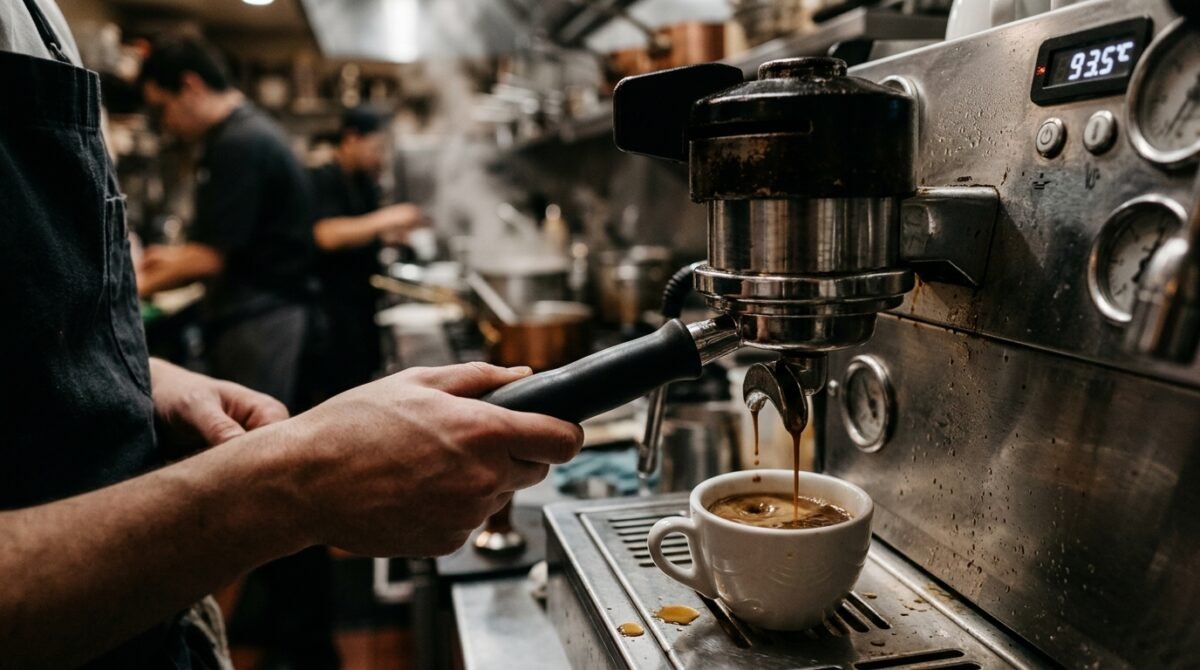
I stood frozen in the doorway, my eyes tracking the trail of brown, viscous liquid dripping down the side of my beautiful machine. The sound was the worst part—a wet, sputtering wheeze that sounded like a mechanical death rattle. Mark looked up from the sink, a carefree smile plastered on his face, oblivious to the carnage he had just wreaked upon my kitchen counter.
“Hey, you’re up early,” he said, wiping his hands on a rag. “Listen, the microwave is kind of acting up today, so I figured I’d use the hot water feature on your fancy coffee thing to warm up my soup. It worked pretty well, but it’s making a weird noise now. You might want to check the filter or something.”
I felt a vein pulsing in my temple. I walked over to the machine, my heart sinking as I lifted the drip tray. It wasn’t just a splash; the entire internal system had been compromised. I looked at the carton of beef bone broth sitting on the counter, then back at the machine, trying to process the level of ignorance required to think this was an acceptable use of a professional-grade appliance.
“Mark, do you have any idea what you just did? That is a pressurized boiler system designed for pure water. You didn’t just ‘warm up’ your soup; you’ve essentially performed a lobotomy on a two-thousand-dollar piece of machinery.”
— Me, trying to keep my voice steady while internally screaming
Mark shrugged, seemingly annoyed by my reaction. “It’s just broth, man. It’s liquid. Everything is liquid. Don’t be such a drama queen. It probably just needs a rinse. You act like I poured concrete into it.”
I didn’t answer. I couldn’t. The sheer lack of respect was overwhelming. This wasn’t just about the machine; it was about the total, flagrant disregard for the environment I had built. He saw my possessions not as items belonging to a person, but as communal resources available for his convenience, regardless of the cost or consequence to me.
The Price of Ignorance and the Cost of Repairs
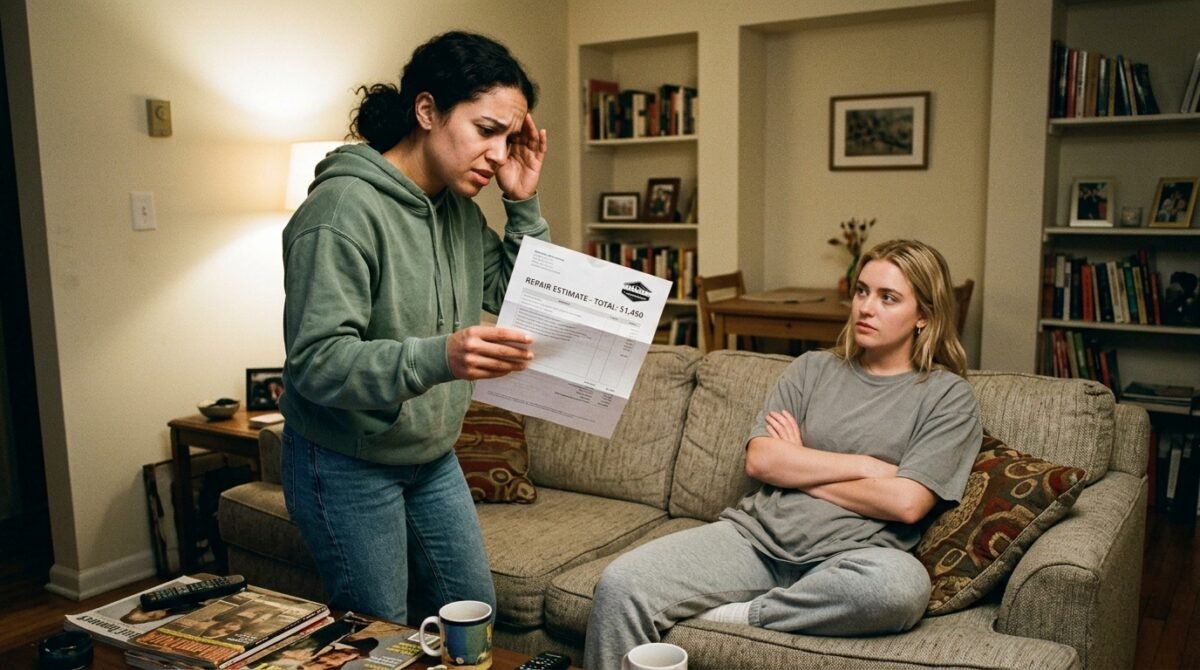
I spent the next two hours on the phone with a specialized repair technician. The news was exactly what I feared: the boiler, the pump, and the heating element were likely contaminated beyond repair. Because of the sugars and fats in the broth, the system would need a complete teardown and likely a replacement of every internal component. The estimate for the repair alone was nearly $800, and that was assuming the motherboard wasn’t fried.
When I finally sat Mark down that evening to present the estimate, I expected at least a flicker of guilt. Instead, he laughed. He leaned back in his chair, feet propped up on the coffee table, and treated the conversation like a nuisance. He hadn’t even looked at the quote I had printed out. To him, the $800 price tag was just a number I was pulling out of thin air to make his life difficult.
“Look, I’m not paying eight hundred dollars for a ‘repair’ that you’re probably just inflating to get a new machine,” Mark said, his voice dripping with condescension. “If you wanted it protected, you should have put a sign on it or told me it was off-limits. I’m a tenant here, not a guest. I have access to the kitchen.”
“You are a tenant who has access to the kitchen, not a child who has access to a chemistry set. You don’t need a sign to tell you not to pour food into electronics. If you break it, you pay for it. That is basic human decency, Mark.”
— The heated confrontation in our living room
The conversation devolved from there. He refused to acknowledge his liability, claiming that it was ‘an accident’ and therefore not his financial responsibility. He even suggested that because I ‘bought something so expensive,’ I should have expected it to be fragile. The irony was physically painful.
The Group Chat That Sealed My Fate
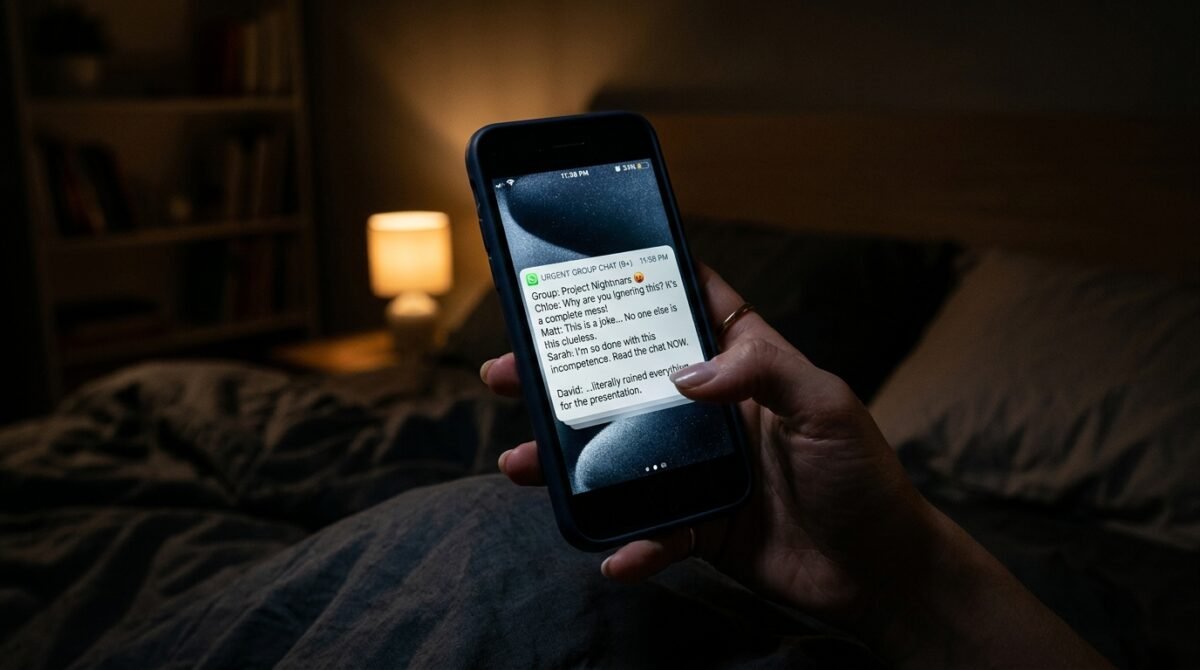
That night, I received a notification on my phone. Mark had started a new group chat with our mutual friends—the ones who had vouched for him in the first place. He had painted a picture of me as a tyrant, a landlord-roommate from hell who was trying to extort money from him over a ‘small spill.’ He conveniently left out the part about the beef broth and the destroyed boiler.
I watched as the messages rolled in. People I had known for years were piling on, telling me to ‘chill out’ and ‘be a better friend.’ They saw me as the wealthy, privileged roommate trying to bully a struggling guy. The narrative had been successfully hijacked, and I was suddenly the villain of the story, all because Mark couldn’t admit he had made a mistake.
“Seriously OP? You’re going to charge a friend $2,500 over a coffee machine? That’s friendship-ending behavior. Just let it go and maybe try being a little less attached to your stuff.”
— Sarah, via Group Chat
I realized then that Mark wasn’t just cheap; he was manipulative. He had been cultivating this reputation of being ‘misunderstood’ for months. Every time he broke a plate, or left a mess, he had been complaining about my ‘rigid’ personality to everyone we knew, setting the stage for this exact moment. I wasn’t just dealing with a roommate issue anymore; I was dealing with a character assassination.
An Unexpected Ally in the Reddit Trenches

Exhausted and feeling gaslighted, I turned to the internet. I posted my story on a popular forum, expecting to be told I was the problem. I laid out the facts, the cost of the machine, the broth incident, and the refusal to pay. Within an hour, my inbox was flooded, but not with the vitriol I expected. The community, it seemed, had little patience for people who destroy expensive appliances for the sake of laziness.
The responses were a mix of shock and practical advice. People pointed out that the ‘it’s just an accident’ defense doesn’t hold up when the cost is significant. They urged me to document everything, to save the texts, and to consider small claims court. For the first time in weeks, I felt validated. I wasn’t crazy. I wasn’t being ‘uptight.’ I was a victim of someone else’s total lack of accountability.
“This is not an accident; this is a failure of basic adult behavior. If you borrow, you return in the same condition. If you break, you replace. Do not let him gaslight you into thinking this is about your ‘attachment’ to things.”
— u/CoffeeLogic (Top Comment, 18.2k upvotes)
The community support gave me the backbone I needed. I stopped responding to the group chat and started documenting the damages. I took photos of the broth residue, the repair estimates, and the screenshots of our conversations. I was done trying to convince Mark; I was now focused on holding him accountable.
The Confrontation at the Dining Table
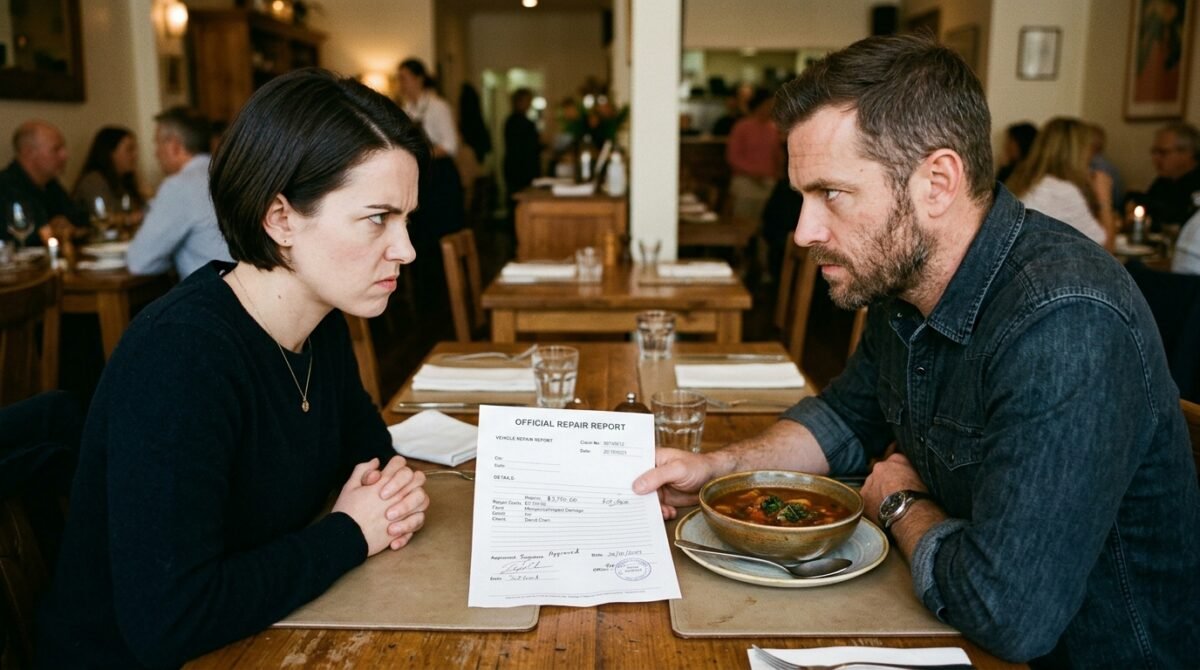
Two days later, I staged the final confrontation. I had the official repair report from a certified shop in my hand. I waited until Mark was actually home, sitting at the table eating—ironically, soup again. I placed the documents in front of him, right next to his bowl. I told him that I was done playing games and that if he didn’t take responsibility, I would be taking legal action.
Mark looked at the paperwork, then back at me, his face turning a shade of red that wasn’t from the heat of his soup. He tried to laugh it off, but this time, there was a tremor in his voice. He realized that I wasn’t looking for an apology anymore; I was looking for a solution, and I had the proof to back up my claim. The power dynamic had shifted entirely.
“Mark, look at these papers. This is an official assessment. The machine is totaled. You have two choices: you pay for the replacement, or you find a new place to live by the end of the month, and I will be taking this to small claims court. This isn’t a suggestion anymore.”
— Me, finally standing my ground
The silence in the room was heavy. Mark looked around, as if searching for an exit, but he knew he was backed into a corner. He had spent weeks relying on his charm and his ability to manipulate our friends, but those tactics don’t work in the face of a cold, hard invoice. For the first time, he looked truly nervous.
The Unraveling of the ‘Friendship’
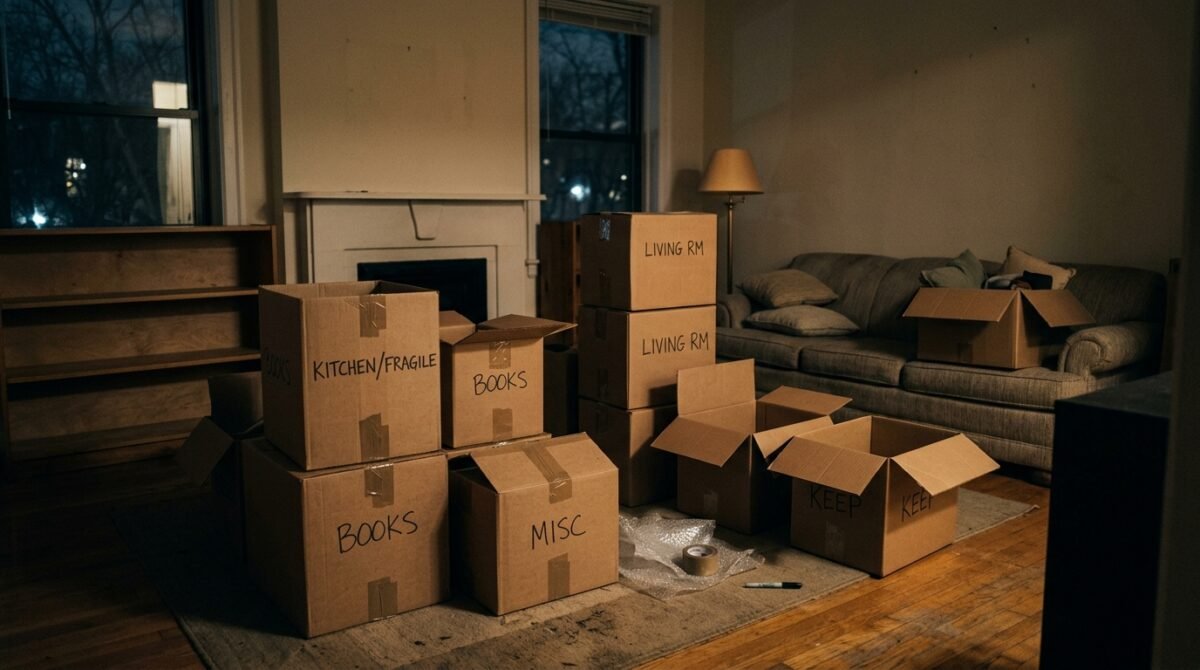
The fallout was instantaneous. Mark moved out within the week, but not before making a final attempt to paint me as the villain. He left a note on the counter—a petty, rambling mess of excuses about how I had ‘ruined his life’ over a coffee machine. It was pathetic, really. He couldn’t even acknowledge the damage he had caused, focusing entirely on his own ‘inconvenience’ of having to move.
As he packed his bags, he tried to rally the support of our friends one last time, but the tide had turned. When I shared the photos of the broth-filled boiler with them, the tone of the group chat shifted. It’s hard to defend someone who looks like a buffoon, and the physical evidence of his negligence was impossible to ignore. His own allies started to see the reality of his behavior.
“I had no idea he actually poured broth into it. I thought you were just mad he used it without asking. That’s insane. Who does that?”
— Mike, former supporter of Mark
It was a hollow victory. Yes, I had reclaimed my space, and yes, I was finally rid of a toxic presence, but the realization of how easily people were manipulated against me stung. It taught me a hard lesson about the nature of friendship and the importance of vetting the people you allow into your home. The ‘roommate lottery’ isn’t just about paying rent; it’s about shared character.
The Reality of Small Claims Court
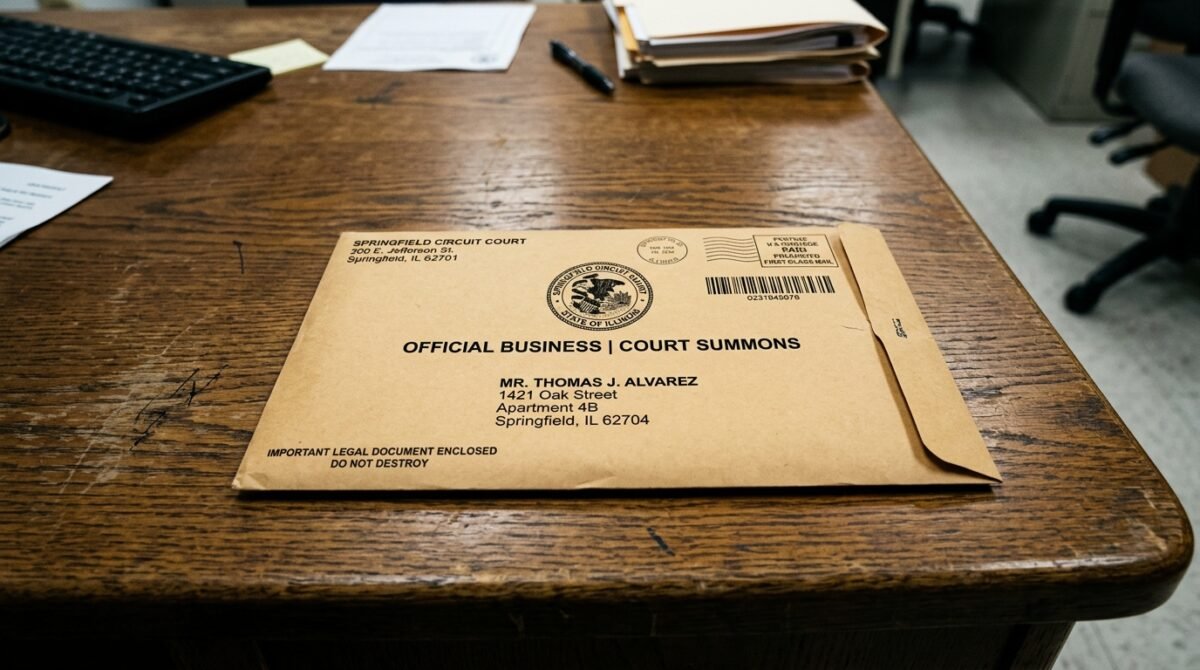
Even after he moved out, the money didn’t just materialize. Mark ignored my messages for weeks, clearly hoping that I would just give up. He thought that by leaving, he was washing his hands of the debt. He didn’t account for the fact that I had kept every receipt, every text, and every email. I filed the paperwork for small claims court, and for the first time, the reality of the situation hit him.
When he received the court summons, his attitude changed overnight. The arrogance vanished, replaced by a desperate, panicked tone. He called me repeatedly, trying to negotiate, offering ‘payments’ that wouldn’t cover even a fraction of the cost. He suddenly understood that a judge wouldn’t care about his feelings or his opinion of my ‘uptight’ nature; they would care about the facts.
“I can’t believe you’re doing this. It’s just money. Can’t we just be adults and settle this? You’re going to ruin my credit over this.”
— Mark, in a panicked late-night voicemail
I didn’t answer his calls. There was nothing left to discuss. The time for ‘being an adult’ was when he first broke the machine and refused to acknowledge it. Now, it was time for the legal system to do its work. It wasn’t about the money anymore—it was about the principle of accountability, a concept Mark seemed entirely unfamiliar with.
Reflections on Boundary Setting

Looking back at the entire ordeal, I can see where I went wrong. I allowed the small things—the borrowed oil, the used beans—to slide because I wanted to avoid conflict. I thought I was being ‘easygoing,’ but in reality, I was signaling to Mark that my boundaries were flexible. By the time he destroyed my machine, he had been conditioned to believe that I would eventually let everything go.
This experience served as a brutal masterclass in the importance of setting firm boundaries from day one. It’s not about being a ‘bad roommate’ or an ‘uptight person’; it’s about maintaining a standard of living that respects the autonomy of everyone in the home. You have to communicate expectations early and enforce them consistently, because if you don’t, you’re just inviting chaos into your own life.
“Boundaries aren’t a punishment; they are a blueprint for a healthy relationship. If someone gets upset when you hold a boundary, it’s usually because they were benefiting from you not having one.”
— Wisdom from a therapist friend
I still have the new machine. It’s a slightly different model, one that I keep locked behind a ‘no-touch’ rule that I make explicitly clear to anyone who stays here. It sounds harsh, but after the beef broth fiasco, I’ve realized that my peace of mind is worth more than the illusion of being the ‘cool roommate.’
Community Perspectives: The Verdict

The discussion on the subreddit continued for weeks, growing into a massive thread that explored everything from roommate etiquette to the legalities of property damage. The consensus was overwhelmingly clear: I was in the right. What was truly fascinating was reading the stories of other people who had experienced similar ‘roommate nightmares,’ ranging from destroyed kitchens to lost security deposits.
Some users suggested that my situation was a classic example of a ‘DARVO’ tactic—Deny, Attack, and Reverse Victim and Offender. Mark had denied the damage, attacked my character, and reversed the roles so that he was the victim. Seeing the situation through that psychological lens helped me understand why I had felt so gaslighted during the process. It wasn’t just my imagination; it was a textbook tactic.
“This is why I don’t share high-end equipment. People who don’t know the value of things will never respect them. OP, you aren’t the jerk. You’re just the person who learned a $2,500 lesson in human nature.”
— u/RoommateVeteran, 12.5k upvotes
The debate in the comments also brought up interesting points about the ‘sharing culture’ that some people push in communal living. While sharing is good, there’s a difference between sharing a cup of sugar and assuming that someone’s expensive, specialized equipment is fair game for a culinary experiment. The community’s support was the final nail in the coffin of my guilt.
Moving Forward: The Aftermath

Today, my apartment is a sanctuary again. There are no more mystery smells, no more stolen pantry items, and most importantly, no more beef broth near my espresso machine. I’ve learned to value my own peace more than I value the approval of people who don’t have my best interests at heart. The legal process is still ongoing, but the outcome is essentially decided—Mark will be paying for the machine, one way or another.
I’ve also started being much more selective about who I invite into my life. I don’t shy away from having the ‘awkward’ conversations anymore. If someone doesn’t like my rules, they don’t have to live here. It’s a simple, effective policy that has saved me from so much stress. I’ve realized that being liked is not the same as being respected, and I’d choose respect over popularity any day.
As for the espresso? It tastes better than ever. There’s something about a cup of coffee that you know is safe from contamination that makes it all the more enjoyable. I’ve even started a small tradition of inviting friends over for coffee, but only those who have proven they can respect the ‘no broth’ rule. It’s a small, funny reminder of everything I went through.
“The cost of the machine was high, but the cost of the lesson was worth it. I now have a home that is truly mine, and I have the self-respect to keep it that way.”
— Final reflection from the author
If you take anything away from my story, let it be this: don’t let people walk over your boundaries. If you feel like your needs are being ignored or your property is being disrespected, trust that instinct. You don’t owe anyone your patience at the expense of your own sanity.
Conclusion
My journey from a naive roommate-seeker to a firm believer in strict boundaries was a difficult one. The destruction of my espresso machine was the spark that ignited a much deeper realization about the people I surround myself with. It forced me to confront my own passivity and the ways in which I allowed others to take advantage of my kindness. I’ve learned that respect is a two-way street, and if one person isn’t walking it, you don’t have to walk it for them.
The debate around this situation—the entitlement, the lack of apology, and the eventual legal fallout—speaks to a broader issue in how we navigate communal living. We often prioritize the ‘chill roommate’ vibe over the reality of personal responsibility. I hope my story serves as a cautionary tale for anyone currently navigating a similar situation. Don’t wait for the ‘beef broth’ moment; stand up for your boundaries now.
Now, I turn it over to you. Have you ever had a roommate who completely lacked common sense or respect for your belongings? How did you handle it, and what did you learn? Did you lose a friendship, or did you find a way to make it work? Share your stories below—I’m curious to see if anyone else has a ‘broth-in-the-espresso-machine’ level of horror story.
What's your verdict on this dilemma?
Vote below to contribute to the official community consensus.

Have a Dilemma Keeping You Up at Night?
Share your real-life feud, wedding chaos, or relationship crossroads anonymously with our editorial team.
What do you think ?
0 Comments🛡️ Comments are moderated to protect community integrity. Your comment will appear once approved by the editorial team.