
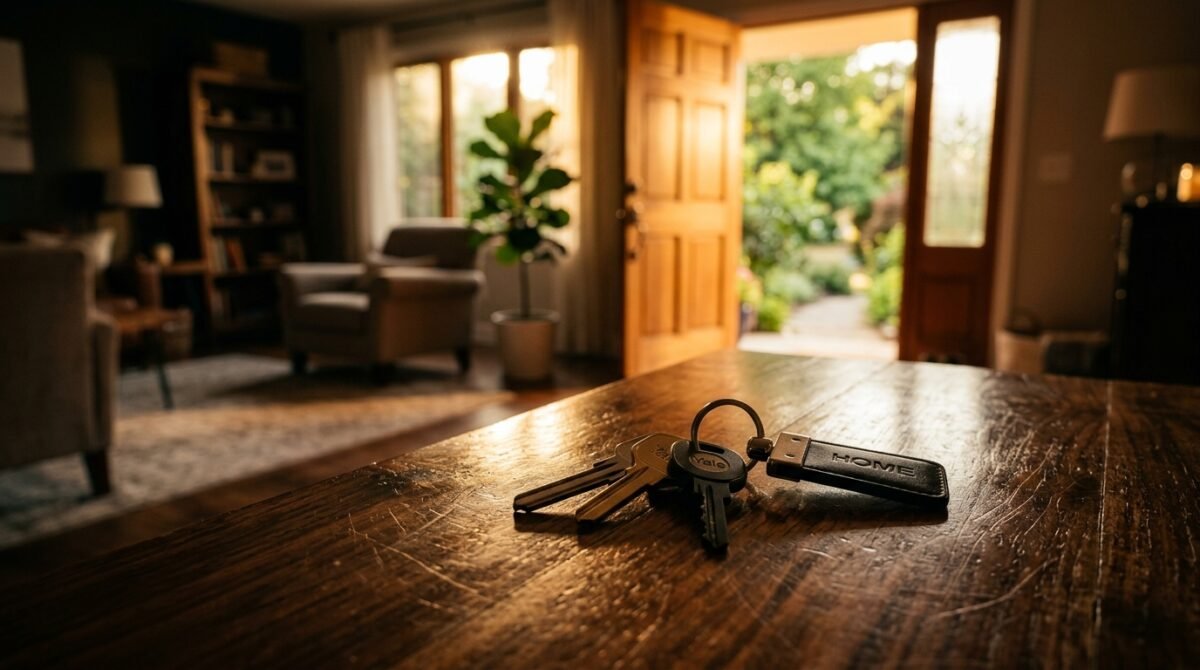
When my grandmother passed away, the grief was a heavy, suffocating blanket that I wore for months. But amidst the heartache, there was a quiet, stable anchor left for me: her duplex. It wasn’t a mansion, and it certainly wasn’t a palace, but it was a property I had spent my childhood summers in. It represented stability, a legacy, and, frankly, a massive step up in my own financial independence. I had spent years renting cramped apartments and living paycheck to paycheck, so when the deed was legally transferred into my name, I felt like I could finally breathe.
However, the moment the ink dried, the vultures began to circle. My stepbrother, Mark—a man whose primary career achievement was successfully avoiding a 9-to-5 for the better part of a decade—suddenly remembered that he had an ‘in’ with the family. To him, my grandmother’s legacy wasn’t a private gift to me; it was a communal resource that I was selfishly hoarding. He didn’t see a home; he saw a free ride.
The entitlement wasn’t immediate, or at least it didn’t manifest as a direct demand on day one. It started with subtle hints, misplaced comments at family dinners, and a tone of voice that suggested I was merely holding the keys until he was ‘ready’ to take over. I was naive, thinking that if I just stood my ground politely, the message would sink in. I was wrong. The pressure mounted, the family began to take sides, and what should have been a period of mourning and settling my grandmother’s affairs turned into a high-stakes battle for my own autonomy.
This is the story of how I became the villain in my stepbrother’s eyes, simply because I expected him to pay rent. It is a story of gaslighting, secret group chats, and the crushing weight of family expectations that demand you sacrifice your future to subsidize someone else’s laziness. It is also the story of how I learned that saying ‘no’ is the most powerful tool in your arsenal, even when every person in your life is telling you that you’re wrong.
The Subtle Infiltration of My Privacy
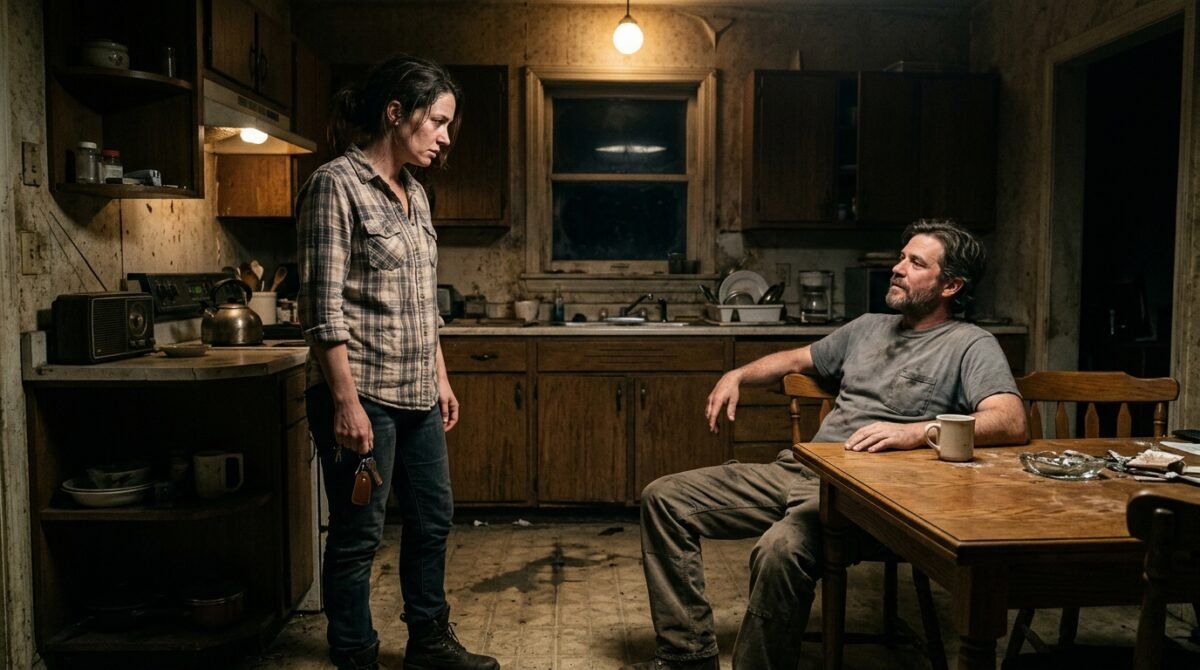
It began two weeks after the funeral. I was still clearing out the back unit of the duplex, sorting through dusty boxes of Nana’s old knitting patterns and porcelain figurines, when Mark showed up unannounced. He didn’t knock; he used a spare key that my mother had foolishly given him years ago—a key I hadn’t yet had the chance to change. I walked into the kitchen to find him sitting at the table, casually drinking a beer he’d pulled from the fridge, looking at the place as if he were already measuring for curtains.
“Nice place you’ve got here,” he said, not even looking up from his phone. “I was thinking, since I’m between jobs right now and this place is mostly empty anyway, I could move into the back unit. It would give me the space I need to focus on my ‘consulting’ business, and it would keep the place occupied for you. You know, security and all that.”
I felt a cold prickle of anger at the base of my neck. I had plans for that unit. I had planned to list it on a rental site to help cover the property taxes and the inevitable repairs that an older house required. I stared at him, trying to keep my voice steady. “Mark, I’m planning to rent that out. I have expenses, and this property isn’t a hobby. It’s an investment.”
“An investment? It’s family property! Nana would be rolling in her grave if she knew you were trying to squeeze money out of her own blood. We’re family, not tenants.”
— Mark, during the first confrontation
I didn’t back down then, but I also didn’t throw him out on his ear. That was my first mistake. I thought I could reason with him, explain the financial reality of owning a home. But you cannot reason with someone who views your hard work as their birthright. He stayed for three hours that day, leaving a pile of pizza crusts on the counter, and when he finally left, he had the gall to ask me when I’d be ‘ready’ for him to move his boxes in.
The Group Chat That Wasn’t Supposed to See the Light of Day

The escalation happened over the weekend. I had been added to a ‘Family Support’ group chat, which I thought was for coordinating memorial flowers or estate photos. Instead, I found myself reading a running commentary on my character and my ‘greed.’ My mother, who had always been prone to prioritizing my stepbrother’s feelings over my own, was leading the charge, but the vitriol from my step-aunts and cousins was arguably worse.
My phone buzzed incessantly, the screen lighting up with notifications that made my stomach churn. They weren’t just suggesting I let him move in; they were crafting a narrative where I was the cold-hearted, wealthy heir who was punishing a struggling relative. They were discussing my finances, my job security, and my supposed ‘miserly’ nature. It was surreal to read about myself as if I were a stranger, a caricature of a landlord.
“I just think it’s sad that [OP] is so focused on the bottom line. Mark is going through a hard time, and he needs a stable environment. A real family would step up. It’s not like the unit is doing anything right now.”
— My Mother, in the ‘Family Support’ group chat
I realized then that this wasn’t just about Mark. This was about their collective expectation that I should be the family safety net. If I conceded, I would be the designated ‘provider’ for the rest of my life. If I refused, I would be the villain. I screenshot every single message. I didn’t respond. I just archived the chat and started calling locksmiths to ensure that no one else had access to my property. The silence from me was interpreted as weakness, but I was actually preparing for the inevitable storm.
By the time I reached out to my mother, she was already primed to fight. She told me that I was being ‘unnecessarily difficult’ and that I should consider the ‘bigger picture’ of family harmony. She didn’t care about my debt, my mortgage, or my plans. She only cared about the optics of me helping Mark. It was the moment I realized that my own family was willing to throw me under the bus for the sake of an entitled, lazy adult who had never once paid his own way.
The Morning Ambush at the Duplex
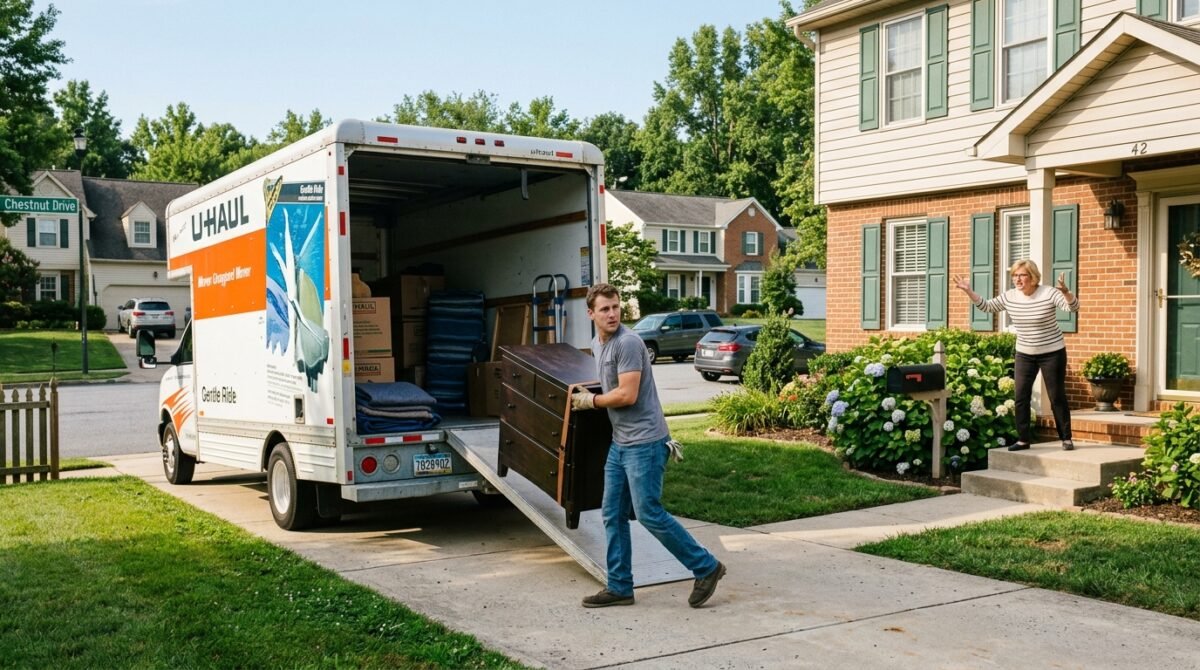
The next Tuesday, I arrived at the duplex to meet with a contractor for a renovation estimate. As I pulled into the driveway, I saw a U-Haul truck parked partially on the curb, blocking the entrance. Mark was there, along with two of his friends, struggling to haul a massive, stained sofa through the front door of the back unit. I felt the blood drain from my face. The audacity was breathtaking. He had clearly assumed that if he just showed up and moved in, I wouldn’t have the heart to throw him out in front of his friends.
I killed the engine and walked over, my heart hammering against my ribs. I had prepared a speech in my head, but as I saw him grinning at me, I realized words were secondary. I walked up to the moving guys and told them to stop immediately. Mark stepped between me and the door, his expression shifting from a grin to a look of practiced annoyance. He acted as if I were the one causing a scene, not the one trying to break into my house.
“What are you doing? I told you, I’m not moving in without your permission. This is trespassing. Get this stuff off my property now, or I’m calling the police. I am not playing this game with you anymore, Mark.”
— My confrontation with Mark at the driveway
The look on his face when I mentioned the police was worth every cent I would eventually spend on security cameras. He tried to laugh it off, calling me ‘dramatic’ and ‘cruel,’ but I didn’t waver. I stood my ground, my arms crossed, watching as he and his friends grumbled and started reloading the sofa back into the truck. It took an hour. The contractor stood by, looking awkward and confused, while the neighbors watched from their porches. It was humiliating, but it was necessary.
Once the truck pulled away, I sat in my car for a long time. My hands were shaking. I had just declared war on my own family, and I knew that this was only the beginning. The emotional toll was heavier than I anticipated; I felt isolated, like an island of ‘cruelty’ in a sea of ‘kindness.’ But as I looked at the house—my house—I felt a spark of defiance. I was not going to be a pawn in their game.
The Financial Breakdown and Reality Check

That evening, I decided to lay everything out on paper. I needed to see exactly why I couldn’t afford to have Mark living there rent-free. I created a spreadsheet, not just for myself, but to show my family if they ever had the audacity to ask for a ‘justification.’ I included the mortgage, the property taxes, the insurance, and the projected maintenance costs. When you looked at the numbers, the reality was stark: one person living there for free would have cost me over $1,200 a month in potential rental income plus the direct costs of utilities.
It was clear that my mother and stepbrother were essentially asking me to pay for Mark’s lifestyle to the tune of nearly $20,000 a year. It was a massive financial anchor that would have prevented me from saving for my own future or even maintaining the property properly. I realized that if I agreed, I wouldn’t just be ‘helping’ him; I would be subsidizing his failure indefinitely. He had no plan to find a job, no plan to pay rent, and no plan to move out.
| Expense | Annual Cost (Est.) | Impact of Free Tenant |
|---|---|---|
| Property Tax | $6,500 | Paid by Owner |
| Insurance | $2,200 | Paid by Owner |
| Maintenance | $4,000 | Paid by Owner |
| Lost Rental Income | $15,600 | Total Loss |
| Total Financial Burden | $28,300 | Net Loss to Owner |
I sent a version of this ledger to my mother. I didn’t add a snarky comment. I just said, ‘This is why I cannot accommodate Mark. I have bills to pay.’ Her response was predictable. She didn’t look at the numbers. She didn’t acknowledge the math. She simply replied that ‘family shouldn’t be about money’ and that I was ‘turning into a person who cares more about dollars than people.’ It was classic gaslighting, designed to make me feel guilty for basic financial survival.
The irony was not lost on me. They were the ones prioritizing his convenience over my survival, yet I was the one being lectured on morality. I stopped responding to the family chat. I muted the notifications. I focused on finishing the renovations and listing the unit. Every time I felt a pang of guilt, I looked at that spreadsheet. It was my shield against the emotional manipulation that had plagued my family for decades.
The Unsolicited Visit from Aunt Carol
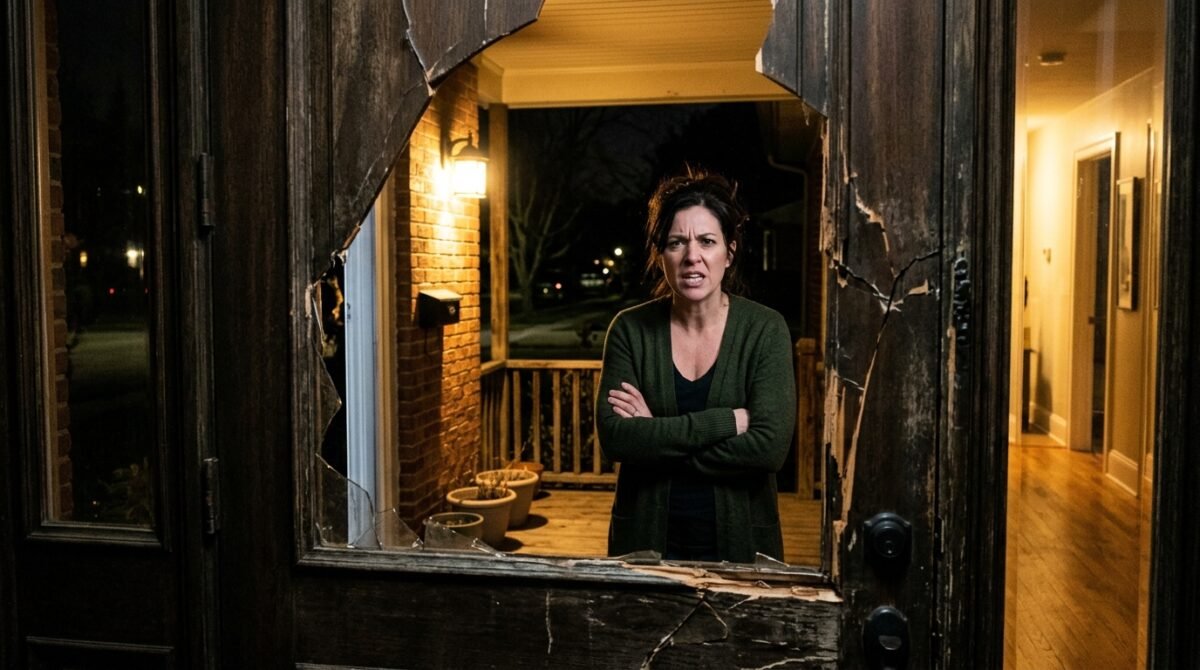
A week later, the doorbell rang at 8:00 PM. I wasn’t expecting anyone, so I checked my security camera. It was my Aunt Carol, my mother’s sister, who had always been the ‘peacemaker’—which in our family meant the person who pressured you to submit so that everything would be quiet. I didn’t want to let her in, but she kept knocking, and the neighbors were starting to stare. I opened the door just a crack, keeping the security chain engaged.
“I’m not here to argue,” she said, her voice dripping with artificial sweetness. “I just want to talk to you about the situation with Mark. Your mother is distraught. You’re tearing the family apart over a little bit of space. Can’t you just let him stay in the back unit for a few months? Just until he gets back on his feet? It would mean so much to everyone.”
“Carol, I’m not tearing the family apart. I’m setting a boundary. If you want to support Mark, why don’t you let him stay with you? You have a spare bedroom, don’t you?”
— My response to Aunt Carol
The look on her face was priceless. She immediately started backpedaling, talking about her own ‘limitations’ and her ‘current living situation.’ It was the classic ‘not in my backyard’ syndrome. Everyone wanted me to be the hero, but nobody was willing to be the one to actually provide the space. They wanted me to sacrifice, but they wouldn’t lift a finger themselves. It was a revelation that stripped away the last of my illusions about their ‘concern’ for Mark.
I closed the door on her, feeling a strange sense of liberation. I had called her bluff, and she had crumbled. I realized that these people didn’t actually believe that I should be helping Mark; they just believed that I should be the one to deal with him so that they wouldn’t have to. It was a massive weight off my shoulders to see them for exactly what they were: people who loved the idea of charity as long as someone else was paying the bill.
The Legal Threat and the Reality of Boundaries
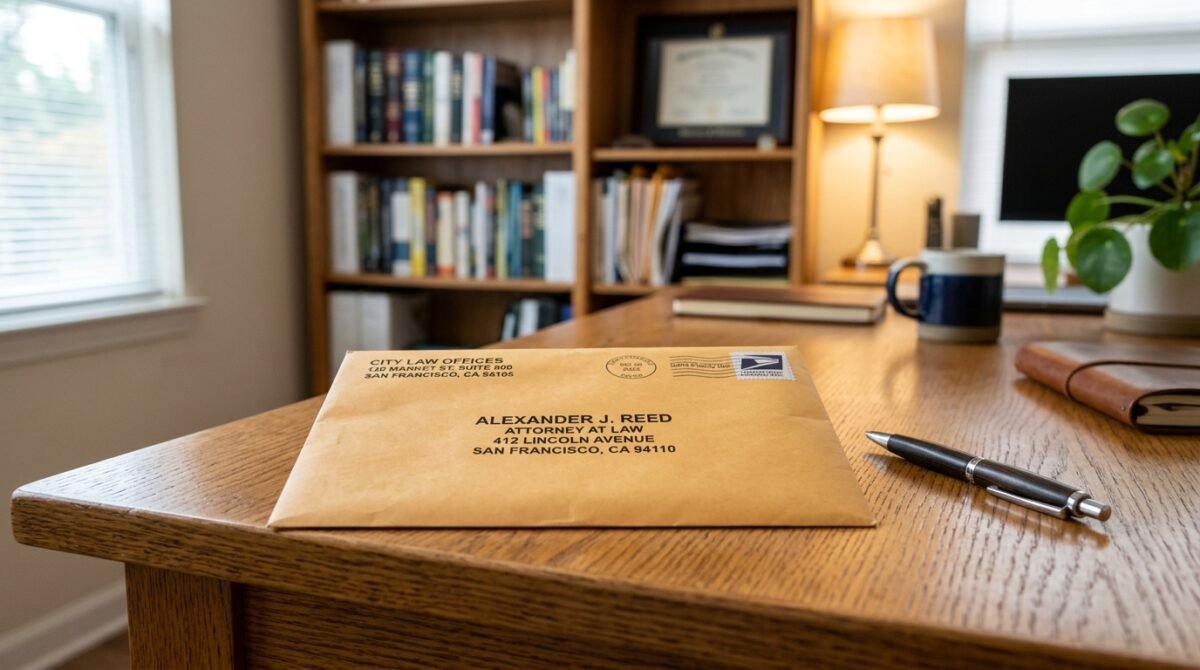
Two days later, I received a letter in the mail. It wasn’t a formal legal document, but it was written in a formal tone, claiming that my grandmother had ‘promised’ the duplex to the family for ‘use as needed.’ It was a blatant lie, of course, but it was designed to scare me into submission. It was signed by Mark, but the phrasing was clearly my mother’s. They were threatening to contest the will, even though the estate was already settled and the deed was clearly in my name.
I didn’t panic. I called my lawyer, a family friend who had helped me through the probate process. He laughed when I read the letter to him. He told me that there was absolutely no legal basis for their claim and that it was a desperate attempt to intimidate me. He advised me to send a formal notice to stop all harassment and to keep a record of every single interaction from that point forward. He warned me that if they kept pushing, I might need a restraining order.
“They are testing you. They want to see if you have the backbone to stay the course. If you fold now, they will never stop coming after your property. Do not respond to them. Let me handle all communications from here on out.”
— My lawyer, during our consultation
Following his advice, I stopped all direct communication. I set up a filter so that emails from my mother and Mark went directly into a folder that I only checked once a week. I didn’t see the messages, and for the first time in weeks, I didn’t feel the anxiety spiking every time my phone buzzed. It was an incredibly difficult step to take, cutting off my own mother, but it was necessary for my own sanity.
The letters stopped after a while, or maybe they just kept coming and I stopped caring. The silence was golden. I spent the next few months renovating the back unit, painting the walls, replacing the old fixtures, and finally, listing it on the market. Within a week, I had a qualified tenant who was happy to pay full market rent. I was finally in control of my property, and more importantly, I was in control of my life.
The Community Weighs In on My Decision
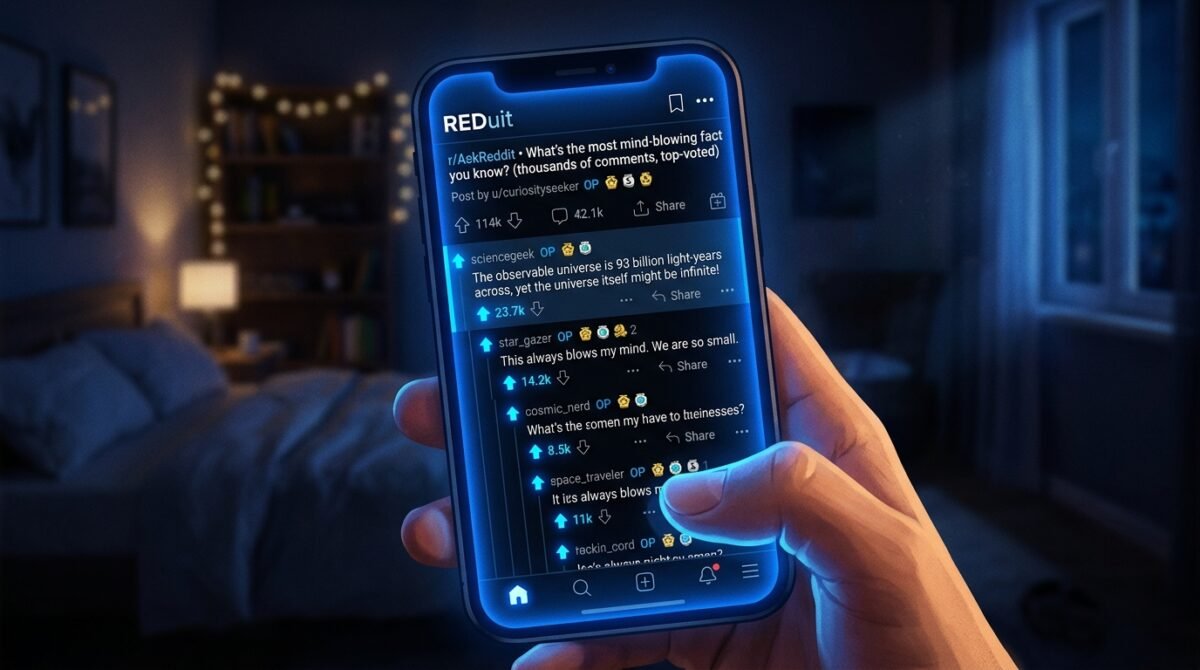
I decided to share my story anonymously on a popular relationship advice forum, just to see if I was truly the monster my family claimed I was. The response was overwhelming. Thousands of people reached out, sharing their own stories of family entitlement, boundary-setting, and the guilt that comes with choosing yourself over a toxic support system. The validation was something I hadn’t realized I needed so desperately.
“NTA. Your stepbrother is a grown man, not a dependent child. Your family is just trying to use you as a dumping ground for his failures. Keep that unit rented, keep your boundaries, and don’t look back. You did the right thing.”
— u/PropertyRightsAdvocate (Top Comment, 18.2k upvotes)
“The audacity of them to suggest you’re the one being unreasonable while they all refuse to take him in themselves is the definition of gaslighting. They are mad because you ruined their plan to get rid of him without them having to pay for it.”
— u/RealTalkMama (12.4k upvotes)
Reading these comments, I felt like a weight had been lifted. The ‘guilt’ I felt wasn’t genuine; it was an indoctrinated response to years of being told that my needs were secondary to the family’s image. The community helped me see that my boundaries were not only reasonable, they were essential. I wasn’t just defending a property; I was defending my right to be a person, not a resource.
I kept the thread updated, posting about the successful rental of the unit and the eventual cooling of the family drama. The more I shared, the more I felt like I was writing the final chapter of a long, painful story. It was cathartic to see so many people championing the idea of self-care over familial obligation. It gave me the courage to move forward and to stop looking for their approval.
The Aftermath and the New Normal
It has been six months since I moved in my first tenant. My stepbrother is still ‘between jobs,’ living with a different cousin who recently complained about him not doing the dishes. My mother still texts me occasionally, trying to guilt-trip me into ‘making amends’ with Mark, but I simply don’t reply. I have found that silence is the most effective weapon in the face of persistent, boundary-crossing entitlement. I don’t feel the need to explain myself anymore.
I am now in a much better place, both financially and mentally. The duplex is turning a profit, which I am reinvesting into the property to ensure it remains a valuable asset for years to come. I have taken up a new hobby, started traveling more, and, most importantly, I have surrounded myself with friends who respect my boundaries and don’t view me as a source of free labor or housing.
The ordeal taught me more than I could have imagined. I learned that family isn’t just about blood; it’s about mutual respect. I learned that saying ‘no’ doesn’t make you a bad person; it makes you a person with self-respect. And I learned that if you let people walk all over you, they will never stop until there’s nothing left of you to walk on. I am grateful for the lessons, even if the tuition was incredibly high.
I still occasionally look at my grandmother’s photos and wonder what she would think of all this. I like to think she would be proud of me for keeping her house standing and for standing up for myself. She was a strong woman, and she taught me that a home should be a place of peace, not a source of conflict. I am finally living in that peace, and I wouldn’t trade it for anything in the world.
Reflecting on the Cost of Kindness

Looking back, the most painful realization wasn’t the betrayal by my family; it was the realization of how long I had been conditioned to accept it. I had been raised to believe that being ‘kind’ meant being a doormat. I had been taught that any request from family should be met with an immediate ‘yes’ to avoid conflict. It was a cycle of abuse that I had been trapped in for years, and breaking it was the most difficult thing I have ever done.
I think about the people who are currently in the position I was in—the ones who are being pressured to give up their savings, their homes, or their time for a family member who has no respect for them. I want to tell them that it is okay to stop. It is okay to prioritize your own stability. You don’t owe anyone your future, especially when they are actively trying to destroy it. The guilt will be intense at first, but it will pass, and what will remain is your autonomy.
I have started to distance myself from the members of my family who still insist on bringing up Mark’s situation. I don’t engage. I don’t argue. I simply walk away. It is a boundary that has served me well. I have found that my life is much quieter, much happier, and much more fulfilling when I am not constantly fighting off the vultures. I have found my own tribe, and they are the people who support me, not the ones who try to leech off me.
The path forward is clear now. I will continue to manage my property, build my own wealth, and, most importantly, continue to protect my peace. I don’t look back with regret. I look back with the knowledge that I did what I had to do to survive, and that in doing so, I became the person I was meant to be—independent, strong, and entirely in control of my own destiny.
Why We Need to Talk About Familial Entitlement

This story isn’t unique, and that’s the most tragic part. Everywhere I look, there are people being forced to choose between their family’s demands and their own well-being. We have an societal issue where ‘family’ is used as an excuse for exploitation. We need to start talking about this more—about the necessity of boundaries, about the dangers of financial enmeshment, and about the importance of holding people accountable for their own lives.
It’s time to move past the outdated notion that family is automatically entitled to your resources. It’s time to recognize that enabling is not the same as helping. If we want to build healthier, more resilient relationships, we have to stop being afraid to say the word ‘no.’ We have to stop letting our guilt be weaponized against us. And we have to start prioritizing the health of the individual as much as the health of the family unit.
My experience was a crucible, but it forged a stronger version of me. I hope that by sharing it, I can give someone else the confidence to stand their ground. You don’t have to be the martyr. You don’t have to be the solution to someone else’s problems. You are allowed to live your life on your own terms, and anyone who tries to stop you is not a family member worth holding onto.
The conversation needs to continue. We need to normalize setting boundaries with toxic relatives, even if that means cutting them off completely. We need to support those who are struggling to do the right thing, even when it’s the hard thing. I hope this serves as a reminder that no matter what your family tells you, you are worth more than what you can provide for them.
Conclusion
My journey from a mourning heir to an empowered homeowner taught me the most painful but necessary lesson of my life: that ‘family’ is a word, not a license to exploit. I lost some relationships, yes, but I gained something infinitely more valuable: my own life. I learned that the people who truly care about you will support your growth, not demand your sacrifice. I am now free from the weight of expectations, and for the first time, the future feels entirely mine to build.
I want to hear from you. Have you ever had to draw a firm line with a family member who felt entitled to your hard-earned success? How did you handle the pushback, and what did it teach you about your own boundaries? Let’s discuss in the comments below—I read every single one of them.
What's your verdict on this dilemma?
Vote below to contribute to the official community consensus.

Have a Dilemma Keeping You Up at Night?
Share your real-life feud, wedding chaos, or relationship crossroads anonymously with our editorial team.
What do you think ?
0 Comments🛡️ Comments are moderated to protect community integrity. Your comment will appear once approved by the editorial team.