

Growing up, there was always a sense that my younger sister, Chloe, lived by a different set of rules than the rest of the world. While I spent my teenage years studying for exams and taking part-time jobs, Chloe was busy curating an image of effortless, slightly chaotic rebellion. It started with skipped curfews and ‘misplaced’ library books, but as we entered our twenties, the stakes escalated from teenage antics to genuine, life-altering maturity tests that she consistently failed. My parents, exhausted by years of bailing her out—both metaphorically and financially—had slowly started to withdraw their support, leaving a vacuum that I was never meant to fill.
The incident that finally broke the cycle didn’t happen in a back alley or a dark club; it happened on a Tuesday afternoon in the municipal park. I was at my desk, deep in a project deadline, when my phone vibrated with a frantic notification from our family group chat. It wasn’t just a request; it was a demand. Chloe had apparently decided that the park’s maintenance golf cart was the perfect chariot for a joyride. It ended with the cart, a couple of frantic ducks, and a very bewildered park ranger, all culminating in a night in the city lockup for grand theft auto and public intoxication.
When the call finally came through from the precinct, I expected a tearful apology. Instead, I was met with a voice dripping with annoyance, as if I were the one inconveniencing her by not having the bail money pre-approved in my banking app. The moral dilemma wasn’t just about the money; it was about the years of enabling that had led us to this specific, absurd moment. I realized right then that if I paid, I wasn’t helping her—I was merely buying her next mistake.
The fallout was instantaneous. My phone became a hotbed of vitriol from relatives who viewed my refusal not as a boundary, but as a betrayal of ‘family loyalty.’ They called me cold-hearted, stingy, and vindictive. But as I sat in the silence of my apartment, I couldn’t help but wonder: at what point does a sibling’s request for help become an anchor that drags you down with them? This is the story of the day I stopped being the backup plan.
The Morning The World Went Underwater

I woke up that Tuesday to a phone blowing up with messages that made my stomach churn. The family group chat, usually reserved for birthday wishes and holiday plans, was a stream of chaotic updates from our mother, who sounded like she was on the verge of a nervous breakdown. Chloe had been detained, and the local news was already picking up on the ‘bizarre crime’ in the city park.
It wasn’t until I spoke to the officer on the line that the absurdity truly hit me. A golf cart? A public park? I felt a strange sense of detachment, as if I were reading about a stranger. I sat at my kitchen table, coffee forgotten, as the details flooded in. She hadn’t just taken it; she had allegedly tried to drive it across the shallow end of the duck pond to ‘avoid a traffic jam’ of pedestrians.
“She is currently in holding, but the bail is set at five thousand dollars due to the property damage and the charges of public intoxication. Are you heading down there, or do I need to call someone else?”
— Police Sergeant via Telephone
I didn’t answer immediately. I stared at the wall, thinking about the last time I helped her—the car insurance deductible, the ‘lost’ rent money, the unpaid therapy bills. My mother’s voice followed up seconds later, demanding to know why I wasn’t already in my car. The expectation that I would drop everything for this was so ingrained in our family dynamic that it felt like a law of physics.
I realized that for years, I had been the safety net. If I said no, she wouldn’t hit the ground; she would just have to deal with the consequences of her own actions for the very first time. It was a terrifying realization, not because of what would happen to her, but because of how angry my parents would be if I defied the script.
I slowly typed out a response to the family chat. My fingers hovered over the glass. I knew that once I pressed send, there was no going back to the way things were. I wasn’t just refusing to pay; I was declaring my independence from her drama. It was the longest thirty seconds of my life as I watched the typing bubbles appear and vanish, signaling the impending storm.
The Group Chat Explosion
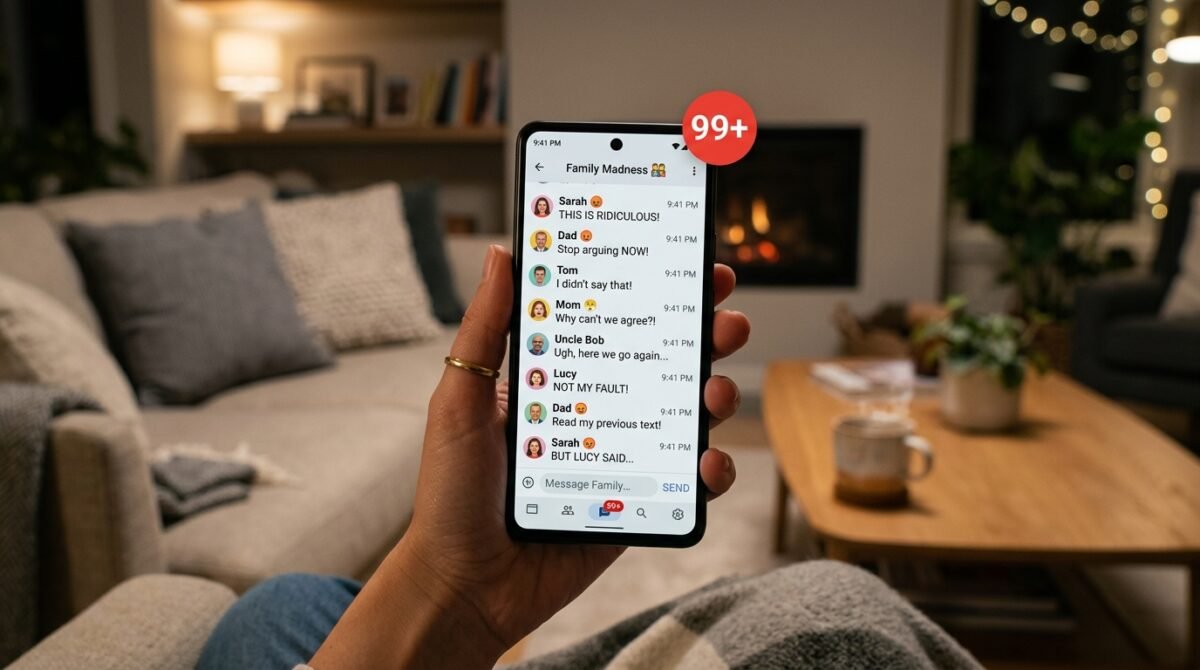
The response was immediate and violent. My phone vibrated so hard it skittered across the granite countertop. It wasn’t just my mother; my aunt and uncle had been looped in, and the tone turned from frantic to accusatory within minutes. They didn’t see the crime; they saw a daughter in trouble and a sister who was ‘refusing to help family in need.’
“You are being incredibly petty. She is in a cell, terrified, and you’re worried about five thousand dollars? You have a full-time job. You can afford this. Don’t be a monster.”
— Mother via Family Group Chat
I read the message three times, trying to find the logic in it. I wasn’t worried about the money; I was worried about the pattern. I tried to explain that this was a legal matter, not a simple favor, but they weren’t listening to logic. They were operating on emotional desperation, looking for a villain, and I was the easiest target in the room.
My cousin chimed in next, saying that my ‘holier-than-thou’ attitude was exactly why Chloe felt she could act out—because the family had always shielded her. It was a rare moment of clarity from someone in the family, but it was buried under a wave of insults. The labels were thrown around like stones: selfish, cold, heartless, ungrateful.
I kept my responses short. I wasn’t going to get into a debate about the ethics of enabling. I had decided on a hard limit, and I was going to hold it. I turned off the notifications for the chat, but I could still see the red badge icon on the app, growing with every passing minute like a digital bloodstain.
It was fascinating to watch how quickly the narrative shifted. Within an hour, I wasn’t the person who had worked their way through college and built a stable life; I was the person who was letting their sister ‘rot in jail’ for the sake of a few thousand dollars. They were rewriting history to make their own guilt more manageable.
The Reality Check at the Precinct
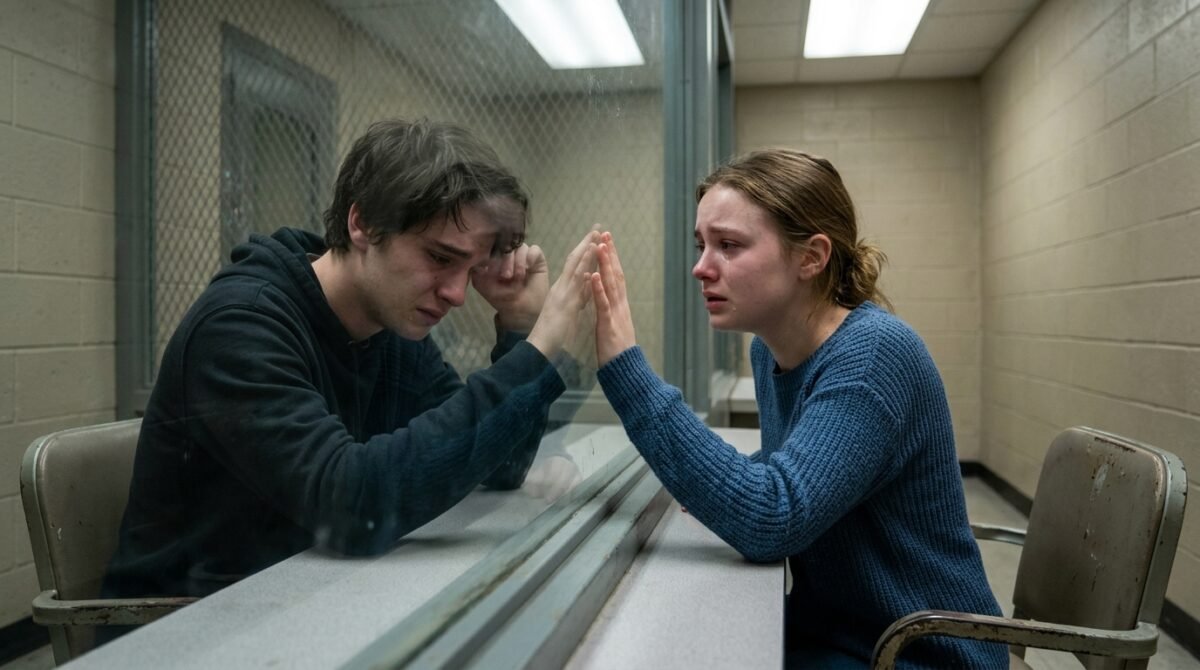
Despite the messages, I did end up going to the precinct—not to pay the bail, but to deliver a message. I needed to see her, to look her in the eye and make sure she understood that this was not a prank that I would fix. The drive to the station felt surreal; the city was bustling with people living their normal, drama-free lives, while I was heading toward a collision course with my own blood.
When I arrived, the clerk looked at me with a weary expression. I saw other people in the waiting area, looking just as tired and defeated as I felt. I filled out the paperwork for a visitation, my hand trembling slightly. I wasn’t sure if I was doing the right thing, but I knew I couldn’t be the silent, complicit bystander anymore.
When Chloe walked out, she looked disheveled. The bravado that usually shielded her was cracking, but there was still a spark of entitlement in her eyes. She expected me to have the papers ready to sign. She hadn’t even considered that I might show up empty-handed.
“Where are the papers? Did you bring the cash, or do I have to wait here for another hour while you get your act together?”
— Chloe, in the visitation room
I told her I wasn’t paying. I told her the bail amount was not my responsibility and that she needed to face the judge. The look on her face wasn’t one of fear—it was pure, unadulterated shock. She had never been told ‘no’ in a situation where she thought she had leverage. The silence between us stretched for an eternity, heavy with years of unspoken resentment.
I left her there, staring at me through the glass, her mouth slightly agape. Walking out of that station felt like stepping out of a burning building. The air outside was crisp, and for the first time in my life, I felt like I was actually breathing, even as I knew the fallout would be catastrophic.
The Fallout Among the Extended Family

By the time I reached my car, the messages had reached a fever pitch. My aunt had apparently called my boss—I don’t know how she got his number—asking if I was ‘going through a mental health crisis’ that would affect my work. The level of intrusion was staggering. I realized then that I wasn’t just dealing with a sister; I was dealing with an entire support system of enablers who viewed my boundary as an attack on their own comfort.
I spent the next several hours blocking numbers. It felt like cutting off limbs, one by one. I deleted the group chat. I went on social media and saw that my mother had posted a passive-aggressive update about ‘how painful it is when children turn their backs on their own blood during their darkest hour.’
The hypocrisy was blinding. My darkest hour was when I struggled with student debt while they were buying Chloe her first car, which she promptly totaled. But I couldn’t dwell on the past. I had to focus on the present. I checked my bank account, half-expecting them to find a way to access my funds, but I had already locked down my accounts.
I felt a strange sense of relief. For years, I had been trying to please people who were never going to be pleased. They were only interested in me as long as I served a purpose—as a wallet, as a mediator, as a problem-solver. Without that purpose, I was nothing to them, and that realization was the final piece of the puzzle.
I ordered takeout and turned off my phone for the night. I knew tomorrow would bring more pressure, maybe even an in-person confrontation, but for tonight, I was just me. No sister, no expectations, just the quiet of my own life that I had built despite them.
The Financial Anatomy of Entitlement

To understand why this was such a monumental decision, one has to look at the history of our ‘help.’ Over the last five years, the amount of money I had poured into Chloe’s life, under the guise of family duty, was enough to have been a down payment on a house. I decided to map it out, just to see the insanity of the numbers. It was a record of every ’emergency’ that was actually just a lack of planning.
| Occasion | Amount Requested | Reason |
|---|---|---|
| Chloe’s 21st Birthday | $1,200 | ‘Stolen’ purse |
| Apartment Deposit | $2,500 | Eviction notice |
| Car Repairs | $850 | Hit and run (her fault) |
| Bail (Current) | $5,000 | Golf cart/Duck pond |
The numbers stared back at me, a cold indictment of my own lack of boundaries. The most frustrating part wasn’t the total; it was the fact that none of these events had resulted in any change in her behavior. She was never incentivized to improve because there was always a safety net. She was a perpetual teenager in a world that demanded adulthood.
My family would argue that these were small amounts for me, that I ‘have it together’ and therefore should share the burden. But it was never about the size of the check. It was about the expectation that my resources were communal property. It was about the lack of respect for my time, my labor, and my own goals.
Looking at the table, I realized I hadn’t just been losing money; I had been losing my own future. Every dollar I gave to her was a dollar I didn’t invest, a dollar I didn’t spend on my own travel, my own growth, or my own peace of mind. I had been subsidizing her lifestyle at the cost of my own happiness.
This wasn’t just about a golf cart in a pond. It was about the final, broken straw in a camel’s back that had been struggling for years. I didn’t just refuse the bail; I refused to be a permanent fixture in her personal disaster movie.
The Reddit Trial: Community Verdicts
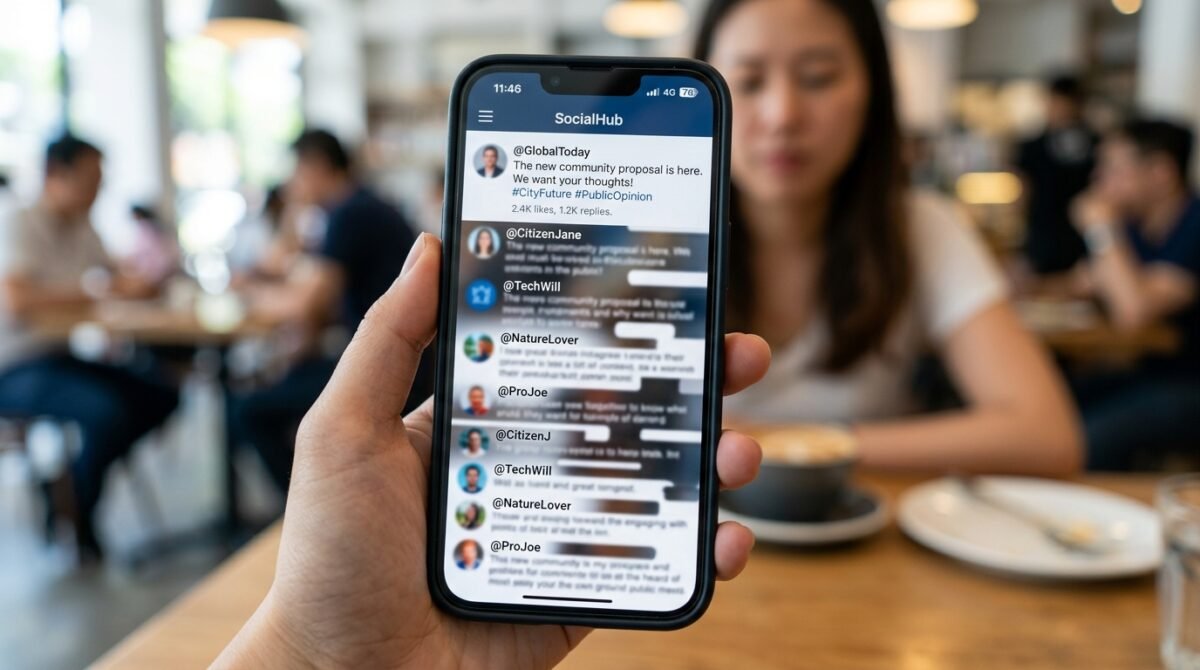
I decided to share my story on a popular forum, needing an objective perspective. I knew the internet could be harsh, but I also knew it could be incredibly validating. The response was a mix of intense support and the occasional ‘family is everything’ sentiment that I had come to expect. It was cathartic to see thousands of strangers agree that I wasn’t the villain.
“You aren’t the asshole. You aren’t her parent, and even if you were, you aren’t responsible for her criminal behavior. Enabling her for years is why she feels entitled to do this in the first place. Stay strong. Do not pay.”
— u/ReasonableObserver (Top Comment, 32.1k upvotes)
“The amount of audacity needed to steal a public golf cart is high, but the amount of audacity needed to ask your sibling to pay for it is even higher. She needs to sit in that cell and think about her choices. You are literally saving her life by letting her face the consequences.”
— u/LegalEagle99 (15.2k upvotes)
There were, of course, the dissenters. There are always those who believe that blood is thicker than water, regardless of how toxic the blood might be. They argued that family should be there ‘no matter what.’ I read those comments and realized they were likely the ones who had never been in my position—the ones who had never been the responsible sibling in a family of chaos.
The debate in the comments grew into a massive thread about the difference between ‘helping’ and ‘enabling.’ It was fascinating to see how many people had similar stories. Thousands of people shared their experiences of breaking free from toxic family cycles. It made me realize that I wasn’t alone, and that my struggle was a rite of passage for many who finally decided to prioritize their own sanity.
The community support gave me the backbone I needed when my mother called again, her voice shaking with rage. I was able to stand my ground, not because I was unfeeling, but because I had the consensus of thousands of people reminding me that my boundaries were healthy and necessary.
The Confrontation at the Sunday Dinner
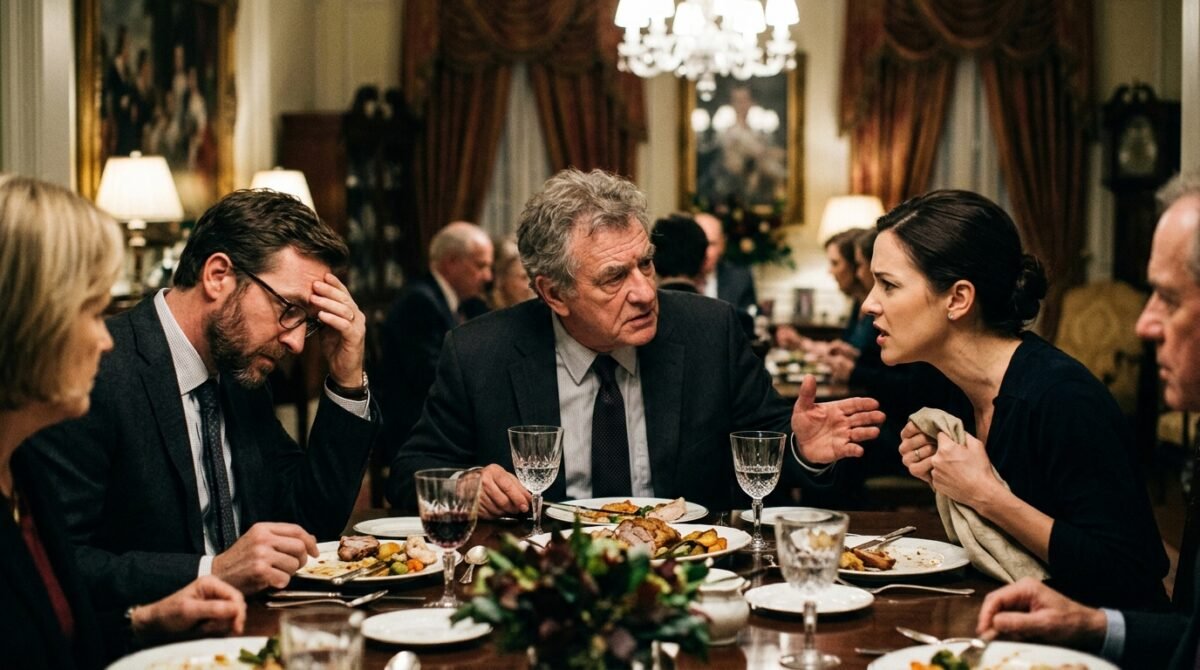
A week later, the storm reached its peak. My parents invited me over for ‘dinner,’ which I knew was a trap. I went, but I went with the intention of being perfectly calm, perfectly clear, and perfectly immovable. The house was tense, the air thick with the smell of roast beef and resentment. Chloe was there, having been released on a lower bail bond that she had miraculously managed to scrape together from credit cards.
The dinner started in icy silence. My father carved the meat as if he were dissecting a problem. My mother didn’t even look at me. Chloe sat there, playing with her fork, looking like a martyr in a tragedy. I ate my potatoes, waiting for the inevitable explosion.
“I hope you’re happy. Chloe had to use her last bit of credit to get out, and you sat there with thousands in your savings while she suffered. Do you even have a conscience?”
— Father, across the dinner table
I put my fork down. I looked at him, then at my mother, and finally at Chloe. I didn’t raise my voice. I didn’t get angry. I just laid it out, point by point. I told them about the years of financial support, the constant crises, and the lack of respect for my boundaries. I told them that I was done being the backup plan for someone who refused to grow up.
Chloe tried to interrupt, to make it about the ‘mistake’ with the golf cart, but I shut her down. I told her that the golf cart was just the final symptom of a disease we had all been living with for years. I told them that I loved them, but I couldn’t be a part of their dynamic anymore. If they wanted to enable her, that was their choice, but they couldn’t force me to be a part of it.
The table went silent. My mother started to cry, not out of sadness for me, but out of frustration that she couldn’t control the narrative. I stood up, thanked them for the dinner, and walked out the door. It was the most liberating thing I had ever done.
The Aftermath: A New Kind of Peace

Walking away from my parents’ house, I felt a weight lift off my shoulders that I hadn’t realized I was carrying. The weeks that followed were filled with silence. No calls from my mother, no desperate texts from Chloe, no guilt-tripping from my aunt. It was exactly what I needed. I started focusing on my career and my own life again, without the looming shadow of the next ’emergency.’
I realized that my life had been structured around avoiding their problems. I didn’t plan vacations because I might need that money for bail. I didn’t move to a better apartment because I needed to be close enough to ‘help.’ Now, the horizon was wide open. I began looking at my finances with joy, seeing savings grow for the first time in years.
I reached out to a therapist, someone who specialized in family boundaries. She helped me understand that the anger I felt wasn’t just about the money; it was about the grief of not having the family I wanted. It was about accepting that they were who they were, and that I couldn’t change them. I could only change how I interacted with them.
The transition was hard, but it was worth it. I started picking up hobbies I had long abandoned. I felt lighter, more focused, and significantly less anxious. I learned that saying ‘no’ was the most powerful word in my vocabulary. It wasn’t about being mean; it was about protecting the person I was becoming.
I still occasionally get a text from an unknown number, but I don’t respond. I know what they are. They are attempts to pull me back into the orbit of their chaos. I don’t need that anymore. I have my own orbit, and it’s finally, beautifully mine.
Why We Enable Without Knowing It

Looking back, the most insidious part of the whole experience was how normalized the enabling had become. We think we are helping when we solve a problem for someone, but we are actually just robbing them of the lesson. My parents, in their desire to ‘protect’ Chloe, had actually been preventing her from developing the resilience she needed to survive as an adult.
We all have that one person in our lives, don’t we? The one who is always in a crisis, always the victim, always needing ‘just one more’ bit of help. We give it because we love them, and because we hate to see them suffer. But we are only delaying the inevitable. The longer we hold them up, the harder they fall when we finally, inevitably, step away.
It’s a cycle of codependency that feels like love but functions like a trap. It’s important to recognize that boundaries are not acts of aggression; they are acts of preservation. When I finally refused to post that bail, I wasn’t punishing Chloe; I was finally letting her take the steering wheel of her own life, even if she had to crash a few more times to learn how to drive it properly.
The community reaction I received taught me that this is a universal struggle. We are trained from birth to prioritize the collective over the individual, but there comes a point where the collective is toxic. Learning to detach is not the same as falling out of love; it is the act of loving yourself enough to not be destroyed by someone else’s dysfunction.
I hope that if you are in a similar situation, you realize that you are not a bad person for wanting your own life. You are not responsible for the consequences of someone else’s choices. You deserve peace, and sometimes, the only way to find it is to walk away from the people who keep dragging you back into the storm.
The Final Verdict: Lessons Learned

If I could go back and tell my younger self anything, it would be to set those boundaries years ago. I would tell myself that the ‘heartless’ label is just a tool used by manipulators to keep you compliant. I would tell myself that the money I spent on Chloe was never going to buy her maturity, and that I was essentially throwing it into a bottomless pit.
The lesson of the golf cart in the pond is simple: you cannot save someone who doesn’t want to be saved. You can only provide the tools, but if they insist on throwing them into the water, you have to let them get wet. It is the most painful lesson I have ever learned, but it is also the most empowering.
I am now in a place of low contact, and it is the healthiest way for me to exist. I have learned that I can care about someone from a distance, without being the one who has to pick up the pieces when they shatter. It is a boundary that keeps me safe and keeps the relationship at a level that doesn’t threaten my mental health.
The fallout with my family is still there, lingering like an old scar, but it doesn’t hurt the way it used to. I have found my own chosen family—people who respect my limits, who don’t ask me to subsidize their bad decisions, and who see me for who I am rather than for what I can provide.
I am living my life, and for the first time, it feels like it is truly my own. I don’t regret the decision I made, and I don’t regret the silence that followed. I did what I had to do, and in doing so, I finally found myself.
Conclusion
The saga of the golf cart in the duck pond is, in the end, just a metaphor for the many times we allow others to steer our lives into disaster. It’s a story about the intersection of love, entitlement, and the absolute necessity of self-preservation. I didn’t choose this conflict, but I did choose my response to it, and that decision has defined the trajectory of my adulthood.
I know many of you have faced similar dilemmas—whether it’s a sibling, a partner, or a friend who treats your resources as their own. It’s easy to feel guilty, to feel like you are failing someone, but remember: you cannot pour from an empty cup. You have a right to your own peace, your own finances, and your own future, regardless of what your family or society expects of you.
The debate about where ‘family loyalty’ ends and ‘personal responsibility’ begins is one that never truly ends. I invite you to share your own experiences in the comments below. Have you ever had to draw a line in the sand with a loved one? Was it worth the fallout? How did you handle the accusations of being ‘heartless’? Let’s discuss the nuances of boundaries in the comments section.
What's your verdict on this dilemma?
Vote below to contribute to the official community consensus.

Have a Dilemma Keeping You Up at Night?
Share your real-life feud, wedding chaos, or relationship crossroads anonymously with our editorial team.
What do you think ?
0 Comments🛡️ Comments are moderated to protect community integrity. Your comment will appear once approved by the editorial team.