
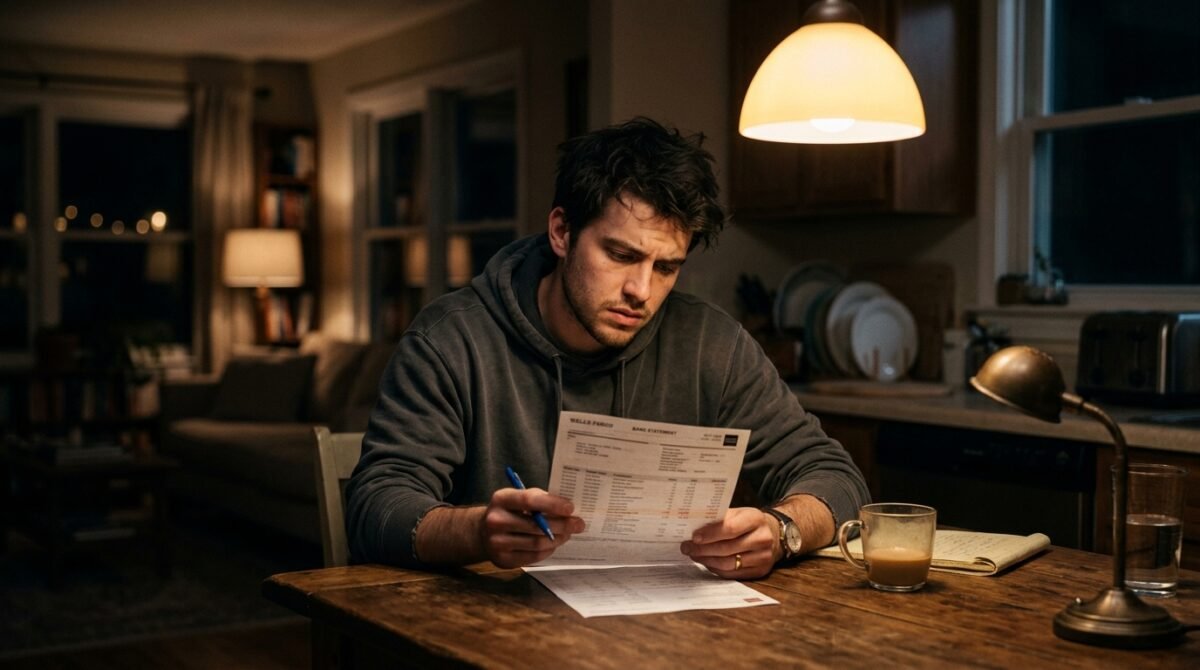
For as long as I could remember, the ‘Surgery Fund’ was a sacred concept in our household. It wasn’t just a bank account; it was my lifeline. Born with a chronic condition that necessitated a corrective spinal procedure by my twenty-first birthday, my life was effectively tethered to that high-yield savings account. My parents, despite their erratic spending habits, had always maintained that this money was untouchable. It was the one piece of stability I had in a childhood defined by their constant financial chaos.
The transition from a protected trust to a hollow account happened silently, without a single phone call or text message to inform me. It wasn’t until I went to my local credit union to verify the remaining balance before scheduling my pre-operative consultations that the world stopped spinning. The teller looked at me with a mix of pity and professional detachment, delivering the news that the account was not only empty but had been closed for three months.
My brother, Leo, had always been the golden child. While I spent my weekends in physical therapy and my savings on specialized equipment, Leo was the star athlete, the one who needed the newest car, the most expensive gear, and constant validation. When I finally pieced together the trail of digital breadcrumbs, the reality was a slap to the face: my medical future had been liquidated to fund a high-end, top-of-the-line jet ski and a summer of lake-house rentals for him and his friends.
The moral dilemma that followed wasn’t just about the money; it was about the fundamental betrayal of parental duty. I was faced with a choice: quietly accept that my health was worth less than my brother’s summer fun, or take a path that would permanently burn every bridge I had with my family. I chose the latter. I reported them for financial exploitation, and in doing so, I forced my parents to confront the consequences of a lifetime of favoritism.
The Day the Savings Account Vanished
The walk to the bank that morning was supposed to be routine. I had already mentally planned the surgery dates for early winter, hoping to recover before the next semester started. The air was crisp, and I felt a rare sense of optimism. I carried my documentation, ready to finalize the deposit for the hospital’s administrative fees. Everything felt like it was finally clicking into place after years of anticipation.
When I reached the counter, the teller pulled up my profile with a smile that quickly faded. She tapped a few keys, frowned, and then turned the monitor slightly away from me. The silence that followed felt like a physical weight in the room. I remember checking my watch, wondering why she was taking so long. When she finally spoke, her voice was hushed, professional, and entirely devastating.
“I am very sorry, but this account has a zero balance. It appears the funds were withdrawn in full over a series of four transactions back in June. The account was closed shortly thereafter at the request of the primary account holder.”
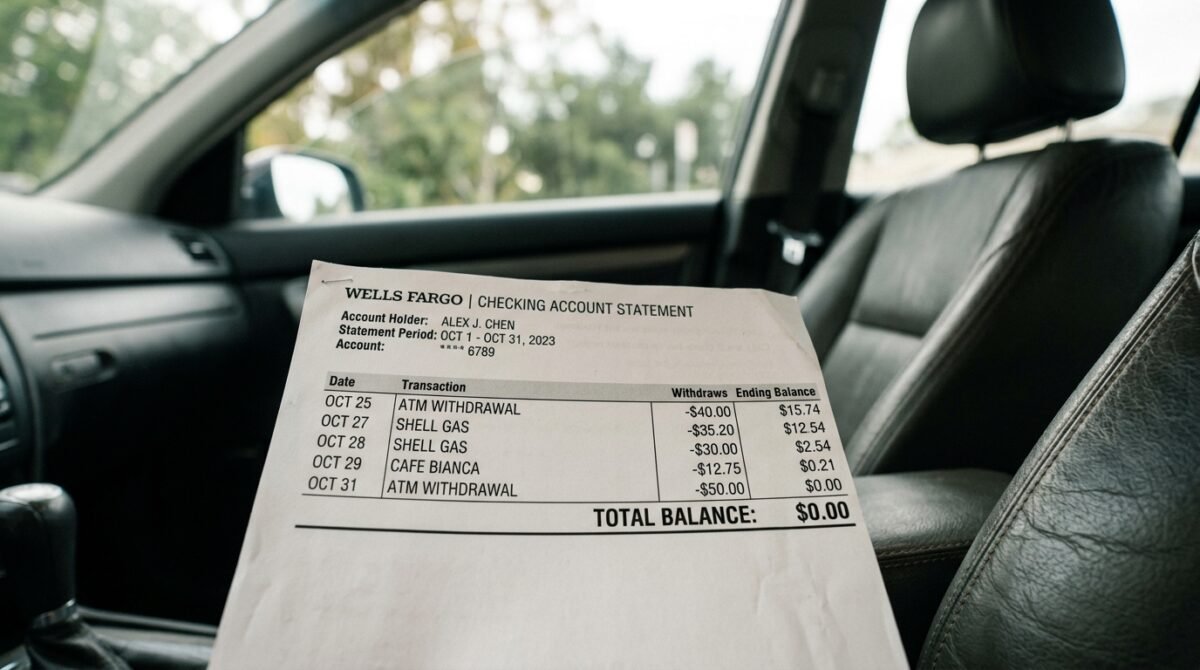
I felt the blood drain from my face. June? That was right around the time Leo had started posting those excessive vacation photos on Instagram. I asked her to print the transaction history, my hands shaking so violently that I almost dropped the paper when she handed it over. The list was a series of wire transfers and debit purchases at a marine supply store and a luxury rental management firm.
I sat in my car for what felt like hours, staring at the receipts. The total amount stolen was exactly what I needed for the surgeon’s deposit. I didn’t cry. Instead, I felt a cold, hard clarity settle over me. This wasn’t a mistake or an emergency. This was a calculated choice. My parents had looked at my health and decided that a jet ski for their favorite son was a better investment.
I didn’t call them immediately. I knew that if I did, I would get the standard defensive ranting, the gaslighting, and the inevitable “we’ll pay you back when we can” lie. I needed to act differently. I went home, opened my laptop, and started documenting every single conversation, every email, and every piece of evidence I had regarding the origin of that money.
The Confrontation in the Family Group Chat
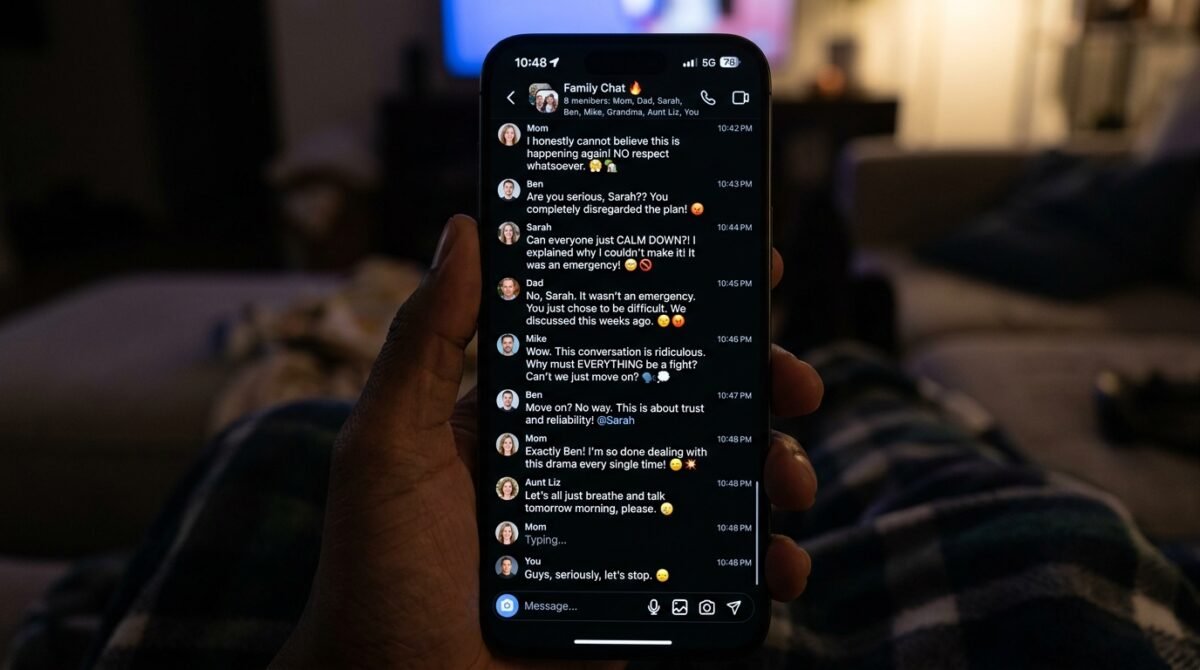
I knew I couldn’t confront them in person; they were too good at manipulating the narrative face-to-face. I needed a record. I took a screenshot of the bank statement and dropped it into our family group chat, keeping my message simple and cold. The notification pinged on my phone, and I waited. The silence lasted for nearly an hour, a testament to their panic.
Finally, my mother began typing. The bubbles appeared and disappeared, a rhythmic pulsing that mirrored the rising anger in my chest. When the message finally appeared, it was the classic deflection strategy: “Why are you looking at accounts that don’t concern you?” It was the response of someone who knew they were caught but still felt entitled to control the narrative.
“Why are you looking at accounts that don’t concern you? Leo worked hard all year and needed a break. We’ll handle your medical bills when the time comes, but you shouldn’t be snooping around like a private investigator.”
— Mom, via Family Group Chat
I didn’t let them off the hook. I replied with the cold, hard facts of the matter. I reminded them that the funds were specifically earmarked for my spinal surgery, a medical necessity that had been discussed with every family member for years. The audacity of calling my discovery “snooping” while they had literally drained my life savings for a water toy was beyond comprehension.
My father joined in then, taking a different, equally toxic approach: the condescending protector. He told me that I was being “dramatic” and that my health wasn’t as precarious as I claimed. He actually had the nerve to suggest that I could just “work a few more hours” to make up the difference, completely ignoring the physical limitations my condition placed on me.
I watched as my brother, Leo, entered the chat, playing the victim. He claimed he had no idea where the money came from and that Mom and Dad had simply “gifted” him the jet ski as a graduation present. It was a lie, and he knew it. I stopped replying to their messages and turned off my notifications. I had everything I needed to move to the next phase.
The Legal Ultimatum and the Police Report
I spent the next forty-eight hours consulting with a legal aid clinic and a local attorney specializing in family law. The attorney was blunt: since my name was technically on the account as a secondary holder, the removal of the funds was a complex issue, but the intent behind the original deposits—which were legally designated as a gift for medical needs—gave me a strong position to file a claim for conversion.
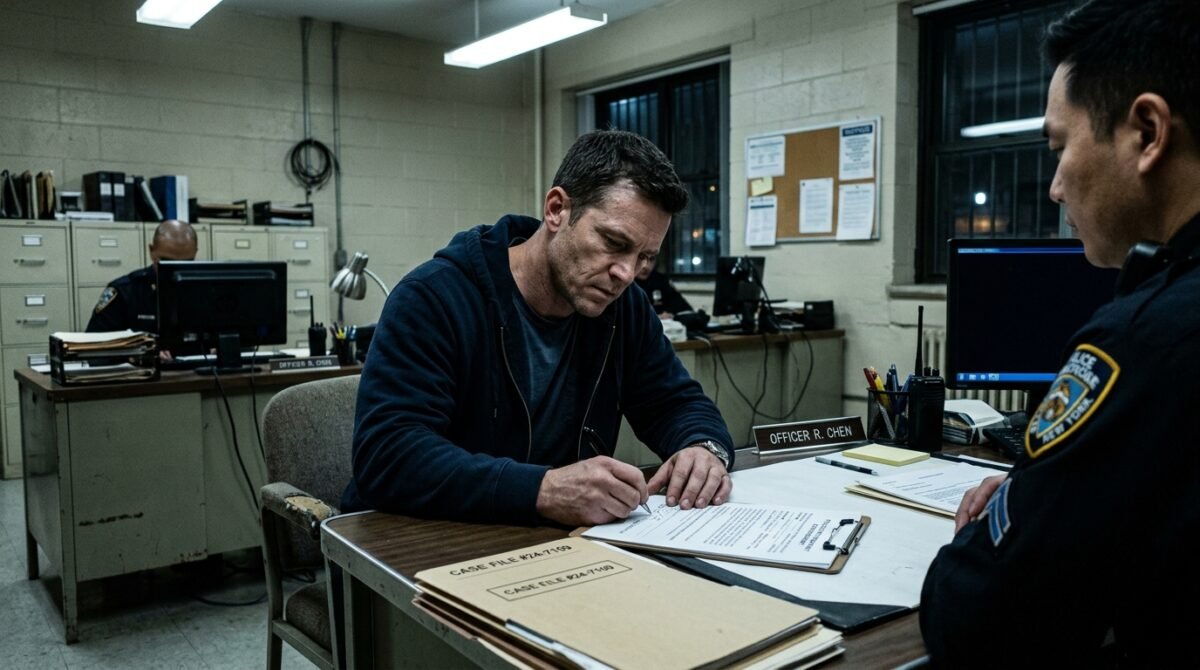
I walked into the local police station on a rainy Tuesday morning. I wasn’t just there to complain; I was there to file a report for financial elder/dependent abuse, as the fund was tied to my medical status. The officer on duty took me into a back room, listened to my story, and looked at the evidence. He seemed genuinely shocked by the level of entitlement my parents had displayed.
“You understand that by filing this report, you are effectively severing the relationship with your parents? Once we open an investigation into these transfers, there is no coming back from the legal implications.”
I told him that the relationship had been severed the moment they decided my mobility was less important than a toy. The report was filed. By the time I walked out of the station, the weight of the “good child” persona I had been forced to play for two decades had completely evaporated. I felt a sense of freedom I hadn’t known since I was a child.
The next day, my parents were contacted by the authorities. The chaos that ensued was predictable. My father called me twelve times in one hour, his voice escalating from confused anger to desperate pleading. He offered to return the money, to sell the jet ski, to do whatever I wanted if I would just “call the officer and tell him there was a misunderstanding.”
I didn’t answer. I sent one final text to the group chat: “This is between you and the law now. Do not contact me again unless it is through a lawyer.” I blocked their numbers and social media accounts immediately. It was the hardest thing I had ever done, but it was also the most necessary.
The Fall of the Golden Child

As the legal investigation proceeded, the fallout rippled through the rest of the family. My aunts, uncles, and cousins heard different versions of the story. My parents painted me as the vengeful, ungrateful child who was trying to ruin their lives over a “minor” financial disagreement. Leo, meanwhile, had to face the reality of his jet ski being impounded as evidence.
The irony was delicious in a dark, bitter way. Leo, who had never had to work for anything, was suddenly struggling to justify his lifestyle to the rest of the extended family. When the truth came out—that he was fully aware of where the money for his toy had come from—his reputation among our cousins took a massive hit. He was no longer the golden child; he was the kid who stole his sibling’s spine surgery money.
“I thought they had an extra account! They never told me it was the surgery fund! I’m the one suffering here because now everyone hates me for something Mom and Dad did!”
— Leo, in a desperate email to an aunt
The family dynamic fractured completely. Half the family supported my parents, citing “family loyalty” and the idea that children owe their parents everything. The other half, mostly my younger cousins and a few sane aunts, were horrified by the financial abuse. The Sunday dinners that used to be the highlight of the month were replaced by awkward silences and then, eventually, total abandonment.
I wasn’t involved in any of this, of course. I had moved into a small apartment across town, working a remote data entry job that allowed me to save money on my own terms. I stopped checking the group chats that were forwarded to me by sympathetic cousins. I was focused on my recovery and my future, leaving the wreckage of my past behind me.
It wasn’t an easy transition. There were nights where the silence of my apartment felt deafening, and I wondered if I had gone too far. But then I would look at the medical estimates I had received for my future care, and the anger would return, steady and grounding. I hadn’t destroyed my family; I had simply refused to let them destroy me anymore.
Reddit’s Verdict: The Community Reacts

I eventually decided to share my story on a popular subreddit dedicated to family drama. I didn’t want validation; I wanted to know if I was actually the villain, as my mother kept insisting. The response was overwhelming. Within hours, the post hit the front page, with thousands of comments debating the ethics of my decision and the nature of parental duty.
“NTA. Your parents didn’t just ‘borrow’ money; they committed financial abuse. People who steal from their children’s medical funds to buy toys are not just bad parents; they are fundamentally broken people. You did the right thing by involving the law.”
— u/ReasonableObserver (Top Comment, 32.1k upvotes)
The community was surprisingly unified. There were a few “devil’s advocate” voices who argued that family should be forgiven, but they were quickly drowned out by hundreds of people sharing their own stories of financial betrayal. It was cathartic to see that I wasn’t alone in this experience, even if the specifics of our stories differed.
Some users provided practical advice on how to protect my credit and medical files, which I hadn’t even thought to do. Others reached out privately with resources for support groups for people dealing with family trauma. The sheer scale of the support was a stark contrast to the isolation I had felt in my own home.
“The moment they spent that money, they stopped being parents and started being thieves. Do not feel guilty. You didn’t burn the bridge; they built a wall of fire and threw you over it.”
— u/JusticeForOP (15.2k upvotes)
Reading through the comments, I realized that the guilt my parents had tried to instill in me was a weapon. They used the idea of “family” as a shield to protect themselves from the consequences of their actions. Seeing thousands of strangers call out that behavior for exactly what it was helped me shed the last remnants of my doubt.
I stopped reading the comments after the second day. The point was made. I had done what I needed to do, and the world—or at least the internet—was in agreement. I closed the tab, looked out my window at the city skyline, and for the first time in my life, I felt like I was the architect of my own destiny.
The Financial Reconstruction and My New Reality

With the legal case ongoing, I had to completely rebuild my financial life. I opened new accounts at a completely different bank, set up two-factor authentication on everything, and placed a freeze on my credit reports. I had to learn the hard way that when it comes to family, transparency can sometimes be a liability if those family members are untrustworthy.
I also had to start saving for my surgery from scratch. It was a daunting prospect. I took on a second freelance gig, working late into the night. It was exhausting, but every dollar I put into that new, private account felt like a victory. It wasn’t just money; it was a testament to my own self-sufficiency. I was no longer waiting for my parents to “take care” of me.
| Expense | Original Fund | My New Plan |
|---|---|---|
| Surgery Deposit | $15,000 | $5,000 saved, $10,000 loan |
| Recovery Costs | $5,000 | $5,000 (Insurance coverage) |
| Living Expenses | N/A | Budgeted at $1,200/month |
My lifestyle changed drastically, but it was a choice I made for myself. I gave up eating out, cut my streaming subscriptions, and focused entirely on the surgery. Every sacrifice I made was for my own health, not for someone else’s jet ski. The sense of control was empowering. I wasn’t just surviving; I was thriving in a way I never could have under my parents’ thumb.
I started seeing a therapist who specialized in family estrangement. She helped me unpack the years of gaslighting and the subtle ways my parents had diminished my self-worth to keep me dependent. It wasn’t just about the money; it was about the psychological shackles they had placed on me. Breaking free was the best thing I could have done for my mental health.
I learned that my worth was not tied to their approval. I learned that “family” is not a free pass to exploit those you are supposed to protect. Most importantly, I learned that I am capable of handling the consequences of my own actions, and I am capable of surviving even when those I love the most betray me in the worst ways possible.
The Final Hearing and the Settlement
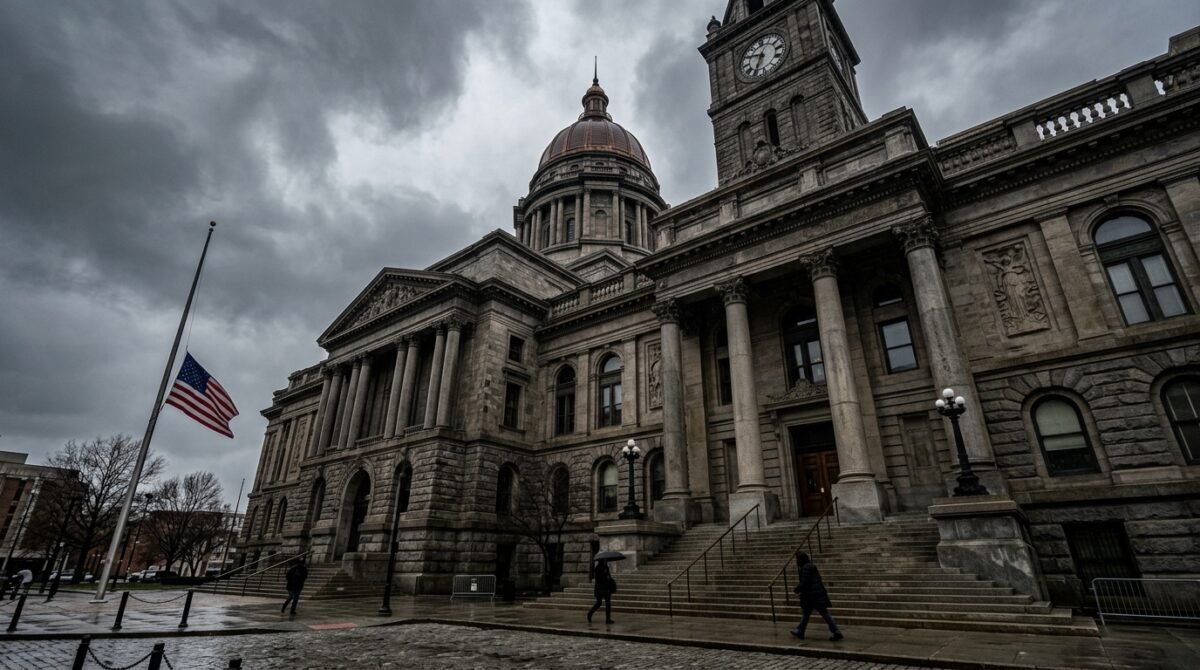
The day of the court hearing arrived, a cold and grey afternoon that matched my mood. My parents were there, looking disheveled and tired. They didn’t try to approach me, for which I was grateful. They had been instructed by their lawyer to keep their distance, though I could see my mother whispering angrily to my father in the hallway.
The proceedings were swift. Because of the clear evidence—the bank statements, the transaction history, and the lack of any authorization—the judge didn’t spend much time deliberating. My parents were ordered to repay the full amount, plus interest, within ninety days. They were also hit with a series of fines, which would further strain their already dwindling finances.
“This court finds the actions of the defendants to be a clear violation of trust and a misuse of designated funds. The repayment plan will be enforced strictly.”
— The Presiding Judge
As we left the courtroom, my father finally broke the rules and stepped into my path. He tried to tell me that this would ruin them, that they would lose the house, and that I was being “cold-blooded.” I looked him directly in the eyes, unmoved. I didn’t raise my voice; I didn’t lose my temper. I simply stated the truth one last time.
“You ruined yourselves when you chose a jet ski over your own daughter’s health,” I said. I walked past him to my car, my head held high. I didn’t wait to see his reaction. I had nothing left to say to him, and I had nothing left to take from them other than what was rightfully mine. The chapter was closed.
The settlement money started trickling in over the following months. I used it to pay off the medical loans I had taken out and put the rest into a long-term investment account. I never spent a penny of it on anything frivolous. It was, and would always remain, my medical fund. It was the price of my independence, and it was worth every cent.
The Aftermath: Finding Peace Without Them

A year after the incident, life looks very different. I am currently six months post-op, and for the first time in my life, I am living without chronic pain. The surgery was a success, and I have my life back. I didn’t invite my parents to the hospital, and I didn’t send them an update afterward. They are strangers to me now, and I prefer it that way.
I have built a small but incredibly supportive group of friends who truly care about my well-being. They were there for me during the long weeks of recovery, bringing me meals, helping me navigate the post-surgery physical therapy, and just sitting with me when the memories of my family became too much. They are the family I chose, the kind of family that doesn’t steal from you when you’re at your most vulnerable.
I occasionally see photos of Leo on social media through mutual friends. He’s still chasing the same high, still looking for the next thing to buy, still posting pictures of himself at parties. He looks lost. I don’t feel anger toward him anymore, just a profound sense of distance. He is a child of the environment that created him, and I hope one day he finds a way to break free, just as I did.
My mother occasionally sends me emails on my birthday, short notes that always start with “I hope you’re doing well” and end with “We love you and miss you.” I never reply. I read them, acknowledge the empty sentiment, and delete them. They are not apologies. They are attempts to rewrite history, and I won’t participate in it.
I am finally in control of my own story. I am no longer the victim of my parents’ greed; I am the survivor of their betrayal. The scar on my back is a reminder of the surgery I fought for, but the strength I feel in my soul is a reminder of the battle I won to get there. I am finally, truly, free.
Reflecting on the Moral Crossroads

People often ask me if I regret taking legal action. They ask if the “family bond” wasn’t worth more than a bank account. I tell them that the family bond was already gone long before I filed that police report. It was an illusion, a fragile thing that my parents shattered the moment they decided I was disposable. You can’t destroy what doesn’t exist.
The true moral of this story isn’t about the money. It’s about the courage to set boundaries. For years, I was told that I was the one who had to suffer, the one who had to be “understanding,” the one who had to wait for the “right time.” I realized that waiting for permission to be treated with dignity is a trap. Sometimes, you have to be the villain in someone else’s story to be the hero in your own.
I think about the thousands of people who are currently trapped in similar situations, afraid to speak up because of the social stigma or the fear of being labeled “difficult.” I hope my story gives them the permission they need to put themselves first. Your health, your future, and your well-being are not negotiable. Never let anyone, especially your family, convince you otherwise.
I don’t hold onto the past. I don’t dwell on the “what ifs” or the “why me.” I focus on the future. I focus on the health I’ve regained and the life I’m building. I focus on the fact that I am finally, after twenty-one years, the person I was meant to be, independent and unencumbered by the expectations of people who never truly loved me.
I hope that one day, my parents find their own sense of peace, but I know it won’t be with me. I have learned that true forgiveness isn’t about reconciling; it’s about letting go of the need for an apology that will never come. And I have let go. I am whole, I am healthy, and I am finally, completely, at peace.
Lessons from the Rubble

Looking back, the most important lesson I learned was the value of documentation. In any dispute, especially one involving money and family, your memory will be challenged, your words will be twisted, and your motives will be questioned. Having the receipts, the texts, and the clear timeline was the only reason I was able to stand my ground.
I also learned the importance of having an independent financial identity early in life. My parents treated me as an extension of themselves, a resource to be tapped into rather than an individual with my own needs. By keeping my finances separate and secure, I not only protected my future but also established a boundary that they could no longer cross.
Most importantly, I learned that you don’t owe your parents your life, your health, or your happiness. We are taught from a young age that parents are infallible, that their mistakes should be forgiven, and that the family unit is the most important thing. But that is a dangerous narrative when it serves to justify abuse. A family that doesn’t respect your basic needs is not a family; it’s a cage.
I have no advice for my parents. They are on their own path, and I am on mine. But for anyone reading this who is in the middle of a similar struggle: document everything, trust your gut, and don’t be afraid to walk away. You are stronger than you think, and you deserve a life where you are the priority.
I am grateful for the journey, as painful as it was. It brought me to this place of clarity. I am no longer the scared child waiting for a surgery I couldn’t afford; I am a survivor who fought for her future and won. And that, in the end, is all that matters.
Conclusion
My life today is quiet, simple, and entirely mine. The surgery fund is no longer a source of stress but a testament to my survival. I have learned that the hardest decisions are often the most necessary, and that burning a bridge is sometimes the only way to light the path forward.
I hope this story serves as a reminder that no amount of “family history” justifies financial exploitation or the sacrifice of a child’s health. We are all responsible for the people we become, and I am proud of the person I chose to be when faced with the ultimate betrayal.
What about you? Have you ever had to choose between family loyalty and your own well-being? What is the one boundary you would never let anyone cross, no matter who they are? Share your thoughts and experiences in the comments below—let’s keep the conversation going.
What's your verdict on this dilemma?
Vote below to contribute to the official community consensus.

Have a Dilemma Keeping You Up at Night?
Share your real-life feud, wedding chaos, or relationship crossroads anonymously with our editorial team.
What do you think ?
0 Comments🛡️ Comments are moderated to protect community integrity. Your comment will appear once approved by the editorial team.