
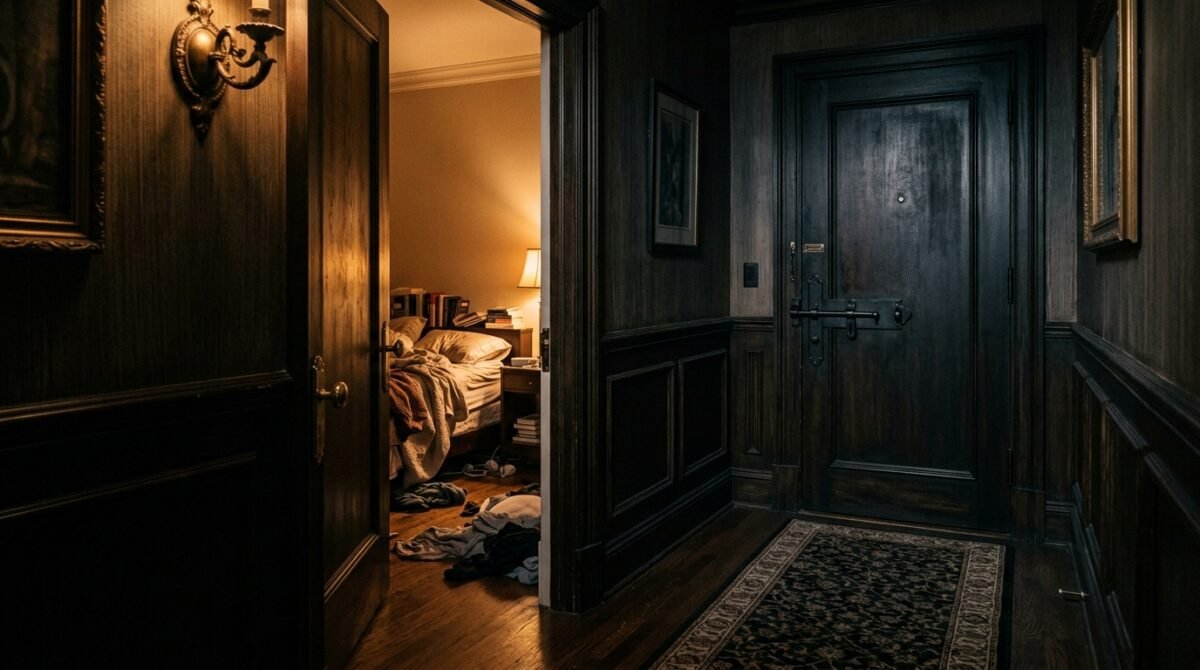
Growing up in the Henderson household was an exercise in strategic visibility. If you were my sister, Chloe, you were the center of the solar system—the ‘Golden Daughter’ whose dance recitals, grades, and fashion choices dictated the climate of our home. If you were me, you were the reliable satellite, expected to orbit, provide support, and never, ever eclipse the sun.
When I made the decision to bring Maya, my foster sister, into my life, I knew it wouldn’t be easy. Maya was a vibrant, resilient teenager who had been through the system and deserved a safe harbor. My parents, however, saw her differently. To them, she wasn’t a human in need; she was a variable that disrupted their carefully curated suburban aesthetic.
The tension didn’t start with a bang. It began as a slow, deliberate erosion of boundaries. My parents treated our home like a showroom, and when Chloe decided she needed a dedicated space for her burgeoning ‘influencer’ career, the target on Maya’s back grew larger by the day. They didn’t just want a room; they wanted the soul of the house reorganized to suit their golden child.
The moral dilemma crystallized during a humid Tuesday evening in July. My father, with a glass of scotch in his hand, sat me down in the study to explain why Maya was ‘inconvenient.’ It was the moment I realized that my own parents had stopped seeing children as individuals and started seeing them as assets. I had to choose: maintain the facade of a family or protect the person who actually needed me.
This is the story of how I chose the latter, why I burned the bridge to the ground, and what happens when you finally decide that blood is not, in fact, thicker than the values you hold dear. It’s a messy, painful, and ultimately necessary exploration of what it means to be a family in the 21st century.
The Blueprint for the Golden Closet
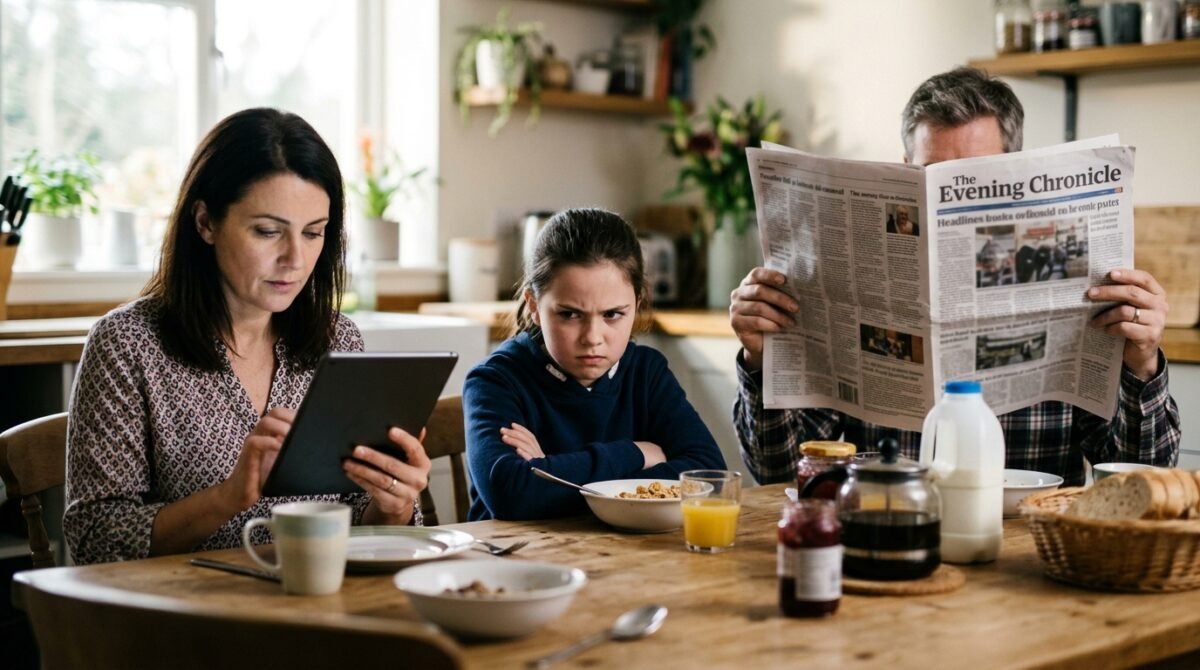
It started with a casual mention during breakfast. My mother, eyes glued to her tablet, tapped the screen and sighed loudly, lamenting how the lighting in the guest bedroom—where Maya had lived for the past eighteen months—would be perfect for a ‘content studio’ for Chloe.
I looked over at Maya, who was quietly buttering her toast, trying to make herself small, as she often did. I felt a sharp, cold spike of adrenaline. The room wasn’t just a guest room anymore; it was Maya’s sanctuary, the first place she had ever been able to decorate exactly how she wanted.
“Chloe has her own room, Mom,” I said, my voice measured. “And she has the sunroom. Does she really need a third space to film videos?”
“It’s not about need, darling. It’s about optics. Chloe is getting brand deals. She needs a space that reflects her brand. Maya can move into the basement storage area. It’s plenty of space for a girl her age.”
— My Mother, during the fateful breakfast
The basement storage area was windowless, damp, and smelled of mothballs and old paint. My father chimed in, not looking up from his newspaper. “Don’t be dramatic. It’s just a room change. Maya is foster; she should be grateful she has a roof over her head at all. We’re doing her a favor, not signing a lease.”
I felt my pulse quicken. The blatant dehumanization was staggering. They were discussing a human being like a piece of furniture they were shuffling around to clear space for a new vanity. I didn’t respond immediately, but the silence that followed was heavy with the weight of an impending war.
That night, I went into Maya’s room. She was sitting on her bed, her eyes red, clutching a pillow. She had heard the entire conversation through the thin walls. “Am I in the way?” she asked, her voice barely a whisper. That single question shattered whatever remained of my patience.
The Sunday Night Ultimatum
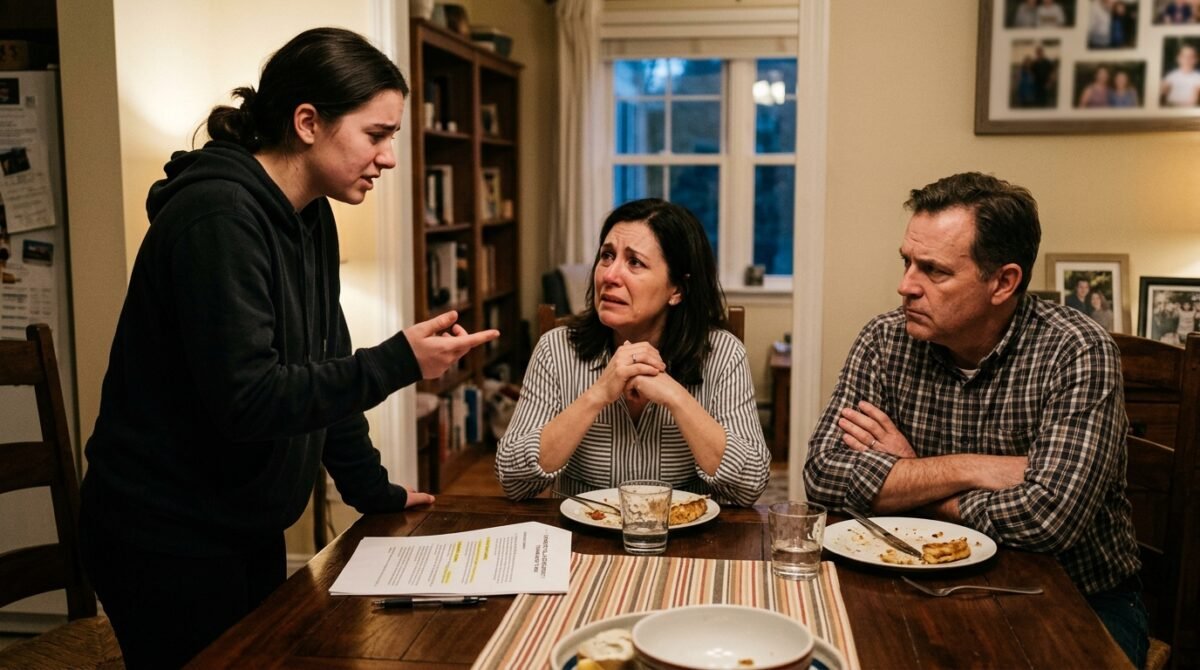
The escalation happened over the weekend. My parents hosted a ‘family strategy dinner,’ which was really just an excuse to enforce their will under the guise of communal harmony. They had printed out a ‘Renovation Schedule’ and placed it on the dining table as if it were a legal document.
Chloe sat there, smirking, already scrolling through interior design sites for ‘luxury closet lighting.’ She didn’t look at Maya once. She didn’t look at me. She was entirely focused on the vision of her new empire, oblivious—or indifferent—to the cost of its construction.
“We’ve decided the move happens on Friday,” my father announced, cutting into his steak with surgical precision. “I’ve hired a crew to move the boxes. Maya, you can help with your own things, but keep it quiet. We don’t want the neighbors hearing a fuss.”
“She isn’t moving. Not to the basement, not to the shed, not anywhere. This room is hers as long as she needs it. If you force this, I’m out, and she’s coming with me.”
— My response to the ultimatum
The table went deathly silent. My mother’s fork clattered against her china plate. The air felt thin, like the oxygen had been sucked out of the room. Chloe looked up, genuinely shocked that I had dared to speak out of turn. She wasn’t used to resistance.
“You’re threatening us?” my father asked, his face darkening with a familiar, terrifying shade of crimson. “Over a foster kid? You’re going to throw away your inheritance, your connection to this family, for a girl who isn’t even blood?”
I looked at Maya, who was trembling, and then back at my father. I realized then that their love was transactional. It was a currency, and I had just declared bankruptcy. “If this is what being part of this family costs, then yes. I’m done.”
The Group Chat Explosion

Within an hour of that dinner, the family group chat—which included aunts, uncles, and cousins—was buzzing. My mother had clearly spun the narrative, painting me as a rebellious, ungrateful daughter who had been corrupted by ‘outside influences’ and was causing chaos for no reason.
My phone didn’t stop pinging. It was a barrage of messages, some from family members who didn’t even know Maya, demanding to know why I was being so difficult. They called it a ‘simple room request’ and told me to apologize to my parents to ‘keep the peace.’
“OP, you are being incredibly selfish. Your sister has a career! You are holding up her progress over a transient foster child. Just move the girl and say sorry. Don’t ruin the family dynamic over a grudge.”
— My Aunt Sarah in the family group chat
I didn’t argue. I didn’t defend myself against the accusations of selfishness. I simply screenshotted the entire thread and sent it back to the group. I wanted everyone to see the exact language they used to describe a child in need: ‘transient,’ ‘foster kid,’ ‘inconvenient.’
The silence that followed my message was delicious. Some family members who had been quick to judge started to backpedal, realizing that the ‘rebellion’ was actually a defense of basic human dignity. Others, however, doubled down, proving that the rot in the family tree went much deeper than just my parents.
I realized then that I wasn’t just fighting my parents; I was fighting an entire culture of enabling. My parents had built a system where Chloe was the prize, and everyone else was a service worker. The group chat was just the public airing of a private sickness.
The Midnight Packing Operation
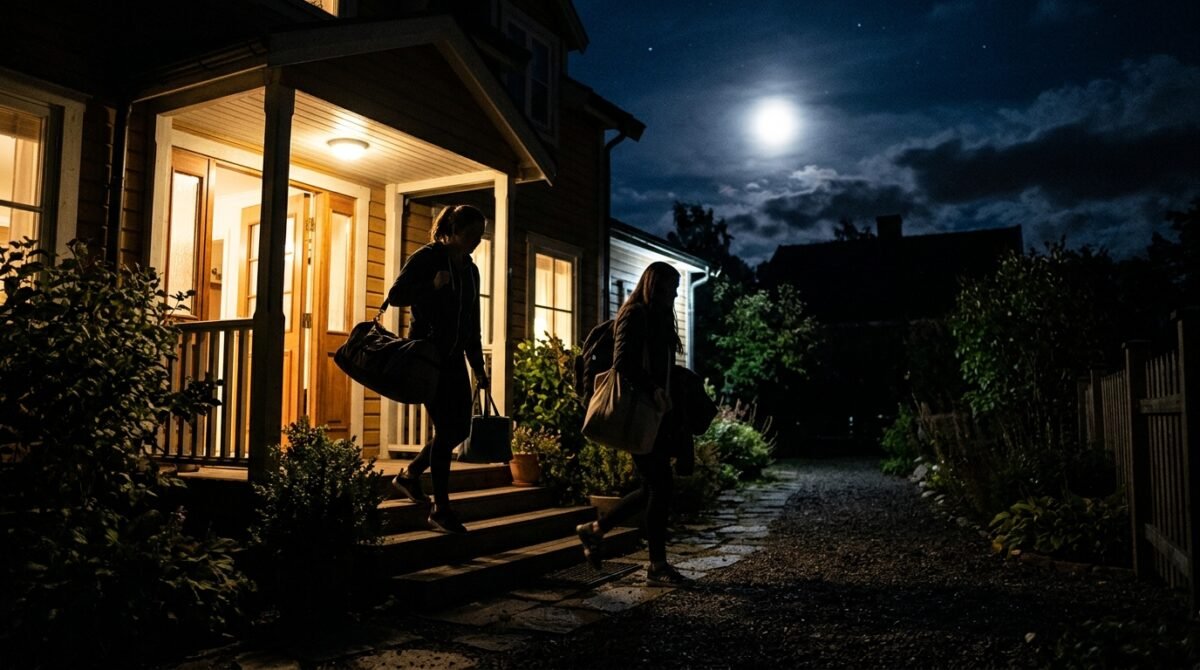
By Wednesday, the atmosphere in the house was toxic. My parents had stopped speaking to me entirely, communicating only through sticky notes left on the refrigerator—cold, clinical instructions about chores and house rules, as if I were a tenant they were trying to evict.
I knew we couldn’t stay. I began secretly packing. Maya was terrified, but she was also relieved. She hadn’t wanted to move into that basement. She knew it was a symbolic burial—a way for them to hide her existence while still maintaining the ‘charitable’ appearance of being a foster home.
We packed light. Clothes, school supplies, her small collection of books, and the few photos she had of her biological family. We did it in the dark, using the flashlights on our phones, moving like thieves in our own home. Every creak of the floorboards sounded like a gunshot.
“Are we really doing this? Where will we go? They’ll say you kidnapped me.”
— Maya, whispering in the dark while packing
“I have the paperwork,” I whispered back, handing her a folder. “And I have the emergency fund. We’re going to my apartment downtown. You’re not being kidnapped; you’re being rescued. There’s a big difference.”
The adrenaline was keeping us upright. As we reached the front door, I caught a glimpse of myself in the hallway mirror. I looked tired, but I also looked free. I wasn’t the ‘reliable daughter’ anymore. I was the architect of my own exit. We stepped out into the cool night air, the heavy oak door clicking shut behind us—a sound that signaled the end of my childhood.
The Aftermath and the Legal Threat
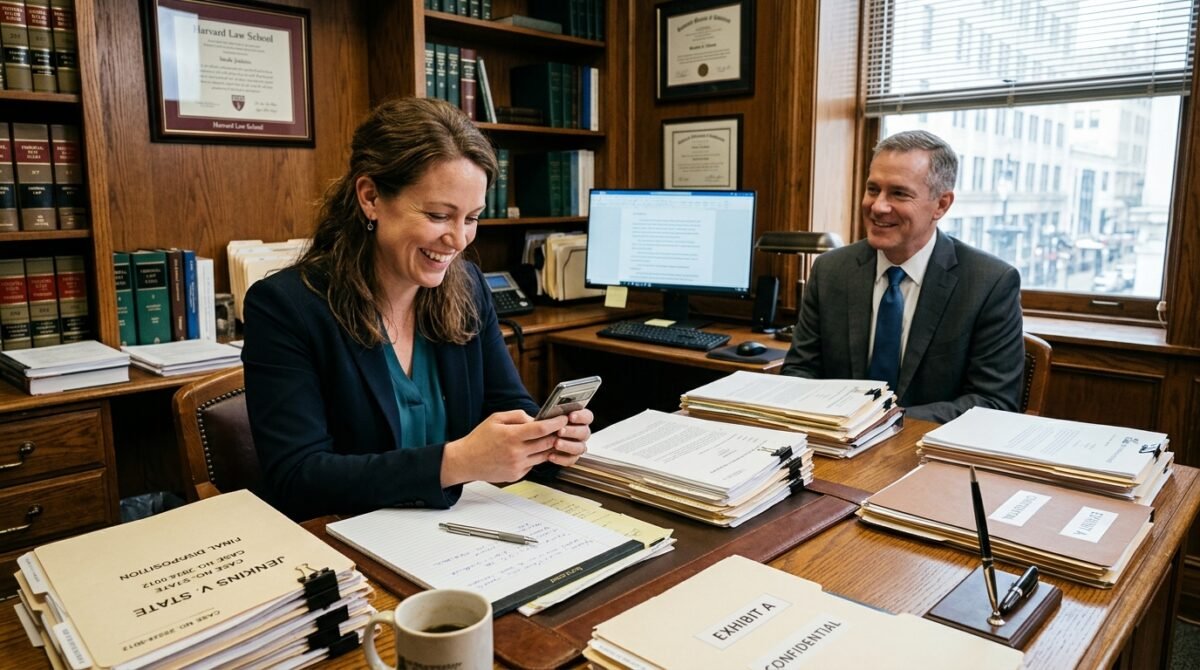
The next morning was a firestorm. My mother found the rooms empty and called me, screaming through the phone. She threatened everything—lawsuits, reporting me to the foster agency, claiming mental instability. She was spiraling, not because she cared about Maya, but because she had lost control of the narrative.
I had already contacted a lawyer and the social worker assigned to Maya’s case. I documented everything: the plan to move her to the basement, the verbal abuse, the blatant favoritism. The social worker was horrified. The agency opened an investigation into my parents’ home almost immediately.
The threats from my mother died down when my lawyer sent a letter detailing the evidence we had gathered. Suddenly, the ‘inconvenient’ foster child was a liability they couldn’t afford to have scrutinized. They went from angry to terrified, realizing that their reputation—the very thing they valued most—was at risk.
“You are destroying this family. You will regret this when we cut you off for good. You think you’re so righteous, but you’re just a traitor.”
— A voicemail from my father, 48 hours after we left
I saved the voicemail, but I didn’t respond. I blocked their numbers. I felt a strange, detached peace. The ‘golden child’ had her room, the parents had their silence, and I had my integrity. The cost had been high, but the alternative was a lifetime of watching a child be discarded like trash.
We started our new life in a small, cramped apartment. It wasn’t the luxury of my parents’ house, but it was warm. It was safe. And for the first time in a long time, it was ours.
The Internet Weighs In
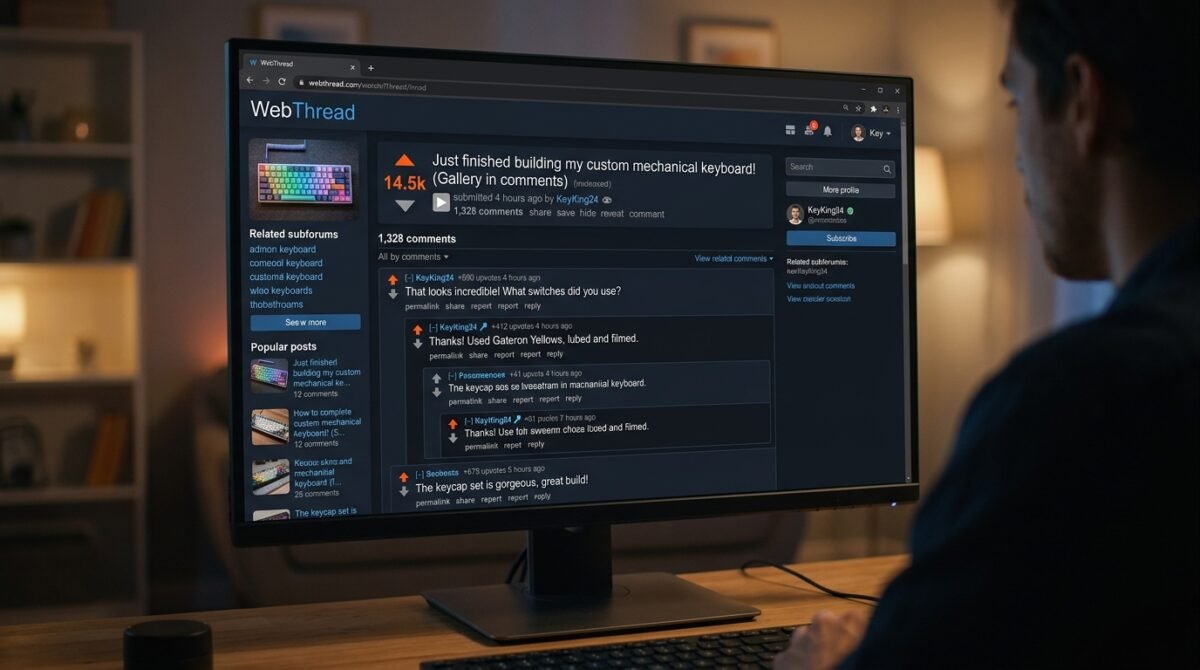
I posted the story on a popular forum, needing a sanity check. I expected some backlash—after all, ‘family is everything’ is a powerful trope—but the response was overwhelming. Thousands of people validated my decision, pointing out that my parents were not just choosing a favorite; they were violating the fundamental duties of a foster home.
The comments section became a space for other people to share their own stories of being the ‘second-tier’ child. It was heartbreaking to see how many people had lived through the exact same dynamic, feeling like props in their parents’ lives.
“OP, you didn’t just save Maya; you saved yourself. When parents start treating children like assets to be managed rather than people to be loved, they lose the right to call themselves parents. You did the right thing. Block them and never look back.”
— u/FamilyLawAdvocate (Top Comment, 42.1k upvotes)
Others brought up the legal perspective, warning me to keep all records in case they tried to retaliate. The community provided a sense of solidarity I hadn’t felt in years. I wasn’t the ‘traitor’ my father called me; I was a protector.
There were a few dissenters, of course. Some argued that I should have compromised, that ‘picking your battles’ is the key to adult relationships. But they missed the point. You don’t compromise on the safety and dignity of a child.
The sheer volume of support made me realize that this wasn’t just a petty family squabble. It was a systemic issue of entitlement. People were tired of the ‘Golden Child’ narrative, and they were ready to see it torn down.
Reflecting on the ‘Golden’ Myth

I spent weeks reflecting on why my parents acted the way they did. It wasn’t just that they loved Chloe more. It was that they loved the *idea* of Chloe more. She was a reflection of their own success, a shiny object they could parade around to prove they were ‘good parents.’
Maya, by contrast, was a complex, wounded human being who required actual effort. She wasn’t an accessory; she was a commitment. My parents didn’t want commitment. They wanted a life that looked like a glossy magazine spread, and anything that challenged that aesthetic was an enemy to be removed.
I realize now that my entire role in that house was to ensure the stage was always set for Chloe. I was the stage manager, the lighting tech, and the background extra. When I decided to step out of the shadows, I wasn’t just taking Maya with me; I was taking my own life back.
“The golden child is often just a mirror for the parents’ ego. When you break the mirror, the parents don’t just see themselves—they see the truth. And that is why they are so angry.”
— A thought from my journal
It’s painful to realize that your parents never really ‘saw’ you, but there is also a profound liberation in it. When you stop trying to earn approval from people who are incapable of giving it, you suddenly find yourself with a lot of energy to spend on things that actually matter.
I miss the version of my parents I thought I had, but I don’t miss the people they actually were. That grief is something I’m still processing, but I’ve realized it’s a necessary part of the healing process.
Maya’s Journey to Healing

Maya is doing better than I could have hoped. The change in environment was like watching a flower turn toward the sun. She’s started art classes, and she’s finally comfortable in her own skin, no longer needing to shrink herself to fit into someone else’s house.
She told me recently that she thought she was ‘bad luck’ because of how my parents treated her. It took a lot of conversations to convince her that the problem was theirs, not hers. She’s learning that her value isn’t tied to how quiet she is or how ‘convenient’ she can be.
“I thought everyone was like that. I thought I was just meant to be moved around. Thank you for showing me that I matter, even when I’m not ‘useful.’”
— Maya, during a heart-to-heart conversation
We’ve established a routine that feels like a family. It’s not perfect—some days are hard, and we both have our triggers—but it’s built on respect and genuine love. We check in with each other, we set boundaries, and we celebrate the small wins.
She’s still in the system, but we’re working on long-term placement options that honor her autonomy. I’m proud of her. Watching her bloom has been the greatest privilege of my life, and it makes the severance of my ties with my parents feel entirely worth it.
The Finality of No Contact

It’s been six months since I left. The ‘No Contact’ rule has been absolute. There have been sporadic attempts by my mother to reach out—cards in the mail, emails from ‘concerned’ relatives—but I haven’t wavered. I know that if I open that door, even an inch, the cycle will begin again.
My parents have tried to frame my departure as a ‘mental breakdown’ or a ‘phase,’ which is their way of dismissing the very real reasons I left. They can’t admit that their actions were wrong, so they have to pathologize me. It’s a classic defensive maneuver.
“You’re throwing away a lifetime of support for a girl you barely know. Think of what you lose. Think of the shame you’re bringing on this family.”
— An excerpt from an email I immediately deleted
I don’t feel shame. I feel pride. I stood up for someone who couldn’t stand up for herself. I broke a generational pattern of toxicity. I created a life where kindness and integrity come before vanity and status.
I’m not the same person who lived in that house. I’m firmer, more direct, and significantly less interested in pleasing people who don’t have my best interests at heart. The ‘Golden Daughter’ era is over, not just for my parents, but for me. I’m no longer waiting for the spotlight.
Lessons from the Rubble

Looking back, the most important lesson I’ve learned is that boundaries are not acts of aggression; they are acts of preservation. For years, I thought that saying ‘no’ was the same as being ungrateful. I thought my parents’ love was unconditional, but it was actually highly conditional, and I was the one paying the price for those conditions.
We are taught to honor our parents, but we aren’t often taught that honor should be reciprocal. If parents treat their children like pawns, they forfeit the right to demand loyalty. Love that requires you to sacrifice your own values is not love; it’s control.
“Boundaries aren’t walls to keep people out; they’re fences to protect your peace. When you stop letting people trample your grass, they’ll call you the villain. Let them. You’re the one who has to live in the house you build.”
— My personal mantra for recovery
I’ve learned to identify the signs of emotional manipulation much faster. I see it in friendships, at work, and in the way people treat others. I’m more vigilant now, and I’m much quicker to speak up when I see someone being marginalized or treated as an accessory.
The trauma of the experience will likely stay with me for a while, but it’s a manageable weight. I’ve gained more than I’ve lost. I’ve gained a sister, a sense of self, and the freedom to define my own life on my own terms.
Conclusion
The story of my parents and the ‘Golden Daughter’ is, at its heart, a story about the cost of maintaining a lie. They built a life that looked perfect from the outside, but it was hollow, brittle, and incapable of sustaining true human connection. When I stepped out of that house, I wasn’t just leaving a building; I was stepping out of a performance.
Maya and I are doing well. The road ahead is still ours to navigate, but we’re doing it together, without the suffocating expectations of a family that valued aesthetics over souls. We’ve learned that family isn’t about blood or duty; it’s about who shows up for you when the world gets dark.
I want to ask you, the readers: Have you ever had to choose between your integrity and your family’s expectations? What did you do, and how did it change your perspective on what ‘family’ really means? Let’s discuss in the comments below.
What's your verdict on this dilemma?
Vote below to contribute to the official community consensus.

Have a Dilemma Keeping You Up at Night?
Share your real-life feud, wedding chaos, or relationship crossroads anonymously with our editorial team.
What do you think ?
0 Comments🛡️ Comments are moderated to protect community integrity. Your comment will appear once approved by the editorial team.