

Marriage is supposed to be a partnership, built on trust and shared goals. My husband, Mark, and I had spent the last three years meticulously building a safety net. We called it our ‘Life Foundation Fund’—money tucked away for house repairs, unexpected medical bills, or a catastrophic job loss. We lived frugally, skipped vacations, and drove a ten-year-old sedan, all to ensure that if the world fell apart, we would be okay.
Everything changed on a Tuesday afternoon when Mark’s mother, Elena, called him in a state of absolute hysteria. Through ragged sobs, she claimed that his father, Arthur, had been diagnosed with a rare, aggressive form of spinal stenosis that required an immediate, out-of-network procedure to prevent permanent paralysis. The cost, she claimed, was exactly $15,000, and the surgeon refused to schedule the operation without the funds upfront. The panic in Mark’s voice as he hung up the phone was something I had never seen before; he was terrified of losing his father.
We didn’t hesitate. I remember sitting at our kitchen table, looking at the spreadsheet we had curated for years, and clicking ‘transfer’ with a sinking feeling of solemn duty. We weren’t giving away money; we were saving a life. We sent the wire transfer, received a tearful, grateful text from Elena, and spent the next few weeks bracing ourselves for the recovery updates. We felt like heroes, proud that we had the means to step up when our family needed us most.
The betrayal didn’t arrive with a confession or a phone call; it arrived with a notification. It was a Saturday morning, the kind of quiet, lazy morning we usually spent planning our own future home improvements. I opened Instagram, mindlessly scrolling through my feed, when I saw it: a photo of Elena and Arthur, beaming, clinking glasses of Aperol Spritz against the backdrop of a vibrant, sun-drenched Amalfi Coast village. The caption? ‘Living our best lives in Italy! Life is short—seize the moment!’
My heart stopped. I checked the timestamp: it had been posted twenty minutes ago. I looked at the background, the clothing, the sheer joy on their faces—this wasn’t a recovery, and it certainly wasn’t an emergency. It was a vacation. A vacation funded by our sweat, our sacrifice, and our desperate desire to keep them healthy. As the realization washed over me, the silence in our living room turned heavy, thick with the weight of a $15,000 lie.
The Late Night Call That Triggered Our Sacrifice
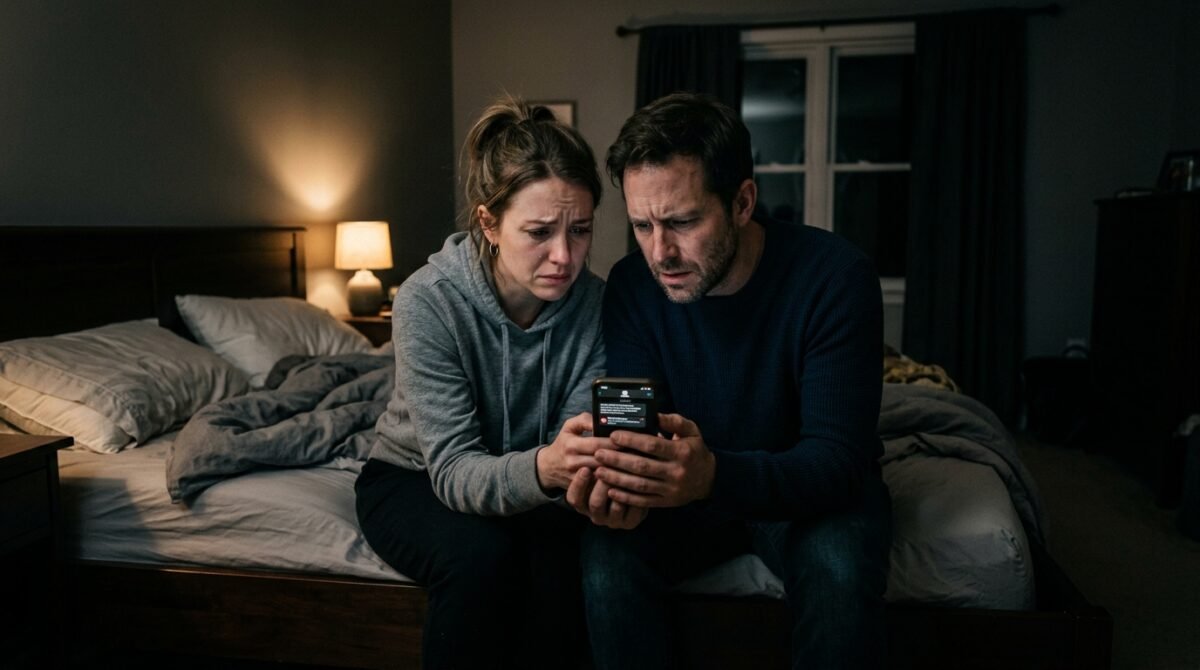
The phone call came at 11:42 PM on a Tuesday. Mark was already in bed, half-asleep, when the frantic ringing snapped him to attention. I could hear his mother, Elena, wailing on the other end, her voice distorted by panic and static. She wasn’t just upset; she was desperate, painting a portrait of a crumbling family structure that relied solely on our immediate intervention.
She told a harrowing story. She claimed Arthur had collapsed at work, that the local hospital was overwhelmed, and that a specialist in the city had agreed to squeeze him in for surgery, but only if the payment was cleared by the next morning. She played the guilt card perfectly, mentioning how Arthur had ‘always worked so hard for us’ and that this was the ‘only way to keep him walking.’
“Mark, please, you’re the only one who can help us. The bank is being impossible, and the surgeon won’t lift a finger until he sees the money. If we don’t pay this by tomorrow, your father loses his mobility forever. We’ve always been there for you, haven’t we?”
— Elena, over the phone during the initial plea
I sat on the edge of the bed, listening to Mark’s frantic responses. He was pacing the floor, his face pale in the light of his phone screen. He looked at me, his eyes wide and pleading. He didn’t even have to ask; he was already looking up the routing numbers for our savings account. We had saved that money for a house, but in that moment, houses felt secondary to a human life.
We moved the money within twenty minutes. The transfer confirmation screen glowed brightly in the dark room, a beacon of our ‘good deed.’ We went back to sleep, albeit fitfully, believing that we had done the right thing. We even sent an extra five hundred dollars for ‘incidentals’ and recovery supplies, feeling a swell of moral superiority for being the kind of children who could support their parents in a crisis.
For the next two weeks, we checked in daily. Elena would send vague, short texts back, saying things like ‘Arthur is resting’ or ‘The doctors are pleased with his progress.’ We didn’t push for photos, thinking that privacy and recovery were paramount. We were being respectful, giving them space while we adjusted our own budget to account for the lost savings.
The Instagram Notification That Destroyed Our Reality

I was drinking my coffee, still in my pajamas, when the notification popped up. It was a tagged photo. I assumed it was from a friend or a cousin, but when I tapped it, my blood went cold. It was a vibrant, high-definition photo of my mother-in-law, Elena, standing on a terrace overlooking the sparkling blue waters of the Amalfi Coast. She was holding a cocktail, wearing a designer sunhat, and looking completely, blissfully healthy.
I scrolled through her feed. It wasn’t just one photo; it was a curated album of their trip. They had been in Italy for at least ten days, documenting their visit to ruins, their meals at high-end restaurants, and their boat tours. There wasn’t a hospital bed in sight. There wasn’t a brace, a bandage, or a hint of medical distress. Instead, there was a caption about ‘finding yourself’ and ‘making time for what matters.’ I felt physically nauseated.
I didn’t say a word to Mark immediately. I couldn’t. I needed to be sure. I went through the entire history of their posts, cross-referencing dates with the dates they had told us Arthur was in the ‘intensive’ phase of his spinal surgery. They were posting from the Amalfi Coast on the exact day they claimed he was undergoing the high-stakes, life-saving procedure.
“Look at this, Mark. Tell me this isn’t what I think it is. Tell me I’m hallucinating.”
— My words to Mark as I handed him the phone
Mark took the phone with a confused expression, which quickly morphed into a mask of pure, unadulterated rage. He stared at the screen, his thumb hovering over the pictures. He zoomed in on Arthur, who was holding a glass of wine with both hands, clearly suffering from no mobility issues whatsoever. The betrayal was so blatant, so public, and so cruel that we both just sat there in silence for a long time.
The sheer arrogance of it was what hurt the most. They hadn’t even bothered to block us or hide the posts. They had taken our money, thanked us for our ‘generosity’ in a text message, and then immediately used that exact money to go on a luxury vacation. It was a slap in the face, a calculated manipulation of our empathy and our financial stability.
The Confrontation We Weren’t Prepared For

Mark didn’t wait for me to suggest a confrontation. He grabbed his phone and called his mother. I stood right next to him, listening on speakerphone. When she answered, her voice was light, airy, and unmistakably cheerful. She sounded like she was having the time of her life, completely oblivious to the fact that she had just been caught red-handed.
Mark didn’t give her a chance to chat. He went straight for the jugular. He asked her where she was, and when she tried to brush it off as ‘just a quick visit to the country for his rehabilitation,’ he exploded. He told her he had seen the photos. He told her we knew exactly what she had done with the money we sent for Arthur’s surgery.
“We know about the Amalfi Coast, Mom. We know about the cocktails. We know you lied to us, stole fifteen thousand dollars, and left us empty-handed. How could you?”
— Mark to his mother during the heated phone call
Her reaction was the most chilling part. She didn’t apologize. She didn’t stutter or try to make up a half-baked excuse. Instead, she turned it around on us. She told us we were being ‘petty’ and ‘unsupportive’ of their need for a break. She argued that since we were ‘doing so well,’ we should be happy that we could provide them with a ‘once-in-a-lifetime experience.’ It was as if she felt entitled to our savings because we happened to be responsible enough to have them.
The conversation spiraled into a screaming match. My father-in-law got on the phone, but he was even worse. He dismissed the entire thing as a ‘misunderstanding of priorities.’ He claimed that because they were our parents, our money was inherently ‘family money’ and that we were being greedy by keeping it to ourselves when they were ‘suffering’ from the monotony of their lives. It was gaslighting of the highest order.
We ended the call, but the damage was irreversible. We weren’t just angry about the money anymore. We were angry about the lack of respect, the manipulation, and the realization that the people we trusted most in the world viewed us as nothing more than a bottomless ATM for their own selfish desires. The trust was gone, and it wasn’t coming back.
The Financial Fallout and Our Legal Options

The next few days were a blur of bank calls and legal consultations. We needed to know if we could recoup the money. Unfortunately, because we had voluntarily wired the funds under the premise of a gift or a ‘loan’ without a formal contract, the bank told us we had very little recourse. It was considered a civil matter, and the legal fees to sue for recovery would likely eat up half of what we could hope to win back.
We sat down with an attorney, a friend of a friend who specialized in family law. He listened to our story with a look of pity. He explained that while it was clearly theft in a moral sense, proving ‘fraud’ in a court of law when we hadn’t put terms in writing was an uphill battle. He suggested we look at it as an expensive lesson in setting boundaries with family.
| Expense Type | Amount | Original Purpose |
|---|---|---|
| Emergency Fund | $15,000 | House/Health |
| Incidental Cash | $500 | Recovery Costs |
| Total Loss | $15,500 | Vacation Funding |
We felt defeated. The idea that someone could just lie to your face, take your hard-earned security, and face zero consequences was maddening. We spent nights scouring our records, trying to find anything—a text, an email, a voice note—that could prove the money was explicitly for medical expenses. We found plenty of texts where Elena mentioned ‘surgery’ and ‘doctors,’ but nothing that constituted a legal contract.
It wasn’t just about the money anymore. It was about the principle. We started researching small claims court limits in our state, wondering if we could at least make them pay for the indignity of it all. But the emotional toll was higher than the financial one. Every time I looked at our bank balance, I saw the ghost of that vacation. I saw the flights, the hotel rooms, and the fancy dinners our money had paid for.
Why the Sunday Dinner Table Went Completely Silent

Two weeks after the incident, we decided to host a dinner—not because we wanted to, but because we felt we needed a final, formal showdown to lay everything on the table before cutting them off. My in-laws arrived expecting us to move on, to ‘forgive and forget’ for the sake of family harmony. They walked into our home as if nothing had happened, expecting wine and conversation.
When they sat down, the air was heavy. Mark didn’t serve them dinner. He waited until they were seated and then placed a printed copy of their Instagram photos in front of each of them. The silence was deafening. My father-in-law tried to make a joke about the food, but the look on Mark’s face silenced him instantly. We had prepared a script, but we didn’t need it. The photos spoke volumes.
“We are not here to eat. We are here to tell you that this is the last time you will ever be in our home. You stole from us. You manipulated us. And you didn’t even have the decency to be sorry.”
— Mark, addressing his parents at the dinner table
Elena started crying, not out of remorse, but out of frustration that she couldn’t control the narrative. She argued that we were being ‘cold’ and that ‘families are supposed to help each other.’ She tried to make us feel like the villains for expecting our money back. It was a masterful performance of victimhood that almost worked, if not for the fact that we were currently holding the physical evidence of their deceit.
They left in a huff, accusing us of being ‘unloving’ and ‘materialistic.’ They didn’t apologize once. As they walked out the door, the sense of relief was instantaneous. It wasn’t the closure I wanted—I wanted a tearful confession and a check for $15,000—but it was the boundary I needed. We locked the door behind them, and for the first time in weeks, the house felt like ours again.
The Viral Reddit Thread That Validated Our Anger

I posted our story to a popular subreddit, needing to know if I was crazy. I kept the post anonymous, but I laid out every detail: the panic call, the transfer, the Instagram reveal, and the dinner. Within minutes, the thread exploded. People were horrified, not just by the act, but by the level of gaslighting my in-laws had employed. The support was overwhelming.
“This is a classic case of financial abuse. They didn’t just borrow money; they stole your security, lied to your faces, and then flaunted the stolen goods in front of you. Do not feel guilty for cutting them off. They are parasites.”
— u/FamilyDramaExpert (Top Comment, 32.1k upvotes)
The community support was a lifeline. I read hundreds of comments from people who had experienced similar betrayals, people who had been guilt-tripped by family members for their savings. It reminded me that I wasn’t alone and that my anger was justified. It also gave me the resolve to stick to my boundaries, even when I felt the familiar urge to ‘keep the peace.’
Some commenters offered legal advice, suggesting we put a lien on their property if they owned a home, while others urged us to focus on our own healing. The consensus was clear: they had burned the bridge, and we had every right to stand on the other side. Reading these stories helped me realize that the ‘family’ label doesn’t exempt people from the basic rules of morality and respect.
By the time the thread was a day old, it had been shared across social media, reaching thousands of people who were equally outraged. It was validation in its purest form. My husband, who had been struggling with the guilt of turning his back on his parents, finally saw the situation for what it was: a toxic dynamic that had been thriving on his compliance for years.
The Secret Group Chat OP Wasn’t Supposed to See
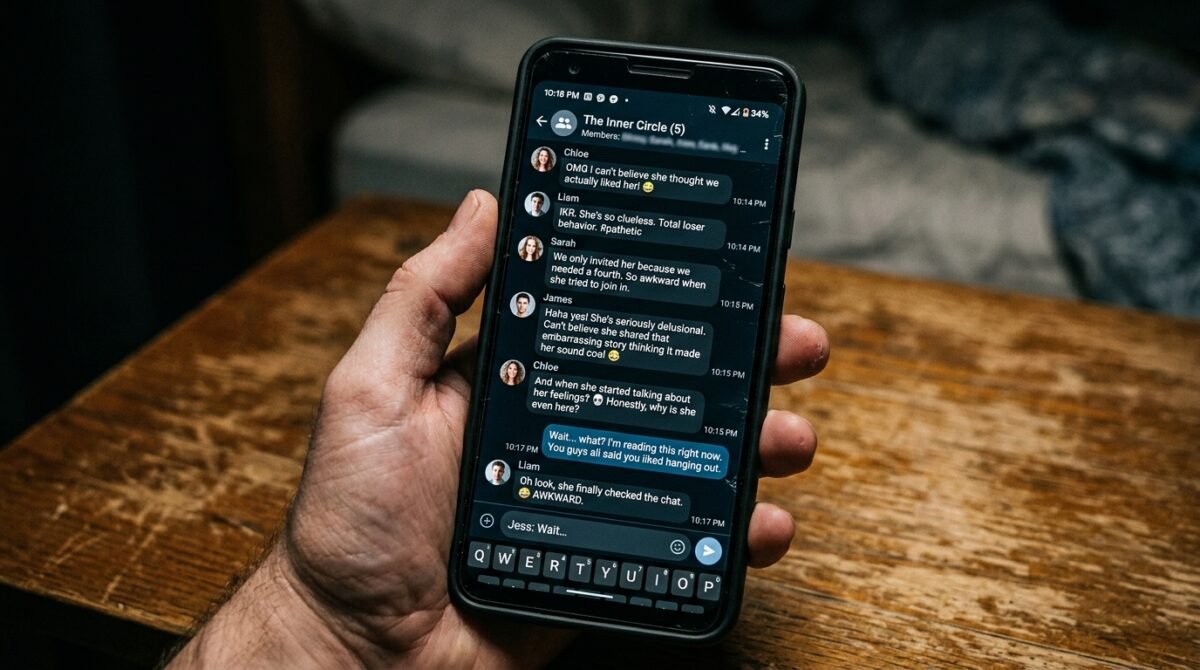
A week after our final confrontation, an accidental ‘slip’ occurred. My sister-in-law, who had been mostly silent during the whole ordeal, accidentally added me to a family group chat that was intended only for the ‘inner circle.’ It was a mistake, but it was the most revealing piece of evidence I could have asked for. I didn’t say a word; I just watched as the messages rolled in.
“Honestly, Mark and OP are just acting out because they’re jealous. They want to control us. We earned that money by being their parents, and honestly, we deserved the vacation after the stress of dealing with them for so long.”
— Elena, in a leaked family group chat
The messages confirmed everything I had suspected. They weren’t sorry; they were resentful. They viewed us as an extension of themselves, a resource to be tapped whenever they felt like it. The chat was filled with disparaging comments about our lifestyle, our home, and our ‘selfishness’ in wanting to keep our savings. It was a masterclass in entitlement.
I took screenshots of the entire thread, not to confront them, but to keep for myself as a reminder of who they really were. Every time I felt a pang of guilt or thought about reaching out, I would look at those screenshots. They were the perfect antidote to any lingering sentimentality. They showed me that our relationship wasn’t a partnership; it was a power struggle we were destined to lose until we walked away.
Mark saw the messages, too. He didn’t cry this time. He just closed the chat, blocked the numbers, and turned his phone off. That was the moment he truly let go. He realized that the parents he had spent his life trying to please were people he wouldn’t even choose to be friends with if they weren’t blood. It was a painful realization, but it was the start of our true independence.
How We Rebuilt Our Financial Security

Rebuilding our emergency fund wasn’t just about the money; it was about reclaiming our agency. We made a pact that we would never, ever discuss our finances with family again. We became private, guarded, and incredibly protective of our savings. We set up an automated transfer to a high-yield savings account that was physically unreachable by anyone but us.
We changed our spending habits, cutting back even more than before. It wasn’t easy, and there were times when we felt the weight of that missing $15,000, but we were fueled by a new kind of energy. We were working for ourselves, for our house, and for our own future. Every dollar we saved felt like a victory, a small rebellion against the entitlement that had almost ruined us.
We also sought therapy, both individually and as a couple. We needed to understand why we were so vulnerable to this kind of manipulation. We learned about setting boundaries, the importance of saying ‘no,’ and how to separate our love for people from our obligations to them. It was hard work, but it was worth it. We were building something stronger than money—we were building a fortress around our life together.
Six months later, we had saved half of what we lost. It wasn’t the full amount, but it was ours. We celebrated with a modest dinner, not in Italy, but at home, with the people we actually loved. We were safe, we were secure, and most importantly, we were free. We had survived the storm, and we were coming out on the other side better, smarter, and more resilient than we had ever been.
The Legal Letter That Changed Everything
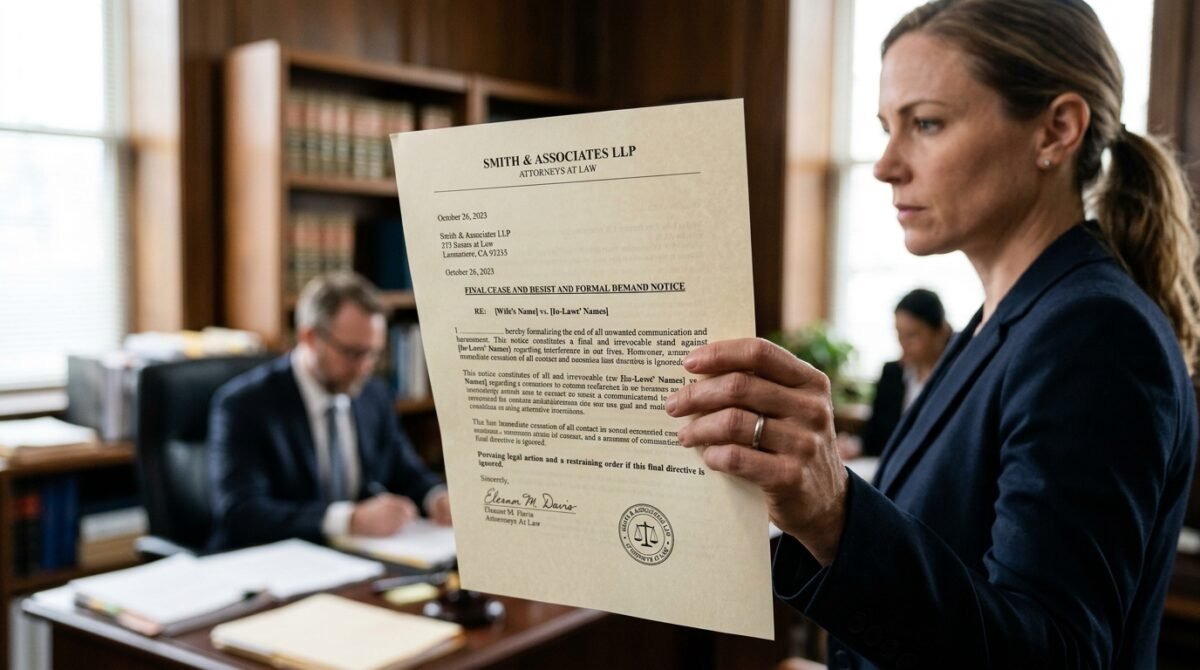
Just when we thought the chapter was closed, we received a certified letter in the mail. It was from a lawyer representing my in-laws. They were trying to sue us for ‘abandonment’ and ‘harassment,’ claiming that by cutting them off, we were violating some archaic filial responsibility law. It was absurd, but it was also intimidating. The sheer audacity of them trying to make us the perpetrators was staggering.
We hired our own lawyer, who laughed when he saw the letter. He explained that their claims were baseless and intended to bully us into compliance. He drafted a response that was both firm and final, laying out the evidence of their fraud and the threat of a countersuit if they didn’t back off immediately. It was the first time we felt like we were fighting back on equal footing.
“We have all the evidence we need to prove that the funds were obtained through fraudulent means. Any further attempt to contact our clients or involve the legal system will be met with a formal complaint and a pursuit of criminal charges for fraud.”
— Our lawyer’s response to the in-laws’ legal threat
The letter was a turning point. We didn’t hear from them for months. The silence was the best gift they could have given us. It allowed us to focus on our lives without the constant threat of interference or drama. We realized that they were only powerful as long as we gave them the power to affect us. Once we stopped reacting, they lost their grip.
We still keep all the documentation in a safe, just in case. But the fear is gone. We’ve learned that when you stand your ground, the people who were using you will eventually move on to someone else. They were looking for an easy target, and they realized that we were no longer it. It was a hard-won peace, but it was one we were going to defend with everything we had.
Reflecting on the Lessons of Betrayal

Looking back, the $15,000 feels like a cheap price to pay for the clarity we received. We lost money, yes, but we gained an entire lifetime of freedom from manipulation. We learned that the people who say ‘but we’re family’ are often the ones you need to watch the closest. We learned that trust isn’t a birthright; it’s something that has to be earned and maintained, regardless of who you’re dealing with.
We also learned the value of a ‘no.’ It’s a powerful, complete sentence that saves more than just money—it saves your sanity. We are no longer the ‘reliable’ kids who will jump whenever the phone rings. We are our own people, with our own lives and our own priorities. And that, in the end, is the greatest lesson we could have asked for.
To anyone out there dealing with similar situations: listen to your gut. If a request feels off, if the story doesn’t add up, trust yourself. You don’t owe anyone your life, your savings, or your peace of mind. You owe those things to yourself and the people who truly respect you. Don’t let guilt be the reason you lose your way.
Today, we are stronger than ever. Our bank account is growing, our boundaries are firm, and our home is a sanctuary. We look at the photos from that time and we don’t feel anger anymore; we feel pity. We pity the people who traded their children’s trust for a few days in the sun. They may have the vacation, but we have the future. And that is a trade we would make every single time.
Conclusion
The saga of the $15,000 emergency fund serves as a stark reminder that in an age of social media, the masks people wear are becoming thinner and thinner. When my in-laws exploited our deepest fears to fund a life of leisure, they didn’t just break our bank account; they broke the illusion of our family dynamic. We chose to prioritize our own well-being, and in doing so, we found a strength we never knew we possessed.
The journey from betrayal to peace was long, but it was necessary. We learned that boundaries are not just for others; they are the foundation of our own integrity. By walking away from the toxicity, we created space for genuine happiness, financial security, and a life built on our terms. We didn’t just survive the scam—we evolved past it.
We would love to hear from you. Have you ever been pushed to the brink by someone using the ‘family card’ to manipulate your finances? How did you set your boundaries, and how did you move on from the emotional fallout? Let’s talk in the comments below.
What's your verdict on this dilemma?
Vote below to contribute to the official community consensus.

Have a Dilemma Keeping You Up at Night?
Share your real-life feud, wedding chaos, or relationship crossroads anonymously with our editorial team.
What do you think ?
0 Comments🛡️ Comments are moderated to protect community integrity. Your comment will appear once approved by the editorial team.