
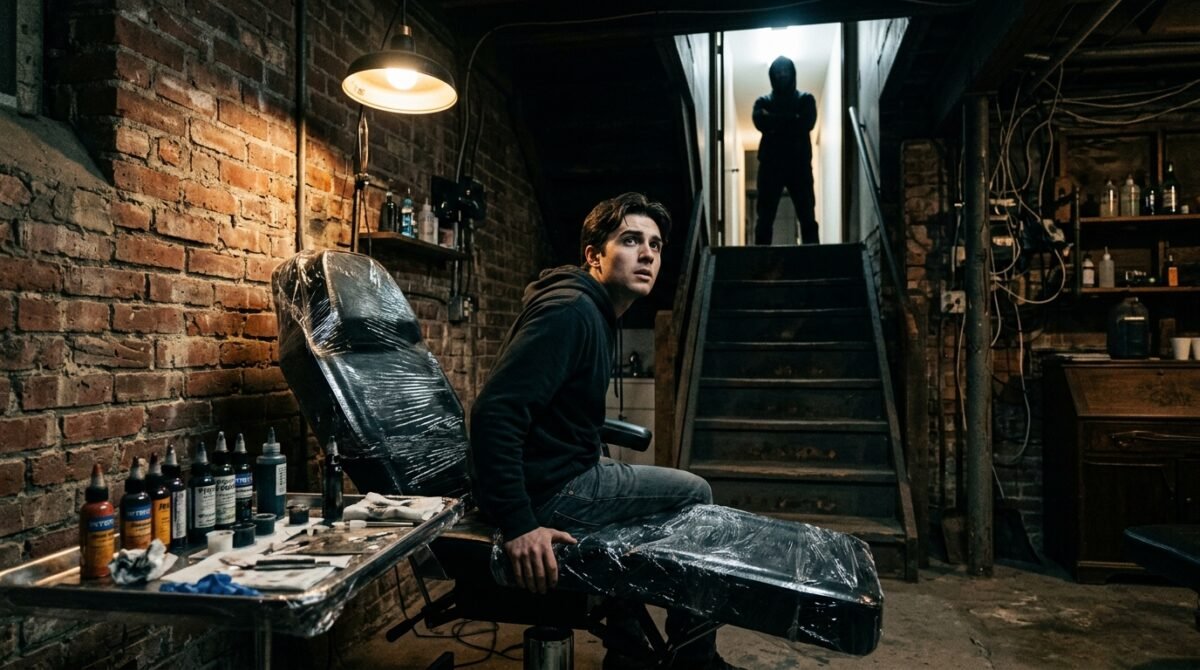
When my brother, Leo, approached me three years ago asking if he could rent my spare basement room for a ‘transitional period,’ I didn’t hesitate. We’ve always been close, and as the older sibling who had finally managed to snag a modest starter home in this overpriced market, I felt a sense of duty to provide him with a stable environment. He was struggling to find steady work and needed a place to regroup, a story I’ve heard from many siblings in my position. I saw it as a temporary favor, a brief bridge to his eventual independence.
The agreement was simple: a nominal amount of rent to cover his share of the utilities and the expectation that he would keep the space clean and quiet. For the first few months, things seemed fine, if a little lackluster. I would hear the occasional murmur of music or the sound of his video games through the floorboards, which I accepted as part of the trade-off. I was busy with my own demanding career, often leaving early and returning late, which created a natural, if not entirely intentional, distance that allowed me to ignore the subtle shifts in the basement’s energy.
However, the red flags began to manifest in ways I initially brushed off as harmless idiosyncrasies. It started with an influx of strangers loitering on my front porch at odd hours, smoking and checking their phones. Then came the persistent, rhythmic buzzing sound—a low-frequency vibration that seemed to permeate the house’s foundation during the weekends. I began finding stray, discarded medical supplies in the kitchen trash: boxes of latex gloves, sterile needle packaging, and ink-stained paper towels that smelled faintly of antiseptic.
The moral dilemma crystallized when I finally decided to investigate. The trust I had placed in my brother was not just being tested; it was being exploited for a venture that put my homeowners insurance, my neighborhood reputation, and my very home at legal risk. I had invited a family member into my sanctuary, only to find that he had transformed it into a subterranean business front that defied every regulation imaginable. This isn’t just about family dynamics; it is about the cold, hard reality of property ownership colliding with a sibling’s reckless disregard for the consequences.
The Hum Beneath the Floorboards
The realization didn’t hit me all at once; it was a slow, agonizing drip of suspicion. The hum, that incessant mechanical drone, became the soundtrack of my life. Initially, I convinced myself that Leo was just experimenting with music production or maybe some high-end gaming hardware. I even made a half-hearted joke about it over dinner once, to which he responded with a vague, dismissive shrug that I didn’t think much of at the time.
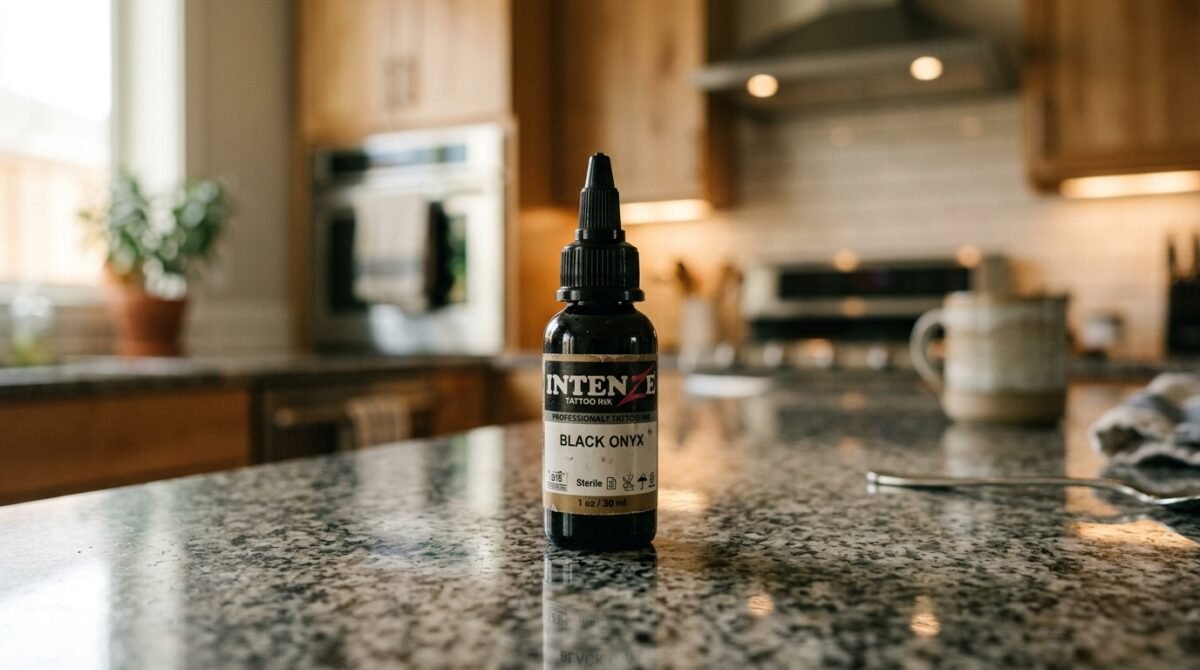
But the smell was the real giveaway. It wasn’t the scent of teenage angst or dirty laundry; it was that sharp, sterile, chemically metallic smell that hits you the moment you walk into a professional studio. One evening, after a particularly long shift, I entered the kitchen to find a box of high-grade tattoo ink sitting on the counter. It was misplaced, obviously, a sign of sloppy packing, but the brand name was unmistakable to anyone who has spent five minutes on Google.
“Is there a reason, Leo, that I’m finding medical-grade pigment in my kitchen? Because the last time I checked, you weren’t a licensed artist, and this house definitely isn’t zoned for a commercial tattoo shop.”
— Me, confronting Leo in the kitchen
Leo’s reaction was the classic portrait of a cornered animal. He tried to laugh it off, claiming he was just ‘practicing on fake skin’ to build a portfolio. He looked me dead in the eye, his face composed, and lied with the confidence of someone who had practiced the script a dozen times. He insisted that he was just a hobbyist, a dreamer trying to make it in a competitive industry, using me as a springboard for his art.
I wanted to believe him. I really did. I wanted to see the best in my brother, to be the supportive sibling who didn’t crush his creative spirit. But the evidence was piling up—not just in the trash, but in the foot traffic. My neighbors had started asking why there were so many people coming and going from the basement entrance. I felt the heat of the spotlight on my home, a spotlight I had never asked for, and the weight of the potential liability was beginning to crush my chest.
The tension wasn’t just physical; it was deeply psychological. Every time I heard the doorbell ring, my stomach twisted into a knot. Was it a neighbor with a complaint? A disgruntled customer? Or worse, a local authority checking on reports of unlicensed activity? I wasn’t living in my home anymore; I was living in a den of secrets, constantly looking over my shoulder, wondering how many more lies Leo was spinning under my roof.
The Midnight Disclosure
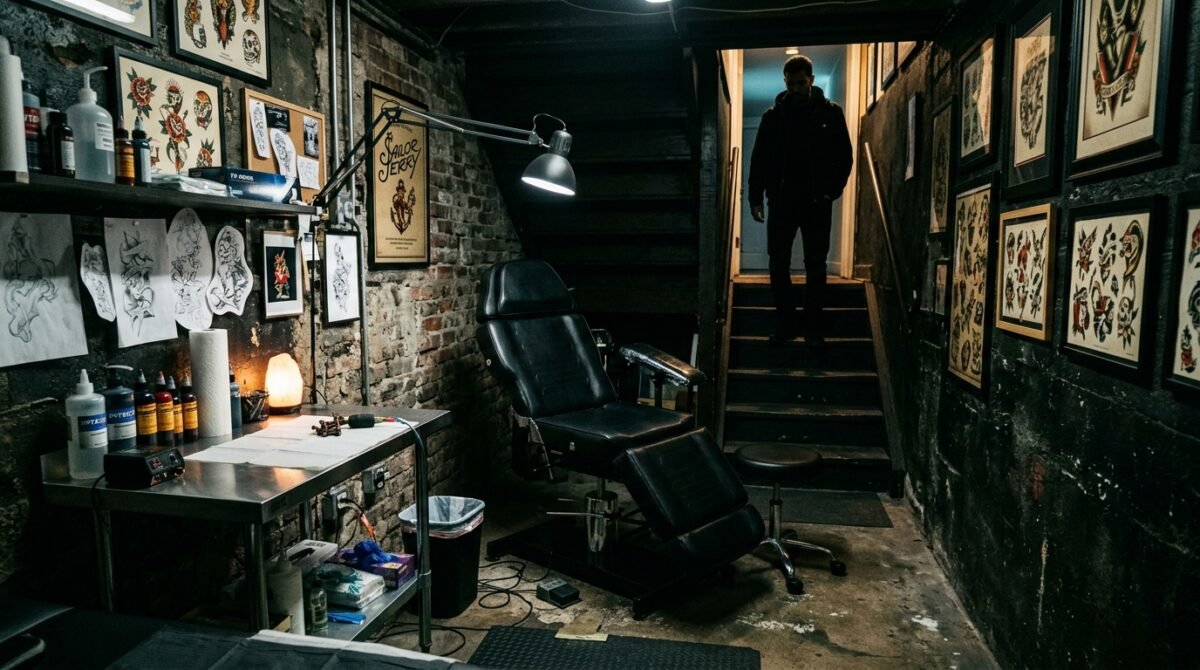
I finally broke the seal on the basement door at 2:00 AM. I had heard the muffled laughter of multiple people downstairs, and the boundary of ‘no guests’ had been crossed one too many times. I marched down the stairs, ready for a confrontation, and what I found was not a hobbyist’s workstation. It was a fully equipped, albeit makeshift, tattoo parlor, complete with a professional-grade hydraulic chair, high-wattage lighting, and a client currently getting a sleeve done.
The air was thick with the scent of stencil solution and ozone. Leo looked up, startled, his hand steady even as his eyes widened in terror. The client, a guy I vaguely recognized from the neighborhood, didn’t even stop moving, clearly annoyed by the interruption. The sheer audacity of the scene left me speechless for a solid ten seconds. My brother had converted my basement into a place where money was changing hands, needles were piercing skin, and health codes were being laughed at.
“You have exactly ten seconds to tell these people to leave, or I am calling the police and reporting an illegal business operation. I don’t care who you think you are, but you are not doing this in my house.”
— Me, standing at the bottom of the basement stairs
The client scurried out, muttering apologies and pulling his jacket over his unfinished tattoo. Leo stood there, the buzzing of the machine having finally ceased, the silence in the room deafening. He tried to pivot to ‘family loyalty,’ as if the fact that we shared a bloodline somehow gave him the right to compromise my safety and my property. He argued that he was making ‘good money’ and that I should be happy he was finally finding his way.
That was the moment I realized the depth of the disconnect. He didn’t see an illegal, hazardous operation; he saw a hustle. He didn’t see a violation of my trust; he saw an opportunity I was lucky enough to provide. The entitlement was staggering, a cold realization that he had never viewed me as a sister, but as a utility—a landlord who could be bamboozled if he just played the ‘poor younger brother’ card often enough.
I told him then and there: he had thirty days. No negotiation. No ‘but I need more time.’ I had been pushed to the absolute edge of my patience, and the safety of my home and the integrity of my legal situation were far more important than his misguided business aspirations. The look on his face shifted from shock to a simmering, toxic anger that I hadn’t seen since we were children. He walked past me, muttering under his breath, and locked himself in his room.
The Family Group Chat Explosion

The next morning, my phone started blowing up with notifications from our family group chat. It was a cascade of messages from my parents, my aunt, and even my cousins, all painting me as the ‘villain’ who was kicking her brother out for no reason. Leo had clearly spun a masterclass in victimhood, omitting every detail about the tattoo shop and focusing entirely on my ‘cold-hearted’ nature.
“I just need a place to stay, and [OP] is throwing me out because she’s having a power trip. I’m trying to build a career, and she’s treating me like a tenant rather than family. Does anyone have a couch for a few weeks?”
— Leo, in the family group chat
My mother chimed in, asking why I was being so ‘unreasonable’ and suggesting that I should just ‘give him a break’ while he gets his shop off the ground. I felt my blood pressure rise with every notification. They had no idea what was happening, yet they were all ready to pass judgment based on Leo’s carefully curated narrative. It was the classic ‘hero-victim’ dynamic he had played his whole life, and for the first time, I felt the sharp urge to break the facade.
I didn’t hold back. I sent a detailed response, outlining exactly what I had found in the basement, the health risks involved, and the potential legal jeopardy he had put me in. I attached a photo of the discarded needle packaging I’d found near the trash. The silence that followed was palpable, a digital pause that felt like it lasted for hours. The group chat, usually a hub of chatter, went completely dead.
It was a tactical strike. I knew that by laying out the facts, I was forcing them to choose between their bias toward Leo and the cold reality of his actions. Some family members went quiet, clearly not wanting to be part of the mess, while others started asking probing questions. My father, surprisingly, was the first to pivot. He was a man who understood liability better than anyone, and he didn’t take kindly to the idea of his daughter’s house being put at risk.
The fallout was messy, but it was necessary. By pulling the curtain back on the operation, I took away his ability to claim victimhood. He couldn’t say I was just being ‘mean’ when he was literally running a business out of a residential basement without a single permit. The narrative had shifted from ‘mean sister’ to ‘responsible homeowner protecting her assets,’ and that change made all the difference in how the family viewed the situation.
The Legal Reality Check

The next few days were a blur of research and anxiety. I contacted a real estate attorney to understand exactly what kind of liability I was facing. The news wasn’t great. If someone had gotten an infection or had a negative reaction from one of Leo’s tattoos, I could have been held civilly liable as the property owner. The sheer recklessness of it all started to sink in, and the anger I felt toward my brother began to harden into a firm, unshakeable resolve.
I realized that if I let this go, I was essentially condoning his behavior. Every day he spent in that basement was another day of risk. My attorney advised me to document everything—every interaction, every piece of evidence, and every verbal agreement we had. I started taking photos of the setup, the supplies, and the state of the basement. I kept a ledger of the utilities he wasn’t paying and the damages he had caused to the flooring.
“You are responsible for every square inch of this property. If he’s running a business here, and something goes wrong, the insurance company will likely void your policy for unauthorized commercial activity. You need to get him out, and you need to get him out legally.”
— My real estate attorney
This wasn’t just a family disagreement anymore; it was a professional business decision. The emotional attachment I had to being a ‘good sister’ was effectively dead, replaced by the necessity of protecting my future. I felt a strange sense of liberation in this transition. I wasn’t just the ‘big sister’ anymore; I was a property owner, and I had responsibilities that extended far beyond the expectations of my family.
Leo, meanwhile, seemed to be in a state of denial. He was still acting as if this was a temporary spat, something that could be smoothed over with an apology or a week of good behavior. He started bringing his friends over again, trying to reclaim the space, clearly thinking that if he just ignored my eviction notice, it would lose its power. He didn’t understand that the deadline was non-negotiable.
I had to set firm boundaries, which meant going low-contact. I stopped responding to his ‘can we talk’ texts and ignored his attempts to guilt-trip me about our childhood. I was no longer interested in the ‘why’ or the ‘how’ of his life; I was only interested in the ‘when’—when he would be packed, when he would be out, and when I could finally reclaim my home. The silence I maintained was the loudest statement I could make.
The Packing Day Stand-Off
When the thirty days were finally up, the atmosphere in the house was thick enough to cut with a knife. I had taken the day off work, and I stood in the living room, watching the clock as Leo moved with agonizing slowness. Every item he packed felt like a personal victory. He was throwing things into garbage bags, clearly resentful of the requirement to leave, and he was making as much noise as possible to ensure I knew exactly how angry he was.
He stopped at the basement door, looking at me with a mix of disdain and genuine confusion. He couldn’t understand why I was doing this to him. He still viewed himself as the victim of my ‘sudden change of heart.’ He tried to make one final plea, a classic guilt-trip about how I had ‘ruined his dreams’ and how he had nowhere to go. I didn’t flinch. I just stood there, arms crossed, waiting for him to move his final box.
“You didn’t have dreams, Leo. You had a scheme. And you put my home and my future at risk for it. I am not the one who ruined your life. You did that all on your own, and you need to take responsibility for it.”
— Me, as Leo finally leaves the house
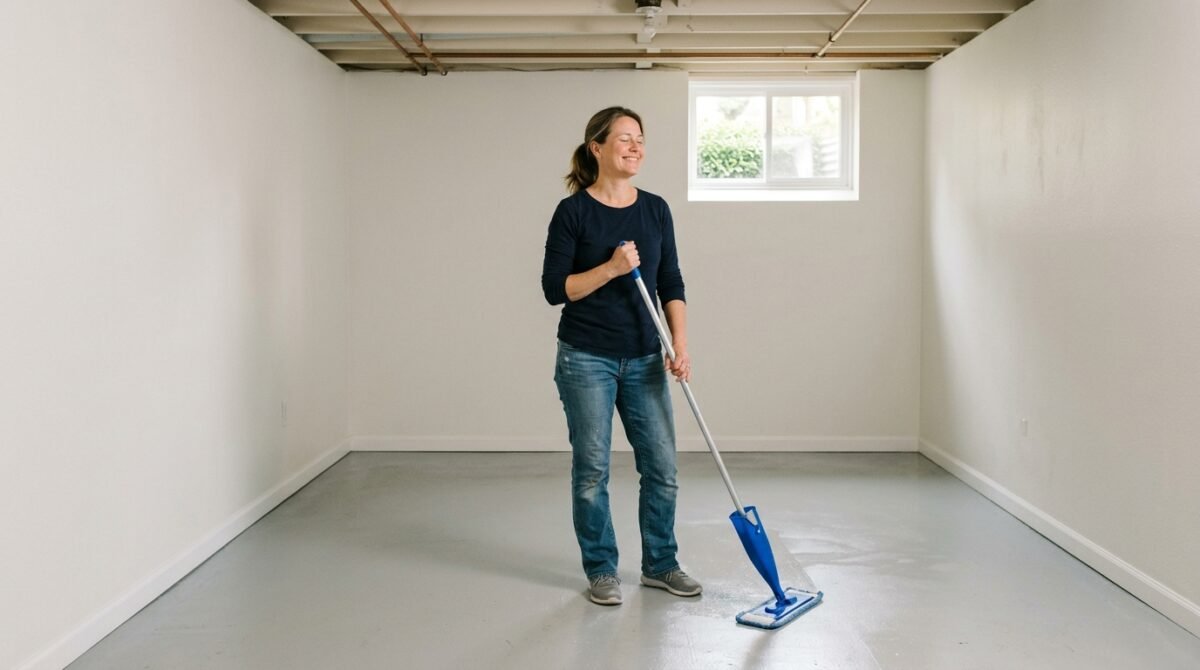
The moment he stepped out the front door, the feeling of relief was almost physical. It was like a weight had been lifted from my shoulders, a sensation of lightness that I hadn’t felt in months. I walked down into the basement, the space now empty and cold, and began the process of cleaning. I scrubbed the floors, I painted over the scuff marks, and I cleared out the remnants of his ‘business’—the stray needles, the ink stains, the plastic wrap.
It was a ritual of reclamation. I was washing away the influence he had on my home, erasing the signs of the chaos he had brought into my life. Every swipe of the mop, every stroke of the paint brush was a reclamation of my territory. By the time I was finished, the basement looked like a basement again—a storage space, a hobby room, or whatever I wanted it to be. It was no longer a place of secrets.
I sat on the basement stairs, exhausted but satisfied. I had done the right thing, even if it was the hardest thing I’d ever done. The family drama would likely continue, and the accusations of being ‘cold’ would persist, but I didn’t care. I had my home back, I had my peace of mind, and I had learned a valuable, albeit painful, lesson about the boundaries that exist between family, business, and personal integrity.
Reddit Weighs In: The Verdict of the Masses

I posted about the situation on AITA, and the response was overwhelming. It wasn’t just a handful of comments; it was a flood of validation, criticism, and shared horror stories. The community didn’t just see a sibling disagreement; they saw a fundamental violation of trust, safety, and property rights. The support I received was a much-needed confirmation that I hadn’t lost my mind, and that my reaction was proportional to the situation.
“NTA. You aren’t just ‘evicting your brother,’ you are protecting your future. If one of his clients got a staph infection or worse, your home would be the one hit with the lawsuits. He didn’t respect you or your home; he used you. Don’t feel guilty for having boundaries.”
— u/LegalEagleEye (15.2k upvotes)
Others shared their own experiences with family members who had taken advantage of their kindness, and the similarities were chilling. It was a common thread—the expectation that family ties somehow supersede common sense and legal responsibility. The Reddit thread became a space for people to vent about their own ‘black sheep’ siblings and the struggle of setting boundaries with family members who treat them like a free ride.
“I had a cousin try to do something similar in my garage. It started with ‘just storing some tools’ and ended with a full-blown automotive repair shop. It’s never ‘just’ a hobby. It’s always an encroachment. Glad you stood your ground, OP. The family will get over it, or they won’t, but you’ll still have your home.”
— u/GarageGuardian (8.4k upvotes)
There were, of course, a few dissenting voices—the people who argued that I should have been ‘more patient’ or that ‘family is family no matter what.’ But they were quickly drowned out by the chorus of people who understood the gravity of the situation. It was a fascinating case study in how different people perceive loyalty and responsibility, and it reinforced my decision to stand by my boundaries, regardless of the family’s reaction.
The thread became a repository of wisdom, a collection of stories that helped me see that I wasn’t alone in this. It was a validation of my own experience, a way to process the emotions I had been holding in for so long. The community didn’t just provide an answer; they provided a perspective, a way to view the situation not as a failure of my character, but as a necessary step in my own growth.
I kept the thread active for a week, reading every comment, even the ones I disagreed with. It was an exercise in detachment, a way to see the situation from a distance. And as the days went on, the anger faded, replaced by a sense of calm confidence. I had done what I had to do, and the internet, with all its cynicism and wisdom, had confirmed it.
The Aftermath: Navigating the Silence

The weeks following the eviction were, unsurprisingly, quiet. My parents occasionally reached out, still trying to play the mediator, but I kept my responses brief and focused on the facts. I was done explaining, done justifying, and done apologizing. I had laid out my reasons, and I had taken the steps I needed to take. If they chose not to understand, that was their decision, not mine.
Leo didn’t reach out for a long time. I heard through the grapevine that he was couch-surfing with a friend, and that he was still talking about his ‘tattoo career.’ It was sad, in a way, to see that he hadn’t learned anything from the experience. He was still playing the victim, still looking for ways to bypass the rules, and still viewing the world as something that owed him a favor.
“I hope you’re happy. You’re the reason I’m in this position. I hope the house was worth it.”
— A text from Leo, two weeks after he moved out
I didn’t reply. There was nothing to say. I knew that if I engaged, I would just be opening the door to more manipulation and more excuses. I had learned the hard way that you cannot reason with someone who refuses to see the reality of their own actions. My silence was my boundary, and I was committed to keeping it for as long as it took for him to move on.
I started investing in the house, making it truly mine. I bought new furniture for the basement, painted the walls a color I loved, and turned it into a small office/reading room. It was a symbol of my reclaimed agency, a physical representation of the fact that I was in control of my own life. I was no longer living in someone else’s shadow, and I was no longer subsidizing someone else’s mistakes.
The family dynamic will likely never be the same, and I’ve come to terms with that. I realized that my desire to be the ‘good, supportive sister’ was based on an idealized version of family that didn’t exist in reality. I am learning to define my relationships on my own terms, focusing on the people who respect my boundaries and value my well-being, and letting go of the ones who don’t.
The Lessons of the Basement
Looking back, the entire experience was a masterclass in boundary setting. I learned that kindness, while a virtue, must be tempered with wisdom. I learned that you cannot help someone who doesn’t want to help themselves, and that sometimes the most loving thing you can do is to say ‘no.’ I learned that the fear of conflict is often a bigger obstacle than the conflict itself, and that surviving a difficult conversation is the only way to build a stronger foundation.
I also learned to listen to my gut. The initial unease, the subtle signs, the feeling that something was ‘off’—I had ignored all of them because I wanted to believe the best. But your gut is a powerful tool, a combination of instinct and observation that you should never disregard. When something feels wrong, it usually is, and investigating that feeling is not a sign of paranoia; it’s a sign of self-respect.
“Boundaries aren’t about being mean. They are about protecting your peace and your integrity. If someone views your boundaries as a personal attack, that’s their problem, not yours.”
— A piece of advice I read during the ordeal
I feel more confident in my decisions now, more secure in my own skin. I am no longer looking for validation from my family, and I am no longer afraid of the consequences of setting clear, firm boundaries. This experience changed me, and while it was painful, I believe it changed me for the better. I am more resilient, more aware, and more committed to living a life that is authentic and true to my values.
I hope that if anyone else is in a similar situation, they see my story as a reminder that their well-being is not up for negotiation. It’s easy to get lost in the guilt, to worry about how you’ll be perceived, or to hope that things will just ‘work themselves out.’ But life doesn’t just work itself out; you have to take action, you have to be firm, and you have to prioritize your own needs.
The basement is quiet now, and I like it that way. It’s a peaceful space, a place for me to work, to create, and to be. And every time I walk down those stairs, I am reminded that I made the right decision, and that I am capable of standing up for myself, no matter how hard it is.
The Unspoken Code of Sibling Loyalty

There is a pervasive myth in our culture that sibling loyalty is an absolute, an unbreakable bond that should survive any transgression. We are taught to ‘stick together,’ to ‘look out for our own,’ and to ‘forgive and forget’ because ‘they’re family.’ This narrative is deeply embedded in our collective consciousness, and it makes it incredibly difficult to navigate situations where that loyalty is being exploited.
I struggled with this for a long time. I felt the weight of that unwritten code, the pressure to be the sister who would do anything for her brother. And because of that pressure, I allowed myself to be mistreated, to be used, and to be put in a position that compromised my safety and my future. It was a painful realization, but an important one: family loyalty is not a blank check.
“Family is a relationship, not a status. And like any relationship, it requires mutual respect and boundaries to survive. If the respect is gone, the loyalty is just a cage.”
— My internal reflection during the final weeks
I see now that by prioritizing that myth over my own well-being, I wasn’t being a ‘good sister’; I was being a doormat. True loyalty isn’t about enabling destructive behavior; it is about holding each other to a standard that allows for growth and health. If my brother had truly cared about our relationship, he would have respected my home, my rules, and my boundaries. The fact that he didn’t shows that he was never interested in loyalty; he was interested in exploitation.
Breaking free from that myth was the most important part of my journey. It allowed me to see my brother as an individual, not just as a sibling, and it allowed me to see myself as an individual, not just as a sister. It was a shift from ‘us versus the world’ to ‘who am I, and what do I stand for?’ And that shift has been transformative.
I am no longer governed by the ‘blood is thicker than water’ mentality. I believe that loyalty is earned through actions, not inherited through genetics. And I am proud to say that I’ve learned to value myself enough to walk away from relationships, even familial ones, that are toxic, manipulative, or harmful. It’s a lesson I’ll carry with me for the rest of my life.
Moving Forward: The New Normal

Today, my life is vastly different. The anxiety that once defined my daily existence has been replaced by a sense of calm. I have established a routine that is entirely my own, one that isn’t dictated by the presence of a tenant, the potential of a crisis, or the fear of a confrontation. I am focusing on my career, my hobbies, and my own well-being, and for the first time in a long time, I am truly happy in my home.
I still have family members who avoid the topic of the eviction, and that’s fine. I’ve learned that I don’t need their understanding to be at peace with my decision. I am secure in the knowledge that I did what I had to do, and I am comfortable with the consequences. I am no longer seeking approval from the people who were so quick to judge me without knowing the facts.
“Peace of mind is the most valuable asset you own. Do not let anyone, not even your own blood, compromise it.”
— Something I remind myself whenever I feel a tinge of doubt
I have also learned to be much more discerning about who I let into my space and into my life. The experience taught me that vulnerability is a gift, one that should be offered only to those who have earned the right to it. I am no longer so quick to offer a ‘temporary bridge’ without clear, documented, and enforced boundaries. I have learned to protect my peace, and I will continue to do so.
As for Leo, I hope he finds his way. I truly do. But I hope he finds it on his own terms, and I hope he learns the value of integrity and respect along the way. Whether he chooses to reach out, to apologize, or to move on, is entirely his choice. For me, the chapter is closed. I have learned my lessons, I have reclaimed my home, and I am ready for whatever comes next.
This experience has shown me that I am capable of more than I ever thought possible. I am capable of standing my ground, of making difficult decisions, and of living with the consequences. I am capable of being my own protector, and that is a realization that has changed the trajectory of my life in ways I am still discovering.
Conclusion
The story of the basement tattoo shop is more than just a viral AITA post; it is a reflection of the challenges we all face in balancing our familial obligations with our personal boundaries. It’s a reminder that no one is entitled to our resources, our safety, or our peace of mind, regardless of the relationship. When we stand up for ourselves, we aren’t just protecting our homes; we are protecting our dignity.
I hope that my journey has provided some insight into the importance of setting boundaries and the necessity of prioritizing your own well-being. It is never easy to stand up to family, but the peace of mind you gain is worth every bit of the struggle. I have learned that I am the architect of my own life, and I am no longer afraid to build the boundaries that will keep me, and my home, safe and sound.
What about you? Have you ever had to draw a hard line with a family member who was overstepping their boundaries? How did you handle the fallout, and what would you have done differently? Let’s keep the conversation going in the comments below.
What's your verdict on this dilemma?
Vote below to contribute to the official community consensus.

Have a Dilemma Keeping You Up at Night?
Share your real-life feud, wedding chaos, or relationship crossroads anonymously with our editorial team.
What do you think ?
0 Comments🛡️ Comments are moderated to protect community integrity. Your comment will appear once approved by the editorial team.