
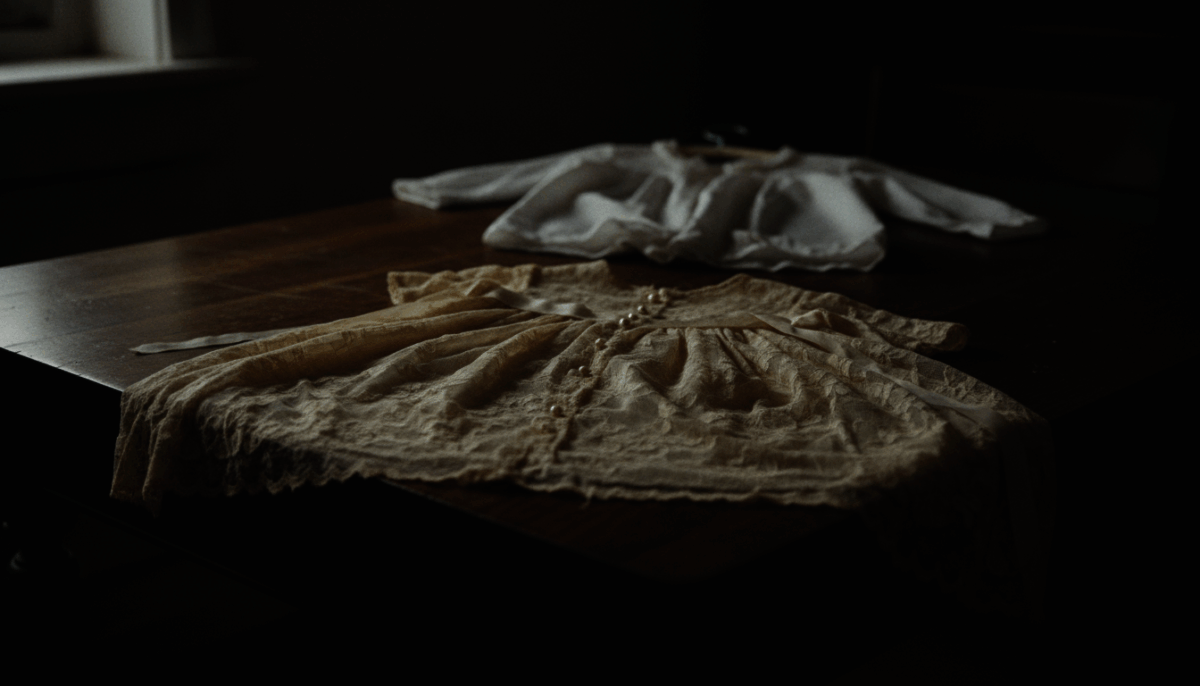
Family traditions are the threads that bind us to our ancestors, often manifested in physical objects that carry the weight of history and love. For my family, that object was my great-grandmother’s hand-stitched christening robe. It had survived wars, migrations, and four generations of babies, serving as a silent witness to our origins. It was the only item I requested to have for my own daughter’s baptism, a request my mother-in-law, Linda, seemed to support with suspicious enthusiasm.
Linda had always been the type to insert herself into the spotlight of family events, but I believed she respected the gravity of this heirloom. When she offered to ‘clean and prepare’ the gown for the service, I felt a sense of relief—a rare moment of harmony between us. I handed it over in a sealed garment bag, trusting her implicitly. That trust would prove to be the most expensive mistake of my life.
The revelation came three days before the baptism. While looking for the matching bonnet, I noticed the texture of the fabric in the storage box felt wrong—synthetic, stiff, and distinctly modern. Panic set in, cold and sharp. I compared the embroidery to old photos, and the truth became undeniable: my great-grandmother’s legacy had been swapped for a mass-produced, polyester imitation.
This wasn’t just a matter of property; it was a violation of the sanctity of my daughter’s future. The audacity of the swap, the calculated deception, and the subsequent discovery left me reeling. As I confronted the reality of the situation, I realized that the boundaries I had tried to maintain for years had been burned to the ground. There was no going back to the way things were, and the upcoming service was about to become the site of a permanent family schism.
In the following sections, I will detail how this betrayal unfolded, the gaslighting that followed, and why I made the excruciating decision to uninvite my husband’s entire family from the service. This is a story of legacy, entitlement, and the moment a mother decides that enough is finally enough.
The Gentle Hand-Off and the Unseen Agenda

It began as a benign gesture. Linda visited our home two weeks before the baptism, cooing over the cradle and remarking on how ‘fragile’ the lace looked. She insisted that she knew a specialist in antique textiles who could treat the fabric to ensure it looked pristine for the ceremony. I hesitated, as I am protective of my heirlooms, but my husband, Mark, urged me to let her help.
“It’s just a dress, honey, and Mom just wants to be involved,” Mark had said, his voice laced with the exhaustion of trying to manage his mother’s need to feel useful. I remember the weight of the garment bag in my hands as I passed it to her. It felt light, yet filled with the stories of the women who came before me. Little did I know, the “specialist” she mentioned was likely a myth, and the “cleaning” was a cover for an entirely different plan.
Linda left with a smile that, in hindsight, looked far too satisfied. She promised to return it on Friday, the day before the rehearsal. I spent the intervening week preparing the reception and managing the guest list, blissfully unaware that the centerpiece of the event had already been compromised. I trusted her because I wanted to believe she was capable of respecting a family tradition that didn’t belong to her.
The silence from her end for the next ten days was deafening. I sent a few casual texts asking if she needed anything else for the gown, to which she replied with brief, dismissive messages. “Everything is under control, dear. Stop stressing, you’re making it worse for the baby,” she wrote. Looking back, that was the first red flag, the first indication that she viewed my anxiety as an obstacle to her secret scheme.
The true nature of her involvement was hidden behind a thin veil of performative affection. She wanted the glory of presenting the ‘perfect’ baby, but she wanted to do it on her terms, using her own aesthetic, and completely overriding my connection to my past. The stage was set, and I was merely an extra in her production.
The Texture of Deceit: A Discovery in the Dark
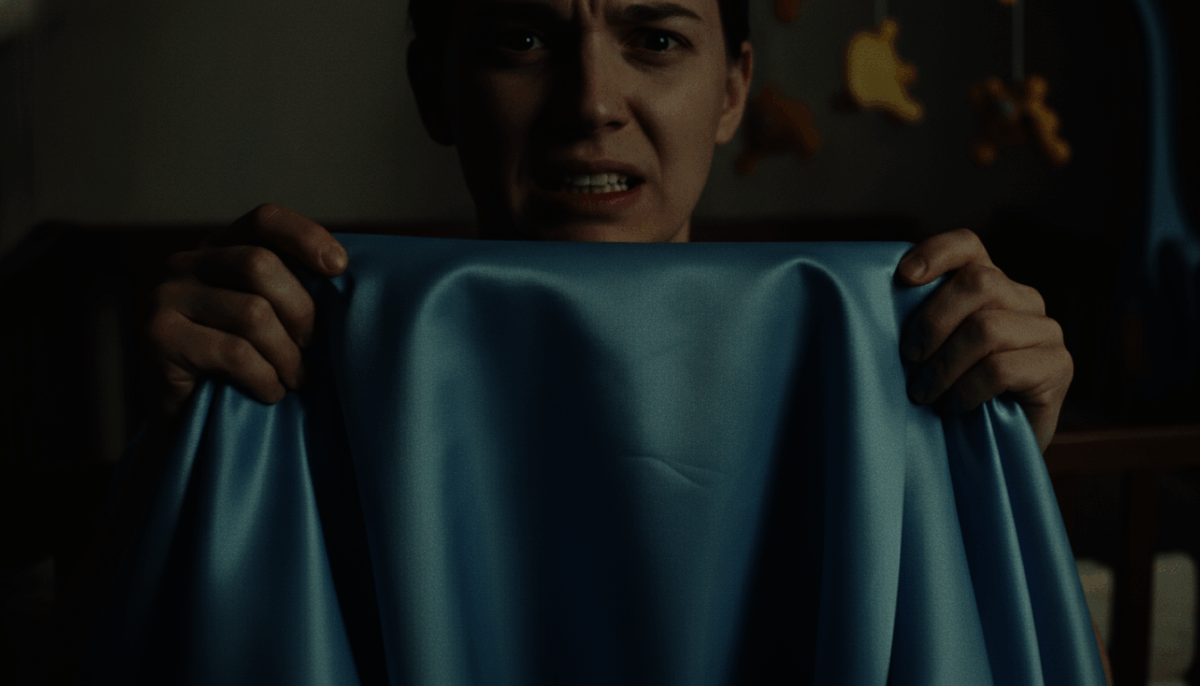
Friday evening arrived, and Linda dropped off the garment bag. She was in a rush, citing a sudden ‘urgent’ meeting with her book club. I barely got a chance to thank her before the door clicked shut. I took the bag to the nursery to hang it up, but as I smoothed the material, my fingers snagged on a seam. It wasn’t the delicate, uneven hand-stitching of the 1940s; it was the rigid, precise line of a machine-made polyester blend.
My heart hammered against my ribs. I tore the bag open and laid the dress on the changing table. The light caught the sheen of the fabric—a cheap, glossy polyester that looked nothing like the soft, antique cotton of the original. The embroidery was a poor imitation, a pattern of roses that were too symmetrical, too perfect to be hand-sewn. I felt a wave of nausea wash over me.
I frantically searched the bag for the original, hoping against hope that she had simply brought the wrong one. Nothing. I looked for a note, an explanation, anything. Just the cheap knockoff sitting there, mocking me. I called Mark into the room, my hands shaking so hard I could barely point to the garment. “Mark, look at this. This isn’t my great-grandmother’s dress. This is plastic.”
“You’re overreacting, it looks exactly the same! Maybe your memory is just playing tricks on you because of the stress. My mom said she had it restored; she wouldn’t just replace it, that’s insane.”
— Mark (My Husband)
The denial was immediate and stinging. Mark, caught in the middle as always, chose the path of least resistance. He tried to convince me that the ‘restoration’ had changed the texture of the fabric. But I knew better. I had held that dress every year since I inherited it. I knew the weight of it, the smell of it, the specific yellow hue of aged cotton. This was a calculated swap, and the realization was colder than the fabric itself.
I didn’t sleep that night. I sat in the nursery, clutching the polyester dress, trying to process the sheer audacity of what had happened. Why would she do this? Was it spite? Was she trying to ‘modernize’ the event? Or did she think I was too unobservant to notice the difference? The more I thought about it, the more I realized that this was about control. She wanted to dictate the legacy of my daughter.
The Confrontation That Didn’t Go As Planned

The next morning, I called Linda. My voice was tight, but I kept my tone level. I didn’t want to give her the satisfaction of a breakdown. When she answered, she sounded perfectly pleasant, almost as if she were waiting for this call. “Good morning, dear! I hope you’re happy with the gown. It looks so much brighter and cleaner now, doesn’t it?”
I didn’t mince words. “Linda, I know what you did. This isn’t my great-grandmother’s dress. Where is the original? You had no right to touch it, let alone replace it with this cheap imitation. I want the original back, right now.” There was a long, heavy silence on the line, followed by a soft, patronizing sigh that made my blood boil.
“Oh, honestly. That old rag was falling apart! It was a health hazard, frankly. I did you a favor by getting rid of that dusty old relic. I bought the new one so your daughter could actually look presentable in photos, not like she’s wearing a museum reject.”
— Linda (Mother-in-law)
I was stunned. She hadn’t just replaced it; she had discarded it, likely thrown it in a trash bin like it was garbage. The cruelty of it took my breath away. “You did what? That was a family heirloom! It wasn’t yours to decide what to do with! You had no authority to touch it, let alone throw it away.”
Linda remained unmoved, her voice dripping with artificial sympathy. “You’re being hysterical over a piece of cloth. I’m doing this for the family’s image. People will notice if she’s wearing something yellowed and tattered. I’ve already told everyone about the beautiful new gown I found. Just be grateful for once.”
The conversation ended with me hanging up, trembling with rage. She had not only destroyed an irreplaceable piece of history but was now gaslighting me about my own feelings. I realized then that there was no room for apology in her world, only submission. She had crossed a line that I could not, and would not, allow to be bridged again.
The Silent House and the Final Decision

I spent the next two hours in a daze. I looked at the invitations on the mantle, the small, elegant cards that had gone out to her side of the family. They were expecting a celebration, a beautiful, sentimental event. But how could I stand there and watch my daughter be christened in a lie, draped in a cheap piece of plastic that represented nothing but the ego of a woman who didn’t respect me?
Mark came home, expecting me to have ‘cooled off.’ He was shocked to find me packing a bag for myself and the baby. He stood in the doorway, confused and desperate. “What are you doing? The baptism is tomorrow! We have people coming from out of town, your parents are driving in, this is a disaster!”
I looked at him, really looked at him, and saw the man who had been enabling his mother’s behavior for our entire marriage. “The disaster happened when your mother threw away my history, Mark. I am not having her at the service. I am not having anyone who supports her behavior there. I am cancelling her side of the guest list.”
“You can’t do that! They’ve already made travel arrangements! You’re going to cause a massive scene and ruin the whole day! Just apologize to her and let it go. We can’t just uninvite half the family.”
— Mark (My Husband)
“I don’t care about the arrangements,” I replied, my voice steady for the first time. “I care about the fact that she destroyed the only thing I had left of my great-grandmother. If you want to be there for her, go ahead. But they are not welcome at my daughter’s baptism. I will not have her there, smiling and pretending that everything is perfect.”
The silence that followed was absolute. I wasn’t asking for permission anymore; I was stating a boundary. For the first time in our marriage, I saw the fear in Mark’s eyes. He realized I was serious, and that the fallout would be catastrophic. But I had reached my limit, and the idea of her standing there, having ‘won’ the battle of the dress, was simply impossible.
The Mass Uninvitation: Emails and Explanations

I sat down at my laptop and started writing. It wasn’t a long message, but it was clear. I didn’t want to start a public war, but I wanted the truth out there. I addressed the email to the entire extended family on his side. I explained the situation—that the heirloom gown had been taken and destroyed by Linda, and that due to this betrayal, they were no longer invited to the event.
I kept it factual. No emotional outbursts, just the timeline of events. “I regret to inform you that due to a serious breach of trust involving a cherished family heirloom, we have decided to rescind the invitations for the upcoming baptism. We hope you understand the importance of this event and why we must prioritize our peace at this time.”
The responses were immediate. My phone started blowing up with notifications. Some were shocked, some were defensive, and others were plain angry. My inbox filled with messages ranging from “Are you crazy?” to “How dare you exclude us over a piece of clothing?” The vitriol was immediate, but it only confirmed that I had made the right choice.
“How dare you? My sister spent months planning her outfit for this, and you’re pulling this stunt over a dress? You’re acting like a child. You need to apologize to Linda immediately or you’re going to regret this.”
— Aunt-in-law (Family Email)
It was fascinating to see how they aligned themselves. It was never about the truth; it was about the disruption of their social calendar. They didn’t care about the gown; they cared about the inconvenience of the uninvitation. It was a massive validation of my decision to cut them off. If they couldn’t see the moral wrong in what Linda did, they had no place in our lives.
The chaos in the group chats was palpable. I ended up muting the notifications after about twenty minutes. I watched as the messages piled up—accusations of being ‘unstable,’ ‘dramatic,’ and ‘unfit to lead a family.’ It was the classic playbook of the enabler family, and I felt nothing but a strange, liberating sense of detachment.
The Morning Of: A New Beginning

The day of the baptism dawned bright and clear. The house was quiet, save for the sounds of my own family. My parents had arrived, and while they were shocked by the drama, they were entirely supportive of my decision. We didn’t mention the gown. We didn’t mention Linda. We focused on the baby, on the ceremony, and on the simple, quiet joy of the moment.
I chose a simple, white cotton dress I had bought as a backup. It wasn’t my great-grandmother’s, but it was clean, it was beautiful, and it was mine. I didn’t have the weight of the heirloom on my shoulders, but I had the strength of my own conviction. As we walked into the church, I felt a lightness I hadn’t experienced in weeks.
There were no scenes. No shouting matches in the church parking lot. My husband’s family didn’t show up, which was the greatest relief of all. We had a beautiful, intimate ceremony, followed by a quiet lunch. It was everything the baptism should have been: focused on the child, not on the theatrics of a toxic grandmother.
Of course, I knew the real battle wasn’t over. I knew Linda would be plotting, that the family would be whispering, and that Mark would be under immense pressure. But I also knew that I had drawn a line in the sand. I had protected my daughter from the influence of someone who thought it was okay to erase a piece of our past to suit her own narrative.
I looked at my daughter, sleeping peacefully in her crib that night, and I felt a fierce sense of protectiveness. She would never know the pain of having her history stolen, not if I could help it. This was the first of many boundaries I would set, and while it had cost me my relationship with my in-laws, the price was well worth the peace of mind.
The Fallout: Internet Reactions and Reddit Verdicts

When I posted the story to Reddit, I wasn’t expecting the outpouring of support. The post quickly went viral, with thousands of comments debating the situation. It was a mix of shock at the audacity of the mother-in-law and heated debates about the extreme measure of uninviting the entire family. The community was a mirror of the conflicting emotions I had been feeling.
“NTA. This isn’t just about a dress. It’s about the fact that she felt entitled to destroy your property and then gaslight you about it. The ‘restoration’ lie is the most insulting part. You are protecting your child from a woman who has no respect for boundaries.”
— u/FamilyDramaExpert (Top Comment, 32.5k upvotes)
Others, however, were more critical of the ‘scorched earth’ approach. Some suggested that I should have tried to talk it out with the extended family first, or that I was punishing the innocent relatives who had nothing to do with the swap. The debate highlighted the different ways families view ‘collective responsibility’ and the role of the individual in group dynamics.
“ESH. You are definitely in the right about the dress—that is a massive violation. But uninviting the whole family? That feels like an overreaction that’s going to cause a rift that never heals. Maybe a middle ground could have been reached?”
— u/NeutralObserver (1.2k upvotes)
Reading these comments allowed me to process the situation from an external perspective. I saw how my actions were interpreted, and I came to understand that ‘right’ and ‘wrong’ are often secondary to the long-term consequences of such drastic decisions. Yet, even reading the criticism, I felt no regret. I stood by my decision because I knew the context that the internet didn’t: this was just the tip of the iceberg.
The validation from the community was overwhelming, but it also forced me to confront the reality of my new life. I was now the ‘villain’ in their family narrative, the woman who had ‘stolen’ their baptism. I had to accept that there was no going back to the way things were, and that I would have to be comfortable being the person who stood up for herself, even if it meant being alone.
The Aftermath: Redefining Family Boundaries

Months have passed, and the silence from my husband’s side of the family remains absolute. We are currently in a period of low-contact, bordering on no-contact, with the entire extended family. My relationship with Mark has been tested to its limits, and we are currently in counseling to navigate the fallout. It’s not easy, and there are days when I wonder if I could have handled it differently.
However, the sense of peace in our home is tangible. There is no more walking on eggshells, no more worrying about what Linda might try to ‘fix’ or ‘improve’ next. I have learned that boundaries are not just about protecting yourself; they are about teaching others how you expect to be treated. When you allow someone to cross a line, you are essentially giving them permission to do it again.
I have started looking into ways to preserve the history of my family in other ways. I have taken up quilting, using scraps of fabric from other heirlooms to create new memories for my daughter. I am reclaiming my history, one stitch at a time, ensuring that the legacy of my great-grandmother lives on, not in a fragile, stolen gown, but in the stories I tell my child.
For those who find themselves in a similar situation, my advice is simple: trust your instincts. If something feels like a violation, it probably is. Don’t let yourself be gaslit into believing that your feelings are ‘dramatic’ or ‘unnecessary.’ You are the guardian of your own life and your child’s future, and you have every right to protect that against anyone, family or not, who seeks to undermine it.
The road ahead is uncertain, but it is mine to walk. I am no longer playing a part in someone else’s drama. I am living my own life, on my own terms. And for the first time, I feel truly, deeply free.
Conclusion
Reflecting on the events that transpired, it is clear that the christening robe was never just about fabric. It was a catalyst that exposed the cracks in our family dynamic—the entitlement, the lack of respect, and the toxic expectation of submission. While the loss of the heirloom still stings, the clarity it brought to my life has been an unexpected gift.
The debate about whether I was right or wrong continues to rage in the comments sections, which serves as a reminder that family dynamics are deeply subjective. What one person views as a necessary boundary, another views as an unforgivable act of exclusion. Ultimately, the only person who has to live with these decisions is me.
I invite you, the reader, to share your own experiences with family boundaries and heirloom disputes. Have you ever had to draw a line in the sand with an in-law? How did you handle the fallout? Let’s continue the conversation in the comments below.
Poll:
Do you think the decision to uninvite the entire family was justified, or should the OP have focused only on the mother-in-law?
1. Completely justified—the toxicity of the family was clear.
2. Too extreme—it punishes the wrong people.
3. It depends—was there a history of issues before this?
What's your verdict on this dilemma?
Vote below to contribute to the official community consensus.

Have a Dilemma Keeping You Up at Night?
Share your real-life feud, wedding chaos, or relationship crossroads anonymously with our editorial team.
What do you think ?
0 Comments🛡️ Comments are moderated to protect community integrity. Your comment will appear once approved by the editorial team.