
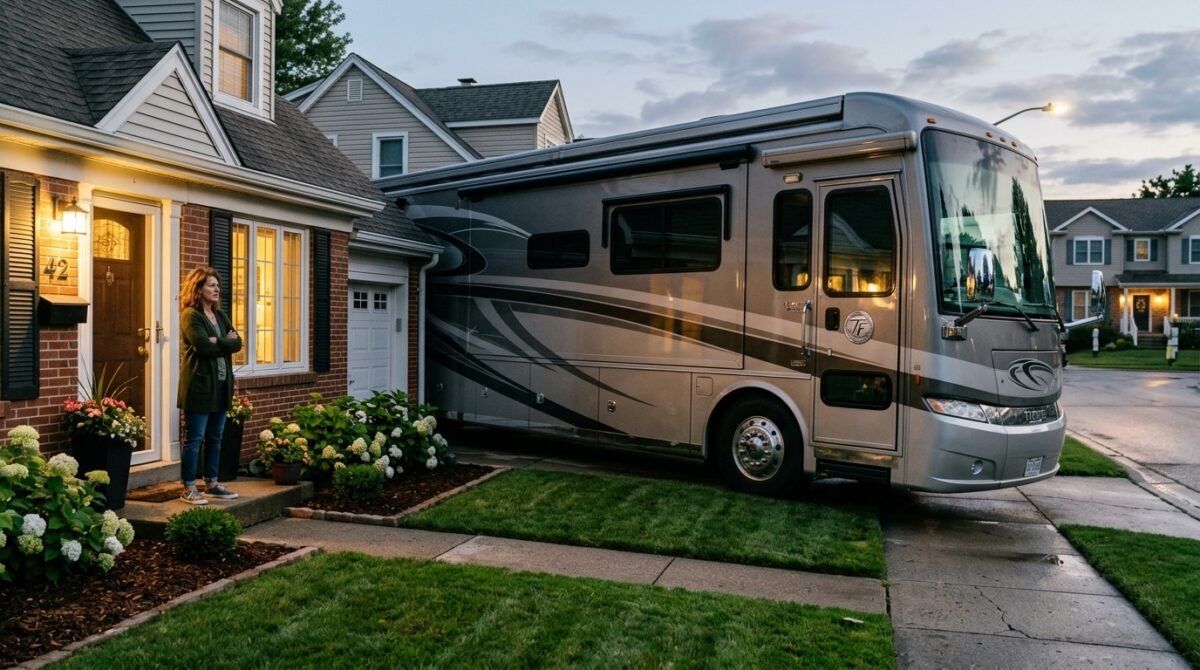
We had spent three years turning our first home into a sanctuary. My husband, Mark, and I spent countless weekends pulling weeds, planting hydrangeas, and curating a space that felt entirely ours. It was a modest suburban life, quiet and intentional, until the phone call came in early May. My mother-in-law, Susan, was calling with what she described as a ‘brilliant, cost-saving solution’ for their upcoming cross-country retirement tour. The problem was, her solution involved turning our carefully curated driveway into a long-term RV park.
The audacity wasn’t just in the request; it was in the assumption. There was no ‘Would you mind?’ or ‘Is this convenient for you?’ Instead, it was a logistical decree delivered with the confidence of someone who assumes their children are merely extensions of their own household. They weren’t just asking for a parking spot; they were asking for access to our water, our electricity, our laundry facilities, and our daily schedule for ninety days.
Mark looked at me with that familiar, panicked expression he gets whenever his mother demands something unreasonable. He knew I’d say no, but he was terrified of the fallout. I, however, had reached my limit. We were not a storage facility, and we were certainly not a free campground for a vehicle that cost more than my first two cars combined. The moral dilemma wasn’t just about the driveway—it was about the fundamental question of whether marriage means sacrificing your own boundaries for the comfort of extended family.
I chose to say no. Little did I know that a simple two-letter word would trigger a summer of passive-aggressive text chains, surprise visits, and a family intervention that nearly cost us our marriage. This is the story of how I stood my ground against the entitlement that threatened to pave over my life, and why I’m still dealing with the aftermath today.
The Three-Month Assumption
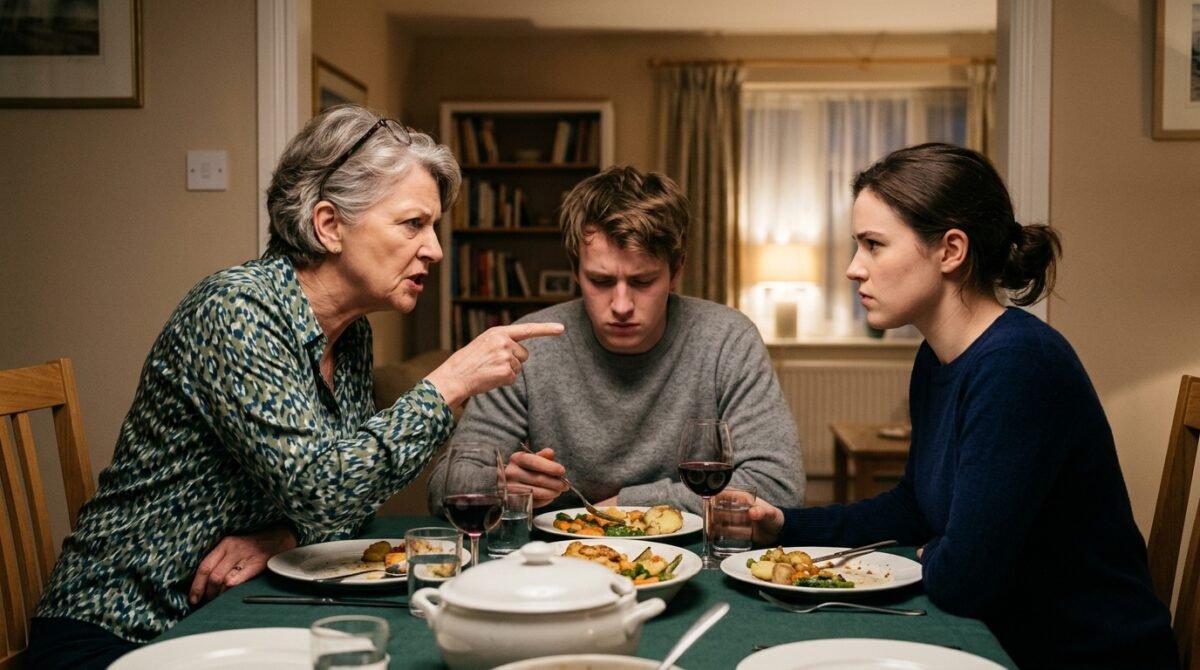
It started with a casual Sunday brunch. Susan and her husband, Robert, had been talking about their ‘Grand Tour’ for years. They had purchased a top-of-the-line Class A motorhome, a behemoth that looked like a Greyhound bus had been redecorated by a high-end interior designer. As we sipped coffee, Susan leaned in, her smile tight and expectant.
‘We’ve worked out the logistics for our summer trip,’ she announced, as if presenting a business plan. ‘We’ll be staying in your driveway from June through August. Since we’ll be in the area for the regional RV rally, it’s the perfect base of operations. We’ve already cleared it with our insurance company.’
I looked at Mark, waiting for him to object. When he said nothing, a cold knot formed in my stomach. Three months? That was an entire season. Our driveway was barely wide enough for two cars, and having a thirty-foot vehicle parked there would block our view, our access, and our privacy entirely.
“Susan, we haven’t discussed this at all. Our driveway is not zoned for a long-term rental or a campsite, and honestly, we aren’t prepared to have guests living in our front yard for three months.”
The table went silent. Robert didn’t even look up from his plate, while Susan’s face hardened. She hadn’t expected a rejection; she had expected a thank-you. The entitlement was palpable, radiating off her like heat from a radiator. She didn’t view our home as our property; she viewed it as her fallback.
‘It’s just a driveway, dear,’ she retorted, her voice dripping with condescension. ‘We’re family. Is it really such a sacrifice to help your parents out? We’re trying to save money for our retirement, not spend it on expensive RV parks. I thought you were more generous than this.’
The Inevitable Text Message Bombardment

The next morning, my phone started chirping at 6:00 AM. It wasn’t just Susan; it was a barrage of links to ‘how to be a good daughter-in-law’ articles and passive-aggressive messages about ‘family values’ and ‘hospitality.’ The boundary I had set was being treated like a suggestion, a mere hurdle to be overcome with guilt and manipulation.
Mark was in the middle, trying to play diplomat. He told me that his mother was just ‘old-fashioned’ and that it would be easier to just say yes to avoid the headache. But I knew that if I gave in, the three months would turn into six, or they would expect full access to our house for showers and meals. It was a slippery slope of boundary erosion.
“I don’t understand why you’re being so difficult. We are your family. Does your house really mean more to you than your relationship with us? This is hurtful and frankly, it’s petty.”
— Text from Susan
I didn’t respond immediately. I took screenshots of every single message. My therapist had taught me that documenting behavior is the first step in dealing with toxic family members. I felt like a prisoner in my own life, constantly checking my phone to see what new insult or demand had been leveled at me.
‘It’s just parking,’ Mark pleaded that evening. ‘If we just let them stay, they’ll leave eventually. Is it worth the fight?’ I looked at him and realized he didn’t understand the principle of the matter. It wasn’t about the parking; it was about the lack of respect for our decision-making as a married couple. If we didn’t hold the line here, where would it end?
The Unannounced 6:00 AM Arrival
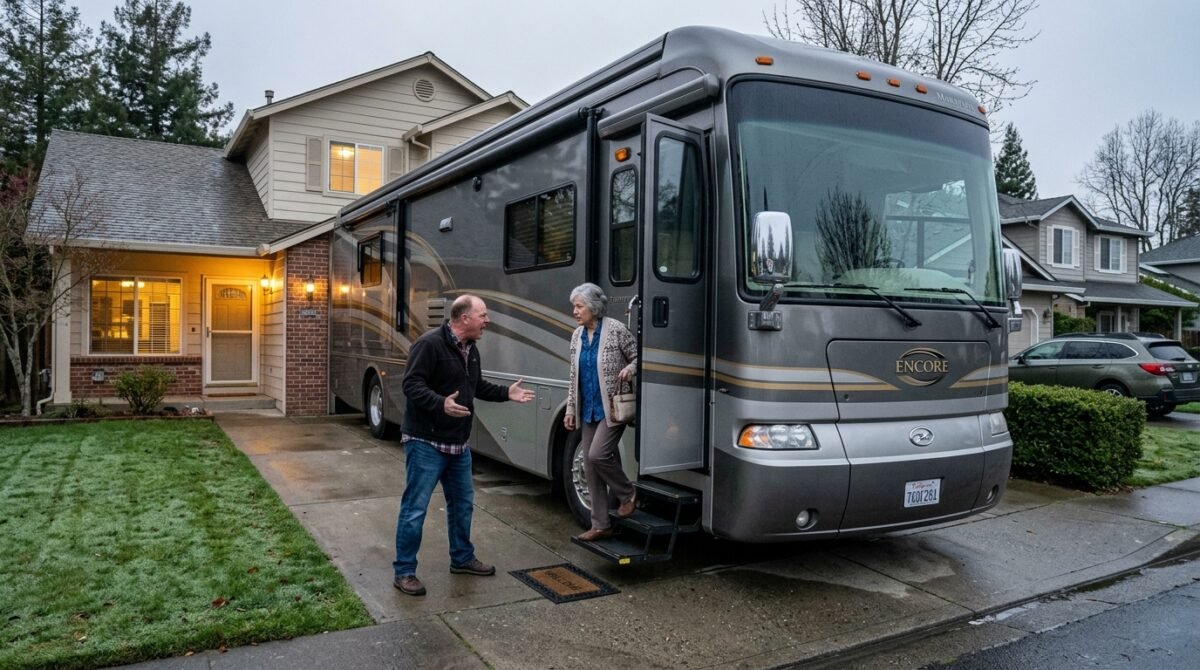
I woke up to a rumbling sound that shook the floorboards. I jumped out of bed, heart racing, and ran to the window. There, blocking our light and our view of the street, was the massive, gleaming motorhome. They hadn’t asked. They hadn’t even checked if we were home. They had simply pulled in at dawn, confident that we wouldn’t dare kick them out once they were physically on our property.
I stormed outside, wearing my pajamas, completely incensed. Robert was outside, connecting a hose to our outdoor spigot. I felt a surge of pure, unadulterated rage. This was a total violation of every social and legal norm. I walked up to the side of the vehicle and pounded on the door.
“What do you think you are doing? You are not allowed to be here! You need to move this vehicle immediately, or I will have it towed at your expense.”
Susan emerged from the RV, looking pristine and unbothered, holding a mug of tea. She acted as if I were merely a neighbor complaining about a barking dog, not the daughter-in-law whose property they had just hijacked. She looked at me with pity, which was somehow even more insulting than her anger.
‘Calm down, dear,’ she said smoothly. ‘We had a long drive and we were tired. We knew you’d come around once you saw us. Don’t be so dramatic. We’re here now, and it’s for the best. Everything is going to be fine.’ I stood there, trembling, realizing that they had no intention of leaving. They had played their hand, and they were betting that I would fold.
The Neighbors Start Taking Notes
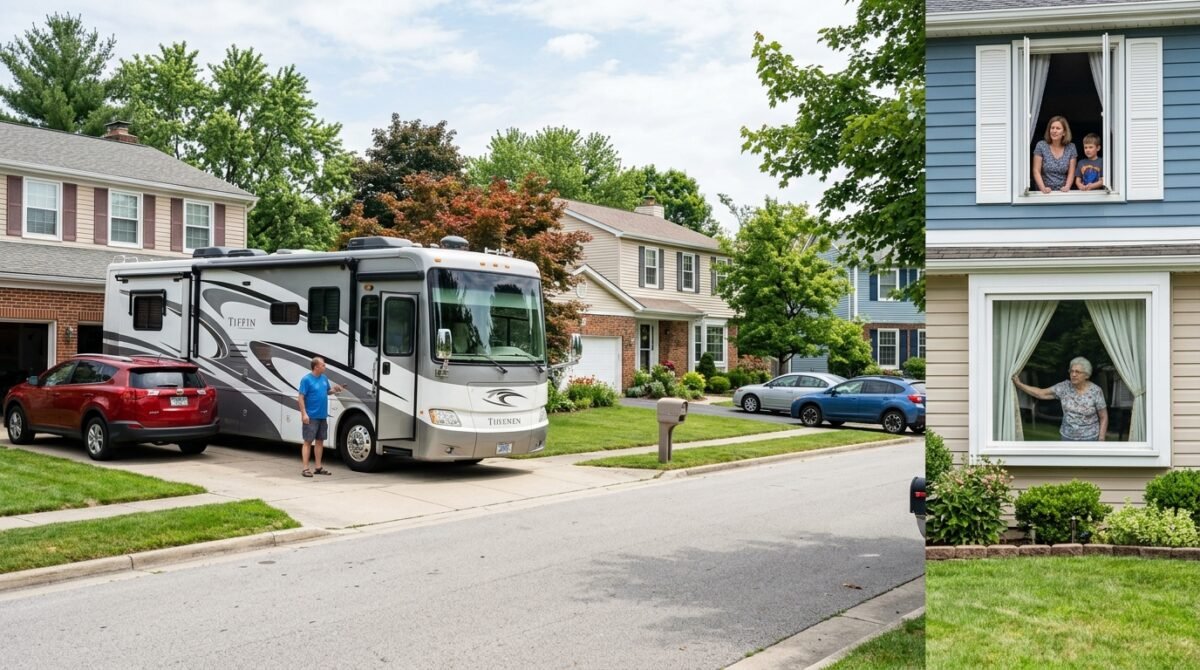
By the second day, our neighbors were already whispering. A giant, industrial-looking RV doesn’t go unnoticed in a quiet neighborhood of single-family homes. I saw Mrs. Gable from across the street staring out her window, her phone clearly in hand, likely reporting the ‘encampment’ to the local homeowner’s association.
I felt a deep sense of humiliation. I had worked so hard to keep our home looking tidy and respectful, and now it looked like we were running a roadside motel for the elderly. When I finally caught up with Mrs. Gable at the mailbox, she was barely able to hide her curiosity. ‘I didn’t realize you were hosting guests, dear. How long are they staying?’
I didn’t have an answer. I couldn’t tell her it was three months, because I still hadn’t accepted it myself. I felt like a liar, pretending everything was fine when in reality, I was plotting a way to get them out. The stress was taking a toll on my marriage, as Mark and I spent every evening arguing about whether we should just ‘deal with it’ for the sake of peace.
“I am not doing this. I am not going to be the bad guy to our neighbors, and I am not going to let your mother treat our home like her personal campsite. You need to talk to them, Mark, or I will.”
Mark finally started to see the reality of the situation. He saw how stressed I was, and he saw the way the neighbors were looking at our house. For the first time, he admitted that his parents had overstepped, but he was still paralyzed by the fear of his mother’s reaction. It was a stalemate, and the RV was the centerpiece of it all.
The Secret Group Chat Revelation

The breaking point came in the form of a ping on Mark’s iPad, which he had left open on the kitchen counter. I wasn’t looking to snoop, but a notification popped up from a group chat titled ‘The Summer Escape Plan.’ Curiosity took over, and I read the messages. They weren’t just staying for three months; they were planning to use our address for their mail, invite their friends over for ‘BBQ nights’ in our backyard, and even store their winter gear in our garage.
I felt the blood drain from my face. They weren’t just staying; they were moving in. They had planned this without even consulting us, treating our house like a storage locker and a social hub. The audacity was breathtaking. I took photos of the chat and confronted Mark immediately.
“Look at this, Mark! They’ve planned our whole summer. They’re inviting people over! They think they have free rein to do whatever they want. Is this what you wanted? A free-for-all in our own house?”
Mark looked horrified as he read the messages. He hadn’t known about the BBQ plans or the garage storage. He had been as much of a victim of their entitlement as I was. We sat down at the table and finally, truly, came to a decision. The RV had to go, and it had to go now. We were done playing nice.
The feeling of betrayal was heavy. It wasn’t just that they were imposing; it was that they had been lying about their intentions from the start. They had framed it as a humble ‘cost-saving’ measure, but it was actually a power grab, an attempt to insert themselves into our lives and our home at a level that was completely inappropriate.
The Formal Eviction Notice
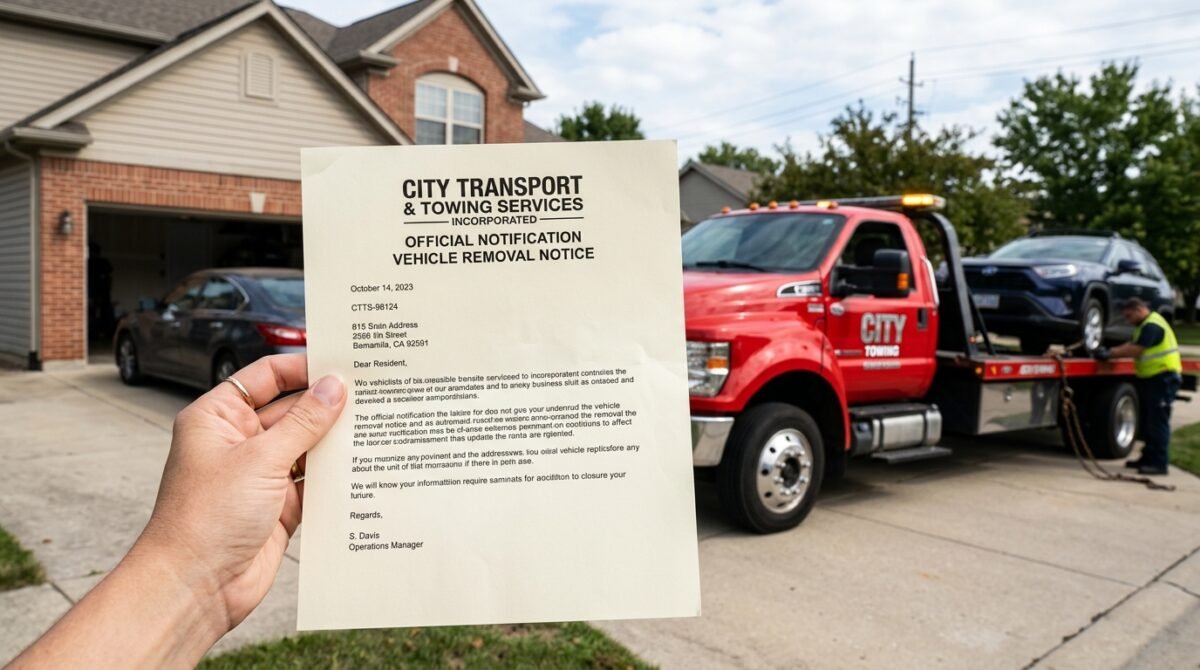
We didn’t just ask them to move; we served them with a written notice. It was a letter we drafted with the help of a legal friend, clearly stating that the driveway was private property, that they had not been given permission to park, and that if they did not move by the end of the weekend, we would be forced to contact local authorities to have the vehicle towed as an unauthorized obstruction.
Susan was furious. She acted as if we had committed a crime against the family, calling us heartless, ungrateful, and cruel. She tried to appeal to Mark’s sense of duty, playing the victim card with tears and accusations of us ‘kicking our own parents to the curb’ during their golden years.
“We are your parents! We gave you everything! And this is how you treat us? Over a parking spot? You should be ashamed of yourselves. You are being completely unreasonable.”
We stayed firm. We didn’t argue back; we just repeated the deadline. It was the hardest thing I’ve ever done, standing there in my own driveway while my mother-in-law sobbed and called me names. But as I watched her, I realized that her anger was a reflection of her own lack of boundaries, not my lack of character. I was protecting my home, my relationship, and my sanity.
The weekend went by in a blur of tension. They didn’t move. They just sat inside the RV, eating, watching TV, and ignoring us, waiting for us to fold. They thought we were bluffing. They thought the ‘family’ label would protect them from any real consequences. But on Monday morning, when the tow truck pulled up, they finally realized we were serious.
The Tow Truck Confrontation
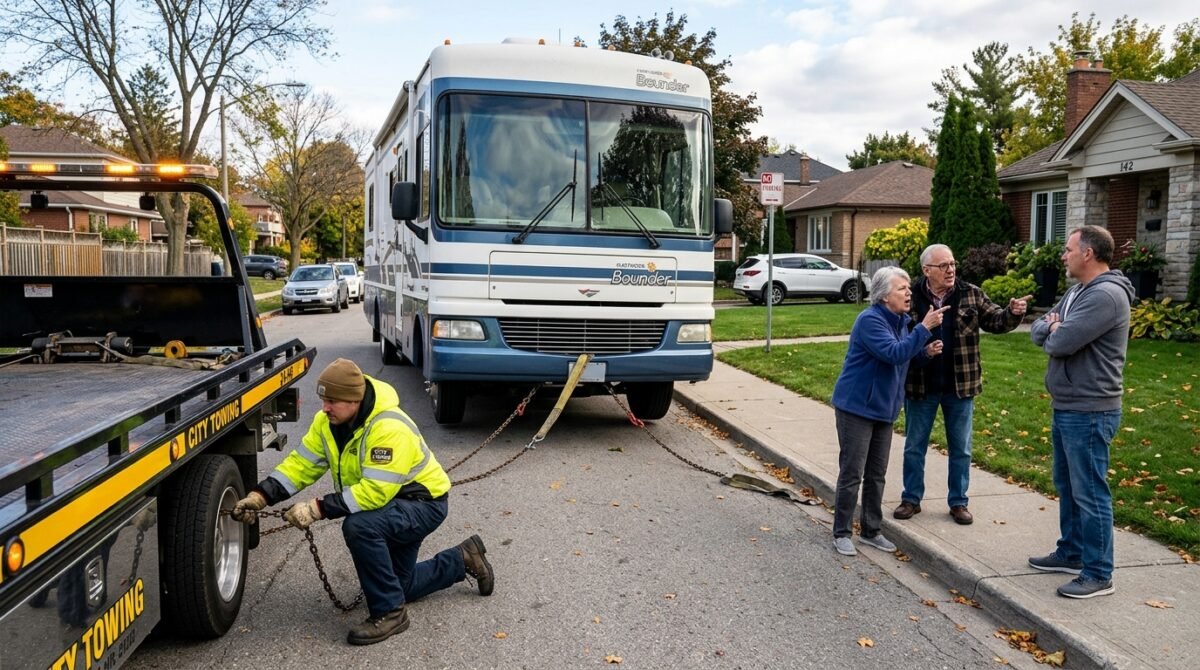
The driver of the tow truck looked at the situation with a mix of amusement and annoyance. He had been through this before, and he knew exactly how to handle it. He didn’t care about family politics; he cared about the contract I had signed. As he began to hook up the massive vehicle, Susan and Robert came running out, screaming and threatening legal action.
I stood by the front door, arms crossed, watching the drama unfold. I felt a strange sense of calm. The chaos had finally reached its conclusion. Robert was shouting about his rights, while Susan was trying to film the driver, calling him a thug. It was a spectacle, one that the entire neighborhood was watching from behind their curtains.
“You can’t do this! This is our property! We’re your parents! Do you have any idea what this will do to our family?”
The driver just shrugged. ‘Ma’am, I have an order to remove this vehicle from private property at the request of the owner. If you have a dispute, you can take it up with them, but you need to move the vehicle or it’s going to the impound lot.’
They didn’t want the vehicle to go to the impound lot. They finally, begrudgingly, got back inside and started the engine. As the RV slowly backed out of our driveway, I felt a weight lift off my shoulders that I hadn’t even realized I was carrying. Our driveway was empty. Our home was ours again. The victory felt bitter, but it was necessary.
The Aftermath and Family Fallout

The fallout was swift. We were excommunicated from the family group chat, and relatives I hadn’t spoken to in years were calling to tell me how disappointed they were. My in-laws had framed the story to make us look like villains, omitting the part about the three-month occupation and the secret plans to host parties in our backyard.
We had to set the record straight, but it was exhausting. We sent a single, calm email to the family explaining the situation—the request for three months, the unannounced arrival, and the refusal to move. Some people understood, but others were so deep in the family cult of ‘family first’ that they couldn’t see the logic. We stopped trying to convince them.
“We have decided to take a step back from family gatherings for the time being. We value our relationship with all of you, but we also value our home and our boundaries. We will not be bullied into accepting unreasonable demands.”
Mark and I used the time to reconnect. We went on a vacation, just the two of us, and left our phones behind. It was the first time in months that we felt like a couple again, not just combatants in a family war. We had learned a hard lesson about the importance of being a united front, and we were stronger for it.
The in-laws eventually stopped calling, and for a while, there was silence. It was a heavy, awkward silence, but it was ours. We had reclaimed our lives, and in doing so, we had learned that you can’t build a healthy relationship on the foundation of someone else’s broken boundaries.
Reddit Weighs In: The Verdict
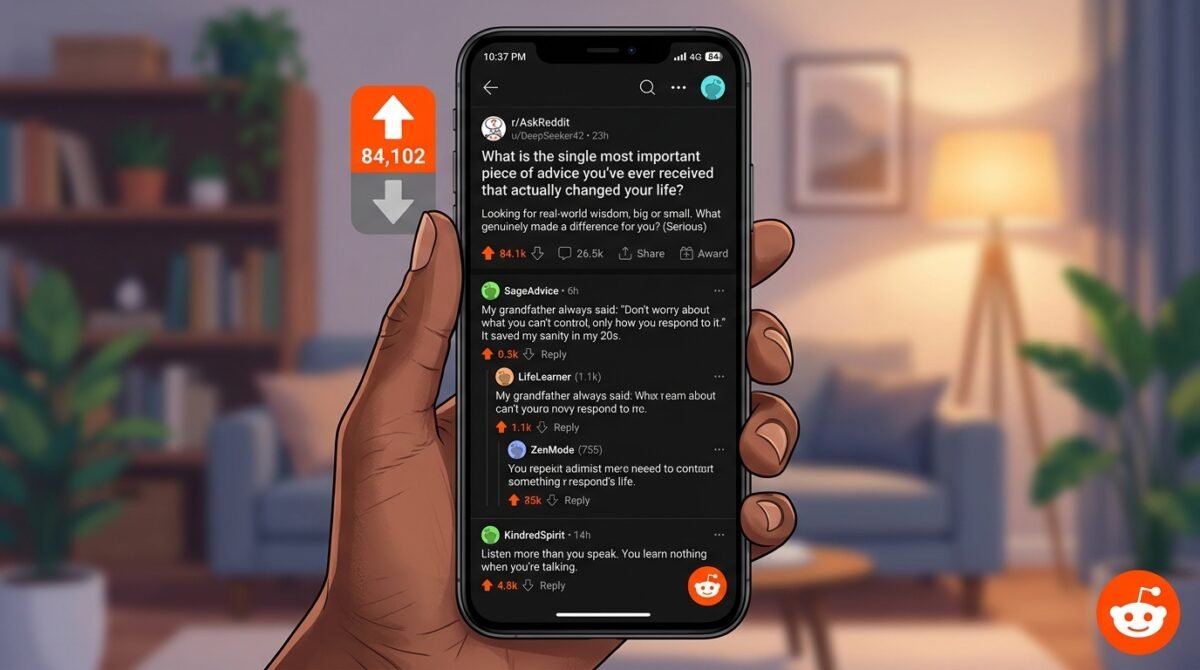
When I finally posted the story to a popular sub-Reddit, I expected a mix of feedback. I wasn’t prepared for the sheer volume of support. Within hours, the post had thousands of upvotes, and the comments were overwhelmingly in our favor. People from all over the world shared their own stories of boundary-pushing in-laws, and it felt like I was part of a global community of people who were done with toxic entitlement.
Many people pointed out that this wasn’t just about an RV; it was about the ‘missing stair’ in the family dynamic—the part of the family that everyone knows is broken, but everyone just walks around because they don’t want to deal with it. I had stopped walking around it. I had called it out.
“NTA. Your driveway is not a campground. The fact that they think they are entitled to three months of free rent on your property, without even asking, is absolute insanity. You didn’t ‘kick them out,’ you reclaimed your property after an illegal occupation.”
— u/BoundariesMatter (Top Comment, 28.5k upvotes)
Others warned about the legal side of things, noting that if they had stayed for too long, they might have established ‘tenancy’ in some jurisdictions. That thought made my blood run cold. It was a reminder that boundaries aren’t just about feelings; they are about protecting your legal and financial assets from people who are happy to exploit them.
The community support gave me the validation I didn’t know I needed. It reminded me that my feelings of frustration weren’t ‘petty’ or ‘mean’—they were a rational response to an unreasonable situation. I wasn’t the bad guy. I was the person who finally said ‘enough.’
Reflecting on the Cost of Peace
Looking back, I realize that the most expensive part of that summer wasn’t the cost of the tow truck or the stress on our marriage. It was the realization that some people will never respect your boundaries, no matter how clearly you set them. The in-laws didn’t want a place to park; they wanted to exert control, to prove that they could occupy space in our lives whenever they pleased.
I’ve learned that setting a boundary is like planting a tree—it takes time to grow, and it requires constant care. You have to be willing to protect it from those who want to tear it down. Sometimes, the people who dislike your boundaries the most are the ones who were benefiting from their absence. That’s okay. Their disapproval is not my problem.
“The hardest part of setting boundaries is watching the people who benefited from your lack of them get angry. But remember, their anger is a testament to the effectiveness of the boundary you just established.”
We are still low-contact with them. It’s not ideal, but it’s peaceful. We spend our weekends in our home, in our driveway, and we love every minute of it. The motorhome is a distant memory, and the garden is thriving. We’ve learned that the most important thing you can offer your family is not your driveway, but your respect—both for them and for yourself.
If you are in a similar situation, don’t wait for them to change. They won’t. You have to be the one to change the dynamic. You have to be the one to say ‘no,’ and you have to be the one to back it up. It’s worth it, I promise.
Conclusion
This experience was a crucible for our marriage. It forced us to confront the reality of family entitlement and to decide, once and for all, what kind of life we wanted to build. We chose a life where our home is our own, where our decisions are respected, and where we aren’t afraid to stand up to those who try to trample our boundaries. It wasn’t easy, and it certainly wasn’t without pain, but it was the most important step we ever took.
Boundaries are not walls we build to keep people out; they are the gates we build to keep our sanity in. When we set them, we aren’t being mean; we are being protective of the peace we’ve worked so hard to cultivate. We invite you to share your own experiences in the comments below. Have you ever had to draw a hard line with family? What was the hardest part about enforcing that boundary? Let’s keep the conversation going.
What's your verdict on this dilemma?
Vote below to contribute to the official community consensus.

Have a Dilemma Keeping You Up at Night?
Share your real-life feud, wedding chaos, or relationship crossroads anonymously with our editorial team.
What do you think ?
0 Comments🛡️ Comments are moderated to protect community integrity. Your comment will appear once approved by the editorial team.