

When my husband, Mark, and I purchased our fixer-upper three years ago, we did it with a specific vision: it would be our home, but it would also be a source of financial stability. The small, detached guest house on the property was perfectly situated, and after extensive renovations, we listed it for rent. That is how we met Elena. Elena has been the ideal tenant for two years—quiet, reliable, and respectful of our space. She even brings us cookies when she goes home to visit her family. She is not just a tenant; she has become a part of the rhythm of our lives.
However, the peace was shattered last month when my mother-in-law, Brenda, decided that her son—Mark’s younger brother, Jason—needed a place to stay. Jason is the quintessential ‘golden child’ of the family. At twenty-eight, he has yet to hold a job for more than six months, and Brenda has spent the better part of a decade shielding him from the consequences of his own erratic choices. The demand came during a Sunday dinner that started with pot roast and ended with a metaphorical grenade dropped right onto our dining table.
Brenda didn’t frame it as a request. She framed it as a necessity, acting as though Elena were nothing more than a temporary inconvenience we could discard at a moment’s notice. She spoke about Jason’s ‘potential’ and how being closer to family would ‘help him find his way,’ all while completely ignoring the legal and moral reality of the contract we had with Elena. When I looked at Mark, I expected him to be as horrified as I was. Instead, I saw a flicker of the old conditioning—the need to please the woman who had spent his entire life molding him into her helper.
That night, the conflict moved from the dining room to our bedroom, and then out into the wider circle of our extended family. The entitlement displayed by my in-laws was staggering, but what hurt the most was the initial hesitation from my own husband. He was torn between his loyalty to me and his fear of his mother’s wrath. This is the story of how we stood our ground, the fallout that followed, and the realization that sometimes, saying ‘no’ is the only way to save your sanity.
The Sunday Dinner Bombardment
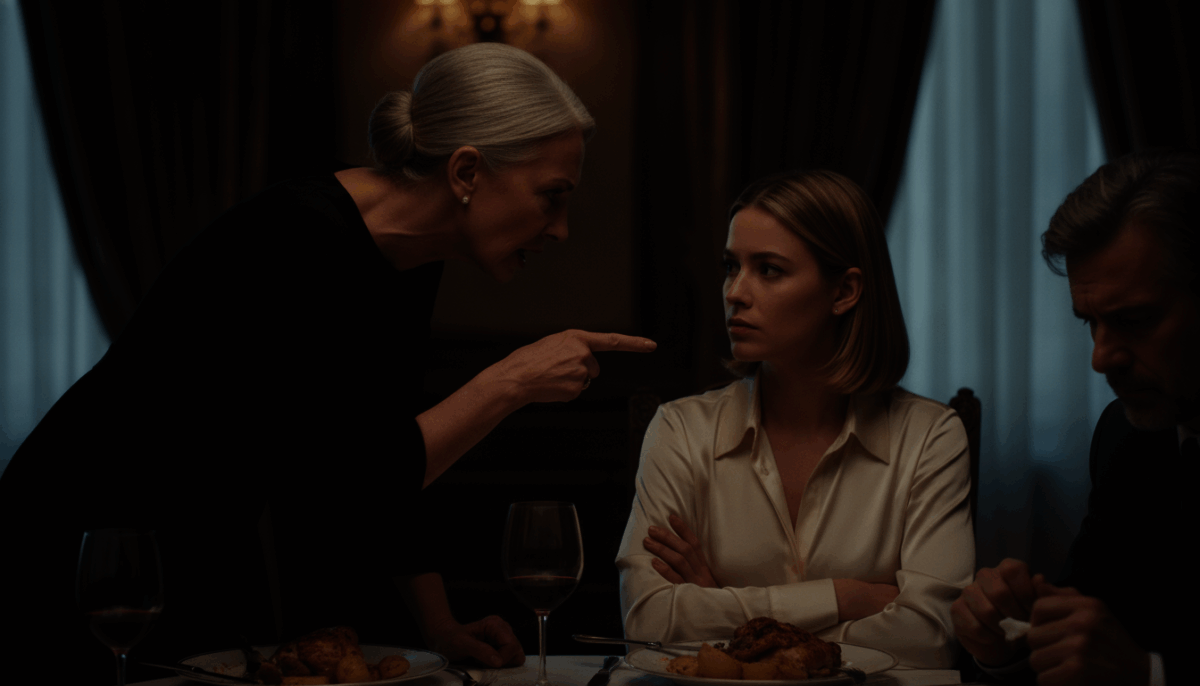
The dinner started like any other: polite small talk, complaints about the weather, and questions about our upcoming landscaping projects. I was enjoying my wine, completely unaware that Brenda had been planning this ambush for weeks. She sat at the head of the table, her eyes darting between Mark and me with a calculated precision that usually signals she’s about to make a request she knows will be rejected.
“Mark, honey,” she began, her voice dripping with that saccharine sweetness she only uses when she’s about to overstep. “We’ve been talking about Jason. He really needs a change of scenery. He’s going to be moving back to the city, and he’s struggling to find an apartment that isn’t a shoebox. Your guest house is just sitting there. It’s perfect for him, and it would be so wonderful for him to be close to his big brother.”
I felt my fork stop halfway to my mouth. I looked at Mark, who was still chewing, clearly oblivious to the implication. I took a breath, trying to keep my voice calm and measured. “Brenda, that’s not possible. Elena is in the middle of a lease. She’s been a great tenant, and we have no intention of breaking that agreement, especially not when she’s done nothing wrong.”
Brenda scoffed, a sharp, dismissive sound that echoed in the quiet dining room. “Elena is just a tenant. You can give her notice. She’ll find something else. It’s not like she’s family. Jason is family, and he’s in a transition period. Surely you two can prioritize your own flesh and blood over some stranger who pays you rent?”
“Elena is not just a tenant; she is a person with a contract. We are not evicting someone because your golden child can’t manage his own life.”
— Me, standing my ground at dinner
The table went deathly silent. My father-in-law, who usually lets Brenda do all the talking, actually looked uncomfortable, staring at his plate. Mark, however, looked like a deer in headlights. He looked at me, then at his mother, clearly caught in the crossfire of his own upbringing. It was the moment I realized that this wasn’t just about a house—it was about whether or not we were going to be puppets in Brenda’s theater for the rest of our lives.
The Late-Night Digital Siege

The fallout didn’t stay at the dinner table. By the time we got home, my phone was buzzing incessantly. It started with a series of texts from Brenda, followed by a barrage of messages in the family group chat that I had mistakenly thought was only for birthdays and holiday planning. The audacity was, quite frankly, impressive. She was framing the situation as if I were a heartless villain keeping a family member on the street.
Mark was quiet during the drive home, but as soon as we stepped inside, he tried to play the peacemaker. “Maybe we can just talk to Elena? See if she wants to move out early? We could offer her a month of rent back. It might make things easier, and then the heat would be off us.” I couldn’t believe what I was hearing. It wasn’t about the money; it was about the precedent. If we gave in now, Brenda would be moving into our kitchen by Christmas.
I opened the group chat, and the messages were piling up. My sister-in-law, who usually stays out of the drama, had chimed in with a passive-aggressive comment about how ‘family helps family.’ I felt my blood pressure rising. I realized then that if I didn’t shut this down immediately, the manipulation would continue until I was the one begging for forgiveness.
“We are not discussing this again. Elena stays. If you continue to harass us about this, I will be muting this group chat and we will not be attending next week’s family gathering.”
— My response in the family group chat
I didn’t wait for a response. I blocked Brenda on my phone and muted the chat. I looked at Mark, who was staring at his own phone, looking utterly defeated. He looked at me, and for the first time, he didn’t look like his mother’s son. He looked like my husband. He sighed and put his phone on the charger. “You’re right,” he whispered. “I’m sorry. I shouldn’t have even suggested it.”
The Unannounced 8:00 AM Kitchen Intrusion
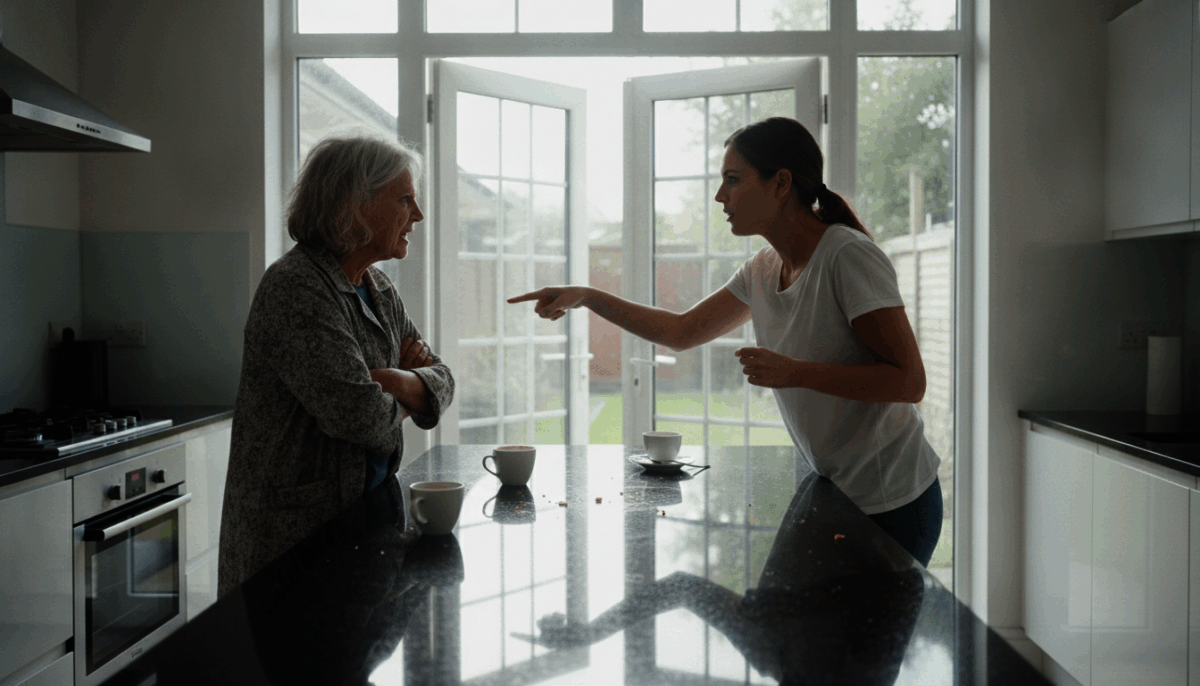
I thought the silence would hold, but I underestimated Brenda’s persistence. Two days later, while I was mid-coffee, I heard the sound of keys in the door. We had given Brenda a spare key for emergencies—a massive mistake I had been regretting for months—but I never imagined she would use it to launch a surprise inspection or, in this case, an intervention.
She walked into our kitchen without knocking, carrying a folder of brochures for apartments in the city. She looked around the kitchen as if she were appraising the value of the home she felt entitled to oversee. When she saw me, she didn’t look guilty. She looked annoyed, as if I were the one inconveniencing her. “We need to talk about Jason,” she declared, setting the folder down on the island.
I felt a rage so cold it turned my vision blurry. I didn’t say a word at first. I simply walked over to the door, opened it wide, and pointed. “Out, Brenda. Now. You do not have permission to enter my home unannounced. If you don’t leave, I will call the police and report a trespassing incident. I am not joking.”
She looked shocked, her face flushing a deep shade of crimson. “I am his mother! I am family! You don’t tell me what to do in my own son’s home!” I laughed, a sharp, humorless sound. “This is our home. We pay the mortgage. We pay the taxes. And as long as I live here, you are a guest—one who clearly doesn’t know how to act like one.”
“If you don’t leave this house right now, I am calling the police. We are done being your pawns.”
— My confrontation with Brenda in our kitchen
She left, but not without a parting shot about how I had ‘ruined’ her relationship with her son. I locked the door behind her and realized that the bridge wasn’t just burned; it was effectively demolished. I spent the next hour shaking, not from fear, but from the adrenaline of finally setting a hard, unyielding boundary.
The Legal Reality Check

By the afternoon, the situation had shifted from a family dispute to a legal one. I knew that I needed to protect Elena at all costs. I reached out to a local attorney who specialized in landlord-tenant law just to ensure that we were completely airtight. The last thing I wanted was for Brenda to try some underhanded tactic, like calling the city to report ‘code violations’ or trying to harass Elena directly.
The lawyer, a sharp-witted woman named Sarah, was incredibly reassuring. She went over our lease agreement and confirmed that we were in a rock-solid position. “Unless you have a clause that allows for early termination due to personal need, which you don’t, you are legally bound to that contract,” she explained. It was a relief to hear, but it also highlighted just how absurd the demands of my in-laws really were.
I decided to be transparent with Elena. I didn’t want her to feel like she was living on a powder keg. I invited her over for tea and explained the situation, omitting the more toxic details but being clear that we had her back. Her reaction was everything I needed to confirm I had made the right choice. She was terrified at first, but when I told her that we weren’t budging, she actually teared up.
“Thank you,” she said, her voice shaking. “I was so worried. I just started this new job, and I couldn’t afford to move right now. You have no idea what this means to me.” It was a reminder that people are more than just line items on a balance sheet. The human cost of Brenda’s entitlement was real, and by refusing to participate in it, I was protecting someone who truly mattered.
“I will defend your lease until the end. You have a home here, Elena, and no one is taking that away from you.”
— Me, reassuring Elena
The conversation with Elena solidified my resolve. I wasn’t just fighting for my boundaries; I was fighting for the well-being of someone who had trusted us with their living situation. It felt good to be the adult in the room for once, especially when my in-laws were acting like toddlers denied a toy.
The Fallout: When the Extended Family Turns

Of course, news of the ‘eviction battle’ spread through the family like wildfire. By the end of the week, I was receiving messages from aunts, cousins, and siblings-in-law I hadn’t spoken to in months. Most of them were taking Brenda’s side, painting me as a cold, materialistic person who put money before family. It was fascinating to see how many people were willing to weigh in on a situation they had absolutely no understanding of.
Mark was getting the worst of it. His phone was blowing up with guilt-tripping messages from his father and his siblings. “They’re saying I’m a coward,” he admitted one night, his head in his hands. “They’re saying that because you’re ‘wearing the pants,’ I’ve lost my family identity.” It broke my heart to hear him talk like that, but I knew he was being manipulated.
I told him to turn his phone off. I told him that if his family was willing to turn on him because he wouldn’t evict a stranger for a sibling who hadn’t worked in years, then they were never really supporting him—they were just using him. It was a hard pill for him to swallow, but he eventually did. We decided to go ‘radio silent’ on the whole family for a few weeks to let the dust settle.
The pressure was immense. Every time I went to the grocery store, I wondered if I’d run into one of them. I started carrying myself differently, with a kind of armor that I had never needed before. It was an isolating experience, but there was a strange, liberating power in it. I realized that the opinions of people who didn’t respect my boundaries were completely irrelevant to my happiness.
“If they want to judge us for being ethical, let them. We are not setting ourselves on fire to keep them warm anymore.”
— Me, to Mark, during a difficult evening
We spent those weeks focusing on ourselves. We took long walks, worked on our landscaping, and spent time with friends who actually respected our choices. It was the most peaceful time we had had in months, despite the digital storm raging in the background.
Reddit Community Weighs In: The Verdict is In

I finally decided to post about the situation on a popular subreddit for relationship advice, just to see if I was losing my mind. I laid out the facts: the lease, the request, the attempted intrusion, and the family fallout. The response was overwhelming. Within hours, the post had thousands of upvotes and a comment section that felt like a validation of everything I had been feeling.
The consensus was clear: I was ‘NTA’ (Not The Asshole). The comments were filled with people sharing similar stories of toxic in-laws, entitlement, and the importance of holding the line. It was incredibly cathartic to read that I wasn’t the only one dealing with this kind of blatant boundary-stomping. It gave me the strength to keep going when I felt like I was buckling.
“This isn’t about the guest house. This is about control. By standing your ground, you’ve told them that you are an equal partner, not a subordinate. They hate that more than anything.”
— u/LogicAndBoundaries (Top Comment, 32.5k upvotes)
“Your husband needs to step up. He’s the one who needs to tell his mother to back off. If he doesn’t, you’re just the villain while he stays the ‘nice guy.’ Don’t let him hide behind your skirt.”
— u/RealTalkMama (15.2k upvotes)
Reading these comments made me realize that this wasn’t just a local drama; it was a societal issue. The expectation that young couples should sacrifice their stability for the whims of older, entitled family members is rampant. Seeing it written out so clearly by strangers gave me a new perspective on why this was happening and, more importantly, how to deal with it.
The Confrontation at the Family Barbecue

A month later, we were ‘invited’ to a family barbecue—an invitation that felt more like a summons. We decided to go, not because we wanted to, but because we wanted to show them that we weren’t hiding. We wanted to demonstrate, in person, that the boundary was not moving. The tension was palpable the moment we walked into the backyard.
Brenda didn’t even look at us. Jason was there, looking as entitled as ever, drinking a beer and laughing with his friends. It was clear he hadn’t changed, and the fact that they still wanted to move him into our home just to ‘fix’ him was even more insulting. We stayed for twenty minutes, made polite conversation with his father, and then started to leave.
Brenda intercepted us by the gate. “So, are you going to keep being difficult, or are you ready to act like family?” she asked, her voice low and venomous. I looked at her, then at Mark, who was standing beside me. I waited for him to speak. He looked at his mother, the woman who had controlled his life for so long, and his expression was completely blank.
“Mom,” he said, his voice steady. “My house is not a revolving door for your failures. Elena stays. The next time you bring this up, we will stop coming over for good. That is not a threat; it is a promise.” I felt a surge of pride so intense I almost cried. He had finally done it. He had chosen us.
“My house is not a revolving door for your failures. Elena stays.”
— Mark, to his mother
We walked to the car, leaving behind a bewildered Brenda and a furious Jason. We didn’t look back. The feeling of driving away, knowing that we were finally free of that weight, was the best feeling I’d had in years.
Why the Sunday Dinner Table Went Silent
The silence that followed our departure from the barbecue was absolute. For the next two months, we didn’t receive a single text or call. It was as if we had been excommunicated from the royal court. At first, it felt lonely, but then, the loneliness transformed into peace. We realized how much energy we had been wasting on managing the expectations of people who didn’t care about our well-being.
We spent that time investing in our own lives. We took a trip to the coast, we started a garden, and we really connected with Elena, who ended up becoming a genuine friend. The guest house became a sanctuary of stability, a testament to the fact that when you respect contracts and boundaries, you build something that actually lasts, unlike the volatile, ego-driven environment of the family we had left behind.
I think the reason the table went silent wasn’t because they were waiting for us to apologize; it was because they didn’t know how to exist without the drama. They were so used to the cycle of demands and reactions that when we removed ourselves from it, they didn’t know what to do with their time. It was a sad realization, but it was also a liberating one.
We had effectively broken the cycle. By refusing to play the part of the ‘compliant children,’ we had forced them to either change their behavior or face the reality of a world where we were no longer available to be used. They chose the latter, and that was their loss. We were building a home, not a family theater.
“The silence wasn’t a punishment; it was a gift. It allowed us to finally hear our own voices without the noise of their expectations.”
— Me, reflecting on the months of no-contact
Looking back, the silence was the most productive period of our marriage. We learned so much about who we were when no one was watching, and we learned that we were capable of standing alone.
The Unsolicited Certified Letter
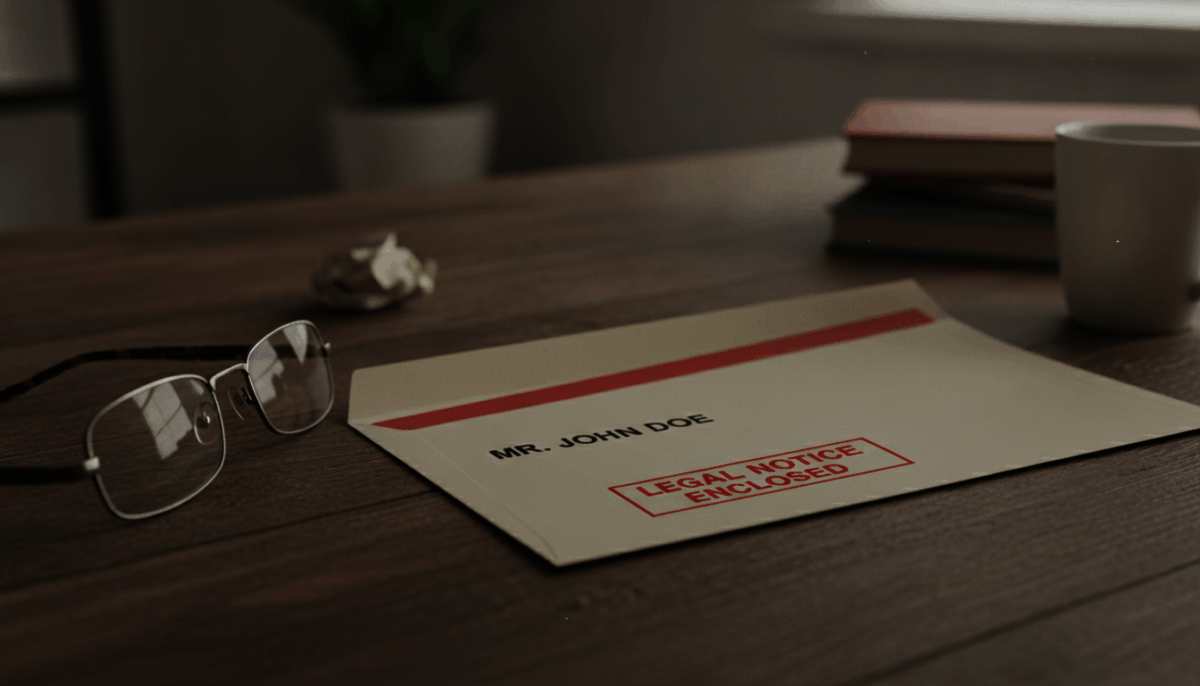
Just when we thought the dust had settled, we received a certified letter in the mail. It was from a lawyer representing Brenda and Mark’s father. My heart sank, not because I was worried about the legal merit of their claim, but because it was such an escalation. They were actually going to sue us to break a lease for a tenant who had nothing to do with them.
I opened the letter with shaking hands. It was a demand for ‘restitution’ for ‘undue burden’ caused by our refusal to accommodate family. It was laughably absurd. It was basically a long-winded way of saying they were throwing a tantrum in a legal format. I called our lawyer, Sarah, and read it to her over the phone. She laughed, a genuine, hearty laugh that put me at ease immediately.
“This is a nothingburger,” she said. “It’s a scare tactic. They know they have no legal standing. They just want to see if they can intimidate you into giving up. If you ignore this, it will go nowhere. If you respond, you just validate their harassment.” I took her advice. I put the letter in a file folder marked ‘Do Not Open’ and went back to my life.
It was the ultimate test. They were hoping that the mere mention of a lawsuit would make us fold. But by now, I had seen the community reaction, I had seen my husband stand up, and I had seen the peace that comes with boundaries. I was no longer afraid of a piece of paper.
“Let them sue. They have no case, and I have no more time for their games.”
— Me, putting the legal threat in a file folder
We never heard from their lawyer again. It was just another example of how far they were willing to go, and how little power they actually had when you simply refused to play along.
Reflections on the Golden Child Syndrome

As time passed, I found myself thinking more about Jason. It wasn’t hatred anymore; it was pity. He had been raised in an environment where he was never taught the value of effort or the reality of consequences. He was a product of his parents’ own insecurities and their need to project an image of perfection. By trying to force us to accommodate him, they were actually stunting him further.
If they had succeeded, Jason would have lived in our guest house for a few months, complained about the neighbors, failed to pay rent, and then expected us to bail him out again. By saying ‘no,’ we weren’t just protecting ourselves; we were actually giving him the space to eventually, hopefully, stand on his own two feet. Though, I don’t think they’ll ever see it that way.
It’s a strange thing, being the ‘villain’ in someone else’s story because you chose to be the hero in your own. But I’ve come to accept it. The labels they assign to us—’selfish,’ ‘cold,’ ‘unsupportive’—are just reflections of their own inability to handle a world that doesn’t cater to their every whim. I’m happy to be the villain if it means I get to be the master of my own life.
We are still low-contact with them. We send cards on birthdays, and we occasionally exchange polite texts, but we no longer attend the Sunday dinners. We have created a new family, one made of friends, colleagues, and neighbors who respect the boundaries we set. It’s a better, healthier, and much more authentic life.
“Being the villain in their story is a small price to pay for being the author of my own.”
— Me, on moving forward
We learned that boundaries aren’t just walls; they’re filters. They keep out the toxic and let in the people and experiences that actually nourish your soul. And that, I think, is the most valuable lesson of all.
Conclusion
Looking back, the entire ordeal feels like a fever dream. It’s hard to believe that a simple request to rent out a guest house could lead to such a massive rupture in our family dynamics. Yet, it also makes complete sense. When you have people who are used to having total control, even the smallest act of independence feels like a declaration of war. By saying no to my in-laws, I didn’t just protect our tenant; I reclaimed our home and our future.
The fallout was difficult, and the isolation was real, but the result was a marriage that is stronger than ever. Mark and I had to decide who we were going to be—the children they wanted us to remain, or the adults we had become. We chose the latter, and I wouldn’t trade that for anything. We are now closer to each other, more confident in our decisions, and much more aware of what we will and will not tolerate.
If you find yourself in a similar situation, remember this: your home is your sanctuary, and your boundaries are your own to set. Do not let anyone, family or otherwise, make you feel guilty for maintaining the integrity of your life. It might cost you in the short term, but the long-term gain of peace and self-respect is priceless.
What about you? Have you ever had to draw a hard line with family over your home or personal boundaries? How did it go, and what did you learn from the experience? Let’s talk about it in the comments below—I’d love to hear your stories and support.
What's your verdict on this dilemma?
Vote below to contribute to the official community consensus.

Have a Dilemma Keeping You Up at Night?
Share your real-life feud, wedding chaos, or relationship crossroads anonymously with our editorial team.
What do you think ?
0 Comments🛡️ Comments are moderated to protect community integrity. Your comment will appear once approved by the editorial team.