
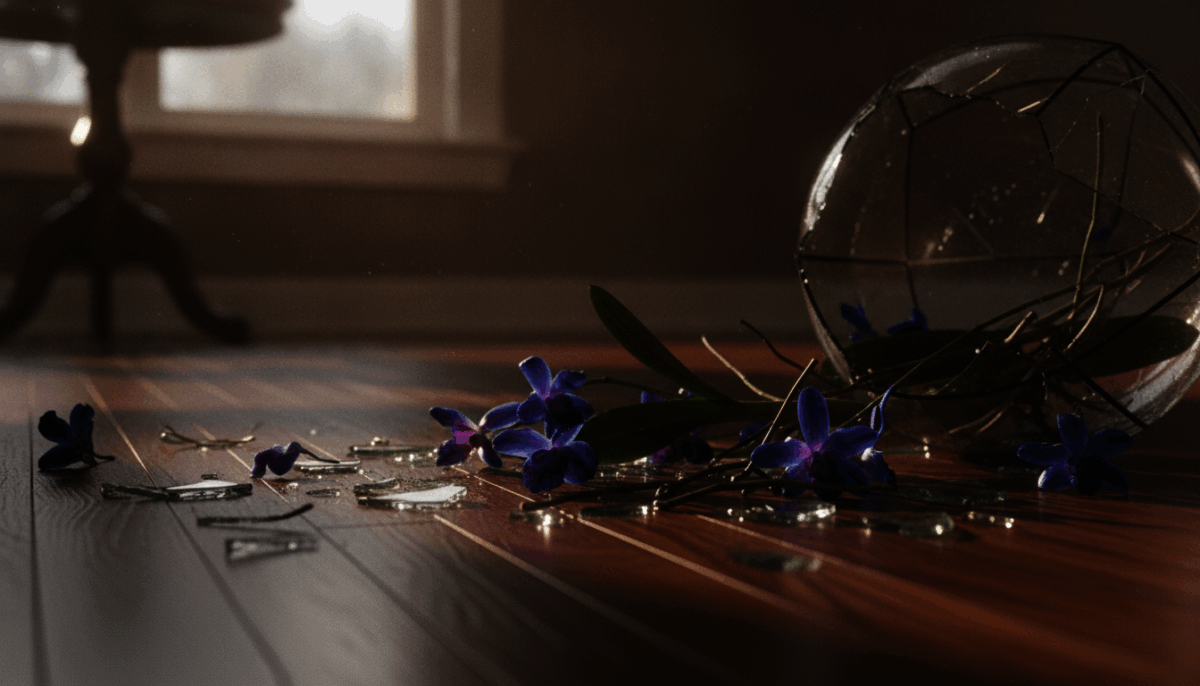
They say that some things cannot be replaced, but when you spend eight years meticulously cultivating a botanical sanctuary, the loss isn’t just financial—it is a piece of your soul being ripped out. My orchid collection wasn’t just a hobby; it was a living, breathing history of my life, a collection of specimens sourced from obscure nurseries and propagated with a level of care that bordered on obsession. Every leaf, every bloom, and every moss-covered stone inside that custom-built glass terrarium represented months of trial, error, and quiet triumph.
My mother-in-law, Brenda, had always made her distaste for my ‘obsession’ known. She viewed my greenhouse-controlled living room as a chaotic mess that detracted from her vision of a ‘proper’ home. But I never imagined that her subtle jabs and passive-aggressive comments about dust and clutter would escalate into an act of calculated destruction. I thought we were at an impasse of differing tastes; I didn’t realize we were in the middle of a power struggle where she felt entitled to play god with my most cherished possession.
The incident occurred on a Tuesday afternoon while I was at work, a day I will never forget. It wasn’t an accident, a slip of the hand, or a clumsy moment with a vacuum. It was a conscious choice, a deliberate act of ‘cleansing’ that left me standing in my living room, weeping over the crushed remains of eight years of patience. The air still smelled like damp earth and ozone, but the life—the beautiful, fragile life I had nurtured through every move and every heartbreak—was gone.
This story isn’t just about plants. It is about the absolute violation of a personal boundary so profound that it shattered the foundation of our family unit. It is about a woman who believes her spiritual whims supersede the respect owed to another human being’s property and labor. And it is about the cold, hard decision to close the door—permanently—on the person who decided that my joy was simply ‘negative energy’ that needed to be purged.
The Eight-Year Cultivation of a Living Legacy
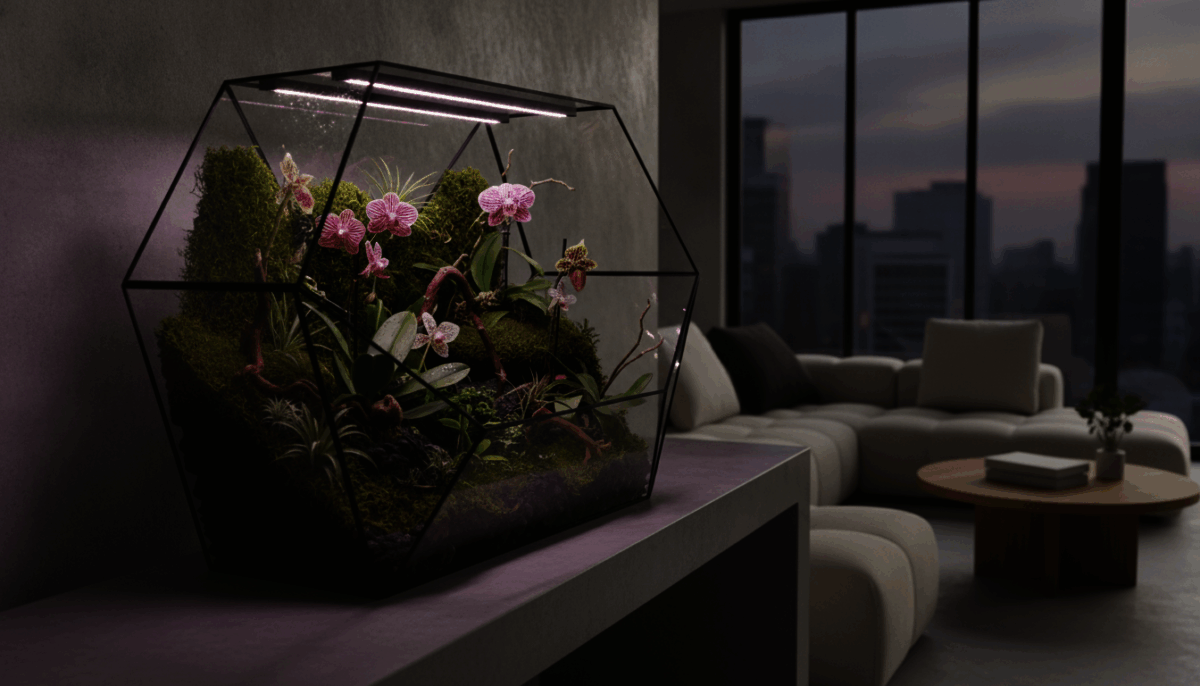
I started my collection in a tiny studio apartment when I was twenty-two, buying a single, struggling Phalaenopsis from a discount bin. It was a recovery project that turned into a lifelong passion. Over the next eight years, that hobby grew into a sophisticated, climate-controlled ecosystem. I invested thousands of dollars into custom lighting, specialized ventilation systems, and rare orchids that were imported from specialized growers in Southeast Asia and South America. It was my meditation, my peace after high-stress days, and my primary creative outlet.
Brenda visited for the first time three years ago, and from the moment she crossed the threshold, she treated my terrarium like a foreign invader. She would hover near the glass, squinting as if she were looking for a crime scene. I remember her standing there, swirling her wine, and making comments that felt like tiny papercuts. She wouldn’t just say she disliked it; she would question the morality of keeping ‘nature in a cage’ while simultaneously demanding I clear out the ‘clutter’ to make room for her family photos.
I kept my cool, even when she would rearrange the small decorative stones or adjust the humidity gauges without asking. I set a firm boundary: this was my space, my work, and my property. I explained to my husband, Mark, that his mother needed to keep her hands off the equipment. He would sigh, promise to talk to her, and then sweep the issue under the rug, claiming she was just ‘trying to be helpful’ or ‘old-fashioned.’ I didn’t know then that her resentment was festering into something much more dangerous.
The tension peaked during the holidays when she suggested we host the family dinner. She tried to move the entire four-foot-long terrarium unit to the guest bedroom to ‘make the room feel more open.’ I caught her in the act, holding a heavy LED light fixture, and told her in no uncertain terms that if she touched the unit again, she would be asked to leave. She looked at me with a terrifying, blank smile and said, ‘You have so much anger toward me for simply wanting to improve your environment. That is why your home feels so heavy.’
Looking back, I realize I was dealing with a person who didn’t understand the word ‘no.’ Every time I defended my boundaries, she interpreted it as an attack on her personhood. She began to treat my house not as my home, but as a project she had been tasked with ‘correcting.’ She started leaving pamphlets on energy clearing and feng shui books on my coffee table, all marked with sticky notes pointing to sections about how ‘stagnant objects hold trapped spirits.’ It was a slow, agonizing descent into madness, but I was too focused on my plants to see the fire coming.
The Tuesday Afternoon Purge
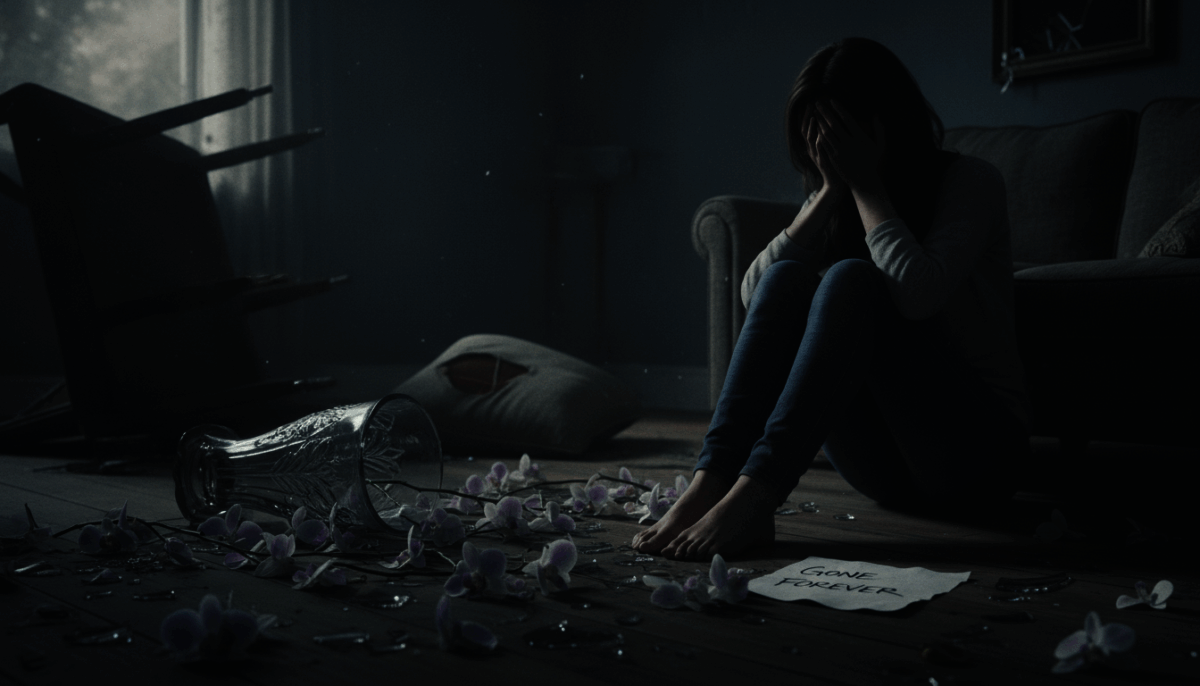
When I returned home that Tuesday, the silence was deafening. The gentle hum of the terrarium’s ventilation fans—a sound that had become the ambient soundtrack of my life—was missing. My heart dropped into my stomach before I even turned the corner into the living room. The glass case was shattered. Not just cracked, but decimated, as if someone had taken a heavy object and hammered it into the base.
The rare orchids—my Blue Vanda, the Ghost Orchid I’d spent two years tracking down, the delicate Cattleya—were lying in the dirt, their stalks snapped and their leaves torn. The soil was scattered across the rug, and the intricate moss carpet I’d spent months cultivating was trampled. It looked like a cyclone had touched down in the middle of my home, a violent, chaotic scene that made no sense.
I sat on the floor, trembling, not wanting to touch anything in case there was a sliver of hope that something could be salvaged. My husband arrived home thirty minutes later. His face went pale when he saw the carnage, but his first instinct wasn’t to look for the perpetrator. It was to look at me, as if he knew exactly who was responsible. I didn’t have to ask; the note was sitting right there on the mantle, written in her distinctive, flowery cursive script.
“I finally did what you couldn’t bring yourself to do, dear. I cleansed the negative energy that was trapping you in this dark, stagnant place. You’ll thank me when the air in this home finally feels light and happy again. I’ve thrown away the dirt and the broken glass. You’re welcome.”
— A handwritten note left by Brenda
I read the note four times, my mind unable to process the sheer audacity. She had not only destroyed my property but had the gall to frame it as a ‘favor.’ I felt a rage so cold and sharp that it physically hurt. I turned to Mark, who was still standing by the door, and the only thing I could manage to say was, ‘Get her out of our lives. Right now. If she isn’t gone by tonight, I am.’
Mark tried to de-escalate. He kept saying, ‘She didn’t mean to hurt you,’ and ‘She truly believes she was helping, even if she’s crazy.’ He tried to touch my shoulder, but I recoiled. The betrayal wasn’t just hers; it was his for letting his mother think she had a key, literal and figurative, to our private life. That evening, the house felt like a tomb, and I knew that the bridge hadn’t just been burned—it had been detonated.
The Confrontation in the Kitchen
I didn’t wait for a slow process of reconciliation. I called Brenda while she was still at her house, her voice chirpy and oblivious. When I asked her why she destroyed my terrarium, she didn’t deny it. Instead, she launched into a lecture about ‘spiritual hygiene’ and how I had been ‘unwilling to listen to the signs of the universe.’ She spoke about the energy in my home as if it were a physical plague she had been tasked with curing.
“You have no idea the amount of burden you were carrying, keeping those rotting things in your living room. I saved you from yourself, and one day, you will realize that my intervention was an act of pure love. Don’t be so dramatic about a few weeds.”
— Brenda, during the phone call
I told her, as calmly as I could, that she was never to set foot on my property again. I informed her that I would be contacting the police to file a report for property damage and that I wanted nothing to do with her or her ‘spiritual’ interventions. She laughed, a high-pitched, dismissive sound that made my skin crawl. She genuinely thought I was playing a game, that I would ‘get over it’ once I cooled down and realized how much better the living room looked without my plants.
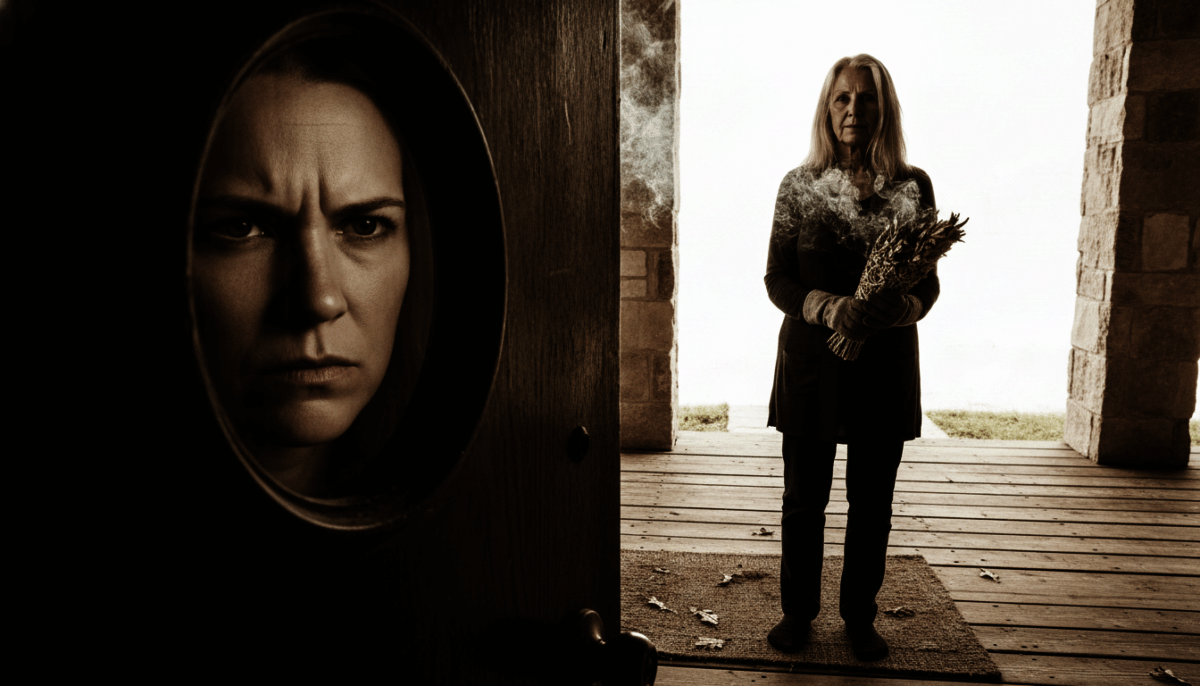
The next day, she showed up at my front door with a box of sage and a bottle of essential oils, ready to ‘bless’ the space where the terrarium had been. I didn’t even open the door. I watched through the peephole as she stood on my porch, knocking with a rhythmic, impatient pace. I had already changed the locks, a decision I made at 3:00 AM while I was sitting in the dark of my kitchen, still smelling the damp soil that had been scrubbed from the carpet.
Mark was caught in the middle, and he was failing miserably. He was trying to mediate between a woman who had committed a crime and a woman who was mourning a loss. He kept telling me, ‘She’s my mother, I can’t just cut her off,’ and ‘Maybe we can just keep her away for a few weeks until things calm down.’ I realized then that my husband didn’t see the destruction of my hobby as a dealbreaker, but rather as a ‘family misunderstanding’ that could be smoothed over with an apology.
I finally broke down when he asked me to consider therapy with her. ‘You want me to go to therapy with the woman who destroyed my life’s work and then told me it was for my own good?’ I asked him. The look on his face was one of genuine confusion, which was perhaps the most painful part of all. He couldn’t grasp that this wasn’t about the plants. It was about the fact that she had violated the most basic tenet of our marriage—that our home was ours, and that she was a guest, not an owner.
The Group Chat Explosion
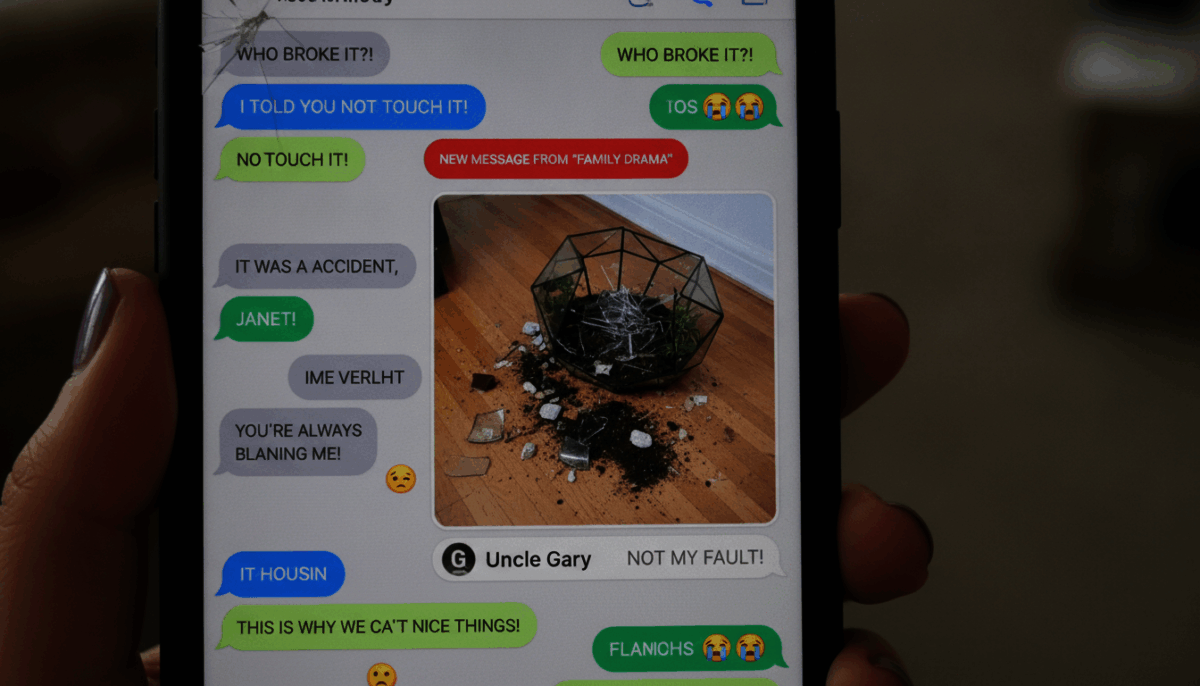
The family group chat, which had been dormant for a week, suddenly erupted on a Saturday morning. Brenda had sent a message to the entire family—my in-laws, my sister-in-law, even distant cousins—explaining how she had ‘performed a much-needed cleansing’ at our home and that I was ‘acting ungrateful’ for her assistance. She framed the destruction of my terrarium as a generous act of motherly concern, omitting the fact that she had broken the glass and killed the plants.
“Just a heads up to the family, I helped the kids clear out some negative energy from their home this week. It was a lot of work, but someone had to do it. Sadly, they are acting quite cold, but I know they will come around once they feel the difference. Love to all!”
— Brenda in the Family Group Chat
The replies started rolling in. Some of them were confused, some were supportive of her ‘efforts,’ and some were clearly trying to stay out of the drama. I felt a surge of adrenaline as I typed my response. I didn’t want to play nice anymore. I didn’t want to protect her reputation or keep the ‘peace’ that had been nothing but a mask for her control issues. I sent a photo of the destroyed terrarium, the broken glass, and the dead orchids directly into the group chat.
The silence that followed was heavy. I followed the photo with a message that stated exactly what happened. I explained that she had broken into our home, destroyed thousands of dollars worth of rare plants, and then left a note claiming it was an act of love. I didn’t use flowery language; I laid out the facts like a police report. The reaction was swift and immediate. My sister-in-law, who had always been the peacemaker, was the first to speak up.
“Brenda, you broke their property? That is not an act of love, that is a crime,” she wrote. Others followed suit. The narrative Brenda had built, the one where she was the benevolent spiritual advisor, crumbled in seconds. The family chat turned into a war zone, with people taking sides and arguing over whether her ‘good intentions’ excused the behavior. I didn’t care about their debate. I had made my point, and for the first time in years, the burden of her behavior wasn’t just on my shoulders; it was in the light for everyone to see.
Brenda started frantically private messaging me, trying to justify her actions, saying that ‘the family doesn’t understand the spiritual stakes.’ I blocked her on every platform. I didn’t need to hear her excuses anymore. I had the truth, I had the evidence, and I had the resolve to walk away. The group chat continued for hours, but I turned off notifications. I realized that the validation of the family didn’t matter; what mattered was that I had finally reclaimed my power.
The Price of ‘Spiritual Cleansing’

A few days later, I sat down with a calculator and a spreadsheet. I needed to know the cost—not just the emotional cost, but the actual, quantifiable financial loss. I went through my receipts, the cost of the rare orchid imports, the specialized lighting, the custom glasswork, and the rare substrate mixtures. The final number was staggering: over $5,400 in direct damages, not counting the countless hours of labor and the years of emotional investment.
I presented the bill to my husband. It wasn’t a request for him to pay it; it was a statement of fact. I told him that I was going to pursue this in small claims court if his mother didn’t pay for the damages. He looked at the sheet, his face pale. He finally understood that this wasn’t a family squabble that would blow over. This was a legal matter involving thousands of dollars and a clear case of property destruction.
| Item | Value | Status |
|---|---|---|
| Rare Orchid Collection | $3,200 | Destroyed |
| Custom Glass Terrarium | $1,200 | Destroyed |
| Specialized Lighting/Tech | $600 | Ruined |
| Substrate/Supplies | $400 | Ruined |
| Total Damages | $5,400 | Claim Filed |
Mark finally stopped trying to play the mediator. He called his mother and told her that if she didn’t pay the full amount for the damages, we would be filing a formal police report and taking her to court. Her reaction was predictable: she cried, she claimed she was being persecuted, and she accused us of being ‘materialistic’ and ‘blind to the spiritual truth.’ She refused to pay a dime, calling it an ‘investment in our future peace.’
We filed the report the next day. The officer who took our statement was professional but clearly tired of family disputes. He told us that since she had a key, it would be difficult to prosecute for breaking and entering, but that the destruction of property was a civil matter we could easily win in small claims. It was a strange, hollow victory. I didn’t want to sue my mother-in-law, but I wanted her to face consequences for her actions. I wanted her to know that her ‘spiritual cleansing’ came with a very real, very heavy price tag.
As the legal process began, the atmosphere in my home shifted. Mark, who had been hesitant to cut ties, began to see his mother for who she really was. He saw the coldness in her refusal to apologize, the lack of remorse, and the way she continued to spread lies about us to the rest of the family. The mask had slipped, and for the first time, he wasn’t looking at the woman who raised him, but at a person who was willing to destroy our peace for her own self-satisfaction.
The Community Weighs In: Reddit’s Verdict

I turned to the internet for sanity. I posted the story on a popular relationship advice subreddit, omitting names but keeping all the painful details. I needed to know if I was crazy. I needed to know if, perhaps, I had been too rigid, if I had been too controlling, if I had somehow invited this destruction. The response was immediate and overwhelming. Thousands of people flocked to the thread, sharing their own stories of boundary-violating in-laws and toxic family dynamics.
“This is not about the plants. This is about your mother-in-law’s desperate need to control your autonomy. She didn’t destroy your terrarium because of ‘negative energy’; she did it because she couldn’t stand the fact that you have something in your life that she doesn’t control. Do not back down.”
— u/PlantParentAdvice (Top Comment, 32.1k upvotes)
The consensus was clear: I was not the villain. The support was validating, but it also highlighted just how common this kind of behavior is. People shared stories of ‘well-meaning’ relatives who had thrown away wedding dresses, ruined family heirlooms, or ‘cleared out’ rooms because they decided the aesthetics didn’t match their vision. It was a bleak look into the prevalence of narcissistic behavior in families, and it made me realize I wasn’t alone.
Some commenters advised me to be careful, warning that people like Brenda rarely stop at one act of destruction. They told me to invest in home security, to change my locks again, and to document every single interaction. They warned me that the legal route would be the only way to get her to respect the boundary because she didn’t possess the empathy to respect it on her own. It was sobering advice, but it gave me a clear path forward.
Others offered advice on the emotional recovery. They told me that the grief I was feeling for my plants was valid, that I shouldn’t minimize it by calling it ‘just a hobby.’ They reminded me that we put our time and our love into these things, and when they are destroyed, we are mourning the time and love we spent, not just the physical objects. I found a small group of online hobbyists who offered to send me clippings and advice, a small but powerful gesture of solidarity that helped me start to heal.
The debate in the comments became a microcosm of the conflict I had been experiencing at home. There were those who argued for reconciliation, who believed that family should always be forgiven regardless of the harm caused. But they were shouted down by the vast majority who understood that forgiveness requires repentance—and Brenda had shown none. The Reddit thread became my anchor, a reminder that I was standing on solid ground and that my boundaries were not just reasonable; they were necessary.
The Final Severing

The final straw didn’t come with a bang, but with a whisper. Two weeks after the incident, I received a letter in the mail. It was handwritten, scented with the same essential oil she had tried to bring to my door. I opened it, expecting an apology or at least a negotiation about the damages. Instead, I found a list of ‘instructions’ for how I should ‘reorganize’ my living room once I finally ‘cleared the remaining negative energy.’
I didn’t even finish reading it. I felt a wave of clarity wash over me. She wasn’t just delusional; she was dangerous. She was never going to apologize because she didn’t believe she had done anything wrong. She was never going to change because she felt that her perspective was the only one that mattered. I handed the letter to Mark, and he didn’t even ask to read it. He just took it from my hand, shredded it, and threw it in the trash.
We went to the courthouse the next day to file for a restraining order. It was a grueling, emotional process, but we were prepared. We had the evidence, the police report, the text messages, and the testimony of the family members who had seen her admissions in the group chat. The judge was stern, but fair. He listened to our story, reviewed the evidence, and granted the order. For the first time in years, the threat was legally neutralized.
Walking out of the courthouse, I felt a weight lift from my chest that I hadn’t realized I was carrying. It was the weight of constantly waiting for the next shoe to drop, of always wondering what she would do next to infringe on our lives. I looked at Mark, and for the first time in a long time, we were truly a team. We had navigated the crisis, we had faced the family, and we had drawn a line that could not be crossed.
I don’t think I’ll ever be able to fully replace the terrarium. The rare orchids are gone, and the eight years of growth cannot be reclaimed in an afternoon. But I have realized that the value of those plants wasn’t in the glass or the moss—it was in the peace of mind they gave me. And as I walked away from the courthouse, I realized that I had finally found a different kind of peace. A peace that didn’t come from a terrarium, but from the strength of my own boundaries.
The Rebuilding Process
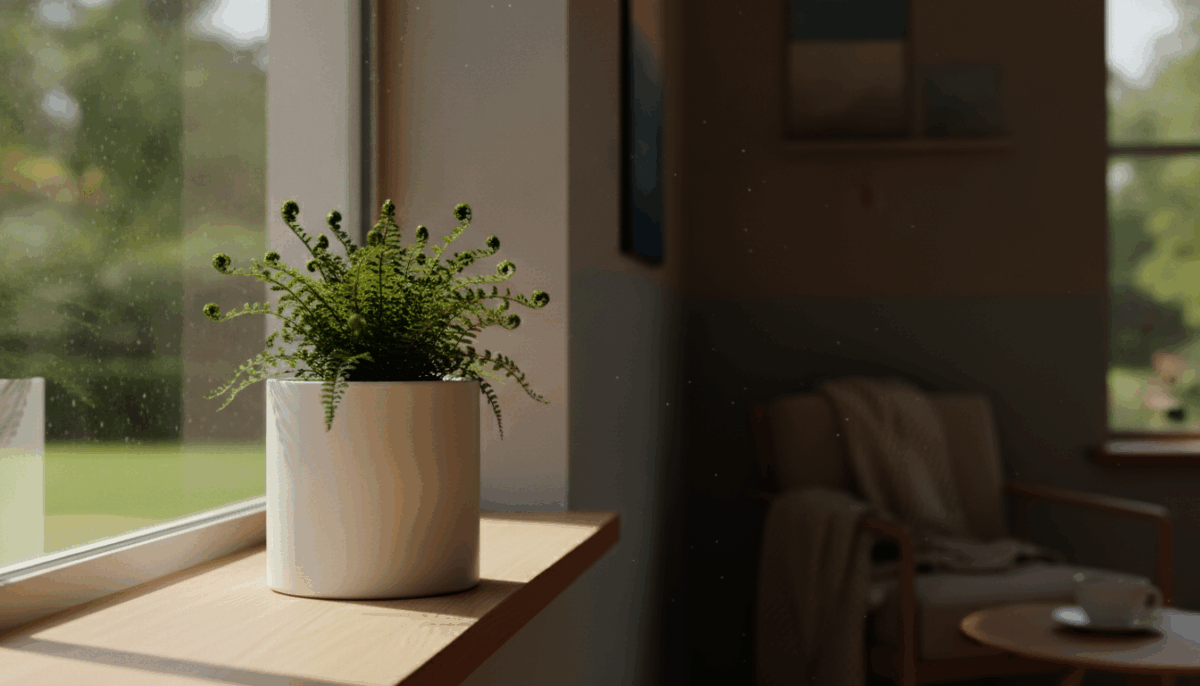
Rebuilding didn’t happen overnight. It was a slow, deliberate process of reclaiming my space and my peace. I didn’t buy a new terrarium immediately. I needed time to let the anger and the sadness dissipate, to mourn the loss of something I had loved so deeply. I spent the next few months clearing out the last remnants of the old setup, scrubbing the floors until they were clean, and painting the walls a color that made the room feel like mine, and mine alone.
I eventually started a new, much smaller garden. It wasn’t the massive, professional-grade setup I had before, but it was enough. I started with a single, resilient fern and a small orchid that I found at a local farmer’s market. I didn’t rush it. I didn’t obsess over the climate control or the rare species. I just enjoyed the act of caring for something living again, a quiet, meditative process that helped me reconnect with the joy of the hobby.
Mark has been incredibly supportive throughout this time. He took over the responsibility of dealing with the family, keeping them updated on our life but also strictly enforcing the ‘no-Brenda’ policy. He apologized for his initial hesitation, and we spent hours talking about our boundaries, about how we needed to protect our home from any future intrusions. It was a painful conversation, but it was necessary for us to move forward.
The rest of the family has been a mixed bag. Some of them have been incredibly supportive, reaching out to check on us and offering their own stories of boundary-setting. Others have drifted away, either because they still side with Brenda or because they find our ‘drama’ too exhausting. I don’t blame them. I’ve come to realize that not everyone is going to understand our choices, and that’s okay. The only people whose opinions matter are the ones who respect our boundaries.
Today, my living room is quiet and peaceful. There is no tension, no hovering, no fear of the next ‘cleansing.’ I have a new, smaller terrarium, and it’s beautiful in its own way. It’s a reminder of what I lost, but more importantly, it’s a reminder of what I kept: my autonomy, my self-respect, and my marriage. I don’t think I’ll ever forget what Brenda did, and I don’t think I ever want to, because it was the moment that defined my path toward a stronger, more independent life.
Lessons in Radical Self-Preservation
If there is one thing I’ve learned from this, it is that you cannot negotiate with someone who does not respect your basic humanity. We try so hard to be ‘good’ family members, to be accommodating, to keep the peace, and to give people the benefit of the doubt. But sometimes, that effort is just a way of enabling behavior that is fundamentally destructive. I had spent years trying to make Brenda feel ‘included’ and ‘respected’ when she had no intention of reciprocating those feelings.
Setting a boundary isn’t a declaration of war, even if the other person acts like it is. It is simply a statement of what you will and will not tolerate. If someone treats that boundary as an insult, it is not your responsibility to soothe their ego. It is your responsibility to maintain the boundary, no matter how much they kick, scream, or try to guilt-trip you into submission. The peace you gain on the other side is worth every bit of the initial conflict.
I’ve also learned that the most important relationship in my life is the one I have with my spouse. We were tested in a way I never imagined, and while we stumbled at first, we found our footing together. We learned that we have to be a united front, that we have to protect each other from outside influences, and that our home is a sanctuary that we get to define. That realization has made our marriage stronger than it has ever been.
Lastly, I’ve learned that the things we lose—whether they are hobbies, belongings, or even relationships—do not define us. They are just chapters in our lives. The destruction of my terrarium was a tragedy, but it was also a catalyst for change. It forced me to look at my life, my home, and my relationships through a clear, honest lens. And what I saw, once I cleared away the debris, was a life that was finally, truly my own.
If you are in a similar situation—if you are dealing with someone who thinks their whims are more important than your boundaries—don’t wait for them to change. They won’t. Protect your space, protect your peace, and don’t be afraid to close the door. It might be the hardest thing you ever do, but it will also be the most liberating.
Reflecting on the Aftermath
It has been six months since I last spoke to Brenda. The court order is still in effect, and the silence from her end is as deafening as the noise she used to create. I still feel a twinge of sadness when I look at the space where the large terrarium used to be, but it’s becoming less frequent. I am learning to appreciate the new growth, both in my garden and in my own life.
I’ve also had to deal with the inevitable flying monkeys—those family members who think it’s their job to ‘bridge the gap’ and tell me that ‘life is too short’ to hold grudges. I’ve developed a standard response for them: ‘I respect your choice to have a relationship with her, but I have chosen to prioritize my mental health and my home. Please do not talk to me about her.’ It’s firm, it’s polite, and it leaves no room for debate.
The impact of this experience has rippled through every part of my life. I’m more confident in my decision-making, more assertive in my communication, and much more protective of my personal time. I’ve realized that the ‘people-pleasing’ habits I had were actually a form of self-sabotage, a way of minimizing my own needs to make others comfortable. That is a luxury I can no longer afford.
I still love orchids. I still love the process of nurturing life. But I’ve learned that my love for these things doesn’t have to be a spectacle. It doesn’t have to be a ‘collection’ that impresses others or takes up space in a way that others can judge. It’s for me, and that is enough. I’ve found a renewed passion for my work, for my hobbies, and for the simple, quiet joy of a home that is truly my own sanctuary.
The journey from the destruction of my terrarium to this place of calm has been long and difficult, but I wouldn’t change it. It has taught me the value of my own voice and the necessity of my own boundaries. It has shown me that the people who belong in my life are the ones who respect the space I’ve built, not the ones who want to tear it down. And that is a lesson that is worth more than any collection of rare plants in the world.
Conclusion
This story is a stark reminder that our homes, our hobbies, and our personal boundaries are sacred. When we allow others to infringe upon these areas under the guise of ‘help’ or ‘spirituality,’ we risk losing the very things that make us whole. The destruction of my terrarium was a painful turning point, but it was also the catalyst for a much-needed transformation.
Ultimately, the battle wasn’t against a mother-in-law or a set of plants; it was a battle for my own autonomy. By standing up for myself and enforcing boundaries, I didn’t just lose a collection; I gained a clearer, more authentic life. The process of rebuilding has been about more than just replacing what was lost—it has been about defining what I am willing to accept and who I am willing to let into my inner circle.
What about you? Have you ever had to draw a hard line with a family member who violated your trust, or have you ever had to walk away from a toxic dynamic to save your own peace of mind? Share your thoughts and experiences in the comments below—let’s keep the conversation going about the importance of boundaries in our most personal relationships.
What's your verdict on this dilemma?
Vote below to contribute to the official community consensus.

Have a Dilemma Keeping You Up at Night?
Share your real-life feud, wedding chaos, or relationship crossroads anonymously with our editorial team.
What do you think ?
0 Comments🛡️ Comments are moderated to protect community integrity. Your comment will appear once approved by the editorial team.