

Giving birth is supposed to be the most vulnerable, private moment of a woman’s life. It is a time for focus, endurance, and the quiet intimacy of bringing a new soul into the world. Yet, for some, the sanctity of the labor room becomes a theater for family entitlement, turning a medical event into a performance piece. When I found out that my husband’s parents were not just planning to ‘be there,’ but were actively coordinating a secret, paid-access livestream for extended relatives, my perspective on our marriage shifted forever.
My relationship with my in-laws, Sarah and David, had always been a tightrope walk. They are the kind of people who view every family milestone as an extension of their own social standing. From the engagement party that turned into a campaign fundraiser to the gender reveal that felt like a corporate branding launch, I had learned to ignore their performative nature. But this was different. This was my body, my medical data, and my child’s first moments of life.
The realization didn’t come from a confession. It came from a misplaced tablet left on my coffee table during a Sunday brunch. I had only meant to check the weather, but the open screen displayed a sophisticated interface—a private video streaming platform—and a list of ‘VIP Family Subscriptions.’ My heart dropped as I realized the scale of what they had orchestrated behind my back.
In the following narrative, I detail how I uncovered their scheme, the explosive confrontation that followed, and the agonizing decision to ban them from the hospital entirely. This is a story about the intersection of social media vanity and fundamental human boundaries, and why sometimes, protecting your peace means burning bridges you thought were permanent.
The Glow of the Tablet Screen
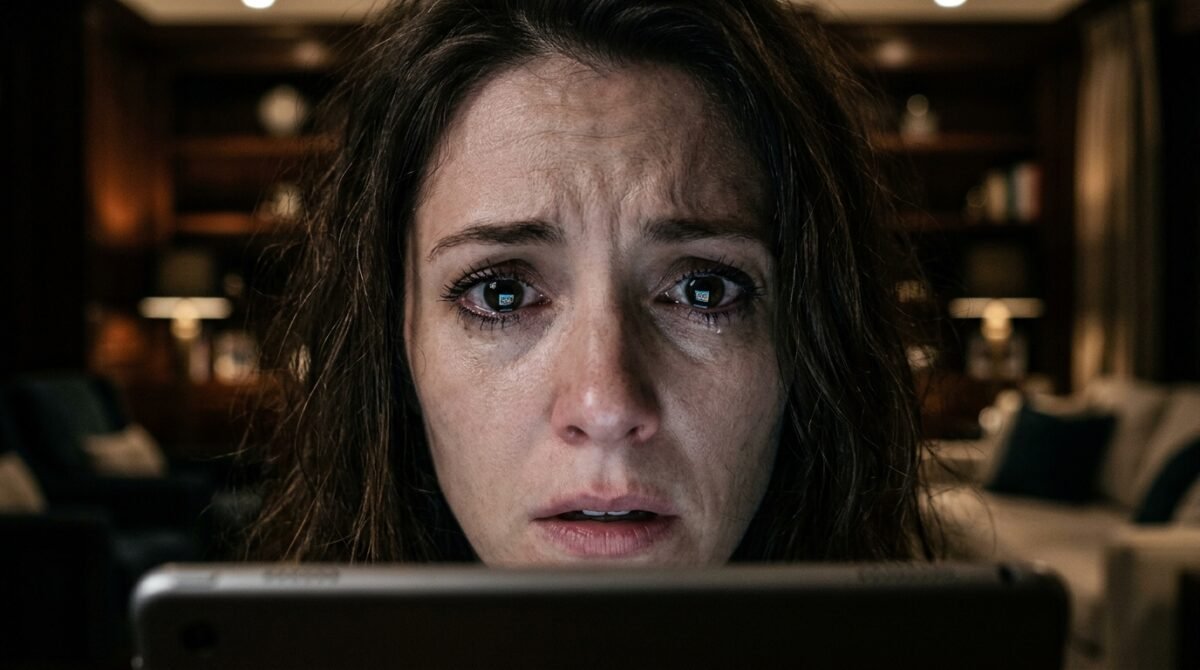
It was a quiet Sunday afternoon, the kind where the house felt heavy with the unspoken expectations of my husband’s parents. Sarah and David had been visiting for the weekend, ‘helping’ with the nursery preparations, which mostly involved them rearranging my furniture and commenting on the color palette. When they stepped out to grab coffee, they left their iPad on the glass coffee table. It was glowing, a notification bubble hovering over the screen like a digital target.
I wasn’t looking for trouble. I simply reached over to turn off the screen so the light wouldn’t distract me while I read. But as my hand moved, the screen unlocked. There it was, bold and clear: ‘Project Delivery: Stream Schedule.’ My eyes traced the text, and I felt a cold shiver run down my spine. It was a dashboard. There were tabs for ‘Camera Angles,’ ‘Audio Sync,’ and, most sickeningly, ‘Donor Tiers for Family Access.’
I felt my breath hitch in my throat. I clicked on one of the tabs. It was a list of names—my aunts, uncles, coworkers of theirs—each assigned a ‘price’ for access to the live feed of my labor. The audacity was so profound I couldn’t even speak. I sat there, paralyzed, watching the cursor blink on a document titled ‘Strategic Monetization of the First Breath.’ The invasion was so thorough that I felt like a specimen in a laboratory rather than a mother-to-be.
I didn’t wait for them to return. I took photos of every single screen on that tablet. I knew if I confronted them without proof, they would gaslight me into oblivion. My hands were shaking so violently that I almost dropped the device. When I heard the front door open, I quickly set the tablet back exactly where I found it, retreated to the bathroom, and locked the door. I needed to breathe, to think, to protect what little sanity I had left.
“I couldn’t believe my eyes. They weren’t just planning to watch; they were selling tickets to my medical procedure like it was a Pay-Per-View boxing match. It felt like I was being auctioned off.”
The sounds of their laughter in the kitchen hit me differently now. They were planning my child’s birth as if it were a reality show, completely detached from the physical agony and raw emotion of the process. I realized then that they didn’t see me as a person. I was merely a vessel for their social capital. The betrayal was so deep it made me physically nauseous.
The Kitchen Table Confrontation

When I finally emerged from the bathroom, the air in the kitchen felt electric. Mark, my husband, was pouring tea for his mother, oblivious to the fact that his parents had spent the morning planning to commodify his child’s birth. I walked to the table and pulled up a chair. I didn’t say a word. I just placed my phone on the table, displaying the photos I had taken of their secret portal. The room went deathly silent.
Sarah dropped her teaspoon, the metal clinking loudly against the porcelain. David’s face shifted from casual indifference to a mask of practiced calm. Mark looked at the phone, then at his parents, his brow furrowing in confusion. ‘What is this, Mom?’ he asked, his voice low. Sarah immediately went on the offensive, her eyes darting between me and her son, looking for a way to twist the narrative.
“It’s not what it looks like, darling,” Sarah stammered, her voice dripping with artificial sweetness. “It’s just a way for the extended family to feel included. We knew you wanted privacy, so we made it a private, secure link. It’s for family! It’s a bonding experience.” She tried to reach for my hand, but I recoiled as if burned. The audacity of her framing this as ‘bonding’ was breathtaking.
I stood up, my voice surprisingly steady given the adrenaline coursing through my veins. “You aren’t bonding. You’re selling access. You’re putting a price tag on a medical procedure. You have cameras planned, lighting setups, and a list of people who have paid to watch me in pain. You are officially banned from the hospital. Not just from the room, but from the building. If you show up, I am calling security.”
“You are not guests anymore. You are predators. Do you have any idea how illegal this is? You are recording a medical procedure without consent.”
Mark looked devastated, caught between his loyalty to his parents and the reality of their gross boundary violation. He looked at the iPad on the table, then back at me. “Mom, is it true? Did you charge people for this?” he asked, his voice breaking. The silence that followed was the sound of a family unit collapsing in real-time. There were no excuses left to offer, only the cold, hard evidence on the table.
The Fallout in the Family Chat
The fallout was swift and brutal. Within an hour of Sarah and David leaving our house, our family group chat started pinging incessantly. It was a digital assault. My sister-in-law, who I thought was an ally, began sending messages echoing Sarah’s sentiment: that I was being ‘selfish’ and ‘hormonal’ for denying the family the chance to ‘celebrate’ the baby’s arrival.
I watched as the messages piled up. It was a masterclass in manipulation. They weren’t acknowledging the secret livestream or the money; they were framing my boundary as an act of hostility. They called me ‘controlling’ and ‘unhinged,’ suggesting that my pregnancy hormones had clouded my judgment. It was a classic attempt to rewrite the history of what happened only hours before.
“We just wanted to share the joy! You are being so cold-hearted. Everyone is so excited, and you’re acting like we did something criminal. Can’t you just let people be happy for once?”
— Sister-in-Law (Family Group Chat)
I didn’t engage in the group chat. I knew that anything I wrote would be screenshotted and used against me. Instead, I took a screenshot of the entire thread and sent it to Mark, who had gone to his home office to process the situation. I needed to know whose side he was on. The divide was widening, and I was being cast as the villain in a story where I was the only victim.
The pressure from the extended family was mounting. I received phone calls from aunts and cousins I hadn’t spoken to in years, all asking why I was being so ‘difficult.’ They were clearly fed up with the narrative being spun by Sarah. It was exhausting. I felt like I was fighting a war on multiple fronts while trying to prepare for the biggest physical challenge of my life.
Finally, I muted the group chat and turned off my phone. I realized that my in-laws had been preparing this narrative for weeks, grooming the rest of the family to see me as the irrational, hormonal obstacle to their ‘joy.’ It was a calculated campaign of character assassination, and it was working perfectly.
Mark’s Ultimatum
Mark finally emerged from his office as the sun was setting. He looked older, tired, and deeply conflicted. He sat beside me on the couch and took my hands. He didn’t defend his parents, which was a start, but he didn’t fully support my stance on the ‘total ban’ either. He suggested a compromise: they could come, but only after the baby was born, and only if they deleted all the streaming equipment and apologized.
I looked at him, and for the first time, I felt a genuine sense of distance. “Mark, they didn’t just make a mistake. They planned this. They created a business model out of our trauma. You think a simple apology is going to stop them? They don’t respect us. They don’t respect me. If you let them in, you are telling them that their actions have no consequences.”
The argument lasted for hours. He kept talking about ‘family harmony’ and the ‘importance of grandparents,’ while I kept talking about safety, privacy, and basic human respect. It was a fundamental clash of values. I realized then that Mark had been conditioned his entire life to accept his parents’ boundary-stomping behavior as ‘love.’ He couldn’t see the toxicity because he had been breathing it in since birth.
“It’s not just about the streaming, Mark. It’s about the fact that they looked at our life and saw a product to be sold. If you can’t see why that’s a dealbreaker for me, then I don’t know how we’re going to raise a child together.”
He finally went silent. He looked at the floor, processing the weight of my words. The silence was heavy, but it was honest. For the first time, he wasn’t trying to mediate or justify. He was just listening. It was the most important moment in our marriage to date, a crossroads where we either chose each other or chose the expectations of his parents.
The Reddit Verdict
While waiting for the next step, I turned to the only place where I could get an objective perspective: an anonymous forum. I laid out the entire story, from the tablet discovery to the group chat harassment. I was expecting a mix of responses, but the sheer volume of support caught me off guard. Within hours, the post had gone viral, with thousands of people validating my anger and warning me about the legal implications of the in-laws’ actions.
“OP, you need to go NC immediately. This is not just ‘overbearing.’ This is a massive violation of privacy and potentially illegal under medical privacy laws. They don’t just want access; they want control. Do not let them near that hospital.”
— u/LegalEagleEye (Top Comment, 32.4k upvotes)
“The fact that your husband is even suggesting a ‘compromise’ shows how deep the FOG (Fear, Obligation, Guilt) goes. He needs therapy, and you need to prioritize your health. Do not give them a second chance at the hospital. That environment needs to be 100% safe for you.”
— u/BoundariesQueen (18.2k upvotes)
Reading these comments was like a weight being lifted off my chest. I wasn’t crazy. I wasn’t being ‘hormonal.’ I was reacting to a gross, predatory invasion of my autonomy. The community provided me with talking points to use with Mark and resources for how to talk to hospital security. They even warned me about the potential for his parents to show up ‘by surprise’ at the hospital, suggesting I register as a private patient.
It was validating to see that others had dealt with similar ‘social media obsessed’ relatives. I felt less alone. The consensus was clear: the hospital room was a sanctuary, and my in-laws had forfeited their right to enter it the moment they viewed my labor as a product. The advice was unanimous: prioritize the baby, prioritize the mother, and let the in-laws deal with the fallout of their own choices.
Registering as a Private Patient
Following the advice of the community, I called the hospital the next morning. I spoke to the head of labor and delivery, explaining the situation without getting into the gory details. I told them I had family members who were attempting to gain unauthorized access and record private medical procedures. The hospital staff were incredibly supportive; they treated this with the seriousness it deserved.
They walked me through the ‘private patient’ registration process. My name would be removed from the public directory, and the nursing staff would be alerted that under no circumstances were Sarah and David to be allowed past the reception desk. I felt a profound sense of relief as I signed the documents. It was the first time I felt like I had regained control over my own birth experience.
When I told Mark what I had done, he seemed shocked by the intensity of the hospital’s response, but he didn’t fight me on it. He actually looked relieved. It was as if having the hospital enforce the boundary took the burden off his shoulders. He didn’t have to be the ‘bad guy’ who told his parents ‘no’; the institution would be the neutral, immovable force that blocked their path.
We spent the evening discussing how we would handle the actual delivery. We agreed that Mark would be my sole support person. No visitors until we were home and ready. No photos, no social media, no updates to the extended family until we were good and ready. It was a new set of rules, one that put us—the new parents—at the center of the experience, not the grandparents.
“I am not doing this for them anymore. I’m doing this for us. I’m done being an actor in their show. From here on out, our life is for us, not for their audience.”
The night before the induced delivery date, we turned off our phones. The house was quiet. For the first time, I felt ready. The fear of their interference had been replaced by a quiet, determined focus. We were a team, and we had drawn our line.
The Hospital Lockdown

The day of the delivery arrived with a cold, sharp clarity. The hospital was a fortress, and I felt safe within its sterile walls. The nurses were protective, checking my badge and ensuring the confidentiality of my chart. When the inevitable occurred—Sarah and David showing up at the front desk with flowers and balloons, looking like they were ready to host a gala—the security staff were ready.
I was in the room, focusing on my breathing, when I heard the faint sound of voices outside. It was muffled, but I recognized the tone of Sarah’s voice, demanding to see her son. Then, the firm, calm voice of a security guard cut through the noise. “I’m sorry, but you are not on the visitor list for this room. You need to leave the premises immediately.”
I didn’t flinch. I stayed focused. Mark held my hand, his eyes locked on mine. He didn’t move toward the door. He didn’t try to intervene. He was fully present, right there with me. The struggle outside lasted only a few minutes before the voices faded away. My heart rate stayed steady. The intrusion had been thwarted by the systems we put in place.
The nurses were amazing. They kept the environment quiet and controlled. They made sure no one else tried to sneak in, and they were diligent about protecting my privacy. It was everything a birth experience should be—sacred, private, and focused on the arrival of our child. There were no cameras, no livestreams, no audience. Just us, the medical team, and the miracle of birth.
“Your room is secure. No one is getting in, and no one is even going to know you’re on this floor. Focus on the baby. We’ve got the door.”
— Nurse Sarah (L&D Staff)
When my baby was finally placed on my chest, I felt a wave of pure, unadulterated joy. There was no pressure to take a photo for the grandparents, no rush to post an announcement. Just a quiet moment of connection that was entirely, 100% ours. I realized then that the sacrifice of cutting off my in-laws was worth every ounce of peace I was feeling in that moment.
The Aftermath and The Silence
We stayed in the hospital for three days, and the silence from the outside world was blissful. We didn’t answer texts. We didn’t check social media. We just existed in a bubble of new parenthood. When we finally returned home, we were exhausted but happy. Our house felt like a sanctuary, free from the prying eyes and the manipulative schemes of the past.
Of course, the messages didn’t stop. They just changed tone. Now, instead of ‘excited,’ they were ‘hurt.’ They sent long, guilt-ridden emails about how ‘broken’ they were that they weren’t invited to the hospital, and how ‘unfair’ it was that they hadn’t seen their grandchild. They were playing the long game, trying to guilt us into letting them back into our lives without ever addressing the original sin of the livestream.
Mark and I sat down and drafted a single, formal response. We didn’t argue. We didn’t defend ourselves. We simply stated our boundaries clearly and concisely. We explained that their behavior regarding the secret livestream had destroyed our trust, and until that trust was rebuilt—which would require professional help and a sincere acknowledgment of their actions—there would be no contact with us or the baby.
“We have decided to take space for our family. Your actions regarding the planned livestream were a violation of our trust and privacy. We require time and professional space to heal. Please respect our need for no contact at this time.”
They didn’t respect it, of course. They showed up at our house twice, but we didn’t open the door. We had a camera system now, and we simply watched them stand on our porch for ten minutes before they left. It was a painful experience, but it was necessary. I was setting the precedent for my child: that respect is non-negotiable and that boundaries are to be enforced, not requested.
Professional Support for the New Norm
It became clear that Mark needed support to break free from his parents’ influence. He started seeing a therapist who specialized in family enmeshment, and the breakthroughs were significant. He began to realize how many of his own insecurities were tied to his parents’ expectations. He started to see their ‘love’ for what it was: a conditional, transactional form of control.
For me, the therapy was about healing from the trauma of the betrayal. I realized that my anger wasn’t just about the streaming; it was about the years of being treated as an accessory. I learned to let go of the need to be ‘liked’ by them. I didn’t need their approval. I only needed my own validation and the health of my new, small family.
We grew closer than we had ever been. We were building a home based on our own values, not on the scripts his parents had written for us. We were learning to communicate without the interference of third parties, to handle conflict without external pressure. It was a slow process, but it was incredibly rewarding. We were becoming the parents we wanted to be.
The extended family eventually settled down, too. Once they realized that we weren’t going to cave, the pressure faded. Some of them even reached out to apologize, admitting that they had been manipulated and that they didn’t know the full story. It was a small victory, but it meant that we were finally able to define our own relationships on our own terms.
“I finally understand why you were so hurt. It wasn’t just the event; it was the entire history of how they’ve treated you. I’m sorry I didn’t see it sooner.”
— Mark (During a therapy session)
I feel empowered. I look at my child, and I know that I made the right choice. I protected them from a life of being a social media prop, and I protected myself from a life of being a puppet. We are free.
Lessons in Radical Boundary Setting
Looking back, the most important lesson I learned is that you do not owe anyone access to your life, especially your medical or personal milestones. We live in an era where social media encourages us to share everything, but that pressure is false. Your life belongs to you. Your health belongs to you. Your baby belongs to you. You are not obligated to entertain the world.
Radical boundary setting is not easy. It comes with guilt, it comes with conflict, and it comes with the loss of relationships you thought were permanent. But the trade-off is your autonomy. It is the ability to walk through your day knowing that you are in control of your own narrative. It is the peace of mind that comes from knowing you are protected.
If you find yourself in a situation where your boundaries are being ignored, do not wait for the other person to understand. They may never understand. They may never agree with you. Your job is not to convince them; your job is to enforce your safety. Protect your space with everything you have, and don’t feel guilty for prioritizing your well-being.
Our journey is far from over. We are still navigating the low-contact, potentially no-contact, reality with his parents. But for now, we are happy. We are healthy. And most importantly, we are whole. The secret livestream is a thing of the past, a cautionary tale that we tell ourselves to remember why we chose to stand our ground.
“Your peace is more valuable than their approval. Never apologize for protecting your sanity, your family, or your boundaries.”
To those reading this who are struggling with overbearing in-laws: You are not alone. There is a community that understands, and there is a way out. Trust your instincts. If something feels wrong, it is wrong. Don’t let anyone guilt you into ignoring your own truth.
Conclusion
This experience fundamentally reshaped the way I view familial love. True love is not about control, spectacle, or monetization; it is about respect for the individual. My in-laws may have thought they were ‘celebrating’ me, but in reality, they were merely celebrating their own ability to influence and consume my life. By stepping away, I finally learned what it means to own my own story.
The path forward is one of healing and careful distance. We have decided to keep our lives private, focusing on the growth of our child and the strength of our marriage. While the anger has faded, the resolve remains. We are no longer willing to sacrifice our comfort for the sake of ‘keeping the peace’ when that peace was built on our own suppression.
What about you? Have you ever had to draw a line in the sand with family members who treat your boundaries as suggestions? How did you handle the pressure to conform? Let’s talk in the comments below. Do you think I was too harsh, or was a total ban the only logical response to such a deep violation of trust?
What's your verdict on this dilemma?
Vote below to contribute to the official community consensus.

Have a Dilemma Keeping You Up at Night?
Share your real-life feud, wedding chaos, or relationship crossroads anonymously with our editorial team.
What do you think ?
0 Comments🛡️ Comments are moderated to protect community integrity. Your comment will appear once approved by the editorial team.