
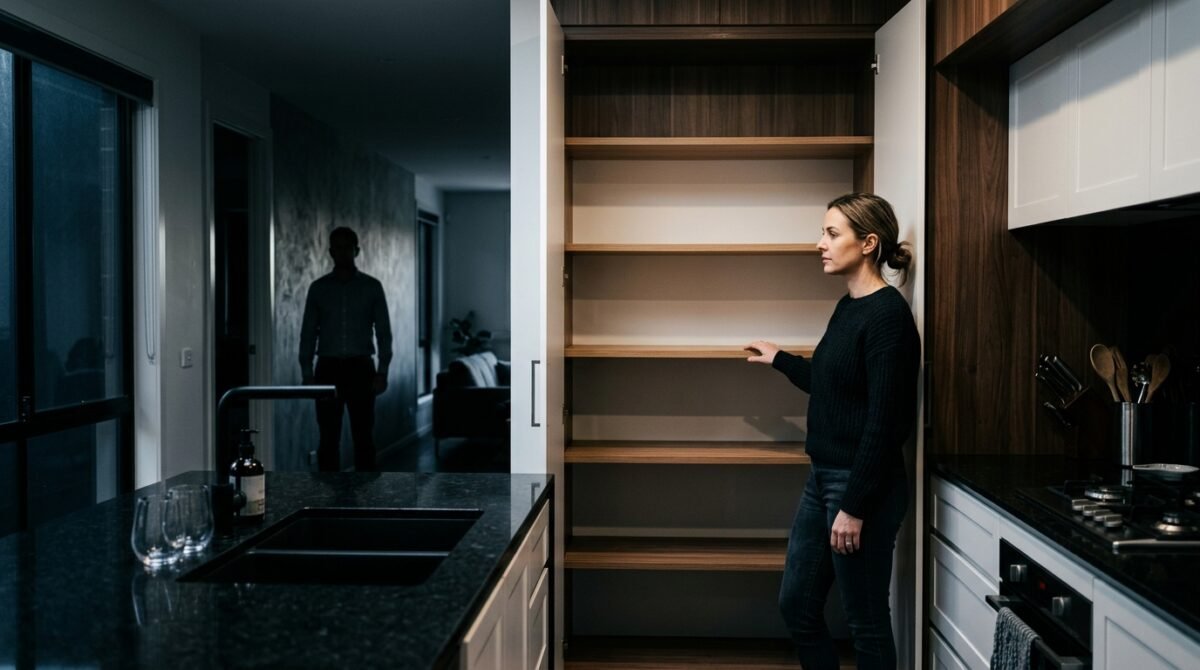
Marriage is built on compromise, communication, and mutual respect for one another’s well-being. But what happens when your partner decides that their personal philosophy trumps your physical health? For years, I have managed a complex autoimmune condition that requires a highly specific, anti-inflammatory diet. It is not a choice, nor is it a trend; it is the difference between chronic pain and living a functional life. My husband, Mark, has always been vocal about his dislike for ‘restricted eating,’ often referring to my groceries as ‘expensive rabbit food’ and ‘hippie nonsense.’ I assumed his grumbling was just an annoyance I could navigate, until the day I returned home to find my shelves bare.
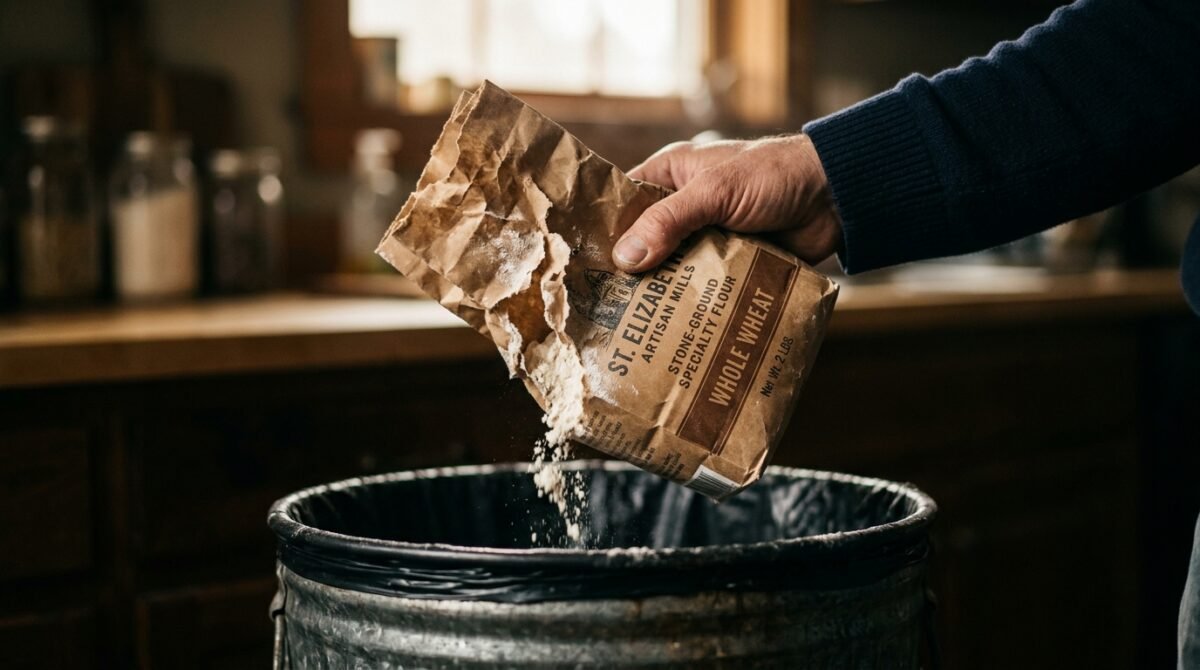
It wasn’t just a disagreement; it was an active intervention that violated the sanctity of my home and my health. Every jar of coconut aminos, every bag of grain-free flour, and every specific supplement I rely on had been unceremoniously dumped into the trash. The kitchen, once a sanctuary of safety for my body, felt violated. Mark stood there, arms folded, expecting a ‘thank you’ for ‘helping me break my cycle of obsession.’ He thought he was curing me. He didn’t realize he had just declared war.
This wasn’t about weight loss or aesthetic vanity. This was about autonomy. When someone decides that their judgment of your life is superior to your own, the relationship dynamic shifts into something much more dangerous. I needed a way to show him exactly what my life looked like without the support he so casually destroyed. I didn’t want a divorce, but I needed him to understand the gravity of his actions. I needed him to experience the labor he took for granted.
So, I made a choice. For the next thirty days, I would provide exactly what he had provided for me: nothing. No cooking, no grocery shopping, no meal prep, and certainly no shared dinners. If he wanted to ‘cure’ my diet, he could start by managing his own nutritional survival. This is the story of how a single act of arrogance led to a month of silence, struggle, and a necessary, painful realization about the person I had married.
The Day the Pantry Went Dark
The realization hit me the moment I stepped into the kitchen. The hum of the refrigerator seemed louder, and the silence in the apartment felt heavy. I walked over to the pantry, pulling open the double doors where I kept my specialty items. Usually, the sight of neatly labeled jars and health-conscious staples gave me a sense of peace. Today, there was only empty wire shelving. My heart sank, then raced with a cold, sharp anger.
I checked the trash bin under the sink. There, amidst the coffee grounds and eggshells, lay the ruined remains of my life. Expensive almond flour, soaked in dish soap. My bulk supply of organic bone broth, spilled and discarded. It was a calculated, deliberate act of destruction. My hands trembled as I took a picture of the carnage. This wasn’t a mistake. This was a message.
“I cleaned it out, honey. You’re welcome. Maybe now you can finally stop obsessing over this ‘diet’ and just eat normal food like a regular person. I bought us burgers for dinner.”
— Mark, walking in with a smirk
I looked at him, truly looked at him, for the first time in months. He seemed genuinely pleased, almost paternal, as if he had corrected a child’s tantrum. The audacity was suffocating. He didn’t see the health repercussions; he only saw his own annoyance at having to witness my ‘lifestyle.’ I didn’t scream. I didn’t cry. I simply walked into the bedroom and shut the door, leaving him standing in the kitchen with his grease-stained burger bag.
That night, I didn’t eat. I couldn’t. I spent the hours mapping out a plan. If he wanted to control my food, he could own the responsibility of food entirely. I calculated the costs of the items he destroyed: nearly three hundred dollars in specialty ingredients. I realized that my silence wouldn’t be enough. I needed to move beyond words. I needed to force him to see the labor he had invalidated.
The Terms of the New Arrangement

The next morning, the house felt like a minefield. I walked past him without a word, poured myself a glass of water, and started typing out a list on the kitchen island. He watched me, waiting for an apology or an explanation. When he realized I was writing a ledger, he scoffed and poured his own coffee. He was waiting for me to break, to beg for help, to return to the status quo of ‘us.’
I placed the paper in front of him. It was a simple, brutal contract. For the next month, the division of labor in our home would be strictly individual. He would handle his own meals, his own groceries, his own dishwashing, and his own laundry. I would handle mine. I would not touch his kitchen space, and he would not touch mine. If he broke the boundary again, the timeline would reset.
“Are you serious? You’re going to act like a roommate because I saved you from a restrictive diet? This is emotional manipulation, and you know it. Grow up.”
— Mark, during the breakfast confrontation
I stared at him, my expression blank. I didn’t argue the definition of manipulation. I didn’t defend my medical needs. I simply reminded him that a household functions on trust, and he had destroyed that trust. The look on his face shifted from annoyance to disbelief. He truly thought I was bluffing, that by dinner time I would be back at the stove, preparing the meal he liked, just to keep the peace.
He underestimated the depth of my resentment. He had been so dismissive of my health for so long that he couldn’t imagine me standing my ground. I walked away, leaving him with the paper. The silence that followed was the first real boundary I had set in our marriage. It felt terrifying and liberating all at once. I spent the day researching local meal delivery services that met my needs, ensuring I wouldn’t have to rely on him for a single calorie.
The First Week of Culinary Silence

By Wednesday, the tension had reached a fever pitch. Mark was struggling, though he refused to admit it. His usual routine involved me preparing dinner while he sat on the sofa. Now, he was coming home from work, staring at an empty fridge, and trying to figure out how to cook something other than frozen pizza. He wasn’t used to planning, shopping, or cleaning up after himself.
I, meanwhile, was flourishing. I had my own pre-planned meals, my own snacks, and for the first time in months, I felt no guilt about my dietary choices. I didn’t have to hear his snide comments about ‘celery water’ or ‘expensive dust.’ I ate in the dining room, he ate in front of the TV, and we communicated only through curt, necessary messages about household bills.
“Where are the sponges? I can’t find the clean ones. Are you hiding them? This is ridiculous, you’re literally punishing me for caring about your health.”
— Mark, via text message
I replied with a simple, ‘Check the cabinet under the sink. You are responsible for your own supplies now.’ I felt a pang of guilt, but it was quickly overshadowed by the memory of my ruined groceries. He didn’t care about my health. He cared about his comfort. He cared about being the arbiter of what was ‘normal’ and what was ‘excessive.’ He was discovering that ‘normal’ requires a lot of labor.
The house was quiet, but it was a cold, sterile silence. We moved around each other like ghosts. He would stomp around the kitchen, clattering pans and swearing under his breath. I would simply put on my headphones and focus on my work. The realization that he couldn’t survive a week without me managing his life was hitting him hard. He was realizing that I wasn’t an accessory to his life; I was the engine that kept it running.
The Sunday Dinner Table Standoff

Sunday was our traditional day for hosting friends, a tradition I usually handled with grace and effort. Mark invited his brother over, fully expecting me to step back into my role as the ‘perfect host.’ When he called me at noon to ask what I was planning to cook for the group, I didn’t even look up from my book.
I reminded him that this was his responsibility. If he wanted to host, he would need to cook. He laughed it off, thinking I was just playing a game. But when he realized I wasn’t in the kitchen at four o’clock, he started to panic. He tried to order takeout, but they were booked. He tried to cook a roast, but he didn’t know how to season it or how long it needed in the oven.
“You’re going to embarrass me in front of my brother. Just make something. Please. I’ll pay for the groceries. Just fix this so we look normal.”
— Mark, begging in the kitchen
I watched him struggle with a raw slab of beef, his face flushed and his brow furrowed. I felt no pity. This was the exact level of frustration he had inflicted on me, only his was self-inflicted. I told him he was more than welcome to order a pizza for everyone, but I would not be cooking. I retreated to my room as his brother arrived. I heard the confused, awkward conversation through the door.
The dinner was a disaster. I heard them fumbling with plates, arguing about who was going to wash the dishes, and the pervasive sense of failure that filled the room. When the guests left, Mark didn’t confront me. He just stood in the kitchen, the pile of dirty dishes staring him in the face. He finally understood that the structure of his life was entirely dependent on my labor, and he had burned that bridge.
The Financial Reality Check

By the second week, Mark started complaining about the cost of his ‘solo’ lifestyle. He was ordering out every night, buying expensive convenience foods, and wasting money on things he didn’t know how to prepare properly. He had always complained about the money I spent on my ‘specialty’ groceries, ignoring the fact that his daily habit of ordering lunch and snacks was triple what I spent in a week.
I kept a spreadsheet. I tracked every dollar he spent on takeout and every hour he spent cleaning, or rather, not cleaning. I wanted him to see the data. When I finally shared a summary of his expenses versus the cost of the groceries he had discarded, he went silent. The numbers didn’t lie. He wasn’t saving money by ‘curing’ me; he was just shifting the cost to a less efficient, more expensive system.
“Look at this. You’ve spent more in ten days on takeout than I spend in a month on my diet. And you’re still not eating healthy. So, what was the point of destroying my food?”
— Me, showing him the spreadsheet
He looked at the screen, his face turning a deep shade of red. He tried to deflect, saying that money wasn’t the issue, that it was about ‘lifestyle.’ But he couldn’t articulate what that meant. He couldn’t justify the waste, the destruction, or the inconvenience. He was trapped by his own logic. He had acted on a whim, fueled by ego, and now he was living with the chaotic result.
The realization that he was fiscally irresponsible was just as damaging as the realization that he didn’t respect my health. He had been playing the ‘frugal’ card to shame me for years, all while being the one who couldn’t manage a household budget. The mask was slipping. He wasn’t the man he claimed to be; he was just a man who expected his wife to be his mother and his cook.
The Reddit Community Weighs In

I turned to the internet for a gut check. I wasn’t looking for validation, but I needed to know if I was losing my mind. I posted the story on a popular forum, keeping it anonymous but detailing the events exactly as they happened. I expected a mix of responses, but the sheer volume of support was overwhelming. The community didn’t just side with me; they dissected Mark’s behavior with brutal, surgical precision.
Thousands of comments poured in. People were horrified by the destruction of the groceries, calling it ‘abusive’ and ‘controlling.’ They pointed out the underlying themes of entitlement that permeated his behavior. It wasn’t about the food; it was about the power dynamic. Many shared their own stories of partners who tried to ‘fix’ them, and the patterns were depressingly identical.
“This is textbook controlling behavior. He didn’t just throw out food; he threw out your bodily autonomy. Do not apologize. Do not cook for him. He needs to realize that his ‘help’ is actually sabotage.”
— u/SupportiveSoul (Top Comment, 18.2k upvotes)
Some users warned me about the ‘escalation’ phase. They told me that if he could do this, he might try something more drastic. They urged me to secure my finances, to keep my own space, and to prepare for a potential breakup. The community provided a mirror that I desperately needed. They showed me that my ‘extreme’ reaction was actually a completely proportionate response to an act of blatant disrespect.
Reading the comments, I felt a sense of clarity I hadn’t possessed in years. I wasn’t being ‘difficult’ or ‘stubborn.’ I was standing up for myself in a relationship that had become fundamentally unbalanced. The collective voice of the internet, often so divided, was united in telling me one thing: you are not the one who needs to change. He is.
The Breaking Point of the Ego

The third week brought the inevitable explosion. Mark came home to find me sitting at the dining table with a beautiful, healthy meal I had prepared for myself. The smell of fresh herbs and roasted vegetables filled the room. He had been eating frozen nuggets for three days. The contrast was too much for him to handle. He slammed his keys on the counter and marched into the room.
He didn’t yell; he just stared at my plate with a look of pure, unadulterated longing. He had hit his wall. He was tired, he was hungry, and he was sick of his own incompetence. He tried to play it cool, acting like he was just ‘checking in,’ but his voice wavered. He wanted me to invite him to share the meal. He wanted the comfort of the life he had destroyed.
“I’m tired of this. I’m tired of the silence. I’m tired of you eating like a queen while I’m eating trash. Just stop this. Just go back to normal. I’ll buy you new groceries. I’ll even buy the expensive brands you like. Just let it go.”
— Mark, pleading for the status quo
I looked at him calmly. I told him it wasn’t about the groceries anymore. It was about the fact that he felt entitled to disrupt my life because he didn’t like it. He didn’t offer a real apology. He offered a transaction. He thought he could buy his way back into my favor by replacing what he destroyed, completely missing the point of the boundary I had set.
I explained that he hadn’t earned the right to share my life. He hadn’t respected my boundaries, my health, or my autonomy. I told him that if he wanted to live with me, he had to learn to respect me as an individual, not as a support system. He stood there for a long time, processing the fact that his ‘power’ over me had completely evaporated. It was the most honest conversation we had ever had.
The Slow Reconstruction of Trust

By the fourth week, the tone had shifted. Mark started doing his own grocery shopping. He started learning how to cook basic meals. He wasn’t perfect, and there were many burnt pans and wasted ingredients, but he was doing it. He had stopped making comments about my ‘fad’ diet. He had finally realized that my health was not a topic for his debate or his intervention.
We started having conversations again, but they were different. They weren’t about household tasks or what I was doing wrong. They were about us. We talked about why he felt the need to control my food. He admitted that he felt insecure about his own health and seeing me take such good care of mine made him feel ‘lazy’ and ‘unhealthy.’ It wasn’t about me; it was about his own failure to manage himself.
“I felt like if you were succeeding at this, it meant I was failing. I know that’s stupid. I know that’s not your fault. I’m sorry I took it out on your pantry. I’m sorry I treated your health like a nuisance.”
— Mark, during a quiet evening talk
It was the first real apology. It wasn’t a transaction. It was an admission of his own internal struggle. We weren’t ‘fixed’—far from it—but we were at least speaking the same language. I didn’t immediately jump back into the role of the primary household manager. I kept my boundaries. I kept my own space. I wanted to see if he could maintain this new level of awareness.
The process of rebuilding trust is slow. It isn’t a one-time event, and it isn’t an easy fix. But for the first time, I felt like I was in a relationship with an adult, not a child. We were navigating the complexities of our individual lives while trying to build a shared one, which is the only way a marriage can actually work.
The Aftermath and the New Normal

The month of exile ended, but I didn’t go back to the way things were. I didn’t resume cooking for him, and I didn’t take over his household responsibilities. We had developed a new rhythm. We shared costs, we split the cooking, and we respected each other’s spaces. It was a partnership based on equality, not a dependency based on convenience.
My health improved. Without the stress of his constant judgment, I found it easier to stick to my needs. I didn’t have to hide my groceries. I didn’t have to explain my choices. I lived in my own home with confidence. Mark, too, seemed to have found a better balance. He was more independent, less prone to complaining, and more appreciative of the work that actually goes into running a home.
“I didn’t realize how much you were doing until I had to do it myself. It’s hard. I don’t know how you did it for so long without me noticing. I’m sorry I took it for granted.”
— Mark, months later
We are still working on us. There are still days when old patterns emerge, when he tries to slip back into the ‘boss’ role, or when I feel the urge to just do everything myself because it’s faster. But we stop. We catch each other. We talk about it. The memory of the ‘pantry purge’ is a constant reminder of how close we came to destroying something valuable because of ego and lack of respect.
I learned that boundaries aren’t just about keeping people out; they are about keeping yourself whole. They are about maintaining your dignity in the face of disrespect. And most importantly, I learned that you cannot change anyone. You can only change how you respond to them. And sometimes, the most loving thing you can do is hold someone accountable for their own survival.
Reflections on Autonomy and Love

Looking back, the most shocking thing wasn’t the act itself, but how normalized it felt before the incident. I had become so accustomed to his ‘caring’ interventions that I hadn’t realized how much they eroded my sense of self. I was living a life curated for his comfort, and the moment I stepped outside of that, the facade cracked. The pantry purge was the catalyst for a fundamental change in my life.
If you find yourself in a similar position, know that your health, your autonomy, and your choices are not up for debate. They are not negotiable assets in a marriage. If your partner cannot respect the things that keep you healthy and functional, they are not your partner; they are an obstacle. You have the right to demand respect, and sometimes, the only way to get it is to stop being the cushion for their laziness.
“Love is not about controlling the other person for your own comfort. It’s about supporting them in being the healthiest version of themselves, even if you don’t fully understand their path.”
— A thought from my own journal
I am grateful for the ‘month of exile,’ as we now call it. It was the most painful, difficult month of our marriage, but it was also the most transformative. It forced us to grow up. It forced us to see each other as individuals, not just as roles in a household. We aren’t perfect, but we are honest. And in a marriage, honesty is the only foundation that can withstand a crisis.
So, the next time someone tries to ‘cure’ your life, whether it’s your diet, your career, or your hobbies, remember: you are the only one who has to live in your body. You are the only one who has to deal with the consequences of your health choices. Don’t let someone else’s ego dictate your survival. Stand your ground, even if it means you have to stand alone for a while.
Conclusion
My journey through the ‘pantry purge’ was a wake-up call that echoed far beyond the kitchen walls. It challenged me to define my boundaries, confront my husband’s entitlement, and ultimately reclaim my agency. The lesson was clear: a healthy relationship is not one where one person manages the other, but one where two individuals support each other’s growth. We have moved past the initial crisis, but the lessons remain etched in our daily lives.
What about you? Have you ever had to draw a hard line in your relationship to protect your autonomy or your health? Have you ever had to force a partner to face the reality of their own contributions? I would love to hear your stories and your thoughts on how to balance partnership with personal boundaries. Let’s keep the conversation going in the comments below.
What's your verdict on this dilemma?
Vote below to contribute to the official community consensus.

Have a Dilemma Keeping You Up at Night?
Share your real-life feud, wedding chaos, or relationship crossroads anonymously with our editorial team.
What do you think ?
0 Comments🛡️ Comments are moderated to protect community integrity. Your comment will appear once approved by the editorial team.