

Marriage is often described as a partnership of equals, but for Elena, that partnership became a one-sided financial transaction the moment her husband, Mark, cleared the mortgage. For five years, Elena had funneled her career bonuses and extra commissions into the family home, sacrificing vacations and personal splurges to ensure they would be debt-free by their tenth anniversary. The goal was security; the outcome, however, was a betrayal she never saw coming.
It wasn’t a slow decline into resentment. It was a singular, calculated move. Two weeks after the final mortgage payment was confirmed, Mark sat her down not with a bottle of champagne, but with a spreadsheet. He argued that because he was now ‘the owner’ of the property, he was entitled to collect market rent from his own wife to ‘cover the lost equity’ of the house. It was a bizarre, gaslighting attempt to reframe their marriage as a landlord-tenant contract.
The audacity of his demand hit Elena like a physical blow. She realized in that instant that Mark hadn’t been planning for their future; he had been planning for his own absolute control. The realization sparked a cold, calculated fire within her. She didn’t scream or beg for reason. Instead, she waited for the exact moment when the joint accounts were at their most vulnerable to pull the rug out from under his carefully constructed power play.
This narrative isn’t just about money; it’s about the crushing weight of realization that the person sleeping next to you views your life together through the lens of a ledger. What followed was a weeks-long struggle of silent glares, legal inquiries, and a total reconfiguration of household power that left the entire family reeling. This is the story of the day the rent check never came, and the day the bank accounts went dark.
The Morning of the Spreadsheet Revelation
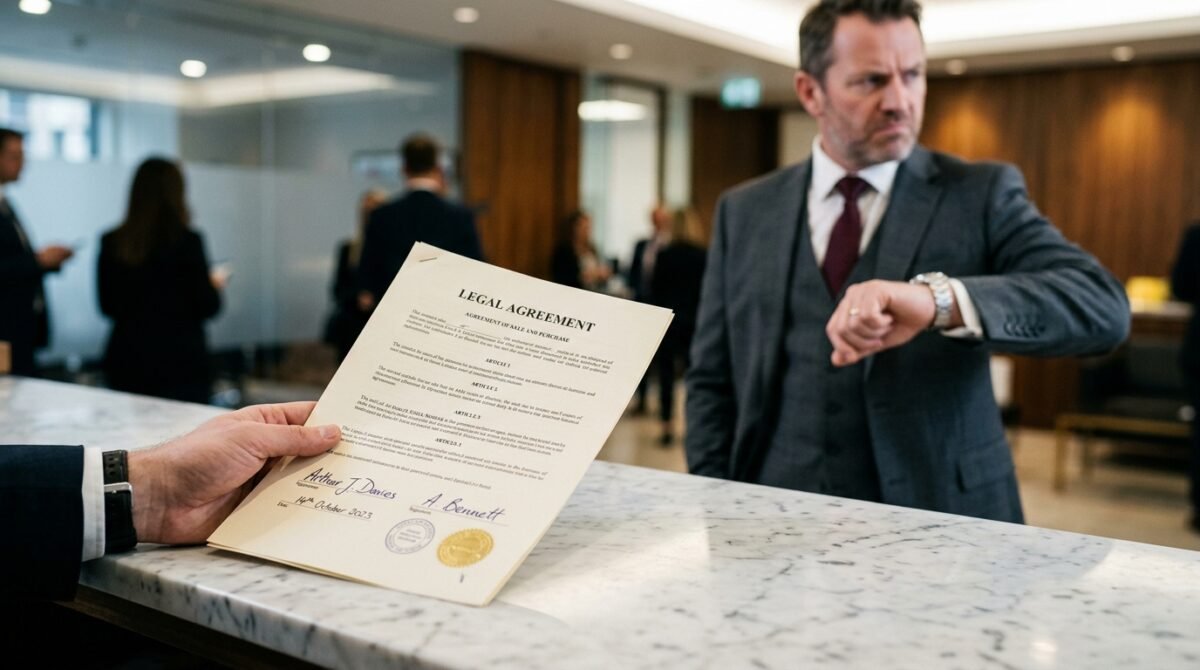
It was a rainy Tuesday when the domestic landscape shifted permanently. Mark had been acting strange for weeks, humming to himself while checking his phone and avoiding eye contact. When he finally called an ’emergency house meeting’ over breakfast, Elena expected news about a promotion or perhaps a vacation. Instead, she watched him slide a printed document across the granite countertop. It was labeled ‘Rental Agreement: 1422 Oakwood Drive.’
Elena stared at the paper, her hand still holding a lukewarm cup of coffee. The terms were staggering. He had calculated the local market rate for a two-bedroom home, added a surcharge for ‘utilities and management,’ and arrived at a monthly figure that consumed nearly sixty percent of Elena’s take-home pay. He spoke with the detachment of a corporate auditor, citing ‘financial fairness’ and ‘asset optimization’ as if he were discussing a business acquisition rather than his home.
“Look, Elena, the house is paid off, but that capital is tied up now. I need to treat this as an investment property. If you want to continue living here, you need to pay your share of the market value. It’s only fair that I see a return on my asset, right?”
— Mark, during the breakfast confrontation
The sheer absurdity of the statement left Elena breathless. They had been married for a decade. She had contributed seventy percent of the mortgage principal, yet he had somehow maneuvered the title into a structure that favored him. She felt the blood drain from her face, replaced by a cold, sharp clarity that she had never experienced in their marriage. The mask of the loving husband had slipped, revealing a stranger obsessed with control.
She didn’t argue. She didn’t point out that she had paid the down payment or that her salary had kept the lights on when he was between jobs two years ago. She simply took the paper, folded it, and placed it next to her plate. She watched him watch her, his eyes expectant, waiting for her to grovel or protest. She gave him nothing but a blank, terrifyingly neutral nod. That was the moment she knew the marriage was functionally over.
Later that day, she spent hours in her home office, not crying, but organizing. She pulled up their joint bank statements, the history of every transfer she had made into the ‘mortgage fund,’ and the records of the recent lump sum that had cleared the debt. She wasn’t just planning a response; she was planning a complete extraction. The silence in the house that evening was deafening, a vacuum where love used to exist.
The Night the Joint Assets Vanished

Elena spent the next forty-eight hours in a state of high-functioning shock. She realized that if she didn’t act immediately, Mark would likely begin siphoning the remaining joint funds under the guise of ‘rental income’ or ‘maintenance fees.’ She needed to secure her own financial stability before the inevitable explosion. By Thursday night, she had opened a new, private account at a different banking institution and transferred her portion of the liquid assets—a move that was legally precarious but ethically necessary in her eyes.
She didn’t stop there. She set up a series of automated transfers to ensure that no further salary payments would hit the joint account. She then sent a brief, professional email to their joint bank representative, freezing the account pending ‘divorce proceedings.’ As she clicked ‘confirm’ on the final transaction, the weight on her chest felt lighter than it had in months. She was no longer a tenant in her own home; she was a woman reclaiming her autonomy.
“I’ve taken the liberty of freezing our joint accounts. Until we sort out the legal ownership of this house and the marital assets, I won’t be contributing another cent toward your ‘market rent’ scheme. Consider this your first notice of eviction from my life.”
— Elena, in a message sent to Mark
Mark returned home at 8:00 PM to find the house dark and the atmosphere icy. When he tried to log into his banking app to pay a credit card bill, the screen flashed a red error message. He stormed into the living room, his face flushed with a mixture of confusion and rage. Elena was sitting on the sofa, reading a book, perfectly composed. The confrontation was immediate and explosive, a culmination of years of suppressed tension.
He paced the room, waving his phone like a weapon. He shouted about ‘theft,’ ‘betrayal,’ and ‘legal consequences,’ but Elena didn’t flinch. She simply pointed to the rental agreement he had left on the counter. She explained, with chilling precision, that if he was going to treat her like a tenant, he would have to accept that she was a tenant who had decided to stop paying rent. She was protected by the laws of marriage, and she was ready to leverage every bit of it.
The psychological shift was instantaneous. Mark realized he hadn’t played a power move; he had triggered a landmine. For the first time in their relationship, he was the one off-balance, the one who didn’t know what would happen next. He retreated to the guest room, slamming the door, but the power dynamic had already shifted permanently. The walls of the house, which he thought he owned, now felt like a prison of his own making.
The Viral Reddit Breakdown

Elena couldn’t sleep, so she did what anyone in the modern age of digital isolation does: she turned to the internet. She posted the entire saga on a subreddit dedicated to relationship dilemmas, detailing the mortgage payoff, the demand for rent, and the subsequent freezing of the assets. Within an hour, her post had thousands of views. By morning, it was the top post of the day. The community reaction was swift, visceral, and overwhelmingly supportive of her decision.
The comments sections became a war room of legal advice, personal anecdotes, and collective outrage. Users analyzed the financial implications of her move, warned her about the potential for retaliatory legal action, and cheered for her ‘cold-blooded’ response to his manipulation. The contrast between his attempted financial abuse and her swift, decisive defense resonated with people who had felt trapped in similar dynamics.
“This is the ultimate ‘you played yourself’ moment. He wanted a landlord-tenant dynamic? Well, welcome to the part where the tenant stops paying and the landlord gets hit with a mountain of legal fees. Girl, get a lawyer yesterday and do not back down.”
— u/LegalEagle88 (Top Comment, 32.1k upvotes)
Another user noted the nuance of the situation, pointing out that in many jurisdictions, his attempt to extract rent from a spouse could be viewed as a breach of fiduciary duty. Elena spent hours reading through the comments, finding comfort in the validation of strangers. It wasn’t just that they agreed with her; it was that they confirmed her sanity. She hadn’t been crazy for feeling betrayed; she had been a victim of a very specific, very cruel form of financial gaslighting.
The discussion eventually turned to the broader implications of marital finances. People shared stories of how they had combined their money only to have it weaponized against them. Elena felt a sense of community, a digital support group that reminded her she wasn’t alone. She began to treat the comment section as a sounding board, updating the post with new developments and asking for advice on how to handle the inevitable legal battle that was to come.
By the second day, the post had been picked up by several major news aggregators and social media pages. The sheer volume of engagement helped Elena realize that she had a massive amount of public support. She wasn’t just a woman getting a divorce; she was a symbol of a movement against financial control. The knowledge that thousands of people were rooting for her gave her a sense of resolve that she hadn’t possessed when she first opened that bank account.
The Legal Tangle and the Unpaid Bills

As the days progressed, the reality of the situation began to set in. Mark’s access to the joint funds was completely blocked, which meant he couldn’t pay the property taxes or the utility bills that were still in his name. He tried to contact the bank, but they required joint consent for any changes to the account status. Elena, having retained a lawyer, refused to sign anything that would restore his access without a complete accounting of the assets.
Mark’s frustration mounted. He attempted to intimidate Elena by threatening to ‘evict’ her, but she reminded him that they were both on the deed to the home, regardless of who paid the mortgage. His ‘rental agreement’ was effectively unenforceable under marital property laws. He was stuck in a house he couldn’t afford to maintain on his own, with a wife who was no longer playing the role of the compliant partner.
“You think this is a game? I pay the bills, I run the house, I pay the taxes. If you don’t release those funds, the bank is going to come for the house. Do you want to lose everything just to spite me?”
— Mark, during a heated confrontation in the hallway
Elena’s lawyer, a sharp-witted woman named Sarah, advised her to remain calm and document every single interaction. Sarah explained that Mark’s attempt to characterize their home as an ‘investment property’ was a gift to their case in family court. It demonstrated a clear intent to move marital assets into separate, personal control—a classic red flag in divorce proceedings. They were preparing a filing that would expose his financial mismanagement for the court to see.
The financial tension created a bizarre living situation. They were roommates who avoided each other at all costs, communicating only through notes or cold, clipped emails. Elena began to move her most precious belongings out of the house, storing them in a secure facility. She was systematically dismantling her life in that house, one box at a time, preparing for the day she could finally walk out the door for good.
Mark, meanwhile, started to look desperate. He tried to reach out to their mutual friends, painting himself as the ‘victim’ of an unstable spouse who had ‘stolen’ his money. But Elena had been proactive; she had shared the story of the rental agreement with a few trusted confidantes, who in turn spread the word. Mark found himself increasingly isolated, his narrative of victimhood failing to gain traction against the cold reality of the rental contract he had tried to force on his wife.
The Sunday Dinner That Never Happened
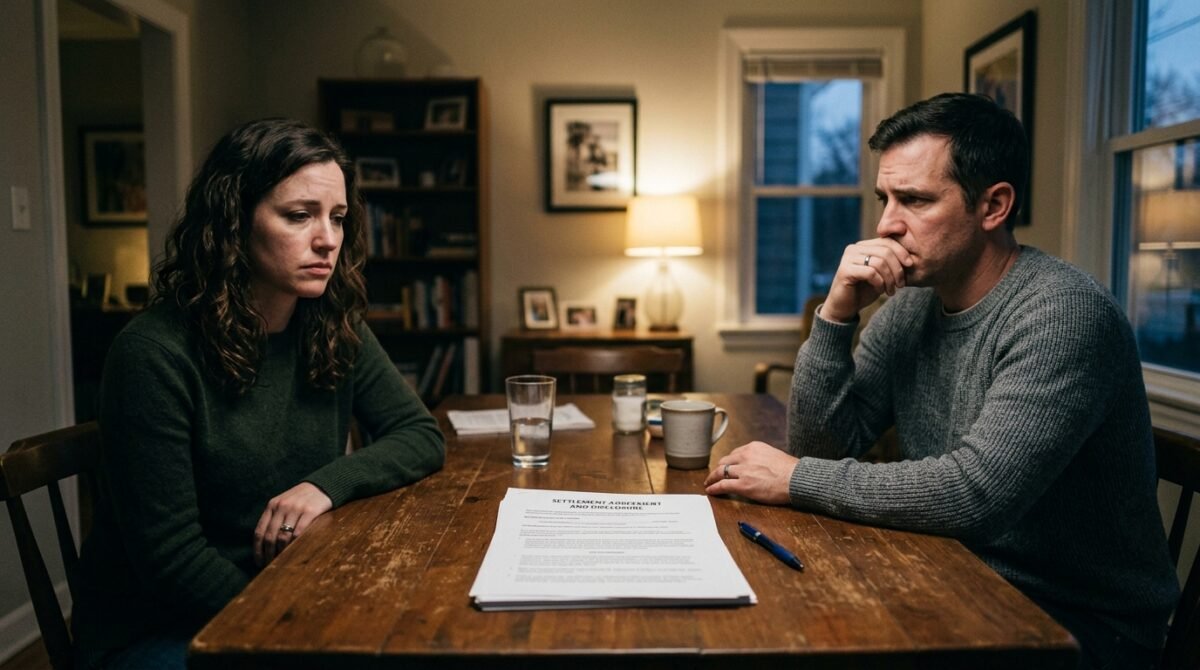
The breaking point came on a Sunday. Mark’s parents, who had always been fond of Elena, came over for their traditional weekly dinner. Mark had clearly intended to use them as leverage, hoping that their presence would force Elena to be ‘reasonable’ and restore his access to the accounts. He greeted them at the door with a practiced smile, but Elena stayed in the kitchen, carefully preparing a meal for herself and her guests, ignoring his desperate attempts to draw her into the living room.
When they finally sat down at the table, the air was thick with tension. Mark’s father asked about the ‘new financial arrangement’ he had heard whispers about from his son. Elena didn’t hesitate. She placed the copy of the rental agreement squarely in the center of the table, next to the roasted chicken. She told the parents, in a calm and measured voice, exactly what their son had attempted to do. The silence that followed was absolute.
“I want you to know why I’ve frozen the accounts. Your son decided that our marriage was a business transaction. He wanted to charge me rent for the home I helped pay for. Here is the contract he tried to make me sign.”
— Elena, addressing Mark’s parents
Mark’s mother turned to her son, her face a mask of disappointment. She had always believed in the sanctity of their partnership, and the revelation that Mark had tried to commodify it was devastating. The argument that ensued was not between Elena and Mark, but between Mark and his own parents. They were appalled by his greed and his lack of respect for his wife. Mark, for the first time, looked truly small.
He tried to defend himself, shouting about ‘the market’ and ‘financial responsibility,’ but his father silenced him with a single, sharp look. The dinner was over before it began. His parents left, not with him, but with a promise to support Elena in whatever she decided to do. They realized that their son had fundamentally failed to grasp the meaning of commitment, and they wanted no part of his downward spiral.
That night, Mark sat in the dark living room, alone. The house, which he had so desperately tried to control, now felt empty of everything that mattered. Elena was upstairs, sleeping peacefully for the first time in weeks. She knew the fight wasn’t over, but the victory of that Sunday evening was a turning point. She had stripped away his support system, his narrative, and his sense of entitlement, all without raising her voice.
The Discovery of the Secret Group Chat

The final straw for Elena occurred when she accidentally discovered Mark’s iPad unlocked on the counter. She hadn’t intended to snoop, but a notification popped up from a group chat titled ‘The Boys.’ Curiosity, or perhaps a instinctual need to know the extent of his betrayal, led her to read the messages. She found a series of exchanges that confirmed her worst fears. Mark hadn’t just acted on his own; he had been encouraged by his friends, who viewed his wife as a ‘gold digger’ who needed to be put in her place.
The language they used was degrading and misogynistic. They had been joking about ‘evicting’ her for months, laughing at the idea of her scrambling to find money to pay him rent. They had been planning this ‘financial education’ for their wives as well, a sick game of control that they felt entitled to play. Elena read through the messages with a sense of detachment, feeling the last remnants of her love for Mark evaporate entirely.
“She’s finally breaking, boys. The rent notice did the trick. I’ve got her right where I want her. Soon as she pays, I’m locking down the rest of the accounts. This is how you handle a wife who thinks she’s equal.”
— Mark, in a leaked group chat message
She took screenshots of everything. She didn’t feel angry anymore; she felt empowered. These messages were the ‘smoking gun’ she needed for the divorce proceedings. They proved not just financial abuse, but a premeditated, malicious intent to harm her both emotionally and economically. She sent the files to her lawyer and to her personal email address, ensuring that they could never be deleted or denied.
When Mark eventually realized his iPad was missing and then found it on the counter, he knew something was wrong. He tried to grab it, but Elena was ready. She told him that she had seen everything—the group chat, the plans, the misogynistic jokes. She told him that he had lost the right to any consideration in the divorce. He had turned their marriage into a war, and she had just secured the ultimate weapon.
The terror in his eyes was palpable. He realized that the narrative he had tried to sell to his friends was now the primary evidence against him. He had been playing a game, but Elena had been playing for keeps. The power dynamic hadn’t just shifted; it had inverted entirely. She was no longer the victim of his financial games; she was the one dictating the terms of the end of their marriage.
The Final Ultimatum and Departure

A week later, Elena filed for divorce. She also filed for a temporary restraining order, citing the psychological abuse and the evidence of his premeditated financial sabotage. She didn’t ask for a reconciliation; she asked for a complete separation of their lives. She moved out of the house that same day, taking only her personal belongings and the pets. She left behind the empty house, the mortgage-free title, and the man who thought he could buy her loyalty.
The move was swift and efficient. She had hired a professional moving company, and within six hours, the house was empty of her presence. Mark was at work, unaware of the scale of the departure, until he returned home to find the house echoing with silence. He found a note on the counter, but it wasn’t a love letter or a demand for money. It was a simple legal notice regarding the upcoming court proceedings.
“I am leaving. The accounts remain frozen until the courts decide the distribution of our assets. I have the evidence of your planned financial abuse. Do not contact me. Speak only to my lawyer.”
— A note left by Elena for Mark
The aftermath was a whirlwind of legal battles, but Elena was prepared. The evidence she had gathered—the rental agreement, the bank records, the leaked group chat messages—made her case nearly ironclad. The court saw through Mark’s ‘investment property’ narrative, viewing it for exactly what it was: a bad-faith attempt to hide marital assets and exert control over his spouse. The judge was not amused.
In the final settlement, Elena walked away with more than she had ever anticipated. She was awarded a significant portion of the home’s equity, as well as a share of the remaining joint assets that he had tried to keep for himself. She also forced the sale of the house, ensuring that he couldn’t hold onto the property as a ‘reward’ for his behavior. He was left with the legal fees, the embarrassment of his public failure, and a reputation in tatters.
Elena, however, started fresh. She moved to a new city, focused on her career, and rebuilt her life on her own terms. She didn’t look back. She had learned the hard way that financial transparency and mutual respect were the bedrock of a marriage, and she was no longer willing to compromise on either. She was single, she was secure, and for the first time in years, she was truly free.
Reflections on Financial Autonomy

Looking back, Elena realized that the signs had been there all along. The small comments about ‘my money’ versus ‘our money,’ the subtle attempts to control her career choices, the slow encroachment on her independence. She had ignored them because she wanted to believe in the ideal of a perfect, unified partnership. She had learned, through the most painful experience of her life, that love requires boundaries and that financial independence is the ultimate protector of one’s own sanity.
She started a blog, anonymously, where she shared her story and provided resources for other people dealing with financial abuse. She found a new community of supporters, and she used her experience to help them navigate their own situations. She didn’t want anyone else to go through what she had, and she was determined to use her voice to advocate for financial education and awareness in relationships.
“Never, ever combine your finances in a way that leaves you vulnerable. A partnership is built on trust, but it must be backed by financial independence. Don’t be afraid to keep your own accounts, your own savings, and your own path.”
— Elena, in her final blog post
She often thought about Mark, wondering if he had learned his lesson or if he was still trying to play the same games with someone else. She hoped, for his sake, that he had realized the cost of his ego, but she didn’t waste her time worrying about him. He was a chapter of her life that had ended, a cautionary tale that she had survived and from which she had emerged stronger, wiser, and more resilient.
She was no longer the woman who had been afraid to stand up for herself. She was a woman who had faced a massive challenge and had come out on the other side, better than before. She valued her independence above all else, and she knew that she would never again let someone dictate the terms of her life. She was the architect of her own future, and that was worth every single cent.
In the end, the house that Mark had tried to weaponize against her turned out to be the catalyst for her liberation. It was a strange irony, but one that she embraced with a sense of peace. She had lost a marriage, but she had gained a life, and that was a trade she would make every single time. She was ready for whatever came next, confident in her own strength and the knowledge that she could survive anything.
The Community’s Last Verdict

The Reddit thread that had started it all became a legend in its own right. It was frequently referenced in other threads as the ‘gold standard’ for how to handle financial abuse. People would link back to Elena’s story whenever someone asked for advice on marital money issues, using her case as a beacon of what was possible when one refused to be a victim. The community continued to grow, fueled by the stories of others who had been inspired to act.
Elena watched it all from a distance, amazed by the impact her story had made. She hadn’t set out to be a hero; she had just been a woman trying to save her own life. But the fact that she had helped so many others gave her a sense of purpose that transcended her personal pain. She had taken a negative and turned it into a positive, a legacy of empowerment that would outlast the memory of her marriage.
“Elena’s story taught me that you don’t have to be a martyr to be a good partner. You can have love and respect without sacrificing your financial security. Thank you for showing us that we have options, even when things look hopeless.”
— u/HopefulReader (Comment, 15.2k upvotes)
The community remained a vibrant, supportive space for those looking to reclaim their independence. Elena occasionally dropped into the comments, offering words of encouragement and advice based on her own journey. She remained anonymous, but her presence was felt, a testament to the fact that her story had become a part of the collective experience of those seeking justice in their own relationships.
As she reflected on the entire ordeal, she realized that the most important thing she had gained was the knowledge of her own worth. She was valuable, she was capable, and she was deserving of a partner who viewed her as an equal. The financial battle had been the catalyst, but the internal battle had been the real victory. She had reclaimed her life, and that was the greatest success of all.
Her final piece of advice to anyone reading her story was simple: Trust your gut. If something feels off, if someone is trying to control your money, if you feel like you are being treated as a tenant in your own life—listen to that feeling. It is your instinct protecting you, and it is the most valuable tool you have. Stand your ground, seek help, and remember that you have the power to change your life.
Lessons Learned from the Rubble

The wreckage of her marriage was eventually cleared, and Elena found herself in a place of deep, profound stability. She had learned that financial entanglement, while common, requires a level of communication and shared values that she had taken for granted. She realized that she had been so focused on ‘the goal’—the paid-off house—that she hadn’t looked closely enough at the character of the person she was building it with.
She had also learned the importance of legal protections. She had entered the marriage thinking that ‘what’s mine is yours’ was a beautiful sentiment, only to discover that it could be used to silence her. She now understood the necessity of keeping one’s own assets, maintaining individual financial security, and always having a ‘Plan B’ that didn’t depend on anyone else’s cooperation or approval.
“I learned that love is not a contract. If your partner starts talking about contracts, leases, or ‘fair returns’ on marital assets, run. A loving partner doesn’t try to profit off your contribution to the family. They try to build a life where you both thrive, not one where one thrives at the expense of the other.”
— Elena, in her final reflection
She was now more cautious, but not cynical. She believed in love, but she also believed in being smart. She was no longer looking for someone to complete her; she was looking for someone who would complement her own, already whole life. She was a woman who knew exactly what she brought to the table, and she wasn’t going to let anyone diminish that again.
The journey had been long and grueling, but she wouldn’t change a single moment of it. The pain had been the forge in which her new self had been created. She was stronger, more confident, and more authentically herself than she had ever been. She had lost a house, but she had found her voice, and that was a trade she would make a thousand times over.
As she moved forward into her new life, she carried with her the lessons of the past. She was ready to love again, but with eyes wide open and a clear understanding of what she deserved. She was a woman who had taken her life back, and she was ready to live it on her own terms, with no one to answer to but herself. The story of the rent check that never arrived had become the story of the life she finally deserved.
Conclusion
The story of Elena and Mark serves as a stark reminder of the fragile balance between love and control. When the institution of marriage is treated like a business, the intimacy that defines it is inevitably lost. Elena’s decision to freeze the assets was not an act of greed, but an act of self-preservation in the face of psychological and financial manipulation.
Her journey invites us all to consider: What are the invisible boundaries in our own relationships? Are we building a partnership of equals, or are we slowly ceding our independence to someone who views our contribution as a transaction? The debate continues in our community: Is it ever okay to keep separate accounts in a long-term marriage? Can a relationship survive if one person insists on ‘fairness’ at the cost of unity?
We want to hear from you. Have you ever faced a financial ultimatum that changed the course of your relationship? How did you respond, and what did it teach you about your partnership? Let’s keep the conversation going in the comments below.
What's your verdict on this dilemma?
Vote below to contribute to the official community consensus.

Have a Dilemma Keeping You Up at Night?
Share your real-life feud, wedding chaos, or relationship crossroads anonymously with our editorial team.
What do you think ?
0 Comments🛡️ Comments are moderated to protect community integrity. Your comment will appear once approved by the editorial team.