

When you marry someone, you sign up for a partnership. You believe, with every fiber of your being, that you are rowing the same boat in the same direction. For seven years, Mark and I were supposed to be a team. We navigated the ups and downs of entry-level salaries, student loan repayments, and the crushing pressure of the modern cost of living crisis. Or at least, that is what I thought we were doing.
Last winter, our life became a masterclass in deprivation. We lived in a drafty, hundred-year-old rental that leaked heat like a sieve. Mark, who handled the ‘budgeting,’ constantly insisted that our finances were hanging by a thread. He told me he’d taken a pay cut, that inflation was destroying our margins, and that we had to cut every luxury. I spent three months shivering under piles of blankets, eating instant noodles, and feeling the profound, soul-crushing weight of poverty. I blamed myself for not being a better earner, not being a better partner, not being ‘frugal enough.’
The moral dilemma, however, wasn’t just the lack of warmth; it was the psychological manipulation. I watched him drink cold coffee and wear worn-out socks, believing he was sacrificing alongside me. I didn’t know that every night, while I drifted into a fitful, freezing sleep, he was checking an app on his phone that held the key to a different life. A life where he wasn’t broke, and I was never truly his partner.
This isn’t just a story about money. It’s about the erosion of trust. It’s about how someone can look you in the eye, day after day, and watch you suffer for a reality they have completely fabricated. It is a testament to the fact that sometimes, the person you think you know best is a total stranger living behind a curtain of calculated lies.
The Frozen Night of Reckoning
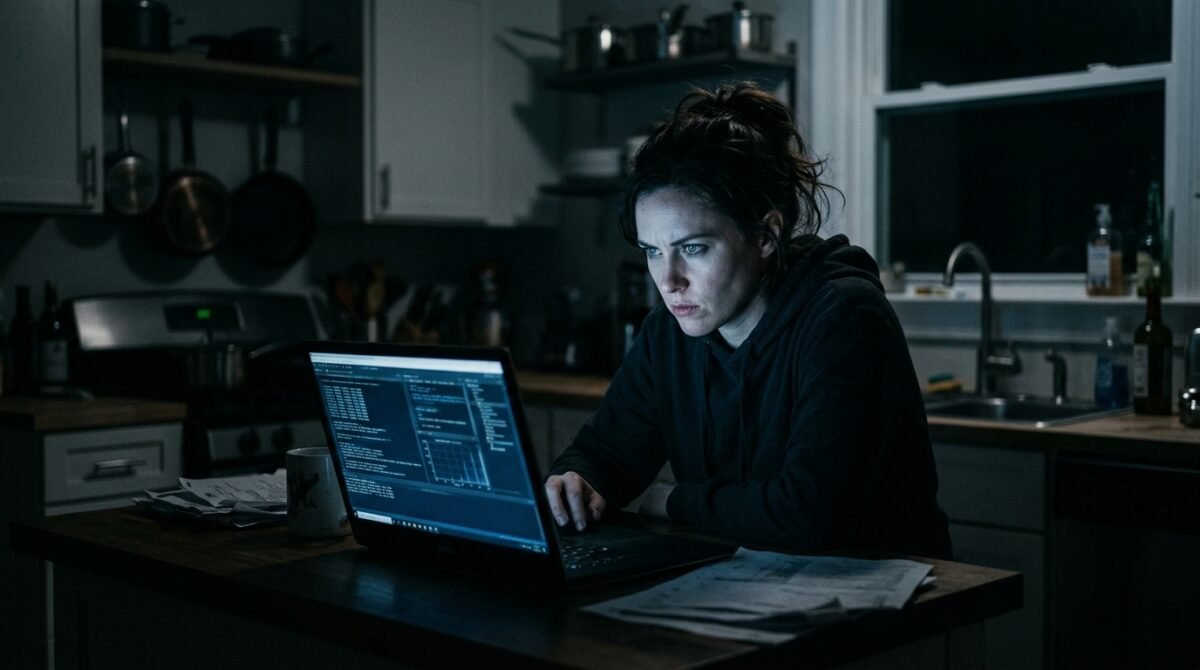
It started with a simple request. I needed to access our primary bank account to pay the electric bill, which had become a source of intense anxiety. Mark had been out of town for a conference, and the notification on my phone screamed ‘final notice.’ I had his laptop open, and when I logged into the bank portal, the browser autofilled his credentials. I didn’t think twice—why would I?
But the dashboard didn’t show our familiar, meager balance. It showed a drop-down menu I had never seen before. Curiosity is a dangerous thing, but in that moment, it felt like an act of survival. I clicked the secondary account labeled ‘Future Fund,’ and my heart stopped. The number was $70,422.18. I blinked, sure it was a glitch, a hallucination brought on by the sub-zero temperatures in our living room.
I sat there for an hour, the cold creeping into my bones, realizing the sheer scope of the deception. I had been rationing heat to save $80 a month, while he was hoarding tens of thousands of dollars. The betrayal wasn’t just financial; it was existential. Every cold shower, every skipped meal, every night spent under a space heater felt like a calculated performance he had directed.
“I just need to see the balance, Mark. I am tired of living like this. Please just tell me the truth about why we are suffering.”
— My voice, shaking as I recorded a voice memo to myself to stay calm.
When he finally walked through the door later that night, he didn’t see the evidence of his betrayal. He saw his tired wife. I didn’t scream. I didn’t throw things. I just watched him, wondering how a human being could maintain such a facade. The silence in our kitchen was deafening, a physical wall between us that had been built brick by brick with every lie he had whispered over the last two years.
He went straight to the thermostat, as he always did, and turned it down to 60 degrees. ‘We have to watch the pennies,’ he muttered, not even looking at me. That was the moment something inside me snapped. The anger wasn’t hot; it was cold, precise, and entirely unforgiving. He had played a game, and he had finally lost.
The Confrontation at the Dining Table

I didn’t wait for a romantic dinner or a quiet moment. I put the printout of the account balance on the table right next to his plate. He looked at it, then at me, and his face went through a spectrum of colors—from pale shock to a flushed, desperate anger. He didn’t even try to pretend he didn’t know what it was. He just sighed, a sound of profound annoyance, as if I had interrupted his favorite television show.
‘You weren’t supposed to see that,’ he said, his voice devoid of any apology. He looked at me with an expression of cold superiority, as if I had violated his privacy by checking our shared household finances. He started listing reasons: investments, emergency funds, ‘future planning’ that apparently didn’t include me. He spoke about his need for ‘financial autonomy’ as if he were a victim of my curiosity.
I remember the way he dismissed my concerns about the heat, the groceries, and the stress. He argued that he was doing this ‘for us,’ even though ‘us’ was clearly suffering in real-time. The gaslighting was so textbook, it was almost laughable. He tried to convince me that my reaction was hysterical, that I was failing to understand the complexities of adult financial management.
“You are being incredibly dramatic. That money is for our future, but I needed to know I had a safety net if things went south. Why are you acting like I’ve murdered someone?”
— Mark, during our argument.
I stared at him, realizing that his ‘safety net’ had been funded by my discomfort. He had taken my labor, my time, and my peace of mind and converted them into a secret hoard. When I asked him why he let me shiver, why he let me cry over grocery bills, he just shrugged. He told me I was ‘too emotional’ about money and that I had ‘never been good with long-term goals.’ It was a masterclass in demeaning a partner to justify a betrayal.
He expected me to apologize for snooping. He expected that once the initial ‘surprise’ wore off, I would settle back into my role as the subservient, frugal wife. He had no idea that the version of me who walked into that room was already gone, replaced by someone who was packing a bag in her mind, item by item.
The Digital Breadcrumbs and Forgotten Apps
After the initial argument, I didn’t sleep. I spent the night going through every digital trail he left behind. I found emails from a financial advisor I didn’t know existed, discussing retirement portfolios and real estate investments. There were screenshots of stock market gains while I was struggling to pay off my credit card interest. It was a digital map of his entire secret life.
He had been moving small, incremental amounts from our joint account into his private one for years. It was a slow drain, designed so that I would never notice the difference in our daily balance. He was the one who managed the ‘autopay’ settings for all our bills, which meant he was the one who determined exactly how much money we ‘had’ left to live on each month. He was puppeteering our lifestyle to keep it at a subsistence level.
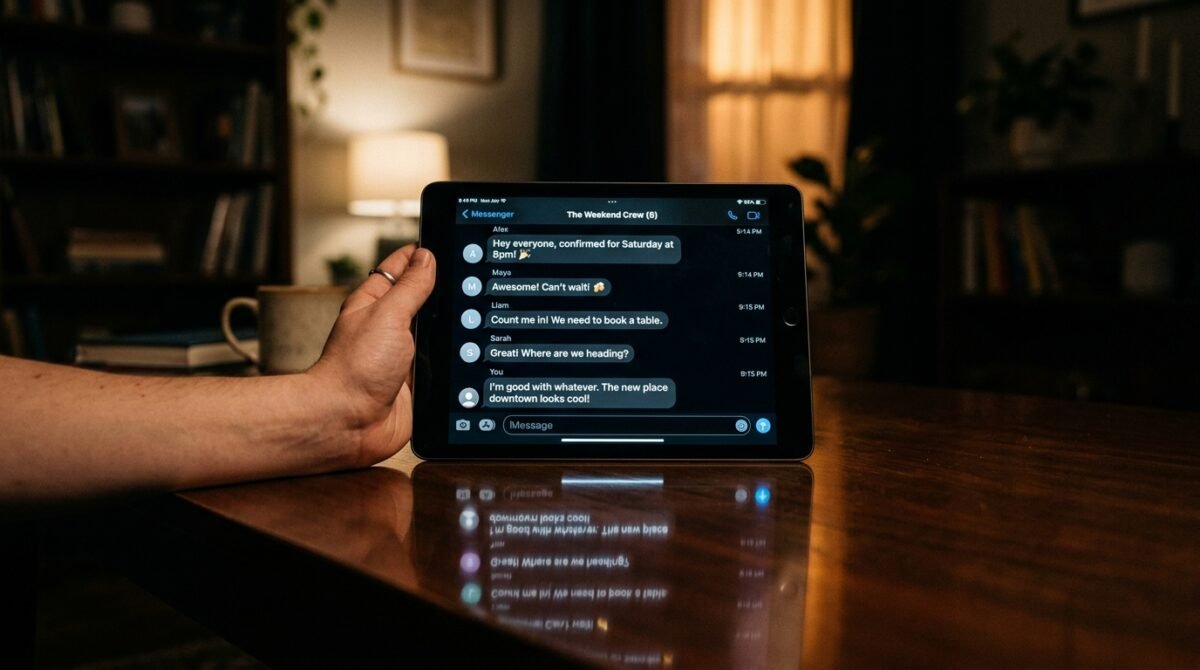
I found a group chat on his old tablet—the one he thought I never touched—where he was talking to his brother about his ‘frugal wife’ and how easy it was to keep her in the dark. Reading those messages felt like a physical blow to my gut. The way he spoke about me, with such condescension and detachment, revealed that he had been holding me in contempt for years.
“She’s so worried about the heating bill, it’s actually hilarious. I told her the prices went up again. She’s completely convinced we’re broke, so she’s not asking for anything. Keep the secret safe, man.”
— Leaked text message from Mark to his brother.
The discovery of those texts changed everything. It wasn’t just that he had money; it was that he was actively mocking my struggle behind my back. Every time I had asked him if we could turn the heat up, he had gone to his brother to laugh about it. That wasn’t just a secret account; it was a campaign of psychological warfare.
I spent the early hours of the morning taking screenshots, saving files, and emailing everything to a private address. I knew I couldn’t confront him again until I had legal advice. I sat there in the dark, the cold no longer feeling like a burden, but like a clarity. I was no longer a participant in his game; I was now an observer, and I was preparing to exit the arena entirely.
The Silent Treatment and the Exit Plan

The next three days were the longest of my life. We lived in the same house like ghosts. I didn’t engage, I didn’t cook, and I didn’t ask about the heating. I functioned with a cold, mechanical efficiency. I contacted a divorce attorney, secured a storage unit, and started moving my most precious belongings out of the house while he was at work. He thought I was just ‘cooling off’—his term for how he expected me to act when I was upset.
He tried to apologize, but it was the kind of apology that is actually a reprimand. He told me he was ‘sorry I felt that way’ and that he was ‘just trying to be responsible for our future.’ He never once acknowledged the pain of the deception or the absolute absurdity of letting his wife suffer in the cold. His focus remained entirely on the money, not the marriage.
I felt a strange sense of power. For years, I had felt powerless in our relationship, constantly trying to meet his standards for frugality, always worried that I was the one dragging us down. Now, I saw the truth. I hadn’t been dragging us down; I had been providing the surplus that he was skimming off the top to build his private empire. I was the engine of his prosperity, and he was the one mismanaging the fuel.
“I don’t think you understand. This isn’t about the money. This is about the fact that you watched me struggle, you watched me suffer, and you laughed about it with your brother. That is not a marriage.”
— My response to Mark when he finally tried to ‘talk’ to me.
The look on his face when I finally told him I was leaving was one of pure, unadulterated shock. He hadn’t thought I would actually do it. He assumed my dependence on his ‘financial expertise’ would keep me tethered to him. He was wrong. The moment he realized that his money couldn’t fix this, he began to panic, trying to promise things he had never considered before—vacations, better housing, ‘full disclosure’ from now on.
I didn’t listen. I kept packing. Every box I filled felt like a weight lifted off my shoulders. I was reclaiming my life, one item at a time. The house was empty, the marriage was dead, and the future, for the first time in years, was entirely, wonderfully mine.
The Reddit Verdict

I posted the situation on a throwaway account, needing to know if I was crazy. The internet, for all its flaws, provided a clarity that my husband never could. The response was instantaneous and overwhelming. Thousands of people validated what I already knew: this was financial abuse, plain and simple. The term ‘financial infidelity’ was thrown around, and the support was staggering.
The community broke down the situation with the kind of clinical precision I needed. They pointed out that he had intentionally impoverished me while hoarding wealth, which is a textbook definition of control and abuse. Some shared their own stories of similar betrayals, helping me realize that I wasn’t alone and that my reaction wasn’t ‘hysterical’—it was a logical response to a profound violation of trust.
“Leave him immediately. He didn’t just hide money; he actively enjoyed watching you suffer while he had the power to stop it. That is a malicious personality trait, not just a financial mistake. Get a lawyer, freeze the accounts, and run.”
— u/JusticeForOP (Top Comment, 45.2k upvotes)
Reading the comments was like reading a roadmap out of a labyrinth. People suggested I gather every scrap of evidence I could find, protect my credit score, and ensure that I had legal representation before he could move any more assets. It was the collective wisdom of thousands, and it gave me the courage to stand my ground when he tried to manipulate me later that day.
I also saw comments from people who had been the ‘Mark’ in their relationships, or who had once made excuses for partners like him. Their reflections were even more eye-opening. They warned me that people like him rarely change because they don’t see anything wrong with their behavior. They see the world as a transaction, and their partners as employees who don’t deserve the full truth.
The validation provided the final piece of the puzzle. I wasn’t the broken one. I wasn’t the failure. I had been living in an environment designed to make me feel that way, but the reality was that my husband was the architect of my misery. The Reddit community had given me the final push I needed to stop apologizing for my existence and start fighting for my future.
The Lawyer’s Cold Calculation

My meeting with the attorney was the most sobering moment of the entire ordeal. She didn’t care about the emotional betrayal; she cared about the assets. She looked at the documents I had gathered and saw a clear-cut case of marital fraud. She explained that in our jurisdiction, the money he had hidden was technically half mine, and he had essentially committed theft by systematically diverting joint funds into a private account.
She told me to stop talking to him entirely. No more attempts at ‘closure,’ no more arguments about the heating, no more emotional pleas. She told me to let the legal system handle it, because he was not a person I could reason with. She emphasized that his behavior suggested a level of planning that indicated he was prepared to leave me long before I ever considered leaving him.
We discussed the implications of his actions. The $70,000 wasn’t just a nest egg; it was his ‘get out of jail free’ card. He had been preparing for a life without me, while keeping me around as a cheap housekeeper and emotional support animal. The realization made me feel physically ill, but it also steeled my resolve. I was going to get every penny that was rightfully mine.
“He has been building a separate life for years. You are not just ending a marriage; you are dismantling a fraud. Do not be surprised if he fights dirty. He already has.”
— My lawyer, during our initial consultation.
The strategy was simple: secure the assets, file for divorce, and expose the deception. She explained that the ‘financial infidelity’ would be a significant factor in the settlement negotiations. He would have to account for every dollar, and his attempt to hide it would not look good in court. The tables were turning, and for the first time, he was the one who had to worry about the cost.
I left her office feeling like I had finally taken control of the situation. I wasn’t just a victim anymore; I was a litigant. I had the facts, I had the law, and I had the resolve. The fear of being broke, the fear of the cold, and the fear of his judgment were all dissipating, replaced by a singular, focused desire for justice.
The Final Goodbye

The last night in the house was surreal. I had packed everything into a U-Haul, and the place looked as empty as our marriage had felt for years. He was in the den, likely on his phone, checking his secret accounts, completely oblivious to the fact that I was already gone. I didn’t say goodbye. I didn’t leave a note. I simply left the keys on the counter, the same place where he used to leave the ‘budget’ spreadsheets that were the root of all our misery.
As I drove away, I didn’t look back. I thought about the first time we met, the way he promised me the world, and how he had spent the last several years systematically stripping that promise away. I realized that the person I fell in love with might never have existed, or at least, he was a character he had played until he didn’t need to play it anymore.
I felt a profound sense of mourning, not for the man he was, but for the time I had wasted. I mourned the versions of myself I had suppressed, the ambitions I had put on hold, and the joy I had denied myself in the name of ‘frugality.’ But as I hit the highway, that mourning turned into a fierce, burning determination to reclaim every single piece of that life.
“I am leaving. The keys are on the counter. Don’t contact me. My lawyer will be in touch.”
— The only text message I sent him before blocking his number.
I didn’t need to hear his explanation. I didn’t need to hear him tell me he was sorry, or that he could change, or that I was being unfair. I knew exactly who he was, and I knew that no amount of apologizing could undo the years of calculated deception. I was free, and that was the only truth that mattered.
The air in the car felt different—crisp, clean, and entirely under my control. I turned the heat up as high as it would go, just to feel the warmth, and for the first time in years, I didn’t feel guilty about it. I was going to be okay, and more importantly, I was going to be me again.
The Aftermath and The New Normal

Months have passed. The divorce is finalized, and while the settlement didn’t make me rich, it gave me enough to start over. He didn’t get to keep the full $70,000, and the look on his face when the judge ordered him to pay my legal fees was the best gift I have ever received. He tried to fight it, of course, but the evidence of his deception was too overwhelming to ignore.
I have moved into a small, warm apartment that I can afford on my own. I have a job that I love, and I am surrounded by friends who truly care about me—people who don’t treat our relationship as a transaction. I have learned that I am capable of so much more than I ever believed, and that my worth is not determined by a bank balance or a partner’s approval.
I still have bad days. Sometimes, I find myself checking the thermostat, waiting for someone to yell at me for turning it up. Sometimes, I worry about money in a way that is hard to shake. But those moments are becoming less frequent. I am learning to trust myself again, to trust my own instincts, and to recognize the signs of manipulation before they have a chance to take root.
“I used to think my husband was the one who kept our life together. I realize now that he was the one who was holding it back. I am finally, truly building my own life.”
— My reflection in my new home.
The lesson I learned is one I hope no one else has to learn the hard way: your partner should be your teammate, not your keeper. If you ever find yourself feeling like you are living in a shadow, or that your needs are being systematically ignored for the ‘greater good’ of a future you never agreed to, look closer. You might find that your reality is being carefully curated by someone who doesn’t have your best interests at heart.
I am grateful for the experience, as painful as it was. It forced me to grow, to stand up for myself, and to demand the respect I deserve. I am looking forward to the future, not with fear, but with a sense of excitement. There is so much life left to live, and I am going to live it on my own terms.
Conclusion
My story is a warning, but also a call to action. Financial infidelity is a silent destroyer of relationships, often hidden behind the guise of ‘budgeting’ or ‘planning.’ If you feel like your partner is controlling the narrative of your life, take a step back and look at the evidence. Trust your gut, and don’t be afraid to demand the transparency you deserve. You are worth more than a secret bank account, and you deserve to live a life that is warm, honest, and truly your own.
What about you? Have you ever discovered a hidden truth that changed everything in your relationship? Do you believe that financial secrets can ever be justified, or is it always a betrayal? Let’s discuss in the comments—your experiences might just help someone else find the courage to walk away.
What's your verdict on this dilemma?
Vote below to contribute to the official community consensus.

Have a Dilemma Keeping You Up at Night?
Share your real-life feud, wedding chaos, or relationship crossroads anonymously with our editorial team.
What do you think ?
0 Comments🛡️ Comments are moderated to protect community integrity. Your comment will appear once approved by the editorial team.