

Marriage is built on promises: for better or worse, for richer or poorer. But nowhere in our vows did it state that I was signing up to be the financial backstop for my husband’s unemployed childhood best friend, Leo. For years, I watched the boundaries of our home erode, but the day Mark sat me down—not to discuss our future, but to demand I add Leo to our premium family health insurance plan—was the day the foundation finally cracked.
Mark and Leo have been inseparable since grade school. I always accepted the closeness, even when it meant Leo crashing on our couch for weeks at a time or ‘borrowing’ money that never returned. I viewed it as a quirk of a lifelong brotherhood. I was naive. I thought loyalty had limits, and I assumed those limits were defined by the person you built a life with, not the person you played video games with until three in the morning.
The demand wasn’t just a request; it was a cold, calculated expectation. Mark argued that because I have the better career and the top-tier benefits, it was ‘the least I could do’ to support someone who had been there for him during his darkest times. He didn’t see the legal, financial, or emotional implications. He only saw a way to maintain his comfort without sacrificing his friend’s convenience.
When I refused, the masks dropped. The soft-spoken, supportive husband I thought I knew vanished, replaced by a man who viewed my paycheck as communal property and my autonomy as an inconvenience. I realized then that I wasn’t his partner; I was a resource. And that night, as I packed my life into the back of my car, I knew there was no going back.
This is the story of how a simple document—a health insurance enrollment form—became the catalyst for the destruction of my marriage. It is a story about the hidden costs of codependency, the audacity of entitlement, and the moment a woman finally decided she was done being the third wheel in her own life.
The Tuesday Night Ambush

It started on a Tuesday evening, a night usually reserved for takeout and catching up on our respective projects. I was sitting at the kitchen island, finalizing some work emails, when Mark walked in, followed closely by Leo. Leo, as usual, looked like he had just rolled out of a basement, clutching a bag of chips and looking entirely at home in a space he didn’t pay for.
Mark cleared his throat, a sound I had come to recognize as the precursor to an uncomfortable request. He didn’t go for small talk. He moved straight to the point, his voice calm but laced with a strange, performative confidence. He laid out a laptop, opening a browser tab to our insurance provider’s portal, and pointed at the screen. He told me he’d been doing some research and that our current plan had a ‘family dependent’ clause that we weren’t fully utilizing.
I stared at the screen, bewildered. I saw the words ‘Dependent Enrollment’ and felt a cold prickle of dread at the base of my neck. Mark explained that Leo was going through a rough patch—which seemed to be his permanent state of existence—and had lost his job at the local warehouse. He suggested that by adding Leo to our policy, we would be doing a ‘good deed’ that cost us virtually nothing in terms of monthly premiums.
“Look, I’ve already checked the fine print. Adding him as a dependent covers him for emergencies. It’s not like it’s going to hurt us, and it means he can finally get his tooth looked at. He’s been in pain for months. We have the means, why wouldn’t we help family?”
— Mark, during the initial ‘pitch’
I felt my pulse quicken. I asked him, with as much calm as I could muster, if he understood that ‘family’ and ‘best friend’ were not legally interchangeable. I reminded him that health insurance fraud is a very real thing, and that my company’s HR policy was ironclad about who qualified as a dependent. Mark rolled his eyes, dismissing my concerns as bureaucratic nonsense and accusing me of being cold-hearted.
I looked at Leo, who had the audacity to look expectant, like he was waiting for a Christmas present. I wasn’t just being asked for money; I was being asked to jeopardize my career and my family’s future security for a man who had never even offered to chip in for the gas he used or the groceries he ate. That night, the air in our kitchen turned toxic.
The Financial Entitlement Ledger

The next morning, I did something I should have done years ago: I opened a spreadsheet. For too long, I had been ‘playing nice’ with our finances, keeping things loose and flexible because Mark insisted that ‘money shouldn’t dictate friendship.’ But seeing the reality in columns and rows was nauseating. I realized that over the last two years, I had inadvertently subsidized Leo’s existence to the tune of nearly twelve thousand dollars.
This included everything from the spike in our utility bills to the ’emergency’ repairs on his beat-up sedan that never seemed to run quite right. I looked at the numbers and realized Mark hadn’t just been generous; he had been using my labor and my salary to buy Leo’s loyalty and companionship. Every dollar I thought was going toward our savings was being siphoned off into the bottomless pit of their codependent bond.
When I confronted Mark with the printout, he didn’t apologize. He didn’t even look ashamed. Instead, he laughed, calling me ‘calculating’ and ‘obsessive.’ He argued that my perspective was warped by corporate greed and that I was viewing our life as a business transaction rather than a partnership. He insisted that the money was irrelevant compared to the bond of brotherhood they shared.
“You’re really going to sit there and nickel-and-dime the people who are closest to me? I thought we were a team. A team shares what they have. This is exactly what’s wrong with your mindset—you think everything has a price tag.”
— Mark, defending his spending habits
I told him that the only thing wrong with my mindset was that I had been blind to his manipulation for way too long. I pointed out that his ‘brotherhood’ was being funded by my sweat, and that I was done. The look on his face shifted from dismissive to genuinely shocked. He truly believed that his entitlement was a fundamental right, and that I was the one breaking our unspoken contract.
He spent the afternoon on the phone with Leo, whispering in the other room. I could hear snippets of the conversation—the way they laughed about my ‘tantrum’ and planned how they would get me to come around. It was then that I realized I wasn’t just fighting Mark; I was fighting an invisible, entrenched opposition that viewed my home as their personal safety net.
The Group Chat Revelation
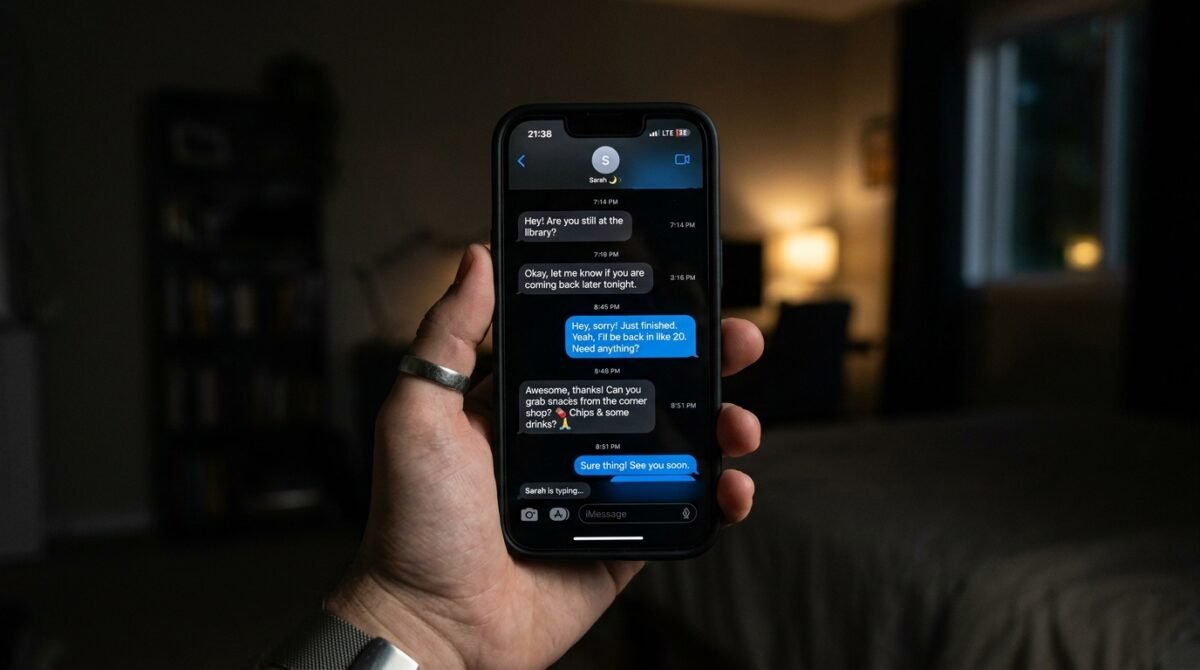
The tipping point didn’t come from a face-to-face argument. It came from a notification I wasn’t supposed to see. Mark had left his phone on the coffee table while he was in the shower. A notification popped up from a group chat titled ‘The Brothers.’ Curiosity, or perhaps a deep-seated need for self-preservation, made me look. I shouldn’t have, but what I saw changed everything.
The chat was a cesspool of disrespect. Leo was complaining about me, calling me a ‘control freak’ and a ‘corporate shill’ who needed to be ‘put in her place.’ Mark was participating, laughing along, and even sharing details about our intimate life to make his friend laugh. He told them he had a plan to ‘break me down’ by making me feel guilty until I finally relented on the insurance thing.
“She’s just being dramatic as usual. Give her 48 hours to cool off, then we’ll play the guilt card about how much Leo has been through. She always caves when I bring up how lonely I was before him. It’s classic manipulation, and it works every time.”
— A text from Mark to the ‘Brothers’ group chat
I felt physically ill reading the words. Everything I thought was a private struggle was being mocked and strategized against by a group of men who viewed my boundaries as an obstacle to be overcome. It wasn’t just about the insurance anymore; it was about the fundamental lack of respect for me as a human being, as a wife, and as an individual.
I didn’t confront him about the phone. I didn’t want to give him the satisfaction of a reaction. Instead, I went upstairs, opened my closet, and started pulling down suitcases. I did it quietly, methodically, while Mark was still in the shower. I felt a strange, cold clarity descend upon me. The person I was living with was a stranger, and the life I had built was a facade.
Walking Out into the Rain

Leaving was the most liberating moment of my life. I didn’t leave a note. I didn’t leave an explanation. I simply packed the essentials—my documents, my laptop, a few changes of clothes, and my sense of self—and walked out the front door. It was raining, a cold, drizzly evening that matched the grey feeling in my heart, but as I turned the key in the ignition, the air felt fresher than it had in years.
My phone began to buzz almost immediately. Mark noticed I was gone. He called once, twice, three times. Then came the texts. At first, they were angry, demanding to know where I was and why I was acting ‘insane.’ Then, as the realization set in that I wasn’t coming back for dinner, the tone shifted to bewilderment. He couldn’t grasp the reality that I had actually left.
“Where are you? Are you seriously doing this over a simple request? Come home right now, you’re making a scene out of nothing. Leo is worried, and I’m embarrassed. Just come home and we can talk about this like adults.”
— Text message from Mark, one hour after I left
I didn’t respond. I drove to a friend’s house, someone who had warned me months ago that my marriage was becoming a one-sided arrangement. When she opened the door and saw my face, she didn’t ask questions. She just hugged me, led me inside, and poured me a glass of wine. For the first time in years, I wasn’t responsible for anyone else’s happiness.
The silence in the room was deafening, but it was a good silence. It was the silence of a life reclaimed. I realized that by leaving, I had effectively severed the lifeline Mark and Leo were using to keep their toxic dynamic afloat. I had taken away their resource, their safety net, and their favorite punching bag. For the first time, I felt powerful.
The Fallout and the Family Pressure

The next few days were a blur of frantic messages and unexpected visitors. Mark’s family got involved, calling me to ask why I was being ‘so dramatic’ over a ‘small favor.’ They had been fed a version of the story where I was the villain, a cold, career-obsessed wife who didn’t care about the well-being of her husband’s closest friend. It was frustrating, but it also made me realize how deep the enabling went.
Mark’s mother called, her voice dripping with disappointment. She told me that marriage is about sacrifice and that I was failing my husband during a time of need. I listened to her lecture, realizing that this is exactly where Mark learned his sense of entitlement. He was raised to believe that his ‘brothers’ took precedence over his partner, and that any woman who disagreed was simply difficult.
“I thought you were a good person, but clearly, I was wrong. You’re being selfish. Mark is trying to help a friend in need, and you’re acting like a spoiled child. Think about what your actions are doing to this family.”
— Voicemail from Mark’s mother
I realized then that I wasn’t just leaving a marriage; I was leaving an entire ecosystem of toxicity. If I had stayed, I would have been fighting his mother, his friends, and his own ingrained beliefs for the rest of my life. The choice to leave wasn’t just about the insurance—it was about choosing my own sanity over the expectations of a group of people who would never respect me.
I blocked the numbers. It was hard, but it was necessary. Every time I felt a pang of guilt, I reminded myself of the group chat. I reminded myself that they were laughing at me while I was crying in the kitchen. The guilt evaporated, replaced by a steely resolve to never let myself be treated as an ATM or a doormat ever again.
Reddit Weighs In: The Verdict of the Masses
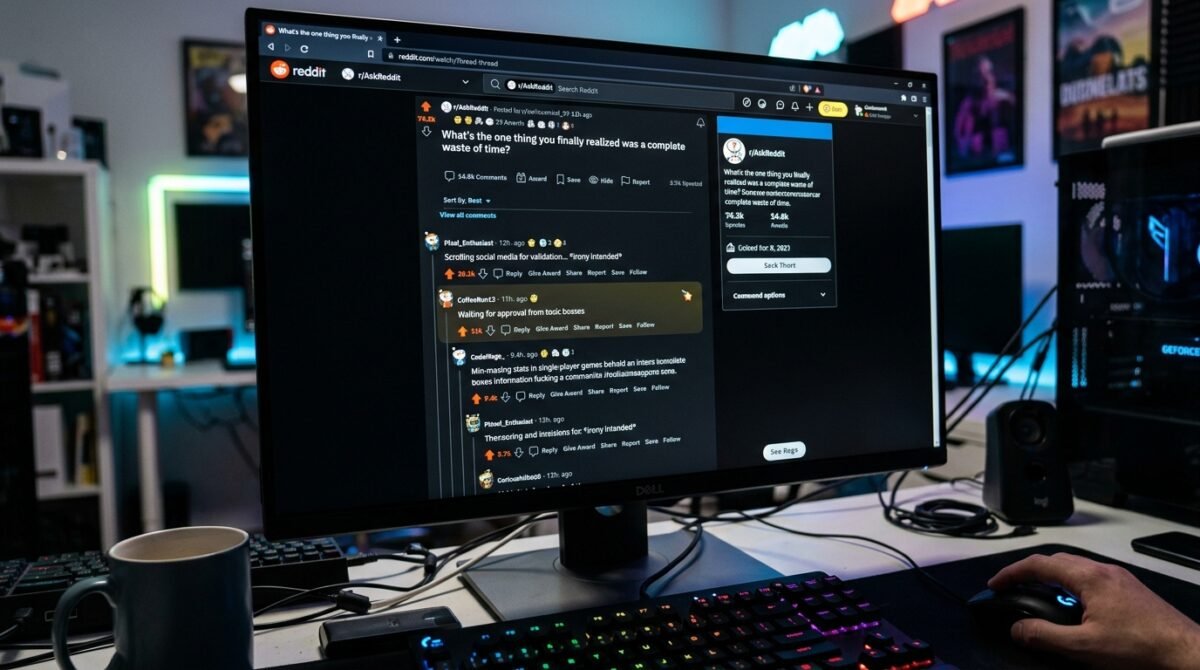
I eventually decided to share my story on a popular forum. I needed to know if I was crazy. I needed to know if my perspective was warped. Within hours, the response was overwhelming. Thousands of people, many of whom had experienced similar ‘parasitic’ dynamics, reached out to validate my decision. The support was a lifeline I hadn’t expected.
“You are not a charity, and you are definitely not his mother. Adding a non-family member to your health insurance is not just a favor; it’s insurance fraud. You did the right thing by leaving. Do not look back.”
— u/ReliableAdvice (Top Comment, 32.1k upvotes)
The community support was a mix of outrage on my behalf and practical advice. Many warned me about the legal ramifications of the insurance scheme Mark had proposed, confirming that my HR department would have fired me immediately if I had tried to add a ‘dependent’ who didn’t qualify. It wasn’t just a marriage problem; it was a career-ending move Mark was pushing me to make.
“The way he mocked you in that group chat is the smoking gun. It’s not about the insurance; it’s about his total lack of respect for you. He’s been playing a long game of testing your limits, and he finally hit a wall he didn’t expect. Stay gone.”
— u/TruthSeeker (14.2k upvotes)
Reading these comments, I felt a weight lift from my shoulders. It wasn’t just me. The patterns were clear, the red flags were identified, and the consensus was absolute. I wasn’t the selfish one; I was the one who finally stood up for herself. The internet, for all its faults, provided the clarity I couldn’t find while I was inside the bubble of my own marriage.
The Meeting That Never Happened

A week later, Mark reached out via email. He sounded different—less arrogant, more desperate. He claimed he had ‘severed ties’ with Leo and that he realized he had been wrong to prioritize a friend over his wife. He begged me to come home, promising that things would change and that he would finally put me first. It was the classic ‘repentance’ phase, and I knew it was hollow.
I replied with a short, cold message. I didn’t offer a path to reconciliation. I told him that the issue wasn’t just Leo—it was his inability to be a partner. I told him that I couldn’t trust a man who mocked me behind my back with his friends. The email was my final word on the matter. I didn’t want a discussion; I wanted an exit.
“The problem wasn’t just the insurance, Mark. It was the fact that you thought you could manipulate me into it, and that you and your friends thought it was funny. I don’t want a husband who makes me a project, and I certainly don’t want one who values his friend’s comfort over my career. We are done.”
— My final email to Mark
He didn’t reply to that. I suspect he realized that the game was over. The silence that followed was heavy, but it was mine. I started the process of legal separation shortly after. It wasn’t easy, and there were many nights where I cried, mourning the husband I thought I had, but the mourning was for a fantasy, not the reality.
Finding My Own Footing

Life after leaving has been a journey of rediscovery. I’ve started doing things I enjoyed before I became ‘the one who handles everything.’ I’ve reconnected with friends who I had neglected because they didn’t fit into the dynamic Mark preferred. I’ve started saving for myself, spending on myself, and most importantly, making decisions without having to consult anyone else.
I still have moments of doubt. I still wonder if I could have handled it differently, if I could have been more ‘patient.’ But then I remember the group chat. I remember the look of entitlement on Leo’s face. I remember the way Mark looked at me when I said no. And the doubt vanishes. I made the only choice I could have made to save my own life.
My career has flourished since I left. Without the financial drain of supporting Leo and the emotional toll of dealing with Mark’s drama, I’ve been able to focus on my professional growth. I’ve received a promotion, a raise, and a level of respect in my workplace that I never thought I deserved. The energy I was pouring into a dying marriage is now going into building a life I actually love.
“I used to think that being a good wife meant being a martyr. I’m learning now that being a good partner means being an equal. I’m not a martyr anymore. I’m a person with needs, boundaries, and a future that is entirely my own.”
— My personal journal entry
I don’t know where Mark is now, or if he and Leo are still playing video games in their parents’ basements. Honestly, I don’t care. That chapter of my life is closed, and the new one is far more interesting. I’m learning to be selfish in the best possible way—by prioritizing my own health, my own wealth, and my own joy.
Reflecting on the Boundaries I Never Set

Looking back, I see the warning signs I missed in the first year of our marriage. It started with small favors—lending Leo money for ‘rent,’ letting him couch-surf for a week. I told myself it was fine, that I was being supportive. I never realized that every time I said ‘yes’ to an unreasonable request, I was teaching Mark that my boundaries were flexible. I was training him to view me as a resource rather than an equal.
It’s a painful lesson to learn, but it’s one that has changed how I interact with the world. I don’t ‘play nice’ anymore. If something doesn’t feel right, I say so immediately. If a request crosses a line, I don’t offer an excuse; I offer a hard ‘no.’ It’s surprising how much more respect people have for you when you stop trying to accommodate their every whim.
The most important thing I’ve learned is that your partner should be your teammate, not your dependent. If you find yourself having to justify your boundaries to your partner, or if you find that your needs are constantly being minimized for the benefit of someone else, you are not in a partnership. You are in an arrangement that is designed for your failure.
“You cannot build a future with someone who refuses to see you as an equal. The moment you start feeling like an ATM or a parent to your spouse, the marriage is already over. Leave before you lose yourself entirely.”
— Advice from a mentor I met after leaving
I’m grateful for the insurance request. It was the catalyst that finally woke me up. If he hadn’t pushed that far, I might still be in that house, slowly losing myself in a sea of resentment and codependency. Sometimes, the most ‘unreasonable’ request is the one that sets you free.
Where I Stand Today

Today, I am stronger than I have ever been. I have a new apartment, a new routine, and a renewed sense of purpose. I’ve started therapy to deal with the aftermath of the gaslighting, and it’s been incredibly helpful in understanding how I allowed myself to stay for so long. I’m not ‘the victim’ of my story anymore; I am the protagonist.
Mark has tried to reach out a few times, mostly to ask for ‘closure’ or to complain about his current situation. I don’t engage. Closure is something you give yourself, not something you get from an ex-husband who never respected you. I’ve blocked him on everything. My peace is worth more than any apology he could ever offer.
I want to tell anyone in a similar position: listen to your gut. If your partner is demanding things that compromise your values, your career, or your safety, they are not your partner. They are a liability. Don’t wait for the ‘big’ betrayal; the small ones are just as damaging. Listen to that voice that says, ‘this isn’t right,’ and trust it. You deserve better than being the secondary character in someone else’s drama.
“The most important boundary you will ever set is the one that protects your own peace. Don’t let anyone make you feel guilty for saying no to things that hurt you. Your life is yours.”
— A reminder I keep on my wall
I’m looking forward to the future now, not with fear, but with excitement. I’m excited to see who I am when I’m not constantly managing someone else’s crisis. I’m excited to build a life that is truly mine, built on a foundation of mutual respect and genuine love. And I’m excited to never, ever have to worry about someone else’s insurance again.
Conclusion
My journey from a trapped, unappreciated wife to a liberated individual was paved with the hardest decisions of my life. The insurance demand was merely the final spark in a house already full of gasoline. By walking away, I reclaimed my autonomy, my finances, and my sanity. It serves as a reminder that no matter how deep you are in a toxic situation, it is never too late to walk out the door and start over.
The lessons I learned about codependency and boundaries are ones I will carry for the rest of my life. I hope my story serves as a wake-up call to anyone currently feeling like a ‘resource’ rather than a partner. Your value is not defined by how much you can give to others, but by how well you protect yourself.
What about you? Have you ever had to leave a situation where you realized you were being used? Or have you had to draw a hard line that ended a friendship or a relationship? Join the debate in the comments below: Is there ever a scenario where putting a non-family member on your insurance is acceptable, or is it always a red flag? Let’s talk about the boundaries that keep us sane.
What's your verdict on this dilemma?
Vote below to contribute to the official community consensus.

Have a Dilemma Keeping You Up at Night?
Share your real-life feud, wedding chaos, or relationship crossroads anonymously with our editorial team.
What do you think ?
0 Comments🛡️ Comments are moderated to protect community integrity. Your comment will appear once approved by the editorial team.