
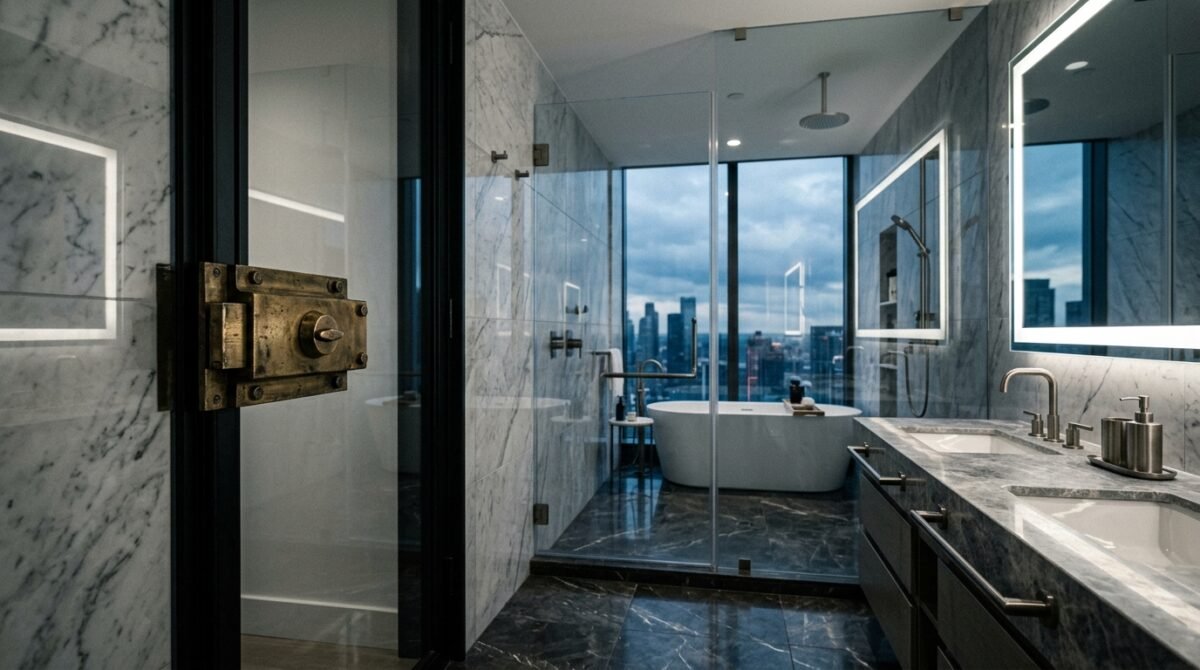
It began not with a bang, but with a brochure for architectural hardware. Mark, my husband of five years, has always leaned toward the minimalist end of the design spectrum. Our home, a mid-century modern renovation we poured our savings into, was his sanctuary. But what started as a passion for decluttering and ‘clean lines’ slowly evolved into a psychological prison. The final straw wasn’t a secret bank account or an affair; it was a physical barrier installed between us while I was at work: a heavy-duty deadbolt on the master en-suite bathroom door.
Mark claimed the intrusion of my ‘cluttered’ toiletry bottles was ruining the sensory experience of his morning routine. He argued that the bathroom needed to remain a curated space, an extension of the zen atmosphere he was trying to cultivate. When I returned home that Tuesday to find the lock clicked shut and my belongings moved to the guest hallway vanity, I realized I wasn’t living with a partner anymore. I was living with a curator who saw me as an exhibit to be managed, not a wife to be cherished.
The moral dilemma here isn’t just about bathroom storage; it’s about the erosion of partnership. In a healthy marriage, space is shared, negotiated, and respected. In mine, it had been colonized. The deadbolt was a physical manifestation of a deeper, more insidious power dynamic that had been bubbling under the surface for months. Every time I tried to voice my discomfort, I was met with condescending lectures on ‘visual harmony’ and ‘mental clarity.’
As I stood outside that door, staring at the cold, clinical steel, something inside me snapped. It wasn’t anger, initially—it was a terrifying, crystal-clear realization of my future. I saw the next thirty years: me apologizing for existing in my own home, him constantly refining the ‘vibe’ until there was no room for my personality, my mess, or my voice. I took a deep breath, walked into the kitchen, and opened my laptop to Zillow.
This story is about the day I decided to stop being a prop in his architectural dream and start reclaiming my life. It is about the audacity of demanding space in a home you co-own, and the realization that sometimes, the only way to save yourself is to leave the structure that is actively trying to erase you.
The Morning The Aesthetic Took Priority Over My Needs
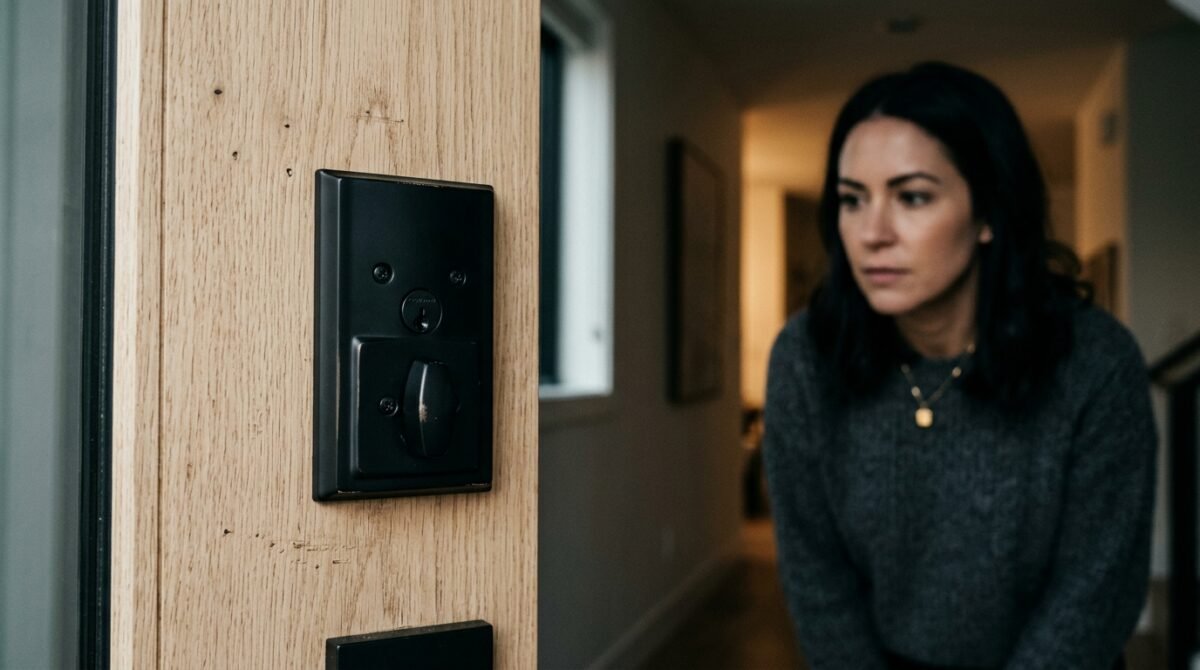
The escalation started innocuously. For months, Mark had been complaining about the ‘visual noise’ of my skincare routine. I use a handful of serums, a moisturizer, and a cleanser—standard stuff, really. But to Mark, these bottles were unsightly intruders. He would often rearrange them in perfect, equidistant lines, or worse, hide them in a drawer without telling me, leading to a frantic morning search before work.
I tried to compromise. I bought beautiful, uniform amber glass dispensers to match his aesthetic. I bought a designer tray to corral my items. But it wasn’t about the mess. It was about control. Mark needed the bathroom to look like a high-end showroom at all times, and my existence was a variable he couldn’t quite control. I remember the morning he first mentioned the ‘need for total isolation’ during his meditation.
“I just need the bathroom to be a pure, untouched space, Sarah. When I see your things, I feel cluttered. It’s affecting my ability to center myself before the day begins.”
— Mark, during a heated breakfast argument
I laughed it off then, thinking he was just being his usual obsessive self. I didn’t realize he was already planning a permanent solution. He spent the weekend researching high-security locks, framing it as a ‘security upgrade’ for our home. He told me it would make us both safer, but deep down, I knew the safety he was interested in was the safety of his curated visuals.
The day the lock was installed, I received a text while in a meeting. It was a picture of the bathroom door with a sleek, matte black deadbolt. The caption read: ‘Finally, the space feels balanced. Please don’t try to force the door open if it’s locked—I’m in my transition period.’ I felt my blood run cold. My toothbrush, my contacts, my hair dryer—all of it was locked behind a door I was no longer welcome to enter at my convenience.
When I got home, the silence in the house was deafening. I found my toiletries relegated to a small, drafty corner of the guest bedroom vanity. It felt like being evicted from my own life, one room at a time. I realized then that I had been slowly losing my voice in this relationship, and this lock was the final, physical seal on that loss. The ‘minimalist vibe’ was just a fancy term for ‘my way or the highway,’ and for the first time, I chose the highway.
The Confrontation At The Dinner Table
I didn’t wait for the weekend. I confronted him the moment he stepped out of the bathroom that evening, looking far too relaxed for a man who had effectively barred his wife from the master suite. He had a smug satisfaction on his face, as if he had just achieved a breakthrough in his interior design project. I stood there, arms crossed, waiting for him to notice the sheer intensity of my gaze.
“Mark, we need to talk about the door,” I started, my voice trembling slightly but resolute. He didn’t even look up, just wiped his face with a linen towel and began straightening a plant in the hallway. The dismissal was so complete it felt like a slap. He finally turned to me, sighing as if I were a child pestering him with a request for candy.
“Sarah, please. Can we just have one evening without you making everything a conflict? I finally have the space I need to breathe. Why are you so determined to ruin it?”
— Mark, responding to my concerns
I told him that the bathroom was a shared space, that we paid for this house together, and that I was not a guest in my own home. I explained how humiliating it was to be pushed to the guest bathroom like a teenager being punished. His response was a masterclass in gaslighting, framing my request for basic access as an attack on his mental health and his need for ‘architectural harmony.’
He went on a long tangent about how modern architecture is meant to facilitate peace, and how my ‘clutter’ was a direct barrier to his peace. It was clear that he had completely dehumanized my presence in his space. He didn’t see a wife; he saw an interruption. The gap between us felt like a canyon, and I realized that no amount of reasoning would change his mind because his mind was locked behind the same door as his bathroom.
The conversation ended with him walking into the living room to listen to a podcast, leaving me standing in the hallway, feeling more isolated than I ever had in my life. I went into the guest room, sat on the edge of the bed, and opened my phone. I didn’t cry. I was too angry for that. I started researching real estate agents who specialized in quick sales. I was done.
The Secret Zillow Listing And The Realtor’s Call
The next day, I didn’t go to work. I had taken a personal day, telling my boss I had a plumbing emergency. It wasn’t entirely a lie; the plumbing in our marriage was definitely broken. I met with a local realtor named Elena, who was known for her discretion and her ability to move properties in our high-end neighborhood. I didn’t want a long, drawn-out process. I wanted out.
I showed her the house, and she was impressed by the ‘aesthetic,’ completely oblivious to the rot beneath the surface. I told her clearly: ‘I want this house sold. As-is. As fast as possible. I don’t care about the market peak; I care about the exit.’ She looked at me, sensing the urgency, and didn’t pry. She just nodded and started taking photos. The irony of the situation wasn’t lost on me: the very ‘minimalist’ features Mark cherished were exactly what would make the house sell quickly.
We set up a schedule for showings that would coincide with Mark’s work hours. I realized I would need a place to go. I called my sister, who lived in a nearby town, and told her everything. She didn’t hesitate. She offered me her spare room without a second thought. For the first time in months, I felt a weight lift off my chest. I had a plan. I had an escape route.
“You’re doing the right thing, Sarah. A house is just a building, but your sanity is non-negotiable. Don’t look back once you get that sign in the yard.”
— Sarah’s sister, during their phone call
The hardest part was the deception. I had to keep acting like everything was normal while I was secretly dismantling our entire life. I would come home, see the deadbolt, and just smile, pretending I had accepted the new normal. Mark was so wrapped up in his own self-importance that he didn’t even notice the change in my behavior. He thought he had won.
That night, I saw a notification on his phone, which he had left on the kitchen island. It was a message from his mother, asking how the ‘renovations’ were going. I peeked, knowing I shouldn’t, and saw he had told her that I was finally ‘behaving’ and respecting his boundaries. The rage I felt was so hot it felt like ice. I wasn’t behaving; I was leaving.
The Unannounced Showing And The Breaking Point
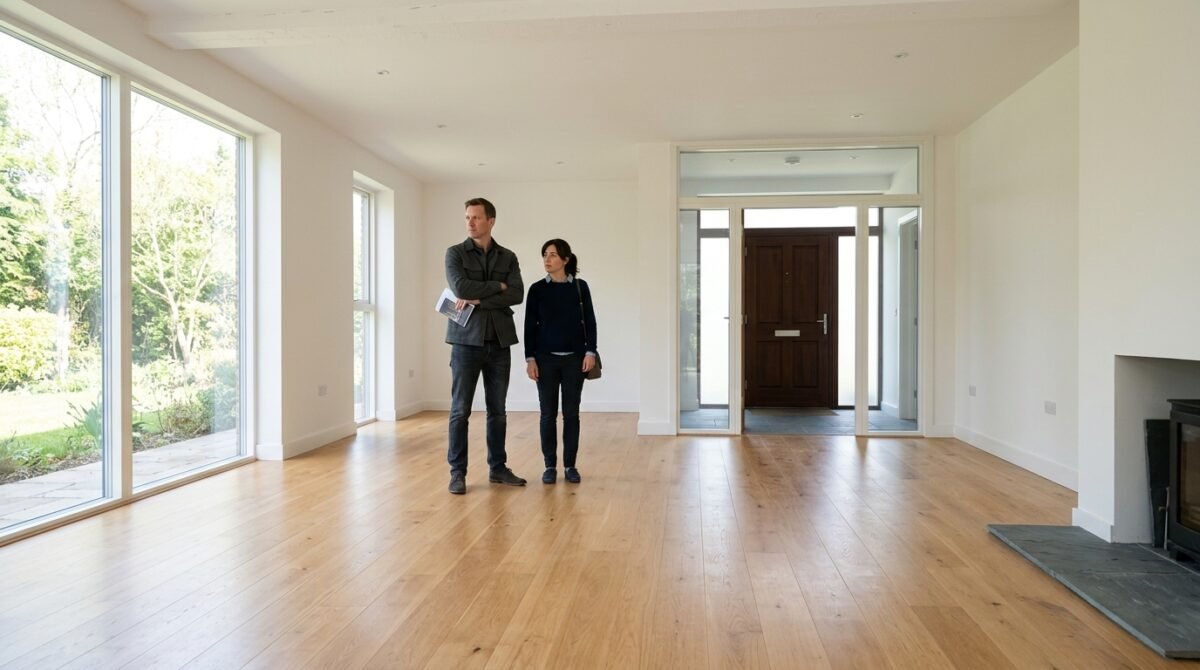
The inevitable happened on a Thursday. Elena had scheduled a private showing for a serious buyer, but due to a scheduling error at the office, the buyer arrived forty-five minutes early. I was at the house, packing my things into discreet boxes, when the doorbell rang. I opened it to find a well-dressed couple, clutching their real estate agent’s business card, looking confused.
I had no choice but to let them in. They were polite, admiring the ‘minimalist’ layout, the clean walls, and the open-concept living room. I walked them through, pointing out the kitchen, the deck, and the garden, all while my heart hammered against my ribs. We eventually reached the master suite. My stomach dropped. I had forgotten the deadbolt. The door was shut, and the lock was engaged.
The potential buyer, a man in a sharp suit, tried the handle. It didn’t budge. He looked at me with a questioning expression. I froze. I didn’t know what to say. I could have blamed it on a faulty latch, but I just told the truth, or a version of it that felt like the truth. ‘My husband prefers to keep this room locked for his private meditation,’ I said, keeping my tone perfectly neutral.
“Oh, that’s… unusual. Is it a safe room? We didn’t see anything about that in the listing details. It’s certainly a unique feature for a master suite.”
— Potential buyer, during the house tour
The tension was palpable. The buyer’s agent looked uncomfortable, and the woman in the couple exchanged a look with her husband. I realized then how truly insane our situation looked from the outside. To a stranger, this wasn’t a ‘minimalist vibe’—it was a red flag the size of a billboard. It was the most validating moment of the entire ordeal.
I excused myself to the kitchen, claiming I needed water, and texted Elena. ‘The house is being shown. The deadbolt is a problem. We need to handle this.’ She replied immediately: ‘Take them to the guest wing. Don’t worry about the deadbolt. Most buyers will think it’s weird and move on, but we have two other interested parties. Just get them out.’ I felt empowered by her professional detachment. This was a business transaction, and I was the boss.
The Group Chat Explosion
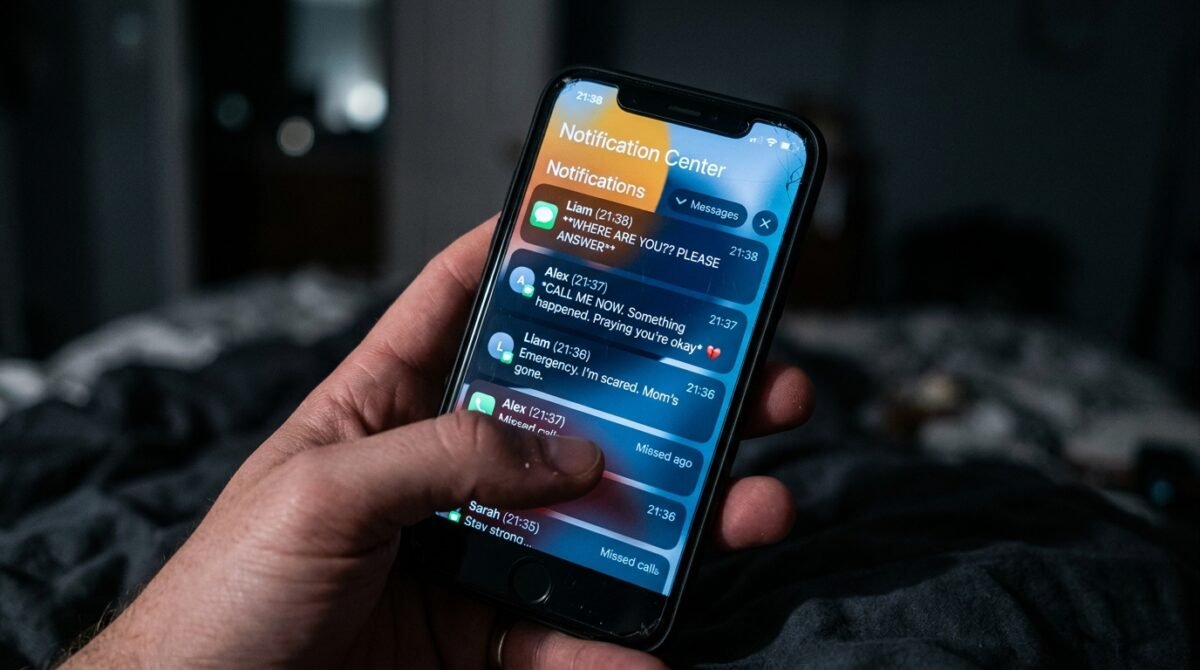
Mark found out about the sale through a mutual friend who had seen the ‘For Sale’ sign on our lawn while driving by. He called me, then texted, then sent a flurry of messages to our family group chat. He was panicked, confused, and furious. He thought I was playing some kind of sick joke, or that I had lost my mind. The notifications on my phone were relentless, a cacophony of digital aggression.
“WHAT IS GOING ON? Why is there a sign in our yard? Sarah, pick up the phone! You don’t have the right to do this without discussing it with me! This is MY home too!”
— Mark, in the family group chat
I didn’t answer. I muted the chat and waited. I knew if I responded, I would just give him more ammunition for his control. My sister was in the group chat, and she stepped in, holding the line. She told them that the house was being sold and that I was safe, but that I wouldn’t be returning to that address. The silence that followed was heavy.
Mark’s friends started chiming in, some siding with him, some clearly uncomfortable with the public airing of our private crisis. It was a mess, but it was a mess I was no longer in the middle of. I was at my sister’s, watching a movie, feeling a strange, quiet peace. I had reclaimed my narrative, even if it meant blowing up my life to do it.
I eventually sent a single, final text to Mark: ‘The house is being sold because I am not a minimalist accessory. I am a partner, and you locked me out of that role months ago. See you at the lawyers’.’ The finality of that sentence was the most satisfying thing I had written in years. I then blocked his number, his family, and everyone who thought it was their place to weigh in.
I learned later that he had tried to rip the sign out of the yard, only to be stopped by the police because the house was legally in both our names and the listing was authorized by both of us—something he hadn’t checked before his tantrum. The neighbors saw it all, and for once, the gossip worked in my favor. They saw who the volatile one was.
Why The Sunday Dinner Table Went Silent
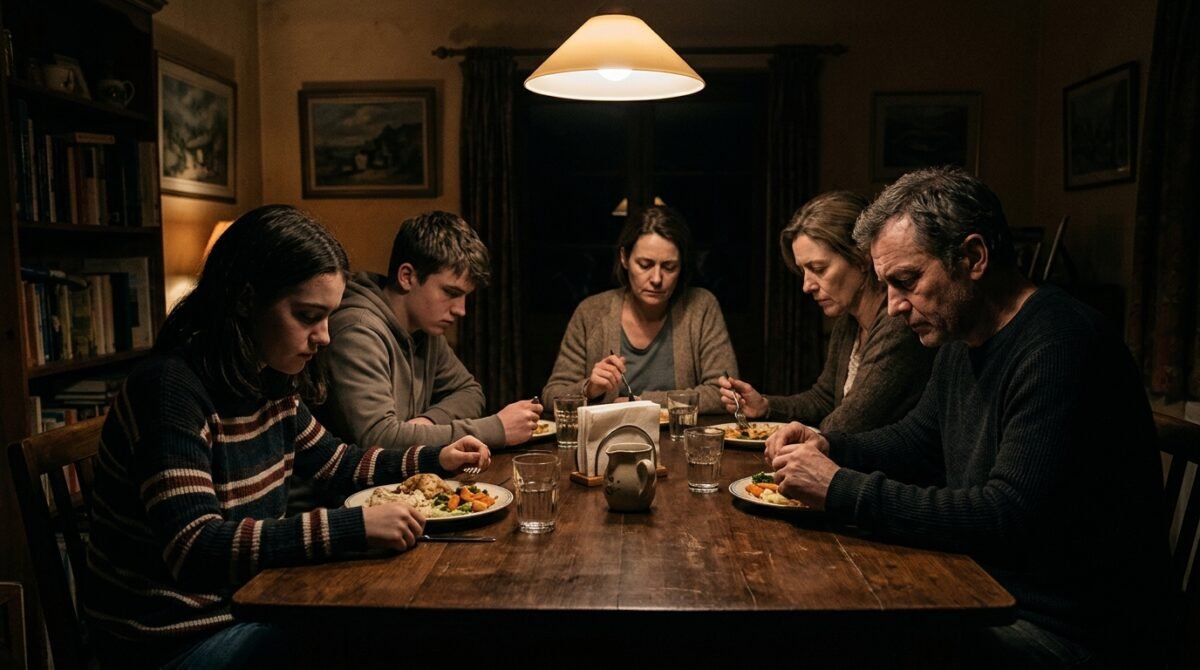
The Sunday following the listing going live, we had a mandatory family dinner. I didn’t want to go, but my mother-in-law insisted, and I felt I owed it to her to explain the situation before the gossip mill chewed her up. I arrived alone, wearing a simple dress, ready to face the music. Mark was already there, looking disheveled, his usual pristine appearance marred by days of stress and anger.
The table was set with his mother’s best china, but the atmosphere was anything but festive. As soon as I sat down, Mark started his rant. He talked about ‘the violation of his space,’ ‘the unprovoked attack on his property,’ and ‘the betrayal of his minimalist vision.’ It was a performance, meant to garner sympathy, but as he spoke, his words just sounded more and more unhinged.
I waited for him to finish, then I looked at his mother. ‘Mark installed a deadbolt on our bathroom, Mary. He locked me out of the master suite because my personal items were ruining his aesthetic. I was living in the guest room for three months. That isn’t a house; that’s an exhibit. I am not a piece of furniture, and I refused to live like one.’
“He did what? Mark, you told me you were just renovating the en-suite to be more efficient. You never mentioned locking your wife out of the master bathroom.”
— Mark’s mother, visibly shocked
The table went dead silent. You could hear the clock ticking on the wall. Mark’s face went white, then red. He tried to backtrack, to explain, to justify, but the look on his mother’s face said it all. She wasn’t seeing a ‘minimalist visionary’; she was seeing a man who had completely lost his perspective on what a marriage actually was.
The rest of the meal was agonizingly awkward. Nobody spoke about the house, the sale, or the divorce. We just ate in silence, the weight of the truth hanging in the air. As I stood up to leave, Mark’s mother caught my hand. ‘I’m sorry, Sarah. I didn’t know. He… he gets these ideas, but this was too much.’ It was the only apology I would get, and it was enough.
The Certified Letter That Changed Everything

A week later, I received a certified letter from Mark’s lawyer. He was trying to block the sale of the house, claiming it was his ‘primary residence’ and that I was acting in bad faith. It was a desperate move, one that showed how little he understood about the legal reality of our situation. He was still trying to use intimidation, still trying to control the outcome of the game.
I sent the letter to my own attorney, who laughed. ‘He has no standing,’ she said. ‘The house is in both your names. You have every right to sell, and he cannot legally bar you from the proceeds or the decision. This is just a power play. Ignore it.’ I felt a wave of relief. The legal system was the one thing he couldn’t ‘minimalize’ or redesign.
I spent the next few days gathering my remaining items from the house, accompanied by a police escort, just in case. Mark didn’t show his face, but I could feel his presence in the house—the way the rooms were perfectly, unnaturally empty. It was like walking through a museum of a failed life. I took everything that was mine and left the rest. I didn’t want a single thing that had been touched by his ‘vibe.’
“You’re doing great, Sarah. Don’t let his legal posturing scare you. He’s just scared because he’s losing his grip on the only thing he really values—his control.”
— My lawyer, over the phone
As I walked out of that house for the last time, I didn’t look back. I didn’t take a final picture, I didn’t linger in the hallway, I didn’t check the lock on the bathroom door. I just walked to my car, started the engine, and drove. The air outside felt cleaner, fresher, and more real than any ‘zen’ environment Mark could have ever curated.
The house sold three weeks later, to a young couple who actually seemed to want to live in it, not just look at it. I got my half of the proceeds, and I used a portion of it to put a down payment on a place of my own—a place where I can leave my skincare products on the counter if I want to, and where the doors never, ever have deadbolts.
Reddit Community Reacts: NTA or Overreaction?

When I finally posted my story to Reddit, I expected a mix of responses. I wanted to see if I was crazy or if I had actually been the victim of a very specific, very strange form of domestic abuse. The response was overwhelming. Within hours, the thread had thousands of comments, most of them fiercely defending my decision to sell the house.
“NTA. A deadbolt on the master bathroom? That’s not minimalism, that’s domestic isolation. You were living with a curator, not a husband. Good for you for getting out before he decided you were ‘clutter’ too.”
— u/Realist101 (Top Comment, 28.5k upvotes)
There were, of course, the dissenters. Some people argued that I should have tried therapy, or that selling the house was a ‘nuclear option.’ They didn’t understand that for me, the therapy ship had sailed the moment the deadbolt was installed. They didn’t see the months of quiet, systematic erasure I had endured. They just saw a house being sold.
“ESH. You should have communicated better, but installing a lock on the bathroom is definitely a red flag. Maybe you both needed therapy, but selling the house without his consent seems extreme.”
— u/DevilAdvocate_99 (1.2k downvotes)
Reading the comments was therapeutic in its own way. It showed me that while some people couldn’t see the nuance of my situation, the vast majority understood that a home is a shared space for shared lives. The ‘minimalist’ argument was widely mocked, with many users sharing their own stories of ‘aesthetic-obsessed’ partners who made their lives miserable.
I found comfort in the fact that I wasn’t alone. Other people had been in similar situations, where their identity was slowly being squeezed out by someone else’s ‘vision.’ It validated my feeling that this wasn’t about the bathroom at all; it was about the fundamental right to exist in your own home without being managed or controlled.
The discussion eventually moved toward the legal aspects of marriage, with many people pointing out that ‘shared assets’ means exactly that—shared. You cannot unilaterally claim a space as your own in a marriage. It was a valuable lesson for everyone in the thread, and I was glad that my story could serve as a warning for others who might be in a similar, slowly boiling pot.
The $1,400 Restaurant Bill Left On The Table

The final confrontation happened at a high-end restaurant where we had agreed to meet to sign the final divorce papers. Mark, ever the aesthete, had chosen the venue—a place so minimalist it felt like dining in a sterile laboratory. We sat at a table that felt like it was miles wide. He didn’t look at me; he just stared at the menu, complaining about the ‘cluttered’ font.
I signed the papers, feeling nothing but a profound sense of relief. When the waiter brought the bill, Mark just pushed it toward me. It was for $1,400—mostly from the expensive wine he had ordered to soothe his nerves. I looked at the bill, then at him, and just laughed. I took out my credit card, paid for my own drink, and stood up.
“You’re paying for this, Mark. You wanted the experience of a high-end dinner, and you wanted to be the one to control the narrative. You get the bill, too. I’m done paying for your version of reality.”
— My parting words to Mark at the restaurant
I left him there, sitting with a $1,400 bill and a lot of questions. I didn’t care if he could afford it or not. I didn’t care if he felt abandoned. I felt free. I walked out of that restaurant into the night, feeling the cool air on my face, and for the first time in years, I didn’t feel like I was walking on eggshells.
I got home, to my new apartment, and went into the bathroom. I didn’t have any fancy dispensers, no marble tiles, no minimalist aesthetic. I had my clutter. I had my bottles of serum, my moisturizer, and my face wash, all sitting right there on the counter. And for the first time in my life, I realized that my mess was not a failure—it was a sign of a life being lived.
I went to sleep that night knowing that I was the one who held the key to my own door. I hadn’t just sold a house; I had sold a prison, and I had bought myself the freedom to be exactly who I am. It was the best investment I had ever made.
Lessons From The Minimalist Trap
Reflecting on everything, I realize that the deadbolt was just the symptom, not the disease. The disease was the belief that one person’s comfort and ‘vision’ could supersede the needs and existence of their partner. Minimalism is a beautiful design philosophy, but when applied to human relationships, it becomes a weapon. It demands that you subtract, cut away, and reduce until there’s nothing left but the ego of the person in charge.
I learned that boundaries are meant to protect, not to isolate. In a marriage, you have to be able to share space—physically and metaphorically. If you can’t be yourself, with all your ‘clutter’ and ‘noise,’ in the place you call home, then it’s not a home. It’s just a house, and you’re just a guest in someone else’s life.
I also learned that it’s okay to walk away. We are taught to ‘work it out,’ to ‘compromise,’ to ‘be patient,’ but sometimes, the only path forward is to exit the situation entirely. There is no shame in realizing that a partnership has become a cage. The sooner you recognize it, the sooner you can start building a life that is actually yours.
I am now at peace, living in a space that is mine, surrounded by the things I love, even if they aren’t ‘minimalist.’ I am happy, I am free, and most importantly, I have a bathroom door that I can leave wide open if I want to, or lock for my own privacy—a choice that is entirely, and finally, mine.
I hope my story serves as a reminder to anyone feeling small in their own home: you are not an exhibit. You are a human being, and you deserve to take up space. Don’t let someone else’s ‘vibe’ define your value. You are the architect of your own happiness, and you have the power to tear down any walls that are standing in your way.
Conclusion
My life today is unrecognizable from the one I led six months ago. The divorce is finalized, the house is a memory, and I have regained the autonomy I didn’t even realize I was losing. I look back on that deadbolt not as a tragedy, but as the turning point that forced me to look at the reality of my situation. It was the physical manifestation of the control I had allowed into my life, and its removal—by way of the house sale—was the only way to reclaim myself.
I still receive the occasional text from mutual friends about Mark, telling me he is still ‘redecorating’ and looking for the next ‘minimalist’ project. It’s sad, in a way, but it’s no longer my sadness to carry. He is trapped in his own cycle of perfectionism, and I am finally living a life that is messy, authentic, and entirely my own.
If you have ever felt like an intruder in your own life because of someone else’s standards, I want you to know that your discomfort is valid. You don’t owe anyone a ‘curated’ version of yourself. You are not a prop. You deserve to be heard, seen, and respected in your own home. Don’t wait for a deadbolt to realize you deserve better.
Community Poll: Have you ever had to leave a relationship because your partner was obsessed with control or ‘aesthetic’ over your mutual needs? Do you think the ‘minimalist’ trend is inherently exclusionary to relationships? Let us know your thoughts in the comments below.
What's your verdict on this dilemma?
Vote below to contribute to the official community consensus.

Have a Dilemma Keeping You Up at Night?
Share your real-life feud, wedding chaos, or relationship crossroads anonymously with our editorial team.
What do you think ?
0 Comments🛡️ Comments are moderated to protect community integrity. Your comment will appear once approved by the editorial team.