

Marriage is often described as a partnership of equals, a shared journey where two people navigate the complexities of life, finances, and parenthood in tandem. For years, I believed that my husband, Mark, and I were on the same page. We had our struggles, certainly, but we were a team. Or so I thought, until the onset of a particularly brutal winter exposed a fissure in our foundation that I could no longer ignore.
My son, Leo, from my previous marriage, has always been the apple of my eye. As the temperatures began to plummet, I noticed his old snow boots were tattered and his jacket was no longer providing the warmth he needed for the long walks to his school. When I approached Mark about setting aside a modest amount of our household budget to get Leo proper winter gear, the response was immediate and sharp: we were in a financial crisis. We were ‘too broke,’ he claimed, to justify anything beyond the absolute bare minimum.
I felt a deep sense of guilt. I took on extra shifts, cut back on our groceries, and agonized over every penny, convinced that our household was hovering on the precipice of ruin. Mark played the role of the stressed provider perfectly, sighing over bills and complaining about the rising cost of living. It was an elaborate performance, one that left me feeling anxious, isolated, and utterly responsible for the ‘hardship’ we were facing.
The illusion finally shattered on a Tuesday afternoon when I stumbled upon a small, elegant shopping bag tucked away in the back of his closet. Inside was a receipt for a luxury watch—a $3,000 purchase made just days after he had told me we couldn’t afford a $150 set of snow gear for my son. The betrayal wasn’t just about the money; it was about the deliberate deception and the hierarchy of importance he had established in our home.
Standing there, holding that receipt, the silence of the house felt deafening. I realized then that my husband hadn’t been protecting our family’s future; he had been curating his own image at the expense of my child’s comfort and my own peace of mind. This wasn’t just a disagreement; it was a fundamental breach of trust that required an immediate, and perhaps permanent, response.
The Fabricated Financial Emergency

For weeks leading up to the incident, Mark had been painting a grim picture of our finances. Every time I mentioned an upcoming expense, he would launch into a monologue about interest rates, debt-to-income ratios, and the need for extreme austerity. It felt like walking on eggshells; every grocery run felt like a negotiation, and every utility bill was treated as a personal affront to our stability.
I trusted him implicitly. He handled the primary accounts, and I focused on managing our daily needs. When I brought up the fact that Leo needed a new, waterproof winter suit, Mark looked at me with what I now recognize as a practiced expression of pained regret. He told me that we were ‘barely keeping our heads above water,’ and that Leo would simply have to ‘make do’ with what he had for the rest of the season.
I felt so small in those moments. I looked at Leo, playing in the living room, and felt a surge of shame that I couldn’t provide even the basics. I started skipping lunches at work to save a few dollars, and I even sold some of my old college textbooks to a local shop to scrape together a few extra bucks, just in case of a true emergency.
“I just don’t see why you’re being so dramatic, honey. It’s just cold. Kids are resilient. We need to prioritize our mortgage and the car payments before we worry about boutique snow gear. Can’t he just wear his sweater under his old jacket?”
— Mark, during our ‘budget meeting’
The psychological toll of that scarcity mindset was immense. I stopped taking care of myself. I stopped asking for anything for the house. I became a ghost in my own life, obsessed with the numbers, while Mark continued to dress impeccably for his job, insisting that he had to ‘look the part’ of a successful professional to ensure his promotion.
Looking back, I see the signs. He was always checking his phone, always defensive when I asked about his credit card statements, and always disappearing for ‘errands’ that seemed to take far too long for someone who claimed to be so busy working overtime. I was so blinded by my own desire to be a supportive wife that I never stopped to question if the austerity was being applied equally.
The Discovery in the Closet
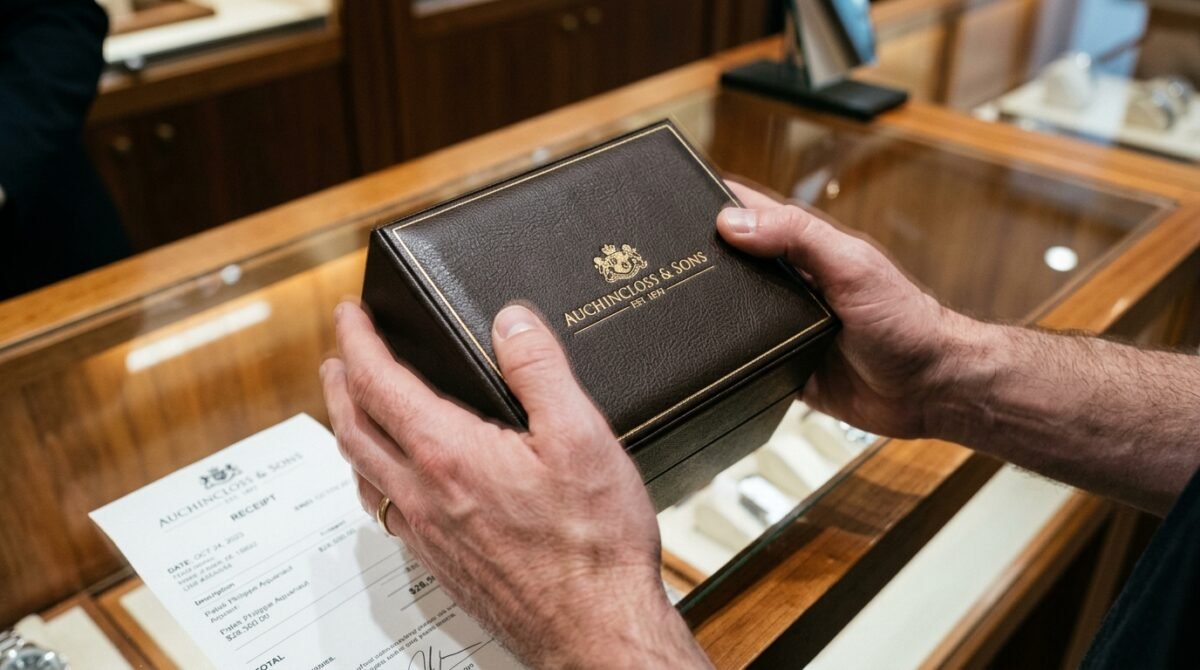
It started as a simple chore. I was looking for a spare coat hanger to organize the laundry when I noticed the shopping bag tucked behind a row of winter coats. It was a high-end, embossed bag from a luxury boutique, the kind of place that we had never, ever frequented—not in our wildest dreams, according to Mark.
I reached in, my heart pounding for reasons I couldn’t yet articulate. I pulled out a small, velvet-lined box and a crumpled receipt. As I opened the box, I was greeted by the sight of a gleaming, silver-toned watch. It was beautiful, undeniably so, but as I unfolded the receipt, the air left my lungs. The purchase price was exactly three thousand dollars. The date on the receipt was from three days prior—the very same day Mark had told me we couldn’t afford $150 for Leo’s gear.
I stood frozen in the closet, the weight of the receipt heavy in my hand. I felt a cold, sharp anger rising in my chest, a sensation that quickly eclipsed the shame I had been carrying for weeks. It wasn’t just the money; it was the audacity of the lie. It was the deliberate choice to prioritize an accessory over the health and physical comfort of my child.
“It was just a bonus, okay? I bought it as an investment piece! It’s something that holds value. You just don’t understand the world of men’s accessories. It’s for my career image.”
— Mark’s later defense
I didn’t immediately confront him. I couldn’t. I needed to process the sheer magnitude of the betrayal. I walked out of the closet and sat on the edge of our bed, staring at the watch. I realized that for every meal I had skipped, for every hour I had stressed over our bank balance, Mark had been planning this purchase. He had been looking at his wrist, knowing that my son was shivering in the cold, and he had felt nothing.
My hands were shaking as I pulled out my phone. I didn’t want to scream. I wanted to act. I knew that if I waited, I would lose my nerve. I had to do something, anything, to reclaim some semblance of control over my household and my life. The decision to take the watch back wasn’t just about the money anymore; it was an act of survival.
The Return to the Boutique

I didn’t tell Mark I was going. I simply grabbed the watch, the box, the warranty card, and the original receipt, and I headed to the boutique. The store was located in the high-end district of the city, a place where the air smells of expensive cologne and refined indifference. I felt completely out of place in my old sneakers and worn-out parka, but my resolve was ironclad.
When I reached the counter, the sales associate was impeccably dressed and polite, though his eyes flicked over my outfit with a subtle, practiced appraisal. I placed the box on the glass counter. I told him I needed to return the item. He hesitated, noting that it was a final sale for certain promotions, but I was prepared.
I had read the fine print on the back of the receipt while sitting in the car. It clearly stated that items could be returned for a full refund within seven days if accompanied by the original receipt and all packaging. The associate spent a long time inspecting the watch, clearly trying to find a reason to deny the return. I didn’t budge. I stood there, firm and calm, for nearly twenty minutes until he finally tapped the keys on his register.
“I am sorry, ma’am, but the policy usually requires the original purchaser to be present if the item has been unwrapped. I see you have the receipt, but this is a high-value item.”
— The boutique clerk trying to dissuade the return
I looked him directly in the eye and said, “I am his wife. We share the bank account from which this money was withdrawn. If you don’t process this return, I will contact my bank to report this as an unauthorized transaction on our joint account. I have the documentation to prove it.”
The clerk looked at me, saw the desperation and the resolve in my face, and sighed. He processed the refund. As the confirmation receipt printed, I felt a wave of relief so intense it was almost dizzying. Three thousand dollars back into our account. Three thousand dollars that would now be used for what I deemed necessary. I walked out of that store and immediately drove to the children’s department store, where I bought the best snow gear they had, along with boots, gloves, and a new winter coat for Leo.
The Explosive Confrontation

When Mark came home that evening, I was already prepared. I had placed the new snow gear prominently on the kitchen table, and I had left the return receipt sitting right next to it. I sat at the table with a glass of water, waiting. I didn’t have to wait long. He walked through the door, checked his wrist, and stopped dead in his tracks.
He didn’t look at the snow gear first. He looked at his bare wrist. Then he looked at the table. His face turned a shade of crimson I hadn’t seen before. He didn’t ask; he started shouting. He accused me of theft, of sabotage, of being a controlling shrew who didn’t want him to have ‘nice things’ for his career.
“You had no right! That was my watch! That was for me! Who the hell gave you the authority to walk into a store and return my property? You are insane! You’ve embarrassed me in front of the entire store, haven’t you?!”
— Mark, screaming in the kitchen
I stayed calm. I stood up, looked him in the eye, and told him exactly what I had done. I told him that I had used the money to properly clothe my son, a child who had been freezing in the cold while he wasted our survival funds on a status symbol. I told him that the ‘financial crisis’ he had been peddling was a lie, and that I was no longer going to play the role of the impoverished martyr.
He tried to argue that the watch was an investment, that it would appreciate in value. I laughed. It was a hollow, bitter sound. I told him that the only thing that had appreciated was my realization of his true character. I told him that if he wanted a luxury watch, he could buy it with his own, separate funds—if he had any left after I was finished restructuring our finances.
The fight lasted for hours. He tried to gaslight me, telling me I was being overly sensitive and that Leo didn’t actually need new gear. He even suggested that I was ‘ruining’ his professional opportunities by acting like a ‘jealous child.’ I didn’t care. For the first time in years, I wasn’t trying to keep the peace. I was standing my ground, and it felt like I was finally breathing for the first time in a long time.
The Digital Fallout and Secret Messages
The next morning, the fallout began in earnest. Mark hadn’t spoken to me all night, sleeping on the couch. I woke up to a flurry of notifications on his phone, which he had left on the kitchen counter. I didn’t intentionally snoop, but a notification from a group chat titled ‘The Boys’ caught my eye. It was from one of his friends, mocking me for being ‘the budget police.’
“Bro, your wife actually returned the watch? That’s hilarious. You should put her on a strict allowance after that. Can’t believe you let her get away with it. You need to show her who’s boss before she thinks she runs the bank account.”
— A text from ‘The Boys’ group chat
Reading those messages was like being doused in ice water. It wasn’t just Mark; his entire social circle viewed me as an object to be managed, a burden to be controlled. They were joking about my efforts to provide for my son. They were discussing our finances as if they were a game, a way to keep me in line.
I took screenshots of everything. I didn’t know what I would do with them yet, but I knew that this level of disrespect went far beyond a simple disagreement about a watch. It was a fundamental lack of respect for me as a partner, a mother, and a human being. I sent the screenshots to my own phone and then deleted the notifications, leaving the phone exactly as it was.
I realized then that Mark had been venting to his friends about me for months, painting a distorted picture of our life to justify his own selfishness. He wasn’t just lying to me; he was lying to the world about who I was and what I contributed. It was a systematic effort to strip me of my agency and make me feel like I was the problem, all while he lived a double life.
I spent the day at my mother’s house, not telling her everything yet, but just needing to be somewhere safe. I realized that my marriage was not a partnership. It was a hostage situation where I had been providing the ransom for my own subordination. The question wasn’t how to fix the marriage anymore; the question was how to safely exit it.
The Lawyer’s Consultation

When I returned home, I didn’t engage with Mark. I was cold, distant, and focused. I had already scheduled an appointment with a family law attorney, someone a friend had recommended. I needed to know where I stood legally regarding our finances. I wanted to ensure that if I left, I wouldn’t be left with nothing while he continued to splurge on his ‘investments.’
The consultation was eye-opening. The attorney explained that while we were married, most of our assets were considered community property, regardless of whose name was on the account. However, he also warned me that Mark’s pattern of behavior—the hiding of funds, the secret purchases—could be documented as financial infidelity. It wasn’t a criminal act in the traditional sense, but it would be a major factor in any potential separation.
I told the attorney about the watch, the lies about our budget, and the group chat messages. He listened intently, taking notes. He told me that I had done the right thing by securing the documentation of the purchase and return. He advised me to start gathering all our financial records, tax returns, and statements, and to keep them in a place where Mark couldn’t access them.
“Financial infidelity is just as damaging as any other form of betrayal. It erodes trust, security, and the future. If you suspect he is hiding other assets, we need to act quickly to ensure a full audit is part of any legal proceedings.”
— My attorney during our consultation
I felt a strange sense of empowerment. I wasn’t just a victim of a bad marriage anymore; I was a person taking active steps to protect my future and my son’s future. The fear that had paralyzed me for so long started to dissipate, replaced by a steely determination. I was going to get out, and I was going to do it on my own terms.
When I got home, I found Mark sitting at the kitchen table, staring at the empty spot where the watch had been. He didn’t look angry anymore. He looked scared. He asked me where I had been, and for the first time, I didn’t feel the need to justify my movements to him. I simply said, “Taking care of business.”
The Sunday Dinner Silence
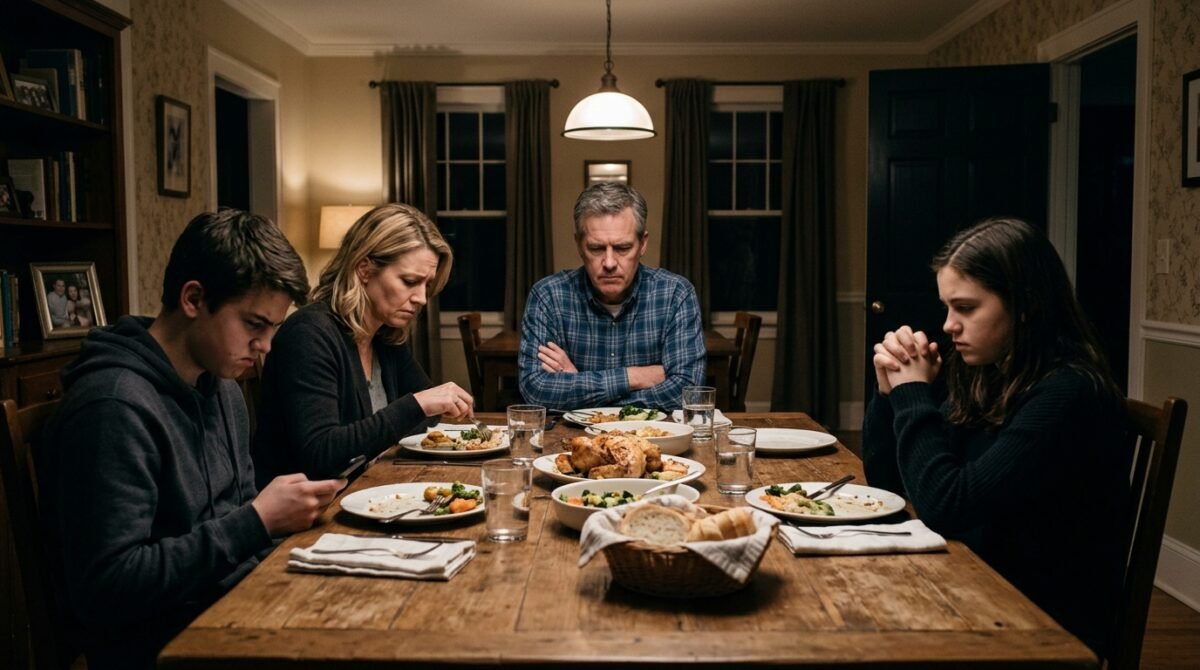
Sunday dinner at Mark’s parents’ house was always an ordeal, but this time it was different. We were hosting, and the air was thick with tension. Mark had tried to act normal, but his eyes were darting around, and he was clearly on edge. I, on the other hand, was perfectly composed. I had spent the afternoon preparing a meal that didn’t break the bank, and for once, I didn’t care if it met his standards.
His mother, ever the critic, made a comment about the ‘simple’ meal. She was used to us ordering out or going to fancy restaurants. I smiled and told her that we were prioritizing our family’s future over luxury, a remark that made Mark choke on his wine. The table went deathly silent. His father looked at us, sensing the shift in the power dynamic.
“Everything okay? You two seem a bit… quiet today. Mark, you usually have a story about work. And Sarah, you’re usually more talkative. Is there something going on that we should know about?”
— Mark’s father at the dinner table
Mark tried to laugh it off, but I didn’t let him. I looked at his parents and told them exactly what had happened with the watch. I told them about the ‘financial crisis’ he had been insisting on, and how he had used our money to buy a luxury item while my son needed winter clothes. I didn’t yell. I spoke with the calm, flat tone of someone who had already mourned the end of their marriage.
The look on his mother’s face was priceless. She was shocked, not necessarily by the watch, but by the fact that I had dared to speak about it in public. She tried to defend him, saying that he was a ‘hardworking man’ who deserved a treat. I cut her off, reminding her that a ‘hardworking man’ puts his family first. The rest of the dinner was agonizingly awkward.
As we drove home in silence, Mark didn’t say a word. He knew that the facade he had built was crumbling. He knew that I wasn’t the weak, compliant wife he had convinced himself I was. And he knew that he had lost control over the narrative. The silence in the car wasn’t empty; it was heavy with the weight of everything that had been revealed.
The Internet Weighs In

I had been documenting everything in a private draft, and on a whim, I decided to share the story on a popular forum. I needed validation that I hadn’t lost my mind. I needed to know if I was the villain, as Mark had suggested. The response was overwhelming. Within hours, thousands of people had weighed in, and the consensus was clear: I was not the one at fault.
“NTA. Your husband is a classic financial abuser. He created a false reality of scarcity to keep you compliant while he indulged himself. Returning that watch was the ultimate power move. Don’t let him back in. Run, don’t walk, to a lawyer.”
— u/FinancialTruthSeeker, 15.2k upvotes
“I had an ex who did the exact same thing. It starts with a watch, then it’s a car, then it’s gambling debts. He’s showing you who he is. Believe him the first time. You’re doing the right thing for your son.”
— u/Survivor101, 8.4k upvotes
The support was validating, but it also made me sad. It made me realize that so many women had walked this path before me, enduring the same manipulation and the same gaslighting. It made me feel less alone, but it also made me realize how widespread this issue really was. The comments weren’t just support; they were a roadmap of what to expect next.
Many users warned me about ‘extinction bursts’—the period when an abuser realizes they are losing control and escalates their behavior. They warned me to be prepared for everything from tearful apologies to threats, and to ensure I had a safe place to go. I took their advice to heart, creating a ‘go-bag’ with important documents, Leo’s birth certificate, and some emergency cash.
I stopped caring about Mark’s feelings. I stopped trying to ‘fix’ the marriage. I spent my time reading the stories of others who had escaped, and I found the strength to start planning my exit in earnest. The internet had given me the perspective I needed to see that this wasn’t about a watch; it was about my life.
The Final Ultimatum

A few days later, Mark tried to ‘reset’ the relationship. He came home with flowers and an apology. He told me he was stressed, that he made a mistake, and that he wanted to work on things. He even suggested marriage counseling. I sat him down and gave him a choice. It wasn’t an invitation to negotiate; it was a set of demands.
I told him that for us to even consider staying together, we needed full, transparent access to every single financial account. We needed to move all our money into a joint account that we both monitored daily. And most importantly, he needed to sign a post-nuptial agreement that protected my son’s interests and ensured that any future ‘investments’ were discussed and agreed upon by both of us.
“I am not asking, Mark. I am telling you what needs to happen if you want to stay in this house. You have destroyed my trust, and you have failed as a provider for Leo. If you aren’t willing to do this, then our marriage is over, and I will be filing for divorce.”
— My ultimatum to Mark
His face went pale. He tried to argue, saying that I was being ‘punitive’ and that I didn’t trust him. I reminded him that trust is earned, and he had spent every cent of it. He refused, of course. He couldn’t handle the loss of control. He couldn’t handle the idea that he would have to be accountable for every penny he spent.
The conversation ended with him storming out of the house. He thought he was walking out on a disagreement. He didn’t realize he was walking out on his marriage. I sat on the couch, feeling a strange sense of calm. I had given him a chance to show me he cared about us, and he had shown me exactly what his priorities were. It was the clarity I had been waiting for.
I spent the rest of the evening calling my lawyer and setting the wheels in motion. I wasn’t angry anymore. I was relieved. I had finally stopped trying to fix something that was fundamentally broken, and I was finally ready to start building a life for myself and my son that was based on honesty, respect, and shared goals.
The New Beginning

The divorce process was long and messy, as everyone said it would be. Mark tried to fight me on every point, accusing me of being the one who ruined the marriage. But I had my documentation, my screenshots, and my resolve. I didn’t back down. I focused on Leo, making sure he was shielded from the worst of the conflict and that he felt secure in our new home.
Today, Leo and I are in a much better place. We live in a smaller, more affordable apartment, but it’s ours. It’s filled with laughter, warmth, and the sound of a happy child. We don’t have to worry about whether we can afford winter boots or groceries, because our finances are transparent and managed with care. I’ve learned that security isn’t about how much money you have; it’s about the trust and the people you share it with.
I look back at the watch, the receipt, and the shouting, and I see them for what they were: the catalysts for my freedom. I’m not the same woman I was then. I’m stronger, more discerning, and more protective of my own happiness. I’ve learned that I am worth more than a luxury watch, and that my son is worth more than a budget-conscious lie.
“I used to think that being a wife meant sacrifice. Now I know that a true partnership is about mutual support and growth. If you find yourself having to sacrifice your child’s needs for your partner’s vanity, you’re not in a partnership. You’re in a trap.”
— My parting reflection
I still see Mark sometimes, from a distance, and he looks the same—still chasing status, still trying to impress people who don’t care about him. But I don’t feel anger anymore. I feel pity. He had a family who loved him, a partner who trusted him, and a life that was worth more than any timepiece. And he traded it all for a watch that tells the time, but can’t buy back what he lost.
I’m finally living for myself and my son, and for the first time in years, the future doesn’t look like a financial crisis. It looks like an opportunity. And that, more than anything, is the best investment I’ve ever made.
Conclusion
This journey has been a difficult one, but it has taught me the invaluable lesson that self-respect is the most important asset one can possess. Financial infidelity is a silent predator that eats away at the foundation of trust, and it must be addressed with the same gravity as any other betrayal. If you find yourself in a situation where your needs—or the needs of your children—are being systematically ignored in favor of your partner’s vanity, please know that you are not alone, and you deserve better.
I want to hear from you. Have you ever discovered that your partner was hiding large financial expenses while claiming poverty? How did you handle the discovery, and what were the long-term consequences for your relationship? Let’s discuss in the comments below.
Poll: What would you have done in my situation?
- A: Returned the item immediately and demanded transparency.
- B: Confronted the partner and demanded they return the item.
- C: Stayed quiet and started secretly saving your own money.
- D: Initiated a divorce or separation immediately upon discovery.
What's your verdict on this dilemma?
Vote below to contribute to the official community consensus.

Have a Dilemma Keeping You Up at Night?
Share your real-life feud, wedding chaos, or relationship crossroads anonymously with our editorial team.
What do you think ?
0 Comments🛡️ Comments are moderated to protect community integrity. Your comment will appear once approved by the editorial team.