
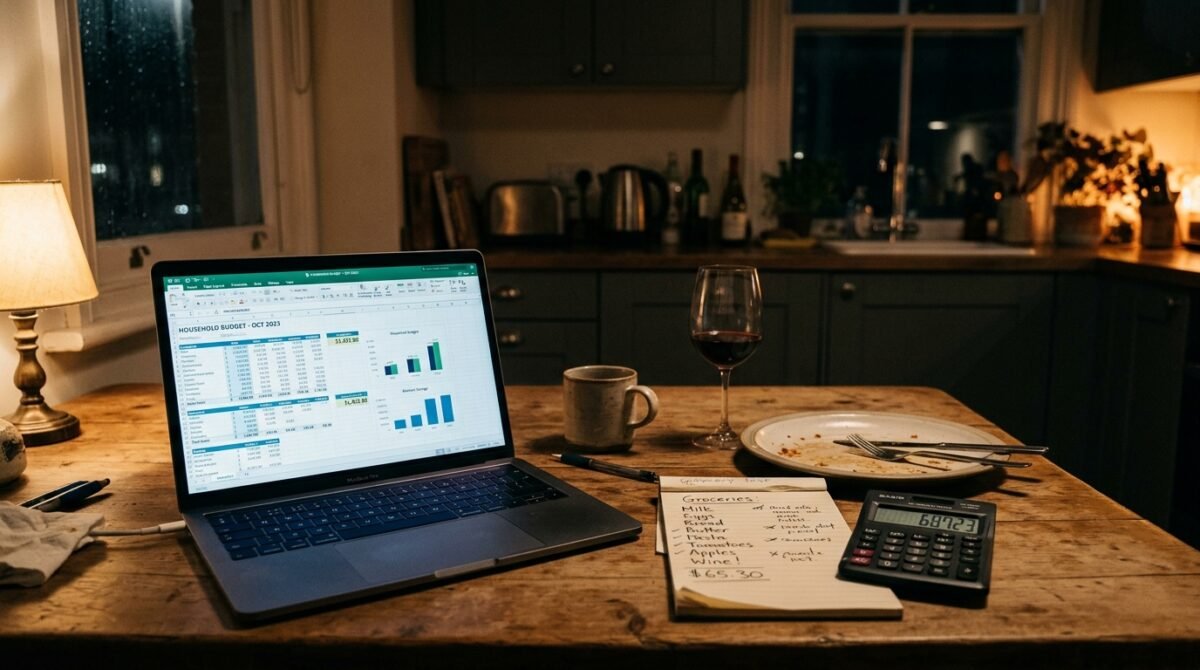
Marriage is supposed to be a partnership—a merging of two lives, two bank accounts, and two philosophies into a shared existence. When I married Mark, I thought we were a team. We navigated the trials of our early twenties, student loans, and career pivots with the kind of solidarity that makes you feel invincible. But sometimes, the cracks don’t appear in the form of a dramatic infidelity or a sudden, explosive lie. Sometimes, they appear in the quiet, methodical calculation of a grocery receipt.
It started subtly. A casual comment about my intake at dinner, a pointed look at the price of organic produce, and then, the inevitable ‘optimization’ phase. Mark, an accountant by trade and a micromanager by nature, began to view our household as a business to be streamlined. But he took it a step further than budget cuts. He decided that our caloric needs—and therefore our grocery spending—should be governed by a mathematical formula based on our BMI and basal metabolic rate.
I remember the night he first brought the spreadsheet to the table. It was a Tuesday, the air thick with the smell of roasted chicken I had spent two hours preparing. Instead of talk of our days, he pulled out his laptop. The screen glowed with blue light, illuminating rows of data that reduced my existence to a series of integers. He wasn’t just tracking costs; he was calculating my worth as a percentage of the total household intake.
The moral dilemma here isn’t just about money—it’s about the dehumanization of a partner. When your spouse stops seeing you as a human being with needs and starts seeing you as a line item on a budget sheet to be adjusted, the foundation of the relationship has already begun to crumble. I didn’t know it then, but that spreadsheet was the beginning of the end. It was the moment the ‘we’ became ‘me’ versus ‘you’.
This is the story of the grocery calculator that broke the camel’s back. It’s a story of how a small, controlling habit blossomed into a full-blown crisis of identity and respect, eventually leading to a reckoning that neither of us saw coming. It’s a story that left me sitting alone in a silent house, wondering how a person I once trusted implicitly could turn a simple loaf of bread into a weapon of emotional warfare.
The Spreadsheet of Insanity
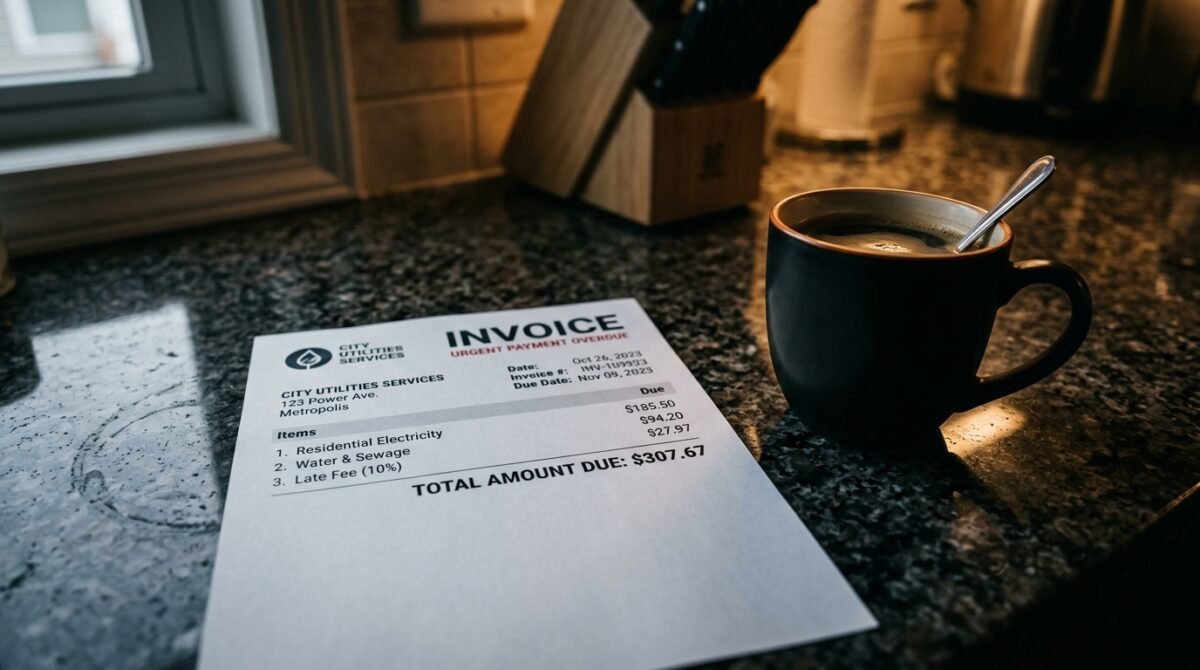
The spreadsheet was titled ‘Household Resource Allocation.’ At first, I laughed. I thought it was a joke—a quirky, accountant-style eccentricity that he’d eventually tire of. But when I checked the grocery bill the next day and saw a discrepancy in how he’d split the costs, I realized the joke was entirely on me. He had factored in my height, my weight, and my ‘average caloric expenditure’ to determine that I owed 38% of the food bill, while he paid the remaining 62%.
I confronted him, expecting an apology or at least a chuckle. Instead, he pulled up a medical website on his phone. He started lecturing me about thermodynamics, energy equilibrium, and the ‘mathematical fairness’ of our financial contributions. The look in his eyes wasn’t one of malice, but of cold, hard logic. It was as if he had divorced himself from the emotional context of our marriage entirely.
“It’s not about the money, Sarah. It’s about systemic efficiency. If you consume 40% fewer calories than I do, why should we split the burden 50/50? It’s basic resource management.”
— Mark, during the first confrontation
I felt a chill run down my spine. I was looking at a man who was treating his wife like a roommate he was trying to optimize for tax purposes. I tried to explain that marriage isn’t a transactional arrangement, that we were building a life together, not running a lean startup. But he just tapped the spreadsheet, pointing to the cells where my ‘share’ was highlighted in yellow.
The audacity of it was staggering. He had even calculated the cost of my morning coffee. He had tracked the milk, the sugar, and even the electricity for the kettle. It was a level of pettiness that went beyond frugal; it was deeply, profoundly obsessive. I spent that night staring at the ceiling, wondering if I was the one being unreasonable or if I was losing my mind.
The next morning, he had left a copy of the bill on the counter, with a sticky note indicating the exact amount I owed him for the previous week’s groceries. It was an invoice. He had literally invoiced his wife for breakfast, lunch, and dinner. I looked at the number—$42.17—and realized that this wasn’t about the money at all. This was about power.
The humiliation was immediate. I wasn’t an equal partner anymore; I was a subordinate, a client, someone whose worth was tied to a consumption quota. I took the bill, folded it into a tiny square, and put it in my jewelry box, a grim memento of the day my husband decided he was the CEO of our marriage.
When the Dinner Table Becomes a Courthouse
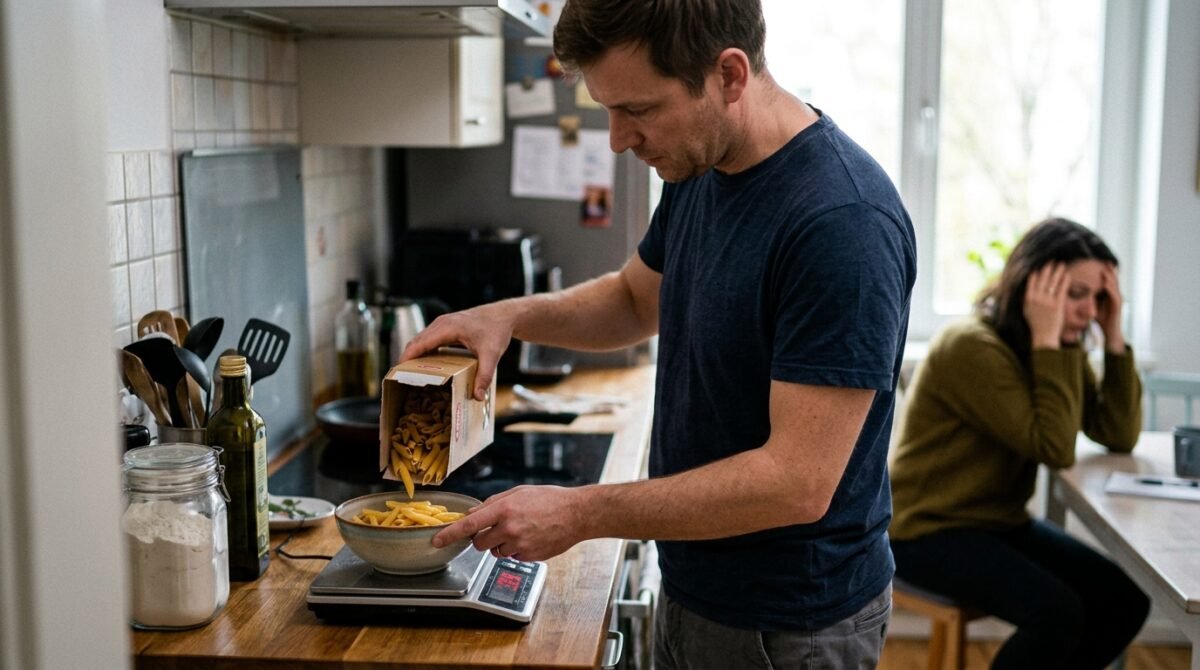
Dinner became a performance art of anxiety. Every bite I took felt like I was being watched, analyzed, and logged. If I reached for a second helping of salad, Mark would look at his watch or glance at the spreadsheet open on his phone. The joy of cooking, of sharing a meal, of simply enjoying food, was completely stripped away. It felt like I was living in a laboratory, and he was the lead scientist measuring my metabolic efficiency.
I remember one specific evening, I had made pasta. It was a simple dish, nothing fancy, but it was supposed to be a nice night. As I plated our portions, he stood up and grabbed the digital kitchen scale. He didn’t say a word, just moved the bowls to the scale and started weighing the portions. The sound of the plastic hitting the scale was deafening in the silence of the room.
“You’re serving yourself 200 grams of carbohydrates. That’s outside the threshold we discussed. You’re over-indexing on your weekly caloric allowance again.”
— Mark, while weighing dinner
I felt my face heat up with a mix of shame and righteous fury. I looked at him, standing there with his scale, his face unreadable, his focus entirely on the weight of the noodles. I pushed the bowl away and stood up. I didn’t want the food. I wanted to scream, but the words were stuck in my throat. I left the room, leaving him to weigh his own bowl in silence.
Later that night, I found him in the living room, still looking at the spreadsheet. He hadn’t even checked to see if I was okay. He was busy updating the ‘Deviation Log.’ Apparently, I had deviated by 15% from my agreed-upon calorie target. The absurdity of it made me want to laugh hysterically, but all I could feel was a crushing sense of loneliness.
I realized then that this was a pattern. It wasn’t just the groceries. He was applying this ‘optimization’ to everything. He tracked my fuel usage, my utility consumption, even the time I spent in the shower. Every aspect of my life was being quantified, judged, and taxed. He was building a wall, brick by brick, receipt by receipt.
The household had ceased to be a home. It was a business entity where I was the struggling partner failing to meet quarterly targets. The emotional toll was immense. I found myself checking the fridge before I ate anything, wondering if I had the ‘budget’ to be hungry. It was a suffocating, restrictive existence that I didn’t recognize as my own life anymore.
The Group Chat That Wasn’t Supposed to Be Seen
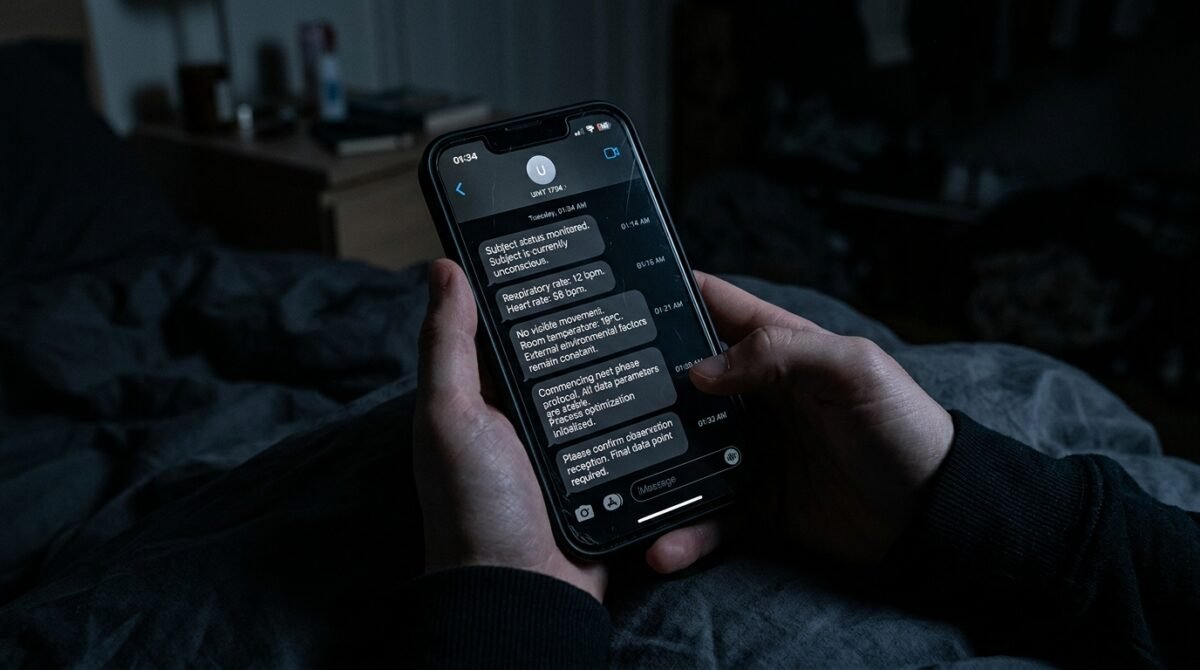
The breaking point came in the form of a notification. Mark had left his phone on the kitchen island while he was in the shower. I wasn’t looking for trouble, but the screen lit up with a message from a group chat titled ‘The Efficiency Lab.’ My heart sank as I saw my name pop up in the preview.
I shouldn’t have looked, but I did. I unlocked the screen, my hands trembling. The messages were from Mark to his two best friends. They were discussing my ‘consumption habits’ in terms that were both clinical and deeply insulting. They were joking about how to ‘gamify’ my diet to save more money on their future vacation fund.
“Sarah is still struggling with the caloric budget. I’m thinking of implementing a ‘Penalty Tax’ for any extra snacks. It’s for her own good, really. Plus, it’ll help us hit our savings goal for the trip to Japan by September.”
— Mark, in a group chat with his friends
I felt the breath leave my lungs. A ‘Penalty Tax’? He was literally planning to extort me for eating an extra apple. The betrayal felt physical, a sharp pain in my chest. I looked back through the chat history and saw months of casual misogyny, financial manipulation, and cold, calculated cruelty. They weren’t just discussing our budget; they were mocking my autonomy.
I felt small. I felt like a commodity, a piece of inventory in his grand plan for ‘efficiency.’ I couldn’t believe this was the man I had fallen in love with. The realization that he had been sharing our most private, intimate struggles with his friends for their amusement destroyed whatever shred of respect I had left for him.
I took a photo of the screen, my reflection caught in the dark glass of the phone. I looked tired, older, and defeated. I put the phone back, exactly where he had left it. I didn’t say a word when he came back into the room. I just walked past him, went into the bedroom, and locked the door.
I spent the night awake, listening to him move around the kitchen, probably checking his precious spreadsheet again. I was no longer a wife. I was a problem to be solved, a variable to be controlled, and a source of revenue to be extracted. And I knew, in that moment, that I couldn’t stay. The cost of this marriage was far higher than any grocery bill.
The Morning After the Revelation

When the sun rose, it felt like the world had changed, even though the room looked the same. I had packed a bag while Mark slept. I didn’t want to make a scene, but I couldn’t bear the thought of another breakfast where I had to justify my existence to a digital scale. I left the key on the kitchen table, right next to his precious, laminated copy of the ‘Household Resource Allocation’ ledger.
I heard him wake up. I heard the familiar sound of his routine—the kettle whistling, the clatter of the scale, the tapping of the keys. He walked into the kitchen, and for a moment, it was silent. Then, I heard the sound of the paper being picked up. I was already at the door, my coat on, my bag in my hand. I didn’t look back.
“Sarah? What is this? Why is your key here? And what are these receipts doing out of order?”
— Mark, from the kitchen
I stopped with my hand on the doorknob. I didn’t turn around. I didn’t want to see his face. I didn’t want to hear his excuses, his justifications, or his lecture on why I was being ‘irrational’ or ‘inefficient.’ I just said, ‘You can manage the budget all by yourself now, Mark. I’m sure you’ll find a way to make it even more efficient without me.’
I walked out and into the cool morning air. It was the most liberating feeling I had experienced in years. The weight that had been pressing down on my chest for months suddenly evaporated. I didn’t know where I was going, but I knew I was going somewhere where my worth wasn’t calculated in grams and cents.
I checked into a hotel, my phone buzzing incessantly. He was calling, sending texts, demanding to know what happened, why I left, and how I expected to settle the ‘outstanding balance’ of our last grocery run. I blocked his number, one by one, until the silence was total. For the first time in a long time, I was free.
I spent the day at a park, watching people go by, just breathing. I wasn’t thinking about calories or costs. I was thinking about who I was before this marriage, before the spreadsheets, before the control. I was starting to remember. And that was the first step toward getting my life back.
The Internet Weighs In
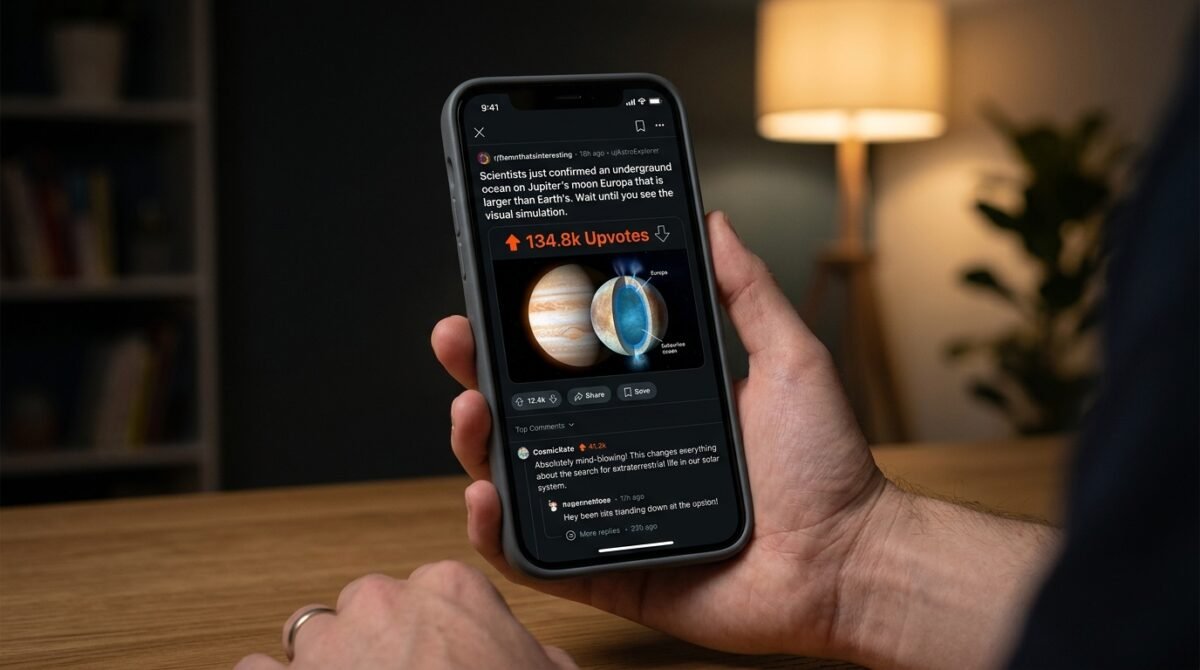
I knew I had to tell someone, so I turned to the only place I felt I could be honest without judgment: the internet. I posted my story on a popular forum, detailing the spreadsheet, the weigh-ins, and the leaked group chat. I expected some backlash—maybe people telling me I was overreacting—but the response was overwhelmingly supportive, and honestly, a little bit terrifying in how much it resonated with others.
The thread exploded within hours. Thousands of people commented, shared, and analyzed my situation. Many were disgusted by the ‘caloric budget’, calling it a form of financial and emotional abuse. Others shared their own horror stories of partners who used money as a weapon. The collective voice of the internet was clear: I had done the right thing by leaving.
“This isn’t a marriage; it’s a prison run by a spreadsheet. The fact that he’s taxing your food based on your weight is beyond controlling—it’s psychological torment. Run, don’t walk.”
— u/RedditUser99 (Top Comment, 45.2k upvotes)
It was validating to see so many people recognize the toxicity I had been internalizing for so long. It helped me realize that I wasn’t crazy. I wasn’t being ‘difficult.’ I was a human being being subjected to a standard of treatment that no one should ever have to endure. The support helped me find the courage to start divorce proceedings.
There were some dissenting voices, of course. Some argued that ‘financial transparency’ is key in a marriage and that perhaps I wasn’t contributing enough. But those comments were quickly buried under a mountain of support from people who understood that there is a fundamental difference between a joint budget and a weaponized spreadsheet.
The experience taught me that the internet, for all its faults, can be a place of genuine connection and clarity. It showed me that my experience, while unique in its absurdity, was part of a larger, darker trend of using data to control intimacy. It gave me the strength to stand my ground when Mark finally tracked me down and tried to convince me to come back.
I read through the comments every day for a week. They became my mantra. ‘You are not a line item.’ ‘Your worth is not a spreadsheet.’ ‘You deserve better.’ They were small phrases, but they carried the weight of a thousand strangers who were rooting for my happiness. And slowly, I started to believe them.
The Confrontation of the Century
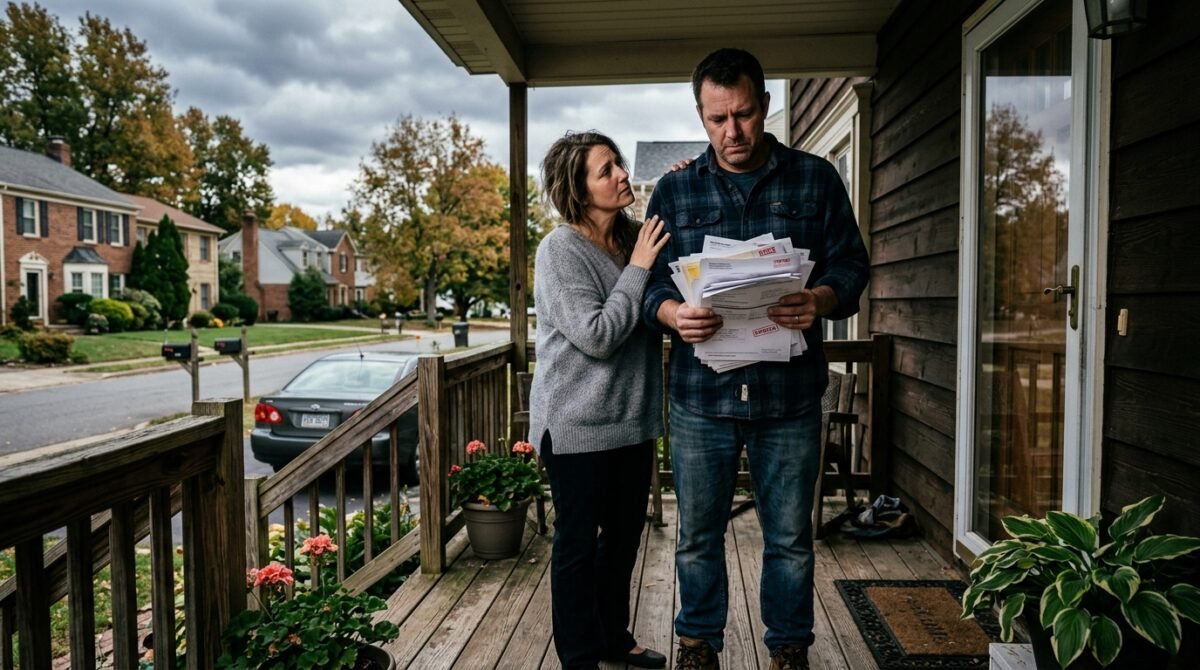
Mark found me at my sister’s house two weeks later. He wasn’t the cold, calculating man I had left; he was frantic, disheveled, and completely out of his depth. He brought a printed copy of the spreadsheet, all 40 pages of it, to show me how he had ‘fixed’ the errors. He wanted to show me that he could be a better partner, that he could adjust the ‘efficiency metrics’ to make me more comfortable.
I sat on the porch, my sister behind me, as he laid out the papers on the deck. He pointed to a new row he had added: ‘Emotional Maintenance Allowance.’ He had tried to quantify my happiness, my time, and my needs in hours and dollars. It was so absurd, so profoundly missing the point, that I actually started laughing. I couldn’t stop.
“Look, Sarah! I’ve factored in the time you spend on hobbies. I’ve even added a credit for the emotional labor you do! See? The math works out now. We’re perfectly balanced.”
— Mark, gesturing to his spreadsheet
I looked at him, really looked at him, and realized he would never understand. He was a man who lived in a world of numbers, and he was incapable of seeing the human experience for what it was—messy, irrational, and beautiful. He didn’t want a wife; he wanted a balanced equation. And I was never going to be that for him.
I told him to pack up his papers and leave. I told him that I didn’t want a spreadsheet of my life; I wanted a partner who loved me regardless of how much I ate or how much I cost. I told him that our marriage was over, not because of the money, but because of the lack of humanity. He didn’t understand. He just looked at me with confusion, as if I was the one failing the math.
He eventually left, muttering about ‘lost investments’ and ‘wasted potential.’ My sister stood by me, and we watched him pull out of the driveway. I felt a profound sense of relief. It was done. The hardest part was over. I was finally, truly, moving on with my life, away from the influence of the man who measured everything and understood nothing.
The divorce process was long, but it was also a process of reclamation. I had to fight for my assets, my sanity, and my story. But I had the support of my family and the validation of thousands of strangers who had been there. I was going to be fine. More than fine. I was going to be happy.
The Legal Reckoning

The divorce proceedings brought their own set of surreal challenges. My lawyer, a woman who had seen it all, couldn’t stop laughing when I showed her the ‘Household Resource Allocation’ spreadsheet. She kept it as a ‘highlight’ of her career, she joked. But for me, it was a piece of evidence that I was ready to present in court if I had to.
Mark’s lawyers tried to argue that the spreadsheet was simply a ‘shared financial strategy’ and that I had agreed to it. They tried to paint me as the volatile, emotional partner who couldn’t handle ‘fiscal responsibility.’ But when they saw the leaked group chat messages, their tune changed very quickly. The concept of a ‘Penalty Tax’ for eating didn’t play well in front of a judge.
“The defendant’s attempt to quantify the caloric intake of his spouse is not a financial strategy, your honor. It is a textbook case of financial and emotional control that borders on harassment.”
— My lawyer, during the deposition
The judge was not amused. During one of the hearings, the judge asked Mark directly about the ‘Penalty Tax.’ Mark’s face went white. He tried to explain it as a ‘game’ or a ‘motivation tool,’ but the judge cut him off. It was clear that the court saw exactly what I had seen all along—a man who had lost his way in a sea of his own making.
The settlement was fair. I walked away with my dignity, my savings, and a renewed sense of self. I didn’t get everything I wanted, but I got what I needed. I got my freedom. I got a clean break. I got to leave the house, the spreadsheet, and the digital scale behind.
The final day of the divorce was quiet. I signed the papers, shook my lawyer’s hand, and walked out of the building. The sun was shining, and I felt like I was breathing for the first time in months. I didn’t have to check a budget to buy a coffee, or justify my grocery list to anyone. I was the master of my own finances, and more importantly, my own life.
I sent a final email to Mark, wishing him the best, but emphasizing that we were done. He never replied. I like to think he’s still in his house, somewhere, with his spreadsheet, his scale, and his empty life, trying to figure out where the math went wrong. But honestly, I don’t care anymore. My life is far too full to leave any room for him.
The Aftermath: Learning to Eat Again

Recovery is a strange process. It’s not just about the legal stuff; it’s about the mental baggage. For weeks after the divorce was finalized, I found myself checking the price of every item in the grocery store against an imaginary budget. I would hesitate before buying a bag of chips, wondering if it would put me over my ‘limit.’ It took time to realize that there was no limit, other than the one I set for myself.
I started cooking again, but this time, it was for joy. I didn’t use a scale. I didn’t calculate calories. I cooked what I wanted to eat, when I wanted to eat it. I invited friends over, and we ate with our hands, laughing and talking without any fear of judgment. It was the best medicine I could have asked for.
“You’re finally eating, Sarah. And you look like you’re actually enjoying it. It’s so good to see you like this again.”
— My sister, during a dinner at my new apartment
I realized how much of my personality I had repressed to fit into his ‘efficient’ mold. I had stopped being spontaneous, stopped being creative, stopped being me. I had become a shadow of the person I used to be. But now, I was coming back. I was rediscovering the things I loved, the people I valued, and the life I wanted to live.
I started a new hobby: gardening. It was the polar opposite of spreadsheets and scales. It was messy, unpredictable, and entirely dependent on nature. You couldn’t force a tomato to grow faster by calculating its caloric efficiency. You just had to nurture it, wait, and enjoy the result. It was exactly what I needed.
My new home is my own. I have no rules about what I can eat, no bills for my coffee, and no one watching me with a digital scale. I’ve surrounded myself with things that make me happy—plants, books, art, and memories that I’ve chosen to keep. I’m finally, fully, at peace with my life.
I know that some people might look at my story and think it’s just about a guy who was too into money. But it’s about so much more. It’s about the danger of losing yourself in someone else’s world. It’s about the importance of boundaries. And it’s about the courage to walk away when the cost of staying is your own humanity.
Reflections on the Modern Relationship

Sometimes I look back at the photos of us, and I feel a strange sense of pity for the people we were. We were so young, so sure of ourselves, and so deeply misaligned. I wonder if he ever thinks about the spreadsheet. Does he ever look at it and realize how much it cost him? Or does he just look at the data and see it as a ‘failed experiment’?
The world is increasingly obsessed with quantification. We track our steps, our sleep, our habits, our finances. It’s a tool that can be helpful, but it’s a tool that can also be dangerous if we lose sight of the humanity behind the numbers. When we start to treat our loved ones like variables in an equation, we lose the very essence of what makes a relationship work.
“Love isn’t something you can calculate. It’s something you feel. And if you’re using a spreadsheet to manage it, you’ve already lost.”
— A thought I wrote in my journal, months after the divorce
I’ve learned that a healthy relationship is one where you can be messy, where you can make mistakes, and where you are loved not for your efficiency, but for your presence. I’ve learned that money is just money, but time and trust are precious, finite resources that should never be wasted on someone who doesn’t respect them.
I’m dating again, slowly, but with much firmer boundaries. I’m looking for someone who sees me as an equal, not as an investment. And I’m much quicker to spot the red flags now. I know what to look for, and I know when to walk away. I’m not going to let anyone dictate my life through a spreadsheet ever again.
The experience has made me stronger, more confident, and more intentional about my choices. I don’t regret the marriage, because it taught me more about myself than I ever would have learned otherwise. It taught me that I am capable of leaving, of starting over, and of finding happiness on my own terms. And that is a lesson worth any price.
To anyone out there who feels like they’re being optimized, tracked, or controlled in their relationship: please know that you are not alone. You have the power to walk away. You have the right to be human. Don’t let a spreadsheet dictate your worth. You are so much more than a line item.
Closing the Book on the Calculator War

It’s been over a year since I left. The house is sold, the spreadsheets are deleted, and the digital scale is long gone—I think I threw it in a trash bin somewhere in the city. I still see the occasional reminder, maybe a notification from a banking app or a conversation about budget-sharing, but they don’t hold the same power over me anymore. I’ve reclaimed my financial autonomy and my emotional freedom.
I’ve started to realize that the ‘Grocery Calculator’ wasn’t just about food. It was a symptom of a much larger issue: the need for absolute control in the face of the unpredictability of life. Mark was terrified of the unknown, so he tried to quantify everything he could reach. But life, and love, can’t be measured. And that was the truth he couldn’t face.
“You cannot measure the value of a person with a spreadsheet. And yet, that’s exactly what he tried to do. And in the end, that was his undoing.”
— My therapist, during our final session
I’ve moved on, and I’m in a place now where I can look back without bitterness. I’ve forgiven him, not for his sake, but for my own. Carrying the anger was just another way of letting him control my life. Letting go was the final act of independence. I’m free, and that’s all that really matters.
I often wonder what he’s doing now. Is he still calculating? Is he still measuring? Or has he learned that some things are meant to be experienced, not quantified? I don’t know, and I don’t need to know. My life is my own now, and that’s enough. I have my garden, my friends, my work, and my peace.
I hope that my story helps someone else who might be in a similar situation. It’s easy to get caught up in the details of a relationship, to focus on the day-to-day conflicts, and to lose sight of the big picture. But remember that your worth is not a spreadsheet. You are a human being with needs, desires, and a life that belongs to you.
So, here’s to the ones who walked away. To the ones who refused to be measured, taxed, or optimized. To the ones who chose their own happiness over the logic of a man with a calculator. We’re out here, we’re doing great, and we’re never going back.
Conclusion
My journey through the spreadsheet-driven madness of my marriage was, in hindsight, the most important lesson in self-worth I have ever received. It was a painful, exhausting, and surreal chapter, but it was one that forced me to define what I truly valued: freedom, autonomy, and the right to exist without being audited. I learned that love is not a zero-sum game or a mathematical equation—it is a choice we make every day to support each other without keeping a ledger.
If there’s one thing I want you to take away from this story, it’s that your boundaries are not negotiable. If your partner is treating your needs as an inconvenience, or your presence as a variable to be minimized, you have the right to question that arrangement. Life is too short to live in a house governed by the cold, judgmental logic of a spreadsheet. You deserve a life that is as vibrant, messy, and joyful as you are.
I’d love to hear your thoughts on this. Have you ever been in a relationship where the lines between ‘shared responsibility’ and ‘financial control’ became blurred? Or have you ever had to draw a line in the sand regarding your own personal autonomy? Share your stories in the comments below—let’s talk about how we keep our human dignity intact in a world that wants to turn us all into data points.
Community Poll: How would you handle a partner who tried to apply a ‘caloric budget’ to your grocery spending?
A) Immediate discussion to set boundaries.
B) Walk away immediately—this is a massive red flag.
C) Try to meet halfway to save the relationship.
D) I’d turn it into a joke and buy extra snacks just to spite them.
What's your verdict on this dilemma?
Vote below to contribute to the official community consensus.

Have a Dilemma Keeping You Up at Night?
Share your real-life feud, wedding chaos, or relationship crossroads anonymously with our editorial team.
What do you think ?
0 Comments🛡️ Comments are moderated to protect community integrity. Your comment will appear once approved by the editorial team.